Monday, December 16, 2019

The Pleasures of Reading, Viewing, and Listening in 2019, pt.7: Andrea Hairston

Taking My Mind On Safari 
by Andrea Hairston


A few weeks ago I visited the Book Moon in Easthampton, MA, a new independent bookstore that Kelly Link and Gavin Grant opened this fall. I love bookstores. I love walking through the words and pictures, feeling a hum of thoughts and possibilities, glimpsing dreams, nightmares, and maps that might reconfigure my imagination. Bookstores are magic. An independent, brick-and-mortar store opening is cause for celebration!
It was a raw November evening, getting dark way too early. Anger at the state of things—the climate, the country, my knee, my back, the fool who thinks the arts aren’t rigorous like engineering—was bubbling in my gut. I felt exhausted from fighting stupid battles, over and over. Bored, not inspired, by the same old same old. But as I walked into Book Moon, my spirit lifted. Shelves jammed with books climbed to the ceiling. Tables were covered with journals and volumes of who knows what. This was my world, my universe, calling to me, challenging me to shake off the blues and take my mind on safari.
Gavin Grant was a welcoming host, guiding me through the shelves and aisles: used books, bright and cheery and ready for a new home; weighty art books and atlases of other worlds, glamorous new releases—mysteries, space operas, biographies, and guides to good living. Gavin was about to recommend a book, but he stopped and asked, “Do you still read science fiction and fantasy?”
Given that I write sf & f and have read a lot of it, could it still offer pleasure, insight, surprise? Did sf & f still feed me? Had I lost the sense of wonder? Sitting in Maleficent II, I thought the filmmakers bludgeoned us with special effects. They drained the magic from their story with over blown spectacle and left nothing for the theatre of our own minds. Too much empty-calorie spectacle—everywhere, every day, the STORM OF THE CENTURY pummels us. I have indeed picked up a few sf & f books, read 20-50 pages, and found thin spectacle plots laid out in the title. I have cringed at colonial tales, kleptocracy celebrated with artistic flare and a progressive sheen…the might-makes-right Master Narrative offered up uncritically, and so I’ve put these book down, but—
“Yes, I still read science fiction,” I told Gavin.
I bought the book he suggested—Version Control by Dexter Palmer, a thoughtful time-travel novel about what it means to be human in the science fictional universe that we have created and that creates us. The serendipity of Gavin’s recommendation impressed me. I’m doing research for my next novel on the social-cultural-techno reality of social media, surveillance capitalism, and machine learning. Version Control fit right in with non-fiction books I’ve been reading:
The Cyber Effect by Mary Aiken, a deep dive beyond utopian idealism and commercialism to understand how human beings/society have been changed, compromised, or exploited by the digital age.
 Race After Technology by Ruha Benjamin, an eloquent exploration of the ubiquitous algorithms of oppression that maintain and amplify White supremacy, kleptocracy, and inequality.
The Age of Surveillance Capitalism—the fight for a human future at the new frontier of power by Shoshana Zuboff, a thorough examination of how tech giants like Google, Amazon, and Facebook steal our data, our “behavioral surplus” and turn it into Big Data, into power and profits. Like Benjamin’s Race After Technology, Surveillance Capitalism is an exposé of Big Data wizards who cast a mind control spell that could be the demise of our participatory democratic dream.
Ten Arguments For Deleting Your Social Media Accounts Right Now by Jaron Lanier, and Nudge—Improving Decisions about Health, Wealth, and Happiness by Richard H. Thaler and Cass R. Sunstein also deal with invisible coercion and the challenges of maintaining our humanity in the 21st century.
All these books explore the mystique of the algorithm, the mythology of absolute objectivity and infinite choice. The authors analyze and clarify our romance with social media, Big Data, Big Tech. At the turn of the 21st century, tech gurus proclaimed we’d soon all be living online—virtual reality would reign supreme. Of course all reality is virtual, filtered through culturally-tuned biological senses. Didn’t need digital tech to achieve that. We have no direct, unmediated contact with “brute” reality.  We see/feel/hear/experience what our cultures allow/expect.
Try to wrap your tongue (mind) around a language you don’t know, play music with intervals and rhythms you can’t parse, see colors you can’t name. Try to understand values or perspectives that are alien. Try imagining trees, fungus, bacteria as protagonists in their own stories. Read The Hidden Life of Trees by Peter Wohlleben, Mama’s Last Hug by Frans de Waal, Gifts of the Crows by John Marzluff and Tony Angell, or Beyond Words by Carl Sarafina. 
Reading about plants and animals as the subjects of their own lives is a revelation. Young trees feed a mama elder stump and scent the air with warnings so trees down the road might turn bitter and discourage foragers. Chimpanzees, elephants, crows, and orcas mourn their dead, plot revenge, rescue the helpless, beam at old friends, or trumpet, or whistle and soar. Wohlleben, de Waal, Marzluff, and Sarafina challenge the mindset that plants and animals are merely objects at our disposal. These books disturb the virtual reality in which we humans are the exceptional subjects of an otherwise object-universe.
Glamorous, 21st century digital platforms capitalize on the colonial myths of inevitable and superior European progress to mystify the colonizing of our planetary future.  Our 21st century techno-wizardry gives the illusion of choice by manipulating what people want and monopolizing what they can get; the illusion of objectivity by fronting neutrality; the illusion of connection and intimacy by activating anxiety, amplifying fear, and stimulating pleasure centers. Which is to say, our marvelous tech is entangled in our biological and social realities. Technology is not the good guy or the bad guy, not the cause or the solution to our dilemmas, but it is a tool of the powerful to determine whose story we live, whose story we tell, whose story matters. The powerful may be striving for absolute monopoly, a totalitarian dream that we agree or acquiesce to. Still they are not all-powerful.
We have access to these incredible tech tools as well. I had the pleasure of going to a lecture by, Yeshimabeit Milner, the founder of Data For Black Lives, a group of activists, organizers, and mathematicians committed to abolishing Big Data. To quote Milner, a data scientist, “Data is power. Big Data is fascism. To abolish Big data would mean to put data in the hands of the people who need it the most.”
Try imagining your enemies as mortal, as sane.
Many people argue that the tech giants who determine our interface with the digital world are too big, too powerful to take down and we (poor commoners, marginalized grunts, mere mortals) are too weak. So we must submit. Let the big guys (mostly guys) have their way with us and somehow—behind their backs perhaps—we salvage what we can of ourselves. This is a familiar lament in the long-running Master narrative. We have to change that story, explode the romance, the mythology. We’re living in the post-apocalyptic colonial dystopia. We have to be like Harriet Tubman, believing in freedom and making an underground railroad with our spirits to our dreams. See the film Harriet and get fired up.
So yes, I still read science fiction and fantasy to experience other worlds, other possibilities. History wasn’t inevitable, neither is the future. Sf & f gets me to do the journey from self to other, helps me decolonize my mind, helps me imagine the world I want.
The books that made me read to the end:
The City in the Middle of the Night by Charlie Jane Anders—on a faraway planet in a distant future, humans and aliens bond to save their world from human-created eco-disaster.
The Poppy Wars by R. F. Kuang— a historical fantasy based on the Second Sino-Japanese War where a young woman warrior seeks the power of the gods to fight the brutal invaders.
The Bird King by G. Willow Wilson—In 1491, right before Muslim Grenada falls, a concubine and her best friend, a mapmaker, escape the confines of the sultan’s palace and the threat of the inquisition in order to find another world.
The World That We Know by Alice Hoffman—in 1941 Lea’s mother and a rabbi’s daughter create Ava, a golem who must protect Lea as she flees the Nazis.
The City of Brass and The Kingdom of Copper by S. A. Chakraborty—a story-telling feast about a con artist who calls forth a djinn and finds herself caught up in the fantastic power struggles, adventures, and romance of the six djinn tribes.
Children of Blood and Bone by Tomi Adeyemi—magic, a gift from the gods, has been banished from the world. Those who once wielded it are oppressed. A young woman and her allies seek to bring magic back in this novel inspired by Yoruba cosmology.
Do not settle for the illusion of insignificance. Take your spirit on safari. Go to Book Moon or Broadside Books or any independent bookstore. You can visit them online! Find the magic, the heat, the laughter and challenge. Find the inspiration for a marvelous future!


Hairston is author of Will Do Magic For Small Change, finalist for the Mythopoeic Award, Lambda Award, Tiptree Award, and a New York Times Editor’s pick. Other novels include: Redwood and Wildfire, a Tiptree and Carl Brandon Award winner, and Mindscape, winner of Carl Brandon Award. These novels were published by Aqueduct Press. She has also published essays, plays, and short fiction and received grants from the NEA, Rockefeller Foundation, and Ford Foundation. Andrea is a Professor of Theatre and Africana Studies at Smith. Tor.com will publish Master of Poisons in Sept 2020.

Sunday, December 15, 2019

The Pleasures of Reading, Viewing, and Listening, pt.6: Rachel Swirsky

2019 Pleasures
by Rachel Swirsky


In the Trump era, I do less reading than I did in the eras before. Instead, I have been feeding my narrative addictions with some wonderful television shows. TV is getting to the point where I can apply the same critical faculties to it that I do to fiction.

For instance, The Good Place is a comedy about philosophy and the afterlife that you've probably heard of before. Eleanor Shellstrop wakes up in the not-heaven but-basically-heaven afterlife--but she's not supposed to be there. The show's sophisticated engagement with the discourse of academic philosophy is the only thing like it I've seen on TV.

Russian Doll is the most sophisticated single-arc season of television I've ever seen. It follows the story of a woman who dies over and over again, only to begin again at her birthday party in the kind of situation we tend to associate in the US with the movie Groundhog Day. While the show is left open to continue after the first season, if it ends where it is right now, it will still be a satisfying narrative. Great characterization and conceptual development.

Bojack Horseman, while using a superficially light-hearted cartoon format, is experimenting with form and structure in a more sophisticated way than anyone else. Episodes wind together with strange flashbacks and metafictional intrusions, using techniques from literature and from the stage in a disjunctive narrative in which never lets the viewer settle into an easy view of the world.

Two of these are Netflix original series, and I don't think that's coincidental. The original content flourishing on Prime and Netflix has been able to get weird and smart and interesting fast, without having to deal with the rigorous network requirements for broad popularity. I'm excited to keep watching where TV goes next, even while the rest of the world seems to keep exploding.


Rachel Swirsky is an award-winning literary, speculative fiction and fantasy writer, poet, and editor living in California. She was the founding editor of the PodCastle podcast and served as editor from 2008 to 2010. Her novella "The Lady Who Plucked Red Flowers Beneath the Queen’s Window" won the 2010 Nebula Award and was also a nominee in the Best Novella category for a 2011 Hugo Award and in the Novella category of the 2011 World Fantasy Award. Aqueduct published her short fiction and poetry collection, Through the Drowsy Dark, in 2010.

Saturday, December 14, 2019

The Pleasures of Reading, Viewing, and Listening in 2019, pt.5: Christina M. Rau

The Pleasures of Reading, Viewing, and Listening in 2019
by Christina M. Rau 


Listening came easier than reading or viewing this year because of lots of fun projects and self-betterment. I became reiki-certified, I stayed at an ashram, I slept over at the Rubin Museum, and I went to Ohio to watch an Ironman race. These were highlights in a very productive year. Here’s what I was reading and watching and listening to all the while.


In sci-fi fem poetry:  

Unmanned by Jessica Rae Bergamino (http://www.noemipress.org/catalog/poetry/bergamino/);

Death by Sex Machine by Franny Choi (https://www.frannychoi.com/);

I Am Not Your Final Girl by Claire C. Holland (https://www.clairecholland.com/);

Glimmerglass Girl by Holly Lyn Walrath (http://www.hlwalrath.com/);

M Archive: After the End of the World by Alexis Pauline Gumbs (https://www.alexispauline.com/)


In other kinds of poetry:

The Voyager Record: A Transmission by Anthony Michael Morena (https://www.anthonymichaelmorena.com/);

Tasty Other by Katie Manning (https://www.katiemanningpoet.com/);

Celebrity Sadhana: Or How to Meditate With a Hammer by Vijay R. Nathan (http://vijayrnathan.com/);

Propagation by Lesley Wheeler (https://lesleywheeler.org/)

In nonfiction:

Make Noise: A Creator’s Guide to Podcasting and Great Audio Storytelling by Eric Nuzum (http://ericnuzum.com/);

Nikola Tesla: A Spark of Genius by Carol Dommermuth-Costa;

Notorious RBG: The Life and Times of Ruth Bader Ginsberg by Irin Carmon and Shana Knizhnik;

The Power of Now: A Guide to Spiritual Enlightenment by Eckhart Tolle


In fiction:

Pet by Akwaeke Emezi, a YA book (https://www.akwaeke.com/)

In fiction and poetry:

The Poet X by Elizabeth Acevedo, which is a YA novel in verse (http://www.acevedowrites.com/);

[Dis]Connected: Poems & Stories of Connection and Otherwise Volume 2 edited by Michelle Halket (http://www.centralavenuepublishing.com/book/disconnectedvol2/)


And I also read All My Friends Are Dead by Avery Monsen. I don’t know how to categorize it other than Clever. (http://www.averymonsen.com/)


In progress:

Vanity of Duluoz by Jack Kerouac and The Journey Within: Exploring the Path of Bhakti by Radhanath Swami (http://journeywithinbook.com/)

On television, I watched a documentary about Patrick Swayze called I Am Patrick Swayze, and it made me cry. In theatres, I watched Toy Story 4 because I won free tickets—and it was outstanding, so hooray for serendipity. If Beale Street Could Talk was upsetting but beautiful. Joker was simply upsetting. Rocketman proved to be everything a movie about Elton John could be.

I don’t watch 90 Day Fiancee or any of its iterations, but I still listen to the podcast 90 Day Gays with Matt and Jake because they make me laugh (https://play.acast.com/s/90daygays).


Christina M. Rau is the founder of Poets In Nassau, a reading circuit on Long Island, NY, where she's lived all her life. She is the author of the chapbooks WakeBreatheMove (Finishing Line Press, 2015) and For The Girls, I (Dancing Girl Press, 2014). She serves as editor for The Nassau Review at Nassau Community College, where she teaches writing and literature.  Aqueduct Press published her Elgin Award-winning collection, Liberating the Astronauts, in 2017. For her blog, visit alifeofwe.blogspot.com. For everything else, www.christinamrau.com.

Friday, December 13, 2019

The Plesures of Reading, Viewing, and Listening in 2019, pt.4: Sarah Tolmie

The Pleasures of Reading/Listening/Viewing 2019
 by Sarah Tolmie


First off, if you read poetry, you should read Kim Hyesoon’s The Autobiography of Death (translated by Don Mee Choi, New Directions, 2018). Even if you don’t read poetry you should read it. Though you may hate it; it isn’t poetry for the inexperienced. It’s one of the best books I have read in a long time. The raw nerve it takes to write an autobiography of the force that destroys the subject, that de facto has no story and is inaccessible to consciousness — well, it is awesome in the fullest sense of the word. Here is a woman attempting to do the impossible. I can’t give her enough points for style.


I was on sabbatical for part of this year, continuing my odyssey through the world of audiobooks. I am still totally on a roll with this format, to my surprise. As I think I may have mentioned last year, I got into this following eye surgery — now I can’t give it up. We always read aloud to our kids, teenagers now and busy with their own stuff, so maybe it has to do with a certain nostalgia for the voice. Anyway, it has become the medium in which I undertook a project of filling in the gaps in my reading of 19th-century novels. I don’t exactly write naturalistic fiction myself, but I have always admired it, and plenty of the major British and Russian novelists stray into expressionism and use fantastic effects unashamedly. For one thing, having heard a bit more Dickens — Richard Armitage’s excellent David Copperfield for Audible and Mil Nicholson’s Our Mutual Friend for Librivox — the extent of his influence on Mervyn Peake (whose Gormenghast trilogy is gorgeously performed by Saul Reichlin, by the way) as well as on Neil Gaiman has become ever more clear to me. The grotesque Christmas story The Chimes, for example, could almost have been written by either of them. (The multi-cast production of Gaiman’s The Graveyard Book, incidentally, deserves mention here. As a rule I do not like dramatizations with a full cast and music and all the rest of it, but this is a good one.) I listened to all of the works of George Eliot, who was a towering genius. Juliet Stevenson does inimitable readings of Middlemarch and Daniel Deronda. Just amazing.

I finally became acquainted with the major Victorian novelist Elizabeth Gaskell, who wrote, among other things, North and South. Her grimdark take on the industrial north is quite the eye-opener, let me tell you, in books like Mary Barton: A Tale of Manchester Life and several others. I completely missed her in school and it was a real gap in my feminist education. I listened to some Trollope, which was more entertaining than I thought it would be, and to Wilkie Collins’ The Woman in White, that fountainhead of the mystery genre (really interesting, especially considering that one of its central characters is a “halfwit” who is viewed in a quite multifaceted way). I tried to listen to The Return of the Native and realized that Thomas Hardy is an ass. Not even the luscious reading of Alan Rickman was able to rescue it.


Then there was a lineup of celebrated Russians. There are numerous recordings of most of these. I went with Constantine Gregory for many of them. The Brothers Karamazov is a book that nearly roasted to death on my back burner: it’s a flawed gem in many respects but I am glad I know it in its entirety now, and I can certainly appreciate its influence. Gogol was a revelation, especially Dead Souls. Lermontov’s A Hero For Our Time is bleakly wonderful — it provided the epigraphs for both my latest poetry collection and short fiction collection — and Tergenev’s Fathers and Sons is a wonderfully humane book, all things considered. The crowning glory of them all, though, both as a book in itself and as a recorded performance, was Julian Rhind-Tutt reading Bulgakov’s The Master and Margarita. Rhind-Tutt is that rather leonine fellow you may remember as the evil elder brother in Harlots — he has one of those signature velvety baritones and seems to have been made to read this book. The work itself is terrifyingly good. Bulgakov’s life was such a disaster that it is heartbreaking to consider that he never knew what a success it became. It is pretty damn clear where Sympathy For The Devil came from. If you listen to one audiobook in your life, make it this one. I have developed a weird passion for turning it into a libretto (the book, that is); it is perfect opera material. Wow.


I should also put in a good word for Peadar O’Guilin’s YA books The Call and The Invasion, which I read back-to-back. Very pacey and gripping, though not for the faint of heart when it comes to body horror. A really good use of Irish mythology.


And yes, I am watching Jack Thorne’s adaptation of His Dark Materials. I have been waiting and waiting for it, as Pullman’s series is one of the major achievements in fiction of the last 20 years — and my gods, was the movie ever bad. It deserved better and it seems to be getting it. Cast is spot-on everywhere (except for Mrs Coulter, alas, who I don’t like at all — though there is at least a plausible resemblance between mother and daughter) and, amazingly enough, they are letting the story unfold at a reasonable pace instead of making it into a CGI action nightmare. Let’s hope they can keep it together through the climax.

Best wishes to all for 2020, and happy reading!


Aqueduct Press has published four of Sarah Tolmie's marvelous books: The Stone Boatmen in 2014, NoFood in 2014, Two Travelers in 2016 and this year, The Little Animals. Sarah is also a poet; and has published two collections, Trio in 2015, and The Art of Dying in 2018. She is an Associate Professor in the English Department at the University of Waterloo. Her author site is sarahtolmie.ca.

Thursday, December 12, 2019

The Pleasures of Reading, Viewing, and Listening in 2019, part 3: Lisa Tuttle

Pleasures of Reading 2019
by Lisa Tuttle


 I don’t consider myself a book snob; I love movies and watch a lot of television – and unlike back in the 1970s, when I spent a few years watching and reviewing American network TV for my actual living, there’s no longer any need to apologize for “staring at the box”, or any reason to be snobbish about anything made-for-TV: ours is the most amazingly rich time for television, better than seemed even remotely possible last century. So many channels, so many providers, so many great (or at least interesting) new series, mini-series, and one-off dramas (not forgetting comedies, quiz shows, concerts, documentaries and more), that for the first time in my life not only do I never find that there’s nothing I want to watch, but I’ve even had to decide not to get started on something that I’m pretty sure I would enjoy, because we’re already recording four or five other things this week, and do I want to add another one, for another six or eight or more weeks? When would I have time to read? The yet-to-be-watched movies and TV episodes that have mounted up on the box seem daunting at times, but they are as nothing compared to the multiple stacks and shelves of unread books in my house.

And I love reading. Books were my first love, before I even saw my first movie, and maybe they’ll be my last.

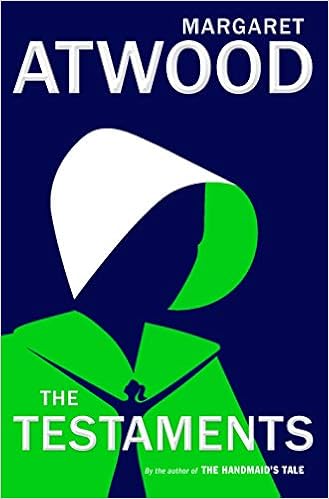
I first read The Handmaid’s Tale in 1986. I was already a big fan of Margaret Atwood – mostly for her novels and poetry, but I even bought her book about Canadian literature (Survival: A Thematic Guide to Canadian Literature ), despite having no particular connection to or interest in the subject. Although it is not my favourite Atwood novel, I have always found her dystopian vision of misogyny and religious mania in America to be compelling and brilliant, and while it seemed far-fetched to me, back in the more hopeful and progressive 1980s, when I re-read it three or four years ago, The Handmaid’s Tale seemed far more horrifically prescient about America than I could ever have imagined.

When I heard that Margaret Atwood was writing a sequel, I was excited – and I am not normally excited about sequels to books that stand perfectly well on their own. But, more than three decades on, it seemed as if Margaret Atwood was not only the author of a classic to stand alongside Orwell’s 1984 (can you imagine the excitement if Orwell had survived into the 1960s and announced he was writing 1985?) but might actually be a living oracle, here to tell us more about what was to come....and even advise us how best to respond.

I bought The Testaments the week it came out – no way, this time, that I was going to wait for the paperback, or sign up to a waiting list at the library. I read it immediately, and at a gallop. It is a very readable book, and very different in tone and style and story from the first bleak and chilly evocation of Gilead through the eyes of Offred – just as it should be, considering the ways 2019 is different from 1985. But I have not been able to work out what I think of it yet – it might take another, closer reading. Or maybe it requires something else. Because, as I read, I suspected that The Testaments was not a sequel to the earlier novel, but had been written in response to the to the television series.


That might not bother most readers, and is perhaps inevitable. But apart from the first episode, I did not watch the TV version of The Handmaid’s Tale, and I don’t want to. I’m not knocking it; I just didn’t feel like subjecting myself to what was clearly going to be a very grim, realistic, protracted depiction of a brutal American theocracy violently oppressing women and other social subversives.

The original novel gave me plenty of food for thought, as well as things to get angry about. And even if it means I can’t properly appreciate The Testaments, it was still well worth reading – it is one of my top ten reading memories of the year. The others – out of the 68 books I’ve finished reading to date -- are:


The Dollmaker by Nina Allan


HHhH by Laurent Binet


The Lonely City by Olivia Laing


Her Body and Other Parties by Carmen Maria Machado


Ghost Wall by Sarah Moss


To Be a Machine by Mark O’Connell

 Normal People by Sally Rooney


Theory of Bastards by Audrey Schulman


Never Anyone But You by Rupert Thomson


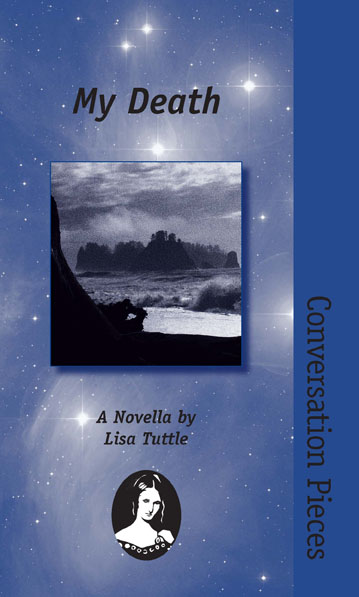
 Lisa Tuttle is the author of numerous novels and short story collections. Her most recent novel is The Curious Affair of the Witch at Wayside Cross. She has also published nonfiction and more than a dozen books for younger readers. In 1974 she won the John W. Campbell Award for Best New Writer and, in 1987, the BSFA award in the short fiction category. Aqueduct Press published her novella My Death in 2008 (which is now available as an ebook). Born and raised in Houston, Texas, she has made her home in a remote rural region of Scotland for the last twenty years.

Wednesday, December 11, 2019

The Pleasures of Reading, Viewing, and Listening in 2019, pt.2: Erin K. Wagner

The Pleasures of Reading, Viewing, and Listening in 2019
by Erin K. Wagner


Each year, it seems like I have less and less time to read and watch texts—and yet, each year, it seems more and more important to do so. The moments of elation or heartbreak, amusement or anger, feel like important catharsis, feel like a magic unparalleled by many of the gifts I receive over the winter holidays. So, here are some of the texts that meant the most to me this last year!

Novels

--LaValle, Victor. The Changeling. Spiegel & Grau, 2018. This was a heartbreaking and challenging novel that recycled traditional changeling narratives in some really inspired ways, tackling issues of race and nationalism.

--Le Guin, Ursula. A Wizard of Earthsea. Harcourt, 1968. So I’m a little behind on the classics, and I read this for the first time this year, thanks to the beautifully illustrated edition my husband gifted me. It was lovely and quiet and stirring all at the same time. It also reinvents how the fantasy epic can be told.


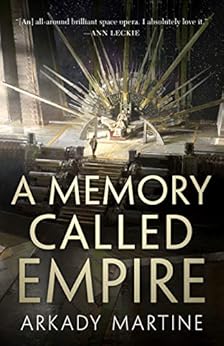
--Martine, Arkady. A Memory Called Empire. Tor, 2019. I’m only about half-way through this novel at the time of writing this list, but it’s one of those novels that makes me excited about settling into my pre-bedtime reading. Detailed and meticulous—with plenty of political intrigue—it’s a novel I’m happy is so long so I’m not in danger of finishing it too soon.


--Palmer, Ada. Too Like the Lightning. Tor, 2016. Another novel that was incredibly complex, a unique blend of fantasy and science-fiction against a backdrop of an older culture come again. The book is very intertextual and is almost educational at the same time that it is entertaining.


Short Stories


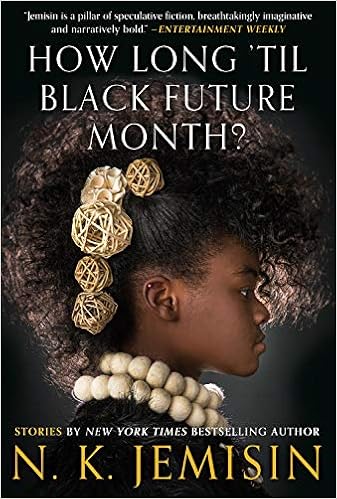
--Jemisin, N. K. “The Ones Who Stay and Fight.” How Long ‘Til Black Future Month? Orbit, 2018. This is a story I taught in combination with Le Guin’s “The Ones Who Walk Away from Omelas,” primarily because it is the text with which Jemisin directly dialogues. Jemisin challenges her readers, via sharp, direct prose, to consider their own responsibility to fight the evil they see in society.

--Liu, Ken. “Paper Menagerie.” Fantasy &Science Fiction, Mar/Apr. 2011. I’ve taught this story two times now. The first time I read it, in preparation for a class in the spring 2019 semester, I was almost moved to tears. I’ve had students share similar experiences with me. The story is not high fantasy but it is high art, family and identity explored through magical realism.


TV & Movies

There’s a lot of TV on the list this year—because sometimes you just need to unwind from the reading and writing of your day job with a well-crafted visual narrative. Or you sit at the edge of your seat in horror or anticipation. Either way.

--Di Martino, Michael Dante and Bryan Konietzko. Avatar: The Last Airbender. Nickelodeon, 2005-2008. I’ve watched this before, but my husband and I finished a rewatch this year. The ending is inspirational to me as a writer, as it manages to be both epic and engagingly intimate at the same time.

--Duffer, Matt, and Ross Duffer. Stranger Things. Season 3. Netflix, 2019. This one you’ve probably heard of. Though I didn’t feel season 2 or 3 quite matched up to the blockbuster that was season 1, this send-up of summer nostalgia hit a lot of the right notes and explored what it means to grow up in the face of overwhelming trials.

--Favreau, Jon. The Mandalorian. Disney +, 2019. Yep. Yes. I can’t resist Baby Yoda. Also, the music for this show, though markedly different than standard Star Wars fare, is awesome.


--Johnson, Rian. Knives Out. Lionsgate, 2019. I only just watched this. It was one of my most anticipated films of the year, and it did not disappoint. A mystery film that is both an homage to standard detective fare and thoroughly disruptive to anti-immigration narratives. A nuanced metaphor and funny to boot.

--Lee, Chang-dong. Burning. Pine House Film, 2018. Quiet and breathtaking. And creepy. An exploration of toxic masculinity.

--Levy, Dan and Eugene Levy. Schitt’s Creek. CBC, 2015-present. This is one of the more perfect sitcoms I’ve watched. The family ensemble is both charming and appalling. Ew, David.

--Mazin, Craig. Chernobyl. HBO, 2019. There is something about bureaucratic cruelty and inefficiency that makes me incredibly angry. Though there is little optimism in this show, it is acclaimed for a reason. It is a horrific reminder of how the petty and the catastrophic can go hand-in-hand.

--Waititi, Taika. Jojo Rabbit. TSG Entertainment, 2019. Another movie I was excited to see in November—and it did not disappoint. In fact, I went in expecting a satire and instead received a gently comedic, incredibly moving, and heartbreakingly profound examination of how minds become warped and how good can triumph over evil.

Video Games

--Fujibayashi, Hidemaro and Hiroki Hirano. The Legend of Zelda: Breath of the Wild. Nintendo, 2017. I grew up as an N64 kid. My favorite videogame was The Ocarina of Time. Though very different in tone and style (with a steampunk-esque aesthetic), Breath of the Wild satisfied a lot of my childhood nostalgia while providing a spare but moving narrative. Also, the graphics were gorgeous.

Looking Forward to Reading or Viewing in 2020!

--Clarke, Susanna. Piranesi. Bloomsbury, 2020. Very few books have inspired or impacted me as much as Clarke’s Jonathan Strange and Mr. Norrell. Those glorious footnotes. I am over the moon that Clarke is now coming out with a new novel. In preparation for it, I’m blogging my re-read of Jonathan Strange over at my Luna Station Quarterly column.

--Ehasz, Aaron and Justin Richmond. The Dragon Prince. Netflix, 2018-present. The show shares writers with Avatar: The Last Airbender, so I am excited to start this well-reviewed series.


 Erin K. Wagner is a speculative fiction writer, interested in examining how the human responds to the inhuman. She grew up in southeast Ohio on the border of Appalachia, but now lives in central New York, where she hikes in the Catskills and listens for ghostly games of nine-pins.She splits her time between academic research, investigating how medieval English writers navigated their own religious identities, and creative writing. Aqueduct  published her novella, The Green and Growing, as a volume in the Conversation Pieces series earlier this year. Her stories have appeared in a variety of publications, from Apex to Luna Station Quarterly, and her short story "Running Straight" was a finalist in the 2015 Omnidawn Fabulist Fiction Chapbook contest. You can visit her website at https://erinkwagner.com/.

Tuesday, December 10, 2019

The Pleasures of Reading, Viewing, and Listening in 2019, pt.1: Isaac R. Fellman

2019 Readings
by Isaac R. Fellman


This year I came out as trans and started a job as an archivist at a queer historical society, so a lot of my reading was trans history and memoir. It turns out that doing this will revitalize a reading life; I spent too many years reading exclusively about people whose lives I didn’t instinctively understand, and assuming that all lives must be like that. I do highly recommend reading work about people whose lives you don’t instinctively understand, but not for thirty-six years without a break.

Jordy Rosenberg, Confessions of the Fox

This one’s written in fog and fire. It’s a rousing eighteenth-century melodrama; it’s an audacious seizure of trans history; it’s a work of literary theory influenced by José Esteban Muñoz; it’s a piss-take on Pale Fire. It’s a love story. It’s secretly genre! I haven’t read anything like it, and probably shall not again.

Lou Sullivan (edited by Ellis Martin and Zach Ozma), We Both Laughed in Pleasure

An edited volume of diaries or letters is a tricky balance. You need to create a tantalizing miniature of a tantalizing thing, something that feels like a satisfying and informative story but also conveys the incompletion of the archives. Ellis and Zach bring off the trick brilliantly with their candy-colored book, which captures Sullivan – freewheeling, sexy, often in pain and often a victim, working hard to articulate his identity as a gay trans man to a country that wasn’t ready for him – at his literary finest.


Allan Bérubé, Coming Out Under Fire

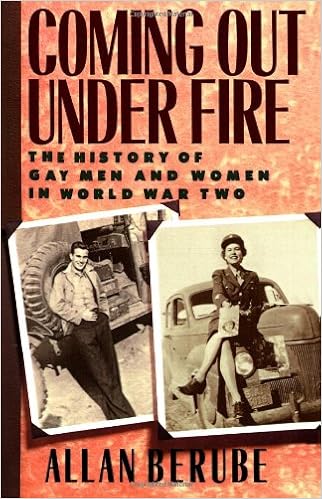
Bérubé’s topic – queer servicepeople during the Second World War – may seem highly specialized, but if you were just going to read one book on queer history, this is the one I’d recommend. It’s not just about the few years of the war; it’s about how Americans came to understand queer identity, how the war quickened the forces that would lead to both deepened bigotry and growing liberation. It’s also beautifully written, with a keen sense of how to temper traumatic moments with pleasurable ones.

Emily Skidmore, True Sex: The Lives of Trans Men at the Turn of the Twentieth Century

I have less to say about this one, but it’s seeped into the marrow of my thought. It’s a fantastically adroit extrapolation, mostly from news coverage, of elusive transmasculine lives at a very specific historical moment. Skidmore demonstrates the broad range of reactions to these men (sometimes negative, sometimes quite positive) – and the ways the public interpreted their stories to create narratives about what gender, citizenship, and race mean.

Anne Lister (edited by Helena Whitbread), The Secret Diaries of Miss Anne Lister

A vital document of queer life two centuries ago, from domestic details to the startlingly recognizable drama between Lister and her local cadre of queer women. These women formed complex friendships, relationships, and jealousies, and they always seemed to want each other in exactly the wrong configuration. It is startling to encounter a full-on scene in rural Yorkshire after the Napoleonic Wars, but such there was. Lister observes the community’s foibles with the cutting pen of an Alison Bechdel, although it’s devastatingly hard to be Bechdel in a world where there are no therapists and virtually no concept of coming out. Still, I don’t think Lister would want our pity.

Terry Castle, The Professor and Other Writings

Castle is the writer I wanted David Foster Wallace to be. She’s honest about things nobody else would think to be honest about, funny about things nobody else would joke about, furious and Byronic and totally in control. A masterpiece.

Michael Dillon, Out of the Ordinary

I don’t know why the wealthier class of trans men before 1950 were so drawn to careers in medicine. Maybe they were fascinated with the potential and the apparent limitations of the body. Maybe it was just a prestigious professional job that offered certain butch satisfactions. But regardless of why, Michael Dillon was a trans man and a doctor (and a Buddhist monk, and a minor British peer, and a good deal more besides). His story of an experimental medical transition just after the Second World War is riveting, although the latter half of this memoir needs a content warning for Dillon’s casually exoticizing view of the people he met on his travels.


Hope Mirlees, Lud-in-the-Mist

Mirlees’ 1926 fantasy novel is one of those books that both codifies a genre and blows it up. A twisty, Wildean narrative, pulsating with queer subtext that’s barely under the surface, it’'s about life in Lud – a dull, prosperous city just over the border from eldritch Fairyland, whose leadership are obsessively anxious about the possibility of young people crossing the border and returning with dreams that the city can’t bear. None of the directions this takes are in any way predictable.


Richard Brautigan, In Watermelon Sugar

The “X meets Y” school of book marketing can be deeply frustrating, but sometimes it really is the best way to explain the grand plate tectonics that make a book special. To this end, this is Minecraft meets No Exit, and you will never find that combination anywhere else.

*

I haven’t included books by my friends on this list (though one of the editors of the Lou Sullivan book is my friend). There’s a curse associated with befriending writers, at least for me. The line blurs between your memory of the book and the memory of their conversation; the book starts to feel like a slightly different artform, with the conversation mixed in, and it can’t be comfortably compared to other books anymore.

That said, three of my friends have written extraordinary books recently, which I’d otherwise have put on this list. Grace Lavery’s Quaint, Exquisite: Victorian Aesthetics and the Idea of Japan is a honed epee of delicate and perfectly sharpened thought. In February, we will finally see the glory of Something That May Shock and Discredit You, Daniel Mallory Ortberg’s alchemical book of essays, short comedy pieces, and trans Biblical exegesis. Lastly, I tore through an ARC of Julian Jarboe’s upcoming debut collection, Everyone on the Moon is Essential Personnel, like a raccoon tearing into a paper bag of the most delicious garbage imaginable. I cannot wait for everyone to be properly introduced to Julian.


Isaac Fellman is an archivist in Northern California. He writes sharp, painterly science fiction and fantasy about his various preoccupations: art history, extreme survival, toxic love, queer identity, and terrible moral choices. Most of his protagonists are great at exactly one thing and are continually prevented from doing it. Isaac is transgender, and initially published The Breath of the Sun as Rachel. The Breath of the Sun won the Lambda Award for Best LGBT Science Fiction/Fantasy/Horror Fiction.

Monday, December 9, 2019

The Pleasures of Reading, Viewing, and Listening in 2019

Our annual series of posts on reading, viewing, and listening is about to begin. Once again I've solicited pieces from a bevy of writers and critics to tell us what they particularly enjoyed reading, viewing, and listening to in the last year. This year's edition will include posts by Andrea Hairston, Lisa Tuttle, Sarah Tolmie, Isaac R. Fellman, Tansy Rayner Roberts, and others. I'll be adding links below as I upload each new contribution, to provide a list for convenient reference. I hope you'll enjoy reading these as much as I do, and maybe even swell your ever-growing list of titles you want to read. Sometimes it seems that the volume of books published is so tremendous that it's no surprise that really wonderful work often slips below one's personal radar.

Part 1: Isaac R. Fellman
Part 2: Erin K. Wagner
Part 3: Lisa Tuttle
Part 4: Sarah Tolmie 
Part 5: Christina M. Rau
Part 6: Rachel Swirsky
Part 7: Andrea Hairston
Part 8: Cheryl Morgan
Part 9: Gwynne Garfinkle
Part 10: Nisi Shawl
Part 11: Octavia Cade
Part 12: Tansy Rayner Roberts
Part 13: Nancy Jane Moore
Part 14: Susan diRende
Part 15: Tara Campbell
Part 16: Suzy McKee Charnas
Part 17: Anya Johanna DeNiro
Part 18: Cynthia Ward
Part 19: Rosanne Rabinowitz
Part 20: Cassandra Rose Clarke
Part 21: Mark Rich
Part 22: Kate Boyes 
Part 23: Lesley Hall
Part 24: Julie Phillips
Part 25: Christopher Brown
Part 26: Kristin King
Part 27: Eileen Gunn
Part 28: Arrate Hidalgo


Monday, November 11, 2019

The Cascadia Subduction Zone, Vol. 9, 3


The fall issue of The Cascadia Subduction Zone is finally out. It's been a long time in coming, for which I'm sorry--one of our editors was very ill for four months (and is now, I'm happy to say, recovered). This issue has remembrances of Vonda N. McIntyre and Joshua Lukin, essays by Steven Barnes and Christina M. Rau, a flash fiction by Nancy Jane Moore, poetry by Gwynne Garfinkle, Sofia Rhei, Mark Rich, and Sonya Taaffe, a Grandmother Magma column by Debbie Notkin, Karen Burnham's Dust Lanes column, four book reviews, and art work by Jean LeBlanc. You can purchase single copies for $3 (electronic) or $5 (print & electronic), or subscriptions for $10 (electronic) or $16 (print & electronic) at http://thecsz.com/subscribe.html.


In Memoriam
My Friend Vonda
    
by Amy Wolf

Joshua B. Lukin
    
by L. Timmel Duchamp

Flash Fiction
Like a Fish Needs a Bicycle
    
by Nancy Jane Moore

Essays
The Nightmare of Those Who Walk Away, the Dream of Those Who Stay and Fight
    
by Steven Barnes

On M Archive: After The End Of The World
by Alexis Pauline Gumbs
    
by Christina M. Rau

Poems by
Gwynne Garfinkle
Sofia Rhei, translated from Spanish
   by Lawrence Schimel

Mark Rich
Sonya Taaffe


Grandmother Magma
The Exile Waiting by Vonda N. McIntyre
   by Debbie Notkin

Dust Lanes
Short fiction reviews
   by Karen Burnham

Book Reviews
The Affair of the Mysterious Letter
by Alexis Hall
   reviewed by Cynthia Ward

Alice Payne Arrives and Alice Payne Rides
by Kate Heartfield
   reviewed by Arley Sorg

Gender and Our Brains: How New Neuroscience Explodes the Myths of the Male and Female Minds
by Gina Rippon
  reviewed by Nancy Jane Moore

The Heads of Cerberus
by Francis Stevens
  reviewed by Kathleen Alcalá

Featured Artist
Jean LeBlanc

Tuesday, October 29, 2019

The WisCon Chronicles submission deadline has been extended

Co-Editors Isabel Schechter and Michi Trota are extending the submission deadlines for The WisCon Chronicles: Vol. 12: Boundaries and Bridges. The submissions deadline has been extended to November 15, 2019.

For the complete set of guidelines, please see the original call for submissions:  https://aqueductpress.blogspot.com/2019/07/the-wiscon-chronicles-vol-12-call-for.html.

Sunday, October 27, 2019

Octavia Cade's Mary Shelley Makes a Monster


Aqueduct Press is pleased to announce the release of Mary Shelley Makes a Monster by Octavia Cade, the seventieth volume in our Conversation Pieces series, in both print and paperback editions.  You can purchase it now at www.Aqueductpress.com, where you you can also read a sample from the book,


Mary Shelley Makes A Monster is a series of fantasy-biographical poems in which Mary Shelley’s monster, bereft of its foster mother after Shelley’s death, goes searching for a replacement. All our monsters are mirrors. And when Mary Shelley’s monster—built from her life rather than her pen, born out of biography instead of blood—outlives its mother, that monster goes looking for a substitute. But all the monster really knows of women is that women write, and so the search for a replacement takes it first to Katherine Mansfield, and then to other women who know what mutilated things can be made from ink and mirrors….

Tuesday, October 15, 2019

Cesi Davidson's Articulation: Short Plays to Nourish the Mind and Soul


I'm pleased to announce the release of Articulation: Short Plays to Nourish the Mind and Soul by Cesi Davidson, the founder and curator of Short Plays to Nourish the Mind & Soul, free public theatre in New York City. Articulation is the seventy-first volume in Aqueduct's Conversation Pieces series, and is available in both print and e-book editions. You can purchase it now at www.aqueductpress.com, or read a sample from the book.

 
“In these fanciful, often hilarious plays you will discover a fantastic variety of characters—familiar nursery-rhyme figures who work in a ninety-nine-cent store and bet on horses, bananas and radishes, who discuss their ill-fated destinies, birds who sing songs of unrequited love, time travelers who skip about from Caribbean present-day to slavery-era Virginia, bunnies who meet in support groups.

“Many of the plays will have you laughing out loud. But they also explore serious issues and wrenching troubles. Little Bo Peep finds her marriage destroyed by the gambling habits of Big Man Blue. A bunny mother struggles to accept her gender-fluid son/daughter. A young man dreams of different incarnations of his drug-addicted mother, hoping for maternal love to conquer his pain. A traumatized African-American woman seeks to wash away the bloody stains of a racially motivated violent assault.”  —from the Foreword by Zachary Sklar


“Cesi’s plays are adventures in wordscapes that show us the ways we are and the ways we can be. Characters not often seen on screen, stage or page populate her scenes in situations that make these short plays eminently readable and relatable while being unapologetically unique. Lovers of theater and fiction alike will find much to cherish in this collection. Bravo!”  —Celeste Rita Baker, author of Back,Belly, and Side
 
“Cesi Davidson’s short plays are swift but indelible, both light and enlightening, their profound human truths conveyed with power and originality. Each piece assembles an intriguing, often whimsical or fantastic cast of characters (a young man and his dream mothers, two guardians standing watch on a pregnant woman’s belly, a ripening banana and its peel…) and gives them unbridled voice. The result is a series of interactions that embody fresh takes on the conundrums, the alienations and vulnerabilities—including those of race and class and gender and sexuality—of contemporary life. We’re awakened to our own ability to express our experiences, to feel our pain and that of others, to persevere.”  —John Gould, author of the Giller Prize short-listed Kilter: 55 Fictions


Sunday, September 15, 2019

Julie C. Day's The Rampant


I'm pleased to announce the release of The Rampant, a novella by Julie C. Day, as the sixty-ninth volume in Aqueduct's Conversation Pieces series. It's available now in both print and e-book editions at http://www.aqueductpress.com.

It’s ten years since the hordes of old-world Sumerian gods arrived in Southern Indiana to kick off the end of the world, but things have not gone to plan. A principal player decided not to show. Now humanity is stuck in a seemingly never-ending apocalypse. Sixteen-year-old Emelia Bareilles and Gillian Halkey are determined to force a change, even though it means traveling into the lands of the dead.


Read a sample from the book here".

 “I loved the epic journey of our two teenaged lesbian he¬roes, Gillian and Emelia, through the sprawling horrors of the Sumerian afterworld. The clash of their modern feminist sensibilities with the cruel and rigid theocracy of the very oldest gods out-weirds much of the New Weird. In The Rampant, Julie Day calls us to visit a fantastical landscape in a voice that is hers alone.”
 — James Patrick Kelly, winner of the Hugo, Nebula, and Locus awards

The Rampant was so much fun to read! Is that the right way to blurb a horror novel? I don’t know, but it’s the truth. Julie Day’s novel is smart, playful, sly and, yes, hor¬rifying too. A short gem of a book.”
 —Victor LaValle, author of The Changeling

“The girl-powered post-apocalyptic Sumerian under¬world quest I didn’t know I needed.”
 — Sarah Pinsker, winner of the Nebula and the Theodore Sturgeon Memorial Award

The Rampant is one of the most original Apocalypse tales I’ve read in ages. Julie C. Day avoids cliché and gives the reader the end-times by way of Sumerian myth—except this particular end-of-the-world stalls when one of its principal players decides not to show up. What unfolds is a journey into the underworld filled with joy and hor¬ror, hope and loss. It’s a wise and lovely story—exactly what I’ve come to expect from Day.”
 —Nathan Ballingrud, winner of the Shirley Jackson Award; shortlisted for the World Fantasy, British Fantasy, and Bram Stoker Awards.


Equal parts playful and heartbreaking, this apocalyptic novella offers one-of-a-kind answers about the end of the world. Gillian Halkey and Emelia Bareilles, both 16, have spent most of their lives enduring the nightmare of the never-ending rapture. It’s been a decade since the ancient Sumerian gods descended on Indiana, promising that the chosen people would ascend to Nibiru, but the terrifying entity called the Rampant—the last of the Evil Messengers heralding the destruction of civilization—seems to have missed the memo. Until he shows up, the rapture can’t happen. Meanwhile, bored gods are eating people. It’s up to Emelia and Gillian to descend to the Netherworld, using Gillian’s prophetic dreams as guidance, in hopes of liberating the Rampant so the judging can begin and the suffering can end. Mixing a coming-of-age and a second coming, the story is unmatched in its idiosyncrasy. Day conveys genuine empathy for the two young women, who are still learning about themselves (including a sweet crush of Gillian’s), while never relinquishing the archaic fear instilled by the presence of ancient gods and the televangelists who have smoothly pivoted into running the Sumerian Revivalist Church. This clever and surprisingly fun take on the rapture is the perfect theological horror story.   —Publishers Weekly, Aug 12, 2019

Mel and Gillian feel very much like real people; they aren’t superheroes, they’re teenage girls doing their best to cope in a weird and messed up world, dealing with the loss, and a daily existence that is anything but normal. Their heart and determination, and their bond with each other, carries the story through. Day perfectly balances dark and light in The Rampant, and offers up a fresh take on apocalyptic fiction that draws on ancient mythology and literature to create something that feels completely original and new.-   (Read the whole review)   —The Book Smugglers, A.C. Wise,  August 2019