Showing posts with label Sarah Tolmie. Show all posts

Wednesday, December 10, 2025

The Pleasures of Reading, Viewing, and Listening in 2025, pt. 1: Sarah Tolmie


Annual Pleasures

by Sarah Tolmie 


I spent 2023-4 (I chunk time in academic years) trying to figure out what weird fiction was. For those of you with access to journals that normally publish articles on Middle English poetry, I can direct you to one result of it: ‘Would’st thou be in a Dream, and yet not sleep?’: Piers Plowman, Gormenghast, and the World of Weird Fiction, The Yearbook of Langland Studies, Volume 38, Issue 1, Jan 2024, p. 123 - 165. Weird venue for a manifesto, you say. Yeah. I’ve come to the conclusion that the weird often combines technicality, one way of coping with the unknown, with other, more fabulist, methods. Often the weirdest stuff ends up directed to niche audiences. What is it that M John  Harrison said in Wish I Was Here — good luck with trying to be weird, see you at the ceremony? 


In 2024-5, the process was still going on in another way: basically, I was just sitting around with the idea in my head and seeing what I was attracted to. A bit like dowsing. A new book by Helen Marshall is always an event in weirdness, so if you haven
’t already, take a look at The Lady, The Tiger and the Girl Who Loved Death. Someone just directed my attention to Ned Beauman’s Venomous Lumpsucker, which I had somehow missed entirely; I haven’t read it yet but it is number one on my holiday list. It sounds like a posthumous work of A.S. Byatt, like he had a wicked months-long séance while writing; we shall see. I have hopes. I was also lucky enough to be a beta reader of the amazing Pam Mordecai’s first collection of ghost — duppy, as she says — stories, Two Days in Mayaro, which comes out next year with Goose Lane Press. Order it now!

 So much for contemporary works such as you usually see on year-end lists. I’ve spent much of the rest of the year reading Joseph Conrad. Or, to be perfectly honest, listening to it, as read by the Australian Peter Dann for Librivox. He’s an excellent reader of Conrad, proof that you can find absolute gems on Librivox, despite what audiobook snobs say. Librivox is one of those things that give me hope that regular humans are still reading, sharing books aloud. Speaking of generally vital crowdsourcing, this was also the year in which I started giving Wikipedia a monthly donation. I’ve always used it a lot but it was crucial to a book I wrote this year. It was time, and the evil stupidities marshaling themselves against it need combating.


 But. Moving on. Conrad. Weird, eh? Why read Conrad in this day and age? Inexcusable old white guy? Well, it
’s because, in my mind, Conrad is a weird writer. He’s always been an odd fit in the canon: a Pole who writes in English, a man whose books are set everywhere other than Europe in a Eurocentric tradition. A man on his second career. A modernist who grew up reading patriotic Polish romances. I think it’s his extreme psychologism that gives him away. It’s like his characters are scarcely on Earth at all, despite all the circumstantial detail; they’re so deep in their own heads. Most of all, what makes me feel a kinship in weirdness with Conrad is the extent to which his characters remain complete mysteries to themselves. There’s a lot of willful blindness about, but even more sheer unknowability. People experientially contending with the limits of knowledge is the heart of weird fiction to me, individuals just being thrown back into a state of dogged, often confused, will. His protagonists do it all the time. Their heads are chock-a-block with knowledge, but it almost never helps them: it’s the wrong knowledge at the wrong time, or the right knowledge rendered suddenly inaccessible by a panic attack, or huge amounts of distracting knowledge that won’t help you at the moment, and so on. People think they’re doing one thing, but they’re doing another. Ironic but weirdly attached narrators see some of it, cranky or disaffected readers see more, but nobody ever sees it all. Never a full revelation or resolution. 

Conrad stories just sort of stop with a bit of a sputter. Language frequently outruns itself, not lost in its own convolutions like Henry James, but as if it’s just dropping a pin in meaning and rushing along before it all gets away. There are actual grammar fails and a feeling of precariousness that you just don’t get with Virginia Woolf, say. There’s a wonky, struggly weirdness to Joseph Conrad altogether. I really identify with it. I expect the comparison would horrify him, but to me it all reads a lot like Mervyn Peake. Gormenghast on the South Seas?Hearing it told in the dispassionate voice of a middle-aged Australian — Peter Dann — is also strangely suitable. The last thing you’d want for Conrad is RP. I don’t think he ever even really aspired to be an “honorary Englishman” like Tom Stoppard. He wanted to make a living. Dann’s Melbourne accent keeps things de-centred, antipodean; Australia’s a lot closer to Malaysia than London. Anyway, it works for me. If you’re prepared to look at weirdness in this way, it might work for you, too. It’s all on YouTube. Ramp up your ad blocker, and you’ll be okay.

            Best wishes to all in 2026 amid the global storm.


 Sacraments for the Unfit, which Aqueduct released in 2023, is Sarah Tolmie’s sixth book with Aqueduct Press. Others include The Stone Boatmen, nominated for the Crawford Award in 2015, and The Little Animals, winner of the Special Citation at the Philip K Dick Awards in 2020. In addition to publishing short fiction, novellas and novels with Aqueduct, she has released two novellas with Tor.com, The Fourth Island and All the Horses of Iceland; the latter was listed as one of the top fantasy books of 2022 by The New York Times. She has also written three volumes of poetry for McGill-Queen’s University Press; the second one, The Art of Dying, was a finalist for the 2019 Griffin Prize for Poetry. In her other life, she is a Professor of English at the University of Waterloo. Her website is sarahtolmie.ca.


Wednesday, December 20, 2023

The Pleasures of Reading, Viewing, and Listening in 2023, pt.12: Sarah Tolmie


Reading and Listening in 2023

by Sarah Tolmie


2023 was an awful year. I expect we’re all agreed on that. So bad was this year for so many people that it seems almost bizarre to enumerate personal sorrows or desires and reflect on how the pleasures of reading, viewing or listening alleviated them. But then, where does that leave us as individuals? Or as makers or consumers of art? What levels of misery (personal, national, global) is art meant to combat, or record? Is the purpose of art the reduction of misery, and if so, by what means? Consolation, enlightenment, witnessing, activism? 

These are the questions that bubbled up as I was racking my brains to try to think of works of art that I enjoyed this year. In retrospect they seemed few and far between. This has less to do with any present dearth of art than with the fact that pleasure that is not insane or irresponsible feels like an endangered category. Is it even okay to feel pleasure now? What a horrible, Presbyterian question. I can barely believe I asked it. Chilly ranks of ancestors in a faith my family abandoned generations ago clap their pale hands. Yuck. Back off, you misery goats! I insist that it remains right to like things! I will go on appreciating the crowning achievements of human consciousness that reside in the arts! To that end …


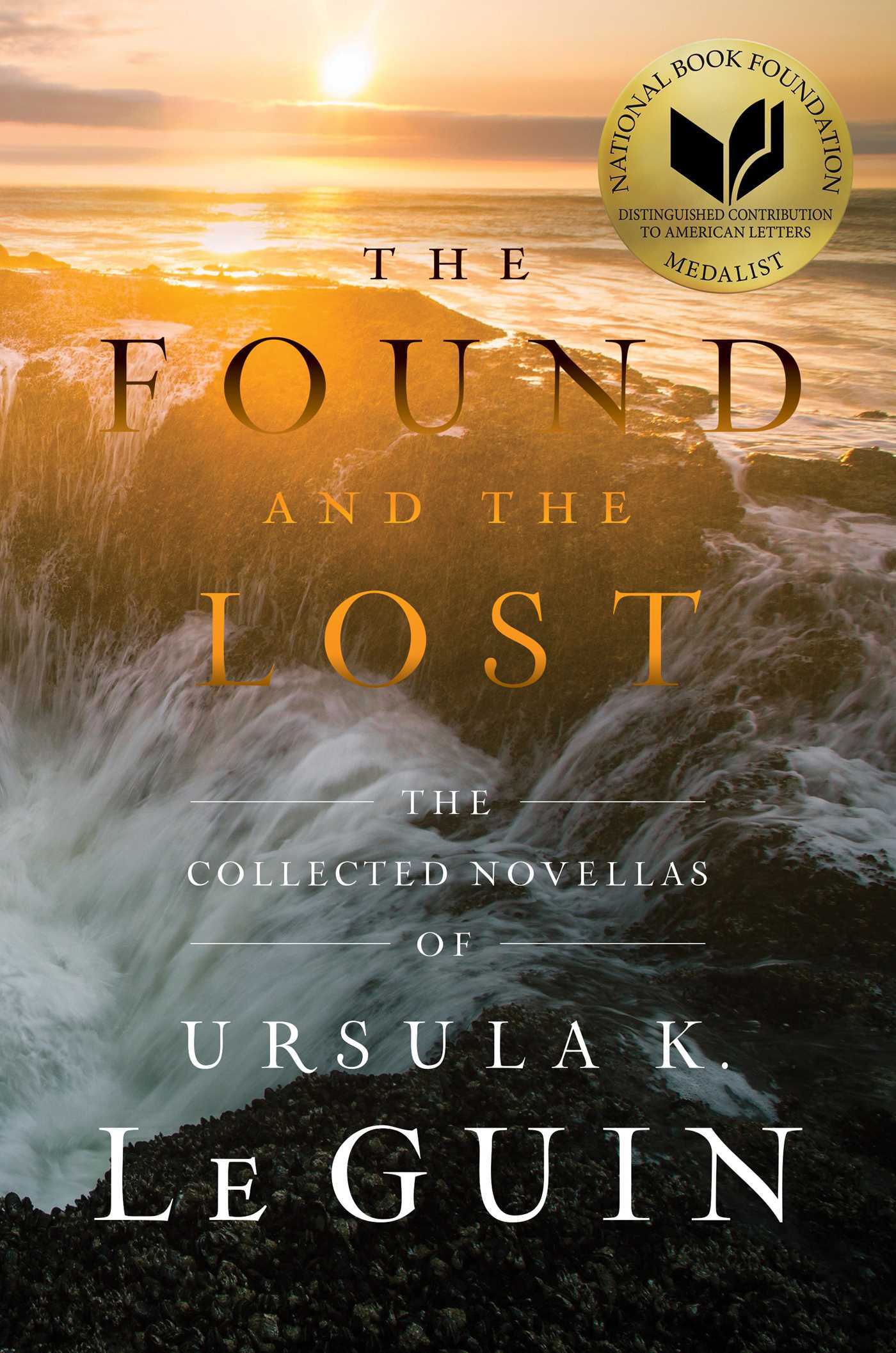
 The two books that I liked most and thought about most this year were two volumes of essays by Ursula Le Guin. I bought both of them — in addition to the big fiction collections The Found and the Lost and The Real and the Unreal — in a paroxysm of grief right after her death but didn’t read them straight off. Indeed, I lost track of them. I found them a couple of months ago. The first, and arguably the more important, is Words Are My Matter: Writing About Life and Books 2000-2016, consisting as it does of commissioned essays and addresses, assorted introductions to classic authors or editions, and an astute series of her contemporary book reviews from the Manchester Guardian. This is the considered, astringent, public-facing Le Guin, knowing that she is writing in moments of consequence and doing so with her inimitable decorum. 


Decorum without prissiness, goopiness or crassness is something I have always associated with her. She is the only modern feminist I can imagine who thought it worthwhile to spend her last novel thinking seriously through what it meant to be pius Aeneas. At the same time she is wonderfully forthright about the months of anxious editing and then the six minutes of terror that was the creation and delivery of her acceptance speech for the National Book Foundation medal in 2014; read that blast of the trumpet against the corporate profiteering of today’s publishing industry and imagine yourself speaking it aloud to a room full of Amazon apologists. Neither will you ever forget what she says (in an address to NARAL in 2004) about her own illegal abortion in 1950, especially if, like her, or my mother, or myself, you are a woman who has both had an abortion and raised a family and understood one as necessary to the other. 


The second book is 2017’s No Time To Spare: Thinking About What Matters, a series of blogs collected from her website, blogging being an experiment she dd not begin until she was over eighty. Being pressed for time at that age — as she explains with marvelous directness — evidently contributed to the concision of these essays. Montaigne would read them with pleasure: they are chatty without being gossipy, casual without being dismissive, clever without being precious. They hit that amazing middle ground that she found in her middle age — along about the time of Tehanu — in combining deep thought and domestic detail. As usual, she is exact and profound about animals (cats, chiefly, plus one memorable encounter with a snake) and language. I was delighted to find that she had gone through a meditation upon the confusing adage “you can’t have your cake and eat it too” that was almost identical to my own (hint: try substituting keep for have). She gets into a moral quandary: is it appropriate to have an amanuensis, even just to help answer your fan mail? (The amanuensis question is highly relevant to female authorship all the way back to Margery Kempe.) All in all, both books, especially when taken as a pair, are golden.


And I listened to Anton Lesser’s reading of Great Expectations. Lesser is one of my favorite audiobook narrators; his Dombey and Son, for example, is a masterpiece. When you combine the talents of a powerful and unaffected voice actor, in particular one who has the rare skill of producing voices for both genders with equal conviction, with the dramatic unfolding of Dickens you really get a great thing. I’ve said before that I never appreciated Dickens until I began to hear his books read aloud; it clarifies a great many of his effects. 

I remember liking Great Expectations when I read it years ago as an undergraduate, but it slipped my mind for decades afterward, and also became strangely fused in my memory with David Copperfield, a book I read much later. I admire the darkness and weirdness of the late Dickens, and Great Expectations certainly has those; the scathing ironic distance that Pip the belated narrator achieves about his self-regarding youthful self is masterful; and the book presents that almost unbelievably callous and systematic separation of the poor and the rich, the criminal and the complacent, that characterized the Victorian period, and that now seems eerily familiar to us again. The twenty-three-year-old Pip, numb and traumatized, witnesses the condemnation of thirty-two men, women and children, to death at one single assize; recollecting it years later he can barely sustain his astonishment beyond a single sentence. Which is worse? Great Expectations: it remains a great and terrible account of class apartheid.


 Sacraments for the Unfit, which Aqueduct released earlier this year, is Sarah Tolmie’s sixth book with Aqueduct Press. Others include The Stone Boatmen, nominated for the Crawford Award in 2015, and The Little Animals, winner of the Special Citation at the Philip K Dick Awards in 2020. In addition to publishing short fiction, novellas and novels with Aqueduct, she has released two novellas with Tor.com, The Fourth Island and All the Horses of Iceland; the latter was listed as one of the top fantasy books of 2022 by The New York Times. She has also written three volumes of poetry for McGill-Queen’s University Press; the second one, The Art of Dying, was a finalist for the 2019 Griffin Prize for Poetry. In her other life, she is a Professor of English at the University of Waterloo. Her website is sarahtolmie.ca.


Saturday, July 1, 2023

Sacraments for the Unfit by Sarah Tolmie


I'm pleased to announce the release, in both trade paperback and e-book editions, of Sarah Tolmie's Sacraments for the Unfit. It is available now at www.aqueductpress.com. This is Sarah's fourth collection of fiction from Aqueduct. 


The isolation of the COVID-19 pandemic brought out the ritualist in many of us. In this collection of contemporary weird short fiction, a variety of different persons and beings try to fill up their days in varying states of isolation and mystery, real or imaginary. An angel outlives the Apparat that used to employ him; a deity complains about no longer feeling seen; a museum curator living alone begins to inexplicably alter; a medievalist suffering from vision loss gets into a strange relationship with the ghost of the codicologist M. R. James; enigmatic objects begin to work themselves out of the ground by the grave of the philosopher Ludwig Wittgenstein, prompting scholarly speculation. Sacraments For the Unfit is a series of vignettes about the transformations that can happen while staying in place. 

Read a sample from the book:  http://www.aqueductpress.com/books/samples/978-1-61976-240-4.pdf

Advance Praise

“These stories could be the mad progeny of Umberto Eco and Ursula K. LeGuin: fiendishly cunning thought-twisters that shimmer with compassion and charisma.”
 —Helen Marshall, author of The Migration


Tuesday, December 27, 2022

The Pleasures of Reading, Viewing, and Listening in 2022, pt. 20: Sarah Tolmie


Pleasures, 2022

by Sarah Tolmie


I taught Piers Plowman, the fourteenth-century dream vision poem upon which a shocking amount of my life’s work to date is based, for the first time in a decade in 2022. Reading a poem as complex as Piers with the view to teaching it tends to eclipse much other reading for pleasure. And it’s worth saying here — and everywhere in our hard-book-hating-world — that re-reading Langland’s magnum opus, on which he (probably) spent an erratic lifetime in the later Middle Ages, remains a pleasure. Re-reading it after multiple go-rounds (it’s a circular poem) is actually a supreme pleasure: it’s the kind of work, as one critic put it, “that should never be read for the first time.” The fact remains: Piers Plowman is the most gripping, bizarre, immersive and cognitively real book/experience (one that is so fucked up that it feels like your life) that I read this year. This will be true, I can almost guarantee, any year that I read it.


Closer to the contemporary world, I discovered Shirley Jackson. This is as belated a claim as Columbus’s discovery of America, I realize. Shirley was already there. Oh yes. I’d just like to add my voice to the thousands of living writers who are in awe at her mastery, particularly at the novella length. We Have Always Lived in the Castle was a revelation to me. It certainly showed me the lineage of all the spooky spunky YA heroines with which our age is littered, and was a wonderful riposte to Welty’s Why I Live at the P.O., a story I have always felt was overrated.


Three books by people I actually know were influential on me this year. One is the collected works of the Caribbean-Canadian poet Pamela Mordecai, A Fierce Green Place, which came out in 2022 with New Directions. It should be on every best-of list this year. In fact, it’s weird that it isn’t. She has hitherto published mostly with small presses. We have a lot of shit-hot Caribbean writers in Canada, especially women, and I think that Pam gets drowned out by some of the bigger names (Dionne Brand, Olive Senior, and so on) when, in fact, she’s better than any of them. 

Helen Marshall’s collection The Gold Leaf Executions, which was due out in October but was delayed by her publisher and should be out soon, was a work I read as an ARC. It spans about the last decade of her career as a short story writer and it is terrific. It was also a work that hit me, personally, at exactly the right time: I have never really written fiction set today, nor anything autobiographical (though I do so all the time as a poet, now that I think about it). Several of Helen’s protagonists in Executions are medievalists, editors, and/or itinerant learned people generally (which designations reflect my background as well as hers) and suddenly I felt that it was okay to do that kind of reveal; I set straight-off writing a new collection of short fiction, Sacraments for the Unfit, which Timmi will be publishing on July 1, 2023. 


Also crucial to this just-completed book was my friend Tanis MacDonald’s hilarious memoir Straggle: Adventures in Walking While Female. This book, typical of everything of hers I have ever read, is both hard-hitting and a total scream; it takes a sardonic poke at rugged, male, outdoorsy memoirs of the hill-walking-and-existential-musing type. I recommend all three of these very different books wholeheartedly to all.

 I am watching the new episodes of His Dark Materials with great happiness. I feared that The Golden Compass would become a CGI action nightmare but so far, so good. There are some casting decisions that I can’t get behind (I don’t need to see Lin-Manuel Miranda ever again, frankly) and they have had to dumb it down for people who haven’t read Milton, but aside from these inevitable problems, it’s great; the young leads are doing a great job carrying the can on what is, after all, a superb story.


 Our family Christmas re-watch this year, controversially, is the 1966-7 Soviet War and Peace. This remains one of the best movies (film series, I guess, really, though it feels more unified than that) I have ever seen, and the single best book-to-cinema adaptation. While being interestingly stylized in itself, and of its own moment, it is absolutely note-perfect to Tolstoy’s original, a feat all the more remarkable given its completely morally unacceptable status to the regime. My husband’s family is Ukrainian and nobody is feeling anything less than loathing for Putin and his oligarchy right now, but at the same time we decided that boycotting great works of art of the past because of insane contemporary wars makes no sense. This great Russian-language Soviet showpiece was directed by, and stars, a Ukrainian (Sergei Bondarchuk), after all. Best we can do in the moment.

 Merry Christmas under all this snow, and best wishes to all for 2023!


 Sacraments for the Unfit, which Aqueduct will be releasing in 2023, will be Sarah Tolmie’s sixth book with Aqueduct Press. Others include The Stone Boatmen, nominated for the Crawford Award in 2015, and The Little Animals, winner of the Special Citation at the Philip K Dick Awards in 2020. In addition to publishing short fiction, novellas and novels with Aqueduct, she has released two novellas with Tor.com, The Fourth Island and All the Horses of Iceland; the latter was listed as one of the top fantasy books of 2022 by The New York Times. She has also written three volumes of poetry for McGill-Queen’s University Press; the second one, The Art of Dying, was a finalist for the 2019 Griffin Prize for Poetry. In her other life, she is a Professor of English at the University of Waterloo. Her website is sarahtolmie.ca.