Showing posts with label Suzy McKee Charnas. Show all posts

Saturday, January 7, 2023

Suzy McKee Charnas (1939-2023)


Earlier this week, Suzy McKee Charnas died. And so I’ve lost another friend and colleague, one who is also an Aqueduct author. The last time I saw Suzy in the flesh was at Vonda McIntyre’s memorial, when she and Molly Gloss and I embraced in a three-way hug, forhead-to-forehead-to forehead.


Suzy McKee Charnas first blazed onto the science fiction scene with her then outrageous novel, Walk to the End of the World, in 1974, followed by the splendid Motherlines—differently shocking to the sensibilities of the day—in 1978. William S Burroughs blurbed the first one, and Samuel R. Delany blurbed the second. I first read these in 1979 (which is when I discovered them at Tower Books in Seattle), cover to cover, without being able to put them down. 

Walk to the End of the World was more familiar to my imagination, if you can believe that, than Motherlines, which imagined an all-women society that was nothing like that of Charlotte Perkins Gilman’s Herland and is likely more comfortable reading than Walk for most people today. And yet it was Motherlines that the publisher of Walk declined to publish. Looking back, the characterization on the cover of my paperback second edition of Walk might explain it: “The terrifying science fantasy about a world ruled by men.” What was I living in, in 1979, but a world ruled by men? Nothing strange about that! 

Motherlines, though—the women in it were tough, assertive, and taking no shit from anybody—in a forthright way, without disguise,  that few real women then could get away with. My mother, for instance, was the comptroller of a medium-sized business and basically called all the owner’s shots for him—but could only be admitted to a trade association meeting under the guise of being his “girl friday.” I’d been thinking of myself as tough and assertive, but when I read Motherlines, I found myself thinking that I wasn’t tough enough to live in that world. By the next time I read it—in 1995, in preparation for reading The Furies, the third book in Suzy’s Holdfast Chronicles—I had to laugh at that memory. Had I really been such a wimp?

This may sound like a merely personal reaction to Suzy’s first two novels, but I think it actually speaks to the sorts of questions that arise when reading her work. Her fiction, that is to say, touches places in our imaginations that provoke us to ask questions we take personally. That’s not always a comfortable response when reading fiction—but it’s something that happens concomitantly with immersive reading, making those questions seem almost inadvertent, an accident of personal circumstance.

The last book in the Holdfast Chronicles, The Conquerer’s Child, won the Otherwise Award the year I served on the jury. (I wrote an essay about it, which you can find at  https://ltimmelduchamp.com/criticism/child.html. ) Suzy’s short fiction was also outstanding, and her feminist werewolf story “Boobs” won a Nebula, and her novella “Unicorn Tapestry” a Hugo Award. Probably Suzy’s best known work is The Vampire Tapestry. I’ve written about it and eight other of her books Aqueduct has produced e-book editions of for this blog (https://aqueductpress.blogspot.com/2020/10/e-book-editions-of-nine-books-by-suzy.html). Aqueduct also published Suzy’s novel Dorothea’s Dreams in our Heirloom Book series.
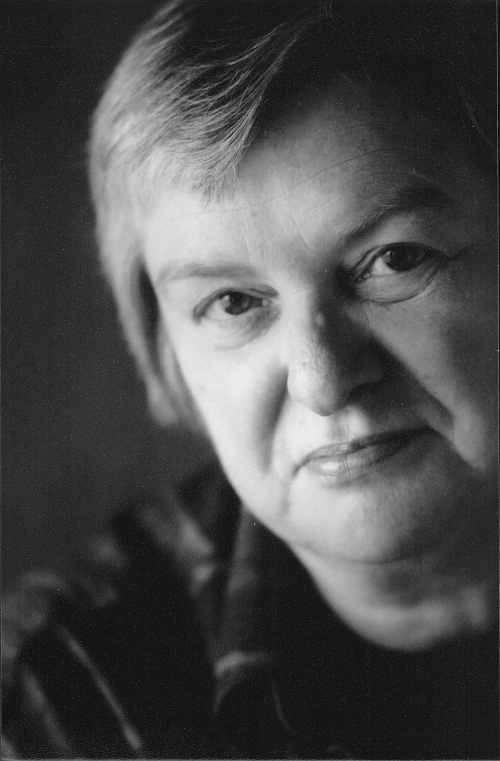

I first came to know Suzy through the fem-sf listserv to which we both belonged. But I first met her in the flesh a little later, during a Potlatch con in Seattle, at lunch with a group of people Nicola Griffith assembled. (I met her more often at Potlatches than at WisCon, actually.) My awe of her gradually morphed into deep respect. Probably the phrase “a very private person” applied to her more than to anyone I’ve ever known, and yet she was an easy conversationalist, not at all reticent. But then she liked herself and trusted her own judgment without ever being overbearing. She told me that she enjoyed reading her own writing after it had been published, which impressed me. (Many writers hate to read their published work. I don’t, but I always want to edit myself, which sometimes makes reading of my own work an act of regret.) This ability to appreciate one’s own work actually turns out to be true for quite a few writers. But I suspect it’s rarer for women writers. And it may be even rarer in writers with a strong critical sense, which Suzy certainly had.

A related quality, I think, was Suzy’s self-sufficiency. My appreciation of this made me think, in my late forties, that I wanted to be like her when I grew up. Suzy was also warm and generous, and gracious to students and fans. As a publisher and editor who worked with her, I would also say she was astonishingly easy to work with. And finally, I will add, also, Nisi Shawl’s characterization: “loving.”

Finally, she was a splendid example of a feminist with a sense of humor. That, combined with her scathing political opinions, goes a long way toward explaining how she came to write her first novel. It was inspired, she said, by reading a newspaper article on the US Government’s plan for preserving the government past a nuclear holocaust, which was devised by the Nixon Administration. The article noted that in the case of nuclear exchanges, all the top government officials and a few junior officials and secretaries were to be flown to a special, clandestine, secure bunker where they were to be sequestered, out of harm’s way, for the duration. Tant pis, of course, for their mates and families. (Or any ordinary citizens, for that matter.) Suzy imagined what would happen if such a collection of top officials survived with only a few secretaries on hand to serve them (and provide the means for reproduction). When I first heard her tell the story, in her own dry way, I thought: thus the classic feminist sfnal imagination. Suzy is our answer to Nixon.

Suzy made my world richer for her work and her presence. And I will miss her.   


Thursday, December 15, 2022

The Pleasures of Reading, Viewing, and Listening in 2022, pt. 6: Suzy McKee Charnas


Reading Pleasures, 2022
by Suzy McKee Charnas 


What a year! Books I loved — 


A Tidy Ending, by Joanna Cannon, is a clever, funny, wicked thriller that sneaks up on you under a bland (but often funny and unexpectedly perceptive) suburban surface, this is a brilliant book. You might easily find yourself finishing it with your eyes wide and your mouth hanging open, and then go back and read it again, this time with slightly queasy astonishment. I did. 


Next up, We Spread, by Iain Reid. Reid takes us into the mind and experience of an elderly widow, a painter whose awareness is becoming patchy and unsure, who finds herself unexpectedly lodged in a deceptively cozy assisted living situation. It’s a gorgeous feat of the author's imagination, based on Penny's slow realization of just what unnatural (but oh so humanly natural!) drives underpin this sheltered life, even as her clarity of mind fades in and out, fighting for integrity of thought, identity, self.


 For a completely different, clever, and charmingly funny fantasy of old age, try the third in Richard Osman’s series about a cabal of puzzle-solving oldsters, The Thursday Murder Club:The Bullet That Missed. These seniors bring the skills and wisdom gained through their lively pasts to bear on intricate and entertaining crises rising now. It's great fun, and a good place to jump aboard this clever series. There’s always the danger of a series going stale, or getting weighed down with accretions of too many new characters acquired along the way, or old ones turned into stock figures being moved around in formulaic plots. Get this charming stuff while it’s still fresh! 


Then there’s The Ballad of Perilous Graves, by Alex Jennings, a rich and tasty phantasmagoria of and adventurous quest through a haunted, mystical New Orleans that draws on deep well-springs of local history. It runs deep and flies high on the irrepressible energy of music, not least the music of the language of a magical alternative city. This is a big, broad book, full of joy and danger; still a fast reader, I made myself slow down for this novel so I could better savor its discoveries and de- lights. This author’s debut is a doozie. 


 Finally, a gem of a book by Elizabeth Strout: Lucy by the Sea. We face our own strange, afflicted times both head on and obliquely, as the narrator’s plain, clear voice carries the reader through the disjointed upheavals of the first pandemic year. Uprooted from her New York apartment, Lucy and her ex view this jagged new era from a house on the coast of Maine. Lucy often says that she understands how others think and feel, and she shows us how and why she understands, using moments from her own fraught past. But there’s no security in understanding; time rolls on relentlessly, filled with spikes of the unexpected, waves of bafflement, bolts of far-off illumination, but above all, loss: loss of bearings, loss of home, loss of life, loss of the old familiar world being overwhelmed by an awful present. Here we are, clinging to what we can save, find, and improvise, even if it’s all so fragile: always dancing on the brink, but now we know it, every moment. 


Suzy McKee CharnasSuzy McKee Charnas is the author of the four-novel Holdfast Chronicles, The Vampire Tapestry, Stagestruck Vampires and Other Phantasms as well as several other books. She's been honored with the Hugo, Nebula, and the Otherwise Awards.  Aqueduct Press published her novel, Dorothea Dreams, as part of its Heirloom Books series, and have since released nine of her titles in e-book editions. 

Tuesday, December 21, 2021

The Pleasures of Reading, Viewing, and Listening in 2021, part 17: Suzy McKee Charnas


2021 Pleasures
by Suzy McKee Charnas 


Reading has been disappointing this year, but still: 

The Weight of Memory by Shawn Smucker — a strange, then stranger story with the dreamy inexplicability of fairy tales from an exotic country, mixed with a sharp eye for grounding detail somewhere in the rural northeast. I started this one evening, finished it at 7 a.m. the next day.

Here’s Alexander McCall Smith with a new series, and he seems to have captured the slow civility + odd side of Nordic mystery (nothing Noir about it) with The Man with the Silver Saab, the third and newest of these stories of a Swedish detective named Ulf Varg (“Wolf Wolf”) with a case to solve and a decision to make about his dog’s nose. 


And art — feed the eyes. Art on the web is FANTASTIC. 

https://www.facebook.com/GrandArtists/photos/a.241068725964997/5662750403796775/

https://www.facebook.com/GrandArtists/photos/a.241068725964997/5788686027869878/

https://www.facebook.com/GrandArtists/photos/a.241068725964997/5921162484622231/ 
So is music — particularly music from films and TV. Some of this work is bloody gorgeous.

https://www.youtube.com/watch?v=lalnGhxT3PQ 
 
https://www.youtube.com/watch?v=WldRNFYUv9U 
This one, above, let me actually hear the music without the bombast of full orchestration -- a bit of Hans Richter’s score for “Interstellar.”
 
 https://www.youtube.com/watch?v=5URpJemLDrI

	And this, if you’re room for one more . . .   Hope the links work!


Suzy McKee CharnasSuzy McKee Charnas is the author of the four-novel Holdfast Chronicles, The Vampire Tapestry, Stagestruck Vampires and Other Phantasms as well as several other books. She's been honored with the Hugo, Nebula, and the Otherwise Awards.  Aqueduct Press published her novel, Dorothea Dreams, as part of its Heirloom Books series, and was pleased to release nine of her titles in e-book editions this fall.

Monday, December 14, 2020

The Pleasures of Reading, Viewing, and Listening in 2020, pt. 9: Suzy McKee Charnas


2020 Pleasures
by Suzy Charnas 


 First off, I want to recommend a TV series from Belgium called Professor T. It’s told as a police procedural, with some interesting police persons (and very little actual procedure), and their relationship with an academic who’s a genius in criminology. Yes, not a new idea (remember Numbers?). There are some nicely rounded (and spiky) female characters, and, in the end, a person who began as a bit of a grotesque turns out to be the true hero of the Professor’s personal story (and to be so suddenly and extraordinarily beautiful that the camera can barely bring itself to turn away). Dabs of fantasy, smart dialog, plausible tensions and resolutions, and don’t forget the music . . . Try it. It’s not for everybody, quirky as it is, but the people I know who like it don’t just like it; they love it. As I did, and I do. 


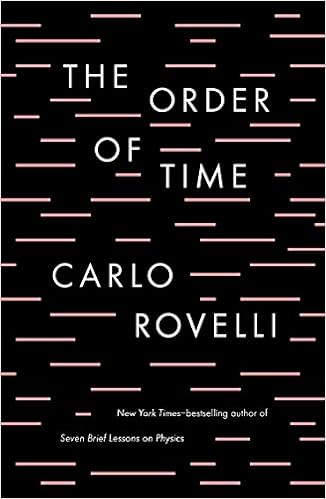
 Second, a book that offers the best argument for the absolute bedrock reality of the concept of "free will" that I’ve seen. It’s physicist Carlo Rovelli’s recent book, The Order of Time. Not long, but pithy and clear. I’ve ordered a copy for my permanent shelf.

In music, a piece called “Says” by Nils Frahm, with the visuals from a French art studio — so it’s music AND text (black ink on glass), and it has sent me off in pursuit of different sorts of music than I usually look for. (Here’s a link, I hope). https://www.youtube.com/watch?v=dIwwjy4slI8 


And Agnes Obel, whose work was suggested to me years ago by Elizabeth Vonarburg, with a performance on NPR’s Tiny Desk program — a rendition of “Broken Sleep.”

 Finally, for those who saw Kieslowski’s great film trilogy, Blue, White, and Red, this short film about the making of Red, with Irene Jacob talking about the changes she brought to the original script, shows why Red is not just another movie about an old recluse reconnected with life by contact with a beautiful, idealized young woman. I loved this movie when I first saw it, but I did feel moved to dismiss it as just a very elegant version of that boring, done-to-death trope. So I looked at this, and I listened to what these people had to say, and now I understand more about why I loved Red anyway. Being older now than I was then also has a lot to do with it, I think. https://www.youtube.com/watch?v=gJhx4XGz6Jc 


Suzy McKee CharnasSuzy McKee Charnas is the author of the four-novel Holdfast Chronicles, The Vampire Tapestry, Stagestruck Vampires and Other Phantasms as well as several other books. She's been honored with the Hugo, Nebula, and the Otherwise Awards.  Aqueduct Press published her novel, Dorothea Dreams, as part of its Heirloom Books series, and was pleased to release nine of her titles in e-book editions this fall.

Wednesday, October 14, 2020

E-book Editions of Nine Books by Suzy McKee Charnas


I'm pleased to announce the release by Aqueduct Press of e-book editions of nine books by Suzy McKee Charnas. Among these, the collection Stagestruck Vampires and Other Phantasms (originally published by Tachyon Publications in 2000) has not previously appeared in an e-book edition. The other titles include the Sorcery Hall Trilogy, consisting on The Bronze King (1985), The Silver Glove (1988), and The Golden Thread 1989), as well as The Vampire Tapestry (1980), The Kingdom of Kevin Malone (1993), The Ruby Tear (1997), Music of the Night (2001), and My Father’s Ghost (2002).  You can purchase all of them now at www.aqueductpress.com.


  I've been a great fan of Suzy's fiction since the early 1980s, so it gives me particular pleasure that Aqueduct can now offer e-book editions of so much of her work. The Vampire Tapestry (1980) is one of those books that I every now and then just have to reread. Here are some of the pull-quotes we've found for it:

 “Probably the best vampire novel ever written.” 
  —Oxford Times

“…Charnas’ view of her protagonist is unswervingly unsentimental, and…her denouement is savage and intense and brilliantly satisfying.

“…Charnas’ writing is also rich and impressive: she seems equally at home on a college campus, in the office of a professional therapist, in the emotions of a 14-year-old boy, and in the music and story of Tosca. The novel works on many levels — as pure adventure, as social description, as psychological drama, and as a passionate exploration of the web that links instinct, morality, and culture. It is a serious, startling, and revolutionary work, and I recommend it to all comers.” 
  —Washington Post

“Told in five interlocking novellas that form a single chronological narrative, this is the story of a seemingly immortal figure… His academic specialty is dream research, but his true nature compels him to seek intimacy with ‘colleagues, students, and social companions’ who then become his admirers and eventually his victims.

“…It’s a fascinating conception, handled with masterly skill. Charnas’ characters are boldly drawn and memorably complex, her prose is alive with energy and wit, her narrative inventions ingenious and atmospheric. Nothing better has been done in this, er, vein since Bram Stoker’s legendary Dracula in 1897. And, as a pure piece of writing, Charnas’ deeply intelligent, disturbing novel may actually be the superior book.” 
  —USA Today


Suzy hasn't written a huge amount of fiction in shorter form, but it's all intensely engaging and memorable. Most of it is collected in Stagestruck Vampires and Other Phantasms. 

“In ‘Listening to Brahms’ Charnas proves that she can take global tragedies and extract the most minute yet potent seed of hope from the rubble. Three linked stories comprise a nuanced portrait of her vampiric antihero Dr. Weyland. With its Leiberesque love affair with the stage, this entertaining volume deserves to run as long as Cats.” 
  —Asimov's SF, Paul di Filippo

“An intoxicating mix of exhilaration and terror…every story will have an effect on your psyche, thanks to Charnas’ magnificent style. Her writing is almost poetic in its beauty, but damning in its subject; similar to chocolate-covered arsenic. “ 
  —Horror-web.com


Another, slimmer volume collecting Suzy's short fiction is Music of the Night. These four tales of mythic monsters, who embody our deepest and most secret desires, evoke wilderness and wonders lurking below the familiar surfaces — splendid, coarse, or startlingly every day — of modernity.

“From the moment of reading the ‘true’ story of the Phantom of the Opera…I was drawn into a deep, dark, yet highly erotic world that Suzy Charnas brings to life. I enjoy reading all things paranormal, but this book delves deep into the emotions of the characters… Each story is deep, slightly dark, and on some level it hits where we think our darkest thoughts, though most of us never act upon them. Suzy Charnas has tapped the deepest parts of our lives and brought them out in these stories… What a wonderful collection, that I recommend to anyone who wants something different!” 
  —In the Library

“The Hugo winning, Nebula nominated short story ‘Boobs’ is one story I find myself re-reading over and over again. …a young girl, having come of age over summer break, begins 8th grade and is ridiculed for her new adult body by her fellow students… This story is so well written that I found myself cheering her on as she gets revenge against the immature boys she has to go to school with.” 
  —Fantastic Reviews


 The Kingdom of Kevin Malone is YA Fantasy:  Amy, brooding on a family crisis, retreats to Central Park—from the frying pan straight into the fire! Out of her past swoops her old arch-enemy Kevin Malone, the neighborhood punk who used to bully her. Angrily chasing him now through an arched passage under a park roadway, she emerges into another world. Kevin's feverish imagination has transformed Central Park into the Fayre Farre, a land of danger, magic, and heroic adventure. Here, among castles, elves, monsters, wild men, battles, and prophecies, Kevin is a Prince and a legendary champion. He's also still a self-centered jerk with a chip on his shoulder, and he's lost control of his magnificent creation: chaos and destruction are sweeping the land. Despite Kevin's bravado, Amy sees that he desperately needs her help. Will she risk her life in such a thankless job, or just leave him to sort out his own mess? And either way, where will that leave her?

“…the author’s sly digs at the heroic fantasy genre are on the mark, and Kevin makes an unusual hero. He's whiny, sullen, and self-centered, but also a tragic figure with a nascent sense of responsibility… Readers can sift through the whimsy for serious themes or not, as they choose.” 
  —School Library Journal

“…a perfect example of the mixing of genres (contemporary fiction and high fantasy)… Underneath the plotline…is the more serious story of the protagonist's coming to terms with her favorite cousin’s death, and it's the touching way Charnas handles that story, along with her engaging characters and smooth prose, that makes this novel so successful…” 
  —Mystery Scene


 The Ruby Tear is a standalone novel originally written under the pseudonym of Rebecca Brand. 

“The Ruby Tear is a fun contemporary vampire story revolving around a theatrical production entitled “The Jewel.” The author, Rebecca Brand, writes smoothly and plays well with the conventions of the gothic, which isn’t too surprising when one realizes that Ms. Brand is a pseudonym for Suzy McKee Charnas, who obviously enjoyed writing this book. You’ll enjoy reading it.” 
  —Magazine of Fantasy & Science Fiction

“A highly theatrical novel about highly theatrical characters…There’s some comfortably warm sensual writing, as well as a candid treatment of real sex. Characters who at one time came across as not terribly deep gain another level of interest. And the climax of The Ruby Tear will modestly rip your heart out.” 
  —Locus


My Father's Ghost is Suzy's memoir of her father. 

“From [Suzy] Charnas, a true and tender account of caring for her aging father from the time of his truculent arrival at her home to his irascible last illness and death… The author makes good use of entries from [her father’s] journals, full of amusing, brittle, sad, and hopeful anecdotes and musings, epigrams, and reflections on art and life…to capture the mix of guilt, longing, impatience, and empathy that characterizes their relationship. Anyone who has cared for aging and ill parents will recognize and perhaps be comforted by this frank delineation of the mixed emotions called up by the death of a father.” 
  —Kirkus Reviews

“…a moving, thoughtful… never sentimental account of how daughter and father get to know each other in middle and old age…Robin’s unique combination of eccentricity and strength speaks for itself… Charnas’ story is bound to be a guidebook and an inspiration for anyone caring for aging parents.” 
  —USA Today


And finally, we have the Sorcery Hall Trilogy.What if your home town was invaded by wild magic spilling over from a sorcerers' war on distant battlefields? What if no one notices or realizes what's happening, but magic wakes and sings in your own blood, and unlikely warriors seasoned in an ancient struggle demand your help. What if you were born to be one of them? This is the story of Valentine Marsh, a New York kid faced with the call of an impossible destiny; of her divided family, her enemies both home-grown and far-flung, and her awed and unlikely fellow-adventurers who, with Val in the lead, battle their way to the lofty gates of Sorcery Hall. 


  The Bronze King: Sorcery Hall Book 1.

As a teenager, music — on radio and records — was the unfailing touchstone to my true, inner feelings. This story of heroes, punks, a dragon, and a girl fighting for her city’s life alongside a violin prodigy and a street fiddler (aka, ancient wizard) is my tribute to the power of music and those who make it.

“…A breathless and fast moving fantasy… The details are exactly right, from the wizard as busker, to the three messengers of evil as young hoods in jackets emblazoned ‘Prince of Darkness’, to a splashing, roaring final showdown…in Central Park…” 
  —Library Bulletin

“The tensions and startling switches in developments, as well as the author’s realistic evocations of metropolitan life, result in an unforgettable novel.” 
  —Publishers Weekly 


The Silver Glove: Sorcery Hall Book 2

“…sinister Dr. Brightner…is installed as the new school psychologist the same day Val’s magic Gran runs away from her nursing home. A renegade wizard, Brightner is after souls, and he’s been trying to get Gran to his clinic for ‘research.’ Val is horrified to find that he is trying to seduce her mother, who has long denied Gran’s magic and doesn’t see the threat. This is a book to relish: told in Charnas’s nearly perfect first-person narration, Val’s engaging personality of savoir-faire and innocence is judiciously mixed with a flying carpet, a deliciously scary Indian witch and a wonderful final confrontation in Central Park.” 
  —Publishers Weekly

“Charnas excels at making magic a believable part of her city, and her characters real city dwellers…magic is well handled: the good forces can’t use their magic directly against the evil Dr. Brightner and his minions, but must turn Brightner’s own attempts to hurt them back on him. It’s a clever, believable book.” 
  —Locus


 The Golden Thread:
Sorcery Hall Book 3

“With her beloved sorceress grandmother in a coma and hospitalized, 14-year-old Valentine Marsh…is assigned to assist a strange foreign exchange student, Bosanka, who reveals that she is a powerful, magical ruler of another world and…demands that Val and her friends use their power to find her misplaced subjects. Val fears Bosanka’s people may subdue and misuse humankind, yet she dreads to refuse the royal commands.

“Charnas shows the adventures of a typical high-school girl who just happens to have inherited some degree of white magic talent. In so doing, she touches on a host of contemporary issues, the most important of which is her ecological message that we are one people and must use technology to preserve the earth rather than destroy it. If all this seems a ‘stretch,’ it isn’t. Charnas neatly ties seemingly disparate pieces together into an exciting, absorbing, contemporary romp.” 
  —School Library Journal

“The third in Charnas’s series about a girl gifted with wizardly power in contemporary Manhattan, this may be the best. The characters are real, and the struggle between good and evil transcends the usual clichĂ©s.” 
  —The Magazine of Fantasy and Science Fiction


Sunday, December 22, 2019

The Pleasures of Reading, Viewing, and Listening in 2019, pt. 16: Suzy McKee Charnas

2019 Pleasures
by Suzy McKee Charnas


 Lately I’ve been getting my best story-kicks from the screen more often than from the page, much as I hate to admit it. But this year was remarkably rich. I came late to Fleabag, and at first found its protagonist (the flea, or the bag?) just too nasty. That passed, however, and the brilliance of the whole thing was nailed down by an excellent final episode.


Then there was Russian Doll, a show built around a wholly different style of obstreperous woman, stuck in her own private “Groundhog Day” scenario until she figures a few things out.


Lastly, Undone. This is an animated series, gorgeously rotoscoped and colored. The protagonist is a young woman looking for answers about her father’s death (with some help from the ghost of same),  who finds her self reconnecting with her maternal Latino heritage. 


For words, a book read in 2019: Michael Ondaatje’s Warlight, a beautiful novel about postwar Britain that, oddly, reminded me of Jeff Vandemeer’s Borne and also Lewis Carroll’s “’T’was brillig and the slithy toves“ — a shifting setting full of uncertainty and mystery that make elusive sense, if you look at it all sideways-ish.


Suzy McKee Charnas is the author of the four-novel Holdfast Chronicles, The Vampire Tapestry, and Stagestruck Vampires and Other Phantasms and has been honored with the Hugo, Nebula, and James Tiptree Jr. Awards. Aqueduct Press reissued her novel Dorothea Dreams as a volume in its Heirloom Book series. She lives in New Mexico.

Monday, December 7, 2015

Report on the Tiptree Symposium


I spent last weekend in Eugene, Oregon, attending the Tiptree Symposium, which was hosted by the University of Oregon Libraries in honor of Alice Sheldon's centennial. In case you haven't heard,the University of Oregon Libraries' special collections include the papers of James Tiptree JR/Alice Sheldon, Joanna Russ, Ursula K. Le Guin, Suzy McKee Charnas, Kate Wilhelm, Suzette Haden Elgin, and other feminist writers who are so critically important to our field and its history. I say I attended, but Aqueduct also attended: Kath presided over three tables with generous help from attending Aqueductistas. We sold several dozen books of our own, plus a variety of Tiptree-related books from other publishers and Tiptree Award tee-shirts.

During the welcome speeches made at the opening of the symposium, Senior Vice Provost Doug Blandy quoted from the introduction to Octavia's Brood in order to emphasize the importance of speculation and "visionary thinking" and declared that the symposium "advances our academic mission." This was a particularly nice touch, I thought, especially since none of the programming carried even a whiff of what most non-academics dislike about academic presentations. (As someone at home with academics, I'm always especially happy to find such harmonious blending.)


The first afternoon featured keynote speaker Julie Phillips, who gave a frequently funny and always moving account of two important correspondences, between Tiptree and Le Guin and Tiptree and Russ. These correspondences record, among other things, how Alli Sheldon spent the last ten years of life--following the disclosure that Tiptree was also, somehow, Alice Sheldon--"trying to find out who she was." After the revelation, she often felt that she didn't have any self at all, that she was caught up in "an animated puppet show." The value of the correspondence in these archives, Julie noted, is about refusing splitting things into compartments and labeling them (something Joanna Russ's letters talk about explicitly).

Following Julie's talk, students of Carol Stabile's Feminist Science Fiction course read selections from the correspondence, and Ursula read her letter in response to Tiptree's disclosure of Alice Sheldon. Many of us cried.

Karen Joy Fowler then introduced an audio production of "The Women Men Don't See," complete with sound effects. The actor reading Don Fenton's narration and dialogue was perfect. I've read that story men times, of course, but I found I couldn't bringing myself to leave the auditorium before it was finished. (Two tours of the Titpree Exhibit and Knight Library began as the tape was playing.) I did get to see the exhibit anyway, though, thanks to Julie Phillips doing the honors for me and her family members, who attended the symposium.

That evening, the Tiptree Motherboard hosted a party, full of conversation, with great refreshments and decorated with gorgeous flower arrangements and posters of Tiptree Award winners lining the walls.


Next morning began with a panel that was originally conceived to be on the subject of "feminist sf publishing." (Somewhere along the way, and without my noticing, "feminist" got dropped.) I was on this panel with Jacob Weisman, publisher of Tachyon Publications (who has done a lot of feminist sf publishing, including three Tiptree Award anthologies), Lisa Rogers, assistant editor at The Magazine of Fantasy and Science Fiction, and Gordon van Gelder, the publisher of , who was also Julie Phillips' editor for her life of Alli Sheldon. We were all a bit gobsmacked when moderator Prof. Phil Scher began by asking us about whether the mainstreaming of sf movies had significantly changed the status and fortunes of sf publishing. When my turn came to respond, I noted how vexed an issue sf film is for women: that films representing women well are considered "flukes" when they're successful, because Hollywood assumes "people" want to see stories about white men only. 

We talked about more interesting subjects, though, when the moderator asked us about "aha" moments when reading mss. (I chose to describe my exhilaration when reading the ms of Andrea Hairston's first novel, Mindscape.) And when the audience entered the discussion, it became promiscuously wide-ranging. This is the only way I can account for the introduction of the subject of "transparent" prose. I think it may have stemmed from a thread provoked by Eileen Gunn; I do recall that Eileen noted that some people don't seem to recognize certain styles of writing as styles, and that it takes a good deal of effort to write in such styles. And Ursula Le Guin, seated in the front row, provided a pungent remark that scotched the notion that "transparent prose" is "journalistic." The conversation was moving too fast for me to insert some of my own concerns about the use of the term "transparent prose"; these relate, of course, to my ongoing reflections about intelligibility-- that intelligibility is neither obvious nor "natural," but always a consequence of the stories, labels, words, etc that are generated by dominant, mainstream (dare I say "hegemonic"?) culture. Some stories, some identities, are simply invisible to those who don't venture outside mainstream culture. While any socially marginalized person is intimately acquainted with this problem and it seems to me to be an important issue that belongs in any discussion about "sf publishing" (feminist or otherwise), that's a minority view, I know, and requires connecting dots that are likely to go unnoticed by most people. Toward the end of the panel, though, Carol Stabile asked about whether the internet and social media had had an impact on sf publishing. And here I was able to note that these had made presses like Aqueduct possible--allowing the amplification of voices that are usually inaudible to the mainstream and the telling of stories unfamiliar and therefore otherwise unintelligible to mainstream publishing. 


I thought about the issue of intelligibility of non-mainstream stories again, when on the next panel, moderated by Karen, featuring Ursula, Suzy Charnas, and David Gerrold, Suzy talked about her first sf convention in 1976, in Kansas City, where she discovered "a community of women writers and readers, coalescing and beginning to create the world of feminist sf." The men at the convention, she said, didn't want to discuss sf by women or stories written from a woman's pov--and yet were outraged that women would want to meet separately simply so that they could discuss such sf (without being told how boring and awful it was and being constantly interrupted, as they were whenever they tried to say anything in the presence of men). Suzy said she'd been "taught that a woman's pov is too constricting and boring. But emerging feminist voices challenged that attitude." Ursula noted "It was a man's world. Feminism had been tried and abandoned earlier in [the twentieth] century. I thought literature was written by men, about men, for men." And so she wrote as a man-- "until I started to feel it wasn't right. Vonda [McIntyre] kept pinging me gently on the head." And: "I wanted to learn how to write as a woman. (But I was happy being a woman.)" And here followed a flurry of discussion affirming that writing like a woman had to be learned, and that it took hard work.

This made me remember how dissatisfied I was with some of the attempts of men writers to write a woman's pov in the 1980s & 1990s & of how Samuel R. Delany has more than once noted that for 19th-century European novelists, being able to write well from a woman's pov was an index of the quality of their art. Since writing from a woman's pov became declasse with modernism, of course both reading and writing stories by women, at least to begin with, takes an effort. And so it is for other marginalized identities. Remember Octavia Butler telling an interviewer that for a long time she thought her protagonist and pov character had to be a hard-drinking, chain-smoking 30-year-old white guy? We write not only from life, but from models. It's something we always have to keep in mind when we're thinkining and talking about gender issues in fiction.

After lunch, Jeff Smith very kindly submitted to questions about his friendship with Alli Sheldon/James Tiptree from Carol Stabile's students and then the audience. This was vivid and often poignant, a very fine reminder of how important oral histories are. And I have to say I'm fascinated to hear that for a while, Sheldon had a living tree growing inside her house. (Surely that's even more remarkable than her feeding a raccoon oatmeal cookies in her kitchen every afternoon?)

Next we had the pleasure of listening to Alli Sheldon's voice, by way of three audio recordings dating from the 1970s. One of these talked about Robert Heinlein's I Will Fear No Evil, another about the play of gender differences in marriage, and the third about pain. 


And finally, the last item on the program was a panel discussion of the James Tiptree Jr Award, moderated by Joan Haran (now a professor at the Center for the Study of Women in Society at the University of Oregon), featuring Jeanne Gomoll, Margaret McBride, Pat Murphy, and Heather Whipple. Pat began by telling one of the "many versions of the birth of the award," in which Pat's GoH speech at WisCon announced the award as a spoof but the audience insisted on taking it literally and making it real. Heather, who is the award's archivist, talked about the materials documenting jury discussions etc. When Joan asked the panelists where the award was going now, I think the response that most interested me was Pat's observation that "what 'exploring or expanding the sense of gender' is different now than when we started the award," and that that meant the award would necessarily always be changing. Oh, & I should also perhaps mention that a request was made that new nominations for the Award not be submitted until after the new website design had been implemented (which will, I gather, be fairly soon).

At the end of the panel, Nisi Shawl, having insisted that music was part of the award's tradition, joined the panel as Pat led the room in a rendition of a song sung at one Tiptree Award Ceremony.

Finally, Carol Stabile made the stunning announcement that more Tiptree Symposia would be held-- next year with a focus on Joanna Russ, and the following year with a focus on Suzy McKee Charnas.

All in all, it was a stimulating weekend. I do have one reservation, though: it is that Nisi Shawl could remark that perhaps only one other black person attended the symposium. Obviously, this strikes me as a blindspot, given that all three Aqueduct authors who have been honored with the Tiptree Award are black women, that Jeff Smith identified Alli as a "social justice warrior," and that the newest Tiptree and Le Guin fellowship awards have gone to black women.