Showing posts with label Tamara Kaye Sellman. Show all posts

Monday, January 5, 2026

The Pleasures of Reading, Viewing, and Listening in 2025, pt. 26: Tamara K. Sellman


PODCASTS FROM THE SHADOWS: for those of us who like to explore the dark places


by Tamara Kaye Sellman

  2025 was a year of alternative media consumption for me as a kind of self-defense against the downward spiral that is US global politics and the rise of fascism and useful idiocracy. I found a great many podcasts worth listening to in particular that I’d like to shout out and share here. Most are not popular, chart-topping shows and none of them are led by “bros.” And because I like things dark, these aren’t going to be “feel-good” shows, but provocative series (most of them limited) that explore our understanding of each other and ourselves through the lens of some pretty uncomfortable, bizarre, or fringe perspectives.


·        BLINK

The Binge, Corinne Vien/Jake Haendel

https://podcasts.apple.com/us/podcast/blink-jake-haendels-story/id1779813806


Jacob Haendel wasn’t supposed to live through a terminal brain disease and coma, but he did. He is co-host, guided by podcaster Corinne Vien, who helps him plot not only his journey, but also the journeys of his family and ex-wife. Here’s the thing: you may at first want to withhold sympathy for Haendel; he wasn’t exactly a model citizen before this all happened. But there’s a hidden medical mystery inside his story that will make you rethink your judgment. You can follow him in Instagram while he continues to recover.


·        THE DEVIL YOU KNOW

CBC podcasts, Sarah Marshall

https://www.cbc.ca/listen/cbc-podcasts/2054-the-devil-you-know-with-sarah-marshall


Fear, indeed, is the mind-killer, and host Sarah Marshall is the bomb. It takes a great CBC podcast to more honestly unravel the history of the US Satanic Panic of the 1970s, which lingers even today. But this podcast doesn’t stop there; it draws a literal crime map connecting the history of patriarchy, homophobia, misogyny, and moral conservatism via Old School fire-and-brimstone Christianity to illustrate how these controlling factions continue to build a playbook for the fascist New World Order.


·        GURU: THE DARK SIDE OF ENLIGHTENMENT

Wondery, Matt Stroud

https://wondery.com/shows/guru/season/1/

I remember hearing about the sweat lodge deaths in Arizona a few years ago and wondered how that could happen. It’s easy to imagine how gullible, undereducated people with access to money might fall for this kind of ruse, but in this case, the people who participated were educated, sensible, and yet manipulated by self-help cult figure, James Arthur Ray. You’ll learn about his personal history, how he crept to such heights as a guru, and get (macabre) first-person accounts from survivors at the scene.


·        HYSTERICAL

Wondery, Dan Taberski

https://wondery.com/shows/hysterical/


This story takes gaslighting to multiple dimensions. Fifteen years ago, high school girls in New York state experienced an outbreak of “conversion disorder.” This series examines the incident’s progression as it enters local media, where its clunky exploration prompts important sociopolitical discussions about collective confusion/ fear of the unknown, the implicit biases we all hold about female illness, how we link—or fail to link—outbreaks to the environment, and why this story isn’t about gender at all.


·        NOBLE

Wavland, Shaun Raviv

https://podcasts.apple.com/us/podcast/noble/id1757686789

Not for the faint of heart. This serial investigates the 23-year-old story of Noble, a town in Georgia, where the local crematorium is, in a phrase, “behind schedule.” Despite its grim subject matter, this isn’t a lurid, sensationalized true-crime show, but a thoughtful retelling of a sad moment in this small town’s history. The host’s intelligent overarching question, which informs the podcast, is an important one: “What do we owe the dead?” Even if the show doesn’t resolve that question, it will make you think.


·        SCAM FACTORY

Wondery, Denise Chan

https://wondery.com/shows/scam-factory/


I’m willing to bet you think you wouldn’t fall for a scam, and yet, this podcast shows you that there are literal “scam factories” in “scam cities” in parts of southeast Asia, wherein powerful high-tech fraud operators abduct and force people to work in various ways to scam you online… because scamming works. This particular podcast focuses on a perfectly intelligent, loving woman who was simply trying to help her brother find a job and ended up having to participate in the fraud in order to free her family.


·        SOMETHING WAS WRONG

Broken Cycle Media, Tiffany Reese

https://somethingwaswrong.com/

I’ve listened for three years now. Such a feat of pursuant justice! The ongoing docuseries’  intrepid, award-winning host, Tiffany Reese, brings rough but necessary activism/journalism to support survivors of trauma, stalking, and abuse. This is another show not for the faint of heart. If you start at the beginning and work your way through, you’ll more deeply understand why victims struggle to come forward, how legal systems continue to fail us all, and why gender assumptions re: villain vs victim need a makeover.


·        TELEPATHY TAPES

Yellow Wing Productions, Ky Dickens

https://thetelepathytapes.com/


Do not listen unless you want to get sucked in. This podcast will make you question everything you think you know about autism, our educational system, our science community, and, yes, telepathy. Are you a nonbeliever? I dare you to listen and not come away reconsidering what you think you know about the human mind and collective consciousness. Great commentary on the conflicted interests of systems and individuals. They’re now making a movie based on this compelling story and honestly, I’m here for it. 


·        WITCH

BBC Radio 4, India Rakusen

https://open.spotify.com/show/5G8G4pBD93IqpZgRj2p1MN

I’m fascinated with occult topics, but this one resonates for me. The host is a woman who is witch-curious, and that’s a plus because—in case you didn’t already know this—there’s tremendous bias/contempt worldwide about (mostly) women practicing spirituality unsanctioned by organized religion. Witch gives a global history of witchcraft while weaving in contemporary stories about relevant issues, like land access, human rights, and feminism. You may be surprised by what you learn from this exploration.


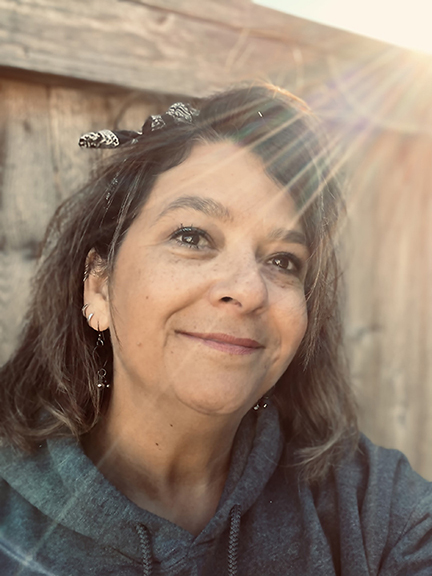
 Tamara Kaye Sellman's  published works (poetry, fiction, journalism, and essays) have been nominated for the Pushcart Prize or have earned other awards or distinctions. Some places where you can find her work include Crab Creek Review, Gargoyle, Literary Mama, Lowestoft Chronicle, The Nervous Breakdown, NonBinary Review, North American Review, Quarterly West, Rosebud, Spoon River Poetry Review, Terrain, and Weber: The Contemporary West. Her first book, Intention Tremor (MoonPath Press, 2021), collects poetry and prose forms documenting her life following her multiple sclerosis diagnosis in 2013. She is currently at work transforming the pieces from this book into experimental films to expand their accessibility to the hearing and vision impaired. (And because it’s fun.) Aqueduct Press released her collection Cul de Sac Stories, a volume in the Conversation Pieces series in 2024. A new work, Rain Shadows, appeared in 2025.

Sunday, December 22, 2024

The Pleasures of Reading, Viewing, and Listening in 2024, pt. 13: Tamara Kaye Sellman


The Pleasures of Reading, Viewing, and Listening in 2024

by Tamara Kaye Sellman


2024 was the year I finally made it through an audiobook.

And it wasn’t any old audiobook, it was China MiĂ©ville’s Perdido Street Station, with more than 24 hours of listening time.

Look, I have nothing against audiobooks. Nor do I avidly participate in that faux “listening versus reading” cage match in social media. It’s absurd, with so many ways to encounter story, that anyone can posit that it’s impossible to appreciate story if it’s not consumed as reading. It’s also ableist; many of my peers with MS need alternatives to reading with their eyes because of visual disabilities.

But in the past, I have found that listening makes me sleepy, my ADHD brain wanders, and I end up losing the plot.

This year, however, I needed some assistance. I was in the intense throes of Richard Thomas’ excellent Contemporary Dark Fiction course and one of the reading assignments was, indeed, this behemoth of a book.


I started to read Perdido early, knowing how slow a reader I am (it’s the side effect of having worked as a developmental editor… I find it challenging to read quickly now because I’m so beholden to each word choice, each sentence, each paragraph…).

But I discovered quickly that I had the same issue with reading Perdido that I do with listening to audiobooks… I kept falling asleep.

This is not to say the story didn’t grip me. It did! The words were beautiful to read besides.

I’m one of those people who likes the specific lens that genre offers, but I also crave wordplay and poetics. The language on the pages of Perdido is deliciously baroque, an experience like biting into the most sublime and delicate snowflake cookies at the holidays: perfect texture, rich flavor, memorable for a lifetime, even if the story itself is a gritty treatise on the shadows of the human condition, seasoned with a dash of vulgarity and a pinch of raw truthtelling.

It’s just that there’s no way for comprehension to take place while one is asleep!

Meanwhile, it was early gardening season. I had been listening to far too many true crime podcasts—ask me anything about cyberstalking, I dare you—so I decided to switch out and listen to Perdido while planting seeds and pulling weeds.

(Nota bene: How ironic that Miéville has been the subject of stalkers for more than a decade, something I only learned while checking out his website.)

This is the part where I jump into the collective cheer for great audiobook narrators! The voice for Perdido is the extremely busy voice actor John Lee, who did a stellar job of bringing these characters alive for me while helping me keep track of the many plot layers and metaphor that make this book such a literary feast.

I managed to finish the book over two weeks’ time by simply listening during my yardwork and then reading later that night what I’d just heard.

That seems like a lot of work, but this is no ordinary book. I’m not sure I would need to do the same for other audiobooks. But this was homework, I was supposed to be studying. It made sense to encounter these words, however I could, to best integrate and synthesize the plot. Once that’s done, it’s much easier to process things like story structure, MiĂ©ville’s editorial choices, and the book’s themes and subtext.

One of the things I appreciate about reading is seeing the spellings and the stylistics on the page, and you do lose some of that with listening.

Meanwhile, there are some pretty chonky names in this massive novel and listening helped me to know how to pronounce them with some confidence.

Win-win.

What could have been a slog of a read turned out to be my favorite book of the year… and one I want to go back and read again because, well, there’s so much to it that it deserves another pass.

This is no small thing; I’m not a person who rereads books. The only books I think I’ve actually ever reread—aside from books I loved as a child and then read to my own children—are The Vintage Bradbury and Tolkien’s The Hobbit and the Lord of the Rings trilogy.


Since Perdido, I’ve actually only listened to one other book, one exploring the history of Hecate that was so informative that I bought the print edition for reference.

I’m back to listening to podcasts, again, during hikes and puttering in the yard, because that’s my jam.

But I think about Perdido and how it made me break my own resistance to audiobooks, and I’m glad I have that Audible account now.

Resolved in 2025: Listen to more audiobooks!


 Tamara Kaye Sellman's  published works (poetry, fiction, journalism, and essays) have been nominated for the Pushcart Prize or have earned other awards or distinctions. Some places where you can find her work include Crab Creek Review, Gargoyle, Literary Mama, Lowestoft Chronicle, The Nervous Breakdown, NonBinary Review, North American Review, Quarterly West, Rosebud, Spoon River Poetry Review, Terrain, and Weber: The Contemporary West. Her first book, Intention Tremor (MoonPath Press, 2021), collects poetry and prose forms documenting her life following her multiple sclerosis diagnosis in 2013. She is currently at work transforming the pieces from this book into experimental films to expand their accessibility to the hearing and vision impaired. (And because it’s fun.) Aqueduct Press released her collection Cul de Sac Stories, a volume in the Conversation Pieces series, earlier this year.


Monday, July 15, 2024

Cul de Sac Stories by Tamara Kaye Sellman


I'm pleased to announce the release, in both print and e-book editions, of Cul de Sac Stories by Tamara Kaye Sellman, as a volume in Aqueduct Press's Conversation Pieces Series. It's available now at http://www.aqueductpress.com. The volume includes an introduction by Cat Rambo.


 Read a sample from the book here: http://www.aqueductpress.com/books/samples/978-1-61976-262-6.pdf


The neighborhoods of Cul de Sac Stories are not precisely the safe spaces you might expect. This collection of quirky exurban tales houses the whispered fears of mothers and daughters, crones and maidens, neighbors both familiar and aloof. Here you’ll find the codex through a believably terrifying apocalypse, a primer for new mothers managing newborn shadows, sacred scriptures unspooled by a handmade doll’s magic promise, a village’s record of a fantastical war against mother nature, witness to a town’s sudden choreography with catastrophe, transcripts of prescient dreams from humbled charlatans, notes from a suburban commandeering, and a romantic liaison left hovering in the eaves.

“Maiden, mother, crone—the women in these stories are filled with magic and wonder, vengeance and tenacity. Keep an eye on Tamara Sellman—she knows how to cast a spell, weaving a grand tapestry filled with mystery, love, horror, and hope.”
 —Author and editor Richard Thomas (Incarnate, 2024), Bram Stoker, Shirley Jackson, and Thriller Award finalist


Thursday, December 14, 2023

The Pleasures of Reading, Viewing, and Listening in 2023, pt.4: Tamara Kaye Sellman


New Ways of Listening: Music as Creative Inhale
by Tamara Kaye Sellman
 

Human speech is like a cracked kettle on which we tap crude rhythms for bears to dance to, while we long to make music that will melt the stars. — Gustave Flaubert Madame Bovary


I learned the art of the creative inhale* by accident in 2023. It came to me in the form of music.

*Creative inhale: though multiple definitions exist, here’s mine… the intentional refueling of one’s creative life and process by mindful exposure to other media, forms of expression, disciplines—music, for instance, or dance, film, paintings, theater, poetry—always aligning to narrative as one’s true north.

I say "by accident" because it’s really unlike me to mash up music and writing.

It’s funny. Music ought to be an obsession for me, given my GenX OG status (’65). But, as with so many other of my personal pop-culture leanings, I’ve lived the life of an outlier, enjoying all kinds of music without becoming a material curator of any of it.

(I hope I don’t lose my GenX cred over that confession, but if you remember Lloyd Dobler’s monologue in Say Anything, you’ll recall that it dripped with anticapitalist, antimaterialist sentiment, which more or less describes my ethos.)

Not that I don’t enjoy music. Quite the contrary. I listen to specific kinds of music while exercising—at the gym, while hiking or kayaking, or during heavy work in the garden—if only for rhythms to keep me breathing and focused. I also like to sing loudly in the car to upbeat music (if solo) to energize myself on the way to conferences and conventions.

So I’d been at the gym last winter, listening to a brand-new workout playlist to get me through a long spinning session. And a Slack conversation broke out. My peers in a writing critique group would often sling Slack messages back and forth to one another during my time on the bike. I often chimed in because so many of those conversations could be robust and energizing. (In 2023, I can boast a new skill set: active Slack messaging during stationary cycling.)

It should come as no surprise that I finally conceived a possible connection between listening to music and my writing process during one of these writerly banter sessions. It happened when I discovered the song by Big Data, “Give Me Life,” and realized it more or less matched the theme to one of my peers’ cyberpunk horror stories. It was then that I—and my peers—began to toy with the idea of assigning a theme song to a novel in progress as a kind of emotional framing device. Ultimately, I decided it couldn’t work. Not for me, anyway. It seems unlikely that one lone song could capture the complex essence of long-form narrative. I mean, a short story can make much of a single evocative tune, but a novel really deserves an entire score, especially my novel in progress. After all, it features:

• A present-day protagonist
• A second protagonist (recently dead) from the past whose story provides the folkloric institutional memory of the novel
• A third character from the past (long dead) who leaves behind a scrapbook of factual history, hidden but meant to be found; and
• A fourth character who just happens to be Mother Nature herself.

Each of these characters really deserves their own soundtrack, if I’m being honest. So I let the idea drop; it seemed overly cerebral in the face of the original intention: to capture emotionality in a narrative. Anyway, I didn’t need another project. Workshops, critique groups, and other creative pursuits—and gardening—always keep me on my toes.

Then, one night not long after that, I found myself after hours updating my gym playlist (it’s in a constant state of revision, just like my novels and stories). It was then that I realized it wasn’t my novel that needed a playlist or soundtrack, but each of my characters--dedicated streams of music to capture the emotional weight of each of their arcs in the narrative. The story itself may be the highway upon which their emotions travel, but the characters are the emotional vehicles cruising that highway. 


This idea bloomed at the crocus stage of winter when I naturally begin to crave exercise outside again after months of being trapped indoors. Gardening and hiking are my go-tos in the spring, moving meditations in natural sunlight and fresh air that I’ve come to rely upon to evolve a stuck draft. It’s a fertile time to sort out the knots of plot issues, identify structural inadequacies in the overarching narrative, or immerse myself in a character’s imagined headspace to know them better. 

Sometimes these periods of intellectual disentanglement stretch for hours, but I scarcely notice the physical work at hand while I’m doing it—the sheer volume of pulled weeds or the miles spanned underfoot—for all my brain’s creative churn, aided and abetted by active listening. 

Part of doing something is listening. We are listening. To the sun. To the stars. To the wind. – Madeleine L’Engle, Swiftly Tilting Planet 

Afterward, I’m primed to sit down and write to capture those vibes, insights, and brainstorms. 

Now this… assigning playlists to each of my characters? This made sense. 

So I found myself up late again yet another night, turning in at oh-dark-thirty after creating two new Pandora collections and a whole folder of dedicated music and sound effects in my Epidemic account. The differences in their content were eye opening. 

• My protagonist suffers from moral injury as a former COVID front-line respiratory therapist. She’s experienced more trauma in one year than some people ever experience in a lifetime. You can bet her playlist runs emo and dark, brooding, weepy, angry (so angry), despairing, dissociative, dysregulated, and deeply driven by anxiety. Sample: “Heavy Rain” by Ethan Sloan 

• The second character is the protagonist’s dead grandmother, who left family property for the protagonist to steward in hopes she might find its right purpose. Dead grandma’s tunes are folksy, nostalgic, and underproduced, yet laden with sonic magic straight out of the landscape. So much like my own grandmother’s music, heavy with strummed instruments and vocal harmonies, with more than one loon calling in the background. Sample: “Walk Right In” by The Brothers Four 

• I must confess that the third character—a dead patriarch who left behind written mementoes that ultimately connect the novel’s past to its present—doesn’t have his own playlist. It’s not that he doesn’t deserve one, but more that his purpose in the novel is to establish objective truth through the public minutiae of newspaper clippings, underlined passages in books, and official letters. I do allow him a single confession—a secret diary entry recollecting a string of ineffable life-altering moments, which he can only tell straight because it’s his own truth, not meant for any audience. 

• Finally, Mother Nature gets her own playlist. I went with music categorized by mood or theme, all of it instrumental, and sound effects that explore the “ambience” of this stretch of her remote, wild acreage… some of it tamed, some of it left to its own fertile chaos. Her sections in the novel are god’s-eye interludes gazing upon the world beyond what humans can cognitively experience—a vibe check for transitions in the narrative, certainly, but also a chance to give voice to Gaia herself. Sample: “Into Wilderness” by Placidic 

Proof of concept of this newfound strategy struck the very first time I listened to one playlist: my protagonist’s moody music. I set it on Shuffle and Repeat and tuned in via earbuds. Unironically, I spent half the day mulching my mucky raised vegetable beds last spring while testing out this strategy. My writerly goal? To solve a challenging, unresolved plot point. 

I wasn’t looking for emotional depth in the writing that followed after the garden gloves came off that day and I sat down at my laptop. I just wanted to find order, structure, and sensibility in my ideas. 

And I did. But the playlist left me feeling like a voyeur soaking up my protagonist’s psyche. Not in a creepy way, but in an empathic way. I didn’t expect to discover how the implicit gravitas beneath the lyrics in her songs gave me more depth to understand her point of view. 

From this vantage, I finally discerned how to weave the dead roots of her emotional trauma into new living soil (new relationships) and trust the unseen mycelium (fates, Nature, the sacred) to perform its resurrection magic. 

What a breakthrough! Who knew that I might learn to lean into music as a tool in my writer’s process toolbox, using an approach that seemed impossible only weeks before? It’s a kind of listening I’ve never done, at least not in this capacity or with this kind of purpose. I now read lyrics on the regular, listen for architecture in music to inform structure in storytelling, savor the moments when I notice a thoughtful redirection in a song or the power of a certain phrase or refrain. 

I drink in the creative inhale now. If I cock my ear right, I can hear the breath of a story, carried out in voices and strings, drumbeats, and silence. 

We breathe the light, we breathe the music, we breathe the moment as it passes through us.―Anne Rice, The Vampire Lestat 

Now I invite the subterranean nature of emotion in music to ping its acoustic beacon while I tease out my own storytelling puzzles, all in service to establishing order in the noisy chaos that is my unfinished novel draft. 

Want to hear a sample of the sound of my brain while writing? "Don't Wake the Trolls" by Jon Björk  


Tamara Kaye Sellman's  published works (poetry, fiction, journalism, and essays) have been nominated for the Pushcart Prize or have earned other awards or distinctions. Some places where you can find her work include Crab Creek Review, Gargoyle, Literary Mama, Lowestoft Chronicle, The Nervous Breakdown, NonBinary Review, North American Review, Quarterly West, Rosebud, Spoon River Poetry Review, Terrain, and Weber: The Contemporary West. Her first book, Intention Tremor (MoonPath Press, 2021), collects poetry and prose forms documenting her life following her multiple sclerosis diagnosis in 2013. She is currently at work transforming the pieces from this book into experimental films to expand their accessibility to the hearing and vision impaired. (And because it’s fun.) Aqueduct Press will be publishing her collection Cul de Sac Stories in the Conversation Pieces series in 2024.