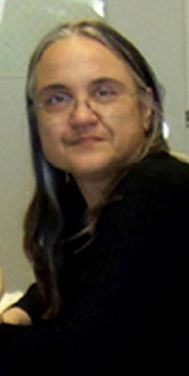
Listening and Looking, and a Little Reading by Nisi Shawl
Listening, sometimes while looking
Two words sum up the music that gave me pleasure in 2010: Michael Jackson. Investigating him in the course of writing a fantasy story, I discovered the genius I’d managed to ignore while he was alive. Want to hear what I heard? See what I saw? For these purposes, Google is your friend. My favorite music video is the live-in-Kansas City version of “Another Part of Me.” The one where Michael discovers mid-tune that his fly’s unzipped. He’s adorably embarrassed. But the performance of Billy Jean where he premieres his version of the moonwalk is so brilliant it lights me up like a string of electric stars. And the early J5 tapes are amazing feats of athletic prowess in which he and his brothers sing complex harmonies and counterpointed melodies while practically standing on their heads. It’s all good.
After watching as many music videos as I could search-engine up, I created an MJ Pandora station. I listen to it everyday. You know how Pandora works: doesn’t play only what you expect to hear but bases its song rotation on some obscure algorithms and occasionally goes wrong. In amongst the Motown I heard a strangely moving song by a two-woman vocal group called Floetry: “Butterflies.” It made me cry for no reason. Then Pandora played Michael Jackson’s cover and I understood....Listen. Listen to dat. Nothing more I can say on the subject.
Looking alone
I saw two films in 2010. My book discussion group, the Octavians, watched Moon, and it was excellent, creepy and fun. I watched This Is It five times. This Is It is a documentary about the prep for MJ’s 2009 fifty-concert gig, the one his death canceled. My thanks to David J. Williams, who told me to see it. You should, too. If you already have, watch it again.
And okay, reading
I’ve read some books this year. They had nothing to do with Michael Jackson.
The Octavians have already discussed ten titles including the aforementioned movie, and we’ll be covering one more in our upcoming December meeting. My favorite books were all rereads: Bruce Sterling’s Distraction, Philip K. Dick’s The Man in the High Castle, Graham Joyce’s The Limits of Enchantment, and Galatea 2.2 by Richard Powers. I was most pleasantly surprised by how well the Dick stood up (pun intended). Its racial and cultural politics were interestingly nuanced and way better than one would think they’d be, considering the book first appeared in 1962.
I read twelve books so I could review them for the Seattle Times, and a thirteenth to write a still-unpublished review for Ms. Magazine. I liked all of them. The Times asked me to pick one, only one, for their Best of the Year list, and I had no doubt which that should be: Horns, by Joe Hill. That book is funny, appalling, metaphysically challenging, fat with poetic juiciness, and burning with style. But there were plenty of other pretty strong contenders for best among the rest so I’m listing them below.
Last year I promised to write a steampunk novel set in the Belgian Congo. This year I’m doing it. The work is research-heavy and involves lots of highly pleasurable reading. My favorite sourcebook so far: African Reflections: Art from Northeastern Zaire, by Enid Schildkrout and Curtis A. Keim. As you’d guess from the subtitle, Reflections includes many pictures of exquisite ivory hair pins; throwing knives with multiple, complexly recurved edges; musical instruments whose tuning heads are modeled on fantastical beasts; hats constructed of snail shells and eagle feathers; and much more beauty than I could summarize here. But it also contains helpful photos of daily activities among the Mangbetu and Zande peoples during the late 19th Century. And the text is deep. Here are some sample chapter titles: “Music and Dance in Northeastern Zaire,” “Dealing with Destiny,” “Mangebetu Social Organization in the Early Colonial Period.” Most informative. Kath Wilham borrowed a copy of Reflections from the UW library so I could refer to it; I’m going to have to buy one for keeps.
My picks for 2010 (in no particular order)
Maybe I’m forgetting something, but this list includes all the stuff I can think of:
“Billie Jean” by Michael Jackson
“Heaven Can Wait” by Michael Jackson
“Blame It on the Boogie” by the Jackson 5
“Never Can Say Goodbye” by the Jackson 5
“Butterflies” by Michael Jackson
“Another Part of Me” by Michael Jackson
“Scream” by Michael Jackson
“Don’t Stop Till You Get Enough” by Michael Jackson
“This Is It” by Kenny Ortega
“Moon” by Duncan Jones Dreadnought by Cherie Priest Zero History by William Gibson Redemption in Indigo by Karen Lord Mammoths of the Great Plains by Eleanor Arnason The Loving Dead by Amelia Beamer Kraken by China Mieville Horns by Joe Hill Blackout/All Clear by Connie Willis The Very Best of F&SF edited by Gordon Van Gelder Sandman Slim by Richard Kadrey The Quiet War by Paul McAuley Akata Witch by Nnedi Okorafor (due out in March 2011) The Limits of Enchantment by Graham Joyce Distraction by Bruce Sterling The Man in the High Castle by Philip K. Dick Galatea 2.2 by Richard Powers African Reflections: Art from Northeastern Zaire by Schildkrout & Keim
Nisi Shawl writes not only reviews, but also wonderful fantasy and science fiction stories. Fourteen of them have been collected in Filter House, which won the Tiptree Award and was a finalist for the World Fantasy Award and was published by Aqueduct Press. She is also the co-author, with Cynthia Ward, of the acclaimed writing handbook, Writing the Other: A Practical Approach, another Aqueduct Press publication. Nisi is currently editing the next volume of The WisCon Chronicles, forthcoming from Aqueduct in Spring 2011, and she will be the Guest of Honor at WisCon in May.
Reading, Listening, and Viewing in 2010 by Athena Andreadis
Because I'm a film buff and a bookworm who reads at Mach 1 speed, about thirty years ago I instituted a cast-iron rule -- otherwise I'd need a city block of warehouses: I only keep books, CDs and DVDs I want to revisit, whose absence I mind. In all media, I enjoy works that cross genres and boundaries. So here are a few of my keepers for 2010.
Books
As I've grown older, I read less fiction -- in part because there are only so many stories and so many ways to tell them. These days, something has to snag at my interest like an assertive kitten. I like in-depth character- and world-building; layers and echoes (inevitable, given my natal culture); starkness or restrained opulence (think Rennie McIntosh art nouveau); first-person narrators; powerful women and snacho long-haired men. In non-fiction I head for context-rich biographies/histories and for explorations of new or hidden connections and patterns, regardless of discipline: from theories of quantum gravity to the red-haired Ürümchi mummies.
Black Ships, Jo Graham’s debut novel, is a well-researched historical fantasy that retells the Aeneid and owes equal debt to Mary Renault, Marion Zimmer Bradley and Jacqueline Carey. The story is told by Linnaea, a Trojan woman born in exile after the famous war who has the gift of prophecy -- Virgil’s shadowy Sibyl, here taking center stage. Efficiently plotted and boasting well-fleshed characters for whom we come to care, the novel is an engrossing quest story that contains few clunky passages and cringeworthy anachronisms.
Kristin Landon’s trilogy (The Hidden Worlds/The Cold Minds/The Dark Reaches) belongs to that maligned girl-cooties subgenre, romance space opera. The trilogy is not perfect, particularly the first book that contains the required taming of brooding hunk Iain sen Paolo (a hereditary star pilot from an all-male society jealous of its privilege) by plucky contract concubine Linnea Kiaho (who proves to be a crack pilot, a taboo occupation for women). Yet the premise – humanity precariously dispersed after intelligent AIs on earth turned hostile – is interesting and followed up well, the style is gritty and taut, the plot has imaginative flourishes and moves briskly, the characters get deeper and more complex. Warts forgotten, I found myself staying up to finish these stories, which is more than I can say for the vast majority of so-called hard SF.
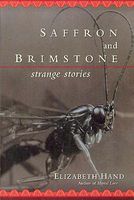
Elizabeth Hand’s eight-story collection Saffron and Brimstone is luminous… phosphorescent would be a better description. Sharp as a diamond-edged blade, it thrums with lush, menacing harmonics – a close kin to A. S. Byatt’s Angels and Insects and The Matisse Stories. For my taste, its two masterpieces are "Pavanne for a Prince of the Air" and "The Least Trumps." "Pavanne," a tale of a hippie shaman’s death amid an alternative-lifestyle group of friends, unfolds like a hallucinatory dream. "Trumps," equal parts Marguerite Yourcenar and Roger Zelazny, is one of the half-dozen works I cannot stop re-reading. The narrator is a tattoo artist who finds stories and tarot cards bleeding into the real world, restoring color to her barren, constricted life.
Jon Cohen’s Almost Chimpanzee: Searching for What Makes Us Human, is the usual historical retrospective / scientific reporting mix seen in popular science books. The topic is inherently fascinating; plus I didn’t find any glaring mistakes in his molecular biology, which put me in a particularly good mood. Cohen goes through the commonalities and differences between humans and their two closest cousins, bonobos and chimpanzees. Ranging from surface epitopes on immune cells to the FOXP2 gene (trumpeted to be linked to language, but actually related to brain function in a more complex way) to roles of older women in hunter-gatherer cultures, the book illustrates the interplay between initial conditions and feedback loops: in this case, how tiny differences in almost identical species got amplified across scales to produce us.
Further along the cognition axis, Guy Deutscher’s Through the Language Glass: Why the World Looks Different in Other Languages is essentially an extended meditation on the weak version of the Sapir-Whorf hypothesis. The strong version of the hypothesis – that languages constrain cognitive ability to think past their existing scaffolding – is obviously false. On the other hand, anyone who speaks more than one language, as I do, knows that linguistic relativity is true on at least one level. Although the Sapir-Whorf hypothesis fell out of favor during the ascendance of the Universalists (some of whom, like Chomsky, constructed entire theories of language while being monolingual), it has made a comeback aided by such non-invasive techniques as functional MRI. These methods have established linguistic relativity in several cognitive domains, and argue that we are a single species divided by language (to paraphrase George Bernard Shaw).
Music
Through the years, I have gathered much of my music by hearing a stray snatch that tugged at my solar plexus. I go to the nearest music store and sing the melody to them. The staff in my neighborhood Newbury Comics know me well by now.
Composer and cellist Zoë Keating, a spiritual child of Laurie Anderson, created a hypnotic album in Natoma. She uses her instrument as a cello, a lyre, a drum. The warm tones of the cello come across like a dark-hued human voice. The pieces bring to mind the more melodious works of Philip Glass — but equally so, the elegiac Celtic-tinged tunes in The Last of the Mohicans and the opening of Peter Gabriel’s Biko, with its interweaving of Zulu drums and Highland bagpipes.
Whereas Keating turns her instrument into a voice, Fleet Foxes in their eponymous album turn their voices into supple wind instruments. A fusion of Pearl Jam and Languedoc troubabours, these five young guys sing tense lyrics with the otherworldly harmonies of early Renaissance choirs. The standout is "Your Protector" – but the entire album goes by like a shimmery mirage.
Much older but equally compelling is Oysterband, whose most recent album Meet You There also pulled me under. The music is recognizably Celtic folk-rock but light years away from the usual syrupy stuff. This is superb, complex music graced with biting lyrics. Cross U2 with the Orkneys’ Three Piece Sweet (whom I heard rehearsing literally in front of a garage in Stornoway) and you get a sense of Oysterband. I could play three of the tracks forever: "Bury Me Standing," "The Boy’s Still Running," and "Dancing as Fast as I Can." Why they are not megastars is a mystery.
And then one night I had WGBH on for background noise, when it turned into more than noise. Austin City Limits had started, and on it was Aimee Mann with her men playing her latest album, @#%&*!Smilers. I stopped what I was doing, sat down, listened to the entire thing and bought the CD the next day. All the songs are minor key, with "Little Tornado" the jewel in this unadorned crown. Though the instrumentation is exquisite, it is there only as a light garment to Mann’s even voice with its nasal underdrone – as deceptively calm as a gathering tidal wave.
Film and Television
Those who read my blog know that I detest Star Wars and Avatar not only for their messianic fervor and status-quo enforcing message but also because they degrade their sources: they manage to make exciting myths boring, effectively turning gold into lead. As I explain in my Unibrow Theory of Art, I have nothing against popular movies; but obvious insults to intelligence, emotional manipulations and hooks for lunchboxes and tie-ins (aka commissioned fanfic) make me cranky.
I had read Marvyn Peake’s surrealistic Gormenghast trilogy a long time ago, and it had left a strong imprint on my memory -- including a line I recalled each time I started another love affair: "For lust is an arrogant and haughty beast and far from subtle." This year I finally saw the 2000 BBC series, which adapted the first two books (a wise choice, since there’s a tectonic shift after book 2). It’s absorbing, faithful to the books and burnished by stellar performances from famous British actors. The decision to give it the hue of Beijing’s Forbidden City was artistically intelligent: the isolation of the characters and the suffocating atmosphere of ritual and protocol are palpable.
On this side of the pond, the mystery/romance hybrid Castle is an updated, brainier version of Moonlighting -- but Nathan Fillion is vastly more talented and less annoying than Bruce Willis. Too, there are three strong, intelligent women in the series and the main one, Detective Kate Beckett (Stana Katic), is in a position of intrinsic power and in the center of a loyal chosen family. The series is decidedly lightweight but also lighthearted and witty, and it has steadily improved, recently moving into SF territory. A recent episode that spoofed the X-Files (and gave a tiny nod to the Firefly ‘verse) was inspired. In a TV landscape strewn with Law and Order boulders and grotty reality shows, it's a tiny oasis.
Moving to the other side of the law divide, I found myself unexpectedly captivated by In Bruges, a nimble dark comedy in which Waiting for Godot meets Miller’s Crossing. Perhaps because I have been to Bruges, and the film captured its drowned-Ys becalmed beauty. Perhaps because I like Ralph Fiennes in everything (except as Moldyvort… er, Voldemort), I like Colin Farrell when he almost reluctantly exhibits his considerable talent (A Home at the End of the World, The New World)… and I was astonished at a nuanced, restrained Brendan Gleeson. Or, finally, perhaps because I have a terminal soft spot for outlaws with codes of honor who like high art.
Coming back full circle to the question of high art, an example that perfectly meets my definition is the Oscar-nominated The Secret of Kells. It uses traditional 2-D techniques and is completely accessible. Yet it engages and stimulates many levels of thought and emotion at once. The story teaches real history, since it’s based closely on what we know about the journey of the Kells manuscript from Iona; the conflict is not the usual tussle between monochromatic good and bad guys, but instead highlights the struggle between two versions of good (like Miyazaki’s Mononoke Hime – or Sophocles’ Antigone); the interactions explore the interplay between Paganism and Christianity, myth and history, imagination and discipline, nature and culture; the style incorporates both Celtic curvilinear forms (in the style of the Book of Kells as well as its Jugendstil descendants) and the jagged shapes used in such graphic novels as The Crow or Sin City.
Put together, the film becomes Gesamtkunstwerk at the level of Wagner’s Nibelungen cycle or Jackson’s Lord of the Rings trilogy: a total, totally absorbing work of art that delights and also exercises the senses, the cortical emotions, the intellect – and achieves this feat without loudly advertising its intent or, for that matter, its artsiness. Unlike the incessant trumpetings about the groundbreaking technique or “socially relevant” content of such Hindenburg-sized films as Avatar, The Secret of Kells came and left quietly. Then again, art of this caliber doesn’t need to shriek for recognition. Its quiet but sure voice is potent enough.
Athena Andreadis was born in Greece and lured to the US at age 18 by a full scholarship to Harvard, then MIT. She does basic research in molecular neurobiology – regulation of alternative splicing, focusing on mental retardation and dementia. She is an avid reader in four languages across genres, the author of To Seek Out New Life: The Biology of Star Trek and writes speculative fiction and non-fiction on a wide swath of topics. Her work can be found in Harvard Review, Strange Horizons, Crossed Genres, Stone Telling, Science in My Fiction, H+ Magazine, io9, The Huffington Post, and her own site, Starship Reckless.
What I've Been Reading and Not Reading by Rebecca Ore
My Spanish language books stacked on the other side of my Nicaraguan-made table remind me that I need to learn better Spanish. I've got a La Metamorfosis by Franz Kafka, Narraciones ejemplares de Hispanoamerica, and two books by Federico Garcia-Lorca, and Popol Vuh. The local liberias (basically stationery stores with some books) have the Ruben Dario autobiography plus a range of other books, including European Spanish classics, and a tienda that sells everything has, among other books, translated Joyce Carol Oates.
The only English language books I brought with me were a North American bird guide, two guide books to Nicaragua (I recommend the Moon over the Lonely Planet as chunks of what the LP book says about Jinotega is wrong, not that 2/3rd of the discos mentioned in the Moon aren't closed, too), and Samuel R. Delany's About Writing. I brought the 2009 Dr. Who Christmas Special in two parts, which made a nice gift to the computer kids who run the repair and sales shop on the way to the hotel with the WiFi hotspot I use. They let me take a blank DVD with a promise that I'd pay later (gringos either have a reputation for being honest or we're just really conspicuous, or both).
A Welsh couple (their dog introduced us) has been loaning me books from their library and in thinking about this essay, I realized that while I remembered a title, On Chesil Beach, I'd forgotten the name of the writer, Ian something, which reminded me of something most writers forget, that the relationship is between the book and the reader, not between the reader and the writer. After John Ashbery left a New York party, someone sat in his seat and then characterized him as a mushroom who produced the greatest contemporary American poetry.
As a baby writer, I cared about writers and the gossip about writers; as a reader, I read and enjoyed a lot of Ballard short stories without connecting them to the name associated with the various experimental novels that I hadn't been so taken with as a 21-year-old reader who also read William Burroughs and Michael Brownstein.
Chip's book now has a whole lot of annotations, underlinings, and comments about how William Burroughs and Frank O'Hara were more perceptive about say, popular media, than most academics, plus lots of places where I agree with him.
Meanwhile, I've been reading P.D. James enough to get the pattern there. One murder brings our detective to the scene and another murder makes him bear down harder to solve the case, which was done by the person who had sufficient ink but not the majority of the ink as we meet the other people at the crime scene. James writes better than most mystery writers and I steal some of the perceptions.
George Eliot's Daniel Deronda gave me a taste for more George Eliot though I had some objections to the sentimentalization of Israel as a goal for all Jews. Nicaragua has been described by racist Costa Ricans as a “volatile mix of whites, blacks, indigines, Arabs, and Jews” which strikes me as missing the Chinese immigrants (Chinese whose ancestors migrated in the 19th Century run a store that we all call the Chinese store) but otherwise being a rather wonderful mix of groups and people. The Arabs are Palestinians traveling on Turkish passports; the Jews are either Sephardic from early settlement or Russian Jews who decided to go neither to Israel nor the US. Eliot improved on her own earlier biases, but one does get an impression that Jews for her are still an exotic people who would be happier if they had a homeland of their own, over there. Hybrid vigor interests this Manhattanized Southern townie now living in Nicaragua far more.
Richard Russo's Bridge of Sighs had some other sentimentality that's more contemporary, about the relative happiness of being the small town boy vs. the anxieties of ambition and achievement in exotic foreign locations. Artist stands in for writer, and not all that convincingly. A culture where the artist is the hero rather than his canvases is broken.
Somewhat ironic considering that I'm in Jinotega, Nicaragua.
I've also read Zora Neale Hurston's Their Eyes were Watching God, and Charlotte Bronte's Villette. Hurston's split of narrative voice as neutral educated American and dialogue in black creole is interesting. I'd taught Hurston's essay on how racism was the racist's problem, not hers, as racists were simply depriving themselves of her wonderful company, and felt that she was right in some ways yet she still spent the last decade of her life poorer than I hope any writer with that track record and those books would be today, and that was what racism did. Hurston shows dialect speakers as fully-complex people, and blacks as various, from competent but uptight businessmen to anything else. Unlike Eliot, she speaks from within the culture as well as from her education that gave her a perspective on the culture.
Bronte's Villette is more distanced than Jane Eyre, and lacks that book's sadistic end game of having the blind male at the female's mercy. Her various heroines know the latest in scientific discoveries of the day (one mentions mammoths) and all are working to have as much control of their own lives as they can under the constraints of the day. A book I'll probably borrow again. Interesting structure of disappearing and reappearing characters.
At least one local lawyers reads John Grishom. I'm not quite sure what this means.
I also read street and business signs. Having a medical education in Cuba is something people put on their office signs. I muddled some of the way through a local Nicaraguan Communist Party flyer – the NCP disapproves of Ortega, too.
The simplicities we see from the US, whether we're right-wing or left-, disappear at closer range. Still interesting here after four months, and I've got a range of things to read once I learn Spanish better, from El Gueguense, a trilingual satire about the Spanish written by an anonymous indigenous writer in the 1600 (the indigenous people here were often urban traders, and often still are and 70% of the population is mestizo) to Carlos Fonseca's works.
Poets sell their pamphlets door to door; book vendors come into cafeterias selling short novellas as single volumes (my Spanish-language Kafka came from such a dealer). I'm learning to read Jinotega, a departmental capital of about 50,000 in a narrow valley at 1,000 meters surrounded by rocky hills grazed by cattle with excellent balance.
Rebecca Ore's fiction burst upon the world in 1988 with the publication of her celebrated Becoming Alien trilogy, the first two novels of which were nominated for the Philip K. Dick Award. Since then she’s published a great deal of short fiction and numerous novels, including Gaia’s Toys, Time’s Child, Outlaw School, Slow Funeral, the short fiction collection, Alien Bootlegger, and from Aqueduct Press, Alien Bootlegger and Centuries Ago and Very Fast, a collection of linked short stories that was a finalist for both the Philip K. Dick and the Lambda Awards.
The Pleasures of Reading, Viewing, and Listening in 2010 by Tansy Rayner Roberts
Television: It’s hard to go past New New Doctor Who as the Everything Highlight of the year, not just TV. I had high hopes for Stephen Moffat’s new take on the show, and had faith that the funny looking lead actor and that skinny redhead in the sexy police uniform would turn out to be far better than everyone else seemed to be dreading - but even with my high hopes I was blown away by how good Season 5 was, how swiftly Matt Smith’s Doctor became iconic, and how beautifully all the pieces of the story slotted into place. I’d have been there for the ride no matter what, but this version of my favourite TV show of all time made me a fan all over again.
Cinema: Harry Potter and the Deathly Hallows (part one) has completely re-energised my interest in the Harry Potter franchise, which took some doing. It’s not the best or most coherent movie in the world, and I’m not sure whether it will make sense to anyone who hasn’t read the books, but I was joyfully surprised, and particularly enjoyed the brief but memorable performances of many favourite minor characters (okay, mostly the Malfoys).
Podcasts: I listen to podcasts more than I consume any other media these days! My favourites this year have been those which match my favourite obsessions: the classic Radio Free Skaro and feisty, funny newcomer The Ood Cast to cover Doctor Who; the classic Arsecast and feisty, funny newcomer Up For Grabs (featuring Alan Davies) to cover the highs and lows of my beloved Arsenal football club; Boxcutters (which manages to be classic AND feisty AND funny) for the Australian take on current TV; Bad Film Diaries to cover cinema news, and Notes From Coode Street Live with Gary K Wolfe for industry gossip and analysis. No, I can’t just pick one. They were all fantastic this year.
Music: The Indelicates’ Songs for Swinging Lovers has been my album of the year, a soundtrack to my novel-in-progress. I love the grim sense of humour and bleak romanticism in their lyrics as well as the scraping, haunting instrumentals - “Roses” and “Savages” are my favourites. On a completely different note, I want to put in an honorary mention for Laura Simpson’s free (on iTunes) The Ood Cast Album, full of the brilliantly funny filk songs that she does for the podcast, one to match each episode of the new season of Doctor Who. “Amelia Waits” to the tune of the old Dawson’s Creek theme tune, and “Wipe Your Lips, Mate,” a homage to The Streets and River Song’s hallucinogenic lipstick, are particularly awesome.
Live Event: I went to my first Hugo ceremony at Aussiecon4 this year, but that really couldn’t compare to the experience earlier in the day when I got to sit in on a live recording of the Boxcutters podcast, featuring guests Paul Cornell and Robert Shearman as well as regular presenters Josh Kinal and John Richards. Comedy gold!
Reading Short Fiction: Rachel Swirsky’s fantastic feminist fantasy novella "The Lady Who Plucked Red Flowers beneath the Queen's Window," from Subterranean Magazine was my story of the year, closely followed by “Seven Sexy Cowboy Robots,” by Sandra McDonald at Strange Horizons, and “Yowie” by Thoraiya Dyer in the Australian suburban fantasy anthology Sprawl (Twelfth Planet Press). I also loved the black humour of the YA anthology Zombies v. Unicorns.
Reading YA: It was a particularly fabulous year for YA novels - Holly Black began a crunchy new series featuring mobsters and magic with The White Cat, Sarah Rees Brennan outdid last year’s excellent debut with her snarky and clever The Demon’s Covenant, John Green & David Levithan teamed up to produce an extraordinary novel for young men with Will Grayson, Will Grayson, and New Zealand author Karen Healey had a powerful debut with the dark and mystical Guardian of the Dead.
Favourite Non-Fiction: I’m back to Doctor Who again with the excellent essay collection Chicks Dig Time Lords, as well as the revamped and extended The Writer’s Tale: The Final Chapter, by Russell T Davies and Benjamin Cook. As regards to the latter, I do really hate paying again for the same book, even though I told myself I was only paying for all the new text rather than the old, but it was completely worth it. I also really enjoyed The Secret Feminist Cabal, by Helen Merrick, and The WisCon Chronicles IV, edited by Sylvia Kelso, and finally managed to inhale the mind-blowing How to Suppress Women's Writing, by Joanna Russ.
Novel of the Year: while I especially enjoyed Alaya Dawn Johnson’s 1920’s urban fantasy Moonshine, the dark humour of Trent Jamieson’s Death Most Definite, Mira Grant’s emotionally wrenching SF political thriller (with zombies) Feed, and Mary Robinette Kowal’s Jane-Austen-with-magic Shades of Milk and Honey, the best novel of 2010 for me has to be the stark and deeply affecting African post-apocalyptic magical epic Who Fears Death, by Nnedi Okorafor, a book which changed the way I look at the world.
Tansy Rayner Roberts is a Tasmanian fantasy writer, author of Siren Beat and Power and Majesty: Creature Court Book One. She blogs at tansyrr.com, reviews short stories with the Not If You Were The Last Short Story On Earth crew, and is one of the voices of the Galactic Suburbia podcast. You can find Tansy on Twitter at @tansyrr.
I wandered into a discussion of Philip Roth on facebook and mentioned that I had not read him and did not intend to read him. Then, more or less as a joke, I said I was so embarrassed that I was going to crawl into a cave and gnaw on Icelandic sagas. One of the people in the discussion said that I deserved to live in a cave if I hadn’t read Roth, especially one novel, American Pastoral.
This lead me to think about the books I had not read and did not intend to read. The list includes many classics.
I then thought of books I hadn’t read and might actually want to read. This led me to pull Under the Glacier off my bookshelf. It’s by Halldor Kiljan Laxness, considered to be Iceland’s greatest modern writer. I bought the book on my last visit to Iceland and never got around to reading it. So yesterday I finally did.
It may be the weirdest book I have ever read. The narrator is a young man who is sent by the Bishop of Iceland to investigate rumors of irregular events in a parish below Snaefellsjokull, a volcano capped by a small glacier. The volcano is an actual place, now a national park. According to a travel blurb I found online, “Snaefellsjokull is considered to be one of the most beautiful mountains in the country. It is believed that Snaesfelljokull is one of the seven main energy centers on Earth. Poets, writers and artists have often come to the glacier in search of inspirational energy… Snaesfelljokull is also the setting for the famous work by Jules Verne, Journey to the Center of the Earth."
What are the rumors the bishop wants investigated? The minister’s wife left him 35 years ago and he has never divorced her; he no longer performs his duties as a minister; the church is not maintained; a house has been built next to it, on church property without church permission; and there is a strange story about a casket that was put in the glacier three years previously, rather than decently buried.
So the young man travels to this remote parish, at the end of a long peninsula. When he asks questions, the locals are evasive, change the subject, tell apparently irrelevant stories, make remarks that sound crazy or at least very odd. The minister, when he finally shows up, spends all his time as the region’s handy man. He can fix anything and shoe horses, and he has apparently lost all interest in religion.
An old friend of the minister’s, an inventor who left Iceland and made a fortune elsewhere, arrives. The house built next to the church -- without permission --is his. He is there (he says) to perform a resurrection. He brings with him three utterly weird people, who are followers of the inventor’s made-up, New Age religion.
The inventor apparently ran off with the minister’s wife 35 years ago. The wife is now dead, maybe. According to the inventor, she sent him a postcard three years previously saying she was dead.
While the minister has lost interest in religion, the inventor has created his own religion/philosophy, which sounds like utter bullshit. There is a lot of talk about cosmo-biology and the aliens on other stars who are going to help us.
The inventor dies of a heart attack. His funeral takes place in the church, which is cleaned up for the occasion, and he is buried in the run-down churchyard. The three New Age weirdoes then proceed with their ‘resurrection,’ helped by two locals. They go up to the glacier and retrieve the casket and bring it to the church. When it is opened, it is found to contain a very large salmon encased in a block of ice.
At that point, apparently out of nowhere, the minister’s long-vanished wife appears. She is a handsome middle-aged woman, who has inherited everything from the inventor and takes charge firmly, moving into house by the church and telling their three weirdoes they can leave for Reykjavik now. An impressive person.
The reader may remember that the minster previously said -- more or less in passing -- that the inventor had turned his (the minister’s) wife into a fish. The young man does not remember.
He interviews the woman and gets the story of her life with the inventor, which has been exotic and rather strange and hard to follow. A lot about the inventor and the woman does not add up.
The young man then goes to the minister's work shed and says, “Your wife is back.”
“What do you mean?” the minister replies. “My wife has always been with me. She never left.”
The ice around the salmon melts, and it is eaten by birds.
The young man and the woman -- whose name is Ua -- feel a mutual attraction. The woman offers to drive him to Reykjavik. The day is foggy, the landscape – and the glacier -- invisible. The woman turns off the road onto a sandy track, saying that she is going to her family farm. The car, a big Chrysler Imperial, gets stuck, and they end walking over soggy ground through the rain, finally reaching an old-fashioned, run-down farmhouse. The woman goes in to speak to her parents first. The young man waits outside till he is thoroughly wet and cold. Then he begins shouting. There is no response. The house appears to be empty. When he finally shouts the woman’s name -- Ua -- he hears a shrill, eerie laugh. He panics and runs away.
That’s the end of the novel. I think it’s a ghost story. Ua is apparently both a salmon and a ghost. But I’m not sure what else the novel is about. The Icelandic title translates as "Christianity Under the Glacier," and there is a lot of discussion about religion in the book, which I read quickly, because it didn’t interest me nearly as much as the characters and the folklore.
Why have I gone into so much detail? Because it’s a really hard book to synopsize.
I think what appeals most to me is the sense of strangeness and of being at the edge of a magic world.
One of the characters talks about being on the glacier and seeing a beautiful ram with straight horns. She knows there is no such animal in the area. It is an elf ram.
I love the ghost story, which is told obliquely, in bits and pieces through the novel: the inventor, who is also a very good angler, turns Ua into a fish, then catches her and freezes her and puts her in the glacier, then -- three years later -- plans to bring her back to life. I’m rather glad he died. What a thing to do your longtime companion!
But Ua does not seem like a victim. Rather, she seems to be a strong and possibly dangerous person, who may not be entirely human.
I think I was ruined by reading fairy tales as a kid. Almost all the fiction I like has an element of the unreal; and most of the classics I don’t intend to read are realistic.
As I wrote in my blog: “I want the exotic, the fantastic or the political when I read. Best of all is all three.”
There is some sniping at the Icelandic government in Under the Glacier, but it isn’t a political novel. Laxness’s Communist period was earlier, when his greatest novel -- Independent People -- was written. But there is certainly fantasy here, or maybe a portrait of a world where the fantastic is natural. There is nothing fantastic about the gritty lives of these rural Icelanders who find nothing unnatural about ghosts and elf sheep, but are still having trouble coming to terms with electricity.
Would I recommend it? Maybe, if you like ghosts and sheep.
Eleanor Arnason has written several novels and many short stories. Her fourth novel, A Woman of the Iron People (2001), won the James Tiptree Jr. award for gender-bending science fiction and the Mythopoeic Society Award for adult fantasy. Her fifth novel, Ring of Swords (1995), won a Minnesota Book Award.
Aqueduct Press published her Lydia Duluth adventure, Tomb of the Fathers, earlier this year, and her collection, Ordinary People, in 2005.
My Best of the Year: Books, TV, Movies By Lisa Tuttle
As a reviewer, I find most of my reading time is devoted to the latest SF and fantasy titles, with a little bit of supernatural horror thrown in. My impression is that this was a good year for those genres, although whether I’ll still rate them, or they will be considered significant, ten years from now I wouldn’t like to say. Among those I recall as especially enjoyable are a couple of first novels – The Quantum Thief by Hannu Rajaniemi and The Leaping by Tom Fletcher -- and one block-buster best-seller, The Passage by Justin Cronin.
But the novels that really stand out as the most moving and gripping reading experiences of the year for me – books I do not hesitate to call great -- are Room by Emma Donoghue and The Lacuna by Barbara Kingsolver.
Room is one that, initially, I didn’t want to read at all, knowing that it had been inspired by one (or more) of those horrible true stories involving a man keeping a young woman imprisoned in his cellar for many years. But the praise and award-nominations made me take a look, and once I’d read a few pages I was hooked by the voice. The story is told by the woman’s little boy, and it’s all about his perceptions and experiences, growing up in one small room that, to him, is all the world. It’s about the child and his mother, not about the sexual deviant who is their jailer, it’s about love and integrity and growing up, and it is absolutely brilliant.
The Lacuna was the book I most looked forward to, after hearing the author talking about it in a radio interview, even though I still haven’t read her earlier book, The Poisonwood Bible (but I will now!) and it more than lived up to my highest expectations. Intelligent, believable, politically astute, absorbing...what can I say? Just go read it.
My absolute favourite thing on TV this year, as the year before, was MAD MEN. It’s so burnished and beautiful to look at, the actors are wonderful, and the minimalist style of story-telling unlike anything I’ve ever seen made for television, and hypnotic in its power. I just adore watching it. Yes, it’s a downer – all the characters seem set on a disastrous course, fixated on the wrong things, destroying each others’ lives as well as their own, the storylines are depressing, and then there’s all that casual sexism, racism and cigarette-smoking...oh, maybe you are bad for me, MAD MEN, but for the first time in my life I think I will have to buy the complete series on DVD, because I don’t know how I will go on without your company one night a week.
We don’t see many new movies – living out in the sticks -- and I don’t generally much care for even the few that we do see, especially not those big-budget Hollywood monsters. But we will watch (again) anything by Hitchcock that turns up on the small screen, and seeing VERTIGO this year was a real eye-opener. I think it was my third viewing – over the course of as many decades. I had remembered it as being somewhat ludicrous, and in terms of the plot, maybe it is, but psychologically? Wow. What an amazing psycho-drama. Maybe I needed those two earlier viewings to prepare me – I saw it in a very different way this time, and it gave me so much to think about. Definitely my most compelling movie experience of the year.
Lisa Tuttle is the author of numerous novels and short story collections. She has also published nonfiction and more than a dozen books for younger readers. Aqueduct Press published her novella, My Death, in 2008. Born and raised in Houston, Texas, she has made her home in a remote rural region of Scotland for the last twenty years.
Thoughts about American Gods by Carolyn Ives Gilman
The most interesting books to write about aren’t the ones you admire the most; they are the ones you want to argue with. When Timmi asked me to write about the best books I’d read in 2010, I thought about recommending that everyone read David Mitchell’s The Thousand Autumns of Jacob de Zoet, a book I admired fawningly. But hearing me gush about the way Mitchell’s descriptions replicate the random way we actually perceive the world, and other such connoisseurship, would be tedious. So I want to talk about a book that made me say, hey, wait a minute: Neil Gaiman’s American Gods.
American Gods is not a new book; it’s been sitting on my to-read pile for years. I took it with me to the hospital when I was incarcerated for pneumonia, and it kept my attention through days and nights of IVs and X rays. This is high praise. Not many books could do this.
Despite my long delay, I really anticipated reading this book, because I’m quite interested in American gods. To me, this seems like one of the most god-ridden, god-bedeviled countries on earth. Here is a country that could invent Mormonism and Scientology; a country that once was practically papered over with the Utopian communities of Zoarites, Harmonists, Hutterites, and Swedenborgians; a country that has been hospitable to imports like Theosophy and Transcendental Meditation. Surely it has an aptitude for this god thing.
Imagine my surprise, then, to find that American Gods was not about American gods at all; it was about gods from everywhere but America. In fact, Gaiman advances the remarkable argument that America is hostile to gods, that they can’t survive on American soil. The premise of the book is that immigrants from all over the world brought gods with them to North America, but they have not thriven here, and now are forced to eke out an existence as grifters and deadbeats, taxi drivers and small-town businessmen. It makes for a pretty interesting story, although it requires you to swallow the idea that practicing believers in Odin and Anubis somehow made it through Ellis Island.
The idea of America being hostile to gods seemed preposterous to me until it struck me that if all you knew about America came from its writers of fantastic literature, you would surely have to draw the same conclusion. American fantasy is remarkably Eurocentric, and where it is not, it turns to Japan or Africa or India for mythology, almost never to America. If you believe our fantasists, American cities are populated with imported Romanian vampires, Russian werewolves, Celtic faeries, and Germanic witches, but nary a homegrown magical being. True, there are some fantasies based on a European environmentalist notion of what Native Americans might have believed, scrubbed clean of all the actual gods and mythology. But as a rule, we plagiarize northern Europe when it comes to the supernatural.
Why is it so easy for us to imagine an Old World teeming with supernatural beings, and so difficult to imagine a North America enchanted with indigenous gods? Why can’t we believe we live in a naturally magical place? I can’t answer that, but I have some ideas.
Gods tend to spring from the land. When you go back to the original myths, the events are usually tied to a geographic spot—not just “the forest,” but a specific glade in a particular forest. People with an intimate knowledge of their local landscape know the spots where other-than-normal events tend to happen, where the boundaries between here and there are thin, and oddness leaks through. North America is just as peppered with these places as anywhere else on earth. What it lacks are people with the intimate, generations-long knowledge of place that reveals the location of enchanted spots. We are too mobile for such sensitivity. It takes quiet, slowness, and listening, for which we are in too much of a hurry. But this may be changing. We could, of course, make it change.
Gods also tend to spring from the past, and we persist in seeing North America as a place without a past. It is somehow necessary to the American character to believe that history started here with the arrival of Europeans, and as a result we are in a state of willful denial about deep time on this continent. For example, in St. Louis I live in a place that was the site of a city bigger than London or Paris in 1200 A.D. Half an hour’s drive from my home there is a flat-topped pyramid larger in volume than the great pyramid of Cheops. From the crest of this towering, geometric structure you can see a panoramic view of the valley that was once the urban center of North America. A recent archaeological theory holds that the valley was laid out much like the Nile Valley at Thebes. On the east side was a complex of temples dedicated to gods of the sun and sky; on the west side was a cluster of pyramids that marked the entry into the underworld—a maze of limestone caverns that now lie under a rusty wasteland of abandoned railroads and factories. The city on the east side is a UNESCO World Heritage Site, but Americans trivialize it by calling the pyramids “Indian mounds” as if they were primitive heaps of dirt.
Another example: when the Roman empire was in its heyday in Europe, the Scioto Valley in Ohio was one of the holiest places on earth. Here, inhabitants created hundreds of enigmatic landscape artworks of massive berms and ditches in geometric shapes—perfect circles, octagons, precisely measured squares, ellipses, and linear causeways that linked sites 50 or 100 miles apart. Archaeologists now think that these people had a grasp of geometric theory we never suspected—for example, some of the square-circle combinations (which look like Euclidian diagrams in aerial view) may be linked to the classic problem of “squaring the circle” that also fascinated Greek mathematicians. Others are astronomically aligned—not to the sun, which would have been obvious, but to the moon cycles, which requires precise observations over at least an 18-year period. And yet Americans think they have to go to Europe to tour neolithic observatories.
I mentioned how modern books trivialize Native American religion by denying that it involved mythology or gods. Gaiman explicitly states this in American Gods, but can hardly be blamed for it, since to find information on Indian gods one must resort to such sources as the forbidding green volumes of the Bureau of American Ethnology (which, contrary to popular belief, are mostly written by Indians themselves, too often uncredited). Here one finds grand mythic cycles such as the one underlying the Mandan Okipa ceremony, which re-enacted the creation and early history of the world. The Mandan knew gods aplenty—Charred Body, Old Woman Who Never Dies, Long Arm, and demons like Shoulder Mouth, Tail with a Knife, and Flame around the Ankle. Among the most compelling gods are the cosmic twins Mahash and Atutish. They represent principles of wild chaos and civilized order. Through a set of linked stories they collaborate to rid the world of primordial dangers. The climax comes when Mahash is crucified for three days on a forked tree, then is resurrected by the daring intercession of his brother, demonstrating the necessity of both principles.
With material like this at hand, why do American writers feel they have to import supernatural beings and ancient civilizations from Europe?
Of course, the granddaddy of American gods is the Christian one, who has absorbed entire pantheons. I was puzzled by Gaiman’s exclusion of Christianity, as if it had nothing to do with the question of American gods. (Actually, till the end of the book I kept expecting Jehovah to show up and smack down all of Gaiman’s has-been pagan gods with his pinky. It never happened.) Now, I can understand writers’ hesitation to take on living gods who walk around today interceding in peoples’ lives and messing with our politics. But you cannot argue that the Christian god lacks enchantment. And authors do not earn points by only taking on the easy questions.
I wish I could challenge American authors of fantastic literature to do some hard work seeking inspiration in the American landscape and the American past, instead of looking in the pages of already-written books and already-used myths. This is a magical and mysterious country full of pristine material. For gods’ sake, we should use it.
Carolyn Ives Gilman lives a double life. In her writing life, she has published dozens of stories and the very fine novel Halfway Human. In her professional life, she is a historian specializing in 18th and early 19th-century North American history, particularly frontier and Native history. Her most recent nonfiction book, Lewis and Clark: Across the Divide, was published in 2003 by Smithsonian Books. She has been a guest lecturer at the Library of Congress, Harvard University, and Monticello, and has been interviewed on All Things Considered (NPR), Talk of the Nation (NPR), History Detectives (PBS), and the History Channel. As for her "day job," Carolyn works for the Missouri Historical Society as a historian and museum curator.
Novels. I’ve read an awful lot of good books this year, and more than usual were new. The three from 2010 that top my list are A.S.Byatt’s The Children’s Book, Barbara Kingsolver’s The Lacuna, and Jose Saramago’s The Elephant’s Journey.
They have nothing in common that I can think of except that they were all written by very good writers at the top of their powers.
I think the Byatt a much more thoughtful and interesting historical novel or period piece than Possession (which seemed to me quite artificial, particularly the rather crude pastiches of Victorian writing). This is a genuinely big novel, brilliantly organised, and, a couple of predictable situations excepted, it rings very true emotionally, it is a powerful book.
The Kingsolver, also historical, is gorgeous in detail and construction -- a beautiful book, quite unpredictable, and untouched by the over-earnestness that has derailed some of her novels.
As for old Saramago, what can I say? I feel privileged to have lived while he was alive. The Elephant’s Journey is short, dry/sweet, subtle, and a joy in every way. A glass of very, very good champagne.
Poetry. When I was in college in Massachusetts, Robert Frost was treated like God. This turned me off him for decades. I finally outgrew the ancient, silly rebellion. We are reading the entire Collected Poems aloud, evening by evening. Amazing, amazing! God he isn’t, but good he is.
Films. In the Valley of Elah. A couple of years old now, the movie said what needs saying about our war(s). And therefore lasted about five minutes in the theaters. Terrific acting. A heartbreaker.
Recordings. OK, a little esoterica? My pet CD this year is called Zarambeques (‘Musique d’Abord’ from Harmonia Mundi) -- Spanish guitar (mostly) music, from the 17th and 18th centuries. If you are a nut like me about guitar, Spanish, Baroque, go hunting for this one -- the music and the musicians are totally satisfying. And if you aren’t, then you don’t have to worry about trying to locate it. But Harmonia Mundi isn’t actually all that hard to find.
Krazy Kat. Fantagraphics, in Seattle, blessed be their name, continues to publish their series of George Herriman’s Krazy Kats from the over twenty years they ran in Sunday and daily papers. A marvillis finhominy! I’m all aflutta and gooze pimpil.
And a happy Hogmanay to all!
Ursula K. Le Guin has written many books and won many awards and at 81 makes awesomeness look wonderfully easy. Aqueduct Press published her collection of essays, Cheek by Jowl, in 2009 and 80! Memories and Reflections on Ursula K. Le Guin, a collection honoring her 80th birthday, edited by Karen Joy Fowler and Debbie Notkin, just two months ago. She blogs at Book View Cafe.
I've been slowly working my enjoyable way through Kim Stanley Robinson's Galileo's Dream. I'm about two-thirds of the way through (it's a big book!) so I can't review it yet or offer any substantive comments other than that Robinson has drawn an amazingly vivid, plausible character who is very much of his time in the way most historical figures in fiction tend not to be. (For an excellent review, check out Nic Clarke's here.) An interesting aspect of reading the novel at such a leisurely pace is that I'm finding that details from the book linger in my thoughts, long after the scene in which they occurred, and because of that leisurely pace, I've granted myself ample time to think about them. One of these details in particular is affording me immense satisfaction. I'm not sure why, but I suspect it's because I am so often vexed and irritated by novels embedded in history. Of course Galileo, in this novel, is set in at least one alternate timestream to our own (at least so far as his own personal biography is concerned). The passage in which the detail is set depicts Galileo talking with Hera, a woman he is visiting via "entangler," living in the 31st century. Hera has just mentioned that a century before, people in her culture were in favor of spending enormous amounts of energy ("the complete sacrifice of the two outermost gas giants") placing entanglers in various times and places in the past. She remarks,
"It has all since been reconsidered. By no means everyone agrees it was a good idea."
"I should think not," Galileo said. "Why did they do it at all?"
"Some wanted to retroject science analeptically into a time earlier than it had naturally appeared, in the hope of making human history a bit less dire."
"Why bother, now that you are here?"
"The intervening years were more dire than you know. And we are not just here; we are there too. You are not really comprehending what I have told you.We are all connected and alive in the manifold of manifolds."
Galileo shrugged. "Things still seem to happen one after the next."
She shook her head. "In any case, what you see here is a damaged and traumatized humanity. It was felt for a while that work on the past could make that better. A kind of redemption."
"I see, I think."
And then Galileo, bored, changes the subject.
There are two sets of thoughts that come together for me when reading this passage. The first set of thought is about how an educated person living in early 17th-century northern Italy conceptualizes the past. For such a person, their image of the past is likely to be the one conceptualized by the humanists in the previous three centuries: that the peak age of man lay in the past-- in classical Greek and Roman cultures. (Vico, one of the earliest intellectuals to think about history as History, was born in 1668, a couple of generations' Galileo's junior.) The whole idea of the "Renaissance," after all, is tied up with the idea of leaping over centuries of the past, to try to recover (and maybe even "progress" from) what has been lost. It's rather sad, actually, to think that they had so little sense of more recent history and thinkers (say, those in the eleventh and twelfth centuries) that they did some reinventing of the wheel (again!). Robinson correctly depicts Galileo as feeling irked by the authority of Aristotle (Aristotelian and Aristotelian-derived texts hung in there pretty tenaciously throughout the middle ages, not least because Arab scholars passed them along)-- but at the same time viewing Archimedes as one of his few equals (in all of history). But not many thinkers of Galileo's time thought of history as a flow of events that could be studied for itself (rather than a chronicle of the past that can be ransacked to prove one genealogy or another, whether of political entities (cities or states), theology and ecclesiology, families, possession of property, ideas, etc).
Since Natalie Zemon Davis's History's Two Bodies is still somewhat fresh in my mind, I couldn't help but thinking of the image she considers about "giving to History" and then dismisses as "too unchanging, too sober." :
For a time, I considered adopting the Angelus Novus, the new angel of Paul Klee's watercolor, which Walter Benjamin acquired in 1921 and kept with him until he fled from Paris in 1940. You will recall that Benjamin, in one of his last aphorisms, made this the angel of history: "His eyes are staring, his mouth is open, his wings are spread.... His face is turned toward the past. Where we perceive a chain of events, he sees one single catastrophe which keeps piling wreckage upon wreckage and hurls it in front of his feet. The angel would like to stay, awaken the dead, and make whole what has been smashed. But a storm is blowing from Paradise...[It] irresistibly propels him into the future to which his back is tuned, while the pile of debris before him grows skyward. This storm is what we call progress.
Hera of course is aware not only of history as an accumulation of wreckage, but also that the wreckage cannot be escaped-- even if one physically moves off the planet on which the wreckage has occurred. The wreckage is part of who one is. The idea of making history less "dire" is a dream, of course, of removing that weight of that wreckage from who humans are. There's certainly a good deal of irony in the 30th-century people imagining that if they managed to start the scientific revolution earlier (say back in Archimedes day) the wreckage could be avoided. Galileo's notion of his own genius-- absolutely characteristic of early modern thinking-- is a sort of index of the larger problem that is, of course, invisible to him. (See, for example, Michael Swanick's Jack Faust.)
Of course, now that I've started working on my novel again, I might not be able to keep reading it, at least not until the residency is over and my attention is no longer being held captive.
The weather, today, is mercurial. It rained all night, and this morning, when the sun was due to rise, the sunrise was invisible and I had to turn the lights on to make coffee and read. Then at around nine, sunlight flooded into the cabin, and when I looked out the window, I saw blue sky overhead. Now, clouds have rolled in, the temperatures dropped a few degrees, and only a few patches of blue are showing. I don't know what to expect next.
I took my walk today at noon, when the tide was at its (not very low) daytime lowest. The air was mild-- balmy 50(F) degrees, which meant I could sit down on a log every so often and write in my notebook. The water was dazzling but wild. It took me awhile to locate any birds, because they were bouncing around in the chop and waves kept rolling over them. The river otter did not seem to be swimming or even diving, only popping its face up above the chop. I was astonished to see some horned puffins scattered about-- making me wonder if they'd given up swimming in a synchronized line, but it turns out they were different horned puffins than the ones who I always see swimming together in a line, as I discovered when I saw the synchronized horned puffins doing their thing in another part of the inlet. I also saw the usual hooded mergansers and red-breasted mergansers and western grebes, as well as a Brandt's Cormorant (which I've only seen a few times during my visit here).
My hope for seeing a seal this year is waning. (I saw one last year on the penultimate day of my residency.)
The many disputes of feminism are a question of boundaries and of terrain rather than of strict genealogy. It is useless to trace up smooth continuities and lineages when the mapping of engagement runs across so many divergent methodological and conceptual lines, as well as cultural histories. One must just take what one needs to work and think. Poets such as Adrienne Rich, Nicole Brossard, June Jordan, were crucial activists, brilliant theorists and polemicists of their generation, political poets, and for their purposes, they had divergent ideas about woman, but agreed on the fact that as cultural axis, "she" is a symbol of necessary revolution, a complicated dare, that must be contextualised in relation to class, ethnicity, cultural belonging. Feminism ahs been a collective yet conficted password; women, a heterogeneous potential; and Freud's dark continent, "a rose wet cave." These things were difficult to say, didn't sit easily in language, nor in culture and one needed to carve inroads. These things are still difficult to say, and still easily derided.--Caroline Bergvall, "Points of Pressure"
This week Farah Mendlesohn reviews a new novel from Tricia Sullivan for Strange Horizons. In the second sentence of her review, Mendlesohn characterizes the fall into "zombiedom" as "the hottest theme in the field right now." Well, along with steampunk, I'd guess. I hadn't thought to mention the zombie fad in my piece about the search for the subjunctive mode, but given the fairly obvious subtext of zombiedom,it's arguable that the zombie fad can be seen as a subgenre of dystopian fiction (especially when the zombies are science fictional rather than horrific or darkly fantastic). Ordinarily I don't touch the stuff (if I can help it-- but such stories do force themselves on me in writing workshops). But this is Tricia Sullivan. And her novel is science fiction, not urban fantasy. And, Mendlesohn writes,
Sullivan eschews the lies about survival being the responsibility of, or even a possibility for, the individual. This is the kind of text that recognizes that one of the key features of human evolution is the degree to which cooperation enables us to climb beyond the limitations of soft hands and blunt teeth. Lightborn shows us a world in whcih the argument is about what kinds of cooperaton work best (top down or bottom up, anarchic or authoritarian, amongst others), and has little truck with the more individualistic ends of the anarcho-libertarian spectrum.
Oh yeah. You can see I'm going to have to read this one.
Also this week, Torque Control offers a special focus on science fiction by women. I mentioned here last week that Niall Harrison was doing a poll on sf novels by women over the last decade. Over this week, he's posting about an assortment of sf novels by women (not just those that fit the parameters of the poll). I urge you to start the plethora of posts with Prelude on Dec 3 and work your way forward. There's a fascinating piece that has Niall Harrison discussing Mary Gentle's Golden Witchbreed and Ancient Light with Duncan Lawie. Interspersed between posts about novels not on the list are the novels selected in the poll.
I would note about the poll that very few people from the US took part in the poll. In fact, I feel a bit like a cuckoo having deposited my egg in another bird's nest, since only 15% of the 101 respondents were USians. This really is a poll about the recent novels by women that British readers have read. (Which makes a kind of sense, since the poll was kicked off by a discussion of the lack of novels by women receiving British sf awards since 2001.) I suspect the results of a poll with more US respondents would have been different, not least because ease of access to titles tends to matter in such selection processes.
Today I begin my third week at Centrum. After that, when I've returned to the work that's been piling up at Aqueduct,I'll begin posting the annual Pleasures of Reading and Listening in 2010 series. We'll have contributions from many of our usual contributors as well as a few new ones.
I think I've said this before, but perhaps not. The idea of taking out a big block of time to work on a collection is proving as engaging as working on a novel. Obviously it's not necessary that one approach assembling collections in this way. Perhaps it's the inclusion of new material, some of which I've just finished writing, that makes me feel as though the body of stories is still full of living yeast and responsive to being punched and kneaded. I've a few more comments about the work at the end of the post. But first I want to catch up with my account, which I left off with on Thursday because I didn't have the time on Friday and Saturday to spare to go over to the wifi building (though I did jot notes for posts both days).
Friday began with a sunrise that streaked above a solid bank of clouds on the horizon in a burst of smooth, glassy flame. A grand start, but a couple of hours later, the cap that tops the bolt that constitutes the shower pull (the mechanism that sends the water up into the showerhead) came off the bolt, and the bolt, washer, and a mytserious piece of plastic into the tub. (Tom bought some metal epoxy and glued the cap on. He says it looks as though it had been glued once already.) Things picked up considerably, though, when I went for my walk mid-afternoon, when the tide was as high as I've seen it this year. The water was smooth, the air mild. And I immediately spotted three river otters, swimming in a line back and forth over the same area of water for the duration of my walk. Scattered far and wide were individual western grebes, each on their own, doing a lot of diving. One fairly close to shore caught a fish too big for it to handle-- I watched it struggle to shift the fish, which it had gripped in its beak, into the right position for swallowing, and it was having a hell of a time. I don't know if it finally succeeded, for all at once it dove beneath the surface, the fish still in its beak, and vanished. I of course looked for the horned puffins, and after a lot of work with the binoculars, found them, not far from the opposite shore. I've been curious about their swimming in single-file every time I've seen them, and this time as I watched them, I noticed that every now and then one of them would reverse direction, which the others then adapted to, so that the last puffin became the lead.
As for the ducks-- they were extremely busy. For one thing, many of them were dabbling while they were swimming (which I don't often see the ducks at Union Bay Fill do-- though perhaps they weren't actually swimming, but merely drifting with the current). And as with the grebes, they came in much closer to shore than they've been doing-- but tacking back and forth (with me walking quickly, trying to keep pace with them). Most fascinating, though, was their every so often rearing up (with their foreward momentum continuing) and then taking off, en masse, to another patch of water. They also tended to do their dives en masse, too-- one would dive, and then in quick succession all the rest would follow. This cluster, by the way, had an assortment of species-- several red-breasted merganser (see my extremely low-res photo), hooded mergansers (I just love the punk-look of the females, even though the males have the most spectacular markings), buffleheads, and harlequin ducks. It fascinates me that such an assortment of species have formed a group that synchronizes its diving, flying, and choice of location. It makes sense that many species of birds can share the same territory when the food is plentiful. And it's also easy to understand why certain birds flee when others (usually larger and sometimes immediate predators) arrive. (You should see the reaction of the waterfowl that happen to be in the cove at Union Bay when an osprey arrives in the sky above-- pretty similar, actually, to what happens when a woodpecker occupies a branch of a tree loaded with yellow warblers.) It's less obvious, though, how individuals of assorts species form social groups that effectively choreograph their group behavior.
Saturday was dazzlingly clear and sunny. All the mountains were out. The air was crisp, the water sparkling. Sun flooded my cabin (which has a row of southern-facing windows that runs the length of the cabin), and for a while, at least, it dispelled the feelings of deep unease that my story "Sadness Ineffable, Desire Ineluctable" fills me with when I work on it. The tide in the afternoon was again very high, but when I walked out onto the beach with Tom, we saw two river otters (in different places in the Inlet), grebes, a Pacific loon, and of course the puffins. The light cast an alpen glow over everything with a pale color. Apart from the walk on the beach, we spent much of the time talking, talking, talking. The sun hitting my cabin all day made it hot. But because the sky was clear, when the sun went down, the temperature dropped sharply. And then the stars came out. As Tom prepared to leave, we looked at Jupiter through the binoculars. It was wonderfully big and bright, but there were no signs of its moons.
When, finally, Tom started the drive back to Seattle, it dawned on me that I was starved for conversation and companionship. (But the only time I had any conversation the entire last week was when I visited the Centrum office to confer with the staff about the shower pin. Thinking back on it, I recall babbling madly about the sunrise and the river otters, which probably gave them the false impression that I'm a gregarious extrovert.) I'm going to do my best to maintain my isolation for this last week. But I can't help but think that having Tom's cell phone with me may pose a temptation.
This morning I enjoyed another spectacular sunrise as I made coffee and washed the dishes. The stories in the collection I'm assembling, I realized while watching the sunrise, span more than twenty years. There's always a risk that sf stories that are twenty years old will have become clunkily dated. I do have a few of those, which I'm happy to relegate to obscurity. Whether or not stories come to seem dated to the reader, though, I feel certain that any writer, revisiting stories after many years' absence, is bound to be aware of the (past) moment in which they were first composed. In the case of the stories I've chosen for this collection, as I work on each in turn, I find myself recollecting the cultural and political contexts of the moment in which they were written-- though I've more or less forgotten the details of my personal biography at those moments. (One of the stories was written in two parts--the inner level of the story was written in the late 1980s and very much feels 1980s-ish, while the frame story was written over the last few months and finished last week.) I can't help but be notice how differently some of these stories read out of their original particular moment. One story, which was the cover story for an issue of Asimov's in the late 1990s, now feels extremely radical (politically). That absolutely astonishes me. It shouldn't, but I can only conclude that I've deeply internalized the notion that what was radical in the past will eventually be middle-of-the-road-- though I distinctly remember discarding that idea when I was 23 years old. On the other hand, I suspect that the oldest story, which will now be published for the first time-- severely trimmed (by about 30%)-- may now be intelligible to more people than it probably was at the time I wrote it. (It is, in fact, more intelligible to me.) That is, perhaps, the flip side of stories dating. Some stories do take awhile to grow into their proper age. Writers who haven't been working for thirty years may not realize that. (Not that every story put in a drawer is likely to have been born prematurely... I'm just saying.)
I may be out of sorts today-- forgot to take my morning medication until 4 p.m., have had several small accidents involving objects, and am irritable, perhaps because I've passed the halfway mark of my residency and still have much to do on the collection-- but my walk on the beach offered some wonderful distractions. It's cold today, but with little wind. At around two this afternoon, when I happened to shift my eyes away from my computer screen as I was thinking, I realized I was seeing an eagle in my view out the window. I ran for my binoculars, of course, but by the time I'd gotten tem the eagle was out of sight. But it made me realize it was time to do my walk.
From the overlook I could see plenty of waterfowl in the waters off the south beach, so I decided to walk on that beach today. Close to the Marine Center's pier I immediately spotted a western grebe, and about fifty feet south of it, another. Both were doing a lot of long dives. Further south, more grebes. And then the cluster of buffleheads, grebes, and hooded mergansers I've come to expect to see together. Where, I wondered, were the puffins? I was getting nowhere looking for them with my binoculars, so I just stood and watched for awhile with my naked eyes, and as if they knew I was expecting them, they entered my field of vision stage left (from the north), again in single file. (I think I've seen ducks swimming in single file only when they're ducklings.) One has to stand very still when using the binoculars, of course, but it was too cold really to do that for very long. So I settled for just finding them, then walked on. On my return trip, I was sure enough I was seeing something moving in the water that I spent a lot of time trying to locate it in my binoculars. Finally I did. And what a surprise! It was a pair of river otters-- with long tails that reminded me a bit of rats' tails and long necks that were sort of sea-dragonish, and very distinct faces. They weren't, of course, diving the way grebes do. They dove as they swam, in a continuous, sleek motion, looking very slippery and slithery.
It's always a thrill to see creatures you're not looking for...
By the way, the photo posted here is a view of what I was looking at when I spotted waterfowl that I then identified with my binoculars. I think that a year ago I wouldn't have thought there were any ducks out there at all.
Today the air's mild; the sea is calm and, down on the beach, silky. The clouds are starting to thin, revealing patches of blue.And every now and then the sun breaks through, always, it seems in about the same place in the sky. Before descending the hill to the beach, I looked out over the water and saw that a good many waterfowl were to be seen in the southern part of the Inlet-- and discovered, when I reached for my binoculars to take a closer look, that I'd forgotten to bring them. (When I get this into my work, I get absent-minded. So no big surprise there.) Since I knew I'd feel frustrated walking the south beach without the binoculars, I walked north, instead, to Point Wilson, and did not even try to guess the species of the few birds I happened to see in that part of the Inlet (grebes, probably, since they were making a lot of long dives). The beach was clean, the tide on its way out, and the only debris littering the sand and stones (other than bits of seaweed and clam shells) was a vodka bottle, still with its plastic cap on (no letter inside, sorry to say, only a small bit of clear fluid). Up at the Point, although the wind didn't pick up and the sea was still fairly smooth, repeatedly a swell would rise into a good-sized wave, heaving higher and higher until finally it began to curl (the kind that could be surfed, but for the fact that it broke, each time, on the rocks, which would make any attempt at surfing suicidal). When finally it broke on the rocks, the dramatic collapse created thunder (as well as a lot of foam, of course). It was a mesmerizing sight, especially because the waves were breaking at a something like a ninety degree angle to the beach. So I found a comfortable log and sat and watched until I got to cold to sit quietly. But then the Point is a weird place, as I discovered last year. The beach curves dramatically, it's at the mouth of Admiralty Inlet, and its water is flowing into or out of the Strait of Juan de Fuca (depending on whether the tides going out or in). Lovely.