Sunday, December 16, 2018

The Pleasures of Reading, Viewing, and Listening in 2018, part 10: Andrea Hairston


A prayer:
All praises to the spirits of this land! We are storytellers, speaking in many voices, dancing in many idioms. We ask how can we be different, together. All praises to the animals and peoples who lived here before, to the old rocks, rivers, and trees that let us breathe and grow! All praises to everyone and everything making this world now. We are griots, reaching for sacred truths, not robber barons hiding behind a high tech curtain of disinformation.

Many storytellers inspired me this year. They got me up in the morning, kept me going all afternoon, and helped me sleep at night.

Weapons of Math Destruction by Cathy O’Neil and Algorithms of Oppression by Safiya Umoja Noble were excellent brain and spirit food. O’Neil and Noble expose big data algorithms and technological practices that pose as neutral, as fair and impartial, but in fact are steeped in imperialist, patriarchal, and white supremacist values. Algorithms are used in the courts and schools, in employment and medicine, banking and finance for life-changing evaluations and decisions. Algorithms are seen as superior to subjective, biased humans. Yet, these algebraic wonders create feedback loops that amplify the privilege and power differentials that have haunted America from its beginnings. Eagerly deploying invisible, ubiquitous weapons of math deception, we colonize the future. We chain the new world to the dominant modes of the old world.
The good news is we can recalibrate and interrupt the vicious cycle. For that, stories are needed, not just data points. Stories (and prayer) can’t be reduced to Algebra! Human intervention is essential. The mathematical models must be checked against real-world outcomes, must be adjusted to the context of specific people and their particular stories. We can dismantle the feedback loops that strangle our humanity. We just need the vision and will to do this. We need a better story on the limits of algorithms!

Other engaging nonfiction books that I read this year: The Patterning Instinct: A Cultural History of Humanity's Search for Meaning by Jeremy Lent and Your Brain’s Politics: How the Science of Mind Explains the Political Divide by George Lakoff and Elisabeth Wehling. Both books investigate the core metaphors we use to make value and meaning. Abstract thought emerges from everyday world experience and is embodied/expressed in metaphors. These metaphors structure what we think and what we don’t think. Lent, Lakoff, and Wehling puncture the myth of objectivity. There is no God's eye view of a singular universe to be had.We live in a multiverse—yet embracing a plurality of vision is a great challenge.

Fiction can afford us a view of the multiverse.

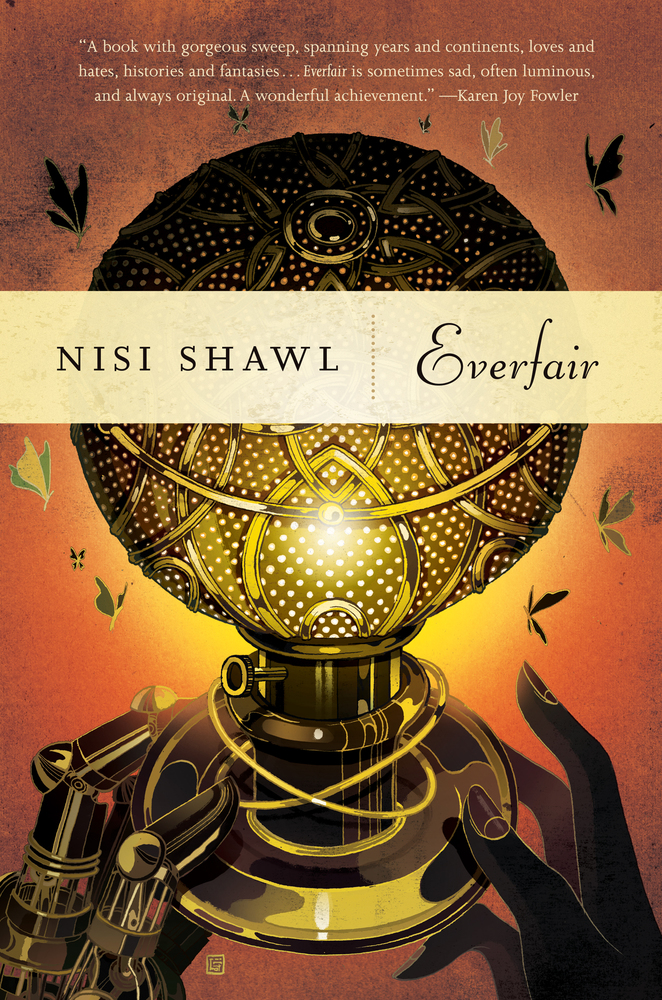
Almost fifty years ago I wrote and directed a play that featured a black cleaning lady as one of the heroes. She faced down bad guys, solved several mysteries, and helped save the day. I was a senior in college, and this was my first full-length play. Some audience members were disturbed that the hero was a cleaning lady. This meant I was putting “negative images” of black people on stage. A lot of folks just didn’t want a cleaning lady character in the play at all. A trial was convened and I was accused of spreading negative images of black people. This was serious social drama in the 1970’s! The verdict was inconclusive. For almost fifty years since, I have faced resistance to the lower class, black characters I write who use black vernacular English, know languages other than English, and understand physics and how to solve a tricky mystery (see Lawanda in Mindscape). So of course, I was thrilled to see Guillermo del Toro’s Shape of Water and watch cleaning ladies fight the power and set the world right. The creature from the lagoon stole my heart. I also had a blast reading Nisi Shawl’s Everfair and Naomi Novik’s Spinning Silver. Shawl’s and Novik’s main characters come from the center and margins of their societies. The labor they perform is not a measure of their spirits. Diversity is power. The characters figure out how to be different together and transform their worlds. This is enormously entertaining.

At the movies, I had great fun watching a crew of women pull off the perfect heist in Oceans Eight and Widows. The Women of Wakanda who save the day in Black Panther made me want to write an essay. Spike Lee’s Black Klansmen and Drew Goddard’s Bad Times at the El Royale are a surreal blast from the past. Boots Riley’s Sorry to Bother You is a surreal blast from tomorrow. Forget the one man with a big stick, ray gun, or wand saving the world. In each of these films, a motley crew defies the forces that would destroy us all and live to tell their tale.

All praises to the storytellers who keep rescuing me every day


Andrea Hairston is that author of Will Do Magic For Small Change, finalist for the Mythopoeic Award, Lambda Award, Tiptree Award, and a New York Times Editor’s pick. Her other novels include Redwood and Wildfire, a Tiptree and Carl Brandon Award winner, and Mindscape, winner of Carl Brandon Award, finalist for the Philip K. Dick Award, and a Tiptree Honor List book. All her novels were published by Aqueduct Press. She has also published essays, plays, and short fiction and received grants from the NEA, Rockefeller Foundation, and Ford Foundation. Andrea is a Professor of Theatre and Africana Studies at Smith


Saturday, December 15, 2018

The Pleasures of Reading, Viewing, and Listening in 2018, part 9: Nancy Jane Moore


Books and Experiences
by Nancy Jane Moore


A book I read early in the year (and reviewed for the Cascadia Subduction Zone ), Her Own Hero: The Origins of the Women’s Self-Defense Movement, ending up defining 2018 for me. I stumbled across this book by historian and martial artist Wendy L. Rouse in a Facebook post by Yudit Sidikman, a self-defense teacher and fourth degree black belt in judo who has established ESD Global, an international organization aimed at teaching empowerment self-defense to everyone. In August, I went to ESD Global’s teacher training.

In November, I taught a self defense class for International Women’s Self Defense Day. For years I have been doing presentations on self defense at WisCon and other conventions, but this was a class that combined the concepts I’ve been discussing with physical training, games, and play. I’m planning more classes. While Professor Rouse’s book did not introduce me to self defense – I’ve trained in martial arts for close to forty years now – it did give me the detailed history of how learning how to fight back figured into the suffragist movement of the early twentieth century in both the United States and in Britain. I knew some suffragists trained, but I had no idea how widespread such classes were, even though I was well-aware of feminist self-defense and martial arts training from second wave feminism in the 1970s. This is an important part of feminist history, particularly at this time when many still try to argue that women are not physically capable of taking care of themselves.

The ESD camp left me with the feeling that I’d found another place where I belong in the universe – a community of women, many of them also martial artists, committed to helping others recognize their power. The training we do is not just about teaching others useful skills so that they can protect themselves from violence, but also about empowering them to go out in the world and do the things they want to do and need to do with their lives. One of the best things about the empowerment approach is that addresses the complexity of violence against women – the systemic misogyny, the fact that women are at more risk from people they know than from strangers, the belief many people have that women can’t take care of themselves – in a direct manner that incorporates it into the training.

Here’s another recommendation growing out of the empowerment self defense work: the documentary Beauty Bites Beast, a film by Ellen Snortland that provides an excellent introduction into the concepts.

I did read some other things this year. Despite being somewhat older than the target middle-grade audience, I loved Ellen Klages’s Out of Left Field, which provided a history of professional women baseball players alongside a story about a girl who wants to play Little League. Now there’s a book showing a girl willing to take risks and do.

I also finished up Nnedi Okorafor’s Binti trilogy with Binti: The Night Masquerade. I loved this imaginative tale that incorporated aliens, complex human cultures, and creative technology. Binti: The Complete Trilogy is coming out in February. I also just got the first issue of her new comic, LaGuardia, which is equally wonderful.

I seem to be hooked on serial novellas, because I also got into the Murderbot Diaries by Martha Wells. I read the first one, All Systems Red, earlier this year and just finished the second, Artificial Conditions. These stories, told from the point of view of a security unit, are great adventures that make the reader think about how artificial intelligence might work as well as the kind of misdeeds and stupidity that often come with human structures. I’ve started a lot of books and not finished them this year. With fiction, that rarely had to do with the quality of the book, but rather with the feeling that the story was going to be too painful and difficult for me to handle right now. Apparently part of my reaction to the political morass and its ongoing horrors is an inability to get deep into fictional tragedy after seeing so much news about it in real life.


In the case of nonfiction, I usually stopped reading because I was disappointed in the books. I did like Rebecca Solnit’s latest collection of essays, Call Them by Their True Names. I find her realistic optimism to be a guiding light in these troubled times. Another book I reviewed for the CSZ, Kate Manne’s Down Girl: The Logic of Misogyny, could not be called optimistic, but provided a useful and original structure for addressing our misogynistic culture.

Nell Painter’s Old in Art School, which chronicles her experience of starting formal art study in her sixties after a distinguished career as an historian, was also revealing. I loved it partly because it was about someone who isn’t young going after a new creative career with passion, and perhaps even more because it showed the extra difficulties of doing that when one also has elderly parents, another important career, and is African American. And she does not neglect to discuss the fact that she had a supportive spouse and the financial resources to do this properly.

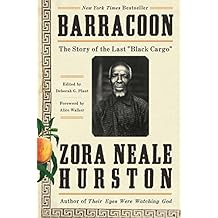
Zora Neale Hurston’s Barracoon: The Story of the Last “Black Cargo”, a book neglected during her lifetime, was issued this year. This report of those on the last slave ship from Africa to come to the United States, an event that happened just before the Civil War and fifty years after such trade had been outlawed, and their post-Civil-War settlement of Africatown, Alabama, which is now part of Mobile, provides a stunning oral history that complements much of the historical work being done on slavery and racism these days.

Right now I am finishing Kate Raworth’s Doughnut Economics and discussing it in a local book group. This book re-envisions economics. No, we don’t need doughnuts, but the shape of that pastry gives us a more reasonable look at how we should create our economic systems. The doughnut itself represents the “safe and just space for humanity.” It is bordered on the outside by the ecological ceiling and on the inside by social foundation. The idea is an economic system based on what people need and what the limits are to good life on Earth. In the face of climate change and severe income inequality, changing our economic system is primary.

I was a little surprised when I finished this piece and discovered that I hadn’t mentioned one book by a male author. While I didn’t intend this result, and, indeed, suspect I read several good books by men last year, I’m going to leave this list as it is. There’s plenty of good reading on it.


Nancy Jane Moore’s science fiction novel The Weave came out from Aqueduct in 2015. She recently finished writing a novel inspired by binge reading Alexandre Dumas. Her book reviews and fiction have appeared most recently in the Cascadia Subduction Zone. She has trained in martial arts for close to forty years and holds a fourth degree black belt in Oakland. A native Texan who spend many years in Washington, DC, she now lives in Oakland, California.

Friday, December 14, 2018

The Pleasures of Reading, Viewing, and Listening in 2018, part 8: Christina M. Rau


The Pleasures of Reading, Viewing, and Listening in 2018
by Christina M. Rau


Books and podcasts and books and podcasts and movies and books and podcasts. That’s how I spent the better part of this year. Here’s what I most indulged in.


In current-ish novels: Crazy Rich Asians by Kevin Kwan, but I have yet to see the movie, but I plan to read the next book in the series; Darcy Bell’s A Simple Favor, and I saw the movie and within the first ten minutes decided to think of the movie as not based on the book, which made both enjoyable; Weike Wang’s Chemistry, which is unlike any book I’ve ever read, in a good way; The Sleepwalker’s Guide To Dancing by Mira Jacob, and I didn’t want it to end; Good As Gone by Amy Gentry and You Will Know Me by Megan Abbott, two thrillers that thrilled me to the core.


In throwback novels: Murder on the Orient Express (and then I watched the movie, or, actually, I watched the insides of my eyelids while the movie droned in the background).


In YA: Adib Khorram’s Darius the Great Is Not Okay, and I loved this book because I related so hard (https://adibkhorram.com/); Sadie by Courtney Summers, which tells a striking and thrilling tale


In poetry: Rupi Kaur’s Milk and Honey, read mostly so that when my students ask me if I’ve read it, I can say, “yes;” Jason Reynolds’s Long Way Down, which is a poetry-novel; Jared Harel’s Go Because I Love You, which is stunning and sweet (https://jaredharel.com/).


In nonfiction: Carl Sagan’s The Demon-Haunted World: Science As A Candle In The Dark. I read other nonfiction, but nothing compares to this thought-provoking gem.

In listening: Serial Season 3; Annotated; Inside: Trader Joe’s (if you shop at TJ’s, listen to this); Oh My Dollar! to get geeky about money; and to laugh like a lunatic and justify my watching Riverdale, the podcast: RiverMales: All Tea, All Shade, All Riverdale (https://omny.fm/shows/tv-tea-time-with-mattie-jake)


Last year, I listened to the podcast Dirty John. This year, I’m watching the series based on the podcast on Bravo.


Other watching pleasures: Bohemian Rhapsody (wow!); The Meg; Ant-Man and The Wasp (yasss!); Jurassic World: Fallen Kingdom; Deadpool 2 (ha!); Avengers: Infinity War (whoa!); Black Panther (whoa again!).


Christina M. Rau is the founder of Poets In Nassau, a reading circuit on Long Island, NY, where she's lived all her life. She is the author of the chapbooks WakeBreatheMove (Finishing Line Press, 2015) and For The Girls, I (Dancing Girl Press, 2014). She serves as editor for The Nassau Review at Nassau Community College, where she teaches writing and literature.  Aqueduct Press published her Elgin Award-winning collection, Liberating the Astronauts in 2017. For her blog, visit alifeofwe.blogspot.com. For everything else, www.christinamrau.com.

Thursday, December 13, 2018

The Pleasures of Reading, Viewing, and Llistening in 2018, part 7: Mark Rich


Readings and Re-Readings, 2018
by Mark Rich


I wish sometimes that I could meditate upon all the sublime, ocean-deep, profoundly rolling and breaking words that have seen print but that I never have read, and that——given how that sea erodes us, much as time erodes us——likely I never will read ... or, if I do, will never meditate upon ... seeing how we seem to face a choice: to be a hollow walnut shell, afloat and thus never letting the sea inside us, adrift on it happily while saying that, yes, we know these seas; or to be a sieve, which can hold an ocean entire, but sinks.

Maybe for this reason, in one of the few resolutions for this year that I managed to keep, I found a way to be both walnut shell and sieve, and finished memorizing Robert Frost's first book of poems, A Boy's Will, of 1913. And for perhaps half the year, while in the garden, walking to the post office, or at the sink with my hands in suds, my head was floating and sinking, both. For months I recited to myself that small book, skimming over it and yet delving into it a hundred, two hundred times. Who knows. Daily, for months on end. I later changed my routine so that, here at year's rump-end, I revisit those poems perhaps a couple times a week. In the way of the walnut shell, I hardly know Frost at all. In the way of the sieve, his poems flow into and out from me more than I can know.

##

I did begin the year with the thought to myself: "Read. Just read!" I think the thought arose because of my daily time with Bach. For I was dabbling with the idea that I should be learning him as I was learning Frost. I decided, however, to continue on my original task, of improving how I read the page. So I kept at that, in a program that takes me through two preludes and fugues per day. I believe it will prove to be with the tonal music in Bach as with the verbal music in Frost, that only through a memory process may I truly hear it. In the meantime, however, I have kept reading, just reading——remaking more into a whole the half-musician I first trained myself to be.

I think it safe to say that as teenagers we are half the readers we might be, if perhaps in some ways better readers than we will be ever again. This past winter, having finished those books I wish I had read as a teenager, the Earthsea trilogy, I went on the Le Guin that I did read, then: The Left Hand of Darkness, which had impressed me in my youthful Kansas years, and impresses me again in my long-toothed Wisconsin ones. It reads to me as a story that is so much of its time——as a story must be, if it is to have any chance at becoming a story to have a life in later times.

I had hoped to go on in my Le Guin reading, this year, though not through any presentiment of her passing. I was in the pages of Left Hand, and Martha was reading the Earthsea books, when news reached us, late by two days, that she had died. It came as a blow.

In looking back into my journal, I see that a few days later Martha happened to see that it was the day on which Frost had died, in 1963; and I felt secure enough to note that I now "had A Boy's Will to mind." And then I noted further something I have quite forgotten——that I "had a dream in the night in which I was something like stage-manager to a production in a small church, halfway between a wedding and a performance and an event of honor; and Le Guin was in the alley to the side, although on that last time [in the sequence of dream-events, was] directly behind the large house or barn or church, meaning she had a walk ahead of her; and I told her I regretted not having given her a ride [...] since I had been in a position to do so." Why I should dream that I should have offered Le Guin a ride somewhere, I have no idea.


I ended up elsewhere than with Le Guin for the remainder of the year, as it turned out. In one direction I took, I picked up another novel from my teenaged years: C.S. Lewis's Out of the Silent Planet——from which title I took the name of my first small-press zine, in the 1970s. Lewis, as befit his calling, could write beautifully: and he did. As a youth I found the lurking Christianity in his fantasies disquieting, however. I read only the first in his space trilogy, then as now; and of his Narnia books I recall liking only The Voyage of the Dawn Treader. A copy of The Magician's Nephew appeared near to hand, however, when I was still feeling some glow from Silent Planet's linguistic strengths. I found Nephew distasteful for the way it draws out the good-and-evil struggle, though; and for relief I pulled a novel from one of my to-read piles: The Magician's Wife by Brian Moore. Back in the eighties or nineties I read Moore's beautiful first novel and was struck by the realism in his characters and narrative; and my desire to read more went unmet for decades. I do like this novel, which revolves around the French mechanician Henri Lambert. Fortunately having no "steampunk" leanings, Moore leaves automata for local color and adroitly develops a tale in which Emmeline Lambert partly undermines a magician and partly reveals a human being. Knowing nothing about Moore's life, the novel made me wonder if he himself had regrets about the discipline and isolation required of the novelist, who by verbal legerdemain must accomplish the impossible. I wonder, too, if having read Robert Mondovi's autobiography Harvests of Joy——which proved highly readable, by the way, for us, who are less wine esthetes than enthusiasts——sparked this thought: for among Mondovi's themes are regrets relating to the discipline, the isolation from home and family, required by one's chosen artistic calling.

##

I threw a few shovel-fulls into the canyonesque gaps in my readings, this year. Although I had read shorter works by her, Misha's Red Spider, White Web had sat awaiting me since we visited her and her publisher, David Memmott of Wordcraft, a few years back. I found it an amazing and (to draw an elevated term from deeply-dusted lit-crit tomes) trippy novel. In the early chapters one grasps for substance and a coherent understanding of what is transpiring; and then in Chapter Five, as I recall it, the language leaps upward into a fractured and painful brilliance that then carries one on to the end. I might call it jagged and uneven, perhaps even never fully developed, if I might also call it remarkable and enchanting for those same reasons.


Having also finally read Willa Cather, I now have the pleasant prospect of her more famous novels ahead of me. The Lost Lady may be the most haunting novel I read this year——to judge from how certain scenes have kept returning to my mind, over the months. May they keep returning, over the years. I can only dream how Cather might have handled Moore's novel, which I think should have been haunting in this way.

Some similar effect resulted from reading Hamlin Garland's stories in Main-Travelled Roads. The fact that he wrote, in part, about the region in which Martha and I live must help our finding his writing so inviting and satisfying, although I think the stories have little need of such help.

Garland is less tidy, less pat, less symmetrical in his plots than is Charlotte Perkins Gilman, whose Herland, and Selected Stories I have belatedly read, after having had Gilman books float within reach, off and on, since the late seventies. I enjoy her stories for their enthusiasms, their energies. The facile element may be no more than an artifact of the markets for which she wrote. Even if not, she plainly felt impulses that could and did lift her above the norm.

For sheer wonder, aside from Misha's word-fests, I encountered nothing this year more powerful——this may surprise you——than Laura Ingalls Wilder's Farmer Boy. Chalk it up, if you must, to this reader's making a living, in part, by spending daily workshop time in cleaning and restoring small antiques, including barn pulleys, milk stools, and hay hooks. Within each chapter I seemed to reach an "oh, wow" moment. I have found, just now, a journal comment. "I continue being amazed at Farmer Boy: first the cooking and eating that made it so dreamy a vision, even with the antagonisms and hard work; and then the work itself, the processes and methods, the drawings of items that I gravitate toward buying at auctions."

I have been ending my year with a few readings less venerable, less yellow-wallpapered. It rarely happens these days that I am at a newsstand, but did recently buy there the new Analog, to read G. David Nordley's "An Empress of Starlight," and other stories by other old friends. (Is it really two years since, at this same stand, I chanced upon the issue with a wonderful Nisi Shawl story?) Just afterwards I was reading a quite differently textured science-fantasy that also shows a woman becoming a sort of queen of the known universe. Both Nordley's story and Timmi Duchamp's "The Tears of Niobe," in her collection Never at Home, brought back to me the over-the-top reachings, the rushing leaps for grandeur that science-fantasy can deliver. And the yearnings for immortality. Have I been missing those flavors, those intoxicants? Maybe I have.

And lately I have been working through the appendices in David Hockney's 2006 extravaganza Secret Knowledge: Rediscovering the Lost Techniques of the Old Masters——an art book as fun and interesting in its words as in its pictures. (I do read the old Little Golden Books I happen upon. It is not true that I only look at the pictures! I do value that words-and-pictures pleasure. Come to think of it, I found a used copy of Maus this year, and read it. Good as Spiegelman is, though, I will go back more often to Gustav Tenggren, Tibor Gergely, Richard Scarry, J.P. Miller, and the Provensens.)

##

That parenthetical aside, just above, penciled itself into my closing thoughts, and led me to pick up The Poky Little Puppy, handily nearby in a loved-to-death copy too beat to sell at the shop. On one page, the five little puppies see the sign, "Don't ever dig holes under this fence!" Turn the page, and see the puppies out in "the wide, wide world"——and a beautiful toad by Tenggren. ("Brown hop-toad" in the text by Janette Lowrey. A green one, in the illustration.) What a treasure! A toad! A visual feast! No wonder I learned so well to turn the page!

Little Golden Books were partly Disney-fied in even their early days. In the Seventies they became Sesame Streeted——with a few of those books still being good page turners. ("Do not turn that page! Noooo!" I recall Grover saying that, in one.) Later, though, Little Golden Books became Barbied, Pixared, and Barbie-Disneyed, or some such thing —— which makes me wonder if a generation may have been lost to page-turning. In our new century some old Little Golden Book titles have been re-issued as classics, offering that small hope that the future may hold new page-turning readers. Long live Tenggren! Long live Gergely!

At happy hour, by the way, we use a little aerating device for newly-opened wine, which someone gave us. (If you squint at it you might see an elongated nut shell, with a sieve at the top.) It gurgles air into the wine.

So we call it Tibor.

Cheers ...


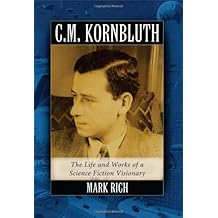
Mark Rich had a syllabic sonnet in the spring 2017 issue of Poem and has a traditional one in the  fall issue, after not having had a poem in Poem for twenty years. His story "And Fountains Flow" appears in Shadows & Reflections, the Roger Zelazny tribute anthology. He has had two collections of short fiction published — Edge of Our Lives (RedJack) and Across the Sky (Fairwood) — as well as chapbooks from presses including Gothic and Small Beer. He is also the author of a major biographical and critical study, C.M. Kornbluth: The Life and Works of a Science Fiction Visionary, published by McFarland. With partner-in-life Martha Borchardt and two Scotties-in-life he lives in Cashton, Wisconsin, and gardens, shovels snow, still reads Bach daily, and remains faithfully behind in his book revisions.

The Pleasures of Reading, Viewing, and Listening in 2018, part 6: Gwynne Garfinkle


The Pleasures of 2018
by Gwynne Garfinkle


One of my favorite reading experiences of 2018 has been The Element of Lavishness: Letters of Sylvia Townsend Warner and William Maxwell, 1938-1978. (In fact I'm not done with it yet! I'm reading it as slowly as possible, never wanting it to end.) Warner was not only a great writer of fiction and poetry, but an exquisite and very witty letter writer; her New Yorker editor Maxwell was no slouch in the letter-writing department either. The correspondents' loving friendship and authorial camaraderie shine through on every page. The letters are endlessly quotable; here's a passage by Warner, more or less at random: "I wish you could see the two cats, drowsing side by side in a Victorian nursing chair, their paws, their ears, their tails complementally adjusted, their blue eyes blinking open on a single thought of when I shall remember it's their supper-time. They might have been composed by Bach for two flutes."


Another book of letters I enjoyed is a more slender volume, Sister Love: The Letters of Audre Lorde and Pat Parker 1974-1989, which offers a fascinating look at the lesbian poetry scene of the 1970s-80s. The book shows how Lorde mentored Parker, and how the two women supported each other personally, professionally, and in their experiences with the cancer that would ultimately take both their lives.

I was already familiar with the film In a Lonely Place, based on the 1947 novel by Dorothy B. Hughes, but when I read the book this year, I was surprised to discover that, unlike the film about a screenwriter suspected of being a killer, the novel focuses on a serial killer posing as a writer. (Clearly a movie starring Humphrey Bogart as a serial killer wasn't going to fly in 1950.) Hughes' gripping crime novel is an all-too-contemporary study of the destructive force of misogyny.

A book I savored slowly was Emily Wilson's new translation of Homer's Odyssey. Wilson's feminist sensibility and her use of contemporary diction reinvigorate the poem. "I have tried to make my translation sound markedly poetic and sometimes linguistically distinctive, even odd," Wilson writes in her Translator's Note. "But I have also aimed for a fresh and contemporary register. The shock of encountering an ancient author speaking in largely recognizable language can make him seem more strange, and newly strange. I would like to invite readers to experience a sense of connection to this ancient text, while also recognizing its vast distance from our own place and time."

I'm not sure why it took me so long to read Juniper, Gentian, and Rosemary by Pamela Dean, since I've long loved Dean's Tam Lin. This fantasy novel, dealing with the perils of being derailed from your own path by an unworthy guy, is delightfully packed with references to astronomy and books and music. (I don't know how Dean manages to make extended sequences of a family reading aloud from Julius Caesar so entertaining, but she pulls it off.)

The new book I most looked forward to this year was Sonya Taaffe's collection of weird fiction, Forget the Sleepless Shores. Taaffe--also an accomplished poet--writes sumptuous, fiercely intelligent prose, often on queer and Jewish themes. "The Trinitite Golem" is an arresting tale of J. Robert Oppenheimer's encounter with an undying creature born of the bomb. Taaffe's work frequently evokes the sea, sometimes (as in "All Our Salt-Bottled Hearts") in a Lovecraftian vein.

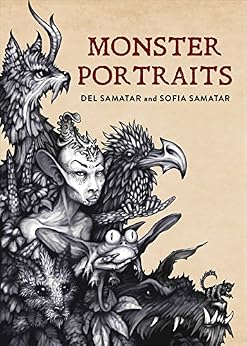
Monster Portraits is a hybrid work by Sofia Samatar (A Stranger in Olondria, The Winged Histories, Tender) and her brother Del Samatar. The dialogue between Sofia's prose and Del's drawings creates a kind of speculative autobiography. Sometimes reminiscent of Borges, this is another book I find endlessly quotable. In "The Early Ones," Samatar writes, "Like all monsters, we don't belong, but our problem is time and not space. We got here too early. We have always had this sense of wrongful, unseemly arrival. We arrived before community, before there was language to describe us, before the 'Other' box on the census, before the war."

Some other books I enjoyed this year include:

Barbara Comyns--Our Spoons Came From Woolworths and The Vet's Daughter 
Francesca Forrest--The Inconvenient God 
Karen Joy Fowler--What I Didn't See and Other Stories 
Lois Duncan--Down a Dark Hall
Sam J. Miller--The Art of Starving
Ursula K. Le Guin--No Time to Spare: Thinking About What Matters 
Nnedi Okorafor--The Night Masquerade


In terms of TV watching, 2018 was the year I fell in love with The Good Place. Show creator Michael Schur couldn't have known when the program began airing two months before the 2016 elections how much we would need a sitcom about ethics, but I am grateful we have it. This year I also began a rewatch of the supernatural soap opera Dark Shadows (1966-1971), and I've been loving its bravura stew of tropes, its ensemble cast, and its technical difficulties preserved for posterity as much as ever.


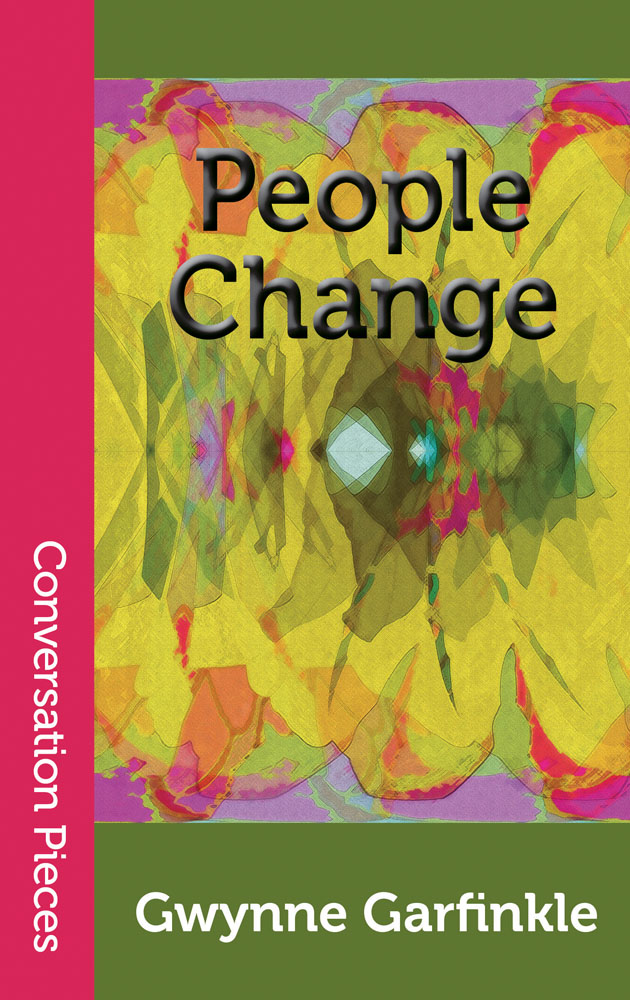
Gwynne Garfinkle lives in Los Angeles. Her work has appeared in such publications as Uncanny, Strange Horizons, Apex, Not One of Us, and The Cascadia Subduction Zone. Her collection of short fiction and poetry, People Change, was published in October 2018 by Aqueduct Press.

Wednesday, December 12, 2018

The Pleasures of Reading, Viewing, and Listening in 2018, part 5: Nisi Shawl


A Never Land
by Nisi Shawl

This was the year my mother died. Those who knew her appreciate the depth of this tragedy and understand my grief. Those who didn’t will have to take the word of others that she was a remarkable woman, and accept my declaration that she was my closest friend.

When June died I was in the midst of a slew of commitments to teach, give talks, and lead workshops around the world. I cancelled one session of one class, but otherwise kept to my schedule, fitting her two memorial services around dates already spoken for. I kept on going despite the unending sorrow of my loss. How?

Drugs and escapism. Well, all right, not exactly drugs--merely a tincture compounded of certain somnorific herbs with which I’m familiar. Herbs that helped me drown the wakeful voices nagging me out of my much needed rest. I resorted to escapism in bed at night, before sleep came, curled up with my phone and binge watching episodes of the Jeeves and Wooster series. Stephen Fry and Hugh Laurie play the pair to perfection: elegantly drawling, goggling, eyebrow-arching, shrugging, smirking, and toodle-pipping their way through a Wodehousian fantasy world.


And it was a fantasy, one that enfolded me. Nothing to do with me or my mother or brain aneurysms or questions of life insurance, cremation, debt cancellation, or any of the other problems I had to eventually grapple with. Instead, there was this never-existent landscape filled with mists and mansions. Jolly feudalists jousted with one another over improbable accounts of kangaroo race-fixing and similar sillinesses. Far, far from the rational, duty-crowded round of my daily life.


My favorite episode, though, does have a few moments of racially aware humor. Gormless Bertie Wooster poses as the chief of the fictional African “Umgali” people in unconvincing blackface, mouthing stereotyped pidgin phrases about traveling across the “great water” in a “much, much, much big iron boat.” Then the real chief of the Umgali appears, identically garbed and wielding a royal horsehair fly whisk, speaking in cultured Oxford accents and sharing reminiscences about school athletics with the local bigwigs. The joke is on Wooster and his flat, failed misrepresentation of a multi-layered human being.


I liked that. I liked laughing at the foolishness of not according the “Other” three-dimensionality, or at least dimensionality of some sort, a depth consonant with the fairy-tale topography where Jeeves and Wooster frolic, work, and play. The Cockaigne wherein I have eluded my most recent sorrow.


 Nisi Shawl is the author of  Filter House, which won the James Tiptree Jr. Award and was nominated for the World Fantasy Award, Something More and More, her WisCon GoH collection, and, with Cynthia Ward, the co-author of the celebrated Writing the Other: A Practical Approach, and the editor of The WisCon Chronicles, Vol. 5: Writing and Racial Identity, all of which are published by Aqueduct Press. Aqueduct Press has also published Strange Matings: Science Fiction, Feminism, African American Voices, and Octavia E. Butler, which Nisi co-edited with Rebecca Holden. Tor released her brilliant alternate history/steampunk novel, Everfair, in 2016. She is also the editor of the widely and wildly acclaimed anthology, Stories for Chip: A Tribute to Samuel R. Delany and other anthologies.  She reviews science fiction for the Seattle Times and writes columns for Tor.com and The Seattle Review of Books, is a member of the Clarion West board, teaches writing workshops at Centrum in Port Townsend, WA., and is the reviews editor of The Cascadia Subduction Zone.

The Pleasures of Reading, Viewing, and Listening in 2018, part 4: Brit Mandelo


Pleasures of 2018
by Brit Mandelo


2018: both the longest year and the fastest I’ve lived to date, seems like. Politics these days will do that to a person, I guess? As usual I’ve read a mix of things over the past twelve months, some for review and some just for me. Of all the books reviewed at Tor.com this year, some favorites (longform reviews linked!) include:


• Friday Black by Nana Kwame Adjei-Brenyah, a debut collection of sharp, visceral short fiction that primarily explores the oppression and violence faced by contemporary Black Americans.

• On a Sunbeam by Tillie Walden, a quiet young-adult graphic novel about queer women/GNC folks, found family, and growing up—bonus: it’s fantastical space opera.

• Alien Virus Love Disaster by Abbey Mei Otis, another debut collection of short fiction full of “outsider or abject characters; viral, haunting, gruesome physicality; hunger mixed with passion and crooked adoration; cataclysm before-during-and-after.”

• The Descent of Monsters by JY Yang, the third Tensorate novella—just as queer and genderfluid as the previous two, while also immensely fun in terms of its prose structure.

• Blackfish City by Sam J. Miller, an ambitious sf novel set post-climate-collapse and dealing with a sexually transmitted virus as well as wealth/real estate inequality, to name a few significant themes.

• Space Opera by Catherynne M. Valente, best described as “Eurovision in Space,” is wholesome and aggressively hopeful—plus hilarious in the vein of Douglas Adams.

• Monster Portraits by Del and Sofia Samatar, a mĂ©lange of art and prose poetry that spoke to me on an academic level as much as it did a personal one.


Given that I was writing a novel for the majority of 2018, almost all of my personal reading took other forms like comics, poetry, YA, or nonfiction. On the comics front: My Lesbian Experience with Loneliness and My Solo Exchange Diary by Nagata Kabi struck my fancy. They have a fascinating pink-and-grey color scheme, fun sketchy art, and an extremely intimate emotional approach to being a young queer woman with depression in Japan. On the flip side, My Brother’s Husband by Tagame Gengorou explores issues facing queer men in Japan—as well as single parenthood, what makes a family, and so on. It’s quiet, domestic, and moving (plus, it’s nice to see Tagame’s loving artistic treatment of larger men’s bodies in this context).

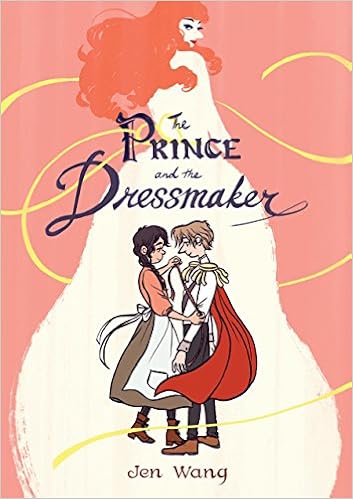
Yes, Roya by C. Spike Trotman and and Emilee Denich is, to be direct, a porn comic set in the 60’s, featuring a dominant woman, her submissive husband, and their new younger male lover. The comic is definitely hot; it also treats bisexuality, interracial relationships, and comics publishing for women with a thoughtful seriousness. The Pervert by Remy Boydell and Michelle Perez is about a trans woman’s experiences of sex work, gender confirmation, and survival. The art is a mix of anthropomorphic animal characters and straightforward human characters, which creates an intriguing contrast, particularly in sexually explicit scenes. Totally different, as it’s a young-adult comic, there’s the overwhelming cuteness of The Princess and the Dressmaker by Jen Wang—queer and genderfluid in approach with cartoon-adjacent, charming art. It’s a heartwarmer for sure.


The poetry collection Prelude to Bruise by Saeed Jones is intense and astounding. His poems about rural queer masculinities and Black experience, particularly combined, are worth reading for everyone whose hands I could press them into. (Also, follow him on Twitter.) Anger is a Gift by Mark Oshiro, a young adult novel, has a real and pressing approach to police brutality, young resistance, and trauma—it’s a hard read, emotionally devastating but important. Picture Us in the Light by Kelly Loy Gilbert is also a young adult novel, balancing coming of age and coming into one’s queer identity, falling in love with a best friend, and intergenerational struggles of immigration and citizenship. It also has some of the most striking lines I read this year about the emotional connections people form in love.

Lastly, it would be remiss not to mention The Merry Spinster: Tales of Everyday Horror by Daniel Mallory Ortberg—he has been and remains a treat to read, funny and sharp and poetic, with a handy grasp on genre and its functions. Strongly recommended, this one. And while I rarely read true crime (for all the reasons you’d expect), I’ll be Gone in the Dark by Michelle McNamara was a gripping, thoughtful exploration not just of the Golden State Killer case but also the genre itself, a memoir and investigation all at once that bends its approach self-reflexively in a manner I found extremely compelling.
This won’t come as a surprise to anyone who follows me on Twitter, but musically, this has been the most intense year to date for me as a fan of BTS with the release of their Love Yourself albums. I’ve been in that club since 2016; watching them rise to international stardom, including speaking engagements at the United Nations on youth culture, has been immensely satisfying. It’s great to see a set of artists who are passionate and humble and proud about their work succeeding beyond their wildest dreams. The larger thematic project they’ve undertaken matters, too, in a divided and contentious global popular culture: encouraging openness, self-acceptance, kindness, and honest approaches to mental health is a huge deal. To do so through music that’s also fucking fantastic, with unreal stage presence and a consistently personable social media presence, is notable. Kim Namjoon made a point to acknowledge gender identity and race specifically in his UN speech, which tracks with the band’s public-facing support of queer rights and artists as well as heavily queer-coded and/or queer-friendly content in their own lyrics.

I was able to attend their October concert in Chicago from a front-of-pit position and it was life changing. In a year where I’ve needed positivity surrounding healing and growth, they’ve given that to me. “Love yourself” sounds like a simple directive, but it isn’t, and their music acknowledges that as well. As an American, the significance of decentralizing white Western artists as the be-all, end-all in entertainment matters—and it’s great to see these young men from South Korea gaining more and more traction for their skill and message across the globe. I’m just very here for their specific focus on kindness, self-reflection, and purposeful development as steps toward being a good person. I’m also interested in how their mold-breaking approach to the k-pop industry will benefit future up and coming bands in terms of artists’ treatment and rights.

As for other content in the “radical positivity and healthier approaches to masculinity in pop culture” mode, I finally started listening to the McElroy brothers. I’ve made it through a significant portion of The Adventure Zone (Balance, the experimental arcs, and half of Amnesty); I’ve also watched their short TV program and listened to other related podcasts. There’s something about their willingness to listen, to learn, and to try so very hard that is soothing. Not to mention they’re absolutely hilarious. The Nancy podcast at NPR has also been a good source of workday listening that brings in a variety of contributors on topics both contemporary and historical that I might not otherwise encounter.


I didn’t watch much television, though. Finishing Anthony Bourdain’s Parts Unknown after his suicide was wrenching, but I did do it. His hopeless despair at what some humans have done to the world and to other human beings, particularly via colonialism, is both relatable and in hindsight sobering. It is possible to see, when watching, the weight of his knowledge crushing him. On a lighter note, Salt, Fat, Acid, Heat was tender and enjoyable. It ended before I expected—quite a short season! I hope she’ll do more. (If you’re sensing a theme: yeah, I mostly watched food tv all year.) Queer Eye’s reboot filled my heart two times over with soft feelings and a touch of hope for the future. I was particularly moved by AJ’s episode in the first season. As for movies: Call Me by Your Name wrecked me quite thoroughly while Love, Simon lifted me up; Collette was hot as fire and delightfully sharp about art, love, and sexuality through a historical lens (also, the film featured trans actors!). I watched Netflix’s Hill House adaptation and hated it so much, artistically and personally and politically, that I’m choosing not to acknowledge it further.

The takeaway: content that fills my emotional well and emphasizes the possibility of hope despite trauma has been good—because this is a dark time in the world and maintaining the ability to exist, to struggle, to cope, to even be happy, is a significant factor in being able to enact any resistance. Visibility matters, pleasure matters, and despite 2018’s broad issues with the fallout of SESTA/FOSTA and corporate control over the internet (looking at you Tumblr), healthy sexuality that integrates with our humanity matters. I want to keep on keepin’ on in that direction.


Brit Mandelo  is a writer, critic, and editor. They have published two books, Beyond Binary: Genderqueer and Sexually Fluid Speculative Fiction (Lethe Press, 2012) and We Wuz Pushed: On Joanna Russ and Radical Truth-Telling (in Aqueduct's Conversation Pieces series). Brit has been a nominee for various awards in the past, including the Nebula, Lambda, and Hugo; their work has been published in magazines such as Clarkesworld, Tor.com, Stone Telling, Apex, and Ideomancer.

Tuesday, December 11, 2018

The Pleasures of Reading, Viewing, and Listening in 2018, part 3: Tansy Rayner Roberts


Pleasures of Reading, Watching, & Listening
by Tansy Rayner Roberts

Something that I really enjoy is an excuse to read a “classic” novel, either for the first time or revisiting an old favorite through new eyes. Not that I need an excuse — but it’s so easy to get hung up on what’s being published right now and forget about anything vintage.

KJ Charles is one of my favorite new discoveries this year, a writer of historical and fantastical queer romance whose work is edgy and thought-provoking as well as passionate escapism.The Henchman of Zenda is a clever retelling of Anthony Hope’s The Prisoner of Zenda. Charles has constructed a whole secret romance angle between henchman Jasper Detchard (our new point of view character) and his boss, the scene-stealing villain Rupert of Hentzau. She also beefed up the roles of the women in the story, giving them much stronger characters and motivations.

The Prisoner of Zenda is one of those hugely influential novels that I always thought I had read, but actually hadn’t. I picked it up after Henchman and flew through it, fascinated to see the original threads that KJ Charles picked apart.

The Henchman of Zenda is a smart piece of reinvention that can exist easily alongside the original: all you have to do is accept that the original protagonist, Rudolf Rassendyl, is (a) not nearly as observant or incisive as he thinks he is and (b) often stretching the truth in his “memoir” to make himself look more heroic.

It’s pretty great that while the original ‘not-quite-but-sort-of’ speculative fiction subgenre known as the Ruritanian Romance started with the original Zenda at a time when ‘romance’ meant ‘a fun adventure with swords and some but not a lot of kissing,’ it’s actually the love-conquers-all Romance fiction that has captured it in recent years. Fake European countries abound in novels like Meg Cabot’s classic The Princess Diaries, all the way through to the Netflix Original ‘shinier-than-Hallmark’ royal romance movies like The Christmas Prince and The Christmas Switch, which I find ridiculously enjoyable.

Another big classic re-read I completed this year was Mary Shelley’s Frankenstein (200 years since it was published!) via the Frankentastic podcast (https://twelfthplanetpress.podbean.com/e/frankentastic-episode-1/) that I signed up to do as a stretch goal for the Mother of Invention Kickstarter last year.

The plan was to read the novel aloud chapter by chapter, changing the gender pronouns but no other aspects of the text. (I did change some but not all of the names) For me, this turned out to be a fascinating way to dig into a book I’ve always had a lot of feelings about, while also teaching myself to rethink a lot of assumptions about gender. I also appreciated how many listeners got in touch to share how this regendering of the classic novel affected them.

I’ve now programmed myself to automatically think of both Dr Frankenstein and her monster as female!

Speaking of classics re-imagined, we need to talk about She-Ra.

Netflix has been making some really interesting choices about rebooting old school “Saturday morning” cartoons from the 80s as sharp, 21st century stories for a new generation of kids. My family has been mildly obsessed with the new Voltron for the last couple of years, even if we have lost faith that the central m/m ‘ship’ will ever become canon. (Sigh, it won’t. But all the kids I know want it to happen, including the 9 year old… does this count as progress?)

I was excited about the new She-Ra because the showrunner, Noelle Stevenson, is one of my creative heroes thanks to her amazing comics, and her fannish contributions (she originated the Hawkeye Initiative!!!).

My daughter insisted on watching a few episodes of the original show with me for context, which swept me back to my Saturday morning nostalgia happy place. I have, apparently, visceral memories of the transforming She-Ra (AKA Super Magic Barbie) and He-Man toys, even if I didn’t remember much of the original story — such as She-Ra’s status as a redeemed villain, a narrative that would be carried off to greater effect with Xena more than a decade later.

Ms9 and I did a lot of shouting at the screen as He-Man took central stage for episode after episode of what was supposed to be the “girl spin-off” from his show… almost like the creators couldn’t quite believe that they were going to effectively sell a female-led quest fantasy to an audience of Skeletor-obsessed children.

Then we watched the new reboot.

And it’s beautiful.


She-Ra and the Princesses of Power takes many of the character and visual ideas from the original show and crafts a gorgeous, funny and deeply emotional action comedy around the hearts and minds of mostly female characters (the few male sidekicks in the show are adorable and clearly there to provide emotional support and occasionally set fire to boats).

It’s epic in the same way that shows like Avatar: the Last Airbender and Steven Universe are epic, but with a very different tone to either of those cartoons. Crucially, it places female heroism at the very center of the story, and surrounds it with more female heroism.

Friendship, creativity, diversity… and oh, this show is queer as hell. While there are no outright romances (YET), LGBTQ or otherwise, there are so many great female friendships, many of which border on the kind of intensity that is indistinguishable from romance in G-rated media.

Adora is the newly promoted Force Captain of the Horde, a military organization that is a lot more evil than she realized. When she is chosen to wield the magic sword that transforms her into She-Ra, legendary hero, she has to quickly re-evaluate everything she has ever believed, and changes sides to help her new friends in the Rebellion.

All the side characters are so fabulous, especially Bow, the midriff-baring “I’m in a girl story and I’m happy just to help” male sidekick and all the epic princesses. But it’s important to note that Adora is deeply compelling as a main character: a prickly, angry young woman who isn’t used to having freedom and is only starting to unpack how badly she has been manipulated.
It takes a long time for Adora to trust in her new friends to be there for her, and to build faith in herself that she can be the heroic figure that the Rebellion needs… but that she can also be valued for herself, regardless of She-Ra’s contribution.

Each of the princess characters has a great hook, and the entire show revolves around a reinvention of what ‘princess’ even means… without, crucially, sneering at any expression of traditional femininity. Princesses in this world are bad-ass and creative and terrifying and incredibly powerful and under a lot of pressure to perform. Some of them are super girly. Some of them are much less traditionally gendered. There’s rainbows and glitter and pink and purple throw cushions. There’s robots that are trying to kill you.

I’m completely wrapped up in the tensions of Glimmer’s relationship with her mother, and how she is trying to balance her own desires to save the world and be a hero with her fear of letting everyone down. (Glimmer, TALK TO YOUR MOTHER.) It’s such a fascinating inversion of the Buffy-Joyce relationship, for example, a prime example of ‘teenage girl as hero hides true self from mother’ — but Glimmer’s mother knows that she is a soldier and a magic-user and is conflicted by wanting to protect her (OMG Mom just let me save the world right now) and wanting to unleash her on the Evil Horde.

The villains are also a big part of what makes the story so successful. Sensibly, the ‘lead’ villain Hordak from the original show is kept in the background, with the main focus being on Shadow Weaver (Adora’s former mentor and mother figure) and Catra, Adora’s former best friend who feels deeply betrayed at her changing sides.

The Catra/Adora friendship is heartbreaking and powerful, as the two of them pull further and further away from each other into the camps of Good and Evil. But there’s a lightness there too, a humour that is never entirely lost (Catra turning up to the Princess Prom in a suit with Scorpia on her arm). It’s reminiscent of so many of the great Nemesis Bro combinations such as Sherlock and Moriarty, the Doctor and the Master, or Professor X and Magneto — the sense that these two people could easily be best friends (or in love, totes married) if they weren’t on opposite sides of a pretty major moral divide.

So uh, yes. Watch She-Ra. Then tell me who you’re shipping. Apart from Princess Entrapta/killer robots which is basically canon.


Tansy Rayner Roberts is the author of many SFF novels and short stories including the Creature Court trilogy. She recently co-edited a science fiction anthology about gender and AI: Mother of Invention. Tansy’s new fiction release, “Merry Happy Valkyrie” is a festive fantasy novella blending Norse myth with modern Tasmanian Christmas traditions. Find out more at tansyrr.com.

The Pleasures of Reading, Viewing, and Listening in 2018, part 2: Lisa Tuttle


Pleasures of Reading 2018
by Lisa Tuttle


My favorite book this year was Willnot by James Sallis, published in 2016 by No Exit Press. Sallis is probably best known now as the author of Drive (which inspired a movie by the same name) and a number of detective novels set in the American south and southwest, but he was part of the “New Wave” in science fiction, back in the day, when I was sufficiently impressed by his literary, experimental take on SF to buy his first book in hardcover, brand new, at full price, when A Few Last Words was published in 1970. Taking it off the shelf just now, I found a stack of ancient, faded photo-copies of other stories and poems by Sallis that I carefully saved inside. Reading first lines of one (“Binaries” from Orbit 9, 1971) I was struck by how familiar it felt, and realized it reminded me of the the tone, the style, the voice I was striving for myself back in the early 1970s -- influenced, much? Undoubtedly. It’s obvious, but strange, because I don’t think I ever mention James Sallis, and he was surely as important to my development as a writer as Theodore Sturgeon and Kate Wilhelm – my usually referenced touchstones.

Unless you are into reading American noir detective fiction you probably missed Willnot, which I think should have appeared on “Best SF” as well as “Best American Novel” lists in 2016. If you are a fan of the late, great Theodore Sturgeon, you may find this novel reminiscent of some of his works, too.

Willnot looks like a crime story. The cover is adorned with blurbs from other crime writers, and the first line is “We found the bodies two miles outside town, near the old gravel pit.” But it does not develop in any of the ways you might expect. Yes, there are bodies, crimes, and violence. (This is America; people have guns.) But far more than the mysteries to be solved, about dead bodies and mysterious strangers in town, more than the occasional eruptions of violence, the story Sallis gives us (and it is a gift) is one about small-town life, human relationships, the daily demands of work, the joys and sorrows of living in this world. Willnot is the name of the town – and it is not exactly ordinary. Gradually it is revealed as one of those outsider communities founded on utopian principals that have always been a part of America. Its odd name might be a literary reference – at least, it made me think of Herman Melville’s “Bartleby the Scrivener.” Sallis’s narrator is the town doctor – he is also the son of a science fiction writer, familiar not only with the genre, but with recollections of having met many of the big name writers when he was a boy, dragged along to conventions by his dad.

I don’t want to say too much about the plot because there is a lot of pleasure to be had in being surprised by it. For the same reason, I advise against reading the back cover copy until you’ve finished the book.


Other bests of the year:

Things we lost in the fire by Mariana Enriquez, Portobello Books, 2017. (Originally published in Spanish as Las cosas que perdimos en el fuego, 2016) One of the most intense, brilliant and disturbing short story collections I have ever read. Whether you call her stories horror or literary fiction, Mariana Enriquez is an amazing writer, and I hope we will see lots more of her work in English.


Lost Objects by Marian Womack, Luna Press, 2018. Weird fiction, science fiction, whatever you call them, these ten vivid and disturbing stories by a talented new writer are haunted by impending death, disappearances, mass extinctions and eco-catastrophe. It sounds grim (and often is) but there are gorgeous images, moments of beauty and mystery that compel the reader, revealing a powerful and original imagination at work, and reminding us that, however strange and changed the world, we continue to find meaning in our lives as we struggle to survive.


 Lisa Tuttle is the author of numerous novels and short story collections. Her most recent novel is The Curious Affair of the Witch at Wayside Cross. She has also published nonfiction and more than a dozen books for younger readers. In 1974 she won the John W. Campbell Award for Best New Writer and, in 1987, the BSFA award in the short fiction category. Aqueduct Press published her novella My Death in 2008 (which is now available as an ebook). Born and raised in Houston, Texas, she has made her home in a remote rural region of Scotland for the last twenty years.


Monday, December 10, 2018

The Pleasures of Reading, Viewing, and Listening in 2018, part 1: Rachel Fellman


Ten Great Books 
by Rachel Fellman


Ten great books in arbitrary order:

1. Daniel Mallory Ortberg, The Merry Spinster: Tales of Everyday Horror

 I got the sense that this wasn’t widely read in SFF circles. Certainly I almost skipped it, until I was tipped off by a Publishers Weekly best-of list -- and I’m a fan of Ortberg, just not a fan of satirical fairy-tale retellings. That’s what I assumed this would be, since he is primarily known as a satirist, and the cover is sort of jocular.

However! This book is not satire (though it is funny). It is not horror (though it is upsetting). Instead, it is a major fantasy debut – a witty and sinuous book, both dark and celebratory. I read most of it on commuter trains, and it’s an exquisite thing to read on a train: always switching tracks, changing moods, losing and finding the light, breaking from tunnel to sky, and you always know that the driver is in control and knows where he is taking you. He has an eye on the gender gauge. He is lightly adjusting a switch whose two settings are Dune and Cinderella. Please, if you passed over The Merry Spinster as I initially did, get on this train with me. We are going to have the most fantastic time.


2. Elizabeth Freeman, Time Binds: Queer Temporalities, Queer Histories

I read this as research for an article I wrote in my other life as an archivist, about Joanna Russ and James Tiptree, Jr. Listen, if you’re planning, for some reason, to read exactly one academic monograph in your adult life – try Freeman. Her concept of “queer time” is a vital idea, and a powerfully SFFnal one too; to her, to be queer is to step outside of history and outside of the set temporal pattern of a human life. She explores this idea in many dimensions, many of them quite gonzo. For fans of The Female Man who wish Russ had written more hardcore literary theory.

3. Jane Smiley, A Thousand Acres

It’s hard to pitch you on A Thousand Acres, Smiley’s Iowa-set retelling of King Lear. This is because, despite being a thirty-year-old take on a four-hundred-year-old play, it’s a very dangerous book to spoil. Like Shakespeare himself, Smiley is a brilliant riffer who depends on your knowledge of a famous story for her impact; it’s all in the ways she twists it, the knots she ties in the characters’ minds. Instead, I have to ask you to trust me. Drive up to this with the headlights off. Explore it cautiously. And don’t let the door swing shut behind you, because then you’ll be alone with some absolutely terrible people.

4. Ottessa Moshfegh, Eileen

A whipcrack noir with an unforgettable protagonist. I also read Moshfegh’s two other books this year, which isn’t medically advisable – like stacking three central nervous system depressants in a single evening – but this was my favorite. Moshfegh engages the reader in a perpetual game of chicken, and as her car gets closer and you see her strained face in the windshield, you inevitably realize that she is not the one who’s going to turn aside.

5. Rivers Solomon, An Unkindness of Ghosts

“Multiplicity” is the word for Solomon’s work. Every word is busy; every idea hums with energy, doing more than one job in the text, reaching out with delicate robotic fingers to nudge a character forward, ripping another character’s heart out in the same motion. It is always surprising, always daring, and ideas are deployed for a single scene that any other author would dine out on for at least a book, maybe a series. The novel teems.

What I really love about Solomon, though, is their keen, scything portrayal of people. All of their characters are multiply marginalized, and Solomon is really thinking about what it might mean to be autistic and enslaved, to be a slave and a doctor, a slave and a scientist. Each character is allowed to be complex, obnoxious, heroic, and fragile; I don’t know why more authors can’t bring themselves to let that happen. The pacing is quick, the mystery compelling, the prose artful. The central metaphor – the broken generation ship as failed state – is handled to perfection. And, my God, does it stick the landing!

6. Elif Batuman, The Possessed

Batuman’s memoir of academic life is a unique entry in the field of depressive comedy. Most depressive humor ends up rather vaudevillian: ironic, paradoxical, wry, life’s threadbare pageant, etc. But for Batuman, depression and comedy are formed of the same matter. Nothing is a distraction, nothing is a sublimation. This is simply a very funny book about being very sad.

Like the great 19th-century Russians who are her academic specialty, Batuman is interested in the tension between fiction and criticism and history and memoir. With The Possessed, she wanders through this tension as if through it were a dense and rocky landscape, hiding behind the giant stones, prodding them, sometimes pushing them over. Her novel The Idiot approaches the same landscape from the other end; I also read it this year, and it’s also great.


7. Nalo Hopkinson, Skin Folk

This is a classic that I read shamefully late. Hopkinson is supple and subtle; the moment you start to see how her stories will play out, she holds out her hand, stops them, whisks them aside, and brings forth others. Her emotional register is a grand piano; these stories explore joy and disgust and shame and sexiness and many other emotions too complex to name. And she uses a richer, more intricately intonated English than almost anybody. More than anything else on my list, Skin Folk doesn’t need my help, but if you’re like me and have managed to miss it all your life, it’s time.

8. Wilkie Collins, The Woman in White

Typically for Collins, this is a high camp masterpiece 40% of the time, a shockingly forward-thinking feminist epic 30% of the time (the Count has called a duel and the chosen weapon is RESPECT FOR MARION), and the rest is exhausting minutiae and romantic schlock.

More than anything, it’s a book about gaslighting -- hence its careful focus on multiple witnesses who are taken in to various extents, its awareness of what it takes to build and dismantle an edifice of lies. Worth reading for anyone interested in Victorian Gothic fiction, with its operatic emotions and its quiet observation of everyday evil. It is also, for what it’s worth, funny as hell, and Count Fosco lives up to his reputation as one of the weirdest and most magnetic villains in literature.


9. Ling Ma, Severance

Well, this is enormously legit – the apocalyptic mumblecore masterpiece I’ve been waiting for all my life. At times, it’s so terrifying and so absorbing that I was surprised, when looking away for a moment, to realize that I wasn’t already living in its world. I don’t typically have that experience with novels. It also plays out its central conceit and metaphor – a fungal disease that makes people revert to nostalgic, repetitive motions until they die of thirst and starvation – with a wonderful lightness of touch, trusting the reader to follow all of the frayed threads of metaphor until they break. The ending is a finely balanced piece of ambiguity.

10. Stephen Greenblatt, Will in the World: How Shakespeare Became Shakespeare

I read a bunch of Greenblatt this year, including his outstanding Tyrant, but this one feels definitive – the place to start, and a model for the openly fanciful biography of a public figure who leaves behind a very slight archival record. Combining literary criticism, exploratory research, and a certain degree of brawling with his peers, Greenblatt’s work is speculative in the SFFnal sense, and it will please SFF readers who want to understand a world so different from ours that it may as well be another planet.


Rachel Fellman is an archivist in Northern California. She writes sharp, painterly science fiction and fantasy about her various preoccupations: art history, extreme survival, toxic love, queer identity, and terrible moral choices. Most of her protagonists are great at exactly one thing and are continually prevented from doing it. Aqueduct Press published her debut novel, The Breath of the Sun, earlier this year. 

Sunday, December 9, 2018

The Pleasures of Reading, Viewing, and Listening in 2018

Our annual series of posts on reading, viewing, and listening is about to begin. Once again I've solicited pieces from a bevy of writers and critics to tell us what they particularly enjoyed reading, viewing, and listening to in the last year. This year's edition will include posts by Andrea Hairston, Lisa Tuttle, Rachel Fellman, Tansy Rayner Roberts, and others. I'll be adding links below as I upload each new contribution, to provide a list for convenient reference. I hope you'll enjoy reading these as much as I do, and maybe even swell your ever-growing list of titles you want to read. Sometimes it seems that the volume of books published is so tremendous that it's no surprise that really wonderful work often slips below one's personal radar.

Part 1: Rachel Fellman
Part 2: Lisa Tuttle
Part 3: Tansy Rayner Roberts
Part 4: Brit Mandelo
Part 5: Nisi Shawl
Part 6: Gwynne Garfinkle
Part 7: Mark Rich
Part 8: Christina M. Rau
Part 9: Nancy Jane Moore
Part 10: Andrea Hairston
Part 11: Sofia Samatar
Part 12: Erin K. Wagner
Part 13: Christopher Brown
Part 14: Beth Plutchak 
Part 15: Karen Heuler
Part 16: Susan diRende
Part 17: Cynthia Ward 
Part 18: Carrie Devall
Part 19: Alisa Alering
Part 20: Lesley Hall
Part 21: Kristin King
Part 22: Cheryl Morgan
Part 23: Kate Boyes
Part 24: Arrate Hidalgo Sanchez


Thursday, November 8, 2018

The Cascadia Subduction Zone, Vol. 8, 4


The Fall issue of The Cascadia Subduction Zone is out. The issue includes a short fiction by Susana Vallejo (translated from the Spanish by Lawrence Schimel), poetry by Deborah L. Davitt, Lesley Wheeler, and Sonya Taaffe, a Grandmother Magma column by Julie Phillips, Karen Burnham's column, and reviews of work by Rebecca Roanhorse, Rachel Fellman and others. The issue's featured artist is Heather Tatarek. You can purchase single copies or subscriptions at http://thecsz.com/; the electronic edition is $3 for an issue or $10 for a year's subscription, while the print edition is $5 for an issue or $16 for a year's subscription.


Volume 8, 4
Flash Fiction
Returning
    
by Susana Vallejo
 
Poems
Haunted ~ Ceres ~ Reborn in Blood ~ Contemplation ~ The Barn-Raising
   by Deborah L. Davitt

Racketing Spirits ~ Hairy On the Inside ~ 
Bad Dragon ~ Where Dragons Come From ~ 
White Noise Machine Now With Twelve Settings!
    by Lesley Wheeler

Ariadne in Queens A ~ Vixen When She Went to School
    by Sonya Taaffe
 
Grandmother Magma
The Hearth in the Spaceship
“The Shobies’ Story” by Ursula K. Le Guin

   reviewed by Julie Phillips 

Dust Lanes
Short fiction reviews
   by Karen Burnham

Book Reviews
The Breath of the Sun, by Rachel Fellman
   reviewed by Arley Sorg
Heroine’s Journey, by Sarah Kuhn
   reviewed by Erin Roberts
Down Girl: The Logic of Misogyny, by Kate Manne
   reviewed by Nancy Jane Moore
Trail of Lightning, by Rebecca Roanhorse
  reviewed by Kathleen AlcalĂ¡

Featured Artist
Heather Tatarek