Thursday, December 15, 2016

The Pleasures of Reading, Viewing, and Listening in 2016, pt. 7: Caren Gussoff


The Pleasures of 2016: How One Social Justice Warrior Prepares to Fight for 2017
by Caren Gussoff

I've been trying to write about the pleasures of 2016. There's a cogent draft, sitting in my Google Drive: cogent, but half-hearted, and, in places, downright despondent. Trump's endorsing a yahoo, who famously forgot the Department of Energy even existed, to lead it, replacing a Nobel Prize winning physicist. Citizens in Aleppo are posting final farewells on social media. Hamas supporters are celebrating the group's 29th birthday by giving their children toy machine gun replicas to wave in the streets (regardless of where you fall on this issue, why not give the kids, I don't know, balloons?).  And this is just today's news, the 14th, as I type this.


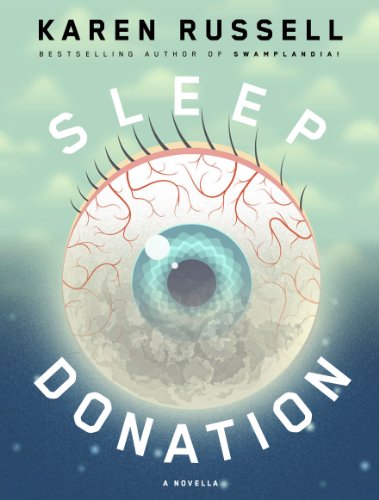
I want to tell you about Adrian Barnes' Nod, which turns our collective anxiety and dysfunction over sleep (so beautifully exploited in Karen Russell's 2014 novella, Sleep Donation) into the plague that ends the world, but not before a carnival of phantasmagorical horrors -- nightmares, even -- set us up for the kill.

Or Charlie Jane Ander's All The Birds In the Sky, which tells half its story of time through the quirky, and sometimes maddening, structure of the book itself, rekindling my optimism about postmodernism and the genre novel.
There was also Keanu, a film that disguised its incisive social satire and honest glimpse at race relations in a post-Obama America behind one of the cutest kittens to be captured on film.

I really did want to spend all my time on these, because they are totally worth it, and maybe more so, now, as glittering islands of human goodness in a world that feels like lightness may become a precious commodity, and one to fight for.

In that spirit, I want to share my (in progress) reading list for 2017. There's so much I don't know, and while I mayn't take pleasure in why these are on my reading list, I will in knowing that whatever is down the road, I'm using my brain and my voice, as well as my heart. I want to have pleasures again, in 2017, 18, and onward.

1. The Qur'an: I can't defend Muslim brothers or family unless I go to the source. 

2. Man's Search For Meaning: Viktor Frankel survived Auschwitz, physically and spiritually. He left us a guide as to how he did this.

3. The New Jim Crow: Mass Incarceration in the Age of Colorblindness: We elected the first black president, yet incarcerate disproportionately more black men. And, if nothing else, November results illustrate that racism remains alive and well.

4. Animal Farm: Time to re-read. We elected Napoleon. 


5. Black Panther -- A Nation Under Our Feet: For when I feel squashed beneath this list, Te-Nehisi Coates' take on the Marvel hero will remind me what we're fighting for to begin with.

I would love to hear more suggestions for my list. Comments are appreciated, or email me directly at caren at spitkitten.com.


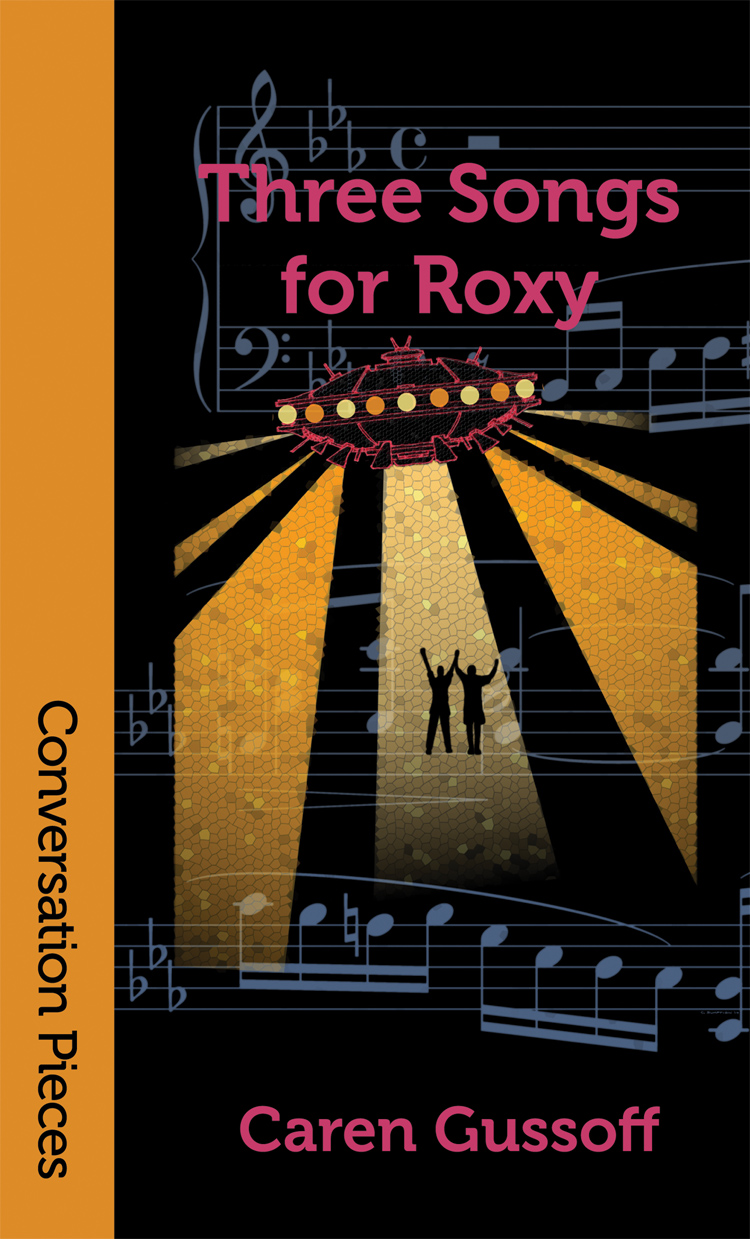
Caren Gussoff''s novella, Three Songs for Roxy, a First Contact story, was published as a Conversation Piece in 2015, and her pandemic zombie math novel, The Birthday Problem, preceded that by a year. She has published numerous pieces of short fiction. For more about her and a list of her publications, visit her at spitkitten.com.

The Pleasures of Reading, Viewing, and Listening in 2016, pt. 6: Nisi Shawl


Pleasures 2016
by Nisi Shawl

Pleasures and 2016 go together like change and smugness. That is, they don’t. Certainly I can’t be the only one shocked and disappointed by the deaths and other losses this past year has entailed. And yet…

Shivering beneath the heavy blankets I crawled under the night of November 9, I retreated from the digital world that had busied me lately to shield myself from reality with the printed word. As I’ve noted in previous posts, reading is in part something I do for a living; listening is something I do while writing, in aid and support thereof. Nothing makes me less likely to do something than making it compulsory. So, of course, despite a girlhood of literally walking around with my nose literally in a book, I had recently fallen behind in my required reading.

That night and since, I’ve regained my ground. I’ve read the books I had to, those I was obligated to review. I won’t go into details about them all here, because mostly they’re covered elsewhere: Gloria Naylor’s Mama Day in my new column at Tor.com, Kiini Ibura Salaam’s collection When the World Wounds with Robert Charles Wilson’s Last Year and Alison Littlewood’s The Hidden Folk in the second installment of my new columnn at Seattle Review of Books.

And so on. My book discussion group will meet in January to talk about Pride of Chanur by C.J. Cherryh, a 1980s space opera that says interesting things concerning gender essentialism. I read it last week, and I just finished the third of its three sequels early this morning.

I’m on a roll.

Call my reading escapism if you want to. Go ahead. I won’t censor you.

Years ago I used to argue with a nihilistic white lover that if voting didn’t matter, the authorities wouldn’t have tried so hard to keep black people from doing it. Well, hey. Got my tenses wrong.

I think reading matters. And I think sharing our thoughts about what we read matters even more. Let’s see how much of that we can do before it’s somehow, for some weird reason, suppressed.


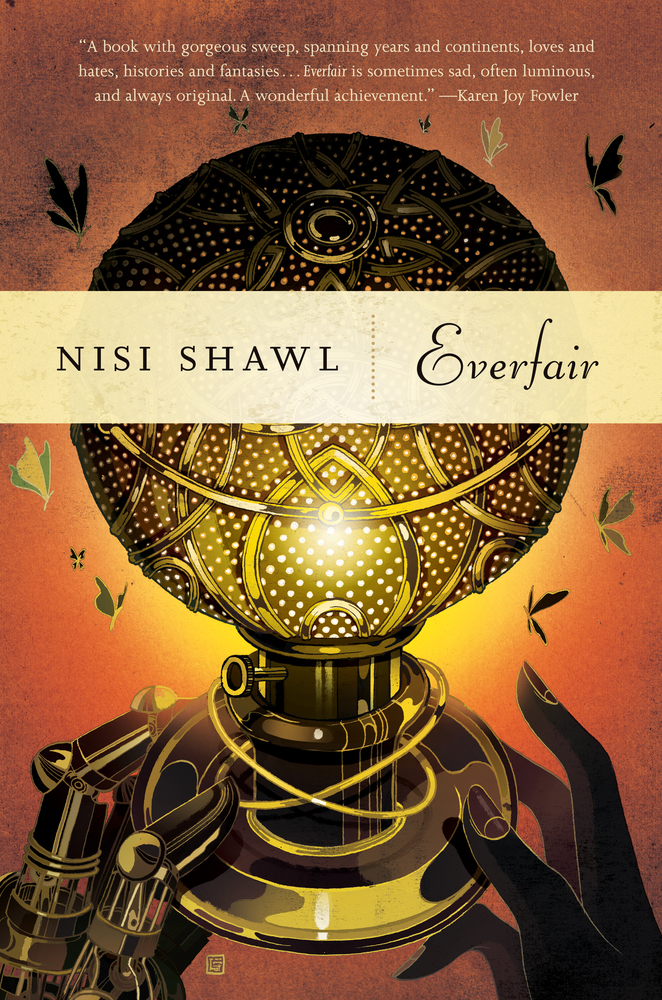
 Nisi Shawl is the author of  Filter House, which won the James Tiptree Jr. Award and was nominated for the World Fantasy Award, Something More and More, her WisCon GoH collection, and, with Cynthia Ward, the co-author of the celebrated Writing the Other: A Practical Approach, and the editor of The WisCon Chronicles, Vol. 5: Writing and Racial Identity, all of which are published by Aqueduct Press. Aqueduct Press has also published Strange Matings: Science Fiction, Feminism, African American Voices, and Octavia E. Butler, which Nisi co-edited with Rebecca Holden. This fall Tor released her brilliant alternate history/steampunk novel, Everfair. She is also the editor of the widely and wildly acclaimed anthology, Stories for Chip: A Tribute to Samuel R. Delany.  She reviews science fiction for the Seattle Times and writes columns for Tor.com and The Seattle Review of Books, is a member of the Clarion West board, teaches writing workshops at Centrum in Port Townsend, WA., and is the reviews editor of The Cascadia Subduction Zone.

Wednesday, December 14, 2016

The Pleasures of Reading, Viewing, and Listening in 2016, pt. 5: Cheryl Morgan


The Pleasures of Reading, Viewing, and Listening in 2016
by Cheryl Morgan


2016 has been so busy that I can scarcely remember what happened early on. However, some great books do stick in the mind. All the Birds in the Sky by Charlie Jane Anders was an early delight, though I suspect that you need to have some familiarity with Bay Area culture to fully appreciate it.

I fell in love with N.K. Jemisin’s work with her debut novel, The Hundred Thousand Kingdoms. I’ve been a bit distracted by other things of late, but I came back to her for her Hugo-nominated The Fifth Season and was blown away by it. It is a well-deserved winner of all those awards. The sequel, The Obelisk Gate, is a great book too.

With the Helsinki Worldcon coming up, Finnish fiction should be on everyone’s reading list. The brilliant Johanna Sinisalo has produced a feminist dystopia of a near future Finland where health concerns are used to control the population and all psychotropic drugs, even chili peppers, are banned. The Core of the Sun is a salutary lesson of how government concern for the population can be manipulated.  

Maresi by Maria Turtschaninoff is another excellent, and very feminist, Finnish novel. Sadly US publication has been put back to next January. Get it when you can, people.

A year in which a new Guy Gavriel Kay novel is published is always a good year. Children of Earth and Sky does not disappoint. Of course it helps that it is set in Croatia, a country I have come to know and love. I was particularly pleased with the ways in which Kay found historically plausible ways to feature women characters in active roles.

History is also a major theme in Matt Ruff’s Lovecraft Country. The way in which Ruff uses Lovecraftian ideas to detail the horrors of being black in 1950s America is very clever, and very timely for all sorts of reasons. There’s some great research in this book.

I haven’t read a huge amount of straight science fiction this year, but Ken MacLeod’s Corporation Wars series, about robots who achieve sentience and decide to liberate themselves, has made a promising start with Dissidence. Another interesting twist on a well-worn theme is Tade Thompson’s Rosewater, in which aliens have established a city in Nigeria and have set about subtly transforming Earth to their liking.

Tor’s novella series is turning into a great publishing success story. The star book by far in my opinion has been Seanan McGuire’s Every Heart a Doorway. I’m delighted to learn that there will be further books in the same world. Also highly recommended is Kij Johnson’s Dreamworlds story, The Dream Quest of Vellitt Boe. Lovecraft’s world is very different when seen through a woman’s eyes.

On the subject of short fiction, my friend Jana Funke has been lucky enough to spend some time rooting around the Radclyffe Hall archives. The resulting book, “The World” and other unpublished works of Radclyffe Hall, is very interesting. I had no idea that Hall made so much use of science fiction tropes in her work. Sadly UK academic publishing is seriously broken and the book is ludicrously expensive. Hopefully you still have access to a library.

The most impressive book launch that I attended this year was for Fight Like A Girl, an anthology edited by my good friends Joanne Hall and Roz Clarke. The book grew out of a conversation on social media and features stories of women in combat. The launch included actual demonstrations of fighting techniques by some of the authors.

One of those authors, of course, was Juliet E. McKenna, who is a black belt in aikido. Just recently I was honoured to publish a brand new book by Juliet. Shadow Histories of the River Kingdom is a new departure for her, being based in a new world rather than her well-known setting of Einarinn.

Still with local people, one book that may have flown under the radar because it was published as literary fiction is The Many Selves of Katherine North by Emma Geen. This fascinating SF novel deals with the invention of a technique for allowing a human consciousness to occupy another body. Initially it is used for biological research, but the company has very different plans. Emma did a huge amount of research on animal lives for this.

Still with (fairly) local writers, I was very impressed with Stephanie Burgis’s debut adult novel, Masks & Shadows. It is heavily based on research she did for a PhD in the history of opera. It is also one of the few books I know of with a eunuch as a love interest. Carlo is a castrato, and they were very much the rock stars of 18th-Century music. But then androgynous musicians were also a thing in the early Islamic Caliphate. So little changes.

Stephanie’s book is one of many I read as research for an essay I am writing on trans characters in speculative fiction. Another was An Accident of Stars by Foz Meadows, which falls firmly into that splendid tradition of feminist SF exploring matriarchal societies. Foz has done a fine job and I’m sure her book will be of interest to Aqueduct readers.

Possibly my favorite treatment of a trans character has been Full Fathom Five. This is part of Max Gladstone’s Craft Sequence. and at first sight there seems to be no particular reason why the character should be trans. That in itself is revolutionary, because so many writers only put a trans character into a book to talk about gender transition. But the more I thought about the book the more I came to the conclusion that Gladstone had done something very clever indeed, and found a role that positively required a trans hero.

The number of trans people writing fiction these days is growing rapidly. I was delighted to come across Hope Nicholson’s Love Beyond Body, Space & Time, an anthology of speculative fiction written by LGBT+ folk who also identify as Native American. Obviously it is a very narrow field, so the content isn’t necessarily always top notch, but it provides a very different view. There’s some really interesting trans history in the book too.

The stand-out literary book about a trans character this year has been When the Moon Was Ours by Anna-Marie McLemore. The quality of the prose, from such a young writer, is astonishing. McLemore is not trans herself, but she is married to a trans man and clearly knows the subject well. The book is probably better called Magic Realism than Fantasy, but I still strongly recommend it.

Finally in fiction, a brief glimpse into next year. I was lucky enough to get an advance reading copy of Dreadnought by April Daniels. It is a story of a young trans girl who, though fortunate circumstances, gets the body she always dreamed of. One potential downside is that she is now the world’s mightiest superhero. Dreadnought is a joyful but sharply observed book well steeped in superhero lore. I loved it.

Most of the nonfiction I have been reading this year has been ancient history, and fairly serious academic stuff at that. It is very much an acquired taste, though hopefully the resulting talks that I craft from the research will be accessible and informative. One book I can recommend is Sex Itself by Sarah Richardson. This is the history of the scientific quest for the origin of sex in the human body. Is it chromosomes, or hormones, or something more complicated? The book is an object lesson in how biological essentialism rooted in a desire to prove how different men and women are can lead to some very bad research. I particularly enjoyed the section on the 1970s panic over “XYY men”. Google it, there were some hilarious misunderstandings.

On to viewing then, and my first item is a live performance. In February I had the honor to spend a week looking after Stuart Milk of the Harvey Milk foundation. This meant that I had to ferry him to and from various public speaking engagements in local schools, colleges and so on; and occasionally share a platform with him. I do a fair amount of public speaking these days, so I know a bit about how it is done. Stuart is an absolute master at it. And his message is magnificent. I learned so much from watching him.

Later in the year Kevin and I made our first ever visit to Barcelona for the Spanish Eurocon. You know how everyone says that it is a really beautiful city, and the Gaudi architecture is jaw-dropping? They are right.

The cinema event of the year had to be the new Ghostbusters. It isn’t a great film by any stretch of the imagination. After all, the premise is deeply silly. Also the theatre release has been cut to the bone to make it fit in under two hours. The extended edition on Blu Ray is a much more coherent movie. Having said that, it is a very knowing film. There’s all sorts of lovely meta stuff in it. Much of the time you are not laughing at the actual jokes, but because of how what they are doing riffs off some real world issue. And then there is Holtzmann, who can revive anything, given a big enough generator.

X-Men Apocalypse was also a somewhat confused movie, but meant a lot to me because I grew up on the comic. This was the first X-Men film that I felt had the Jean Grey of my childhood in it. Shame about poor Warren, but nothing’s perfect.

Captain America: Civil War had an almost impossible task living up to Winter Soldier. It didn’t fail too badly, despite the obvious issues of dealing with a huge ensemble cast of super people. There was enough fan service to keep me happy.

I was really nervous about Doctor Strange. That’s another comic I read all through my childhood. Benedict Cumberbatch did a great job portraying a rich, arrogant genius. The film hung together tolerably well too. However, all of the accusations of cultural insensitivity ring true. I’ve seen it said that they made The Ancient One a Westerner because of pressure from the Chinese government to not have a Tibetan in the film. Movie politics is so annoying. Thankfully the Cloak of Levitation stole the show. I will happily watch any movie with that cloak in it.

Meanwhile on TV I am still watching Supergirl and, thanks to the brilliant cross-over episode, have discovered The Flash. I’m disappointed that Cat Grant has been written out of the series, but I can quite see why, because she stole the show. As recompense in season 2 we have the Alex Danvers coming-out arc, which is just beautiful.

Finally back to real life. The other week I happened to be in London with some free time on just the right day. So I took myself along to the House of Commons to watch the first ever debate on trans rights. Back when I transitioned (in the previous century) trans people had no legal rights in the UK. When the Gender Recognition Act was passed in 2004 it was a question of how little could be done, and how difficult it could be made for us, for the government to comply with a judgement handed down by the European courts. To sit in the Public Gallery of the House of Commons and listen to MP after MP talk about how badly trans people are treated, and how the law needs to change to accommodate us, was a surreal and deeply moving experience.

As for music, it won’t surprise anyone to learn that I have been listening to a lot of Bowie and Prince this year. To lose one of them was a tragedy. To lose both in the same year is unthinkable. At Finncon this year I did a Bowie and Prince Memorial panel. Guest of Honor Cat Valente was kind enough to help out. I hope the Starman was proud of what us kids did.

I am of course biased in this, but I think the best Bowie tribute of the year was Strung Out On Heaven, the album put together by Amanda Palmer and Jherek Bischoff. Amanda’s tribute show at The Proms was also fabulous.

For my radio show I don’t get to see much in the way of new music. However, I did my usual thing this year of helping out with the live coverage of Bristol Pride. Mostly the acts on the main stage sing over backing tracks. My interest picks up when I see someone carrying actual instruments. And wait, what’s this? Is that an all-girl rock band I see? Yes, it is. They are called IDestroy, they are a local band, and they are darn good. Here, have a listen. https://www.youtube.com/watch?v=d6Wlsf2_WQQ

Cheryl Morgan is the owner of Wizard’s Tower Press. She blogs, reviews and podcasts regularly at Cheryl’s Mewsings . Cheryl co-presents the Women’s Outlook show on Ujima Radio . In 2015 she was honoured to give a lecture on “Exploring Gender Fluidity through Science Fiction and Fantasy” at Liverpool University, available online here. Her work has appeared in Letters to Tiptree, The WisCon Chronicles, and elsewhere.

Tuesday, December 13, 2016

The Pleasures of Reading, Listening, and Viewing in 2016, pt. 4: Alisa Alering


Pleasures 2016
by Alisa Alering

Novels

The best book I read this year is Evicted, by Matthew Desmond. I’ve seen it on a lot of year-end “Best Of” book lists, and I’m not surprised. It’s a well-researched, well-documented, yet extremely readable examination of renters, landlords, race, and social policy in Milwaukee. If that sounds dry, don’t believe it for a minute. It is just a fantastic book; Desmond tells the personal stories of landlords and tenants, both black and white, and shows a system that is fundamentally broken and causes far more harm than might initially appear. The only downside to reading this book is realizing how far we are from any practical solution.

A Stranger in Olondria, Sofia Samatar - I’ve been meaning to read this for ages, but Samatar being GoH at Wiscon this year gave me the shove I needed. Beautiful writing, beautiful immersive world. Rich with the possibilities of story and that element of elusiveness, of the magic being somehow just one step out of reach, just one breath beyond the candlelight, that makes it all the more compelling. Glad I finally got there.

The Chimes, Anna Smaill - This one ended up winning this year's World Fantasy award, though I hadn’t heard of it until it appeared on the finalist list. A tale of post-apocalyptic England (London/Oxford), it reminded me of both Riddley Walker and Clockwork Orange. Though there is a strong musical component to Smaill’s dystopia, it was the idea of an entire society living without long-term memory that I found most fascinating.

The Last Confession of Thomas Hawkins, Antonia Hodgson - When I travel, I require a good mystery, preferably historical, for airplane reading. Hodgson delivered with this tour through the teeming streets of early 18th-century London with the ne’er-do-well Hawkins.

Sleeping Giants, Sylvain Neuvel - I read this during the Thanksgiving holiday as I was recovering from a bad cold and my partner was unconscious in the next room with the same cold that I had thoughtfully passed on to him. Despite clogged pipes in my head, I read it straight through, the pages turning quickly, curious about why the ancient alien robot hand had suddenly been discovered in South Dakota. It’s been a long time since I’ve had that kind of uncomplicated reader’s experience, and for that reason I think of this book fondly.

Swing Time, Zadie Smith - A Guardian essay by Smith on “Dance Lessons for Writers” persuaded me to seek out this tale of two mixed-race girls from London and the different paths their lives take. It’s about friendship and family, money and fame, and all the different ways of being in the world. I’m only halfway through, but I still know it’s one of the best books I’ve read this year. It does very well one of my favorite things I like for books to do: tells me in intimate specific detail about lives I will never experience.

Short Fiction

I didn’t read a lot of short fiction this year, but of what I did read a few stories have stayed with me and deserve a mention.

“The High Lonesome Frontier,” by Rebecca Campbell (Tor.com) - Something about this elliptical story that follows an old ragtime song through time touched me in a way that I prefer not to analyze but only to enjoy.

“I Will Follow You” by Roxane Gay (Best American Mystery Stories 2014) - This story about two sisters who were the childhood victims of crime is unique, vivid, and kind of heartbreaking.

Also in Best American Mystery Stories 2014—edited by Laura Lippman and a solid volume overall—I enjoyed the final story, "Antarctica” by Lauren van den Berg, a mesmerizing tale of a woman who travels to a research station in Antarctica, ostensibly to collect the remains of her brother who died in an accident.

Audiobooks

I always have an audiobook on hand to help me through long drives, exercise, and cleaning the cat box. A great audiobook isn’t just about quality fiction. It has to be a story that suits the oral format, that sounds good being told, and the narration can make or break the experience, no matter how stellar the writing. The ones below are outstanding in both respects.

• The Trespasser, Tana French - Murder and secrets in modern Dublin.
 • Razorhurst, Justine Larbalestier - Ghosts and gansters in 1920s Sydney.
• Thousand Autumns of Jacob de Zoet, David Mitchell - Horatio Hornblower goes to Japan. Plus demons.
• Wonders of the Invisible World - Chris Barzak - Magical revenge devastates generations in the American midwest.

Other

And though it’s not something I read, exactly, I was captivated by Mimi Mondal’s reading at the World Fantasy convention. Her work in progress follows a magical, traveling carnival through an alternate historical India. It had dancers, and lovers, princes, djinns, and goddesses. I can’t wait for this to be a finished thing that I can actually read.


 Alisa Alering was born in the Appalachian mountains of Pennsylvania where she ran around barefoot and talked to the trees. Her short fiction has appeared in Mythic Delirium, Time Travel Tales, Clockwork Phoenix 4, Flash Fiction Online, and other places. She is a graduate of Clarion West (2011) and winner of Writers of the Future (2013).  Her "The Night Farmers’ Museum" was chosen by judge Robert Coover as runner-up for the 2014 Italo Calvino Prize. Her story "Madeleine Usher Usher" appeared in Aqueduct's Missing Links and Secret Histories: A Selection of Wikipedia Entries across the Known Multiverse. www.alering.com | @alering

The Pleasures of Reading, Viewing, and Listening in 2016, pt. 3: Andrea Hairston


Books To Dream By
by Andrea Hairston

I hunker at my desk, writing away, slogging through edits, making less sense, not more. Democracy is on the line. Who we are and could become is uncertain; who we once were is under assault. Yes, even the past is at risk. I feel it slipping away from me. The stories we tell on ourselves matter. The narratives we construct are policy. The actions we take are based on the stories we make. It’s tempting to feel bleak, pointless, defeated. (What the hell am I writing?) Yet, I know we need good stories, true stories. We hunger and ache for the inspiring plots we can make out of this or that disaster. The melodramas of the moment are so compelling, so thrilling and appalling, so filled with good guys and bad guys, and delicious, outrageous, outsize lies! Oh the spectacle! Oh the drama! Glitzy, adrenalized, stupendous lies bombard us, occupying our minds as we react and mount rebuttals. The master of disaster stresses every aspect of the system, never letting up, nagging and jagging at three in the morning. Who can think without thinking of him? But I remember. We have survived already. We’ve been living post apocalypse for a long while. Disaster is just not evenly distributed.

I wake up. It’s actually three in the morning, and I am not writing. I’ve been stuck in a bad dream, a writer’s nightmare, and even though I’ve regained motor control and breath control, it still feels like I am stuck in that bad dream. Demons are sitting at the foot of my bed. They are laughing and snarking and doing demon things. It’s dark. I don’t have my lenses in. They could just be shadows, howling with the coyotes, and the bears are up too. It’s a warm night for winter. My phone glows with the storms raging across social media. Truth is getting blasted, displaced by the melodramas people are willing to believe—melodramas they’ve been primed to believe. Complexity is being savaged by feel-good denial. Anti-intellectualism has gone viral. The world as we know it is always coming to an end, but at 3:00 AM I have to force myself not to check for an update. What good would that do at 3:00 AM—better to go out and play with the bears and howl at the stars. But I am not invited to that party.

So I finish the chapter of Super Cooperators I started earlier—a book I’ve already read about the marvel of our biological altruistic nature—we—mammals, bacteria, birds, trees, insects, fish, et. al. are marvels of cooperation. I am thoroughly engaged as Martin A. Nowak ranges through mathematical evolutionary biology, game theory, cultural studies, computer science, the prisoner’s dilemma: Should you stick it to your opponents or trust in mutual cooperation? Over the long haul, those who cooperate flourish, but I’m old. Do I have a long haul?

Of course I do. I am part of a long haul. This book fills my minds with questions. I fall asleep on the image of ancestor rocks, rain, bacteria, slime molds, and creatures swinging through trees, cradling their babies, offering the magic and wonder of life to the universe. Future generations tug me deep into dreams, into possibilities. Super Cooperators is a book to sleep with. So is Braiding Sweetgrass by Robin Wall Kimmerer and Are We Smart Enough to Know How Smart Animals Are? by Frans De Waal. Too often we act as if what we know is what there is to know. A book of stories, a book of actions, a book of insights, Braiding Sweetgrass: Indigenous Wisdom, Scientific Knowledge, and the Teaching of Plants challenges us to examine and expand our ways of knowing the universe. So does Are We Smart Enough to Know How Smart Animals Are? These are books to dream by!

Andrea Hairston is the Artistic Director of Chrysalis Theatre and has created original productions with music, dance, and masks for over thirty years. She is also the Louise Wolff Kahn 1931 Professor of Theatre and Afro-American Studies at Smith College. Her first novel from Aqueduct Press, Mindscape, won the Carl Brandon Parallax Award and was shortlisted for the Phillip K Dick Award and the Tiptree Award. Her second novel, Redwood and Wildfire, published by Aqueduct in 2012, won the James Tiptree Jr. Award as well as the Carl Brandon Kindred Award. Aqueduct released Lonely Stardust: Two Plays, a Speech, and Eight Essays in 2014 and published her new novel, Will Do Magic for Small Change in Spring 2016.

Monday, December 12, 2016

The Pleasures of Reading, Viewing, and Listening in 2016, pt. 2: Sarah Tolmie


The Pleasures of Reading, Viewing, and Listening in 2016
by Sarah Tolmie

1. The Found and the Lost: Collected Novellas of Ursula Le Guin (Saga Press, 2016)

I love novellas and I learned to love them from reading Le Guin. Indeed, it was her precise and firm judgement about how long a story should be, apparently divorced from all marketing concerns — for I have since found that this is a length very hard to sell — that subliminally formed mine.

Ursula, it is all your fault that all my short stories turn into novellas! (Bless you.)

This is the latest in the Le Guin anthology drive, which is presumably supposed to reinforce the question: why has she not won the Nobel Prize? So far, it is one of my favourites. I have read all the different tales separately, but they read well together; the book is a kind of masterclass in the form. Not to belabour the point, but she is the kind of quintessentially American voice that is a useful corrective to these times; hers is the most sustained, reasoned, pitiless but compassionate exploration of the big American themes that I know of: the psychological burden of freedom, the profits and losses of internationalism, the ways in which individuals and collectivities relate. She has articulated for a lifetime the value of art and language, and also championed non-sexual love. I would say she is the high priestess of agape for our era. There are erotic relationships in her work everywhere, but people also love places, objects, traditions and ideas. It is refreshing to hear about these and they are powerfully important. She is the only person ever to make me care about western landscape for more than a microsecond, and, more importantly, the only person ever to use the word “pious” (as she does, memorably, in Lavinia) in a way that doesn’t make me want to puke. Her oeuvre has been, from first to last, entirely free of Christian messianism in any form, which is a great achievement, as it is still one of the driving forces of the sf genres right across the board. Sacrificial gambits in her stories always work another way, and most monotheists are barbarians. It’s a huge relief.

In short: keep reading Le Guin, and reassure yourself that not everyone in the English-speaking world is insane.

2. Time’s Oldest Daughter, Susan Lyons (Aqueduct, 2017)

I read this book to blurb it for Timmi. It made me feel very important, blurbing. But everyone else should read it for less narcissistic reasons. It’s great, and truly unusual. I still remember reading, years ago, in some introduction that Tolkien wrote, that he “cordially disliked” allegory, and at the time I thought I did, too. I have since realized that I do like allegory; in fact, when well handled, it is a medium I love: subtle, flexible, polyvalent, leaving lots of room for readerly action. Time’s Oldest Daughter is like this. It is brief and intellectually dense, but lyrical. Not many people are willing to take on Milton, or if they do, they make a big fuss about it. Lyons just gets the job done, in surprisingly Miltonic language (not the bombastic Milton, the smart and efficient Milton), taking feminism right back to the beginning — or before it, indeed, prequeling Milton’s prequel of the historical human world. You’ll see what I mean. Highly worth reading.

3. Eugene Onegin, choreographed by John Cranko, performed by the National Ballet of Canada, Toronto.

The best ballet performance I have ever seen. I am a big Balanchine fan; I like that tick-tick-tick modernist/neo-classical precision and the sheer technical demands of it. Cranko is very different, much more romantic. The vocabulary is more modern-dancey to my mind; some lifts and floor work look like contact improvisation. But the duets in this ballet just knock your eye out. The emotional range of them within Pushkin’s simple plot is stunning: upbeat Rom-Com courtship; adolescent Twilight fantasy; homosocial regret; married-people-are-sexy-too; and, most importantly, revisit-and-abandon-your-Twilight-fantasy-like-a-grownup. I saw Guillaume CotĂ© dance Onegin. He was fantastic, a privilege to witness. And Greta Hodgkinson as Tatiana. Miraculous. One of the cool things about the National right now is how many senior dancers they have — really experienced old hands who have been with the company for 20 years, who haven’t lost their physical edge but have gained tremendous power and nuance. Absolutely wow.

4. Midnight Diner: Tokyo Stories, on Netflix.

I watched these with my ten-year-old son, who loves anime. Now he is obsessed with Japanese food and is cooking it at home and combing through our recipe books and reading about ramen online. All of this is good. The episodes are lovely, if a bit uneven, each titled after a particular dish made at an all-night diner in Shinjuku. The cast is diverse, the stories charming and wonky, and the master chef presides with terrific gravity. Now we are set to watch the original Japanese-made (and much longer) series upon which it was, apparently, based. Many enjoyable family movie nights ahead.

This doesn’t seem like much, does it? I guess it was a busy writing and teaching year. I will say that I either read or false-started a number of new books this year that I didn’t like, some from small presses and some from the Big Five. The whole experience reinforced what seems to me to be the sheer arbitrariness of the publishing world. It is a crapshoot at every level from the reader’s point of view. Weird. It may also be that I am in a retreatist state of mind. This is the year in which, after much faffing around and moral wrestling, I gave up on social media (an odd thing to say on a blog, of course). And it wasn’t really prompted by the horrors of the recent US election, either, or at least not directly. It was its role as a purveyor of illusions. Plus its addictiveness. So, now I am stuck with all my other addictions, but at least not that one. And while I am a firm believer in the power and usefulness of illusion, what the Dutch call houding (or used to be in the 17th century, anyway) I need mine to be better crafted. So I’m going to read books instead.

Sarah Tolmie is an Associate Professor in the English department at the University of Waterloo, where she teaches medieval and renaissance literature, general British literature, and creative writing. She publishes on the bizarre late medieval visionary poem Piers Plowman and its relations to logic and language and has been developing a virtual reality translation of the text — what she calls a “wearable poem” that the reader walks into via a head-mounted display — called the Salvation Suit, since 2009. This technological experiment has led to several other research-creation projects, among them building an augmented reality angel out of a human dancer and a pair of dynamically-responsive virtual wings, and making a whispering gallery of voices saying “goodbye” with a Kinect, an interactive theatre piece about mourning. Aqueduct Press published her debut novel, The Stone Boatmen, which was nominated for the Crawford Award, and NoFood, a suite of stories, in 2014. This year we published a pair of her fictions as Two Travelers.

The Pleasures of Reading, Viewing, and Listening in 2016, part 1: Lisa Tuttle


Pleasures of Reading, 2016 
 by Lisa Tuttle 

The best book I’ve read this year is Jaggannath by Karin Tidbeck. I’ve been hearing amazing things about this author’s work for a few years, and I see that the e-book I finally got around to purchasing only a couple of months ago was published in 2012 by Cheeky Frawg Books – four years? Really? It took me that long to follow up on all those positive reviews (“You must read Karin Tidbeck” – Caitlin R. Kiernan; “Tidbeck has a gift for the uncanny and the unsettling. In these wonderful, subtle stories...”—Karen Joy Fowler. “I have never read anything like Jagannath. Karin Tidbeck’s imagination is recognizably Nordic, but otherwise unclassifiable—quietly, intelligently, unutterably strange.” – Ursula K. Le Guin.) and recommendations by people I trust, writers whose own work I adore... Wow. Well, better late than never, and if you still haven’t discovered this brilliant, original voice in the genre various described as “weird” or “strange” or even “science fiction” (the title story is certainly that – a mind-blower) – what are you waiting for? Trust me. This could be the best book you read in 2017.

Other books that really grabbed me this year are I Love Dick by Chris Kraus, The Argonauts by Maggie Nelson, A Short History of Myth by Karen Armstrong, Katherine Carlyle by Rupert Thomson, and The Mule by David Quantick.

I’ve also been reading Georges Simenon’s Maigret books, newly translated into English for Penguin Classics – short trips into vividly described settings, each a perfect snapshot of a particular time and place, and intriguing mysteries, too. The quote by William Faulkner seemed unlikely – “I love reading Simenon. He makes me think of Chekhov.” – but now I understand. For various reasons, this year I reread several books which had been important to me in the past, and am happy to report they all stand up to rereading and really were as good as I remembered: Kindred by Octavia Estelle Butler, The Girls of Slender Means by Muriel Spark, Lincoln’s Dreams by Connie Willis and – most importantly, perhaps, in these frightening times, Margaret Atwood’s The Handmaid’s Tale.


 Lisa Tuttle is the author of numerous novels and short story collections. Her most recent novel, published this year, is The Curious Affair of the Somnambulist and the Psychic Thief. She has also published nonfiction and more than a dozen books for younger readers. In 1974 she won the John W. Campbell Award for Best New Writer and, in 1987, the BSFA award in the short fiction category. Aqueduct Press published her novella My Death in 2008 (which is now available as an ebook). Born and raised in Houston, Texas, she has made her home in a remote rural region of Scotland for the last twenty years.

Sunday, December 11, 2016

The Pleasures of Reading, Viewing, and Listening in 2016

Our annual series of posts on reading, viewing, and listening is about to begin. This may feel like the year of doom, but as Andrea Hairston has pointed out in her Take Back the Narrative posts, reading books is more important to us than ever. (Maybe even as important as it was to many of us teenagers, desperate for glimpses of hope and possibility.) And so although this series may strike some of us as trivial in this moment, I'm feeling otherwise--and am especially grateful this year to the authors and friends of Aqueduct able to contribute to the series. And so, once again I've solicited piece from a bevy of writers and critics to tell us what they particularly enjoyed reading, viewing, and listening to in the last year. This year's edition will include posts by Lisa Tuttle, Cheryl Morgan, Nisi Shawl, Claire Light, Sarah Tolmie, Tansy Rayner Roberts, and others. (I'll probably be contributing to the series this year myself.) I'll be adding links below as I upload each new contribution, to provide a list for convenient reference. I hope you'll enjoy reading these as much as I do, and perhaps even find them helpful for slow-thinking our way through these difficult, painful times.

Part 1: Lisa Tuttle
Part 2: Sarah Tolmie
Part 3: Andrea Hairston
Part 4: Alisa Alering
Part 5: Cheryl Morgan
Part 6: Nisi Shawl
Part 7: Caren Gussoff
Part 8: Tansy Rayner Roberts
Part 9: Jackie Hatton
Part 10: Claire Light
Part 11: Nancy Jane Moore
Part 12: Christopher Brown
Part 13: Carrie Devall
Part 14: Jeffrey Ford
Part 15: Kristin King
Part 16: Mark Rich
Part 17: Lesley Hall
Part 18: Lisa Shapter
Part 19: Cynthia Ward


Friday, December 9, 2016

Guest Post by Diantha Day Sprouse-- Part 2: The Dominant Class of Angry White People Elected Donald J. Trump


The Dominant Class of Angry White People Elected Donald J. Trump
by Diantha Day Sprouse

Part 2 of 2
(Go to Part I here.)

The election of Donald Trump to the Presidency of the United States is nothing less than mockery of the American democratic process, mockery of the American Constitutional form of government, and a triumph for the white nationalistic, supremacist, misogynistic, racist, homophobic, and authoritarian forces in American society. Donald J. Trump’s victory, and elevation to the status as president, is a backlash of the white dominant class against the collective minority classes within the United States and an omen to liberal democracy of things to come. On January 20, 2017 we will say goodbye to the first African-American President of the United States. Barack Hussein Obama has served this great nation with compassion, dignity, integrity, and generosity. We will be witness to the inauguration of Donald J. Trump to the presidency of the United States. Donald J. Trump, a white man who curried the favor of the white supremacist, nativist, nationalist, xenophobic, and neo-Nazi elements in this country by promising to restore to them the glory days of Jim Crow, will now be President. A con man, a flimflam artist, and philanderer is President. It is hard to imagine a worse candidate for President. Yet the American dominant class composed largely of white men and women have struck back in an attempt to strike down all the social and fiscal changes that have leveled the playing field for the minority groups within the United States.

Unfortunately the ramifications of this ill-conceived Presidency are likely to have long-term effects: a socially and fiscally conservative Supreme Court; a President who considers women chattel property and minorities as leeches, who has a total disregard for civil liberties, truth, and scientific fact, and a man who discourages simple human decency in favor of denigration. Trump espouses and encourages the unbridled vulgarity, know-nothing attitude, disdain for education, and love of a dog-eat-dog free-market approach to economics that is the mantra of the KKK and neo-Nazi groups. His campaign rhetoric inflamed the passion of the angry white person, especially the angry white male and to a lesser extent the angry white female. His president-elect acceptance speech and post-election behavior continues to inflame racists to take actions they feared to take under the last four previous administrations. I expect his presidency will be no different. This dominant class made up largely of angry white people now has a leader of whom they approve and who approves of them, and that combination will sorely test the strength and resolve of this nation to remain one nation undivided with liberty and justice for all.

This dominant class of angry white men and women dashed the hopes of feminists by putting Hilary Clinton in her place. They showed how easy it is to smear a woman’s reputation. The employment of fake news sites proliferated and had one main focus---destroy any chance that Hilary Clinton had of becoming president by any means necessary, using connections in Congress and the FBI to agitate and foment suspicion. Angrily beat that horse even after it was dead was their motto. They relentlessly used innuendo and vague references to undermine her credibility. She valiantly fought off relentless attack after vicious attack; however, the forces of angry white men and the collaboration of angry white women just kept coming with one lie after another. I think that Hilary Clinton had no idea how social media and fake news sites were proliferating the innuendo, vague rumors, and fantastic stories of atrocities committed by her or in her name.

This dominant class of angry white men and women has with the election of Donald J. Trump, the epitome of “the ugly American” and antithetical to openness and inclusiveness, dealt a horrendous blow to all who believed in the inherent goodness of people. The dominant class of angry white people has decided that all of us should live in their world, where white vanity is in vogue, hatred of the Other is normative, white arrogance is merely pride of heritage, where there is no truth but their truth, where recklessness is heroic and patriotic, and disdain of democratic process is their right. As in Germany in the 1930s, these attitudes and behaviors will lead us into a world of misery, national decline and untold suffering.

Commentators, talking heads of all kinds, are trying to normalize the situation by telling us to remain calm and we are good people here in America and everything will be just fine. They are down-playing the virulence of the racist rants and hate crimes. They refused to report on the debacle at Standing Rock and the poisoning of the Navajo waters by mine waste. In the meanwhile, Donald J. Trump flies around in his private aircraft, refuses to live in the White House, and takes actions that he has no authority to take.

This dominant class of angry white people are behaving foolishly, recklessly, and self destructively both in the aggregate and as individuals. They now have a narcissistic, cunning demagogue who is only too willing to whip them into a frenzy of white pride and rage and ride the waves of their adulation.

 *****
 Diantha Sprouse earned a BA in psychology with a minor in women's studies from Ohio State University.  She earned her MSE from the University of Wisconsin-Platteville. She is currently the sole proprietor of Heritage Hunters Genealogy Services. She resides in Arlington,  Virginia with her spouse of thirty plus years and their dog Rex.

Guest Post by Diantha Day Sprouse-- Part 1: Who Are Those Angry White People who Voted for Donald J. Trump, and What Do They Want?


Who Are Those Angry White People who Voted for Donald J. Trump, and What Do They Want?

by Diantha Day Sprouse


Part 1 of 2

The 2016 election was fueled by class anger, an anger that has been slowly building for four decades. Many people were caught off guard and completely surprised by the breadth and depth of this long held slow simmered anger-- the anger that comes from thwarted dreams.

The dream is to live in your own Class milieu where you feel comfortable with enough money to grow and flourish. The dream is to be independent and order your own life and not take orders from anyone else. The dream is to own your own business and be self-sufficient.

The people who hold this dream of a comfortable independent life know that Alexander Hamilton was right when he wrote, "He who pays is the master" and "A power over a man's support is a power over his will." The independence-minded middle class/working class wants no man to have power over their wills and wants to be beholden to no man.

During this past year I've been in conversation with two men who typify the working class/middle class. What they had to say reveals the anger and frustrations of people whose dreams have been stunted, people who are misunderstood. Danny M. is a young man who has a family to support and a full-time job. He wants a comfortable life for his family. Ray E. is a little older than Danny M. and more passionate in his support of Mr. Trump. Ray E. has a family and a full time job. He also works two part- time jobs to allow his family to flourish. Neither man would be described as working poor. Some of the things they have to say may illuminate what the middle class/working class is thinking, feeling, hoping and dreaming.

Danny described Mr. Trump's victory this way: "The middle class woke up. Voters who occupy 90% of the nation's land mass stood up and put their middle finger in the face of liberalism and said get the hell out of the way." When we look at the final vote tallies from the 2016 election we see that the center of the nation is colored red for Donald Trump the conservative candidate. If we look at the same map by county rather than state we see a map in which the rural areas are red and the cities are blue.

This is a middle class/working class that is acutely aware of the domestic issues in America. Ray E. says we need to take care of the following issues: "employment numbers, people dependent on assistance, economic health, and neglected infrastructure."

The middle class/working class believes that the restoration of independence and self-confidence in people's ability to take care of themselves will go a long way toward remedying the nations problems. Both Danny and Ray believe that both political parties forgot about the middle class/working class. Ray says he feels like a "forgotten person". Danny says he feels that perhaps he is "out of touch with modern thinking" and describes himself as a "traditionalist."

So why did so many of the middle class/working class vote for Mr. Trump?

The middle class/working class admires the rich but resents the professional white-collar class. Why? For the most part, the middle-class worker has little direct contact with the rich except through television programs. However, professional white collar managers order them around every day. Teachers are perceived to be condescending, patronizing, and generally unhelpful. When I was in high school the guidance counselor told me to "forget about college and just marry a farmer." Rich people are perceived to be independent, hardworking, and taking orders from no one. That perception is part of Donald Trump's appeal.

Middle class/working class people like people to speak their minds and to be open to the point of bluntness. Trump's blunt talk taps that working class/middle class value.

Middle class/working class men perceive themselves to have a manly dignity linked to their ability to take care of their families and themselves. Mr.Trump's persona as an independent man who can take care of his family and himself mirrors that value.

One mistake that liberals have made is to conflate the middle class/working class with the working poor. The needs of the bottom 30% of American families are very different from those of the working middle class. Offers of sick leave, increases in minimum wage, and childcare are often seen as insulting. The middle class/working class want a return of stable full-time jobs that generate a solid middle class/working class life.

Ray feels that "our silent majority movement has nothing to do with taking anything from anyone except politicians and criminals.....it's more about being sure we are included in the future of America....rights to life liberty, and pursuit of happiness." There is a perception grounded in reality that the middle class/working class has been ignored and neglected while the poor have had the lion's share of attention from politicians and social programming alike. This has led to some resentment of the poor by the middle class/working class. Mr.Trump has vowed to help the middle class/working class.

One of the unintended consequences of Mr. Trump's rhetoric has been that groups such as the neo-Nazi party and the Ku Klux Klan feel encouraged and emboldened. How does a typical Donald Trump supporter feel about these groups attaching themselves to the Trump campaign? Ray says he finds these groups attaching themselves to the Trump campaign "offensive." Danny also finds them to be "undesirable" and a "blot" on society.

The middle class/working class has made it clear that they are putting both political parties on notice. Forget us again at your peril. If Mr.Trump does not keep his promises, Ray says, "I will be right there against him with the same enthusiasm that I had while putting him in office." Danny says, "Trump has the opportunity to expand or destroy the conservative brand. There is no in-between, so I have a VERY strong eye on him."

Only time will tell us whether the middle class/working class achieves it dream. Time and history will judge the success of this awakening of the behemoth that is the American middle class/working class. Will the middle class/working class be betrayed by their new hero? Will the Democrats raise a hero for the middle class/working class in the next election cycle? Only time will tell.

Go to Part II here.

Diantha Sprouse earned a BA in psychology with a minor in women's studies from Ohio State University. She earned her MSE from the University of Wisconsin-Platteville. She is currently the sole proprietor of Heritage Hunters Genealogy Services. She resides in Arlington, Virginia with her spouse of thirty plus years and their dog Rex.

Monday, November 28, 2016

Depersonalized personalization (or is it personalized depersonalization?)

I keep hearing about "the Trump voter" or "Trump voters" as if these theoretical entities are a source of valid generalizations or conclusions about our changing world. Certainly they're components of the media's narratives about the election. Yesterday Tom read out a passage from a book he's been reading, Cathy O'Neil's Weapons of Math Destruction: How Big Data Increases Inequality and Threatening Democracy that brought home to me just how naive and simplistic the media's narratives about the election really are. This is a book that considers a variety of ways that mass data and algorithms are getting it wrong and continually screwing things up for the individuals who are the sources of the data that's being mined. (Counterintuitive, some people would say, since for years people thought that supplying companies and institutions with data about ourselves was harmless and often a means for avoiding paywalls.) In a chapter titled "The Targeted Citizen," discussing "microtargetting," which produces customized ads and news, she notes:
Successful microtargeting, in part, explains why in 2015 more than 43 percent of Republicans, according to a survey, still believed the lie that President Obama is a Muslim. And 20 percent of Americans believe he was born outside the United States and, consequently, an illegitimate president. (Democrats may well spread their own disinformation in microtargeting, but nothing that has surfaced matches the scale of the anti-Obama campaign.)
Conventional political campaigns still direct the majority of their media buy to television ads, which have a more equalizing effect, but even television advertising is becoming personalized. It may be worth noting that much was made, during the campaign, of the Clinton campaign's reliance on television and Trump's preferred use of the Internet, the medium par excellence for microtargeting. If you want to say different things to different people, especially if you want to propagate "fake news" designed to appeal to particular mindsets, obviously Internet advertising and messaging works more effectively than television ads do. O'Neil predicts that
It will become harder to access the political messages our neighbors are seeing--and as a result, to understand why they believe what they do, often passionately. Even a nosy journalist will struggle to track down the messaging. It is not enough simply to visit the candidate's web page, because they, too, automatically profile and target each visitor, weighing everything from their zip codes to the links they click on the page, even the photos they appear to look at. It's also fruitless to create dozens of "fake" profiles, because the systems associate each real voter with deep accumulated knowledge, including purchasing records, addresses, phone numbers, voting records, and even social security numbers and Facebook profiles. To convince the system it's real, each fake would have to come with its own load of data. Fabricating one would require far too much work for a research project (and in the worst-case scenario it might get the invetigator tangled up in fraud).

...The political marketers maintain deep dossiers on us, feed us a trickle of information, and measure how we respond to it. But we're kept in the dark about what our neighbors are being fed. This resembles a common tactic used by business negotiators. They deal with different parties separately so that none of them knows what the other is hearing. This asymmetry of information prevents the various parties from joining forces--which is precisely the point of a democratic government.
So what does the media come up with to "explain" the disconnect between coastal "elites" (as if--yet another imaginary entity) and "the Trump voter"? A bubble that people on the coasts live in! Is this naivete--ignorance of the effects of microtargeting--or deliberate obfuscation? For rank and file workers in the media, likely the former. But I bet the ones devising the microtargeting split their sides every time they hear about "the bubble."

It's Sarah Tolmie x3 at Strange Horizons this week


This week at Strange Horizons you can (1) read or listen to Sarah Tolmie's "Dancer on the Stairs," one of the tales in Two Travelers (which Aqueduct released earlier this year), (2) read Maureen Kincaid Speller's interview of her, and (2) read Molly Katz's review of Two Travelers. Reading the interview just now, I saw that serendipity had struck again.

Sarah muses:

 It must be pretty clear to anyone who reads my fiction that I am a fan of the slow approach. It is, in fact, the slowness of writing—and of reading, which, while not so slow, is at least repeatable—that is its main strength, in my opinion. If you are writing, or reading, you can actually have time to think. Great things are accomplished by thinking, and we hardly ever get to do it any more. Our culture doesn’t value it. It is quite separate from talking. Reading books can prompt much silent reflection, and writing one is an enormous, extended act of silent reflection, unlike anything else I can think of. It is, as far as I am concerned, the greatest pleasure there is.
Which resonates, for me, with what Andrea Hairston talks about in her recent post. Sarah and Andrea are utterly distinct writers and thinkers (as am I from them), but we all seem to have arrived at the same sense of reading's importance in creating space for thought (which is what, until recently, I thought "mindfulness" actually meant--which now, apparently, it definitely does not). 

Tuesday, November 22, 2016

Take Back The Narrative (Ongoing Action)


This is an invitation to go out right now and BUY A BOOK!

The Waterdancer’s World by L. Timmel Duchamp http://www.aqueductpress.com/books/978-1-61976-109-4.php

The Obelisk Gate by N. K. Jemisin
http://nkjemisin.com/books/

When The World Wounds by Kiini Ibura Salaam
http://kiiniibura.com/books/when-the-world-wounds-coming-nov-1/

Everfair by Nisi Shawl
http://www.nisishawl.com/

Sleeping Under the Tree of Life by Sheree Renee Thomas
http://www.aqueductpress.com/books/978-1-61976-111-7.php

Buy these from the publishers and/or get them at a local bookstore or borrow them from a library.
This is also an invitation to support Independent Presses like Aqueduct Press (http://www.aqueductpress.com/) and Small Beer (http://smallbeerpress.com/) who always let us feast our minds! Buy any of their books. Right now!

Just so you know, I am speaking as someone who does live theatre in a film and video world and who believes in hard copies, pens, her NOOK, and pdfs. I don’t want to give up hugs for emoticons and like buttons, no matter how much love I lavish on my laptop.

In the weeks since the presidential election, I have spoken to many artists who worry that they are insignificant in these trying times. In the furor of the moment, we might forget that democracy requires citizens who understand the narratives of their nation, of the world.

The Hopi say: the one who tells the stories rules the world.

So WHY READ A BOOK?  A Reminder List—please add to it:

To sustain our spirits and challenge our thoughts
To delight in our humanity and commune with the folks we agree and disagree with
To have laugh out loud fun
To remember what we dare not forget
To engage in play
To time travel
To gain empathy
To imagine what we would never have imagined
To practice falling in love with a world we don’t yet inhabit
To engage in radical hope
To embrace the play of ideas
To banish despair
To practice being someone else and living in many skins
To spark insight
To focus and meditate and engage in slow thinking
To commune with the ancestors
To make that way out of no way

Reading a book is not the instant miracle that will dissolve horror with a click. Like theatre, reading a book is a rehearsal of the possible. Reading a book requires slow thinking. We will need slow thinking to meet the challenges of the next few years. So train up. READ A BOOK!

The marvelous Nalo Hopkinson recently encouraged a group of us (artists) to embrace the complexity of who we are in order to be ready for change. To do that in an age of sound bite/Twitter simplicity, we must find elegant modes to disrupt myopic, fast thinking. We must make slow thinking pleasurable. READ A BOOK! Go to a play or a concert! Focus on the work people are doing. Turn off the toxicity. 24-7 on that negative tip can be debilitating.

Reading neuroscience, I learn that our brains are set to amplify the bad, dangerous, awful things. The Internet can become a horror echo chamber, preying on our propensity to notice the negative, like the weather channel always featuring the mega-storms coming to devastate us. We can so easily lose perspective and flounder in a spectacularly awful moment, however—

Meanness does not have a mandate.

We are the flesh of our ancestors and of our great, great, great grandchildren. We are never alone in this difficult now. We make the world with our thoughts and our passions. Stories are sacred time machines connecting us to one another.

SO GO OUT AND BUY THESE BOOKS from the publishers or a local bookstore and spread the word! Boost the signal!

The Waterdancer’s World by L. Timmel Duchamp http://www.aqueductpress.com/books/978-1-61976-109-4.php

The Obelisk Gate by N. K. Jemisin
http://nkjemisin.com/books/ 

When The World Wounds by Kiini Ibura Salaam
http://kiiniibura.com/books/when-the-world-wounds-coming-nov-1/

Everfair by Nisi Shawl
http://www.nisishawl.com/

Sleeping Under the Tree of Life by Sheree Renee Thomas
http://www.aqueductpress.com/books/978-1-61976-111-7.php


Submissions Hiatus at Aqueduct Press

Here's a brief announcement from the managing editor of Aqueduct Press:

We are not accepting submissions at this time. Our publication schedule for 2017 is full; we plan to begin accepting submissions again in late spring of 2017.

Monday, November 21, 2016

A few thoughts about the moral weight of a human life

I'm one of those people who like to skim through the end notes in a book I'm about to read even before I start reading the main text. Yes, I know: the received view these days is that books shouldn't even have them. But I like them for two reasons: (1) they point me to new stuff to read and (2) even in this post-fact world, I continue to set great store by documentation and think that facts and opinion are two different things. Anyway, when I bought Amtiav Ghosh's new book, The Great Derangement: Climate Change and the Unthinkable, which is partly about why people in general and writers in particular find it difficult to write and think about global warming even when they don't deny its existence (and are even deeply concerned about it), I immediately flipped to the back of the book to look through the end notes. Among those that caught my attention was this one:
Something like this was actually implied by Larry Summers when, as head of the World Bank, he proposed that polluting industries should be relocated to less developed nations: "After all, those living in the Third World couldn't expect to live as long as 'we' do, so what could be wrong with reducing their lifetimes by a minuscule amount..." See David Palumbo-Liu, The Deliverance of Others: Reading Literature in a Global Age (Durham, NC: Duke University Press, 2012), vii-viii. Other economists have applied a similar logic. As George Monbiot points out in Heat: "In 1996, for example, a study for the Intergovernmental Panel on Climate Change estimated that a life lost in the poor nations could be priced at $150,000, while a life lost in the rich nations could be assessed at at $1.5 million."
The first time I read this [and yes, that's the same Larry Summers who made the invidious comments about gender and doing science], I thought of how the Dakota Access Pipeline project blithely decided that it would be better to damage the health of Native Americans than those of the mainly white residents of Bismarck.I suppose corner-office types like Summers think of Native American land as being, in a sense, "less-developed nations." Certainly they seem to think that the lives and health of people who live in poor areas worth less than those who live in cities with mainly white residents. This rerouting decision for the pipeline is such a commonplace choice by businesses sanctioned by city, state, and federal government authorities that I'm sure the executives who made that decision imagined they'd be long gone before their decision might face (if ever) public scrutiny. And in fact, most news outlets refused to cover the story for a long time.

I recalled Summers' infamous remark this morning when reading about the law enforcement heavies shilling for the Dakota Access Pipeline's interests (some of them imported from out of state) turned a fire hose on protestors standing on the other side of a razor wire fence. I suppose they're feeling frustrated: even after weeks dealing out abusive treatment of protestors and even Trump's election, the protests persist and the federal government has not given them the permits that would make the last step of the project legal. Assault by fire hose has never been considered humane treatment even in warm weather. (Fire hoses and vicious attack dogs, which have featured in the attack on those actively opposing the pipeline, were weapons of choice in the attacks against Civil Rights actions in the US south in the 1950s and 60s. Given that it's November in North Dakota, illness and hypothermia are not unlikely consequences. Which in turn conjures up another ugly image from US history.

I suppose the reason so many people like watching cop shows and reading murder mysteries is because they tend to portray the dominant outcome as a moral triumph, which, when we're reading, we're desperately hoping for. Hence the embrace of words like "Good Guys" and "Bad Guys." In real life, the institutions of law enforcement are only occasionally interested in working for moral (recently designated "social") justice, and the people who call themselves "Good Guys" are able to use the narrative designation to deceive themselves. If it were otherwise, you wouldn't see law enforcement officials routinely acting as enforcers for business interests, without regard for the health and lives of the people they've been sent in to silence. I imagine that many officers have mixed feelings about this. But how much, really, can such officers do to challenge the role that these institutions are often called on to play (besides, of course, quitting)?

Which reminds me of another thing. In a recent episode of On the Media, When Real Police Shootings Look Nothing Like the Movies, host Bob Garfield investigates the history of television and film narratives of police shooting civilians and how that has influenced the striking difference between real and fictionally depicted police shootings in US culture. Given how keen television police show writers are to get cop culture and the language of policing right, the question arises: now that we have so many videos of how these shootings actually go down, will the popular narrative actually start to change?

  ETA: I've now read in the Guardian that 300 of the protestors assault with rubber bullets and a fire hose have been injured and twenty-six hospitalized. Injuries include bone fractures, internal bleeding and hypothermia. Another proud day for US law enforcement.

Tuesday, November 15, 2016

Guest post: What now? A Parent in Dismay by Kristin King


As the mother of two middle school students, I approached the election with dread. I hoped my candidate would win and the nation wouldn’t be thrown into turmoil. But even if I’d gotten my way, we’d still be in deep trouble. Mass deportations, shredded safety net, environmental devastation, and all sorts of trouble coming our way, not just for the next four years, but for the next twenty. For the next hundred.

So I’ve been a parent for thirteen years, an activist for twenty, and a writer for forty. All these aspects of my life have to come together now and help me build a better world, in the face of deep trouble. I want people to be kind to one another. I want us to share instead of hoarding, accept instead of building walls.

The lessons 

That’s the what I want. But how do I get it? My twenty years of activist work has led me down quite a few dead-end alleys. Too much single-issue politics, infighting, lack of vision, accidentally working with people whose politics I oppose. Some good things too. But here are some of the lessons I’ve come to:

(1) Nothing short of everything will succeed. To me, that means class-struggle intersectional feminism.

(2) We gotta watch our language. I just said “class-struggle intersectional feminism” and most people are going to say, “What?” This blog, people know what I’m talking about. But it’s also ivory tower lingo. Whenever we use language, we should be aware of who it lets in -- and who it keeps out.

(3) We have to organize. The left keeps saying that but doesn’t know what it means. It doesn’t mean “get lots of people out for noisy protests”! That’s mobilize. Do it for sure, but it’s not organizing. Organizing means getting together in an organization.

Except--

(4) Organize democratically. Most of our organizations are run by the nonprofit industrial complex. Rich people are at the top of that. If we have any hope of organizing democratically, we have to build new structures, ourselves.

(5) We have to win.

Where I learned them (for example) 

(1) I’ve been thinking about intersectionality this year, while working on a racial equity team in Seattle Public Schools. We got most of it right. When girls of color were sexually harassed by other kids, we were all clear on the links between gender and race. We looked our own privilege up and down, found our common ground, made a plan, moved forward. But there was a class division I was frankly afraid to touch. I’ve also been thinking a whole lot about gender and how the feminist movement did and did not address core issues. Women are not liberated because we can be forced to have babies (by rape and restrictions on birth control) and then forced into marriage or the workplace while we are still doing the 24x7 job of caring for these babies. Short of a universal basic wage or gift economy, I don’t see how that can be fixed.

(2) From a working-class white male, telling me the story of how he’d been flipping conservative neighbors radical by knowing where they were coming from and where the common ground was. If the left coulda done that, instead of going on about stupidity, the current president-elect would have no base.

(3) All the damn times I put sweat and tears into a group only to find it had no chance of growing bigger than eight people. That sucks.

(4) The Washington State PTSA. I went to a convention where a key vote was happening and learned exactly how and why the democracy was in name only. The PTSA was voting on whether or not to endorse charter schools and had put out a voting guide with a “pro” side to the argument but no “con.” When I showed up with a flier listing the cons, I learned that most people considered the whole vote a strategic game. (One day I’ll write up a blog post on that, because it astounded me.)

(5) If you know me, you’ll know I can’t go far without bringing up Doctor Who. Right now I’m thinking about the most grim and emotionally compelling episode I’ve ever watched, “Heaven Sent.” In it, our hero is trapped in a prison, in emotional torment of a highly personal nature. He keeps wanting to give up, but the memory of a dead comrade, Clara (clear, clarity) keeps saying. “How are you going to win?”

What we do now

We organize. As in, build organizations that can sustain our momentum and carry our positive visions forward for the next hundred years. That’s it. Everything feels hard right now, and it is. People will suffer. A lot. But we keep on going.

And then we win.

 Kristin King (http://kristinking.wordpress.com) is a writer, parent, and activist who lives in Seattle. Her work has appeared in Strange Horizons, Calyx, The Pushcart Prize XXII (1998), and other places. Two of her stories appeared in an Aqueduct Press anthology, Missing Links and Secret Histories: A Selection of Wikipedia Entries Lost, Suppressed, or Misplaced in Time. A selection of her short fiction has been collected in Misfits from the Beehive State.