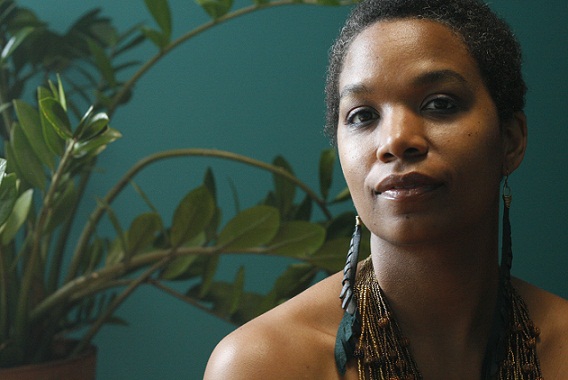
Speaking of those Aqueduct author readings, I have photos for each, which I'll be posting once I'm home (& rested). The photos above are from readings. The other one, below is of our tables in the Dealers Room that I took as we were finishing setting them up. This was the first year we didn't bring at least one copy of all our books. We have too many titles now to bring them all, even with three tables. Can you believe that? But then our next volume in the Conversation Pieces series, Sleeping Under the Tree of Life by Sheree Renee Thomas, will be the fiftieth.
Tuesday, May 31, 2016
The day after WisCon 40
Wow. I slept in this morning, then packed, checked out of my room, & left my luggage in the bellman's closet & ambled over to Michelangelo's for coffee & a bagel. I'm there now, & as happy & relaxed as could be. Why? Because I had a wonderful WisCon, one of the best ever. As most people who've been to WisCon know, one of the most common small-talk questions at the con is, "How's your WisCon?" Unless you have a serious problem that needs articulating, the de rigueur answer is a positive one. My answer in past years has ranged between whole- and half-hearted. No half about it this year, though.
I read from my forthcoming novel, "The Waterdancer's World," but otherwise did not participate in programming. This was the first year of all the WisCons I've attended, in which I didn't appear on a panel. I wasn't sure how I would feel about it, but it feels, in retrospect, like a brilliant decision to have made. I'm going to listen, reflect, & ask questions this year, I told myself. I in fact still did a lot of talking this year (especially on Friday, for some reason, as a few people who might be reading this might readily attest to), but looking back over the weekend, I think I did spend more time than I usually do listening with my full attention to what other people had to say. I half-think this had to do with my decision not to sit on any panels (thus unconsciously shifting my orientation), & also suspect it might have to do with the fact that last year I was depressed, which meant that my energy level was way down & my interest in the rest of the world sadly reduced. This year I was hungry for news of what others had been thinking & doing. I was also pretty lucky in my choice of programming to attend. (I made one wrong choice, which is actually not so bad.) & I sadly had to miss the panel on Octavia Butler's work (which I've heard was dynamite), because it coincided with one of the three Aqueduct Press authors' readings. I missed another panel I wanted to attend because I was in the middle of a conversation when it started and had gotten caught up in another when it was about two-thirds through. It can be a tough call, choosing between conversation & a panel one wants to attend, but the fact is, for me, those conversations are part of what makes WisCon so vital for me. They're the reason I always go home from WisCon changed. At 65, I've never been more aware of how important it is to me to feel myself still learning & changing. I may not have the energy & stamina I once had, but my capacity for engagement is, I hope, as strong as it's ever been.
Speaking of those Aqueduct author readings, I have photos for each, which I'll be posting once I'm home (& rested). The photos above are from readings. The other one, below is of our tables in the Dealers Room that I took as we were finishing setting them up. This was the first year we didn't bring at least one copy of all our books. We have too many titles now to bring them all, even with three tables. Can you believe that? But then our next volume in the Conversation Pieces series, Sleeping Under the Tree of Life by Sheree Renee Thomas, will be the fiftieth.
Sunday, May 15, 2016
Hwarhath Stories: Transgressive Tales by Aliens by Eleanor Arnason
I'm please to announce the release of Eleanor Arnason's collection, Hwarhath Stories: Transgressive Tales by Aliens, which Aqueduct Press has published in both trade paperback and electronic editions. (You can purchase it now from Aqueduct Press.) Hwarhath Stories: Transgressive Tales by Aliens collects a dozen Hwarhath
tales with commentary by their translator. As the translator notes,
"Humanity has encountered only one other species able to travel among the
stars. This species, who call themselves the hwarhath, or 'people,' are
also the only intelligent species so far encountered. Of course, we
interest and puzzle and disturb each other... The stories in this
collection were written after the hwarhath learned enough about humanity to
realize how similar (and different) we are. Our existence has called into
question many ideas about life and morality that most hwarhath would have
called certain a century ago..."
—Gardner Dozois, author of When Great Days Come, editor of Year's Best Science Fiction series
"Arnason's aliens are almost uniformly bisexual, and forbidden from engaging in heterosexual love beyond what’s needed for procreation. This behavior allows Arnason to adapt timeless folkloric tropes to her own modern, progressive, and wholly original reality, which comes alive in her precise, classically beautiful prose."
—Publishers Weekly, February 29, 2016
"This is anthropological science fiction at its best, with only Ursula K. Le Guin rivaling Arnason in cultural insight and in the sophistication, complexity, and evocativeness of her worldbuilding. The hwarhath serve as a distorted mirror in which we can clearly see our own follies, foibles, peculiarities, and the inequalities of our society; the hwarhath, meanwhile, see humans as a distorted mirror in which they can see the peculiarities and inequalities of their own society. Arnason does her best work here at novella length, and I consider "The Potter of Bones" and "Dapple" to be among the very best novellas of their respective years, and as having an honorable place amongst the best SF novellas ever written. "The Hound of Merlin", "The Actors", "The Lovers", "The Garden", and "Holmes Sherlock" are also very strong; in fact, there's really nothing here that isn't worth reading. Coming as it does from a small press, you may not see Hwarhath Stories: Transgressive Tales by Aliens included on many lists of the best collections of 2016 as the year comes to an end, but believe me, it's one of them. It may even turn out to be the best collection of the year. "
—Locus, Gardner Dozois, May 2016
"Since the publication of Ring of Swords in 1993, Eleanor Arnason has been producing stories not so much about her furry, logical, matriarchal, alien hwarhath as by them. Hwarhath Stories: Transgressive Tales by Aliens gathers a dozen such published between 1993 and 2012 and adds an introduction and comments (about which more below). As the crucial preposition in the subtitle suggests, these are tales the hwarhath tell themselves as they begin to question some of their previously unquestioned assumptions about their nature and culture—questions generated by encounters with the puzzling, disturbing, dangerous, gender-strange creatures called humans." —Locus, Russel Letson, May 2016
"The alien species Hwarhath is an intelligent population whose inhabitants share many similarities to, and differences from, humans. This collection by the James Tiptree Jr. Award–winning author Arnason (A Woman of the Iron People) details Hwarhath society from the perspective of a cultural anthropologist and translator. The first story, "Historical Romances," details the differences in Hwarhath literature and popular fiction, showcasing the latter in "The Actors," "Dapple," and "The Potter of Bones." Sexuality, its fluidity, and its defined gender roles in this extraterrestrial community are highlighted in the myth-based tale, "The Gauze Banner." Delivered in a clear voice with scholarly touches, Arnason's book brings a fantastic species to life. Verdict These stories mostly date back to the 1990s, but the intelligent tone and anthropological view is as impressive nearly two decades years later. Readers who favor robust cultural development in related speculative works will find this collection a joy to absorb." —Library Journal, April 2016
Advance Praise
"One of the strongest collections of science fiction stories you’re ever likely to find. It’s hard to think of anybody other than Ursula K. Le Guin who was written better anthropological science fiction than Eleanor Arnason, and this very strong collection gather some of the best stories published by anybody during the last two decades."—Gardner Dozois, author of When Great Days Come, editor of Year's Best Science Fiction series
Reviews
"These are magnificent stories, wise, witty, science-fictionally fascinating, moving. This may well end up being the story collection of the year." —Locus, Rich Horton, April 2016"Arnason's aliens are almost uniformly bisexual, and forbidden from engaging in heterosexual love beyond what’s needed for procreation. This behavior allows Arnason to adapt timeless folkloric tropes to her own modern, progressive, and wholly original reality, which comes alive in her precise, classically beautiful prose."
—Publishers Weekly, February 29, 2016
"This is anthropological science fiction at its best, with only Ursula K. Le Guin rivaling Arnason in cultural insight and in the sophistication, complexity, and evocativeness of her worldbuilding. The hwarhath serve as a distorted mirror in which we can clearly see our own follies, foibles, peculiarities, and the inequalities of our society; the hwarhath, meanwhile, see humans as a distorted mirror in which they can see the peculiarities and inequalities of their own society. Arnason does her best work here at novella length, and I consider "The Potter of Bones" and "Dapple" to be among the very best novellas of their respective years, and as having an honorable place amongst the best SF novellas ever written. "The Hound of Merlin", "The Actors", "The Lovers", "The Garden", and "Holmes Sherlock" are also very strong; in fact, there's really nothing here that isn't worth reading. Coming as it does from a small press, you may not see Hwarhath Stories: Transgressive Tales by Aliens included on many lists of the best collections of 2016 as the year comes to an end, but believe me, it's one of them. It may even turn out to be the best collection of the year. "
—Locus, Gardner Dozois, May 2016
"Since the publication of Ring of Swords in 1993, Eleanor Arnason has been producing stories not so much about her furry, logical, matriarchal, alien hwarhath as by them. Hwarhath Stories: Transgressive Tales by Aliens gathers a dozen such published between 1993 and 2012 and adds an introduction and comments (about which more below). As the crucial preposition in the subtitle suggests, these are tales the hwarhath tell themselves as they begin to question some of their previously unquestioned assumptions about their nature and culture—questions generated by encounters with the puzzling, disturbing, dangerous, gender-strange creatures called humans." —Locus, Russel Letson, May 2016
"The alien species Hwarhath is an intelligent population whose inhabitants share many similarities to, and differences from, humans. This collection by the James Tiptree Jr. Award–winning author Arnason (A Woman of the Iron People) details Hwarhath society from the perspective of a cultural anthropologist and translator. The first story, "Historical Romances," details the differences in Hwarhath literature and popular fiction, showcasing the latter in "The Actors," "Dapple," and "The Potter of Bones." Sexuality, its fluidity, and its defined gender roles in this extraterrestrial community are highlighted in the myth-based tale, "The Gauze Banner." Delivered in a clear voice with scholarly touches, Arnason's book brings a fantastic species to life. Verdict These stories mostly date back to the 1990s, but the intelligent tone and anthropological view is as impressive nearly two decades years later. Readers who favor robust cultural development in related speculative works will find this collection a joy to absorb." —Library Journal, April 2016
Tuesday, May 10, 2016
Strange Horizon's annual SF Count for 2015
Strange Horizons has posted Niall Harrison's annual SF Count. I quote here from their press release:
Strange Horizons' sixth annual "SF Count" - an in-depth exploration of gender and racial representation in SF reviewing - is published today, and finds that although there is some evidence of improvement in some of the 18 magazines and journals surveyed, overall 9 out of 10 books reviewed are by white writers, and 6 out of 10 books reviewed are written by men. A similar disparity is seen in the demographics of reviewers.
This year, Strange Horizons worked with data designer E. G. Cosh to develop visualisations of the SF Count findings. The full results are available on the Strange Horizons website and as an embeddable Tableau dataset (links below). Gifs describing the methodology and the topline results are attached with this press release.
Some notable points from the survey:
* The venues most likely to review books by women or non-binary writers were The Cascadia Subduction Zone (80% of reviews), Romantic Times (57%) and Lightspeed (57%). The least likely were Asimov's (23%), Science Fiction Studies (21%), and Analog (17%)
* The venues most likely to review books by writers of colour were Lightspeed (50%), The Cascadia Subduction Zone (35%) and Strange Horizons (22%). The least likely were Science Fiction Studies (4%), Analog (4%), Foundation (3%), and Risingshadow.net (1%).
* The venues with the most women and non-binary reviewers were Romantic Times (91%), The Cascadia Subduction Zone (88%), and Tor.com (63%).
* The venues with the most reviewers of colour were Lightspeed (67%), The Cascadia Subduction Zone (41%), and Tor.com (22%).
* The most active venues in the field were Locus (324 reviews), SFX (165 reviews), and Romantic Times (141 reviews); the least active were The Los Angeles Review of Books (35 reviews), Lightspeed (28 reviews), and The Cascadia Subduction Zone (23 reviews).
* The venues with the largest reviewing staffs were Strange Horizons (80 reviewers), Science Fiction Studies (38 reviewers), and SFX (30 reviewers); at the other end of the scale, Asimov's and Lightspeed had 3 reviewers each, Risingshadow.net has 2, and Analog has 1.
Strange Horizons' sixth annual "SF Count" - an in-depth exploration of gender and racial representation in SF reviewing - is published today, and finds that although there is some evidence of improvement in some of the 18 magazines and journals surveyed, overall 9 out of 10 books reviewed are by white writers, and 6 out of 10 books reviewed are written by men. A similar disparity is seen in the demographics of reviewers.
This year, Strange Horizons worked with data designer E. G. Cosh to develop visualisations of the SF Count findings. The full results are available on the Strange Horizons website and as an embeddable Tableau dataset (links below). Gifs describing the methodology and the topline results are attached with this press release.
Some notable points from the survey:
* The venues most likely to review books by women or non-binary writers were The Cascadia Subduction Zone (80% of reviews), Romantic Times (57%) and Lightspeed (57%). The least likely were Asimov's (23%), Science Fiction Studies (21%), and Analog (17%)
* The venues most likely to review books by writers of colour were Lightspeed (50%), The Cascadia Subduction Zone (35%) and Strange Horizons (22%). The least likely were Science Fiction Studies (4%), Analog (4%), Foundation (3%), and Risingshadow.net (1%).
* The venues with the most women and non-binary reviewers were Romantic Times (91%), The Cascadia Subduction Zone (88%), and Tor.com (63%).
* The venues with the most reviewers of colour were Lightspeed (67%), The Cascadia Subduction Zone (41%), and Tor.com (22%).
* The most active venues in the field were Locus (324 reviews), SFX (165 reviews), and Romantic Times (141 reviews); the least active were The Los Angeles Review of Books (35 reviews), Lightspeed (28 reviews), and The Cascadia Subduction Zone (23 reviews).
* The venues with the largest reviewing staffs were Strange Horizons (80 reviewers), Science Fiction Studies (38 reviewers), and SFX (30 reviewers); at the other end of the scale, Asimov's and Lightspeed had 3 reviewers each, Risingshadow.net has 2, and Analog has 1.
*****
This year's SF Count will mean different things to different people. My own personal takeaway is that although The Cascadia Subduction Zone's circulation figures remain disappointing, our work is not yet done.
Tuesday, May 3, 2016
Sarah Tolmie's Two Travelers
I'm pleased to announce the publication of Two Travelers, a pair of portal fictions by Sarah Tolmie, in both print and e-book editions. In "Dancer on the Stairs," a woman wakes up on a stone staircase in a baroque palace, not speaking the language of the place and lacking the chemical signature that allows people to identify each other within a complex social hierarchy. Unable to communicate in words, she resorts to dance. In "The Burning Furrow," a man who runs a diner in present-day America is also a freedom-fighter in the northern, courtly realm of Dinesen. His people are abused foreigners at home, the servants of strangers, bound not by their overlords, but by their world itself, through a ritual known as the burning of the furrows. Only he and his family are free—for a time. Now that time is ending.
Advance Praise
"Two Travelers is a magical evocation of the outsider experience, a book that transports its characters to strange new worlds, where they must make their way despite language barriers and culture shock. Sarah Tolmie's lyrical prose guides readers through vividly imagined cultures where the fate of a kingdom hangs on the outcome of a dance, or where, as your family's size changes, so too must your name."—A.M. Dellamonia, author of A Daughter of No Nation and The Nature of a Pirate
"Sarah Tolmie is one of the best new writers I've discovered in a long time. Her writing is a joy to read."
—Amy Thomson, author of Storyteller and The Color of Distance
Reviews
Author and professor Tolmie (The Stone Boatmen) delivers an exquisite duo of short stories in this slim volume.... Rich with detail, both stories are imbued with baroque sensibilities, a refreshing deviation from the typical medieval setting. Rather than relying on pure exposition, Tolmie uses the characters' interactions and personalities to bring color to the unique magic of each setting. Tolmie's investigations of identity, place, and personal meaning are a delight to read and a great contribution to the genre.—Publishers Weekly, April 2016
Two Travelers is available now through Aqueduct's website: http://www.aqueductpress.com/index.php
Saturday, April 23, 2016
Andrea Hairston's Will Do Magic for Small Change
I'm pleased to announce the release of Will Do Magic for Small Change, a new novel by Andrea Hairston, in both trade paperback and e-book editions.You can purchase it now at http://www.aqueductpress.com. It will be available elsewhere soon.
Cinnamon Jones dreams of stepping on stage and acting her heart out like her famous grandparents, Redwood and Wildfire. But at 5'10'' and 180 pounds, she's theatrically challenged. Her family life is a tangle of mystery and deadly secrets, and nobody is telling Cinnamon the whole truth. Before her older brother died, he gave Cinnamon The Chronicles of the Great Wanderer, a tale of a Dahomean warrior woman and an alien from another dimension who perform in Paris and at the 1893 Chicago World's Fair. The Chronicles may be magic or alien science, but the story is definitely connected to Cinnamon's family secrets. When an act of violence wounds her family, Cinnamon and her theatre squad determine to solve the mysteries and bring her worlds together.
Advance Praise
"Will Do Magic for Small Change sings from the page. This is a novel only Afrofuturism pioneer Andrea Hairston could write, full of myth, history, magic and intrigue, from 1980s Pittsburgh to 19th Century Dahomey, West Africa. Hairston puts readers under a spell." —Tananarive Due, American Book Award winner, author of Ghost Summer: Stories"Andrea Hairston's vision is breathtaking. She weaves sweeping historical narratives and mythology with the wisdom of the elders, and shines light on the pressing issues of the day. In her hands language is a blessing, and the familiar and the fantastic become magic, one and the same." —Sheree Renée Thomas, editor of the award-winning Dark Matter anthology series, author of Shotgun Lullabies
"This is one of those books you start and realize you've been waiting to read for a long, long time without knowing. Will Do Magic for Small Change is a deep breath, a good friend, a hearbreaking, game-changing, life-affirming, truthtelling powerhouse. I love this book." —Daniel José Older, author of Half-Resurrection Blues and Salsa Nocturna
"It is hard to pull away from this world of aliens meeting orishas, ghosts appearing and conversing, fiery aje, and sea monsters rising, ahosi, king's wives and warrior women, defending, gender fluidity resounding, blackbirds chronicling and ravens painting, lightning scorching and time travel transcending, wanderers flickering across dimensions and stillpoints grounding, storm fists and storm stories raining, ALL flourishing with incandescent poetic prose and shimmering song lyrics. Welcome to synapses pulsing, the flooding of ancient memories, and praise-song reframing when engaging in this neural decolonizing novel, an 1890s Dahomey, Paris, Atlantic ocean passages, New York and Chicago entangled with a 1980s Pittsburgh, emerging and becoming vibrantly alive!" —Grace L. Dillon (Anishinaabe), Editor of Walking the Clouds
"When I read Andrea Hairston's work, there is always the danger that the plot will draw me so quickly into the complex lives of beings so different from the humans to whom I've grown accustomed that I won't remember to slow down long enough to enjoy the richness of the writing itself. That would be a shame because the beauty of Hairston's passionate language is more than equal to the telling of her insanely imaginative tales of time travel and truth telling; memory and magic. Drawing freely and fiercely from Native American, West African and African American cultural and spiritual traditions, she creates new worlds as richly complicated and blindingly colorful as any you are likely to encounter in the work of the world's best science fiction authors. But even as I write those words, I realize that while calling her writing science fiction assigns it to a specific and honorable literary neighborhood indeed, that label may also mean that some who do not consider themselves fans of the genre may not discover her at all, depriving themselves of the sweep of her creative vision simply because of arbitrary boundaries between what is real and what is fantasy; what is now and what was then; what is past and what is prologue. But Hairston's work is not about boundaries and labels. It is about freedom, to live, to love, to fight and to win. I have been a fan of Hairston's work since Redwood and Wildfire. With the appearance of Will Do Magic for Small Change, she continues her quest to make us see more deeply, feel more authentically and allow ourselves to consider the possibility that there are worlds still to discover. How lucky we are that we're ready to go exploring, we can count of Andrea Hairston to be our guide." —Pearl Cleage, author of What Looks Like Crazy on an Ordinary Day
Reviews
The entire work is filled with magic, celebrating West Africans, Native Americans, art, and love that transcends simple binary genders. Hairston's novel is a completely original and stunning work.—Publishers Weekly, April 2016 (starred review)
At the core of Andrea Hairston's complex tale, WILL DO MAGIC FOR SMALL CHANGE, framed by Cinnamon's need to posthumously connect with her gay, dreamy, black-sheep brother, is the theme of journeying to the self. Cinnamon, as the child of a family scarred by race and class struggles, fights to carve an identity for herself out of the seemingly disparate elements of her life: femininity, art, blackness, geekdom, sexuality, spirituality. Paralleling this struggle is Kehinde, who was kidnapped from another people by the Fon and forced into the role of ahosi; she desperately seeks ways to prove that the Fon never truly enslaved her....The only flaw in this beautifully multifaceted story is that Kehinde's tale outshines Cinnamon's, though this improves over time. Both stories are worth that time, however, with deep, layered, powerful characters. Highly recommended. —The New York Times, N.K. Jemisin, April 24, 2016
Saturday, April 16, 2016
Ravenna Third Place Books on Tuesday
Just a reminder: Susan diRende, author of the comic novella Unpronounceable, the latest volume in Aqueduct's Conversation Pieces series, will be reading and signing at Ravenna Third Place Books on Tuesday evening at 7 p.m. (Details are here: http://www.thirdplacebooks.com/event/susan-dirende-unpronounceable.) Tom & Kath & I will all be attending. We hope to see a lot of Aqueduct Irregulars there!
Saturday, April 9, 2016
The Cascadia Subduction Zone, Vol. 6, 2
The April issue of The Cascadia Subduction Zone is out! The issue opens with Julie Phillips' keynote talk at the Tiptree Symposium (held last December at the University of Oregon) discussing the correspondence between Ursula K. Le Guin and James Tiptree Jr and Joanna Russ and James Tiptree Jr. The issue also includes poetry by Gwynne Garfinkle, Neile Graham, and Sonya Taaffe, a Grandmother Magma column by Daniel Abraham, and reviews of five new books; the issue's featured artist is Betsy James (who is also the author of Roadsouls, a novel Aqueduct has just published, and stories recently published in The Magazine of Fantasy and Science Fiction). If you're not already a subscriber, you can subscribe or purchase the issue here.
Vol. 6 No. 2 — April 2016
- Essay
- “I Begin to Meet You at Last”:
On the Tiptree-Russ-Le Guin Correspondence
by Julie Phillips - Poems
- Clear-Cut Spirit Song
The Goddess of the Unseen
The Gods of Tales
by Neile Graham
- Men Who Aren’t Crazy
by Sonya Taaffe
- Poetess Strikes Again
by Gwynne Garfinkle
- Grandmother Magma
- Toward a Feminist Masculinity
The Will to Change, bell hooks
by Daniel Abraham
- Reviews
- All the Birds in the Sky, by Charlie Jane Anders
reviewed by S. Qiouyi Lu
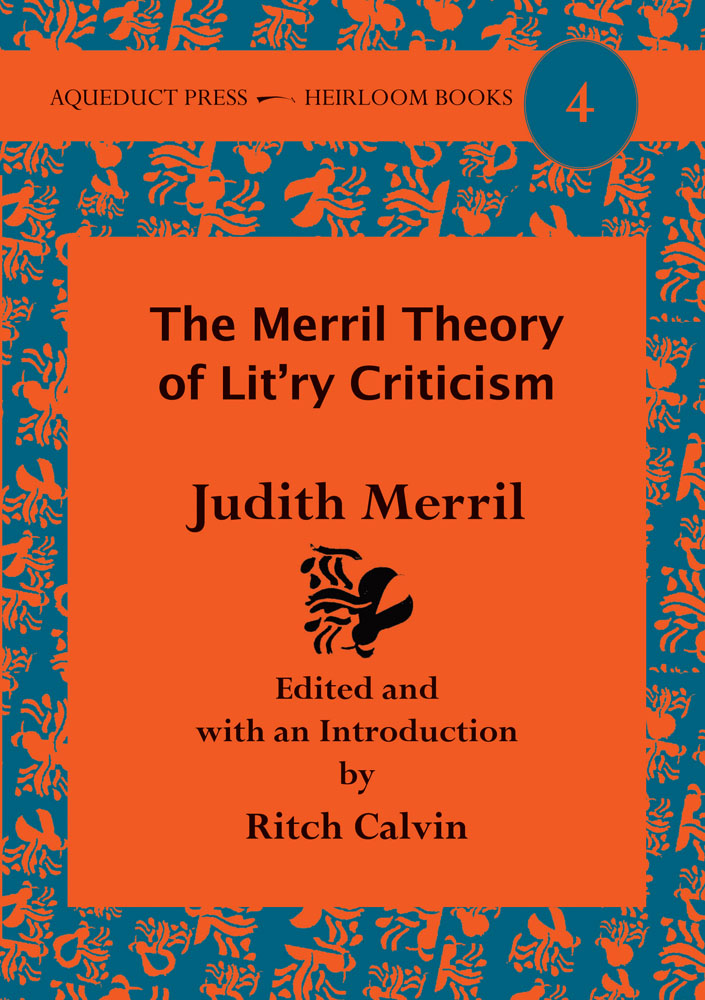
The Merril Theory of Lit'ry Criticism, by Judith Merril, edited by Ritch Calvin
reviewed by Michael Levy
The Winged Histories, by Sofia Samatar
reviewed by Tansy Rayner Roberts
Lost Trails: Forgotten Tales of the Weird West, edited by Cynthia Ward
reviewed by Kristin King
Damnificados, by JJ Amaworoso Wilson
reviewed by Victoria Elisabeth Garcia
- Featured Artist
- Image to Word: The Morning Series
by Betsy James
Thursday, April 7, 2016
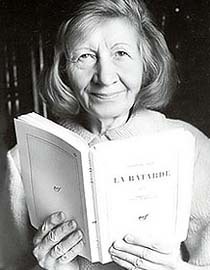
Violette Leduc
Rafia Zakaria's piece in today's Guardian reminds me that it's the birthday of Violette Leduc-- her 109th. Which in turn makes me realize that I missed, entirely, her centenary year, making me think that probably not many people in the US noticed it at the time. And in fact Zakaria's piece notes how neglected Leduc's work has been:
Interestingly, Zakaria zooms in, briefly, on her relationship with Simone de Beauvoir, whom she met in 1945 and who was instrumental in getting Leduc's work published:
Happy birthday, Violette Leduc. And now I must go find the newly published Feminist Press edition of Thérèse and Isabelle
It is a mysterious marginalisation: Simone de Beauvoir, who took on Leduc as a protege, remains a feminist icon. Leduc’s contemporary Jean Genet, also wrote sexually explicit, homosexual texts and is widely read and venerated as a pioneer in French avant-garde writing. Not so Leduc. Her first book, the autobiographical novel L’Asphyxie, has still not been translated into English. Her novel Thérèse and Isabelle, written in 1955, was not published uncensored in France until 2000 and was only translated and published in English by the Feminist Press last year.This marginalization doesn't seem all that mysterious to me. Leduc writes not only from a woman's point of view, not only from a lesbian's (or bisexual's) point of view, but also from a scathingly honest working-class point of view. I still remember how, when I read her powerful La Batarde, I felt shocked by its micropolitical revelations of social relations-- not because they were new or scandalous, but because they spoke, without flinching, of feelings and responses that I never saw represented anywhere else. In short, it was written outside and without reference to the canons of middle-class values (including literature's middle-class notions of good taste and fine aesthetics, which did, actually, make the work scandalous). I think I knew even then how difficult, technically, it must have been for her to do that--not through any inhibitions she might have felt, but because forging new stories and new forms of expression for describing what is usually left unexplored is damned hard. (This is something I talked about a little in my WisCon GoH speech.)
Interestingly, Zakaria zooms in, briefly, on her relationship with Simone de Beauvoir, whom she met in 1945 and who was instrumental in getting Leduc's work published:
The juxtaposition of De Beauvoir and Leduc is revelatory in terms of who defines feminism and who actually lives it. Here is Leduc, a woman made feminist by experience: a fatherless, poverty-stricken childhood, a youth spent grovelling for affection and sustenance, her wartime hustle smuggling legs of lamb to rich Parisians. Her autobiography painfully and pointedly underscores her constant alienation, her surfeit of emotion. Ever the outsider, she steals, she smuggles; when she reads and learns, it is in bits and pieces. Days spent writing are imbued with worries about eating, surviving. Uninterested in branding and constructing her own myth, she bluntly tells De Beauvoir that she is not an intellectual. This annoys her mentor, to whom Leduc recalls retorting: “You are an intellectual because you write.”Can we really, after considering Leduc's differences, call Leduc's marginalization "mysterious"? Many of us women writing today need to believe that writing, which requires a constant exertion of will and agency, is liberating. Is this a pipe dream (of the crack, rather than opium, sort)? I don't know, since I'm one of those who feel that my life and who I am has changed through my writing, regardless of its significance or not to others. Would I still feel that way if my current life were even a little less privileged? I must acknowledge the honesty and even despair of Leduc's flat statement that "to write is to change nothing," especially since Leduc's work, however extraordinary, is so little read and has won so little notice, even though for me, reading what other people have written made my childhood bearable and my feminism and political consciousness, in early adulthood, possible. I wonder what she would have made of the new movement (as I'd like to believe it is) of trying to bring marginalized writing to wider attention? Or, more generally, of the resurgent effort to break the hold of the white male perspective on literature?
De Beauvoir spent her time earning the title “intellectual”. Her story is one of early erudition, acing exams, stunning philosophical acuity and a romantic (if also conveniently strategic) alliance with Sartre. In Leduc, she sees the authenticity that she theorises, and in playing midwife to her self-exposition she seeks the vindication of her philosophy. In existentialism, we are all free to choose, exercise our radical free will; the constraints of past experience can be shaken off, truth told and freedom achieved. Leduc’s life, told in her writing, has to be evidence of the truth of this. De Beauvoir’s feminism, unleavened by any literal struggles with the whims of men, needs Leduc’s literary liberation to prove its practical application.
Yet it is only De Beauvoir’s prescient and crisply analysed feminism that we remember and celebrate. The lived feminism of Leduc – raw, passionate, and devastatingly honest – is what we choose to forget. There are contemporary iterations to this divide: like Leduc, the women fighting the battles on the factory floors of China, or in the classrooms of Egypt or the streets of Karachi do not have the luxury of writing their lives and finding liberation. The lived feminisms of the women who clean French hotel rooms, who eke out lives in banlieues, who are expelled from schools for wearing headscarves, are absent from the country’s feminist and literary narrative.
It is still De Beauvoir’s compelling feminist recipe that one wants to believe. It is, however, Leduc’s truth that presses closer: speaking of De Beauvoir’s prescription, she says: “To write is to be liberate oneself. Untrue. To write is to change nothing.”
Happy birthday, Violette Leduc. And now I must go find the newly published Feminist Press edition of Thérèse and Isabelle
Wednesday, April 6, 2016
Susan diRende's Unpronounceable
I'm pleased to announce a new volume in Aqueduct's Conversation Pieces series: Unpronounceable, a novella by Susan diRende. We're releasing it in both e-book and print editions. (You can purchase these at www.aqueductpress.com now.) Though feminist comedy is a definite thing, it's not all that visible (or should I say audible? since it tends, actually, to be voice-driven) in the sf/f field. Works by Leslie What, Esther Friesner, and Eileen Gunn come easily to mind, of course. And a lot of humor bubbles through many other writers' work, including some of the work we've published by Eleanor Arnason. And there's certainly a lot of sharp feminist wit to be found (beginning, number one, with Joanna Russ, of course.) Unpronounceable is what I'd call broad comedy. Its author, Susan diRende, is so into this kind of comedy that she founded the Broad Humor Film Festival, Los Angeles, to support women’s comedic vision on film. You can probably tell that from the description of this novella:
Susan has also started a blog by Rose Delancy, the narrator of Unpronoucenable, which can be found at http://ambassadorrose.blogspot.com/.
Earth has discovered it is not alone in the universe. The aliens — pink, shapeless, and peaceful — are very nice, but after a string of failed diplomatic missions, they ask Earth to stop with the crazies and send someone normal. In frustration, the UN devises a lottery to pick the next ambassador. Enter Rose Delancy, a Jersey waitress.Susan will be reading from Unpronounceable at three venues in the Seattle area-- during the Broad Humor Festival at Olympic College in Bremerton, Wednesday, April 13, 10:30 am, at the Olympic College Bookstore, BSC, 1600 Chester Avenue; Friday, April 15, 1 pm, at the Bremerton Public Library, 612 Fifth Street; and in Seattle, Tuesday, April 19, 7 pm, at Third Place Books, Ravenna, 6504 20th Ave NE.
Rose settles in and starts teaching the natives all about humans with the help of Hollywood movies, junk food, and sex. They show her a few things of their own involving the transformation of matter, but Rose is only interested in how it applies to sex. That is until she learns that she’s been suckered to play the patsy for an interstellar takeover by Earth. To avoid the horrors of planetary annihilation, not to mention having to go back to Jersey, Rose and the Blobs have to stop the invasion and save the planet.
Susan has also started a blog by Rose Delancy, the narrator of Unpronoucenable, which can be found at http://ambassadorrose.blogspot.com/.
Monday, April 4, 2016
Roadsouls by Betsy James
I'm pleased to announce Aqueduct Press's release, in both print and e-book editions, of Roadsouls, a novel by Betsy James. Roadsouls explores the power of art and creativity for transforming not
only one’s own life but also the world one lives in. Timid Duuni has spent
her life as abused and guarded property. Blind, arrogant Raím is determined
to be again what he once was: hunter, lover, young lord of the
earth. Desperate to escape their lives, the two lift up their hands to the
passing Roadsoul caravan, and are—literally—flung together naked. Each of
them soon learns that saying “yes” to the Roadsouls is more than just
accepting an invitation to a new life—it’s a commitment that can’t be
reversed. For Duuni and Raím, nothing is as it was. Lost to their old
lives, hating each other, they are swept out of their cruel old certainties
into an unknown, unknowable, ever-changing world of journey and carnival,
artists and wrestlers and thieves. Behind them, inexorable, pads a
lion. Inexorable, too, is Duuni and Raím’s inevitable encounter with it, an
encounter that will change everything.
“If you long for a fantasy world that your senses could live in, and that isn’t full of scheming nobility, cynical warriors, mass hatreds, and magic as a weapon, read this book. Its backbone is the wandering life of a sort of gypsy-hippie-circus group traveling a pre-industrial landscape and offering a way out to the misfits and throw-aways of the local villages. Raím, a young man blinded in a fall, and Duuni, the unhappily rebellious daughter of religious patriarchy, find their ways outward from home and towards their own strengths, and each other, with (and sometimes dangerously strayed far from) the Roadsouls' caravan….”
“The writing is vivid and earthy, celebrating a rural world with its sights and smells and wildlife, and the customs and pithy, colorful speech of its people.…” —Suzy McKee Charnas, author of The Vampire Tapestry and Dorothea Dreams
“Betsy James’ dual creative lives as artist and writer enable her to create an elegant variation on the classic hero’s journey. The roads upon which Duuni and Raím travel are those of dirt and rocks, of various cultures lovingly detailed, and of the complex interior landscape of the self. The Roadsouls who are their guides partake more of the trickster than the wise guardian, but as the journey goes on it becomes clear that only the wild and whimsical will free these tormented beings from the shackles that bind their innermost selves.”
—Jane Lindskold, author of the Firekeeper Saga
In this subtle fantasy, James (Listening at the Gate) follows two wounded young people as they move toward (and sometimes away from) each other.... The blossoming of Duuni’s artistic talents and the gradual process of Raím working through his anger are sensitively depicted, and the book has the rhythms of the road—meetings, partings, and new landscapes every day—at its heart.
—Publishers Weekly, Jan 2016
"An innovative and engaging fantasy about ordinary people in a rather low key fantasy realm. Unhappy with their lives, two people abandon their previous circumstances to join a kind of combination caravan and freelance entertainment troupe on its journey across their world. They have adventures of a sort, but they are generally unmelodramatic and they learn more about themselves than about their companions."--Don D'Ammassa, Critical Mass
The Roadsouls, and the novel as a whole, are...open to wonder: genuine transformations that just happen, without rituals or spells. ... Betsy James deliberately avoids the tropes and narratives typical of long fiction (mainstream, heroic fantasy, or romance).
—Locus, Faren Miller, April 2016
Roadsouls can be purchased from Aqueduct Press here.
“If you long for a fantasy world that your senses could live in, and that isn’t full of scheming nobility, cynical warriors, mass hatreds, and magic as a weapon, read this book. Its backbone is the wandering life of a sort of gypsy-hippie-circus group traveling a pre-industrial landscape and offering a way out to the misfits and throw-aways of the local villages. Raím, a young man blinded in a fall, and Duuni, the unhappily rebellious daughter of religious patriarchy, find their ways outward from home and towards their own strengths, and each other, with (and sometimes dangerously strayed far from) the Roadsouls' caravan….”
“The writing is vivid and earthy, celebrating a rural world with its sights and smells and wildlife, and the customs and pithy, colorful speech of its people.…” —Suzy McKee Charnas, author of The Vampire Tapestry and Dorothea Dreams
“Betsy James’ dual creative lives as artist and writer enable her to create an elegant variation on the classic hero’s journey. The roads upon which Duuni and Raím travel are those of dirt and rocks, of various cultures lovingly detailed, and of the complex interior landscape of the self. The Roadsouls who are their guides partake more of the trickster than the wise guardian, but as the journey goes on it becomes clear that only the wild and whimsical will free these tormented beings from the shackles that bind their innermost selves.”
—Jane Lindskold, author of the Firekeeper Saga
In this subtle fantasy, James (Listening at the Gate) follows two wounded young people as they move toward (and sometimes away from) each other.... The blossoming of Duuni’s artistic talents and the gradual process of Raím working through his anger are sensitively depicted, and the book has the rhythms of the road—meetings, partings, and new landscapes every day—at its heart.
—Publishers Weekly, Jan 2016
"An innovative and engaging fantasy about ordinary people in a rather low key fantasy realm. Unhappy with their lives, two people abandon their previous circumstances to join a kind of combination caravan and freelance entertainment troupe on its journey across their world. They have adventures of a sort, but they are generally unmelodramatic and they learn more about themselves than about their companions."--Don D'Ammassa, Critical Mass
The Roadsouls, and the novel as a whole, are...open to wonder: genuine transformations that just happen, without rituals or spells. ... Betsy James deliberately avoids the tropes and narratives typical of long fiction (mainstream, heroic fantasy, or romance).
—Locus, Faren Miller, April 2016
Roadsouls can be purchased from Aqueduct Press here.
Saturday, March 5, 2016
Conversations on Engendering the Future History of Women
To celebrate Women's History Month at the Futures Forum, Dr. Claire Nelson, who has a keen interest in thinking about "sustainable futures" is posting a series of interviews on the subject with Brenda Cooper, Nisi Shawl, Amy Zuckerman, Nita Patal, Maria Velazquez, L. Timmel Duchamp, Linda Cureton, and Caryl Rivers. As someone who thinks how we think about the future shapes how we think about the past (and vice versa), I of course love the idea of celebrating Women's History Month by thinking about possible futures for women.
You can listen to the interviews here: http://futuresforum.org/futures_of_women_2016.
Wednesday, February 24, 2016
Judith Merril's The Merril Theory of Lit'ry Criticism (ed. Ritch Calvin)
I'm pleased to announce the release of the fourth volume in Aqueduct's Heirloom Books series, The Merril Theory of Lit'ry Criticism, which collects Judith Merril's nonfiction, edited by sf scholar Ritch Calvin. Aqueduct is offering both print and e-book editions.
Although Judith Merril is best known for her short fiction and her novels (in collaboration with C. M. Kornbluth), she wrote a great deal of nonfiction. She wrote about SF fandom. She wrote about space and space exploration. And she wrote about science fiction. This volume collects Merril’s nonfiction from The Magazine of Fantasy and Science Fiction, Extrapolation, and her Year’s Best anthologies. In these collected pieces, Merril works through and develops her definition of “S-F” and what makes S-F good. She chronicles changes within the genre, including the emergence of the New Wave. And she provides a history of the genre: its writers, its publishers, and its magazines.
Decades ago, Samuel R. Delany declared that “Merril…is perhaps the most important intra-genre critic the field has had and…the absence of any of her critical work in book form, in a field aspiring to take itself seriously, is preposterous.… [O]ne cannot know the history of science fiction from 1956 to 1969 if one has not read the brilliant commentary that runs through Merril’s best-of-the-year anthologies for that period.”
Now, in 2016, Aqueduct brings Judith Merril and her place in that history to today’s readers.
Gary K. Wolfe writes of the book in the February 2016 issue of Locus: The Merril Theory of Lit’ry Criticism provides our first chance to see in one place Merril’s columns for the magazine [i.e., The Magazine of Fantasy and Science Fiction] between 1965 and 1969, plus appreciations of Theodore Sturgeon and Fritz Leiber, introductions to her groundbreaking ‘‘year’s best’’ anthologies of the ’50s and ’60s, and a more or less theoretical/historical piece from the academic journal Extrapolation. In an unusual strategy, Aqueduct has made available in the e-book full versions of some pieces that are only summarized in the print edition. ...Merril was ... a pioneer in assaulting literary moats and walls, as her anthologies insistently made clear, and it’s fascinating to find someone articulating a half-century ago some approaches to fiction that are only now beginning to look like common sense.
You can purchase either the print or the e-book editions at http://www.aqueductpress.com/books/978-1-61976-093-6.php.
Although Judith Merril is best known for her short fiction and her novels (in collaboration with C. M. Kornbluth), she wrote a great deal of nonfiction. She wrote about SF fandom. She wrote about space and space exploration. And she wrote about science fiction. This volume collects Merril’s nonfiction from The Magazine of Fantasy and Science Fiction, Extrapolation, and her Year’s Best anthologies. In these collected pieces, Merril works through and develops her definition of “S-F” and what makes S-F good. She chronicles changes within the genre, including the emergence of the New Wave. And she provides a history of the genre: its writers, its publishers, and its magazines.
Decades ago, Samuel R. Delany declared that “Merril…is perhaps the most important intra-genre critic the field has had and…the absence of any of her critical work in book form, in a field aspiring to take itself seriously, is preposterous.… [O]ne cannot know the history of science fiction from 1956 to 1969 if one has not read the brilliant commentary that runs through Merril’s best-of-the-year anthologies for that period.”
Now, in 2016, Aqueduct brings Judith Merril and her place in that history to today’s readers.
Gary K. Wolfe writes of the book in the February 2016 issue of Locus: The Merril Theory of Lit’ry Criticism provides our first chance to see in one place Merril’s columns for the magazine [i.e., The Magazine of Fantasy and Science Fiction] between 1965 and 1969, plus appreciations of Theodore Sturgeon and Fritz Leiber, introductions to her groundbreaking ‘‘year’s best’’ anthologies of the ’50s and ’60s, and a more or less theoretical/historical piece from the academic journal Extrapolation. In an unusual strategy, Aqueduct has made available in the e-book full versions of some pieces that are only summarized in the print edition. ...Merril was ... a pioneer in assaulting literary moats and walls, as her anthologies insistently made clear, and it’s fascinating to find someone articulating a half-century ago some approaches to fiction that are only now beginning to look like common sense.
You can purchase either the print or the e-book editions at http://www.aqueductpress.com/books/978-1-61976-093-6.php.
Monday, February 1, 2016
Worlds of Ursula K. Le Guin
Arwen Curry, who is making a documentary film about Ursula K. Le Guin, has opened a Kickstarter campaign for funding the final stages of production of the film. Curry and her partner organization,
Center for Independent Documentary, were awarded a prestigious grant by the National Endowment for the Humanities to fund work on Worlds of Ursula K. Le Guin,
which is scheduled for wide public television and limited theatrical release in 2017. While a major victory for the production team, the NEH funding presents a new challenge: the agency won’t release it until the entire budget has been raised. Curry and her team are now launching a campaign on the crowd-funding site Kickstarter to raise $80K of the remaining $200K needed to complete the film. The Kickstarter campaign launches on January 31, 2016 and continues through February 29, a leap day. Rewards for Kickstarter donors include signed novels and private recorded messages from the author.
The film's website includes, among other things, a video clip about the film. Check it out!
Thursday, January 21, 2016
Reading as a Writer
The deadline for enrolling in the Clarion West One-Day Workshop that I'll be giving in Seattle on February 21 is February 2. If you're a writer interested in honing your understanding of narrative or are having problems with a particular story (or both), this workshop is absolutely for you. When I offered it last year, I was pleased at how hard we all worked and surprised by how intense and far-ranging our conversations were. The format provided ample space for moving between the particulars of the stories we critiqued and more general narrative issues and techniques that form part of the working writer's landscape.
Here's the official description for the workshop:
Many first-rate, well-published writers take time out of their busy writing lives to attend critique workshops with their peers. Why? First, critiques from a variety of readers give writers insight into how the words they’ve put on the page are being transformed into the stories that unfold in their readers’ heads. And second, participation in critique groups enables writers to sharpen their understanding of technical issues. This workshop will offer insight into how others are reading your story and help make it into the story you would like them to be reading.
Students who enroll in this workshop will be asked to submit a piece of writing in advance, which will be distributed for critique by a subgroup of the class. All students’ works will be critiqued by both the instructor and several other students. Over the course of the day, attention will be given not only to the stories being critiqued but also to the critique process; techniques for reading critically and for communicating effectively will be covered. Because of the intensely interactive nature of this particular workshop, and to ensure that all students receive adequate attention, enrollment is limited to 12 participants.
If you're interested in attending, here's the URL you need: http://www.clarionwest.org/workshops/oneday/how-to-read-as-a-writer-2/.
Here's the official description for the workshop:
Many first-rate, well-published writers take time out of their busy writing lives to attend critique workshops with their peers. Why? First, critiques from a variety of readers give writers insight into how the words they’ve put on the page are being transformed into the stories that unfold in their readers’ heads. And second, participation in critique groups enables writers to sharpen their understanding of technical issues. This workshop will offer insight into how others are reading your story and help make it into the story you would like them to be reading.
Students who enroll in this workshop will be asked to submit a piece of writing in advance, which will be distributed for critique by a subgroup of the class. All students’ works will be critiqued by both the instructor and several other students. Over the course of the day, attention will be given not only to the stories being critiqued but also to the critique process; techniques for reading critically and for communicating effectively will be covered. Because of the intensely interactive nature of this particular workshop, and to ensure that all students receive adequate attention, enrollment is limited to 12 participants.
If you're interested in attending, here's the URL you need: http://www.clarionwest.org/workshops/oneday/how-to-read-as-a-writer-2/.
Sunday, January 10, 2016
The Pleasures of Reading, Viewing, and Listening in 2015, pt. 29: Kiini Ibura Salaam
Pleasures of 2015
by
Kiini Ibura Salaam
One of the essential questions that artists have to answer for
themselves is how they will be present, how they will show up and use their
voices, in service of what sensation, expression, intention? In a 2015 interview,
National Book Award-winning poet Terrance Hayes states:
“I’m just interested
in being present, not in being representative of anything.”
Hayes’s statement holds the tension of public and
private--publicly people want to sort you, classify you, use you as a
mouthpiece, a representation, but as an artist, the only way to authentically
do your work is to be present to your self. It is something of a koan: How can
you truly be present in and with and for yourself if you are representing someone
or something else—even someone or something that looks and sounds exactly like
you?
Much of the art I enjoyed in 2015 pivoted on questions of
presence and representation.
Ava DuVernay’s
Selma
In
January, I started my art immersion for the year with the film Selma. I found it to be a riveting and
intense look at one slice of the Civil Rights movement. What I
appreciated most about it was the layers of the Civil Rights Movement that it
revealed. History has flattened somewhat the broad span of groups involved with
changing the laws and practices of segregation and voter discrimination. The students, the
voting rights activists, the local workers, the movement architects, the
superstars, the rabble rousers, the freedom riders—everyone joined the
resistance from a different angle, representing a different demographic and a
different motivation, and all these disparate strands came together to speak in
one voice.
The
other thing the film did was take an unflinching look at the indiscriminate
violence that was visited upon anyone pushing for an integrated, equal society.
The film demonstrated that the Civil Rights Movement wasn’t a sanitized event
that—with a few marches and songs—created a more just society. The willingness
of so many to be beaten, jailed, and killed was the thing that moved the needle
in awakening the consciousness of a nation.
John
Lewis’s March
Selma dovetailed quite nicely
with the graphic novel March by John
Lewis, Andrew Aydin, and Nate Powell. John
Lewis was a college student during the Civil Rights Movement and was active in
SNCC (Student Nonviolent Coordinating Committee). SNCC was already working in
Selma when Martin Luther King and his leadership from the SCLC (the Southern
Christian Leadership Conference) came to town to support the push for voters’
rights. The graphic novel’s striking illustrations and compelling storyline
tells the boots-on-the-ground story of one young man who was unflinchingly
committed to change in this nation.
Though
Selma
and March deal with times past, both were shockingly relevant to
our nation’s contemporary identity, especially in a year filled with protests,
murders, and marches.
Toshi
Reagon’s musical production of Octavia Butler’s The Parable of the Sower
The
evening after I saw Selma, I went to
The Public Theater to see Toshi Reagon’s musical production of Octavia Butler’s The Parable of the Sower.
One thing that was conspicuously missing from Selma was the music of the movement. With the exception of MLK
calling up Mahalia Jackson in the middle of the night to sing to him so that he
might hear the voice of God, DuVernay chose not to include song. There was, of
course, a soundtrack, but during the march when there was singing, DuVernay showed
the actors mouths moving but did not reveal the audio.
During
that time period, music was a major component part of protests, whether
anti-war or anti-discrimination. There has been a lot of study of protest music,
notably Soundtrack for a Revolution http://www.soundtrackforarevolutionfilm.com/Home.html, a wonderful documentary
about the music of the Civil Rights Movement and what it meant to the marchers,
how it kept them fearless and motivated. I suspect DuVernay did not use the
music in the film because we are saturated with the image of people marching
and singing. To a degree, I think the national narrative we’d like to believe
is that the marching and the singing made change. The song was spirit food—it
fed the marchers, steeled their strength and their resolved, helped them carry
on when they were tired and face death when they were scared, but it isn’t what
won the battle.
Toshi
Reagon was born into the tradition of activist folk music. Her mother, Bernice
Johnson Reagon, was deeply engaged in the Civil Rights Movement and other
activist movements. She was also a founder of the group Sweet Honey in the
Rock. Toshi was named for activist, filmmaker, and wife of Pete Seeger—Toshi
Seeger, so activism runs deep through her lineage. Early in 2015, Toshi did a
series of performances to workshop the songs she’s developing for an opera of Octavia
Butler’s The Parable of the Sower. Because I saw it on the same day as Selma, I couldn’t help but view it in
conversation with Selma and it was almost
like the musical answer to Selma. Performing music from the folk tradition and
the church tradition with nods to rock and spoken word, Toshi gathered a
wonderful group of performers to bring Butler’s words to life through song. I
can’t wait to see the opera. One of the songs—dealing with the company-sponsored
town—referenced how hard it is not to sell out when faced with the difficulties
of life. For me, much of Butler’s oeuvre deals with humans in untenable
situations and the unthinkable acts that we engage in when our backs are
against the wall. One of the songs for this evening had a chorus that went
something like: you think you can’t, but you will; you think you won’t, but you
will, you will, you will. It is so Butler.
Wild
Tales
This film had
nothing to do with representation—except, perhaps, the representation of other
types of stories on film, something Argentinian filmmaker Alejandro Jodorowsky
pleads for in this passionate,
philosophical crowd-funding video.
Wild
Tales features five madcap stories about the ravenous nature of
revenge—how it consumes the person seeking revenge and burns down much more
than the intended target. As stated in a review from The Guardian:
“Characters
surrender, gratefully, to the thrill of losing it and letting someone have it.”
The end result of the film is quite thrilling as you watch people push
themselves to the limit to take revenge on others—and suffer the consequences.
Rotten Tomatoes calls it “Wickedly
hilarious and delightfully deranged.” I wholeheartedly agree.
Amaryllis DeJesus
Moleski’s futuristic romps through time and space
Amaryllis
DeJesus Moleski
Amaryllis DeJesus
Moleski presented a series of drawings at MoCADA in the spring that features
big-bottomed, curvaceous women who seemed to be both futuristic and of the
moment. There was so much playfulness as she explored self-image, mythologies,
and the fantastic. I loved the exuberance, unexpectedness, and other-worldly
nature of the work. More images and thoughts from the artist here.
Cassandra
Wilson’s Tribute to Billie Holiday
For
her tribute concert to Billie Holiday, Cassandra Wilson
created an
immersive experience that built its own setting, aura, and sensation of
romance--transporting us into two hours of altered feelings that mirrored the fluttering
pleasures of being in love. Being vulnerable before others is immensely
challenging. Wilson immersed herself in emotion in front of a packed theater.
She was positively altered by the music, the musicians on the stage,
emotionally embodying that which she was singing. It’s the type of presence I
want to bring to my work.
When
we called her back for her encore, she strapped on her guitar and used it to
introduce sonic dissonance and squeals as accompaniment to her vocals on the
classic Strange Fruit. At the end, she went wild, continuing to improvise on it
while slamming it back down in the stand. She left the guitar squealing while
she exited the stage, leaving her band to reconcile the sound, to handle what
she had flung out into the world.
Basquiat’s
Notebooks at the Brooklyn Museum
You
can’t see Basquiat’s work without thinking about representation, fame and pain.
… I was discomfited at the spectacle of all of us, seeing his notebooks, his private
scribbling, each page in each notebook taken apart so as to spread our
consumption of him wider—especially as I suspect the consumption of him, the
contradictions therein, led to his overdose death. This experience was thought
provoking as it showed how Basquiat worked through his ideas and creative
impulses. I am often jealous when I see artists playing with their thoughts, creativity,
process, ideas, because I dream of returning to a state during which my
creativity roams without constraint. As someone who squeezes in the time to
work when I can, I am inspired when I see other artists existing in state of
creative immersion. The exhibition showed the depth and breadth of his creative
instincts, impulses and compulsions.
One Way Ticket: Jacob
Lawrence Exhibition at MoMA
One-Way Ticket was a fantastic exhibition centered around Jacob
Lawrence's seminal Great Migration
series. I also appreciate seeing art I learned about in art books in
real life. Seeing this series really made me reflect on my commitment to making
work. The series consists of a 60 very small panels made with humble materials.
The small scale and readily available materials, made me think that the artist
was dedicated to telling his story with whatever materials he had on hand. The
work itself was great to see in person, but what really elevated my enjoyment
of the exhibition was the expansiveness with which the exhibition was mounted.
There were additional rooms that stretched out to share literature, music,
video, and photographs of other artists from the time period. It was wonderful to
get a multidimensional view of the explosion of black arts at the time.
Fantastic
What
Happened, Ms. Simone?
I found this Netflix documentary about Nina Simone absolutely
riveting and layered. The level of presence she brought to performing was a major
theme of the documentary, but for me the theme that was most compelling was the
issue of representation—how issues of abuse, family, mental health, freedom,
the cost of life, the cost of fame, genius, racism, social unrest and escape
are explored through her body and her presence. I felt each of these issues
intensely and viscerally through the lens of Nina Simone’s tumultuous life. She
was a woman of the times in one sense—in the sense of a woman being expected to
marry and let her husband take care of things. At the same time, she was
timeless, a woman of another world completely, with her vision, her talent, and
her fierceness. An amazing portrait of both a woman and a time; a society and a
situation.
Michelle
Dorrance’s The Blues Project
Clementine Wamariya’s essay
Everything Is Yours, Everything Is Not Yours
In
a multi-part essay, called Everything Is Yours, Everything Is Not
Yours,
Rwandan Clemantine Wamariya writes about her life as a refugee following the
Rwanda massacre. in addition to the harrowing details of surviving while the
world is crumbling around you, Wamariya has a piercing analysis of the world
and a wit that makes you want to keep reading and reading.
Grace Jones at the AfroPunk
Music Festival
The other thing that
makes me jealous of artists is when I see an artist being completely free. At 67
years old, Grace Jones is a riot of freedom, self-possession, outrageousness,
and ferocity. Changing her robe and headgear between every song, Jones pranced
her way through a full set at the 2015 Afropunk music festival. We were
thrilled, we were enchanted, and we were inspired, as she:
Wearing white paint on her nude body
and a corset/codpiece, Jones took us back to the days of disco with a bubble
machine and riding through the crowd on a man’s shoulders:
https://www.youtube.com/watch?t=27&v=kXpzccEFhaU
She had men in body
paint dancing on poles and she freaked them:
https://www.youtube.com/watch?v=tuMFoM9npDg
She changed her headwear
and covering with every song:
https://www.youtube.com/watch?v=FeoxwDTooL8
And she hula hooped the entire way
through Slave to the Rhythm (This video link doesn’t show the night I went, the
night I went that hula hoop didn’t stop.)
https://www.youtube.com/watch?t=25&v=wyOS08gaw_c
Wishing you all a fierce 2016 full of presence, passion, and
bold artistry.
Be well. Be love[d].
Kiini Ibura Salaam
Kiini Ibura Salaam is a writer and painter from New Orleans, LA. Her work is rooted in eroticism, speculative events and worlds, and women's perspectives. Her fiction has been published in a number of anthologies, including Dark Matter, Mojo: Conjure Stories, and Dark Eros. Her essays have been published in Essence, Ms., and Colonize This. She is the author of the KIS.list, an e-column that explores the writing life. Her first collection of short stories, Ancient, Ancient, was published by Aqueduct Press in May 2012 and was a co-winner of the James Tiptree Jr. Award. She lives in Brooklyn.
Subscribe to:
Posts (Atom)