Saturday, December 13, 2014

The Pleasures of Reading, Viewing, and Listening in 2014, pt.2: Sarah Tolmie


What I Read This Year
by Sarah Tolmie


What did I read this year? I remember asking myself this question last year, and quailing slightly.  Hanging out with a spec fic writing crowd now, it takes some getting used to to be surrounded by voracious readers again. I was that kid in grade school, in high school, as an undergrad. But in grad school and afterward, no. It is a pervasive myth that academics read a lot. Certainly not in English departments. People in the humanities may read deeply, but not widely. The only person I know who reads like I did as an undergrad -- every kind of fiction, philosophy, art history -- is a physicist at the Perimeter Institute. I find this fact increasingly depressing.

On a lighter note, I did manage to read a few things this year. None of them are from 2014, of course. The high point was Carolyn Smart's delicious and brave and amazing book Hooked, a collection of first-person poems in the personae of seven spectacular, and spectacularly dysfunctional, women of the early twentieth century. You
know, some suicidal modernist poets, a serial killer, the woman who was in love with Hitler. It makes you want to put every useless fake autobiography of Marilyn Monroe straight on the bonfire. And most sanctimonious biopics. Amen. As a plus it will be produced as a stage show at Theatre Passe Muraille, Toronto, in 2015, having already toured internationally.

I also fell in love with the Archpoet, the man with the best cognomen in history and one of the first professional literary shit disturbers. If most people know him at all it is as the writer of a bunch of the raunchy Latin drinking and complaining songs in the Carmina Burana, which has had a wonderfully long life due to Carl Orff and various other twentieth-century composers. But even when he's not propped up by an orchestra and a full headbanging choir, the Archpoet is a cool guy in a counterculture twelfth-century way, a poet determinedly taking hold of arcane Latin versification and wrenching it toward his own language (probably German): vernacular before the vernacular. The fact that you have to read Latin to appreciate this does not negate his achievement. People will be recording similar facts about the English we presently speak within a century. And the single best live stage show I have ever seen was of the depressive,  internationalist, non-speaking Russian clown Slava Polunin using the Orff score, in London in the 90s.

In a similar but somewhat later vein, I have been re-reading the Metaphysicals, particularly Donne, Marvell and Herrick, this time as a grownup. It is even more powerful, wise and achingly beautiful this time. Ripeness is all. Herrick -- this is part of the narrowness I mentioned before, the stuff that doesn't make it into big teaching anthologies and that you consequently don't read if it's out of your period -- was a prolific writer of aphorisms. Very prolific, running into the hundreds. Most are forgettable, or just little thought points. But hearing Sarah Burgoyne, a writer with Baseline Press, read recently (and aphoristically, and likely drawing on the same books of the bible as Herrick did) made me look at the endless little smartass couplets again: they can really nail it. Nail it and leave you squirming. Donne remains in a class by himself, a dreadful fact that he was all too aware of. I would have gone to church to hear him, and there never could be any other reason. Such is his power. I was well into writing the current novel (-ish thing, which felt like a novella for a while and began as a short story, is this sounding familiar?) before I realized that it was deeply related to a few lines from the Divine Meditations on the resurrection of the flesh. Then I added in Carolyn Smart's heartbreaking couplet as a frontispiece:

They do not now remember where my ashes lie
Love is love and hard enough to find

and now I am stuck in what may become a monstrous novel.  This is what art does, from any period. 
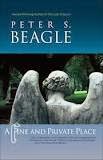
It is a replication technology as good as the genome, though just as much prone to error. As for Marvell, seeing Peter S Beagle's A Fine and Private Place today in the bookstore, I immediately bought it and wrapped it for myself for Christmas. I'm writing an ars moriendi  just now and I have faith he will do justice to the theme of death, remembering the elegy of The Last Unicorn.

This has also been the Year of Pokemon, for me. I realize this can hardly be news to the public. My kids are eight and ten; Pokemon is still huge in grade school. I had no idea that children still collected and traded physical cards: I thought this had died with 50s baseball cards or 70s hockey cards. There are online battles; there are endless TV series. Still, the cards and the specs are at the centre of it. There are parts of the mythos that I hate: if you had a Pokemon, why would you battle it? I was a longterm but lousy Pony Clubber for this reason during my whole childhood. Anyway, I have become a Pikachu fan, some twenty years late. Pika, pika!

 And Peter Capaldi has happened to Dr Who. Bloody excellent. It was all getting too emo for me. When you run out of Dr Who you can watch In The Thick of It and learn how to swear all over again. Smith and Tennant did fine jobs, can't complain, and Russell T Davies' tireless work to get the creaky old thing back on air and impart some postcolonial anxiety and gender trouble to the enterprise were invaluable and necessary. Still, the Doctor is a fuckhead curmudgeon (edit as necessary) at core and it's nice to see us just get on with this fact; he is the face of the British colonial power in its latter, guilty, unpredictable, wondering days. He creates problems, and therefore plots, by showing up and screwing up as much as succeeding. I, for one, am weary of the endless moaning I hear via FB about Steven Moffat. His stories are the best and most sophisticated since the reboot. Dr Who, in the context of its making, in Britain, is the most mainstream of the mainstream, a children's show, and always has been. Might as well castigate Fox News. The distance between what we might believe possible of the BBC and Fox News is, regrettably, coming to mark the distance between Britain and America; it's a hard space to negotiate. Nonetheless, it is worth remembering that the show is an export to alternate America, that beleaguered state. At home it's shooting straight down the middle. It's a very different middle, that's all.

I have a break in the new year: I'd like to read Alyx Dellamonica's Child of a Hidden Sea, and I have heard that a sequel to Sofia Samatar's A Stranger in Olondria is also due. I am looking forward to Jeffrey Donaldson's The Missing Link: The Cognition of Metaphor and the Metaphor of Cognition, out in the spring, and I've been saving Vermeer's Camera and the documentary Tim's Vermeer. Others will occur to me. I know they will.

Best wishes to all for 2015!

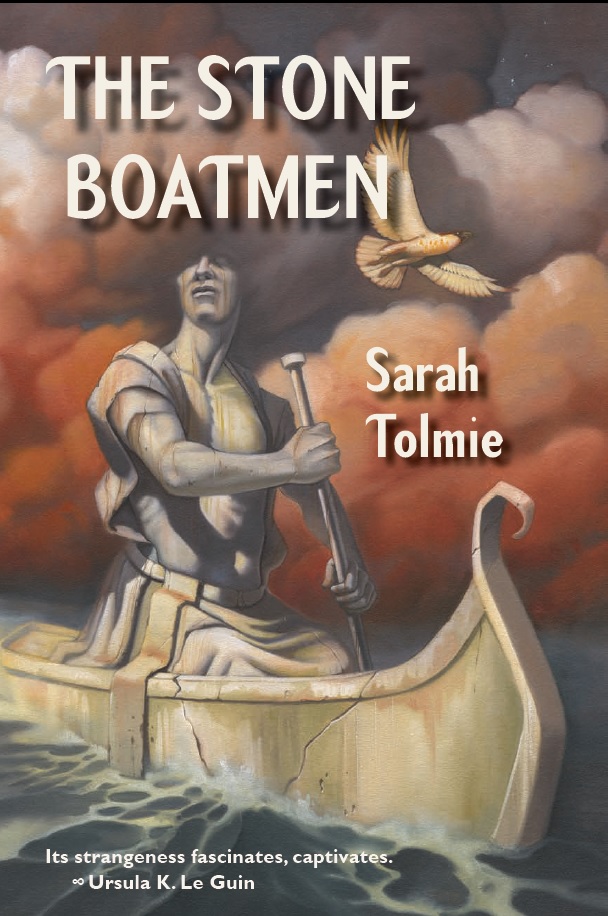
Sarah Tolmie is an Associate Professor in the English department at the University of Waterloo, where she teaches medieval and renaissance literature, general British literature, and creative writing. She publishes on the bizarre late medieval visionary poem Piers Plowman and its relations to logic and language and has been developing a virtual reality translation of the text — what she calls a “wearable poem” that the reader walks into via a head-mounted display — called the Salvation Suit, since 2009. This technological experiment has led to several other research-creation projects, among them building an augmented reality angel out of a human dancer and a pair of dynamically-responsive virtual wings, and making a whispering gallery of voices saying “goodbye” with a Kinect, an interactive theatre piece about mourning.  Aqueduct Press published her debut novel, The Stone Boatmen and NoFood, a suite of stories, in spring and summer of this year.
Friday, December 12, 2014

The Pleasures of Reading, Viewing, and Listening in 2014, part 1: Lisa Tuttle


Pleasures of Reading, Viewing, and Listening in 2014
by Lisa Tuttle


When I sat down to write this list, I had it in mind that Karen Joy Fowler’s wonderful We Are All Completely Beside Ourselves would be my book of the year. Then I looked at my contribution from last year, and discovered it was my book of the year in 2013. Hmmm. Then I remembered that I read it last year – when it was published in the US – because I couldn’t wait until it was published in the UK, this year. It also made the news by being on the short-list for the Mann Booker Prize, this being the first year American writers were eligible. And it’s been turning up on the annual “books of the year” lists in British newspapers – one of the very few books on those lists that I’ve read. Maybe I could quickly read it again, so it might be the best book I read in 2014 as well as 2013....but there’s no time for that now. Later – because this is a book to read and re-read.

What about this year’s reading? I don’t know if anything will stay with me as powerfully as We are all completely beside ourselves, but when I finished Nicholas Royle’s First Novel, I knew it was one I will re-read with pleasure. It is one of those books that fits into the rare and treasured classification of “metaphysical thriller” – at least, in my head. It is meta-fictional, post-modern, clever and tricky, but also with great emotional intelligence and heart; a book about writing and reading, about books and life and fiction.I loved it.


The other, all very different, novels that stood out for me are: Amy Falls Down by Jincy Willett, Babayaga by Toby Barlow, an amazing, accomplished, surreal mash-up of fairy-tale type fantasy and cold war spy story;  Sunburnt Faces by Shimon Adaf, a novel about a girl growing up in Israel and becoming a fantasy writer – I can’t quite explain the power of this book; I suppose it must reside in the language (despite the fact that I read it in translation) and its strangeness. At times I found it a frustrating read – I couldn’t quite get to grips with what it was all about – yet I always felt compelled by it. It’s a book I’d like more people to read, in order to have a conversation about it.
which also has a writer as main character, and is likewise astute about the reality vs the dream of “being a writer,” as well as being extremely funny;

My favourite non-fiction book (although it also contains some fiction) was The Ecstasy of Influence by Jonathan Lethem. I bought this hefty collection of essays, criticism, reviews, etc. a couple of years ago, thinking it would be one to browse through, and then didn’t – it sat on a pile of other unread books for nearly two years until last month, when I opened it, meaning to read just one or two pieces....and was captured. I had to read the whole collection. Not all of the pieces are equally good, but the best are outstanding, and I admire and applaud his aim in gathering them together.

 As usual for me these lists are mostly about reading, but I must say one thing about listening, having just this year listened to my first podcast. It was the first episode of “Serial.” Need I say more? Like so many other people, I was hooked, and still am, by this painstaking investigation into a murder in Baltimore in 1999, and what it reveals about the difficulty (I don’t want to say “impossibility”) of ever learning the whole truth about anything people do.


 Lisa Tuttle is the author of numerous novels and short story collections. She has also published nonfiction and more than a dozen books for younger readers. In 1974 she won the John W. Campbell Award for Best New Writer and, in 1987, the BSFA award in the short fiction category. Aqueduct Press published her novella My Death in 2008 (which is now available as an ebook). Born and raised in Houston, Texas, she has made her home in a remote rural region of Scotland for the last twenty years.

Thursday, December 11, 2014

The Pleasures of Reading, Viewing, and Listening in 2014

Our annual series of posts on reading, viewing, and listening is about to begin! Once again I've solicited piece from a bevy of writers and critics to tell us what they particularly enjoyed reading, viewing, and listening to in the last year, and once again I'm finding the responses as fascinating as they are idiosyncratic. I'm sure I'm not the only one who's picked up suggestions for future reading, listening, and viewing from our past editions of the series. This year's edition will include posts by Brit Mandelo, Lisa Tuttle, Mark Rich, Sarah Tolmie, Tansy Rayner Roberts, Jeff Ford, and many others. I'll be adding links below as I upload each new contribution, to provide a list for convenient reference. I hope you'll enjoy reading these as much as I do.

Part 1: Lisa Tuttle
Part 2: Sarah Tolmie
Part 3: Gwyneth Jones
Part 4: Tansy Rayner Roberts
Part 5: Jeffrey Ford
Part 6: Lucy Sussex
Part 7: Alisa Alering
Part 8: Brit Mandelo
Part 9: Jennifer Marie Brissett
Part 10: Andrea Hairston
Part 11: Richard Bowes
Part 12: Carrie Devall
Part 13: Mark Rich
Part 14: Liz Henry
Part 15: Cheryl Morgan
Part 16: Nancy Jane Moore
Part 17: Lesley Hall
Part 18: Arrate Hidalgo Sanchez
Part 19: Nisi Shawl
Part 20: Kristin King
Part 21: Eleanor Arnason
Part 22: Catherine Krahe
Part 23: Katrinka Moore
Part 24: Fiona Lehn
Part 25: Veronica Schanoes
Part 26: Kiini Ibura Salaam

Tuesday, November 25, 2014

Elysium, by Jennifer Marie Brissett

I'm thrilled to announce that Aqueduct has just taken delivery of Elysium, a debut novel by Jennifer Marie Brissett. It's a gorgeous book that comes recommended by three major writers, Jeffrey Ford, Elizabeth Hand, and James Patrick Kelly, and is getting strong reviews. In Elysium, a computer program etched into the atmosphere has a story to tell, the story of two people, of a city lost to chaos, of survival and love. The program’s data, however, has been corrupted. As the novel's characters struggle to survive apocalypse, they are sustained and challenged by the demands of love in a shattered world both haunted and dangerous.

Jeffrey Ford writes: "Wow! Jenn Brissett's new novel Elysium from Aqueduct Press is a knockout. The writing and structure of the book are so accomplished, I'm amazed this is a first novel. The style flows and draws you into the fiction and keeps you there—poetic in it's imagery but simultaneously economical. It's a science fiction, post-apocalyptic, tale, a love story, but not your dumb old man's love story. A love story for a new age. The structure of the novel was the most startling thing to me—a complex construction that never comes across as complicated. The effect is like a magic trick. Great characters that make the adventure worth the journey. I hope reviewers don't miss this one."

And here's Elizabeth Hand:  "It's really quite difficult for me to believe it's a first novel, it's so good: incredibly ambitious, beautifully written, moving, and with an extremely poignant ending, not to mention that remarkable, intricate balancing act with all your various hall-of-mirrors characters."

And James Patrick Kelly: "Jennifer Marie Brissett has written an audacious first novel that pushes against the limits of the form. With a spiral narrative and a dance of identity and incident, she limns an array of characters and their worlds in deft strokes. Be warned that you will puzzle about the story behind the stories as you read this novel, only to discover a profound and moving answer at its conclusion. With its bold interrogation of gender, Elysium is a book like no other."

Publishers Weekly writes:  "Brissett deftly handles the challenge of a multitude of characters all being the same people in a multitude of places that are the same place, while exploring complicated questions about identity."

The Future Fire writes:   This is a complex, dense book, and reminds me of the best parts of Kate Atkinson’s Life After Life and David Mitchell’s Cloud Atlas. Brissett’s novel, her first, is as ambitious and experimental as those works, and I hope it receives similar attention.... What the book may lack in philosophical meditation it makes up for in emotional resonance: every character Brissett draws is, in one way or another, an emotional survivor—and a visceral one at that. The feeling of loss pervades the novel, reminding us that sometimes it’s not enough to survive, that living requires more than that in ways that only the best writers and thinkers—and stories—can describe."  

Jenn talks at length about the novel with Julia Wade, on a videocast here.

The book is available now from Aqueduct Press in both trade paperback and e-book editions. You can purchase it here.

Tuesday, November 11, 2014

Update on WisCon Chronicles 9

Mary Anne Mohanraj has informed me that she's now 

"reading the submissions for Aqueduct Press's WisCon Chronicles 9 (essays, fiction, poetry, etc., centered around the themes of intersections and alliances -- you need not attend WisCon to submit). Although the deadline has formally closed, I will likely still be looking for some individual pieces to fill out the anthology. If you're interested in submitting still, please send me a query at mohanraj@mamohanraj.com, with a brief description of what you'd be sending; I'll let you know by the end of the week whether I'd like to see it.

"I am open to topical material (such as those responding to various recent controversies in our field) as well as pieces on other subjects."

Monday, November 3, 2014

Three cheers for Arrate!


Arrate Hidalgo Sanchez, who has been Aqueduct Press's intern since March, has finished her internship. We Aqueductistas might have been feeling sad about saying good-bye to her, but the good news is that she's joining Aqueduct as an associate editor. Over the course of her internship, Arrate has demonstrated a great talent for editing. And she is thoughtful and meticulous. Our submissions have been rising sharply, and (as probably a few of you know very well, who've been waiting for me to get to your book) I've been struggling to keep up with them. Each book takes a lot of time, and I have only so much to give (if I'm to have a life at all, that is). And so I'm deliriously happy to have Arrate's help with the front-line editing. 

ETA 11/23/2014
Kath has asked me to clarify my role in reading in submissions: viz., that I myself read only a fraction of those we receive. Kath and Arrate are Aqueduct's first readers. Not only have our submissions in toto been rising sharply, but the number reaching me are, too. 

Friday, October 17, 2014

The Cascadia Subduction Zone, Vol. 4, No. 4


The Fall issue of The Cascadia Subduction Zone is out! This is one of our special focus issues, this time on Women and the Gaming World, brought to us by guest editor Diana Sherman. In addition to the special focus, the issue also brings us Marc Laidlaw's "The Legend of Kit Read" for our Grandmother Magma column and "The Old Testacles," a short story by Anna Tambour.

Here is the table of contents:


 Vol. 4 No. 4 — October 2014

Special Focus on Women and the Gaming Worldand the Gaming World
Essays
Asking the Right Questions in Games
   by Fred Zeleny

The Women of Dragon Age
   by Marie Brennan

The Othering of Women in Gaming
    by L. Wagner

Grandmother Magma
The Legend of Kit Reed
   by Marc Laidlaw

Reviews
Chicks Dig Gaming, edited by Jennifer Brozek,
Robert Smith?, and Lars Pearson
   reviewed by Victoria Elisabeth Garcia

Mass Effect Trilogy, by BioWare
   reviewed by Rachel Blackman

Long Live the Queen, by Hanako Games
  reviewed by Linsey Duncan

Tropes Vs. Women in Video Games by Anita Sarkeesian, Feminist Frequency
   reviewed by Arinn Dembo

Story
The Old Testacles
   by Anna Tambour

Featured Artist
Realm Lovejoy
The digital version of the issue can be purchased for $3, the print version for $5, here

Tuesday, October 14, 2014

Sexual Harssment and Public Space


I've understood for a long time-- sometimes it seems like forever-- that many (though obviously not all) instances of sexual harassment invoke, often unconsciously, the binary formula that has its roots in patriarchal social organization, viz., the notion that public space is for men's business and play and that "decent," "respectable" women will stay secluded in the private spaces unless adequately shielded by a man's protection. As a graduate student in history, medieval and early modern Florence provided a perfect model for understanding this. The prostitute was the prototype for women who lived and worked in public space: a sexualized commodity, available to anyone. A woman without male protection must necessarily expect to be insulted if not assaulted.

Later, in the mid-1990s, I read Catherine Gallagher’s inteteresting Nobody’s Story: The Vanishing Acts of Women Writers in the Marketplace 1670-1820, and my understanding of the connection developed considerably. I’d long been familiar with the anecdotes about the woman who delivered lectures on the law at the University of Bologna from behind a screen to conceal her identity and thus protect her identity, and knew that very few women in the late medieval and early modern world dared to publish their work under their own names. (Marie de France, Christine de Pizan, Artemesia Gentilleschi, and Margaret Cavendish, brilliant exceptions to the rule, stand out as outliers in their audacity and even pride in doing so.) But I didn’t entirely get it until I read Gallagher’s book. Gallagher’s book looks at the development of authorial personae in fiction by women writers in England, dating roughly from Aphra Behn to Maria Edgeworth. Both male and female authors, she suggests, “in quite dissimilar social and economic conditions and across a range of discourses, portrayed themselves as dispossessed, in debt, and on the brink of disembodiment…. [A]uthors of both sexes called attention to their existence in and through their commodification and their inseparability from it. The rhetoric of female authorship differs, in this regard, from that of authorship in general by exaggerating and sexualizing the common theme….As authors, they imply, they themselves are effects of exchange. They do not present their texts as places where they have stored themselves, nor do they portray their authorship as an originary act of creation….Indeed, these authors commonly figured their labor as the accumulation of credit rather than the production of property.” Aphra Behn and her open, public success as a woman writing marked the beginning, really, of Anglophone women publicly claiming authorship (which in her case included writing plays that were publicly performed). And how did Behn fashion that public authorial persona? Gallagher examines how she audaciously used “the metaphor of the author as prostitute to create distinctions between the obliging playwright and the withholding private person, the woman’s body and her self, the stage and real life.” Behn did this as a way in to a role previously reserved for men, allowing the many writing women who followed to fashion other (“feminine”) means for becoming public—ie.,writing—subjects.      

It's been about two decades since I was informed by an sf editor editing one of my essays that the "sexual double standard" is "dead." Really? One of the social premises underlying many instances of sexual harassment is that any woman venturing into public space is subject to sexualization. That is why, of course, women who dare to speak in public space so often become targets for elaborately vicious rape threats. Or slut shaming. Or "doxxing."  Remember the English proverb, "Caesar's wife must be above suspicion"? Women daring to negotiate public spaces (which include, of course, the workplace) are effectively in the position of Caesar’s wife. It's an impossible position for anyone claiming full public subjectivity, of course, since merely pointing out her possession of a vagina can suffice to stain her public integrity and the value of anything she says or does or even her right to speak. Can anyone deny that in our culture all it takes to call a woman's integrity and creditability into question is exposing the fact that she has a vagina is not a cis-male?

I've heard it suggested that sexual harassment has become such a hot issue (an issue that I will remind you was forced into premature retirement by the smearing of Anita Hill during the US Senate’s Judiciary Committee hearings for vetting the nomination of Clarence Thomas to the Supreme Court) because young women have been raised to expect to be treated respectfully and so aren't willing to put up with what women have always had to put up with. I don't think it's so simple. I think that the difference for the second decade of the twenty-first century lies in the stunning, important fact that women are increasingly claiming a place in public space and are consequently transforming public discourse in ways that challenge male entitlement to a serious degree. What else is at issue when evaluations of women’s professional work can be (and often are) smeared by social complaints, which seldom have any place in evaluations of men’s professional work? When the new chief of Microsoft publicly tells women attending a women in tech conference that women shouldn’t be so brassy as to ask for raises? When revealing the gender of the authors of scientific and academic papers results in markedly disadvantaging those identified as women? The implication is that women are in public space on sufferance, as special cases, being given privileges that can be revoked for any one of a number of arbitrary reasons, usually amounting to not in some ways being above rubies.

I've been very clear for some time (since starting the WisCon Chronicles, in fact) that WisCon has been developing into an interesting public space concerned, above all, with issues of access (especially, but not, with regard to gender). When I first attended in the mid-1990s, it felt to me like a semi-private space—a little pocket universe one could visit as a refuge from everyday life. Now I see it as a mix of public and private space, where small, brief private spaces thread and intersect the public. It's still, for me, its own unique space, a place of warmth and generosity, but it has become, as well, a vibrant public space where things happen that reverberate and generate and engender and transform, sometimes in ways that entail discomfort. (Change is like that, no?)  In short, I’ve come to see it as a laboratory for change rather than a clubhouse: for me, the very ideal of a feminist space. Above all, it's a place where women are encouraged to claim public space. And that's why the issue of sexual harassment is such a serious one for WisCon. If we (meaning all of us in this culture we live in) are to learn to accept and value women's contributions as easily and fully as we do men's, the double standard, which rests on the assumption that visibility in public space strips a woman of her respectability, has got to go. And that means, of course, that most sexual harassment that occurs in public space must be recognized as an instrument intended to instruct women that they can exist in public space only as sexualized objects, never as speaking subjects. 

ETA: After posting this, I read about the latest threat leveled in the Anita-Sarkeesian silencing campaign. Sarkeesian is scheduled to speak at Utah State University. Staff members there received a threat of a massacre if Sarkeesian is allowed to speak. Sarkeesian, the threat writer claims, "poses 'everything wrong with the feminist woman' and that is why she is being targeted. “She is going to die screaming like the craven little whore that she is if you let her come to USU.” It's all about expelling Sarkeesian from public space, and fantasizing her reduction to an inarticulate, whimpering markedly female body. What is wrong with "the feminist woman"? She speaks in public. 

Tuesday, September 30, 2014

Thoughts on the Killing of Darrien Hunt


by Mark Rich


Darrien Hunt, a young man in his early twenties, fell to police bullets in mid-September, in Saratoga Springs, Utah. Thanks to the unusual costume he sported, which included a mock Japanese sword, he stood out, that day. Being non-white in a community that considers itself ninety-percent white, he likely stood out from the crowd on most days. Hunt, wearing earbuds and perhaps oblivious to his immediate surroundings, seems to have been engaging in imaginary role-playing, enjoying fantastic adventures elsewhere than on the quotidian plane his feet touched. Called to the scene by someone suspicious of this behavior, two police officers arrived. They had an interaction with Hunt. A photograph has surfaced showing him standing near, and between, the officers, smiling.

At some point Hunt found reason to flee the officers, offering them his back, which they hit in six places with bullets. Assuming the officers were not superb marksmen, one can only imagine how many shots they fired, and how many reached the restaurant toward which Hunt had been headed.

Tim Taylor, deputy chief attorney for Utah County, has made a few interesting statements about the above. The Guardian quotes him as saying he knew of "no indication that race played any role." Since Taylor said this before any formal interviews with the two police officers commenced, we would expect him, naturally, to know of "no indication." How could he, officially?

The sword, which had been purchased at an oriental gift shop and given to Hunt as a present, "was not a toy," according to Taylor—again as quoted by the Guardian. "It is a steel-type sword with a sharpened point and what looks like a sharpened edge," Taylor said.

Yet if a sword is not a "real" sword, and is being used in play, what is it but a play sword? And what line can we draw between a play sword and a toy one? Is not a toy an object that enables play? Even a plastic katana could be described as a "steel-type sword with a sharpened point and what looks like a sharpened edge."

Utah has laws permitting the open carrying of weapons. It has never seen fit to enact laws permitting the open carrying of toys.

*

I have my reasons for continuing to think about this story. While I no longer write for the toy-collector market, I continue to wear some "toy authority" dust on my shoulders, and continue to receive occasional questions concerning playthings. I continue to buy, collect, and sometimes sell old toys, moreover. This being a busy time of year for auctions and flea markets, it happened by pure coincidence that I had been putting restorative oil on the wooden stock of a venerable Daisy toy gun the day before reading about Darrien Hunt.

The Daisy line featured most prominently its BB guns, for which Daisy eschewed "steel-type" material, preferring steel. Tim Taylor might say, "They are not toys." Yet I happen to know that Daisy, Markham, and other BB-gun makers considered themselves part of the American toy manufacturing industry. They exhibited at the American Toy Fair, and sold their products in dime stores and toy departments.

While I grew up not thinking of myself as "non-white," various incidents brought it home to me that others regard me as such. Although some judge my non-whiteness to have resulted from American Indian blood, I am instead half-Japanese. I have not a single toy katana in the house. All the same, around the time Hunt received bullets in his back, I was a non-white male holding a toy weapon, albeit in private. I had bought the toy at an auction, however, and so have had the experience of being a non-white with a toy weapon in my hands in public.

This matters not a whit. Or it matters intensely. When reading about Hunt I learned about John Crawford III, who in August went shopping in an Ohio Walmart—a dreadful store to patronize, for many reasons. Another shopper had removed a BB gun from its packaging, which Crawford picked off a shelf and carried around—which might seem an odd thing to do, were it not for the fact that people tend to carry around items they are thinking of buying. While not wearing earbuds, Crawford was absorbed in a telephone conversation, and so perhaps not entirely in tune with his surroundings. As in the Hunt killing, Crawford, non-white, was turned away from his assailant when he received a bullet from a police weapon. He had already stated to a different officer that the gun that he dropped was "not real."

Two states. Two non-white men who had committed no crimes. Two toy weapons. Four police officers involved in incidents in which state-of-art, state-approved sidearms were used in killing innocents from behind. In Crawford's case, at least one officer must have had the knowledge sink in that he had been called to the scene because someone had a toy.

*

Preserving the peace presumably reigns high among the goals for law-enforcement officers. One would think that "peace officers," as they sometimes have been called, should encourage play and creativity in all its forms: for play and creativity help build society, and give it an abiding strength. Unfortunately these days we accept the phrase "militarized police" with barely a lifted eyebrow, a fact that suggests that those who do act as "peace officers" are being edged out of the law-enforcement field.

For can one be a "militarized peace officer"? Yet do we need to ask this question, when even the words "militarized police" ring with contradiction? Police: "an organized civil force for maintaining order, preventing and detecting crime, and enforcing the laws." This definition comes from the source nearest to hand, the Harper & Brothers American College Dictionary of 1948. Note that the definition indicates the police are a civil force. In common understanding, civil authority stands apart from military authority.

*

One may well ask who besides the police officers are at fault in the killing of these young men.

In the case of Crawford, the giant retailers who have encouraged "open carry" within their retail spaces cannot stand aloof from culpability. These retailers created the social environment in which a person might carry a toy weapon openly, within the toy department or outside it, and be mistaken for one who carries a weapon. Yet if the giant retailers share culpability, within their spheres of influence, then surely the states who embrace "open carry" must, likewise. They have made "open carry" an element within the social fabric by law, and so have created the environment in which anyone who carries a toy weapon openly may be mistaken for one who carries a weapon.

Yet another element plays into these killings, however. Tim Taylor's seeing "no indication" that race played any role in the Hunt killing seems, in itself, an indicator: for he issued, from his position of authority, a denial about the matter. It would have been more accurate for him to have stated his ignorance about the matter, since the investigation into the killing had yet to begin.

*

Above and beyond questions of culpability may be questions about the absence of a needed civil force in the places where these events occurred. The Guardian reported that the officers who shot Darrien Hunt in the back were "placed on paid administrative leave." This seems the action of an organized force that is akin to a fraternal society or brotherhood, not of a civil force. The "chief," Tim Taylor, said moreover that although protocol called for interviewing officers, internally within the department, within two to three days after a shooting, in this case the officers were being scheduled for interviews more than a week after the killing. This gives the further appearance of a fraternal society which protects its own before it protects greater society.

If these appearances have any relation to the facts, then this organized force in Saratoga Springs is not a civil one. If it lacks that civil aspect, it cannot be called "police." If all municipal law-enforcement organizations were like the Saratoga Springs force, and if all other chiefs were like Tim Taylor, we would need to state that we live in a state that goes unpoliced, literally. For we would have no law-enforcement organizations that would fit the definition of police.

We must remember that Socrates created not the single most ideal society possible, in Plato's Republic, but rather the particular ideal society that arises out of certain arguments and a certain logical process. Yet at its core it contains within it the concept of the guardian; and this guardian, one might hope, would hold a place in other ideal societies, developed out of other arguments and other logical processes. The Socratic guardian embodies the notion of Courage, a term that embraces a complex portion of the human soul—perhaps the most complex of all. Within the nature of this Courage exists the concept that death is to be preferred to the uncourageous act. To be the embodiment of Courage, as the Socratic guardian is, means that one accepts this notion, nourishes it among one's core understandings, and allows it to guide, alongside Wisdom, one's actions.

Socrates seems to have held himself to a guardian's standards, to judge from his own death. Does this matter? I believe it does: for it would surprise me should it turn out that any of the police officers involved in these killings had any training to help them understand the responsibilities they take on in becoming guardians of society. Using firearms of any kind around a gas station—which we know from news reports was nearby, in the Hunt killing—seems unwise, in the extreme. Using firearms around a family restaurant, equally, for different reasons. What wisdom then exists, we might ask, in shooting a fleeing man in the back? That very act served as a stereotypical symbol for cowardice, in old cinema. Yet what wisdom, we must insist on asking even more strongly, exists in a "police" department's statement that its officers fired their guns because the young man brandished his sword at them? Are we to understand that two of its officers—highly valued ones, who are worth paying even when not working—faced a toy sword and felt threatened?

That statement, about Hunt's brandishing his toy at them, would seem to have been a fabrication, since Hunt fell to six bullets administered from behind. Apparently these valued officers saw this extravagantly dressed young man running away, with his toy sword, and only then used their non-toys. The costumed one who was fleeing them had committed no crime. So he must have been offering a threat. Yet he successfully threatened the officers only by turning his back. Such fearfully tiny souls, these officers must have had, to have lost their courage at the sight of a fleeing man!

We can understand, now, the department's need to build up these insignificant souls, to make them seem larger and more heroic, by saying that it took the sight of a brandished sword to transform them from officers of the peace into its destroyers. Were they defending society? No: for according to Tim Taylor they were defending themselves against that toy. Then, by firing their expensive, overpowered, and, sadly, state-sanctioned weapons, they showed us exactly what they thought of our society.

Sunday, September 14, 2014

"Real Mothers"

Last summer, Cruising the Disciplines: A Symposium on Samuel R. Delany, edited by Kenneth R. James, appeared as an issue of Annals of Scholarship. This volume was meant to be a proceedings of a symposium on Delany's work held in Buffalo about a decade ago now. I gave a paper at the symposium, which I expanded for the volume, titled "Real Mothers, a Faggot Uncle, and the Name of the Father: Samuel R. Delany's Feminist Revisions of the Story of SF." Since this paper hasn't appeared elsewhere, I've posted it on my website for those interested in reading it. At the heart of the paper is Delany's famous allusion to Jeanne Gomoll's "Open Letter to Joanna Russ" during an interview published in SF Eye in the 1990s.

You can find "Real Mothers..." at  http://ltimmelduchamp.com/Narratives%20of%20sf.

Tuesday, September 9, 2014

Ursula Le Guin to receive the National Book Foundation's Medal for Distinguished Contribution to American Letters

I've just received this press release:
In recognition of her transformative impact on American literature, Ursula K. Le Guin is the 2014 recipient of the Foundation’s Medal for Distinguished Contribution to American Letters. She is the Foundation’s twenty-seventh award recipient.
For more than forty years, Le Guin has defied conventions of narrative, language, character, and genre, as well as transcended the boundaries between fantasy and realism, to forge new paths for literary fiction. Among the nation’s most revered writers of science fiction and fantasy, Le Guin’s fully imagined worlds challenge readers to consider profound philosophical and existential questions about gender, race, the environment, and society. Her boldly experimental and critically acclaimed novels, short stories, and children’s books, written in elegant prose, are popular with millions of readers around the world.
“Ursula Le Guin has had an extraordinary impact on several generations of readers and, particularly, writers in the United States and around the world,” said Harold Augenbraum, the Foundation’s Executive Director. “She has shown how great writing will obliterate the antiquated—and never really valid—line between popular and literary art. Her influence will be felt for decades to come.”
Neal Gaiman will present the award on November 19, 2014, at the National Book Awards ceremony.