Friday, December 11, 2015

The Pleasures of Reading, Viewing, and Listening in 2015, pt.4: Jennifer Marie Brissett


The Pleasures of Reading, Viewing, and Listening in 2015

by Jennifer Marie Brissett


What an amazing year it’s been for me! Kinda a “best of times/worst of times” deal. With renovating and moving into my first home and promoting my novel Elysium, my hands (and brain) were full. I did manage to absorb many books again this year, mostly audiobooks and graphic novels. Here are a few that I completed—


Gilgamesh.


The Iliad (The Fitzgerald Translation) by Homer.


The Song of Achilles by Madeline Miller. This is the story of Achilles as told from Patroclus’s point of view. It reminded me of Lavinia by Ursula K. Le Guin.


Oedipus the King by Sophocles. (The reading by Harry Lennix is a must! Simply magnificent.)


The Three Musketeers by Alexandre Dumas.


The Wind in the Willows by Kenneth Grahame. I fell in love with this tale and listened to it over and over. What magnificent characters are Rat, Mole, Badger and cray-cray Mr. Toad! 


20,000 Leagues Under the Sea and Around the World in 80 Days by Jules Verne.


Perdido Street Station, The Scar, and I’m currently listening to Iron Council by China Mieville.


An extra treat was listening to my own book Elysium in audiobook format produced by Blackstone Audio and Skyboat Media. Even though I hadn’t read it in over a year I still knew the words before they came (because they are in fact my own words!) and it was kinda like having a mind-echo. A little weird. Yet it was wonderful to hear my words interpreted by other people. 


Jamye Méri Grant did a wonderful job in the reading. I was especially fond of how she handled the Saul Williams poem. She read it like a spoken word artist (which simply makes sense) and said the “breaks” like my computer. Simply perfect! And Jim Freund was the mastermind and magic behind this whole project. It wouldn’t have happened without his persistent efforts to love it into existence, and his sound editing makes this reading of my book really very special. 


This was also a year I spent reading graphic novels again. What made my adventure into the form more exciting was finding titles from independent artists and writers. I found several of them through a number of Twitter conversations I had with friends where we exchanged lists of titles. Reading graphic novels was made even more fun because of the handy-dandy Samsung tablet I bought last year. I can flip pages, zoom in and out, and/or choose a guided view all while listening to Led Zeppelin and Pink Floyd on my headphones! 


Here are a few of the titles that I enjoyed— 


APB: Artists against Police Brutality (Rosarium) edited by Bill Campbell, John Jennings, and Jason Rodriguez. Confession: I have a flash fiction piece in this anthology. I had no idea what I was signing onto when I submitted the piece except that I joined with the editors’ passion to say something about America’s police brutality problem. So when I read the book I was wonderfully surprised by the power of its narrative. So many voices and so many points of view all eloquently screaming for the end to the violence against people of color. 


Genius (Top Cow) written by Marc Bernardin and Art by Afua Richardson. Who would guess that there is rhyme and reason behind a spate of street violence? Who could guess who is the leader with a vision for forcing the city to pay attention to a group of citizens that it often ignores?


Luminae (Magnetic) art and words by Bengal.


Mouse Guard: Winter 1152 (Archaia) art and words by David Petersen. It’s Lord of the Rings with mice! (Thanks Jackie for this recommendation!)


Saga, Vol. 5 (Image) written by Brian K. Vaughn and art by Fiona Staples. Following this mixed-race family on their zig-zagging journey to survive and live in a time of war is always an amazing adventure.


Trees (Image) written by Warren Ellis and art by Jason Howard. Mysterious gigantic “trees” have landed on Earth from space. For many years they stand dormant while humans used to their menacing presence go on with their live. But what will happen when the trees wake up? I have no idea where this is going but so far I love the ride! (Thanks Fábio for this recommendation!)
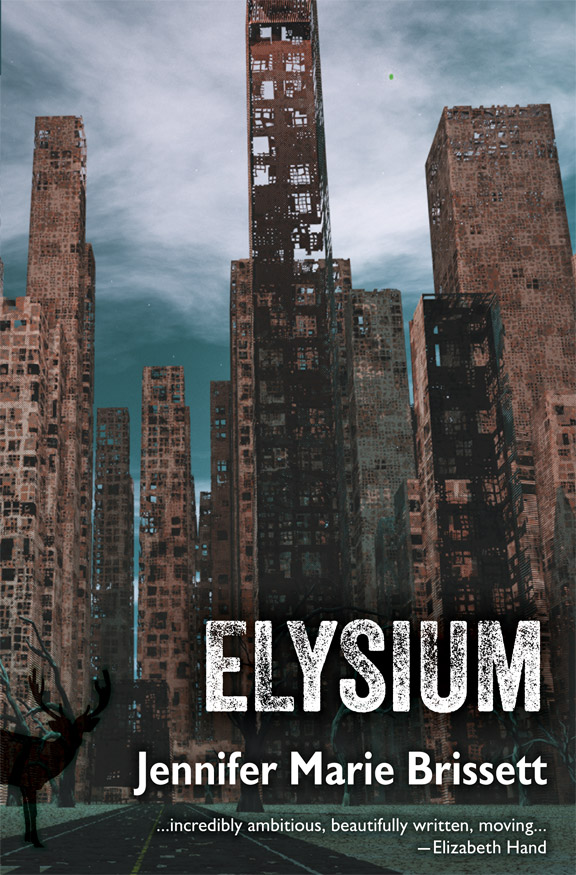


Jennifer Marie Brissett is a Jamaican-British American writer living in New York who has been a software engineer, web designer, and independent bookseller. Her short fiction has appeared in The Future Fire, Morpheus Tales, Warrior Wisewoman 2, and other places. Aqueduct Press published her first novel, Elsyium, just a year ago to great critical acclaim.  Check out her website at www.jennbrissett.com.


The Pleasures of Reading, Viewing, and Listening in 2015, pt.3: Tansy Rayner Roberts

So Much Delicious Culture to Be Consumed This Year!
by Tansy Rayner Roberts


My favourite new podcast is the Fangirl Happy Hour, featuring Renay and Ana. Their love and enthusiasm for the material they review is wonderful; their criticism is sharp and candid. The whole podcast is a celebration of how fans don’t have to agree on everything, don’t have to have watched/read everything SF in order to form an opinion, and how much fun it can be to go against “acceptable fan wisdom” and tread your own path. It doesn’t hurt that they often pick works to review that are the same ones I have either read recently, or desperately want to - more than once, I have hurried up to read a book/comic or watch a show so I can listen to their latest episode. Highly recommended!


My favourite TV watching this year is a cross between Agent Carter and Jessica Jones, two excellently made seasons of television which highlight two fascinating women of the Marvel Comics universe, and also happen to be great drama. Both of them are stories which take place in a superhero universe, but not the superhero genre - Agent Carter is a post-war spy drama, and Jessica Jones is detective noir set in the present day.

This is also the year that I fell in love with and watched ALL of Leverage, a show that left me bereft when it was over, and explains why so many other TV shows try so desperately to capture that magical “ensemble of characters who become found family” dynamic. But with heists.

I’ve immersed myself in comics more than I have in years during 2015 - even taking on the online subscription to Marvel Unlimited, which I highly recommend if you find yourself spending way too much money on digital comics.

In the superhero world, my favourite new comics are the Unbreakable Squirrel Girl (teen-friendly comedy romp adventures) and Bombshells (a digital series based on World War II artwork of DC female superheroes). I have high hopes for the All-New, All-Different Avengers, which had a very solid launch.

In non-superhero comics I can’t recommend The Wicked and the Divine enough - this fabulous story by Kieron Gillen with art by Jamie McKelvie is a raw, magical, filthy glam rock teen coming of age epic with amazing dialogue, characters, art, colours and gut-wrenching cliffhangers. There are about 3 trades so far in the series so it’s a great time to get on board.


Other comics for non superhero fans - Bitch Planet, the harsh and gorgeous intersectional feminist masterpiece by Kelly Sue Deconnick. (Basically Orange is the New Black in Space but without the entitled middle class white girl in the middle of the story) This one has its first trade out, but the individual issues feature amazing feminist articles in the back matter, so don’t be afraid to hit up digital single issues.

For those wanting something a little fluffier, the new Jem and the Holograms comic is simply adorable, a great teen-friendly 21st-century reboot of the classic cartoon featuring girl rock bands, social media, a cutie-pie lesbian romance and more.


Finally, novels - Uprooted by Naomi Novik is my favourite novel of the year, a marvellous fairy tale adventure that felt like Robin McKinley and Diana Wynne Jones got together to storyboard something truly epic. I also really enjoyed Elizabeth Bear’s Karen Memory, Zen Cho’s The Sorcerer To the Crown, and Aliette De Bodard’s The House of Shattered Wings. I continue to enjoy  Ken Liu’s The Grace of Kings, but haven’t got to the end of it yet!

My absolutely favourite thing to read right now is Tremontaine, by Ellen Kushner and her writing team over at Serial Box - a new episode of this gorgeous, swashbuckle-and-spite prequel to Swordspoint is released every week, and I’m getting to the point that I anxiously await each one!


Tansy Rayner Roberts is an author, podcaster, blogger and editor. You can find everything she does at http://tansyrr.com/

Thursday, December 10, 2015

The Pleasures of Reading, Viewing, and Listening, Pt. 2: Caren Gussoff

Beautiful and Resilient
by Caren Gussoff 

2015's done.

You feel my relief, typing out those two little words, a dicyanoacetylene blue fire in ozone. Right?

And there's no one, nearly, around me who's sad to see this year go. This year choked itself with tragedies, small and large, personal and global. Many of my most-loveds wrestled demons and heartache.

And there was Trump.

In direct contrast to the anguish-smeared offal potpourri that was 2015, however, some remarkable work happened, reminders that humanity can be beautiful and resilient, that anything is possible tomorrow, and that there are wonderful ways to escape your present, if it's filled with as much grief and trouble as we've seen.

~Pretty Much Dead, Daphne Gottlieb (Ladybox Books): As much fable as love-letter to pre-tech wealth San Francisco, Gottlieb's latest collection of short stories are ugly-beautiful in the way only cities, themselves, can be, when you're hungry and uncomfortable, and struck by how apartments are more like stacked people nests than sensible shelter and subways are dragons. The workmanship in these pieces is unbelievable; I only put this book down in order to occasionally feel sorry for myself that I hadn't written sentences this good -- a feeling I honestly haven't had since the first time I read Denis Johnson's Jesus' Son in college.


~A Manual for Cleaning Women: Selected Stories, Lucia Berlin (Farrar, Straus and Giroux): When Lucia Berlin died in 2004, commercial success had eluded her (like the rest of us). In her case, though, I have no idea why: her quiet stories of love and failure, addiction, jealousy, pain and redemption are kinder, more true, than Raymond Carver's (yes, I understand what I'm claiming). While literary fiction can fall over itself with its frosty sophistication, Berlin was devoted to her characters, whether they did right or wrong, and wrote with such love, it's impossible to not feel loved. Most of the stories in this new book are culled from her previous collections, but re-reading them together was fresh and a fine perspective across an underappreciated genius's body of work.

~The Buried Giant, Kazuo Ishiguro (Knopf): I have to admit, I have a thing for Ishiguro. It's a lot like my thing for Chip Delany. I can't guarantee you that I wouldn't love 800 pages of the word "fart" if one of those men wrote it. That being said, The Buried Giant was awesome. It's a sad book. Books about forgetting are always sad -- at least to me -- and it's pretty standard Ishiguro to be extra bittersweet about it. There's also the whole Ishiguro plot where what's happening is not what's actually happening, and you only get hints at what's actually going on with Axl and Beatrice, and, if you haven't enjoyed that feeling in Never Let Me Go or The Unconsoled, you aren't going to be happy with this one either -- regardless of how many critics wrote that The Buried Giant was a "…departure" for him. And, if you've never read any Ishiguro, my genre-friends, this one has magical creatures and all kinds of toothy speculative elements to sweeten the deal of reading a book by one of the greatest stylists anywhere.

And with that, friends, I officially close out the year. May 2016 be filled with better times, high hopes, and books we hold high to toast lives lived in boundless joy.

Yes.


Caren Gussoff's currently publishing a serial mystery novel, Last End, right now on chanillo.com. Three Songs for Roxy, her First Contact novella, was published as a Conversation Piece in 2015, and her pandemic zombie math novel, The Birthday Problem, preceded that by a year. Her latest short work will be out in Black Static sometime soon. For all and more, visit her at spitkitten.com.

The Pleasures of Reading, Viewing, and Listening in 2015, pt.1: Sarah Tolmie

2015 in Review
by Sarah Tolmie


This was another year in which I wrote more than I read, it seems. Though that is often an illusion, I suppose. However, a few things stand out: first off, because I just finished it, my friend Carolyn Smart’s seventh book of poems, Careen, a fabulous read in multiple voices about the doomed lives of Bonnie and Clyde. Carolyn is a writer of superbly well- researched dramatic monologues, a kind of latter day Browning, with a taste for desperate personalities. These poems, in the voices of various members of the notorious Barrow gang of the thirties, interspersed with brief documentary reports and extracts from period newspapers, are vivid, slangy and often heartbreaking. I love poets who actually write books, not just bijoux collections. This is a book. You read it straight through. In some respects it reminds me of Chaucer’s Troilus and Criseyde (which I just read for the hundredth time this past term for teaching, so it was also kicking around in my head): a book about famous lovers in a dire situation trapped in their plot, that asks us to deal both with the new-to-them horrors they experience and with our own complacent hindsight (we all know what happens in the Trojan war; we all know what happens to Bonnie and Clyde). If you liked Lynch’s Wild at Heart, or remember all the lyrics to Tom Waits’ Burma Shave, you will love this book.

For those of you interested in the history of science, art or perception, I recommend Laura Snyder’s The Eye of the Beholder: Johannes Vermeer, Antoni Van Leeuwenhoek and the Reinvention of Seeing, which is a smart, readable, thorough introduction to 17th-century Delft and the Dutch Golden Age generally. It’s hard to overestimate the importance of this period for the way we look at the world today. In a similar vein, Celina Fox’s massive coffee-table book The Arts of Industry in the Age of Enlightenment, which may not sound riveting, truly is: if you are at all interested in the ways things are made and the people who make them (textile workers, pottery factories, arms manufacturers, engineers, makers of scientific instruments: the actual processes of creating all the endless new stuff that became available at the beginning of the industrial age) you will really appreciate it. Indispensible to anyone writing a novel set in the 17th or 18th centuries, let’s say … Both these books conjure up the gorgeous, ultra modern library in the Textile Museum in Tilburg, NL, which is where I first found them — a place to which all weavers, knitters, 2D designers and programmers should go, incidentally (you want to see the history of punch card systems, this is the place). Like all museums in the Netherlands, it also has a terrific café and a gift shop of amazingly cool stuff. The most wonderful item I found in Holland came from there: a tablecloth entirely covered in randomized fine print from many sources, from 19th century novels to Wikipedia entries.

I know I speak for many in looking forward to Sofia Samatar’s The Winged Histories, and likewise to Alyx Dellamonica’s A Daughter of No Nation, which was just released. I hope to have my hands on them both as soon as possible. I have ordered the latter and will (heh) give it to my daughter for Christmas.

I read a bunch of YA novels by Kenneth Oppel, which I officially bought for my son (who, encouragingly, read them, too, and was especially proud of them, as he got them signed when Oppel was here in Kitchener for Word on the Street): The Nest, Airborne, Skybreaker, Starclimber, and The Boundless. Oppel has an adventure formula that works very well, and his works really should be classified as alternate histories — somehow no-one thinks of doing this for YA books. The alternate take on Canadian history, particularly all the pieties we learn in school about the railroad, was particularly lovely and weird in The Boundless, quite trippy. Oppel, in his reading of The Nest at WOTS, admitted that he had been working on this one book for ten years, and had written about four more in the interim every time he got stuck. I can see why; it is very different from anything else of his I have read, and quite experimental. Still, I found his admission comforting in such a productive writer, stuck as I am in what could prove to be a similar situation. Come to think of it, the amazingly prolific Dave Duncan also recently mentioned in passing that he has likewise just sold a long novel that took him a decade to write, even as he published a million other books …

Let’s see, what else? I just heard Arvo Part’s Passio live, sung by the Grand Philharmonic Choir. That was pretty amazing and has stuck with me. I’m not a musician so the impression is hard to convey: everything unfolded unpredictably, things did not resolve where you expected them to and yet sounded good; dialogue that is extremely old-hat was natural and compelling. Again, some people have the gift of enlivening and raising the stakes on old stories, ones in which we all know what happens. As an inveterate re-reader of books and despiser of suspense as a principle, I am always on the lookout for this ability in any form.

Netflix is the only TV I watch, except Dr Who. I continue to adore Peter Capaldi, whom I already liked a lot from pre-Who days. The writers really need to let go of Clara, who was never an interesting character in my view and who has reached a dead end. Let’s hope they can ditch her and move on. I enjoyed Sense8, though let’s face it, it was not cerebral. Daredevil: okay. I had a bit of interference from Stardust with the lead actor (Claire Danes’ line about the “magical flying moron” just kept intruding). Jessica Jones: no. Not existentially bleak, just boring, and David Tennant as the obligatory bug-eyed British villain was just a reprise of his Death Eater role from Harry Potter. Humiliating. The fact is, I am not much on comics, superheroes, or the whole Marvel universe business. Every now and again I check in, but it is never worth it. Movies, only saw a few. Interstellar was good, despite its pokerfaced space-movie-we-are-supposed-to-take-seriously demeanour. Ex Machina was sexist claptrap about a tired premise. Possibly a nice job of updating the mad scientist role in that horrifically smug internet billionaire with his hipster beard and low affect, but that’s the best that can be said for it.

Other than that, I have read a lot of books on chinchilla care, as I just bought two on Kijiji: Violet and Daisy. Affection for them gave me my one moment of connection to Jessica Jones, as the weird introvert neighbor had one that bit through a cable and precipitated a few decent scenes. Chinchillas. They’re pure gold. Who knew?

Meanwhile, happy holiday reading to all! See you at WisCon!


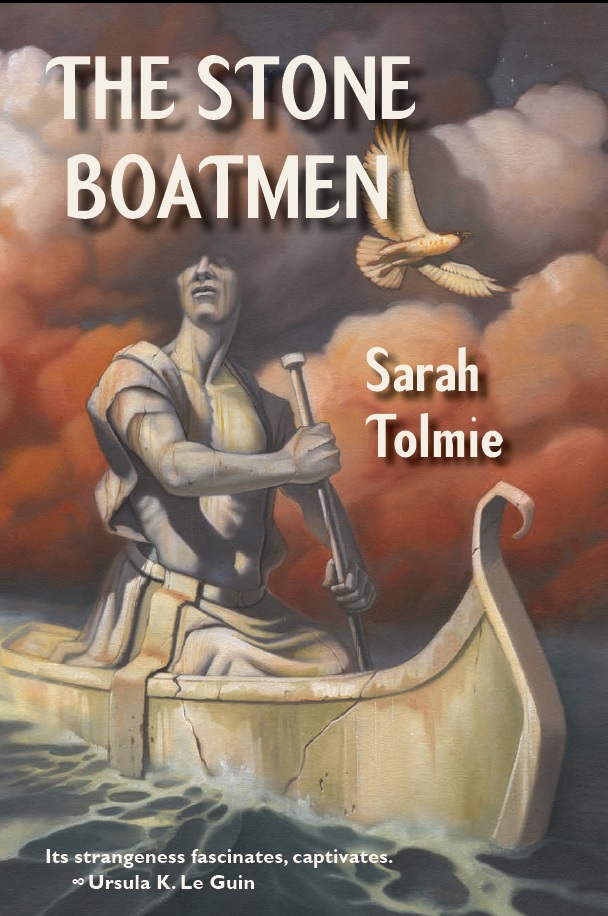
Sarah Tolmie is an Associate Professor in the English department at the University of Waterloo, where she teaches medieval and renaissance literature, general British literature, and creative writing. She publishes on the bizarre late medieval visionary poem Piers Plowman and its relations to logic and language and has been developing a virtual reality translation of the text — what she calls a “wearable poem” that the reader walks into via a head-mounted display — called the Salvation Suit, since 2009. This technological experiment has led to several other research-creation projects, among them building an augmented reality angel out of a human dancer and a pair of dynamically-responsive virtual wings, and making a whispering gallery of voices saying “goodbye” with a Kinect, an interactive theatre piece about mourning. Aqueduct Press published her debut novel, The Stone Boatmen and NoFood, a suite of stories, last year. Next year we'll be publishing a pair of her fictions as Two Travelers.

Wednesday, December 9, 2015

The Pleasures of Reading, Viewing, and Listening in 2015

Our annual series of posts on reading, viewing, and listening is about to begin! Once again I've solicited piece from a bevy of writers and critics to tell us what they particularly enjoyed reading, viewing, and listening to in the last year, and once again I'm finding the responses as fascinating as they are idiosyncratic. I'm sure I'm not the only one who's picked up suggestions for future reading, listening, and viewing from our past editions of the series. This year's edition will include posts by Lisa Tuttle, Cheryl Morgan, Nisi Shawl, Mark Rich, Sarah Tolmie, Tansy Rayner Roberts, and many, many others. I'll be adding links below as I upload each new contribution, to provide a list for convenient reference. I hope you'll enjoy reading these as much as I do.

Part 1: Sarah Tolmie
Part 2: Caren Gussoff
Part 3: Tansy Rayner Roberts
Part 4: Jennifer Marie Brissett
Part 5: Alisa Alering
Part 6: Jackie Hatton
Part 7: Lisa Tuttle
Part 8: Nancy Jane Moore
Part 9: Nisi Shawl
Part 10: Eleanor Arnason
Part 11: Cheryl Morgan
Part 12: Lisa Shapter
Part 13: Carrie Devall
Part 14: Lesley Hall
Part 15: Christopher Brown
Part 16: Gwyneth Jones
Part 17: Kristin King
Part 18: Brit Mandelo
Part 19: Katrinka Moore
Part 20: Andrea Hairston
Part 21: Mark Rich
Part 22: Julie Phillips
Part 23: Veronica Schanoes
Part 24: Fiona Lehn
Part 25: Jean LeBlanc
Part 26: Cynthia Ward
Part 27: Arrate Hidalgo
Part 28: Sofia Samatar
Part 29: Kiini Ibura Salaam 


Tuesday, December 8, 2015

Intelligibility and literary ranking

I'm always finding serendipity at play in my reading, which I gather holds true for most people who do much reading. Yesterday I reported on Ursula Le Guin's remarks on having to learn how to write from a woman's point of view and the flurry of remarks that followed. And so this morning, when I read a piece by Allison Flood in the Guardian about the evaluation made by 81 international critics chosen by the BBC of the best British novels (of all time) and how strikingly different this list was in its rankings from those produced by UK critics, I naturally homed in on this paragraph about the list:

It also, as the BBC points out, features a strong showing from female authors. Unlike other recent lists, including the Observer’s, women writers dominate the top 10, and books by women make up nearly 40% of the total 100 novels on the list. Speculating as to why this might be, Hephzibah Anderson writes for the BBC that “Britain’s literary landscape appears to be a good deal more female to outsiders than we ourselves appreciate”, and suggests that “so many generations of women writers have found themselves to be doubly outsiders – by virtue of both gender and creative calling – that their observations appeal to other outsiders”.

In my view, given my preoccupations with the politics of intelligibility, this last sentence is key and must be considered when one either makes or reads lists ranking literary quality. It is so obvious to me that every time a new list comes out my main response is likely to be skeptical simply because this factor is almost inevitably ignored when each new list is flourished. In this case, precisely because the list does not follow the hegemonic critical stance, that factor is noted to explain the apparent discrepancy in rankings between the presumed experts on British Literature and the "outsiders." The presumption underlying this need to explain is, I hope, obvious.


Monday, December 7, 2015

Report on the Tiptree Symposium


I spent last weekend in Eugene, Oregon, attending the Tiptree Symposium, which was hosted by the University of Oregon Libraries in honor of Alice Sheldon's centennial. In case you haven't heard,the University of Oregon Libraries' special collections include the papers of James Tiptree JR/Alice Sheldon, Joanna Russ, Ursula K. Le Guin, Suzy McKee Charnas, Kate Wilhelm, Suzette Haden Elgin, and other feminist writers who are so critically important to our field and its history. I say I attended, but Aqueduct also attended: Kath presided over three tables with generous help from attending Aqueductistas. We sold several dozen books of our own, plus a variety of Tiptree-related books from other publishers and Tiptree Award tee-shirts.

During the welcome speeches made at the opening of the symposium, Senior Vice Provost Doug Blandy quoted from the introduction to Octavia's Brood in order to emphasize the importance of speculation and "visionary thinking" and declared that the symposium "advances our academic mission." This was a particularly nice touch, I thought, especially since none of the programming carried even a whiff of what most non-academics dislike about academic presentations. (As someone at home with academics, I'm always especially happy to find such harmonious blending.)


The first afternoon featured keynote speaker Julie Phillips, who gave a frequently funny and always moving account of two important correspondences, between Tiptree and Le Guin and Tiptree and Russ. These correspondences record, among other things, how Alli Sheldon spent the last ten years of life--following the disclosure that Tiptree was also, somehow, Alice Sheldon--"trying to find out who she was." After the revelation, she often felt that she didn't have any self at all, that she was caught up in "an animated puppet show." The value of the correspondence in these archives, Julie noted, is about refusing splitting things into compartments and labeling them (something Joanna Russ's letters talk about explicitly).

Following Julie's talk, students of Carol Stabile's Feminist Science Fiction course read selections from the correspondence, and Ursula read her letter in response to Tiptree's disclosure of Alice Sheldon. Many of us cried.

Karen Joy Fowler then introduced an audio production of "The Women Men Don't See," complete with sound effects. The actor reading Don Fenton's narration and dialogue was perfect. I've read that story men times, of course, but I found I couldn't bringing myself to leave the auditorium before it was finished. (Two tours of the Titpree Exhibit and Knight Library began as the tape was playing.) I did get to see the exhibit anyway, though, thanks to Julie Phillips doing the honors for me and her family members, who attended the symposium.

That evening, the Tiptree Motherboard hosted a party, full of conversation, with great refreshments and decorated with gorgeous flower arrangements and posters of Tiptree Award winners lining the walls.


Next morning began with a panel that was originally conceived to be on the subject of "feminist sf publishing." (Somewhere along the way, and without my noticing, "feminist" got dropped.) I was on this panel with Jacob Weisman, publisher of Tachyon Publications (who has done a lot of feminist sf publishing, including three Tiptree Award anthologies), Lisa Rogers, assistant editor at The Magazine of Fantasy and Science Fiction, and Gordon van Gelder, the publisher of , who was also Julie Phillips' editor for her life of Alli Sheldon. We were all a bit gobsmacked when moderator Prof. Phil Scher began by asking us about whether the mainstreaming of sf movies had significantly changed the status and fortunes of sf publishing. When my turn came to respond, I noted how vexed an issue sf film is for women: that films representing women well are considered "flukes" when they're successful, because Hollywood assumes "people" want to see stories about white men only. 

We talked about more interesting subjects, though, when the moderator asked us about "aha" moments when reading mss. (I chose to describe my exhilaration when reading the ms of Andrea Hairston's first novel, Mindscape.) And when the audience entered the discussion, it became promiscuously wide-ranging. This is the only way I can account for the introduction of the subject of "transparent" prose. I think it may have stemmed from a thread provoked by Eileen Gunn; I do recall that Eileen noted that some people don't seem to recognize certain styles of writing as styles, and that it takes a good deal of effort to write in such styles. And Ursula Le Guin, seated in the front row, provided a pungent remark that scotched the notion that "transparent prose" is "journalistic." The conversation was moving too fast for me to insert some of my own concerns about the use of the term "transparent prose"; these relate, of course, to my ongoing reflections about intelligibility-- that intelligibility is neither obvious nor "natural," but always a consequence of the stories, labels, words, etc that are generated by dominant, mainstream (dare I say "hegemonic"?) culture. Some stories, some identities, are simply invisible to those who don't venture outside mainstream culture. While any socially marginalized person is intimately acquainted with this problem and it seems to me to be an important issue that belongs in any discussion about "sf publishing" (feminist or otherwise), that's a minority view, I know, and requires connecting dots that are likely to go unnoticed by most people. Toward the end of the panel, though, Carol Stabile asked about whether the internet and social media had had an impact on sf publishing. And here I was able to note that these had made presses like Aqueduct possible--allowing the amplification of voices that are usually inaudible to the mainstream and the telling of stories unfamiliar and therefore otherwise unintelligible to mainstream publishing. 


I thought about the issue of intelligibility of non-mainstream stories again, when on the next panel, moderated by Karen, featuring Ursula, Suzy Charnas, and David Gerrold, Suzy talked about her first sf convention in 1976, in Kansas City, where she discovered "a community of women writers and readers, coalescing and beginning to create the world of feminist sf." The men at the convention, she said, didn't want to discuss sf by women or stories written from a woman's pov--and yet were outraged that women would want to meet separately simply so that they could discuss such sf (without being told how boring and awful it was and being constantly interrupted, as they were whenever they tried to say anything in the presence of men). Suzy said she'd been "taught that a woman's pov is too constricting and boring. But emerging feminist voices challenged that attitude." Ursula noted "It was a man's world. Feminism had been tried and abandoned earlier in [the twentieth] century. I thought literature was written by men, about men, for men." And so she wrote as a man-- "until I started to feel it wasn't right. Vonda [McIntyre] kept pinging me gently on the head." And: "I wanted to learn how to write as a woman. (But I was happy being a woman.)" And here followed a flurry of discussion affirming that writing like a woman had to be learned, and that it took hard work.

This made me remember how dissatisfied I was with some of the attempts of men writers to write a woman's pov in the 1980s & 1990s & of how Samuel R. Delany has more than once noted that for 19th-century European novelists, being able to write well from a woman's pov was an index of the quality of their art. Since writing from a woman's pov became declasse with modernism, of course both reading and writing stories by women, at least to begin with, takes an effort. And so it is for other marginalized identities. Remember Octavia Butler telling an interviewer that for a long time she thought her protagonist and pov character had to be a hard-drinking, chain-smoking 30-year-old white guy? We write not only from life, but from models. It's something we always have to keep in mind when we're thinkining and talking about gender issues in fiction.

After lunch, Jeff Smith very kindly submitted to questions about his friendship with Alli Sheldon/James Tiptree from Carol Stabile's students and then the audience. This was vivid and often poignant, a very fine reminder of how important oral histories are. And I have to say I'm fascinated to hear that for a while, Sheldon had a living tree growing inside her house. (Surely that's even more remarkable than her feeding a raccoon oatmeal cookies in her kitchen every afternoon?)

Next we had the pleasure of listening to Alli Sheldon's voice, by way of three audio recordings dating from the 1970s. One of these talked about Robert Heinlein's I Will Fear No Evil, another about the play of gender differences in marriage, and the third about pain. 


And finally, the last item on the program was a panel discussion of the James Tiptree Jr Award, moderated by Joan Haran (now a professor at the Center for the Study of Women in Society at the University of Oregon), featuring Jeanne Gomoll, Margaret McBride, Pat Murphy, and Heather Whipple. Pat began by telling one of the "many versions of the birth of the award," in which Pat's GoH speech at WisCon announced the award as a spoof but the audience insisted on taking it literally and making it real. Heather, who is the award's archivist, talked about the materials documenting jury discussions etc. When Joan asked the panelists where the award was going now, I think the response that most interested me was Pat's observation that "what 'exploring or expanding the sense of gender' is different now than when we started the award," and that that meant the award would necessarily always be changing. Oh, & I should also perhaps mention that a request was made that new nominations for the Award not be submitted until after the new website design had been implemented (which will, I gather, be fairly soon).

At the end of the panel, Nisi Shawl, having insisted that music was part of the award's tradition, joined the panel as Pat led the room in a rendition of a song sung at one Tiptree Award Ceremony.

Finally, Carol Stabile made the stunning announcement that more Tiptree Symposia would be held-- next year with a focus on Joanna Russ, and the following year with a focus on Suzy McKee Charnas.

All in all, it was a stimulating weekend. I do have one reservation, though: it is that Nisi Shawl could remark that perhaps only one other black person attended the symposium. Obviously, this strikes me as a blindspot, given that all three Aqueduct authors who have been honored with the Tiptree Award are black women, that Jeff Smith identified Alli as a "social justice warrior," and that the newest Tiptree and Le Guin fellowship awards have gone to black women. 


Sunday, November 29, 2015

Tiptree Symposium, Dec 4-5

Most of you have probably already heard that the University of Oregon Libraries will be hosting a symposium later this week to honor Alice Sheldon/James Tiptree Jr. on the centennial of her birth.
The symposium will kick off with a keynote talk by Julie Phillips, author of the biography: James Tiptree, Jr.: The Double Life of Alice Sheldon (St. Martins, 2006), and will also feature a panel discussion with other writers who carried on lively and engaging correspondence with Tiptree, including Ursula K. Le Guin, Suzy McKee Charnas and David Gerrold. I'll be participating myself, as a panelist on feminist sf publishing with co-panelists Jacob Weisman of Tachyon Publications and Gordon Van Gelder.

The symposium will take place in the Lillis Auditorium, Room 182. Admission is free, however please RSVP here. An exhibit based on the Tiptree Papers will be in Knight Library, first floor, and in Special Collections and University Archives.

Aqueduct Press will be there, as well as numerous Aqueduct authors. We'll be set up in the lobby alongside the University of Oregon Bookstore. We'll be bringing books we've published by attending authors as well as all our Tiptree Award-honored books. Kath made up a list of them (in reverse chronological order), to make sure we didn't miss any, and it's damned impressive, if I do say so myself:


Tiptree Award Winners:

Ancient, Ancient, Kiini Ibura Salaam, Co-Winner, 2012
Redwood and Wildfire, Andrea Hairston, Winner, 2011
Filter House, Nisi Shawl, Co-Winner, 2008

The Marq’ssan Cycle, L. Timmel Duchamp, Awarded Special Honor by 2009 Tiptree Jury
 Writing the Other: A Practical Approach, Nisi Shawl and Cynthia Ward, Special Mention, 2005

Honor List: 
 
Elysium, Jennifer Marie Brissett, 2014
Big Mama Stories, Eleanor Arnason, 2013
The Receptionist and Other Tales, Lesley Wheeler, 2012
"The Nones of Quintilis," in Never at Home, L. Timmel Duchamp, 2011
The Universe of Things, Gwyneth Jones, 2011
The Secret Feminist Cabal:  A Cultural History of Science Fiction Feminisms, Helen Merrick, 2010
Distances, Vandana Singh, 2009
Dangerous Space, Kelley Eskridge, 2007
Mindscape, Andrea Hairston, 2006
Life, by Gwyneth Jones, 2004  (short list)
Love’s Body, Dancing in Time, L. Timmel Duchamp, 2004 (short list)

Friday, November 6, 2015

Jackie Hatton's Flesh & Wires


I'm pleased to announce the release of Flesh & Wires, a debut novel by Jackie Hatton, in both print and e-book editions. (Jackie read from the novel with other Aqueduct writers at the last WisCon.) Following a failed alien invasion the world left is sparsely populated with psychologically scarred survivors, some of them technologically-enhanced women. Lo, leader of the small safe haven of Saugatuck, find their technological enhancements put to the test when a spaceship arrives bearing two men with both wonderful and terrifying news. Is this the beginning of a new era of reconstruction — or the start of a new battle for survival? Not everyone in town wants to fight every comer. Not everyone in town shares Lo’s mistrust of outsiders. This is the story not only of Lo’s battle to protect the safe isolation of her unique community, but also of her struggle to come to terms with a constantly changing and uncertain world.

Publishers Weekly writes: “Hatton creates an unusual, almost entirely Sapphic culture, and the futuristic technologies she introduces are inventive and terrifying. Her prose style captures the peculiarities of this altered world with broad brushstrokes.”

“Jackie Hatton has taken familiar science fiction tropes – alien invasion, the destruction of most of Earth, advanced technology so incomprehensible that it might as well be magic – and turned them into a story that transcends the genre. Instead of the usual tale of evil villains, weak humans, and one brilliant hero, we get complicated human and alien characters dealing with messy situations: that is, real life in dangerous times. There’s plenty of action, but it rarely solves things in the way that the characters, or readers, expect. If, like me, you’re tired of stories with predictable outcomes, this book is for you. “—Nancy Jane Moore, author of The Weave

“In Flesh & Wires Jackie Hatton shows us real women in extreme circumstances: survivors of disaster, traumatized and divided among themselves, with superhuman powers and all-too-human hearts. As they confront change, we witness their desperation, their hope, their need to discover the full range of their powers. A provocative and exciting debut.”—Julie Phillips, author of James Tiptree, Jr.: The Double Life of Alice Sheldon

Flesh & Wires raises questions about community, colonialism, immigration and basic human rights and challenges our assumptions about the ties and obligations of family, community and society in a crisis. You can purchase it now through Aqueduct's site.

Monday, October 19, 2015

The Cascadia Subduction Zone Fall 2015


The Fall issue of The Cascadia Subduction Zone (Vol. 5, 4) is out. It's thicker than usual, and focuses exclusively on comics, and was edited by Thomas Foster. It features essays by Susan Simensky Bietila, Regina Yung Lee, Taylor Boulware, and Roberta Gregory, and Carla Speed McNeill, the featured artist, as well as five reviews. You can purchase single copies and subscriptions here.


 Vol. 5 No. 4 — October 2015


Essays
Out from the Underground
   by Susan Simensky Bietila

Gender, Trauma, and Speculation
in Moto Hagio’s The Heart of Thomas
   by Regina Yung Lee

Fan Culture and Non-Compliance
   by Taylor Boulware


Grandmother Magma
Trying On Sex: Tits & Clits Comix
   by Roberta Gregory

Reviews
Jennifer’s Journal: The Life of a SubUrban Girl, Vol. 1,
by Jennifer Cruté
   reviewed by S. Qiouyi Lu

Ava’s Demon, by Michelle Czajkowski
   reviewed by Jamie Kingston

Supreme: Blue Rose, by Warren Ellis and Tula Lotay
   reviewed by Cynthia Ward

The Secret History of Wonder Woman, by Jill Lepore
   reviewed by Karen Burnham

Ms. Marvel, Volumes 1/2/3,
created by G. Willow Wilson and Adrian Alphona
   reviewed by Tili Solokov

Featured Artist
Carla Speed McNeil

Saturday, October 17, 2015

Strange Horizons Fund Drive: in the home stretch

As I write this, the Strange Horizons fund drive ends in 2 days and 12 hours: if you're intending to contribute and haven't yet done so, you still have time to do it. They're within $1000 of meeting their goal. Many of Aqueduct's authors (including me) are or have been contributors to Strange Horizons. They live in our corner of the galaxy.

In case you don't already know:

Every donation, from $1 to $1,000, is hugely appreciated. As a thank you, we have our regular prize draw, and fund drive special issue. For the first time, you can also sign up (via Patreon) to receive SH in ebook form—and to mark our fifteenth anniversary, we've also put together an anniversary ebook, containing some of our favourite stories.

How do you get these things?

Everyone who donates, via any route, is entered into the prize draw, featuring an array of books, artwork, and other goodies. Check out the prizes page throughout the fund drive, as we add more.

Everyone who donates at least $10 by any route (including Patreon, at any level) will also receive an eBook copy of Strange Horizons: The First Fifteen Years at the end of the fund drive. This ebook includes stories by Elizabeth Bear, Ken Liu, Carmen Maria Machado, Vandana Singh, and many others, plus a history of the magazine.

I'll just note here that several Aqueduct Press books are among the booty available through the prize draw.

Wednesday, October 14, 2015

Quote of the day

"Man" is a universal that applies to everyone precisely because it is no one. It disincarnates itself from the living singularity of each one, while claiming to substantiate it. It is at once masculine and neuter, a hybrid creature generated by thought, a fantastic universal produced by the mind. It is invisible and intangible, while nevertheless declaring itself to be the only thing "sayable" in true discourse. It lives on its noetic status, even though it never leaves behind any life-story, and impedes language with the many philosophic progeny of its abstract conception.              --Adriana Cavarero, Relating Narratives: Storytelling and Selfhood

Tuesday, October 13, 2015

Last call for P K Dick Award e-book bundle


If you haven't purchased the Philip K. Dick Award e-book bundle (see this post) and would like to, the sale ends Thursday at midnight EST. It's a great deal, and includes novels by Gwyneth Jones, Pat Murphy, Elizabeth Hand, Kathe Koja, and others. Just go here.

Sunday, October 11, 2015

On (mini) sabbatical


Have you ever seen termites in action? I hadn't, until I encountered them this morning, devouring a piece of driftwood well above the high-water line of a Port Townsend beach. Though they were a dull color, blending with the wood, their constant, violent movement caught my eye-- only in time before I stepped on them.

I've been noticing lately that small animals like termites-- that sounds odd, doesn't it, since we usually don't call insects animals, though obviously they are-- can do tremendous damage to objects much larger themselves, and at amazing speed. A few months back I noticed that a beaver (and I think it was a single beaver) had been taking down first saplings and then grown trees (in an area of wetlands reclamation). But of course anyone who has had squirrels aiming to move into their house will know what I'm talking about. The termites, beaver, and squirrels have no notion of doing damage inconvenient to, say, humans. And of course, conversely, all the necessary, beneficial things animals do for us-- think of bees-- is incidental to their purposes as well. It's a different way to think about "nature" (a construct that gets pretty shaky whenever I start to ask myself whether such a concept is in any way meaningful)-- maybe a much more meaningful focus than that of the long-time romantic focus characterized by the phrase "bloody in tooth and claw." Kind of like the difference between historians who see human history as an abstract construction trying to represent an extremely complex set of extremely complex relations on the one hand, and history as a record of the acts and speech of Great Men, who supposedly determine what kind of lives (and for how long) the rest of us live. Well I'll back the termites over Donald Trump, for instance, any day.

But I didn't start this post with the idea of nattering on about termites. Rather, I wanted to say that I'm on sabbatical, for two months, from Aqueduct Press, which Kath, Tom, and Arrate are generously making possible. One side-effect of having become a publisher is that I haven't had the mental space to work on my own novels. I've had one novel nearly finished since around the time I started Aqueduct, which I just have not been able to finish in the two- or three-week artist residencies I've had over the last few years. And I have a few other novel manuscripts dating from the late 80s and early 90s that Kath and others have been urging me to publish, but that need a bit of work--in one case, a major restructuring--before they're ready for publication. One thing about working on a manuscript I haven't picked up in years is that I can look at it now as though it had been written by someone else. And since I've had a lot of practice reading other people's novel mss since starting Aqueduct, my attitude toward revising my own work has become, how shall I say, authoritative. And because it's my own work, I can be positively lavish in employing my red pen and demanding enormous deletions and substantial rewriting. Need I say that I'm enjoying myself immensely?

Of course I still love Aqueduct and its mission. But it's good sometimes to take a break, especially when doing one thing has been preventing you from doing something else that's also important to you.      

Friday, October 9, 2015

Jean LeBlanc's A Field Guide to the Spirits


I'm pleased to announce the release of A Field Guide to the Spirits, a collection of poetry by Jean LeBlanc, as a the forty-seventh volume in Aqueduct's Conversation Pieces series. In A Field Guide to the Spirits, poetry becomes a means of time travel in which voices from the past offer insights, reveal secrets, transform our concept of now. These poems explore the interwoven pathways of ghost, memory, imagination, and desire. The spirits visited range from Caroline Herschel and Mary Shelley to Zane Grey and Dashiell Hammet, William Blake to Anne Hutchinson, John Keats to Isaac Newton’s niece. The volume collects fifty-seven poems, forty-four of them original. Aqueduct is releasing it in both print and e-book editions. Check it out on Aqueduct's site.

Tuesday, September 22, 2015

The Philip K. Dick Award Storybundle

Lisa Mason, one of this year's judges for the Philip K. Dick Award, has curated an e-book bundle of novels that have won the Philip K. Dick Award. Gwyneth Jones's wonderful novel, Life, is among these. This bundle will be available for a limited time, from Sept 23 through October 15. Here is Lisa, with the details:

 Above and beyond earning the distinction of the award, this unique and historic collection of eleven amazing books showcases the many-splendored spectrum of science fiction from classic themes to the avant-garde.
Visit the majestic city of the Ascendants in Elizabeth Hand’s Aestival Tide, the spooky abandoned storage closet down the hall in Kathe Koja’s The Cipher, rock-n-rolling San Francisco in 1967 in my own Summer of Love, a Martian colony with a terrible secret in Lewis Shiner’s Frontera, the visionary far future in Walter Jon Williams’ Knight Moves. 

As always at Storybundle.com, you the reader name your price—whatever you feel the books are worth. You may designate a portion of the proceeds to go to a charity. For the Philip K. Dick Award Bundle, that’s Science Fiction and Fantasy Writers of America (“SFWA”). SFWA champions writers’ rights, sponsors the Nebula Award for excellence in science fiction, and promotes numerous literacy groups.
The basic bundle (minimum $5 to purchase, more if you feel the books are worth more) includes:
  • Aestival Tide by Elizabeth Hand (PKD Finalist)
  • Life by Gwyneth Jones (PKD Winner)
  • The Cipher by Kathe Koja (PKD Finalist)
  • Points of Departure by Pat Murphy (PKD Winner)
  • Dark Seeker by K. W. Jeter (PKD Finalist)
  • Summer of Love by Lisa Mason (PKD Finalist)
To complete your bundle, beat the bonus price of $15 and you’ll receive another five books:
  • Frontera by Lewis Shiner (PKD Finalist)
  • Acts of Conscience by William Barton (PKD Special Citation)
  • Maximum Ice by Kay Kenyon (PKD Finalist)
  • Knight Moves by Walter Jon Williams (PKD Finalist)
  • Reclamation by Sarah Zettel (PKD Finalist)
All of these accomplished, traditionally published authors have received recognition and won multiple awards in addition to placing as a PKD Finalist or Winner, and we’re delighted their ebooks are available for the Philip K. Dick Award Bundle. Elizabeth Hand has won the World Fantasy Award (among many others), as has Gwyneth Jones. Pat Murphy has won the Nebula twice, Kathe Koja the Bram Stoker. The list goes on.

If you’re just dipping your toe into science fiction and not sure where to begin or if you’re a long-time fan and reader, this historic and unique collection is an excellent addition to your elibrary, providing world-class, award-winning reading right now and into the holidays.


So there you have it, my friends. The Philip K. Dick Award Bundle is available only from September 23 to October 15, 2015 and only via Storybundle. The bundle is easy to read on computers, smartphones, and tablets, as well as Kindle and other ereaders via file transfer, email, and other methods. You get multiple DRM-free formats (.epub and .mobi) for all books.

When the bundle is gone, it’s gone. So download yours today!

It’s super easy to give the gift of reading with StoryBundle, thanks to our gift cards – which allow you to send someone a code that they can redeem for any future StoryBundle bundle – and timed delivery, which allows you to control exactly when your recipient will get the gift of StoryBundle.
Why StoryBundle? Here are just a few benefits StoryBundle provides.
  • Get quality reads: We’ve chosen works from excellent authors to bundle together in one convenient package.
  • Pay what you want (minimum $5): You decide how much these fantastic books are worth to you. If you can only spare a little, that’s fine! You’ll still get access to a batch of thrilling titles.
  • Support authors who support DRM-free books: StoryBundle is a platform for authors to get exposure for their works, both for the titles featured in the bundle and for the rest of their list. Supporting authors who let you read their books on any device you want—restriction free—will show everyone there’s nothing wrong with ditching DRM.
  • Give to worthy causes: Bundle buyers have a chance to donate a portion of their proceeds to charity. The Philip K. Dick Award Bundle features Science Fiction and Fantasy Writers of America.
  • Receive extra books: If you beat our bonus price, you’re not just getting six books, you’re getting eleven!