Wednesday, December 16, 2015

The Pleasures of Reading, Viewing, and Listening, pt. 14: Lesley A. Hall


Pleasures of 2015

Lesley A. Hall


As far as reading goes, the first few months of the year were devoted to books submitted for the Arthur C Clarke Award, about which the code of the Clarke judges imposes silence. As this was my second year of judging, I have now rotated off the panel, which is a considerable relief, as in both years the numbers of books submitted ran into 3 figures: and it was a perhaps closer look than one would entirely like at the way sff books have got a whole lot thicker since I first started buying them as slender paperbacks in the 1970s in the specialist bookshop in Soho, Dark They Were and Golden-Eyed. However, reading for this purpose did introduce me to some works and some authors that perhaps I would not have picked up spontaneously.
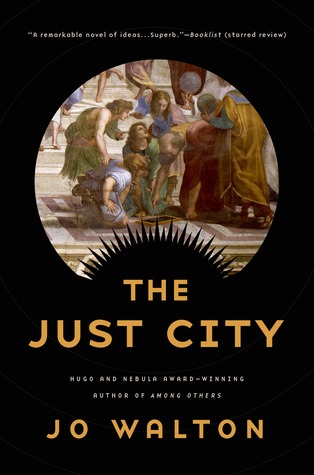
Among the non-award related reading pleasures of the year, 2015 was the year I discovered Vivian Gornick’s memoirs and personal essays (though I think I may have read one or two early essays of hers in anthologies of 70s feminism, back in the day) and devoured everything of hers that I could that I could get my hands on. I also embarked – partly stimulated by the sad news of her relatively early death – upon catching up with Tanith Lee’s rather dauntingly immense oeuvre, much of which has become a lot more accessible with the advent of e-books. This was also the year of the first two volumes of Jo Walton’s ‘Thessaly’ trilogy: The Just City and The Philosopher Kings, which were compelling reading. Also I was very impressed by Roz Kaveney, Tiny Pieces of Skull as well as the third episode in her ‘Rhapsody of Blood’ sequence, Resurrections. 


 Two wonderful books that had long been on my to-read list finally got read during the course of the year and had a curious resonance: Sylvia Townsend Warner’s The Corner That Held Them (1948) about a community of nuns in medieval East Anglia, and Susan Stinson’s Spider in a Tree (2013) about Jonathan Edwards, the early eighteenth century Protestant preacher and theologian of Northampton Massachussets (possibly a figure better known to US than UK readers?): perhaps because they are both about small remote inward-looking communities, occasionally impinged upon by the wider world? Another book on religious matters in a very different mode that I very much enjoyed was Catherine Fox’s Unseen Things Above: set in a very contemporary indeed Anglican diocese (sequel to Acts and Omissions).

A major re-read pleasure this year was revisiting E. M. Delafield’s wonderful ‘Provincial Lady’ books, of which I have the compendious 1947 omnibus edition with a very good introduction by her friend the Irish novelist Kate O’Brien: it contains Diary of, Goes Further, In America and In Wartime. Lovely to be reminded of just how good these are.


In the realm of more serious reading, I particularly enjoyed Catherine Lee’s Policing Prostitution, 1856-1886: Deviance, Surveillance and Morality (2012), insofar as ‘enjoy’ is the word to use for a meticulous study drawing on a range of resources of women in the towns of Victorian Kent for whom prostitution was one aspect of the survival economy. I also read (at last) Gretchen Gerzina’s outstanding classic work Black London: Life Before Emancipation (1995).

In the perhaps rather niche category of the reading pleasures of the researcher, I finally made a visit to the Kinsey Institute Library and Special Collections, where besides being given an overview generally of their collections, I was able to consult some of the archives, which made me very eager to return with a rather longer period of time to spend in them.

Exhibitions that I enjoyed included: Spaces of Black Modernism at the Tate Britain – small but provocative of thought; From the Forest to the Sea: Emily Carr in British Columbia at the Dulwich Picture Gallery; Barbara Hepworth: Sculpture for a Modern World at Tate Britain; Sonia Delaunay and Agnes Martin at the Tate Modern (though I’m not sure it was a wise decision to take in exhibitions devoted to these very different artists on the same day); Julia Margaret Cameron: Influence and Intimacy at the Science Museum. 


This was also the year in which a curious British interwar organisation, the Kibbo Kift Kindred, was rediscovered, with a small but very intriguing exhibition at the Whitechapel Gallery, Intellectual Barbarians: The Kibbo Kift Kindred and two really excellent illustrated books placing it in wider historical context: Annebella Pollen, The Kindred of the Kibbo Kift: Intellectual Barbarians and and Cathy Ross and Oliver Bennett, Designing Utopia: John Hargrave and the Kibbo Kift. This is perhaps mainly exciting to one with my own particular research interests in 1920s and 1930s Britain and the fringey-er movements of the period!

One of my main pleasures this year has been retiring from my full-time job as an archivist, though I retain an association with the Wellcome Library as a Library Research Fellow: but I have been enjoying the pleasures of leisure and not having to get up to commute into Central London, a prospect made even less attractive at the moment by the extended closure for much-needed maintenance work of the nearest Tube station, the week after I had actually retired.

Perhaps as a result of this leisure, release of pressure, etc, a pleasure I have fallen into after many years during which it was sidelined is writing fiction: really, it was an accident, I certainly didn’t think that ‘now I am retired, I will write My Great Novel’ but just found myself writing something that started as a brief jeu d’esprit and then growed.


Lesley Hall was born in the seaside resort and channel port of Folkestone, Kent, and now lives in north London. She recently retired from a career as an archivist of over 40 years. She has published several books and numerous articles on issues of gender and sexuality in nineteenth and twentieth century Britain, and is currently researching British interwar progressive movements and individuals. She has also published a volume in the Aqueduct Press Conversation Pieces series, Naomi Mitchison: A Profile of her life and work (2007).She has been reading science fiction and fantasy since childhood and cannot remember a time when she was not a feminist. Her reviews have appeared in Strange Horizons, Vector, and Foundation, and she has been a judge for the Tiptree and Arthur C. Clarke Awards. She has had short stories published in The Penguin Book of Modern Fantasy by Women (1996) and The Penguin Book of Erotic Stories by Women (1995). Visit Lesley's website.


The Pleasures of Reading, Viewing, and Listening, pt. 13: Carrie Devall

Pleasures of 2015 
by Carrie Devall


I spent a lot of time this year learning basic Russian and Finnish, and reading cheesy horror and thrillers in Spanish and French to work on vocabulary and fluency. Not very exciting, eh? However, I have to recommend the FinnishPod101 videos on YouTube if you want to learn a few basic phrases before heading to Helsinki in 2017. They are well made, easy to follow, and let you see and hear the words at the same time.

Reading in English, I ended up focusing on Finnish, Estonian, and Scandinavian fiction in translation. Most of the Scandinavian fiction in the Hennepin County library system leans toward the more violent and callous end of crime/noir. Leena Leihtolainen’s The Bodyguard was the standout here because it did not glorify violence, had a female heroine who was extremely self-reliant but mostly plausible, and dipped into Finnish politics a bit. The lynx theme did not hurt, either.

The Howling Miller by Arto Paasilinna is a 1981 novel that got some mixed reviews because it was translated into English from a French translation. I found it to be funny, touching and thought-provoking. It’s a picaresque novel and social satire with a deceptively simple style that reads a lot like many novels based on fairy tales. It also has some fantastical twists. The Howling Miller makes fun of the stoic self-reliant ethic and hypocritical romance of wilderness that characterizes both Finnish and upper Midwestern U.S. culture, as well as inhumane bureaucracies and the stifling aspect of small communities.

The Blue Fox, by Icelandic writer Sjón, is a very short novel about hunting in winter but has a poetic style and, again, some nice fantastical twists. I started but have not finished the Icelandic science fiction novel LoveStar, by Andri Snær Magnason, but the opening chapters were snazzy, funny, and full of wacky world building. A corporate tech god has unlocked the key to transmitting data via birdwaves, hence the wackiness.

The two novels I read this year that have stayed with me the most were both by Sofi Oksanen, a Finnish-Estonian writer living in Finland. She also made some strong, brave speeches and interviews in 2015 about the Putin regime historical revisionism that her fiction also works against. The two novels I read covered a lot of territory, moving between the periods of successive Russian and German occupations of Estonia and more current eras through stories of families from rural villages.

The older novel, Purge, deals with the Russian sex trade in the present and the many forms of sexual as well as economic exploitation during the occupations. The more recent novel, When the Doves Disappeared, similarly focuses on the things people do to survive the occupations and the long-term effects on their families, their communities, and their selves. In Doves, this includes writing revisionist literature. These are obviously not fluffy books, but I found them incredibly well written and leavened with deep compassion and understanding.

The excellent translator for both Oksanen novels, Seattleite Lola Rogers, also translated the Lehtolainen novel, Antti Tuomainen’s The Healer, and Johanna Sinisalo’s The Blood of Angels, so she is 5 for 5 in making my year-end lists.


Back to the speculative, Mati Unt is seen as one of the most influential modernist and then post-modernist writers in Estonia, and he wrote about werewolves, outer space, electricity, and vampires. Many of his postmodern books were conglomerates of snippets from various sources juxtaposed against one another, as Johanna Sinisalo has done in many of her novels. I read Unt’s Diary of a Blood Donor, which was clever and witty but gave me the feeling I was missing a lot. Doing a little more research, apparently Unt was somewhat blasphemously homaging Lydia Koidula (1843-1886), who is seen as the first female Estonian poet and the first poet to express an Estonian longing for independence, in a Gothic vampire novel. This goes on my research and reread list.

The movie that sent me in pursuit of Estonian literature was the funny 2010 documentary “Disco and Atomic War,” by Jaak Kilmi, which focused on the influence of Finnish TV, Dallas and disco on Estonian culture during the 80s. The documentary visually depicts how Estonians watched Finnish TV en masse from behind the Iron Curtain with illegally modified TV sets. This began to unravel Soviet ideological control despite attempts to block the broadcasts and create state-approved disco shows.

The Minneapolis St. Paul International Film Festival (MSPIFF) had a good catalog this year. I got to see the Lithuanian lesbian movie Sangailės vasara (The Summer of Sangailė), which had good production quality, great acting, and an okay story. Chagall/ Malevich was a fascinating look at Marc Chagall’s early life, his amazing wife, and the different artistic paths taken by Chagall, the Jewish dreamer trying to float above anti-Semitic, Soviet-controlled Byelorussia, and his opposite, Kazimir Malevich, the father of Suprematism (the artistic movement reflected in many of those old Soviet propaganda posters.) The Russian Woodpecker is a quirky and deeply disturbing documentary about the Chernobyl disaster and the role that U.S.-Soviet jockeying for military supremacy may have played in triggering the blast.

We got the last tickets to the Finnish movie, Mielensäpahoittaja (The Grump), by Dome Karukoski. It was sold out for good reason. An elderly stoic and “self-reliant” farmer coming to visit his citified children in Helsinki and the ensuing culture clash is as Minnesotan a story as it is Finnish. The movie was very tight, well paced and full of visual contrasts and deadpan acting that made the over-the-top actions funnier.


Bande de Filles (Girlhood) by Céline Sciamma, is focused on teenaged French girls in a banlieue/suburb outside Paris struggling to find their way through the obstacle course created by racism, sexism, and ties to family and tradition. It was similarly well constructed, focused on the characters and their personality quirks, and funny and moving in turns. Good music and visual style also made the package work. It is now available on Netflix, as is my last year’s teen girl movie pick, We Are the Best.

Stanley Nelson’s documentary The Black Panthers: Vanguard of the Revolution contained an immense amount of video footage collected from all over the world showing the day-to-day interactions of members as well as the public actions. It underscored how women were integral to the organizing as well as all the well-known male leaders.

I also found the Pussy Riot documentary, available on Netflix, quite interesting, even after having read Masha Gessen’s lengthy book about the Russian feminist activist performance art group/punk band. The documentary includes footage of their court trial, some of their performances, and interviews with people ranging from family members to the patriarchs of the Russian Orthodox Church.

In terms of nonfiction, Finding the Movement: Sexuality, Contested Space, and Feminist Activism, Duke U. Press, 2007, by Finn Enke (book published under Anne Enke), asks interesting questions about how histories of the women’s movement are constructed and how participation is characterized to define social movements as exclusive rather than broad and diverse. This book documents the participation of a wide variety of women in community organizations such as battered women’s shelters and softball leagues in the Midwest to explore these questions, with a focus on women’s contestation of public spaces.

I spent some time rereading Barbara Deming’s writings about her participation in the Civil Rights and peace movements in the 50s and 60s and the Seneca Women’s Peace Encampment in the 80s, particularly Prisons That Cannot Hold. She is a powerful theorist of non-violence from a non-religious basis. I was directly influenced by her ideas through SWPC members I did direct action with in the 80s, and it was interesting to read her work more thoroughly 25 years later.

This was accompanied by A Saving Remnant: The Radical Lives of Barbara Deming and David McReynolds, the 2011 dual biography from Martin Duberman. I have really enjoyed Duberman’s recent double biographies of queer activities and/or artists. Deming and McReynolds were both involved in the peace movement, the Civil Rights movement, and early gay activism, but in very different ways and with a crucial difference being Deming’s trajectory towards lesbian feminist peace activism.A Saving Remnant is a little more draggy than the double biography I read last year, about Essex Hemphill and Michael Callen. However, it relates in detail some crucial pieces of movement histories, such as the internal debates and the coalition work by particular individuals, which are otherwise quickly becoming lost to time and the ever-expanding internets.


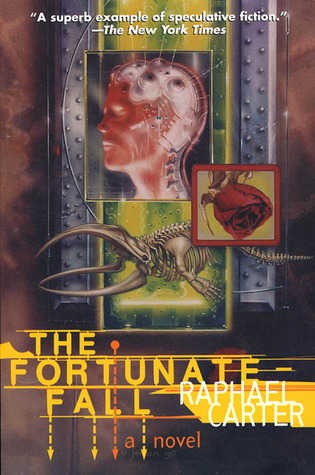
Last but not at all least, I just finished The Fortunate Fall, by Rafael Carter, a very complicated (post-) cyberpunk novel from the late 1990s, which I somehow never got around to reading before, despite queer cyberpunk. Yes, I am slapping my head, hard, though only virtually. So many things come together in this novel, with a critique of pretty much everything you can think of that fits in 21st century science fiction sandwiched in between plot points but also a wicked sense of humor. It still packs a very strong punch. Its future Russia is all too plausible, not the easiest feat of prognostication in the late 1990s. I join the long line of people asking, Why is this book not in print?

Carrie Devall writes from Minneapolis, MN, where it rains a lot thanks to global warming.

Tuesday, December 15, 2015

The Pleasures of Reading, Viewing, and Listening in 2015, pt.12: Lisa Shapter

The Pleasures of Reading 2015: Forgotten Female Founders of Science Fiction
by Lisa Shapter

Our memory of women’s history is often diminished or distorted in popular culture. We remember Victor Frankenstein’s motherless, never-a-child, son as a grunting, monosyllabic hulk. In fact, he talks like this in the original novel: “[A]m I not alone, miserably alone? You, my creator, abhor me; what hope can I gather from your fellow creatures, who owe me nothing?” When we remember the history of science fiction, especially women’s history of science fiction, we often remember Mary Wollstonecraft Shelley’s pioneering Frankenstein: Or The Modern Prometheus (1818) or Charlotte Perkins Gilman’s utopia Herland (1915) but we forget that the history of women writers in science fiction is longer and older than either of these ‘firsts’.


A short list of forgotten books:

1) The Blazing-World (1668) by Margaret Cavendish

Science! Satire! A female narrator who survives, like Ishmael, only to be rescued by .... intelligent polar bears?

Author’s statement: I wish, with all my Soul, [that this book] ... might be shared amongst my Noble Female Friends .... though I cannot be Henry the Fifth, or Charles the Second; yet, I will endeavor to be, Margaret the First: and, though I have neither Power, Time nor Occasion, to be a great Conqueror, like Alexander, or Caesar; yet, rather than not be Mistress of a World, since Fortune and the Fates would give me none, I have made One of my own.

Read the rest at the University of Pennsylvania’s Celebration of Women Writers website: http://digital.library.upenn.edu/women/newcastle/blazing/blazing.html (Penguin Classics used to have a nice edition of this book, but no one has published the annotated edition that does justice to this novel’s humor, its relationship to the history of science, and the author’s other political and social writings.)

2) Mizora (1890) by Mary E. Bradley

A female narrator! Worldbuilding! A single-sexed utopia 25 years before Gilman’s Herland! (Warning: contains racism. See Pfaelzer for historical context.)

In my world man was regarded, or he had made himself regarded, as a superior being. He had constituted himself the Government, the Law, Judge, Jury and Executioner. He doled out reward or punishment as his conscience or judgment dictated. He was active and belligerent always in obtaining and keeping every good thing for himself. He was indispensable. Yet here was a nation of fair, exceedingly fair women doing without him, and practicing the arts and sciences far beyond the imagined pale of human knowledge and skill.

Read the rest at Project Gutenberg: http://www.gutenberg.org/cache/epub/24750/pg24750.txt(Dr. Jean Pfaelzer has produced a critical edition of this book published by Syracuse University Press.)

3) “The Island of the Nine Whirlpools” from The Book of Dragons (1901) by Edith Nesbit

For all its magic and fantastical creatures this is a classic puzzle story with a smart girl and math.

.... [T]he years went slowly by. The wicked King died, and some one else took his kingdom, and many things were changed in the world; but the island did not change, nor the Nine Whirlpools, nor the griffin, nor the dragon, nor the two stone ladies. And all the time, from the very first, the day of the Princess's deliverance was coming, creeping nearer, and nearer, and nearer. But no one saw it coming except the Princess, and she only in dreams.

Read the rest at Project Gutenberg: http://www.gutenberg.org/ebooks/23661.

Reading what pioneering women like these have said for themselves is often a shock and a revelation. I have spent the past year researching the history of 20th century women science fiction authors, and this sense of surprise has been my greatest pleasure while reading in 2015. This brief list is only a starting place for seeing how women have re-envisioned human societies, advanced technologies, and alternate possibilities – and the delights and discoveries these many visions contain.

I wish to acknowledge the kind help of women’s science fiction collector Tom Porter and point intrigued readers to the 15-some other early women writers of satyrical or utopian science fiction (likely including ‘Anonymous’) listed in The Dictionary of Imaginary Places: The Newly Updated and Expanded Classic by Alberto Manguel and Gianni Guadalupi.


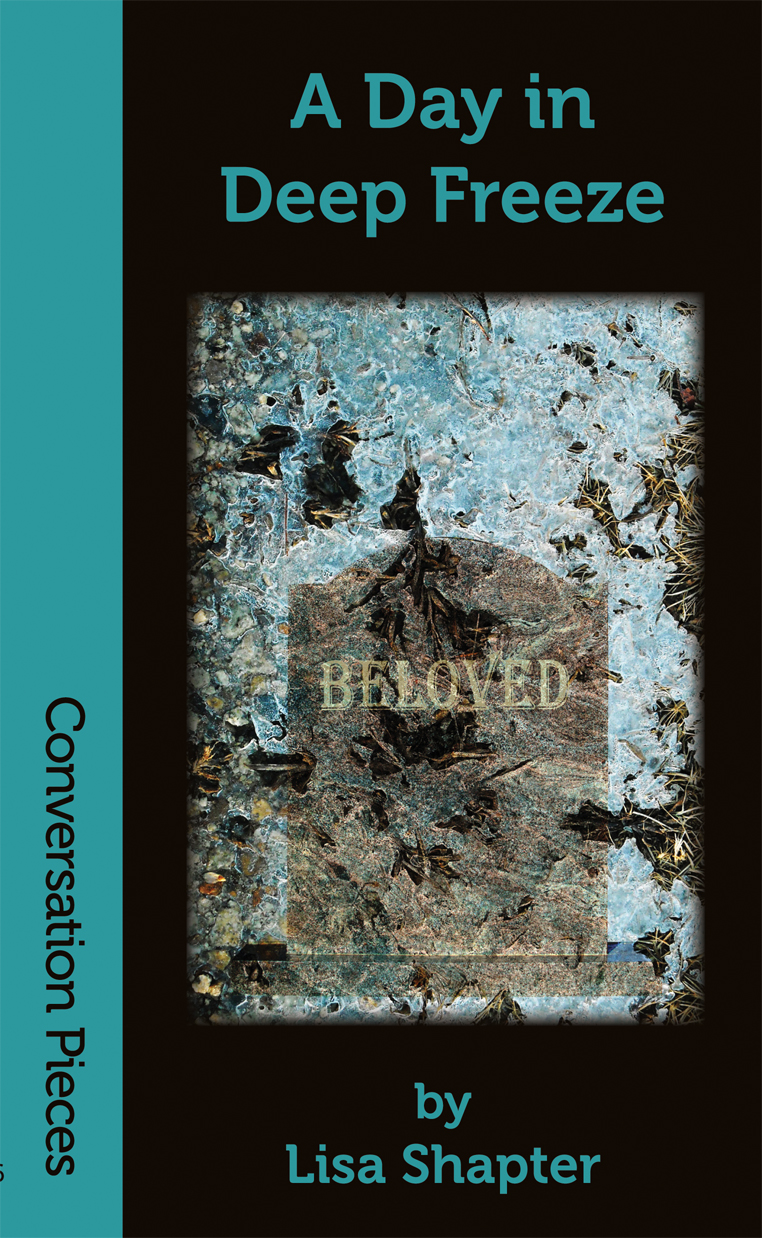
Lisa Shapter is an alumna of the Bread Loaf Young Writers’ Conference and a member of Codex Writers’ Group. She lives in New England, collects antique typewriters, and is researching a history of 20th century women SF authors. She is a member of Broad Universe and the Dramatists’ Guild of America. Her science fiction play “The Other Two Men,” featuring characters from her short stories, will be performed at the Players’ Ring of Portsmouth, New Hampshire in the summer of 2016. Her short stories have appeared in Black Denim Lit, Expanded Horizons, Four Star Stories, Kaleidotrope, and in the anthology Things We Are Not: An M-Brane SF Magazine Queer Science Fiction Anthology. Her novella A Day in Deep Freeze was published in 2015 in Aqueduct Press’s Conversation Pieces series.

The Pleasures of Reading, Viewing, and Listening, pt. 11: Cheryl Morgan

Aqueduct Year in Review 2015
By Cheryl Morgan 


I seem to have read a lot of really good books this year, which is going to make award voting hard. I should probably start with Naomi Novik’s Uprooted. People were really excited about this one on social media, and I can see why. I very much enjoyed it, and if you are into folk tales and sorcery with a capable and determined heroine, I’m sure you will too.

Of course there is a new Cat Valente novel out. Radiance is an absolute delight, and so good in so many different ways that I don’t really know how to do it justice. I just wish that more people loved such complex and ambitious writing.

At a time when diversity in fiction, and the concept of Own Voices, is getting a major push, two novels stand out. Planetfall, by Emma Newman is a great piece of science fiction but also a brilliant portrait of a woman plagued by anxiety. Emma has chronicled her own struggles with anxiety on social media, and it is clear that her book benefits greatly from personal experience. Similarly, Signal to Noise by Sylvia Moreno Garcia manages to be a wonderful fantasy debut reminiscent in some ways of Tim Powers, and a book set in Mexico City by someone who has lived there, and so knows the location far better than any tourist.

Signal to Noise is a book about the magic of music. So too is Wylding Hall. Liz Hand and I are of a similar age and grew up on the same music, so it is unsurprising that I loved this dark fantasy story based in part on the early history of Fairport Convention. Liz too, of course, is writing about things she knows well; in this case the music business. And with The House of Shattered Wings Aliette de Bodard brings her knowledge of the streets of Paris, and of Vietnamese folklore, to make something special from her fallen angels story.

Ian McDonald has embarked on a new venture with Luna: New Moon. That promises to be the first of a series of “Dallas on the Moon” books, and it has already been picked up for a TV series. Thankfully it will be on Netflix or similar, allowing the genderqueer nature of so many of the characters to be maintained. There’s a very nice ethnic mix amongst the cast as well.

Other books I have enjoyed this year include The Book of Phoenix by Nnedi Okorafor; Glorious Angels by Justina Robson; Regeneration, the third and final part of the (R)evolution series by Stephanie Saulter and Ancillary Mercy by Ann Leckie. Next on my pile is Dark Orbit from Carolyn Ives Gilman, which comes with some very impressive blurbs.

I’m pleased to see quite a few books featuring trans characters among the supporting cast. While I’m not always 100% happy with the representation, I’m delighted to see people trying hard to get it right. Check out Karen Memory by Elizabeth Bear, Shadow Scale by Rachel Hartman, and Gideon Smith and the Mask of the Ripper by David Barnett.

There are a number of collections and anthologies I’d like to draw your attention to. Hannu Rajaniemi: Collected Fiction is worth checking out even if you only do so for “The Haunting of Apollo A7LB”, which I adore. Still with Finland, Collected Fiction by Leena Krohn from the VanderMeers’ Cheeky Frawg is a massive tome containing some brilliant work by an extraordinary writer. The Kirkus review compared Krohn to Calvino and Borges, and I’m not going to argue with that.

The VanderMeers also produced the Sisters of the Revolution anthology of feminist SF, which I am sure you all know about. Probably less well known is Daughters of Frankenstein, an anthology of stories about lesbian mad scientists from Steve Berman. Any book that includes a Scooby Doo pastiche is OK by me.


One of the publishing events of the year was the first English language edition of Tales of the Marvellous, News of the Strange. This is a collection of stories in the tradition of The 1001 Nights, but older; much older. It’s not often that you get to read “new” stories that were written 1,000 years ago.

In non-fiction my primary interest this year has been in Letters to Tiptree, produced by Twelfth Planet Press. I’m biased because I have an essay in it, but it also gives me access to some of the letters between Tiptree, Russ and Le Guin, which makes me very happy.

It would be remiss of me not to mention books I have published. Juliet McKenna’s epic fantasy novels continue to sell very well. We are currently half way through the ebook re-issues of her Aldabreshin Compass series which is set in a part of the world of Einarinn inhabited mainly by brown people. Tor put the hero of the series on the cover of Southern Fire back in 2006, which sadly probably contributed to sales not justifying their picking up the rest of the series. I have also done ebook and hardcover editions of the two novels by the late Colin Harvey. I’m particularly pleased to be publishing Damage Time. Set in near future New York, it features a romance between a Muslim policeman and an intersex escort. Colin tried hard to do the diversity thing, and got little notice for it back when he was alive.

Some great things are happening in comics these days, both in terms of more queer characters and books aimed directly at teenage girls. I shouldn’t need to tell you about Saga, which is still going strong, or about Sandman: Overture which sees Neil Gaiman return to his much-loved creation and some absolutely stunning art from J.H. Williams, III.

You might also want to check out The Wicked & The Divine from Kieron Gillen and Jamie McKelvie, which has a whole new take on celebrity culture. There’s the glorious Rat Queens from Kurtis J. Wiebe which may be the best piece of Dungeons & Dragons inspired writing ever. And of course there is The Unbeatable Squirrel Girl from Ryan North and Erica Henderson, which is just delightful.

Having been a Marvel fan from a very early age I have been delighted by the transition of their heroes to film and television. Avengers: Age of Ultron was something of a mixed bag, but if you were annoyed by the goings on between Hulk and Black Widow you should check out the deleted and extended scenes on the DVD and listen to Joss Whedon’s commentary.

I’m delighted to see Peggy Carter getting a lot of screen time. The Agent Carter TV series was pretty good, though it took forever for it to air in the UK. She even got a cameo in Ant Man, which is a lot better than I had feared despite Wasp only getting a few seconds of screen time.

X-Men Days of Future Past – The Rogue Cut is a fascinating artefact. Most movie DVDs come with a collection of deleted or edited scenes, but the changes in The Rogue Cut are really significant. It is like seeing an early draft of a novel before the editor has done the, “you need to get rid of these chapters, and this character, and move these scenes around” thing.

I will doubtless buy the Extended Edition of the Five-Hour Battle of the Endless Armies now it is out. I understand there is 11 hours of material on the Blu Ray. I expect that will be the three hours of the original movie plus an extra 8 hours of Thorin’s death scene.

I love Jupiter Ascending beyond all reason, despite it being desperately silly at times. It is Space Opera, it is supposed to be silly. Besides, the scene at the end where Caine has his wings back reminded me so much of Pygar in Barbarella.

The Wachowskis also did a great job with their Netflix series, Sense 8. I was particularly pleased with the character of Nomi Marks, not only because she was played by a trans actress, Jamie Clayton, but also because the script managed to show some of the horrific challenges faced by trans people without making it a transition narrative.

Talking of trans people, two reality TV shows have done a lot for public awareness of trans issues. I am Cait could easily have been a disaster because Ms. Jenner’s life is so far divorced from everyday reality. Thankfully her decision to involve a posse of other trans women paid off spectacularly. Jenny Boylan, Chandi, Candis Cayne and Jen Richards are the real stars of the show. I am Jazz is much more down to earth but, while Jazz Jennings is a much more relatable person than Cait, the show is even more obviously artificial. Reality TV is anything but real.

In film the big trans story of the year is Tangerine, a sharply observed slice of real life amongst trans hookers on the streets of Los Angeles, based on actual experiences of one of the trans women who star in it. Most media attention will go instead to The Danish Girl, which is unfortunate because it pushes some inaccurate and harmful ideas about what trans people are like.

There’s a big debate going on at the moment regarding two women-led superhero shows. Supergirl is basically Cosmopolitan does superheroes. Poor Kara seems to suffer from every neurosis that women’s magazine columnists love to lecture us about, but she’s Kryptonian so she can have it all. Sometimes. Thankfully the show doesn’t take itself entirely seriously. It is also great for eye candy. I could sit and watch Mehcad Brooks and Peter Facinelli all day. Calista Flockhart as Cat Grant totally steals the show.

So much for the fluff corner. In the noir corner we have Jessica Jones, which is the most impressive TV series I have seen in a very long time. It deals with some very serious issues, and isn’t easy to watch, but it maintains a firm feminist vision throughout. A show like that simply would not have been possible without the move away from broadcast TV. Huge respect to Melissa Rosenberg for getting the show made and keeping the vision intact.

In non-fiction I warmly recommend The Ascent of Woman, a BBC documentary series by Dr. Amanda Foreman. It is basically a history of women’s involvement in human civilization, much of which has been deliberately erased by (mostly male) mainstream historians. I think you can find all of the episodes on YouTube.

I am still working at Ujima Radio (whom I am delighted to report won a National Diversity Award this year), and this means that I am listening to a lot of early 20th century black women. Check out Bessie Smith, Memphis Minnie, and Big Mama Thornton when you get a chance. Thornton was at #1 on Billboard for 7 weeks back in 1952, selling just shy of 2 million copies of her single. The song was called “Hound Dog,” and you may have heard of it because some white guy did a cover version.

My big discovery for this year has been Lianne La Havas. She played the role of the lady scientist on Prince’s 2014 concept album, Art Official Age. This year she came out with a solo album called Blood which I love. Huge thanks to Karen Lord for recommending it to me.


Cheryl Morgan is the owner of Wizard’s Tower Press. She blogs, reviews and podcasts regularly at Cheryl’s Mewsings . Cheryl co-presents the Women’s Outlook show on Ujima Radio . This year she was honoured to give a lecture on “Exploring Gender Fluidity through Science Fiction and Fantasy” at Liverpool University, available online here.

Monday, December 14, 2015

The Pleasures of Reading, Viewing, and Listening in 2015, pt. 10: Eleanor Arnason

Year End Essay 
by Eleanor Arnason


I am still having trouble reading fiction. Mostly I read books I’ve read before by writers like Diana Wynne Jones and Terry Pratchett, both now deceased, alas. They are funny and charming and good stylists. In addition, I read nonfiction, especially about paleontology. The Permian Mass Extinction puts the world’s current problems in perspective.

I spend a lot of time on the Internet, much of it reading political news, and that may explain my liking for light fiction and my reluctance to read more demanding works. Donald Trump can put a person off reality. It might be smart to cut back on the Internet and read more SFF.

What have I liked in the last year? Two movies. The Wind Rises came out in 2014, but I didn’t watch it until this year. It is the final work by the great Japanese anime director Hayeo Miyazaki. Most of his work is suitable for children: funny, charming fantasies, usually with a young girl as the protagonist, though Miyazaki is always concerned with ‘adult’ issues such as technology and the environment, and he always treats working people and old people – especially old women – with respect. Until the 1990s he was a Marxist, and I suspect he is still some kind of socialist. Speaking as an old woman, I appreciate the way he portrays old women a lot.

Wind is different from Miyazaki’s other work. It is a fictionalized biography of Jiro Hirokoshi, the real-life engineer who designed the Zero, Japan’s premier fighter plane in World War Two. Miyazaki has always been in love with flying and planes, and many of his movies are – in part – about war. (For example, Howl’s Moving Castle and Porco Rosso.) His father was director of a company that made rudders for the Zero plane, and Miyazaki has childhood memories of an Allied night raid that firebombed his home town. Planes and war were part of his life from the beginning.

The movie is about a young man who is true to his dream and designs a magnificent flying machine; it’s a love story about two likeable young people that had a sad ending; and it’s a meditation on war and the uses to which planes are put. The Nazis and the Japanese secret police make appearances. The movie ends with Japan in ruins. I wondered if the movie’s title was a reference to kamikaze, the divine wind that saved Japan from a Mongol invasion and to the kamikaze pilots in World War Two. But it’s a reference to a quote from Paul Valery: “The wind is rising… we must attempt to live.” This is a complex, ambiguous movie, physically beautiful in the tradition of Studio Ghibli anime.

The other movie I liked is the Shaun the Sheep Movie, which is hard to describe. It was produced by my other favorite animation studio (along with Studio Ghibli): Aardman Animations in Great Britain. The character (Shaun) first appeared in one of Aardman’s Wallace and Gromit shorts, then starred in a TV series for kids, though these programs also work for a lot of adults, including me. The series is about a flock of sheep on a farm run by a totally clueless farmer with the aid of a less-than-bright farm dog. Basically, it’s slapstick humor for children. There is no spoken dialogue, just animal noises from everyone, including the various humans.

So what is the appeal of the Shaun the Sheep movie? A loopy plot: the farmer is carried away from his farm and into a nearby big city by a runaway caravan. When the caravan finally crashes, he suffers a head injury, which makes him lose his memory. He wanders into a hair salon in a fog and sees a pair of clippers, which he grabs reflexively. (Remember that he is a sheep farmer.) He uses these to shear one of the customers, a celebrity of some kind. The celebrity loves his new haircut, and the farmer becomes a famous stylist: ‘Mr. X,’ since no one knows his name. Meanwhile, back at the farm, the sheep realize that they need the farmer. Who else will run the farm and feed them? Off they go to the city -- Shaun, the farm dog and the flock – to find the farmer and bring him home. The rest of the movie is slapstick humor and a certain anarchistic subversion. The sheep are endlessly inventive, fooling the city’s humans and running circles around the movie’s villain, an animal control officer. In order to pass, they find a used clothing store and dress up as very unconvincing humans, who attract no interest from the city’s residents – though the animal control officer develops an attraction for a very fake-looking woman made of two sheep in a skirt and coat. When they finally escape the city, it’s in a home-made horse costume, which contains a small flock of sheep instead of the usual two men. If this sounds weird, it is. Like the TV series, there are no spoken lines – just grunts, barks, baas and so on.

The closest comparison I can think of is the Marx Brothers, though Shaun does not have the streak of cruelty that the Marx Brothers have. But there is the same combination of zany humor and disrespect of authority. Here, though, there is sweetness as well. Everyone gets safely back to the farm. The animal control officer ends in a pile of manure. The stray dog Shaun has met in the city, who helped the sheep navigate through urban life, finds a lovely lady who adopts him. And the awful pigs, who have been living in the farmer’s house while he was gone, making an awful mess, end back in their pen. Justice and kindness win, and everyone goes off on a picnic.

A very sweet and funny movie, with a lot of diversity, I will add. The movie’s humans come in many colors, and I even saw one hijab. Though the sheep are all white.

What else have I enjoyed during the year? Minnesota Public Radio and the Minnesota Orchestra, especially the work of late romantics: Jean Sibelius, Richard Wagner and Edvard Grieg. I could have sworn that nothing could get me to like a tone poem, but I was wrong. The music director of the Orchestra is a Finn who loves Sibelius; and since the famous union struggle, in which Orchestra administration locked out the orchestra’s musicians, loyalty to the musicians and their union has become combined with loyalty to the music director, Finland and Sibelius. Minnesota Public Radio seems to play Sibelius’s Finlandia once a week. Up the working classes!


 Eleanor Arnason has written several novels and many short stories. Her fourth novel, A Woman of the Iron People (2001), won the James Tiptree Jr. award for gender-bending science fiction and the Mythopoeic Society Award for adult fantasy. Her fifth novel, Ring of Swords (1995), won a Minnesota Book Award. Aqueduct Press published her collection Big Mama Stories in 2013, her Lydia Duluth adventure, Tomb of the Fathers, in 2010, and her collection, Ordinary People, in 2005. This year Aqueduct released  e-book editions of The Sword Smith, To the Resurrection Station, and Daughter of the Clan Bear. Next year, Aqueduct will publish a collection of her Hwarhath stories.

The Pleasures of Reading, Viewing, and Listening, pt.9: Nisi Shawl

Every Day Will Be Like a Holiday
 by Nisi Shawl 


Though I continue to edit, review, and read professionally, and though I enjoyed many of the books I came across over the past year, music’s where my heart and attention are caught up at the moment.

To take care of the literary side of things, at the end of my essay I’ll append a barebones list of pleasure-evoking books and their authors. A couple of notes to accompany it: I chose Sorcerer to the Crown as the best book I reviewed in 2015 for the Seattle Times. But actually, the best book I read this year won’t be published (or reviewed, at least by me) till February 2016: Matt Ruff’s audacious Lovecraft Country, a tale of the horrors facing its six black viewpoint characters during the mid-1950s. I can’t wait for that one to come out so you, too, can read it and go, “Day-um!” Also, I’ll include in my list of recommendations the anthology I co-edited, because I am truly proud of what Bill and I and our contributors and supporters have done. So far four of Stories for Chip’s stories are included in Year’s Best anthologies. See if you can figure out which ones.

Mainly this last month, though, I’ve been listening to music. Listening is of course related to reading, and music to prose. Since 2007 I’ve sung a song at every public appearance I’ve made. While writing each story I consider which song I’ll sing to accompany it.

As I wrote my essay “I.G.Y.” for the new magazine Shattered Prism, I listened repeatedly to its inspiration, the Donald Fagen tune of the same title. I watched the I.G.Y. YouTube video several times. Then the video for “New Frontier,” from The Nightfly, the same album “I.G.Y.” is on. Then documentary clips about Fagen, Walter Becker, and their protean band Steely Dan. Those long Fagen fingers on the keyboards, crossing the diamonds of stacked fourths and transposed fifths with the pearls of classic blues progressions. Those wry lyrics, dense as the dark cores of the science fictional worlds to which they allude, twisted as the lost lives of the ironic outsiders populating them....Usually when I’m in this deep the only way out of an obsession is through it. So I hunkered down to navigate the pages of fan sites, aggregated concert review pages, and clueless anonymous online nattering about what those major dudes really meant to say.

In the end, Christmas came to my rescue. I had created a Pandora station I call Black Christmas that plays seasonal songs by artists such as Louis Armstrong, Ella Fitzgerald, The Jackson 5, Tony Bennett and Vince Guaraldi (race is a cultural construct, don’t forget), and so on, and so forth. Gradually my Steely Dan infatuation gave way to a fascination with William Bell’s Every Day Will Be Like a Holiday (When My Baby Comes Home). The original is a STAX single by the man whose biggest hit is the true and mournful “You Don’t Miss Your Water.”

First I was entranced by the recording, the arrangement: the crying guitar, the fat horn chords, the rocksteady piano, the prayerful vocals. Could I sing it myself? Yes I could.

Then, imaginer that I am, I started wondering why. Not why William Bell had so utterly entranced me with this tune; that was an easy one to answer: He had soul. Soul is an ineffable, ineluctable quality. Once soul enters the equation, that equation becomes impossible to reduce any further. It is unanalyzable.

Here’s what I wondered: Why were black men singing about the absence of black women in the 1960s? On this same Pandora channel I heard various versions of “Please Come Home for Christmas,” a much less compelling ballad of approximately the same burden and period. Contemporaneous songs in which black women mourn the absence of black men always seem, unlike these two examples, to provide an explanation for said absence. In “Message to Michael,” for instance, Dionne Warwick’s lover has gone to seek fame in far-off New Orleans--and besides, it was originally sung by a man as “Message to Martha.” In the afeminist era of Eisenhower and Kennedy, shouldn’t women have been sung of as hearth tenders? Weren’t these the years of koffee klatsches and competitive floor-waxing?

Not for black women. I realize when I look back on my childhood that both my parents worked. Sometimes only my mother--black women were often more employable than black men. They rarely had the luxury of staying home; their financial contributions were essential. When working as maids they might have to mostly live away from home. As I croon William Bell’s chorus I picture my Aunt Nora sleeping in a garret at the Gilkey’s--the white family she served--while Uncle Lloyd smokes a lonely cigar and drinks a bottle of whisky, waiting for her weekend off.

Of course my explanation is made up. Like the song I keep singing. Listen....

 The books:

 • Sorcerer to the Crown by Zen Cho

• Three Moments of an Explosion by China Mieville

• Uprooted by Naomi Novik

• Seveneves by Neal Stephenson

• Aurora by Kim Stanley Robinson

• The Just City by Jo Walton

• The Galaxy Game by Karen Lord

• Dark Orbit by Carolyn Ives Gilman

• Stories for Chip: A Tribute to Samuel R. Delany edited by Nisi Shawl and Bill Campbell


Nisi Shawl is the author of  Filter House, which won the James Tiptree Jr. Award and was nominated for the World Fantasy Award, Something More and More, her WisCon GoH collection, and, with Cynthia Ward, the co-author of the celebrated Writing the Other: A Practical Approach, and the editor of The WisCon Chronicles, Vol. 5: Writing and Racial Identity, all of which are published by Aqueduct Press. Aqueduct Press has also published Strange Matings: Science Fiction, Feminism, African American Voices, and Octavia E. Butler, which Nisi co-edited with Rebecca Holden. She is also the editor of the widely and wildly acclaimed anthology, Stories for Chip: A Tribute to Samuel R. Delany.  She reviews science fiction for the Seattle Times, is a member of the Clarion West board, teaches writing workshops at Centrum in Port Townsend, WA., and is the reviews editor of The Cascadia Subduction Zone. Her first novel, Everfair, is forthcoming from Tor in 2016.

Sunday, December 13, 2015

The Pleasures of Reading, Viewing, and Listening, pt.8: Nancy Jane Moore

The Pleasures of 2015
by Nancy Jane Moore

Every year I reach this point and panic. How did the year go by so fast? What did I accomplish? How can I ask for new books for Christmas when I haven’t even finished all the ones I got last year? And – more to the point for the current assignment – why didn’t I take notes on all the things I read and shows I saw, like I meant to do?

I’m still freaked out by the first three questions, but the Internet proves that while I didn’t put together a nice neat folder full of notes on books and movies and such, I did blog about the ones that affected me the most. So I can tell you about the works I found important in 2015, proving that the duty to blog about something once a week has its uses.

Eight books stood out for me this year, four fiction and four non-fiction. Of all of them, the most important was the one I read first, Naomi Klein’s This Changes Everything. Klein, well known for her analysis of economic concerns, does a brilliant job of showing that changing our economic system is part of the necessary process for making the environmental shifts necessary to limit the damage from climate change. She also provides some hope based on the actions of grassroots organizations across the world.

The other nonfiction I read was also compelling. Katha Pollitt’s Pro provides a thorough reminder that the right of women to control their reproductive life is at the heart of feminism and that it includes the right to abortion as well as the right to obtain and use contraception. I’m with those who consider women’s freedom from forced pregnancy (and the earlier changes that dramatically reduced the number of women who died in childbirth) to be one of the major accomplishments of the last century, right up there with the digital revolution and space exploration.

Laurie Penny’s Unspeakable Things made me realize that the millennial feminists are a positive force, despite the fact that they’re having to go back and fight many of the battles that should have already been won. Penny writes about today’s issues so well. I still believe writers are made, not born, but given Penny’s youth and ability as a writer, I may need to make an exception.

Steve Silberman’s NeuroTribes is my final non-fiction favorite. This book on autism and Asperger’s combines thorough reporting with beautiful writing to create a page-turner that explains not only the history of research and treatment – showing all the warts – but one that, based on the facts clearly explained, argues strongly for recognition that diversity in human brains is important to the human race.

I discovered the work of Elena Ferrante this year. I kept stumbling across references to it and finally got My Brilliant Friend from the library. Once I started reading, I couldn’t put it down – it was that good. This book does what realistic fiction often purports to do, but fails at: provides us with an unsentimental look at actual human lives. One of the many things I liked about it was Ferrante’s way of telling us only what her characters know at the time of the story, even though it is clear that more things are going on around them. I’m planning to work my way through the rest of Ferrante’s Neapolitan novels, though I have to set aside time as I know that once I start I will not be able to do anything else until I finish.

Jennifer Marie Brissett’s Elysium was unquestionably the best work of science fiction I read this year. Not only are the science fictional elements fascinating and compelling and the gender issues at the book’s core appropriately mind-bending, but the writing is lyrical and accomplished.

Browsing in a bookstore is still a great way to find unexpected treasures. I happened to spot Carmen Boullosa’s Texas: The Great Theft while shopping in Diesel Bookstore in Oakland. I’d never heard of the author before, though she’s well-known in Mexico, and a few of her books have been translated into English. This sometimes surrealistic romp through the conflicts at the heart of the relationship between Texas and Mexico gave me a perspective on my history that I suspected existed, but didn’t really know. Boullosa is another fine writer, one who should be read more widely.

All science fiction conventions should follow the example of WisCon and FogCon and have group readings. That’s how I discovered the work of Elwin Cotman – he was reading with writers I knew at FogCon. I came to hear my friends, but it was Cotman’s collection Hard Times Blues that I brought home. He’s an author who knows how to bend reality to give us the truth about the world and, like the others who moved me this year, he does it in beautiful prose.

Maybe I’m just a nerd, but the movies that inspired me this year were all documentaries. She’s Beautiful When She’s Angry gives us the powerful story of the U.S. feminist movement that flowered in the 1970s and laid the groundwork for many of the changes in our society. The movie does not duck the controversies – after all, change is rarely harmonious when it happens – but it still made me want to cheer at the end.

I had the pleasure of seeing The Black Panthers: Vanguard of the Revolution here in Oakland where the Panthers were born and with the added advantage of having several former Panthers and the director there to speak about the movie. While I knew some of this history, I learned a few surprising things. For one, two-thirds of the Panthers were women. For another, Fred Hampton, the young Panther leader who was killed in a police raid in Chicago, was reaching out to other groups and building coalition when he was murdered. One wonders how things might have been different if he had lived to lead the organization. The third documentary that moved me was made to accompany Klein’s book: This Changes Everything. The movie, with its coverage of indigenous activism, is inspiring, though of necessity less detailed than the book. Watching it enriches the experience of reading the book.

Two live performances I saw this year were by nationally known performers and are likely to be presented in other cities: Sarah Jones’s Sell/Buy/Date and Anna Deveare Smith’s Doing Time in Education. Both Jones and Smith do one-person shows in which they perform as many different people. Jones does it with fiction – this work is sufficiently near future to be considered a science fictional treatment of sex work – while Smith builds her stories based on comprehensive interviews within the communities about which she is writing. Both are consummate actors and writers and present programs that enlighten – and maybe haunt – their audiences. Catch them when you can.

The other performances that moved me were dance programs by choreographers in the San Francisco Bay Area. Cid Pearlman’s Economies of Effort: 1 and Sarah Bush’s Rocked by Women used the effects of movement, accompanied by music and words, to rock my world. They will perform different programs this coming year, but I’m sure they will be equally inspiring. If you’re in the Bay Area, search them out.

And finally, on the international scale, I saw Kodo for the fourth time this year. I have been a huge fan of this Japanese troupe, which has taken taiko drumming beyond its traditional roots without losing respect for where it came from, since I first saw them. Every performance has been different, and every time I’ve seen them more and more women have performed in their shows. This particular show involved playful elements I hadn’t seen in their previous productions. They travel throughout the world, so don’t pass up the opportunity to see them if they come to town.


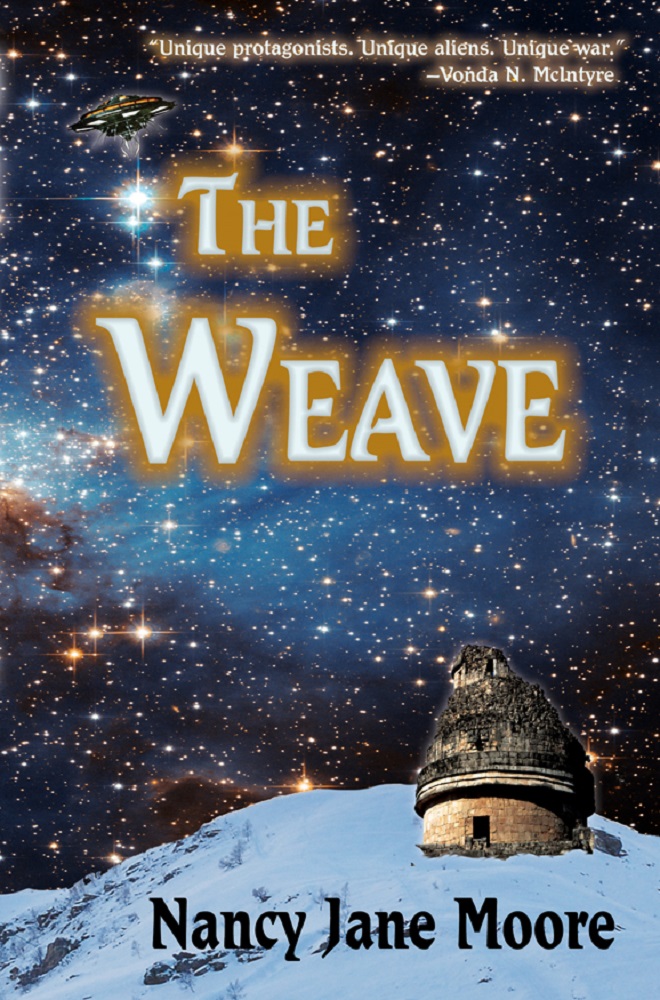
Nancy Jane Moore is the author most recently of The Weave, a science fiction novel recently published by Aqueduct Press. She blogs on Thursdays for Book View Café. [http://bookviewcafe.com/blog/]

The Pleasures of Reading, Viewing, and Listening, pt. 7: Lisa Tuttle

Pleasures of Reading, 2015 
by Lisa Tuttle 


My big author discovery this year has been Rebecca Solnit. I can’t remember what made me order a copy of River of Shadows: Eadweard Muybridge and the Technological Wild West (Penguin, 2003) – Muybridge was a fascinating character, but I was not that interested in him or the early history of photography to think I had to read his biography, so I must have read a review, or happened across a reference to this book which made it clear how much more than just a biography it is, and how wonderful I would find it. It is a beautifully written book about so many different subjects: time, change, America, the westward movement, history, art, and more. I now want to read everything Rebecca Solnit has written.

In the chapter “Lost River” there is a section titled “Ghosts and Machines” – I have to quote a small bit:
“The Ghost Dance was a technology. Literally, a technology is a systematic practice or knowledge of an art, and although we almost always apply the term to the scientific and mechanical, there is no reason not to apply it to other human-made techniques for producing desired results. Maybe the best definition would be: A technology is a practice, a technique, or a device for altering the world or the experience of the world. To propose annihilating the inexorable march or history and the irreversibility of death was to propose a technology as ambitious as a moon walk or a gene splice. The Ghost Dance had its parallels in the spiritualist movement that began in the 1840s... Spiritualism likewise sought to cross that great divide, death.... spiritualism had close ties to the feminist movement of the middle decades of the middle decades of the nineteenth century. Women were the principal mediums in spiritualism, and it was something of a women’s religion...”

I’ve had a long time interest in both the development of spiritualism, and the history of the women’s movement, so I looked at Solnit’s end notes, where I found this: “On spiritualism my main source is Barbara Goldsmith’s magnificent Other Powers: The Age of Suffrage, Spiritualism and the Scandalous Victoria Woodhull (New York, Alfred A. Knopf, 1998)”

Magnificent, indeed! This book, which I promptly sought out, bought and read on the basis of that footnote, is my other favourite book of the year. A combination of biography (Victoria Woodhull) and history, the story Barbara Goldsmith tells is filled with larger-than-life characters and as gripping as a great novel.

As for fiction – I read mainstream, and I read genre – but I like fantasy best when it strays farthest from genre, to inform and transform an otherwise realist contemporary literary novel. It’s a tricky balancing act, and not that many authors attempt it. The two that did it for me this year were The Snow Queen by Michael Cunningham and Call of the Undertow by Linda Cracknell. Both books import elements of fairy tale into contemporary lives and times, with stunning results. Michael Cunningham is, of course, a much-praised, very well-known author (I loved The Hours), but I came across Linda Cracknell almost by chance. Call of the Undertow is her first novel, published two years ago by small press in Glasgow (Freight Books), and well worth seeking out if, like me, you appreciate ambiguity and atmosphere – and a particular Scottish legend I will not name here. In the category of “how did I manage to miss reading this amazing book for so many years?” I read, and loved, The Names by Don DeLillo and The Birds Fall Down by Rebecca West.

And, finally Citizen: An American Lyric by Claudia Rankine. What an amazing, disturbing, powerful, haunting and thought-provoking book. My only regret is that, never having seen a copy, I bought it on my Kindle. Not only does it have pictures, but I missed the whole sensuous thrill of holding an actual book the first time I read it. So now I have to buy it again so I can read it properly. It will bear many re-readings.

 Lisa Tuttle is the author of numerous novels and short story collections. She is one of the contributors to an anthology ghost/horror drama called "The Ghost Train Doesn't Stop Here Anymore," scheduled for a two-week run on the London stage in March 2016. She has a new novel forthcoming in summer 2016 from Jo Fletcher Books,  "The Curious Affair of the Somnambulist and the psychic Thief." She has also published nonfiction and more than a dozen books for younger readers. In 1974 she won the John W. Campbell Award for Best New Writer and, in 1987, the BSFA award in the short fiction category. Aqueduct Press published her novella My Death in 2008 (which is now available as an ebook). Born and raised in Houston, Texas, she has made her home in a remote rural region of Scotland for the last twenty years.

Saturday, December 12, 2015

The Pleasures of Reading, Viewing, and Listening in 2015, pt.6: Jackie Hatton

Reflections on Reading, Viewing, and Listening Pleasures in 2015
by Jackie Hatton 


Away from home more than usual, I read virtually everything on my Kindle this year. The Kindle is great for creating your own portable library. It is less great for replicating the experience of reading a book. Everything blurs together in the sameness of presentation. There is no physical beginning, middle and end. I am sad to say that in some ways I am left with the sensation of having read one very long book with different chapters: walking with a Shakespearean troupe in a post-apocalyptic landscape (Station Eleven), converting the space station to a colony (Seveneves), heading out into space in search of a new home galaxy (Aurora). I am also a little sad that some of the great books I read this year will never sit on my shelf: How ironic that I only own Jennifer Marie Brissett’s Elysium in digital form, given that it is a book about a society of which nothing is left but disintegrating code. When I went to write this blog I had to confer with my e-reader, an experience that will never compare to scanning ones shelves. Speaking of which, my physical bookshelf is starting to look kind of dated thanks to my new digital library. I miss all the shiny covers, the extra blurb material, the visual pleasure of a row of titles, and particularly the nerdy joy of lining them up in whatever way makes you happy (I go for my own version of the Dewey system of classification, books of a feather all together, plus an orderly presentation according to the size of the book). Next year I’m buying more paper.

In a year defined by my digital diet, rushing from e-location to e-location, devouring words without stopping to really give them the attention they deserved, one book did stand out above all the rest: Claire North’s Touch. The story of a very modern ghost — identity indeterminate, running from ghost-hunters, leaping from experience to experience, only sometimes caring about the fate of the people it inhabits, driven almost entirely by an overpowering instinct for self-preservation — Touch proved terrifying, mesmerizing stuff, even in spite of the Kindle. The fact that this book got me to identify and empathize with an amoral and amorphous character that switches into a new body every few pages is a testament to North’s skill as a writer. The prose is as crisp and clear as the truth is elusive. A gender-ambiguous speculative masterpiece.

Netflix gives me the same feeling as the Kindle — one long continuous movie/series — and all suddenly with that high-def, day-time soap-opera look and feel. I wish I had never bought a smart TV. I am so glad that the person who set it up could not persuade me to throw away my old DVD player. One of the great delights of this winter was ordering a bunch of Scandinavian series (subtitles and all) on old-fashioned DVDs (which may stick but will never cut out to reconnect to the internet or go blurry when the system is busy) and settling in for the kind of viewing that requires concentration and defies multitasking. I began with the Danish version of The Killing, which features an enigmatic aran-sweater-wearing female detective and plenty of grimly beautiful Nordic scenery. Although The Killing proved to be wonderfully gritty northern fare, it also turned out to be a mere prelude to the deeper and darker series, The Bridge — a Danish/Swedish collaboration featuring a leather-clad female detective with Asperger’s syndrome who is trying to solve a bizarre mystery while struggling to overcome personal and professional challenges. And even better than The Bridge was the Danish series Borgen — following the trials and tribulations of a female politician looking to become the first female prime minister. Borgen offers a serious, yet dramatically human, view of the challenges faced by women in politics as well as a nice glimpse behind the scenes of a successful socialized democracy. Unmissable in my book! And still there was more to come…

My favorite of the recent Danish offerings is The Legacy — the story, amongst other things, of a female art-director’s attempt to manipulate her siblings out of their inheritance (for a good cause). Beautiful and moody, this story revolves around the decaying great house that was once the home of a famously unconventional Danish artist, a woman with secrets. This is a family drama with plenty of social commentary filmed against a romantically bleak backdrop. Brideshead Revisited meets the Ice Storm. Heady, indulgent stuff. Starring a bunch of strong women. Indeed it is notable that all the above-mentioned series spotlight interesting female characters, perhaps reflecting the strength and reach of feminism in the Scandinavian countries. The Swedish Women’s Lobby recently distributed 100,000 copies of We Should All Be Feminists by Chimamanda Ngozi Adichie to Swedish high school sophomores. This kind of proactive, progressive attitude towards women is palpable in Scandinavian television productions. I don’t watch television series for the politics (sexual or otherwise), but it is really very nice every now and again to watch television that doesn’t make me want to scream at the sexual politics.

Listening is as important as reading to me. If I had my way books would all come with soundtracks, music that spilled out of them and into my speakers as I moved through the pages. That said, I feel the same way about playlists as I do about Kindles and Netflix — great as they are for bringing together songs that create a certain mood or time, they are also homogenizing my listening experience; everything is starting to sound the same, constantly forced into an “if you like this, then you’ll like that” auditory blancmange. I haven’t listened to an entire album in far too long. Perhaps that’s why, when I think of this year in music, I don’t think of artists, I just think of songs. Three very different ones stand out: Time by Jungle (an electronic funk/R&B group from the UK); Say Goodbye by Beck (I think you guys all know Beck, but in fact he’s changed for the moodier); and my guilty pleasure for the year, a track by Australia’s hip-hop icons —Hilltop Hoods — and featuring the enigmatic Sia: I Love It.

Next year I’m buying albums ¬— and maybe even a record player. I miss the covers, I miss the lyrics, I miss the look and feel of all those thin spines on my shelf.

Although I didn’t plan it that way, this blog has turned out to be something of a nostalgic reflection upon all those sensory experiences that we are losing as we digitize and stream and fill our lives with electronic tools. I’m certainly open to everything that technology has to offer, including a portable library of books, movies and music — however I know that convenience comes at a price. This year the price seemed too high — and I’m close to throwing my Kindle in a corner and returning to books. Even if they are heavy and cumbersome, they present words to me in a way that is comfortingly different than the way words come to me on my computer. Books let me disappear into reading, which is the way it always was, and the way it should be.


Jackie Hatton was born in Australia. She spent a glorious girlhood in Tasmania, came of age in the suburbs of Melbourne, became her own person at Melbourne University, then jumped at the opportunity to move to the US for graduate school. She was taught by a long series of strong-minded women who encouraged her in many different ways and to whom she is permanently indebted. After completing her Ph.D. in American Women's History at Cornell University she has done many different things, most of which fall under the rubric of "pen-for-hire." She lives in Amsterdam. Aqueduct Press published her novel Flesh & Wires earlier this year. You can find her at www.jackiehatton.net.

The Pleasures of Reading, Viewing, and Listening in 2015, pt.5: Alisa Alering

No More Bad Books—Reading Pleasures 2015 
by Alisa Alering 
 

On July 28 of this year, I decided to stop reading bad books. Which is an oversimplified way of saying that for the past few years I have been doing a lot of reading for the wrong reasons, to the point where I was turning pages like it was a duty and rarely enjoying what I read. But then I realized that I-actually-me am in charge of my reading plan—and bad books will no longer be a part of it.

A difficult book is not the same as a bad book. A book that frustrates and even infuriates in places is not necessarily a bad book (though it may be). But a book that offers me nothing, neither joy nor escape nor information nor expansion nor exploration, that is a book I don’t need anymore.

Please join me in celebrating of some of the best books I’ve discovered this year.

Hild, Nicola Griffith. I read Hild in June, and it was a large contributor in pushing me to walk out on bad books. I LOVED THIS BOOK. After I finished it, I wondered why I wasn’t having this same immersive joyful experience with other books. It slowly occurred to me that I hadn't lost the capacity to enjoy a book (as I feared), but that perhaps I was reading (all) the wrong books. I had been looking forward to Hild ever since I heard about Griffith working on it when I was at Clarion West in 2011. But then it came out in 2013, and I worried that it was too long or too epic or not enough or—whatever, shut up, I was so wrong. I adored this book. The deep narrative, the lyrical language, the descriptions of nature, the way Hild’s knowledge rises from intuition, close observation, and the natural world. Hild is an amazing character and her world is vividly drawn. I’m desperate for the next installment.

Fudoki, Kij Johnson. I’m acquainted with Kij, and I’m fairly certain that she’s not actually an aging Japanese empress. But then how, when I read this, did she make me believe in the voice of that empress so well? The two-part narrative of 12th -century Japan combines the story of cat who becomes a woman warrior and travels the length of the country and an aging empress who has barely left the Imperial Palace for her entire life. Like Hild, it's rich with historical detail and women’s lives. The fantasy elements are slight but undeniably present, which only adds to the feeling of a secret tale being whispered directly in your ear.

An Unnecessary Woman, Rabih Alameddine. My friend Wendy insisted I read this book because she loved it so much. The heroine, 72-year-old Aaliya, is a bad-tempered, fiercely independent book- and music-loving misanthropist hermit in Beirut. The first-person narrative is loosely structured, weaving between her earlier life and the present day. Much of it concerns her efforts to defend her right to occupy—alone—her small apartment after being divorced by her (unlamented) husband and throughout the long years of the Lebanese Civil War. There’s a lot more to this book beyond the actual events, and I’m not really up to conveying that. Instead, I’ll let Aaliya speak for herself, and hope the first lines draw you in: “You could say I was thinking of other things when I shampooed my hair blue, and two glasses of red wine didn’t help my concentration. Let me explain…"

The Arab of the Future: A Childhood in the Middle East, Riad Sattouf. I just finished this last night; I found it on a “best graphic novels” list circulating the internet and read it straight through. It follows the early years of the author/artist’s life as his family moves through Paris, Brittany, Tripoli, and a village in Syria. The narrative is very personal in the way that it focuses on family life and the things a child observes in his wider environment without really understanding a greater context. It reminds in me some ways of the early bits of Alison Bechdel’s Fun Home. Here, too, the father doesn’t come off well. Valuable to me, particularly, for doing what story can do so well: placing me inside the viewpoint of places and events I would otherwise know only from the most distant outside.

Honorable mentions to Donna Tartt’s The Goldfinch, Kate Atkinson’s A God in Ruins, Sarah Waters’ The Paying Guests and Margaret Atwood’s Maddaddam trilogy.

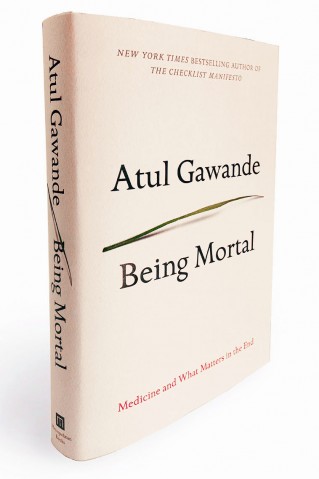
In non-fiction, Atul Gawande’s Being Mortal had a big impact. This is a book not so much about death as dying, and about how we’ve managed through carelessness, modernization, and fear to make that inevitable process even more terrifying—and depressing—than it need be. As someone with an aging parent (and an aging self), this book gave me a lot to think about; some of it chilling, but on the balance reassuring. To quote James Baldwin, “Not everything that is faced can be changed, but nothing can be changed until it is faced."

Today at lunch (eggless egg salad burritos w/ sriracha, mmmm), I embarked on Kazuo Ishiguro’s The Buried Giant. Fifteen pages in and I have a host of ideas as to what this fog-shrouded landscape really represents. I suspect that in the end, I will be both wrong and right. But the point is, I am drawn into the mystery, and I intend to follow wherever it leads.


 Alisa Alering was born in the Appalachian mountains of Pennsylvania where she ran around barefoot and talked to the trees. Her short fiction has appeared in Clockwork Phoenix 4, Flytrap #11, and Flash Fiction Online. She is a graduate of Clarion West (2011) and winner of Writers of the Future (2013).  Her "The Night Farmers’ Museum" was chosen by judge Robert Coover as runner-up for the 2014 Italo Calvino Prize. Her story "Madeleine Usher Usher" appeared in Aqueduct's Missing Links and Secret Histories: A Selection of Wikipedia Entries across the Known Multiverse. www.alering.com | @alering