Wednesday, December 17, 2014

The Pleasures of Reading, Viewing, and Listening in 2014, pt. 10: Andrea Hairston

Where Is That Way Out of No Way?
by Andrea Hairston


What to do when the Gray Men (mostly men) be Stealing Our Time and Colonizing the Future, when they be steady Smoking Our Dreams and Burning Down the Planet, while keeping us abstracted and distracted, fracking and freaking, whining and tweeting? The Apocalypse has happened. What are we doing? And where the hell is that way out of no way?
These were the not-so-hidden, very urgent, and entertainingly dramatic questions filling the books, plays, and films that captured me and inspired this year.
In German, I reread: Momo (oder: Die seltsameGeschichte von den Zeit-Dieben und von dem Kind, das den Menschen diegestohlene Zeit zurückbrachte) by Michael Ende. In English this translates as Momo (or: the strange story of the time-thieves and the child that brought stolen time back to the people). Momo is a young girl who can listen to our spirits. In her presence, people, young and old, abandon themselves to the moment, to each other. They remember: play is sacred. Then comes the invasion of the Gray Men, dressed in colorless suits with pasty complexions. The Gray Men plot to steal people’s time. They would in fact colonize every moment and conquer eternity. Of course, they promise to save time. Using the business model, they will make people efficient, orderly, and super-productive. This means putting an end to frivolous, time-wasting activities such as imaginative play and the arts, but don’t worry. The Gray Men offer children toys and gadgets that will play for them while forcing a twenty-four/seven work plan on adults. No one has time to miss what they’ve lost or bother with family, community, or the commons. The Gray Men desiccate our moments, roll them into cigars, and smoke. Momo challenges their world view and their grand scheme. It’s a thrilling, inspiring read!
Ende published this fantasy novel for youth (and everyone else) in 1973. I first read it in German in the late 80’s early 90’s. Every year this story seems more prescient as our world slides into that stolen time world that Momo had to rescue! This Changes Everything: Capitalism vs.the Climate  by Naomi Klein offers a journalist’s portrait of the parasitic Gray Men and the Momos working to save humanity in 2014. This Changes Everything is not just an indictment of predatory capitalists who deny climate change in the face of overwhelming scientific evidence for profit and power. Klein challenges the origin myths and cosmology of so-called Western Civilization that declares man the grand subject and all else objects to be used or manipulated in his mad monkey schemes. Klein insists: 
We can’t save the world unless we change it!
So, despite the hype and techno-wizardry euphoria over the internet and social media, we still face enormous challenges. Our technology amplifies the challenges. We must pursue inconvenient questions. Who owns our private moments? Who owns the public airwaves? In the name of progress, what corporate or governmental fascism do we naturalize and tolerate? What systems of oppression have gone virtual and viral? This is what Zero: Sie wissen, was du tust (English: Zero: They know what you do.) by Marc Elsberg and The Circle  by Dave Eggers explore. Zero is a fast paced techno-thriller. Circle is a laugh out loud brutal techno-satire. And talk about mad monkey schemes—Margaret Atwood’s MaddAdam Trilogy  is a breath-taking exploration of the multinational corporate Gray Men and  their techno-wizardry which aggravated me as it captivated me.
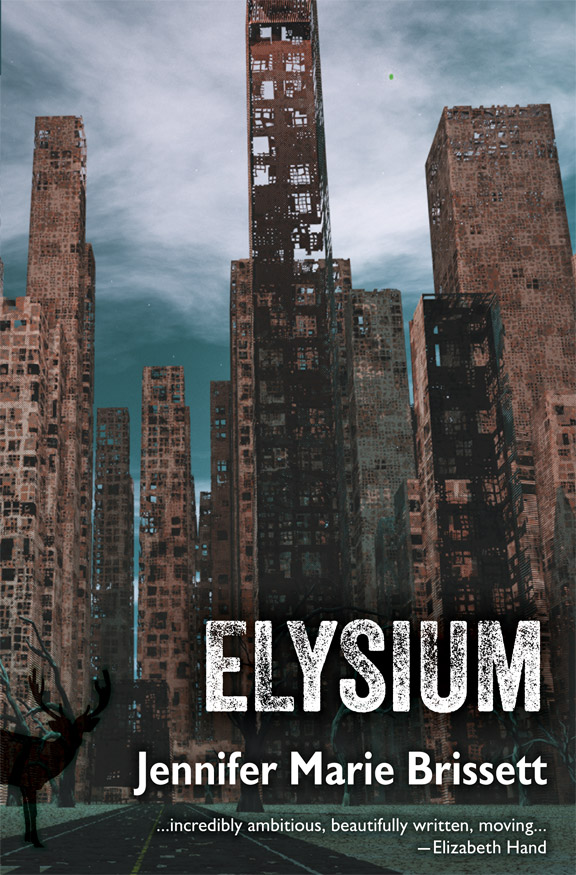
I read an advance copy of Daniel José Older’s Half-Resurrection Blues and enjoyed Older’s Afrofuturist cosmology and Brooklyn sensibility. Half-Resurrection Blues engages with humanity at that crossroads of life and death. It is a delicious urban fantasy paced like a thriller and scored like a fine piece of music. Likewise Jennifer Brissett’s wonderful debut novel, Elysium, is an sf jazz riff on gender, identity, and finding that way out of no way. A blow your mind book that you want to read again and again!
Other books and a few films that took my mind apart and offered guidance on the road out of apocalypse were:
Paradoxa25: Africa SF edited by Mark Bould  explores African Science Fiction.
Belle directed by Amma Asante, written by Misan Sagay tells the story of an 18th century black English woman as slavery is being challenged.
Pride directed by Matthew Warchus where gay activists help striking miners fight Thatcher’s lethal austerity.
Go For Sisters written and directed by John Sayles starring LisaGay Hamilton, Yolonda Ross, Edward James Olmos is an exploration of friendship and redemption.
The Only Good Indian directed by Kevin Willmott and starring Wes Studi.
I was a guest at Sirens this year and had an amazing time. Here is what they say about themselves:
In fantasy literature, women are revolutionary. They are queens, soldiers, assassins, and monsters. They are clever, kind, bold, and daring. They adventure, they conjure, they rule, and they rise. These diverse women inhabit worlds different from our own, where women authors have given them extraordinary opportunities: to grow, to lead, to fight, and sometimes to save the world. Sirens is a conference dedicated to the remarkable women of fantasy literature
It’s all true! And the folks running Sirens are organized, gracious, and fun! We had great conversations about women in sf &f. They’ll be in Denver in 2015. Think about putting Sirens in your calendar!
Finally I saw Denzel Washington, LaTanya Richardson Jackson, Sophie Okonedo, and Anika Noni Rose in Raisin in the Sun by Lorraine Hansberry on Broadway. The acting was brilliant. The audience was moved by main character Walter Lee's refusal to live only for money. I confess, I was surprised to find the 1959 play speaking so clearly to a Broadway audience in May of 2014. Yet, we are in the same sacred moment with Hansberry, who knew:
We have to change the world to save it!

Andrea Hairston is the Artistic Director of Chrysalis Theatre and has created original productions with music, dance, and masks for over thirty years. She is also the Louise Wolff Kahn 1931 Professor of Theatre and Afro-American Studies at Smith College. Her first novel from Aqueduct Press, Mindscape, won the Carl Brandon Parallax Award and was shortlisted for the Phillip K Dick Award and the Tiptree Award. Her second novel, Redwood and Wildfire, published by Aqueduct in 2012, won the James Tiptree Jr. Award as well as the Carl Brandon Kindred Award. Aqueduct released her latest book, Lonely Stardust: Two Plays, a Speech, and Eight Essays, earlier this year.

Tuesday, December 16, 2014

The Pleasures of Reading, Viewing, and Listening, pt. 9: Jennifer Marie Brissett


The Pleasures of Reading, Viewing, and Listening in 2014
by Jennifer Marie Brissett


This has been a kind of fractured year for me. So much going on including having to move … twice! All while trying to put out my first novel. It’s left my mind unable to concentrate on the kind of reading I usually like to do. Instead I’ve been doing something that I never thought I’d get into in such a big way and that is audiobooks. So what have I been listening to? Well let’s see—


*All five of the Fire and Ice books written by G. R. R. Martin, read by Roy Dotrice

*The Golem and the Jinni by Helene Wecker – I simply adored this book. So lovely!

 *The Dispossessed by Ursula K. Le Guin – I never could get through the written version of this book so I thought I’d give the audio version a try. I did finish it, but I didn’t groove to it. I  adore Le Guin’s writing though. I simply can’t put my finger on what it is about this particular title that I don’t like.

*Sarek by A. Crispin – I expected candy, and I got a nice meal instead. What a lovely surprise to slip into the Star Trek world with this lovingly composed depiction of a man who is about to lose the love of his life and yet has to maintain the discipline of non-emotion.

*Under the Dome by Stephen King – I’m often adverse to really long titles in print, but it seems to suit me just fine in audio. I’m not quite sure that this title needed to be quite as long as it was. It also seemed to reach for depths it never quite gets to hold. Yet, the scenes inside the dome when it is filled with smoke are  haunting.

*Alif the Unseen by G. Willow Wilson – quite an adventure once they met the Jinn.
 
*Jonathon Strange & Mr. Norrel by Susanna Clarke– lots of fun in a Dickensian kinda way.

*The Warrior who Carried Life by Geoff Ryman

*All The Tales of the Otori books: Across the Nightingale Floor, Grass for His Pillow, and Brilliance of the Moon by Lian Hearn 

*The Man in My Basement by Walter Mosley – I read this book years ago as an ARC before it came out and absolutely love it. I listen to it because Ernie Hudson was the reader and it was such a pleasure to hear Mosley’s words with his voice. I think it’s one of Mosley’s finest works.

*I am currently listening to Don Quixote of LaMancha and mixing in sessions of the Hearn’s prequel to Tales of the Otori: Heavens Net is Wide and have just begun The Three-Body Problem by Cixin Liu


Jennifer Marie Brissett is a Jamaican-British American writer living in New York who has been a software engineer, web designer, and independent bookseller. Her short fiction has appeared in The Future Fire, Morpheus Tales, Warrior Wisewoman 2, and other places. Aqueduct Press has just released her first novel, Elsyium. Check out her website at www.jennbrissett.com.


The Pleasures of Reading, Viewing, and Listening in 2014, part 8: Brit Mandelo

The Pleasures of Reading, Viewing, and Listening in 2014
 by Brit Mandelo 


This was a strange year, from my end of things—moving countries, completing a Master's program in the UK, working through a lot of personal and professional issues. Consequently, I didn't consume as much text as I would have liked; certainly not as much as usual. But there were some things that stood out (or re-stood-out) to me along the way.

·         The Red Tree and The Drowning Girl by Caitlin R. Kiernan

I'm sure that I've mentioned these in past roundups, but I re-read them in pursuit of writing a graduate thesis and they're still absolutely stunning, particularly as a pair of twinned narratives that deal with similar issues in different ways. Reading them as a duet is revealing and provocative, and I'd highly recommend giving them another go for anyone who's already read them once.

·         Rhapsody: Notes on Strange Fictions by Hal Duncan
Duncan's work on "the genre" is likely one of the best, most thorough and well-argued I've read to
date. It's delightfully dense, smart, and useful; it's the sort of text I'd teach with, were I intending to explore the nature of the "strange" or speculative genres. He's a clever one, he is. I also like how this book speaks to ideas about being somehow more progressive because of being a "nerd," near the end, and addresses that for the fallacy it is.

·         Hild by Nicola Griffith
           
A rich, sprawling historical queer novel that I wouldn't have expected to be so enamored by – I could probably count on one hand the number of historical novels I've loved – but that was undeniably great. Griffith, of course, is a familiar name for sf readers; I'm pleased to say that her work here is just as controlled, compelling, and insightful as always.
           
·         Affinity by Sarah Waters

Another well-known name, and in this case an older book: it's about spiritualism and lesbians and women's prisons. So, again, a historical novel – maybe I'm developing a taste? – and one that has a dark romance at the center of it, all bound up in the restrictions and demands of a not-so-far-away past. I thought it was a fast read, well-researched and well-illustrated, and emotionally intriguing.
           
·         The Goblin Emperor by Katherine Addison

I don't feel like it would be an exaggeration at all to call this one of the best stand-alone second world fantasy novels I've ever read. It's compact, it's full of quiet but intense personal drama and court politics, and it would certainly appeal to the sort of readers who have loved books like Swordspoint in the past. (It's also the first original novel from Sarah Monette in a long while, and it shows a great deal of development in craft and technique.)


·         Hannibal

I do watch television sometimes, and while I know I'm significantly behind the pack on this one, I picked up Hannibal in the UK to pass the time. Somewhat inevitably, I found it breathlessly compelling and handsome. The complex male relationships, bridging a difficult and submerged sensuality, are intense and intensely realized; there are also several revisions to the cast from the base texts to include more women and people of color. (The director was also quite direct about refusing to portray crimes of rape or sexual violence in the show, which is – refreshing.) And did I mention it's handsome? Because the scene setting, direction, and artful horror of it all are truly stunning.

·         The Upsides and Suburbia I've Given You All and Now I'm Nothing by The Wonder Years

It's only half of a joke that I'm in a place in my life where most of the music that appeals to me is probably intended for teenage and/or early-20-something boys. In this case, I've picked up a strong attachment to these two albums by The Wonder Years, a positivist pop-punk band. The first deals primarily with what it's like to be finishing an undergraduate degree and trying to make sense of the perils of growing up; the second is "set" a few years down the road and deals with being in your mid-twenties and not entirely sure how the fuck to survive all of the upheaval in your life. Honestly, if you're going through a rough patch, I couldn't recommend this stuff more. I'd strongly point to the songs "It's Never Sunny in South Philadelpia" and "Came Out Swinging."

·         I Don't Know What I'm Doing by Brad Sucks

This album is a strange one: it's the sort of thing that'll bring you to its emotional level, whether that's good or bad. If you're down, it'll pull you up a little – songs like "Overreacting" are particularly approachable – but if you're up, it'll probably just mellow you out (more than you might like). Regardless, I've found it calming and charming, a little odd but a lot soothing.

And that's more or less what I've been doing: trying to get things back together, stealing a little time where I can for things I like, doing the best I can. The music is good for that; so are the books; and a little television is a good distraction from the rest. 2014 has been a rough one, but it's going to get better, and some of this stuff has helped get me through. I recommend it all.


Brit Mandelo  is a writer, critic, and editor. She has been a nominee for various awards in the past, including the Nebula, Lambda, and Hugo; her work has been published in magazines such as Clarkesworld, Tor.com, Stone Telling, Apex, and Ideomancer. She has published two books, Beyond Binary: Genderqueer and Sexually Fluid Speculative Fiction (Lethe Press, 2012) and We Wuz Pushed: On Joanna Russ and Radical Truth-Telling (in Aqueduct's Conversation Pieces series).

The Pleasures of Reading, Viewing, and Listening, pt. 7: Alisa Alering


Verbose Victorians and Friendship Cheese: Reading in 2014
by Alisa Alering


I almost feel as if it would be somehow more honest to review the books that I meant to read this year but somehow never got around to. I read far less than I used to, though I still digest a few every month. Even so, the finished ones seem to be far outnumbered by the eternal ranks of the enticing-but-unread (not entirely dissimilar to other areas of my life.)

Choosing from the books that I have actually read or listened to over the past year, the two that I’ve enjoyed the most are Everything I Never Told You, by Celeste Ng and A Tale for the Time Being, by Ruth Ozeki. 

I don’t know that these novels have anything obvious in common. Everything is short and spare, focusing on the members of one family over the span of a few months, while Time Being is expansive, pursuing multiple narratives, multiple timelines, life, the universe, and everything. Yet I felt passionate enjoyment and a sense of engrossing wonder while reading both of them. 

With Everything, I was hooked from the first lines: “Lydia is dead. They just don’t know it yet.” I love mysteries, and it’s always promising when the body appears on the first page. But this is not a story about a dead girl; it’s about the shattered family left alive. They each shelter secrets, and though (mostly) well-intentioned, continue to damage each other as they flee their own pain.

Despite equally cheerful themes of suicide, disaster, and cruelty, Time Being has a more exuberant feel. The voice of teenage Nao jumps off her diary page, friendly and unruly, and I never wanted to leave her story. But I also loved Ruth’s quieter sections, her mundane concerns and her observations and interactions with the natural world.

Others novels I enjoyed:

Little Century, by Anna Keesey was given to me by a writer friend who insisted I read it so we could talk about the ending. The jacket misleadingly describes the story's events in terms of a breathless romance, as if its actual story of a young woman finding her place in the world were insufficient to captivate a reader. And my friend was right, it has an amazing final chapter that transforms and deepens every word that precedes it. 

The Luminaries, by Eleanor Catton - Reviewers complained that this 2013 Booker-prize winner was "long and demanding" (NYT). At 848 pages in hardcover, I can't argue with long, but demanding is in the eye of the beholder. The "verbosely Victorian style" (NYT again) goes down smoothly for one who comfort-reads the works of original verbose Victorians like Trollope. But here, instead of smoggy London, we get the wild gold-mining frontier of Hokitika, New Zealand. The landscape feels incredibly real, the characters rich and varied, and the ending leaves open the question of whether all of the seemingly supernatural events can be rationally explained.

I also had a good time with Hilary Mantel’s Wolf Hall (another Booker winner and another "grueling read" according to the same NYT article). Mantel's near-obsessive dedication to the pronoun "he" and refusal of proper names was frustrating, but there was magic in the rest. So much detail, so much interior thought. So much much. Having listened to Philippa Gregory's somewhat less exalted The Other Boleyn Girl a few years ago, the history was fresh in my mind, and it was fascinating to watch the same events unfold from the opposite side of the table.

American Elsewhere, by Robert Jackson Bennett - Horror isn't my usual cup of inky sludge, but I was
sucked in by this Shirley Jackson award-winner, largely because, for most of the book, I couldn't anticipate where it was headed. It mixes traditional Twilight Zone creepy Americana with noir tropes and bumbling criminals, a strong female heroine, X-Files-style government experiments, and oh yeah, monsters. Tor. com calls it "deliciously weird," and I have to agree.

Honorable mentions go to: Black Helicopters, Blythe Woolston; The Night Guest, Fiona McFarlane; Birdbrain, Johanna Sinisalo; Night Film, Marsha Pessl; The Sweet Hereafter, Russell Banks; Chorus of Mushrooms, Hiromi Goto; The Golden Day, Ursula Dubosarsky; Half World, Hiromi Goto; Kate Summerscale, The Suspicions of Mr. Whicher: A Shocking Murder and the Undoing of a Great Victorian Detective (NF)

I’ve had a bit of a fad lately for biography and memoir. One of the reasons I read is because I badly want to know what’s going on in that mysterious space: someone else’s head. Fiction illuminates that wonderfully, but so too does memoir.

Autobiography of a Face, by Lucy Grealy – Grealy’s childhood cancer caused her severe physical pain and left her with a permanently disfigured face. The writing here is really wonderful, and subject not so much tragedy voyeurism as an exploration of identity. I’m now looking forward to reading Truth and Beauty, a memoir by writer Ann Patchett about her friendship with Grealy. 

Mastering the Art of Soviet Cooking: A Memoir of Food and Longing, by Anya von Bremzen - A sort of mother/daughter memoir, history of communist Russia, and cookbook combined. Food is the ship of memory and von Bremzen uses it to connect with her past whether attempting to recreate the fictional feasts of Russian literature or recalling the “Friendship Cheese” of her own Soviet-era childhood. Lots of love and irony here, and a few fascinating recipes.

Also recommended:
Country Girl, Edna O’Brien
Bedsit Disco Queen, Tracey Thorn
The Fry Chronicles, Stephen Fry
This Is the Story of a Happy Marriage, Ann Patchett,
Things I Should Have Told My Daughter, Pearl Cleage

At the end of summer, I embarked on a short story reading and discussion campaign with a fellow writer. We’re reading everything: classic and new, literary and genre, commercial and experimental. Thanks to a Facebook poll for suggestions, we have a wonderful inventory of things to read for the rest of the year. Some favorites so far have been: 

—Benjamin Percy. “Refresh, Refresh.”
—Karen Joy Fowler. “The Dark.”
—Edith Pearlman. “Self-Reliance.” 
—Elizabeth Ellen. “Teen Culture.”

Finally, a special shout-out to recently discovered web comic “Royal Existentials.”


 Alisa Alering was born in the Appalachian mountains of Pennsylvania where she ran around barefoot and talked to the trees. Her short fiction has appeared in Clockwork Phoenix 4, Flytrap #11, and Flash Fiction Online. She is a graduate of Clarion West (2011) and winner of Writers of the Future (2013).  Her "The Night Farmers’ Museum" was chosen by judge Robert Coover as runner-up for the 2014 Italo Calvino Prize. Her story "Madeleine Usher Usher" appeared in Aqueduct's Missing Links and Secret Histories: A Selection of Wikipedia Entries across the Known Multiverse. www.alering.com | @alering