Monday, December 15, 2014

The Pleasures of Reading, Viewing, and Listening, pt. 6: Lucy Sussex

A 2014 Selection
by Lucy Sussex


2014—a strange year, reading-wise.  Because I was doing longer reviews, for the first time in some years, rather than shortbites, I got to savour my response to a book more. That said, it happened that the longest reviews were not necessarily the books I most wanted to write about. I also had less of the reviewing the moderns/researching the Victorians experience, which has had some odd consequences in the past. Once upon a time I was co-judging a contemporary fiction award, and at the same time reading up for my thesis chapter on early crime/melodrama author Ellen (Mrs Henry Wood). After a while I got her modus operandi and she started to seem a rather better author than most of ye moderns. However, I behaved myself and refrained from suggesting that she should get the award. 

Here follows a 2014 selection.

BIOGRAPHY    

The Real Jane Austen: A Life in Small Things
Paula Byrne
Harper

Given the dearth of available information, what more can be said about Jane Austen? Quite a lot, as it happens. Byrne eschews the chronological approach for object theory: artefacts associated with Austen, which have their own story, but also tell hers. They range from portraits to lace to a royalty cheque. The result is to put the writer in context, and show how rich was her social and cultural milieu.  Austen’s interest in the French Revolution, her anti-slavery sympathies, her determination to be a successful writer, all are given due emphasis by Byrne’s approach. I learnt much, not least about the model for book publication, which I will draw upon in my next book. And I also got the inspiration for a short story, which I sold to Ellen Datlow. Thank you, Paula and Jane.


MEMOIR    

Living with a Wild God: A Non-believer's Search for the Truth about Everything 
Barbara Ehrenreich
Granta
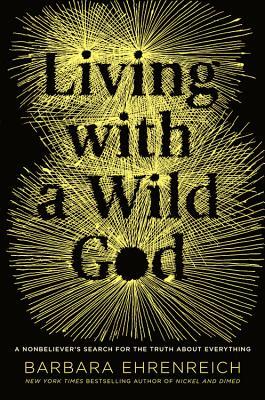
Barbara Ehrenreich is well known as a public athiest and investigative journalist. Now, in her seventies, she reveals a personal contradiction, that in her teens she had a profound mystical experience.  While what happened did not lead her to religion, it still became the central event in her life. Without this "enlightenment," she would not have become the person she is. It marked her out as special, if not anointed for a mission.

The teenage Ehrenreich was the child of socially and geographically mobile parents, alcoholics living in a state of marital war. She was bright, isolated, and miserable.  Her teenage words are as unbearably self-centred as the usual adolescent effusions, and quite hard to read. There are hints that she was mentally at risk, with odd dissociative episodes, experienced visually, momentary altered states of mind. 

Then came the full-blown experience. She travelled with her young brother, and a boyfriend, out of Los Angeles. They spent a vigorous day skiing, then stopped for the night in a nondescript town, sleeping in their car. In the morning, sleep-deprived, hungry, and badly sunburnt, she went for a pre-dawn walk, alone. And entered into a world on fire, subsumed into something wild, violent, and ecstatic.

Brief though this experience was, it marked her. She could have dismissed the experience as a mental fugue, but did not: it had simply been too overwhelming. Though she put it aside, but could never forget it.


 In this memoir she puts all of her investigative skills, all her research, into discovering what happened to her. Thanks to the family atheism, she could not file the experience into the spiritual category.  She examines religious mystics rigorously, yet feels more affinity with shamanism. Never does she deny the experience, but neither can she relate it to any kind of God-like being.  She lacks the religion gene, or the inspired madness of Philip K. Dick, who also saw the mystical in California.
  
Suffice to say, Ehrenreich does arrive at an explanation that satisfies her, and also takes the reader on an extraordinary journey.
                                   

Clothes Clothes Clothes Music Music Music Boys Boys Boys
Viv Albertine
Faber

Before Pussy Riot were the Slits. They were the original feminist 70s punk rock band, loud and
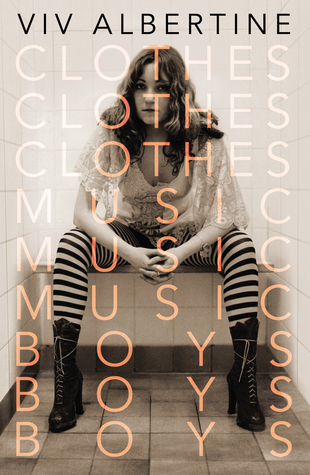
confrontational. Albertine wrote and played guitar with them. Her memoir has raw energy, utter honesty. She also tells a formidable story. It begins with the comment that autobiographers are either twats or broke: “I’m a bit of both.”

 In retrospect, the Slits are respected. At the time they faced constant misogyny and actual violence. Singer Ari got raped, and stabbed twice.  The Slits enraged male privilege—girls were not supposed to play electric guitar. Yet Albertine notes punk was the only time she fitted in. When the band split in 1981, she felt devastated.

In the aftermath she taught aerobics and had a career as a film-maker. Two weeks before marrying, she suffered an ectopic pregnancy. Years of brutal IVF followed. Shortly after her daughter’s birth she got diagnosed with cervical cancer. It took a decade from her life, which time she spent as a housewife on the English south coast. Then her marriage broke up—her husband resented her creativity.

This tale could be a misery memoir, but Albertine refuses to play victim. She has all the positive energy of the Slits, toughness and laughter. And if at the end she is alone, no matter. She has great relationships with her female family, and is making music again.

 Runner-Up: The Twelfth Raven: a Memoir of Stroke, Love and Recovery
Doris Brett
UWAP

One of the hardest literary genres in which to write is the medical memoir. Pain makes us recoil into ourselves, licking at our wounds. Writing about it may serve as a necessary catharsis, but the results are not necessarily good art, rather the reverse. Poet Brett is the outstanding exception.

  
TRUE CRIME

The Tainted Trial of Farah Jama
Julie Szego
Wild Dingo

This book examines the story of how a young Somali living in Australia was convicted of rape--due to contaminated DNA.   It would have been difficult to write, the subject belonging to an immigrant community afflicted with refugee trauma, and subject to racial/religious prejudice.  Matters were not helped by Jama remarking that women in Australia “have too much power.”  Later he withdrew his cooperation.

 Szego did not need it; nor that of the victim, "Maria." She shows how a chain of circumstances, a woman found unconscious in an apparent date-rape, led to the arrest of  a young black man from the other side of town. Only DNA linked the two. The Police laboratories denied any possibility of mix-up, and Jama got jailed.

What happened was extraordinary, an accident of non-admissable evidence, which led to a second victim, "Taylah."  Unlike Jama and Maria, she happily talks, in a chapter that is the warm heart of this book. Szego is particularly skilled in her treatment of ambiguities often elided in the adversarial system, which prefers black vs white. The perception of consent, the nature of rape—a lesser writer would have come to grief here. What also emerges is a chilling portrayal of modern Australia, where cultures clash, but misogyny still rules. 

CRIME

Stone Mattress
Margaret Atwood
Bloomsbury

This collection contained two fine examples of a rare genre: the crime short story. It is hard to do well, but Atwood has the form nailed. “The Freeze-Dried Groom” is a macabre modern take on Miss Havisham, and begs for a movie adaptation. The title story, written to entertain an audience of Arctic tourists, answers the question: how could you murder someone in this setting, and get away with it? It appeared in the New Yorker. The book also contains a horror story, “Lusus Naturae.” which essays vampire matter, realistically: the shortest tale in the book, but brilliant, with nary a word wasted. I’d happily anthologize it.


NATURAL HISTORY    

Where Song Began: Australia's Birds and How They Changed the World 
Tim Low
Penguin

After Australia’s European discovery, its weird creatures became famous worldwide. Marsupials have hogged the spotlight, but much less is known about the native birds. How extraordinary they really are is the focus of this book. Meet the white-winged chough, the only bird that practices slavery. Or the magpie goose, which is neither magpie nor goose, but belongs to a unique waterfowl family. 

 Here DNA studies upset the orthodoxy, like a quoll in a henhouse. Budgies may have conquered the world as cage-birds, but their fellow feathered friends did so by wing-power millions of years earlier. Parrots and songbirds originated in Australia, then flew across the globe. The original songster was the lyrebird.

The interplay between environment and the avians is a major feature of this book. Australia’s soils and sun creates excess nectar. It nourishes birds, and they act as major pollinators. Without them, forests will not survive.  Moreover, the nectar fuels competition between species, the result being some of the most aggressive and noisy birds on the planet. Another factor is brainpower: Australia’s big parrots, and their New Zealand cousins are among the most intelligent of all creatures.  They deserve much better than to spend their long lives alone in small cages.

Low has written a book highly informative, but also most readable. Twitchers everywhere will rejoice, but there is also much here that ordinary readers will enjoy.

   
For fiction, a book already mentioned by the Aqueduct columnists:

We Are All Completely Beside Ourselves 
Karen Joy Fowler

At the heart of this book is what it means to be human. Can we be Lords of Creation and also part-Neanderthal? Are we so different from the apes? Anthropomorphism is ancient, the act of seeing animals in our own image. Instead Fowler suggests empathy as a better alternative, without false sentiment. This novel is weighty, yet written with a lightness of touch that is more effective than any agitprop.  It charts a profound philosophic journey, mixing wit with scientific rigour.  The result might be Fowler’s most important work yet.
  
And I also add Ann Leckie’s Ancillary Justice, a book that has run away with many prizes, but which is also concerned with what it means to be human. And of course, post-colonialism, the crumbling of empires.

 Lucy Sussex was born in New Zealand in 1957. She has degrees in English and Librarianship from Monash University, and is a freelance researcher, editor and writer. She has published widely, writing anything from literary criticism to horror and detective stories. In addition she is a literary archaeologist, rediscovering and republishing the nineteenth-century Australian crime writers Mary Fortune and Ellen Davitt. Her short story, `My Lady Tongue' won a Ditmar (Australian Science Fiction Achievement Award) in 1988. In 1994 she was a judge for the international Tiptree award, which honours speculative fiction exploring notions of gender. Her first adult novel, The Scarlet Rider, is about biography, Victorian detective fiction, voodoo and a ghost. Aqueduct Press published her collection, Absolute Uncertainty, in 2006.

The Pleasures of Reading, Viewing, and Listening, pt.5: Jeffrey Ford

Favorite Reads of 2014
by Jeffrey Ford


Elysium by Jennifer Marie Brissett – Best first novel I read this year. Complex without being complicated apocalyptic science fiction/love story. Economical, yet poetic writing.  (fiction)


The Penguin Book of Witches edited by Katherine Howe – Howe’s premise is that the culture of witchcraft played an integral role in the formation of America.  She makes her point by presenting transcripts from various witch trials 1500’s to 1700’s.  (non-fiction)


For All the Tea in China by Sarah Rose – 19th century industrial espionage of a sort. Brit Robert Fortune infiltrates China in disguise to steal closely guarded secrets of cultivating and growing tea, the consumption of which was experiencing a phenomenal boom in the UK.  (non-fiction)  


They Came Before Columbus by Ivan Van Sertima – A compelling (and to me, convincing) case made for a pre-Columbian African presence in the New World. A book to excite the imagination. (non-fiction)


The Ten Thousand Things by Maria Dermout – A hauntingly beautiful story of a Dutch woman,
raising her son on an old estate on Ambon Island in the Molucca island chain (Spice Islands) off the coast of Indonesia.  Largely quiet and contemplative, great descriptions of the natural world, but also with ghosts, murder, family tragedy, and an ill-fated expedition.  (fiction)


The Jatakas: Birth Stories of the Bodhisatta translated by Sarah Shaw – Folktales of the various incarnations of Buddha on the way to his final life.  One of the coolest things about these stories is that you are presented with a cast of characters in each (sometimes human, sometimes animal), and only after the story has played out is it revealed which of the characters was the Buddha.  Lots of surprises that play games with your perceptions and expectations.  (folk tales)


The Black Spider by Jermias Gotthelf – Had read this years ago, but the new translation for NYRB by Susan Bernofsky is a beauty.  Religio/Horror/Weirdo/Sometimes Funny/Creepshow. A Must read for writers and lovers of dark fantasy and horror. 


Jeffrey Ford, who has the won the Nebula Award, the World Fantasy Award (several times), and a few other awards as well, is the author of The Well Built City trilogy and numerous other novels, as well as several collections of short fiction. His most recent book is Crackpot Palace. He lives in Ohio.

Sunday, December 14, 2014

The Pleasures of Reading, Viewing, and Listening, pt.4: Tansy Rayner Roberts

The Pleasures of 2014
by Tansy Rayner Roberts


This has been an odd sort of year for me - I’ve been reading more than ever before, but not my usual staple of SF and fantasy novels at all. I spent the first half of the year immersed in historical romance novels and then switched that compulsion over to fanfic and superhero comics, and I think it’s been good for me, for once, to spend most of my reading energy on genres and media which I don’t actually write. On the other hand, the list of SF & fantasy books I wish I’d read this year is pretty substantial. I might have to get on that over the summer. In other media I’ve been fixated on Musketeer movies and space opera, much of which I have reviewed for my blog.

So here is some of what I’ve enjoyed this year:

LISTENING

The Guardians of the Galaxy movie was fun and space opera-y, but while I liked the movie a lot, it’s the soundtrack that has stuck with me, and it’s become my go-to car music, not least because my daughters now know all the words to the Pina Colada song. I’m not sorry.

Night Terrace is a fantastic SF comedy audio series made by dear friends of mine in Melbourne. It is Doctor Who-like show might work if the brilliant, competent and world-weary central character was female, and it’s full of all kinds of jokes and commentary about everything from Australian parochialism to intersectional feminism. It’s smart, sharp and it stars Susan from Neighbours.

In podcasts, my big discovery this year is Rachel and Miles X-Plain the X-Men, in which a husband and wife team run through the 40+ year convoluted history of the X-Men in comics and other media in a conversational, knowledgeable and very funny style. If you’ve ever wondered how many long-lost Summers brothers there are, or why Wolverine is in everything, or why comics fans of a certain age have such ferocious opinions about Kitty Pryde, this is the podcast for you.


WATCHING

Every now and then, our family finds a show that the adults genuinely love as much as the children (two girls, 5 and nearly-10) and we watch the hell out of it until we can’t squeeze it dry any longer. Past examples of this have been Horrible Histories, Yonderland and Futurama.

This year, it’s Phineas and Ferb. We’ve crunched through nearly three seasons in as many months,
and we love the emphasis on science and adventure, the genuine affection that the characters have for each other (even when they are working as antagonists) and the fannish callbacks. It’s adorable.

In grown-up viewing, we’ve discovered The West Wing for the first time (don’t know if you’ve ever heard of it) and are mildly obsessed. In superhero shows, I gave Agents of SHIELD another chance after bouncing off it last year, and was really impressed with the growth of the show. Season 2 is pretty brilliant so far, with an expanded ensemble that allows for greater diversity and some interesting variety in gender roles.

In Musketeer media (I’ve consumed a LOT of it this year), the Richard Lester films from 1973 and 1974 are so much more brilliant and funny than I expected/remembered, and are the closest thing we’ve ever come to a close adaptation of the original book (which I have basically read five times or more this year for work purposes). But the new BBC series The Musketeers is my TV pick of the year and maybe the decade. Words cannot express how much I love this show and the interpretations of the classic characters (though I did make an attempt in three blog essays starting with Looks Good in Leather). Needless to say: the men are pretty, the women are clever and competent, and the whole show puts the swash in swashbuckle. 

READING

My Regency/historical romance obsession started with Courtney Milan, whose novels are mostly early Victorian, and are extraordinary for their wit, humour and feminism. It might be a fantasy ideal to have such interesting and forward-thinking women (and especially men) alive during this era but I don’t care, I’ll take it, and I will read everything she writes for the rest of my life.
Her feminist heroes are so dreamy, I can’t even tell you.

Particularly recommended: The Duchess War and its sequels, which feature among other things, a unionist Duke, a cross-dressing female chess champion, a female scientist hiding her achievements, a plebeian politician who can’t afford to fall in love with a woman who deliberately flouts society with her fashion sense to avoid marriage, and a suffragette fighting the patriarchy with her own newspaper.

I also adore the work of Sarah Maclean, who writes the best titles in the business (Nine Rules To Break While Romancing a Rake, for example) and like Milan knows that sexy shenanigans are best served with a whole lot of wit and clever commentary. For something a bit different in the genre I can highly recommend Jeannie Lin’s The Lotus Palace, which is a rare example of Chinese historical romance. I found this book absolutely captivating despite going in with absolutely no knowledge of the cultural or historical background.

Elsewhere, my comics of the year are: Ms Marvel (my 9 year old’s new favourite superhero), a fun and hugely popular legacy superhero comic featuring a Muslim American protagonist; Harley Quinn, as written by Amanda Conner and Jimmy Palmiotti, a darkly humorous take on a character who I love but has been badly served by artist and writer choices previously; Hawkeye again and still, but particularly the recent mini-series of Hawkeye vs Deadpool which is funny and shows that the David Aja interpretation of the characters is now being picked up and run with by other artists.

I have fallen down on blog reading this year but if social justice commentary is your thing, then you should definitely have No Award bookmarked.[http://no-award.net/] They’ve done some great work this year from link lists and reviews to full essays about issues to do with gender and especially race in Australian society and culture.


To prove that I have at least kept half a finger on the pulse of SF and fantasy this year, I do want to give a shout out to Secret Lives of Books, the new Rosaleen Love short story collection as part of the ongoing Twelve Planets series from Twelfth Planet Press. Love is such a beautiful, sarcastic writer and these four stories are fresh, exhilarating and of course feminist. 


Tansy Rayner Roberts [http://tansyrr.com/] is an Australian fantasy author, blogger and podcaster. She won the 2013 Hugo for Best Fan Writer. Tansy has a PhD in Classics, which she drew upon for her short story collection Love and Romanpunk. Her latest fiction project is Musketeer Space, [http://tansyrr.com/tansywp/guide-to-the-blog/musketeer-space/] a gender-swapped space opera retelling of The Three Musketeers, published weekly as a web serial. Come and find her on Twitter at @tansyrr

The Pleasures of Reading, Viewing, and Listening in 2014, pt. 3: Gwyneth Jones


The Pleasures of Reading, Viewing, and Listening in 2014
by Gwyneth Jones

This is going to be about books and movies, with a couple of excursions into Art. Music would be another essay!

January: we went to see the Katniss Everdeen show #2 (I mean The Hunger Games: Catching Fire) for our Christmas outing. Much better than the book, good idea to ditch all the "Peeta is interesting too! He has his cute handicrafts!” ; and to boost the revolution.  Downside: I don't know if you'd get me inside a Center Parcs holiday world now. I'd never be able to enjoy the fencing or the tree climbing, I'd be waiting for the poisonous fog and the mad mandrills the whole time.

February: we saw American Hustle, and I didn’t like it. Megastars, ingenuously dressed up to look tawdry, and loving themselves in the mirror. The best bit, the very best bit, was Jennifer Lawrence and the science oven. I'll stick with The Sting. Which I assure you is more authentically "Seventies." Then we saw Inside Llewyn Davis. Very well-crafted, excellent central performance,  limited folksong repertoire (the scraps left over from O Brother?); whole thing very mean-spirited. Those Coen brothers really did not like this Davis guy! And then we saw Under The Skin.  I like the original Michel Faber novel, which is grim but not horror, better. And Isserly the sympathetic fictional character makes a lot more sense than Jonathan Glazer’s blurred, confusing, alien femme fatale. But as arthouse scifi horror this was pretty good. Scarlett Johannson so has that bruised, slightly fleshy Monroe look worked out.

April: we saw John Michael McDonagh’s Calvary & it was stunning. Quirky "black" Irish  humour
fans of McDonagh’s  In Bruges and The Guard got a shock, Calvary  is a full-on, uncompromising morality play, harsh and pure as they come. I don't know what to compare it with, except maybe Park Chan-wook's Sympathy For Mr Vengeance. And all played out beside the bleak and beautiful strand under bare Ben Bulben's head. The entire audience at The Dukes sat in dazed silence without stirring as the credits rolled, and I have never seen that before.

May: I went to Manchester to visit my friend Mary. We saw Simon Armitage's The Last Days Of Troy at the Royal Exchange Theatre.  The production looked really good, and the action was thrilling, but everything lost focus after the interval, when Armitage strays  away from lifting stuff directly from The Iliad, and makes a bit of a hash of Book II of the Aeneid instead. Shabby treatment of Helen. I know Lily Cole is a supermodel, not an actress, but she’s not an idiot, and there’s no excuse for mutilating the really extraordinary thing Homer does: making Helen, of all people, his viewpoint character: the person who has been weaving on her loom the story the poet’s words tell. Wouldn't you think, in this day and age, a dramatist would know better? Also went to Opera North’s La Bohème at The Lowry, which was lovely. Young cast, believing every word of their story, looking like real, young examples of the bohemian life, and very sweet. 

June:  I didn’t get out much, but I read some books, including: Natsuo Kirino, The Goddess
Chronicle, a Japanese Creation Myth tale, a poignant, strange reminder of what "Okinawa" and "Iwo Jima" might have meant, if they didn't mean The War In The Pacific. Have to admit it's all about Death, and mainly about women (or Yin) getting the short end of that stick, but I liked it a lot. Will now seek her futuristic “hardboiled detective novels”  Belinda Bauer, Rubbernecker:  At first I thought this one was a bit of a conjuring trick. You say Our Hero has Asperger's, then you can do anything you like with him, including using any quirky internal musing (such as we neurotypics might easily indulge in), sound like you Know Everything about the Autistic Spectrum.  But I soon changed my mind. Really liked it. Gruesome fun, with compassion and a good heart. What more can you ask?


July and August: I have nothing special to report.

September: we saw Ben Power’s Medea, filmed live at the National Theatre,  and it was another stunner. Helen McCrory excellent in the name part, and Danny Sepani's Jason impressive: this imposing, successful man who's so good at compartmentalising, putting the brutal piracy and all that business in Colchis out of his mind, astonished that the foreign wife he needs to discard is cutting up rough. The type of man, I would say, if I was a savage or an Ancient Greek,  who positively calls down on himself (and others) the unstoppable, black, implacable force of a Medea. Great music by Will Gregory and Alison Goldfrapp.  NB, not a lot like Euripides.  I read Karen Joy Fowler’s, We Are All Completely Beside Ourselves : I was completely wrapped up in this book, and devoured it in a sitting. Only thing, I thought the storytelling ended too soon. I wanted the reunion, when the sisters meet again, for the first time, to be part of the story. Just that moment, no need to go further: let the rest of the book be (as it is) righteous and necessary footnotes. And then we saw Two Days One
Night, which I also loved. The Dardennes Brothers are so good at passionate drama about ordinary things, happening to ordinary people. I spent most of this movie, totally involved in  the action, thinking, oh no, this isn't going to work. Sandra isn't coping. If she wins this cruel little game and gets her job back, she’ll lose the last shreds of her self-respect. It'll be awful, terrible, she won't last a day . . . But the Dardennes were ahead of me. I can't tell you how or why (even though, after visiting with the Ancient Greeks, I'm feeling more annoyed than usual with that 'spoiler' concept) but it works. Just go and see the movie

October: we visited Shrinking Space's Digital Brighton show : a digital audio-art  installation about the Solar System, in a huge dank hangar, graffitied like an underground car park. Pairs of stools set by roof pillars dotted the endless concrete floor. We were given headsets, MP4 players, a brief induction, and were launched to wander.  Disappointed at first: I never read the advertising properly, I'd been expecting an update on NASA's "music of the spheres" (sound transcription of the radio emissions of the different planets), and instead I was getting human space science voices. I slowly became hooked. I didn't like Earth so much, it was too mundane (the Moon was a bit mundane too), and I didn't like the Sun, it was too big. I liked Venus and Mercury best of the planets, and Enceladus best of the moons, because it was most active, but it was difficult to hear Mercury: the Sun kept eating it. I liked Voyager a lot, because it was so thrillingly quiet, so mysterious; and I got confused by Rosetta. All the voices (apart from Earth and Moon) use the second person plural, uniformly, without a second thought. It's not a device out there, it is we. It is the people who are running the experiment, themselves. They had made a transition.

I also read a lot of sf, in preparation for two public engagements. Notably  The Girl In The Road,
Monica Byrne: A travelogue around India and Africa, in a day after tomorrow world where no we didn't get around to doing anything about global warming, but yes the technology did go on getting more and more marvellous. Pay attention when our free and easy heroine casually tells you, around page two, that she is psychotic. Of course she's psychotic, we're all psychotic, we are brutally murdering our own, literally our own, flesh and blood. An enthralling debut, full of wonderful invention but perhaps not meeting the criteria for positive, corporate-compliant sf;  in territory where older "Western" writers might fear to tread these days. NB, if you don’t like magical realism, walk away now. And The Machine, by James Smythe. A story all about male violence; why women stay with violent men; how women can feel ownership of a violent man’s power, even when he’s brutally abusive, and all against the backdrop of a stifling, paralysed, near future UK. Very impressive.

November: we went up to London to see the Anselm Kiefer Retrospective at the Royal Academy: having done our prep by watching the Imagine feature on the artist the night before. The staggering humungous scale of his operations had a somewhat chilling effect on me, so that when we reached the exhibition I ended up feeling most moved by the "Attic" pictures; that I first saw in the Liverpool Tate many years ago, and immediately co-opted into White Queen, my London-based, Wagnerian alien invasion story.  (Interestingly, the "Attic" picture I quoted in White Queen, Parsifal I was the only print available on sale when we exited through gift shop. Maybe Braemar Wilson bought it here! I didn't: just felt a little spooked, by a ghost of the fictional future.)

I was thrilled, I admit, by the mesmerising Aschenblume; the Shulamith and Margarethe diptych, and the Black Sunflower series ; and enjoyed watching people make the alarm go bleep by peering too closely at the sheets of lead embedded with real diamonds.  But move over, I kept thinking. Move over, Holocaust. We are entering uncharted territory now, you are no longer the terrible, absolute, unrepeatable, high water mark you once were. Our damnation is not in the past, it's engulfing this new century, and the huge mass of Keifer's evidence weighs against his ethereal promise of hope like a lead cathedral against a feather . . .

Installations of piled up paving stones, with a coulis of red grit, did nothing for me, however.
Very much impressed by Ida. This is SUCH a beautiful film, such limpid clarity, such economy of storytelling images: & absolutely amazing, as many people have said, to know that this is entirely digital. A story from the past, but timeless as the light on wintery Poland. What do you do, after the genocide? Years after, when you finally cannot live with what you know and partly know; when you decide the bodies cannot be left buried.  Good article from the director about the making of the movie here (if a little bit cocky):


December: two bookend movies , Effie Grey (Richard Laxton) and Mr Turner (Mike Leigh). I’m out of step here, I know, but I far preferred Effie Grey. Clearly this is the way things were,  but J.M.W Turner’s habit of routinely grabbing female flesh (of unthreatening inferior status)  and raping the woman  as briefly and complacently as he would take a bite from a veal and ham pie — was not endearing. Is “I know I’m unattractive” an adequate defense? No, it is not. Not now, not two hundred years ago. Bookends because both movies deal with a pivotal moment in art history, when the misty Modernism of the Age of Revolution (Turner) gave way  to the lurid colours (and awful drawing!) of the High Victorian Pre-Raphaelites. Comparing the two John Ruskins,  I felt Mike Leigh had it very wrong with his infantile fop. It's a long time since I read anything by Ruskin, but I know he had power & I think the twisted bully in Effie Grey was nearer the mark.  

I have no idea what anyone sees/saw in Interstellar. Possibly this is because I’m a jaded sf fan, unable get all excited by wild terms like "time dilation" or "the fifth dimension" if they don’t come with an engaging story or believable characters attached. Or possibly because it was unutterably boring, very much too long, and hogwash. But then as a treat we watched Guardians of the Galaxy the other night on Netflix, and it was pretty good.

Right now I’m reading  Jessica Cornwell's The Serpent Papers, a spooky mystical thriller about Alchemy and Barcelona.  And looking forward to my Christmas holidays, during which I plan to read The Goshawk, T H White,  H Is For Hawk, Helen MacDonald, Tangara, Nan Chauncy, and The Heart Of Midlothian, Walter Scott.  And finally, here’s something rare and strange, a surreal, all female apocalypse from dissident film makers in Communist Czechoslovakia: introduced to me by David Sorfa of the University of Edinburgh: Late August At The Hotel Ozone

Happy New Year

 Gwyneth Jones is the critically acclaimed author of numerous novels, short stories, and essays. She has been honored with the Philip K. Dick, World Fantasy, Clarke, and Tiptree Awards for her fiction, and the Pilgrim Award for her criticism. Aqueduct Press has published her short fiction collection Universe of Things, her essay collection  Imagination/Space: Essays and Talks on Fiction, Feminism, Technology, and Politics, her novel Life, her short story suite The Buonarrotti Quartet, and ebook editions of her Aleutian novels White Queen, North Wind, Phoenix Cafe, and Spirit. She lives in Brighton, England.