Sunday, December 26, 2021

The Pleasures of Reading, Viewing, and Listening in 2021, part 23: Nancy Jane Moore


The Things I Read in 2021

by Nancy Jane Moore


The move of the emailed newsletter from something intended to announce publishing news to a form of publication itself took off in 2021. Any number of writers, some forced out of their jobs and others looking for a place to publish their essays, began to use this medium.

It even generated controversy, when people discovered that Substack was offering sweet deals to some authors and nothing to others — though at least a few people found greater financial success by eschewing the deals.

 I suspect many of these newsletters, especially the ones started by those who whine about cancel culture, are not worth my time, but that still leaves far more good material than anyone can hope to read.

 Two of them were vital for me this year: Christopher Brown’s “Field Notes” and Heather Cox Richardson’s “Letters From an American.”

 Chris Brown also writes excellent science fiction, but his newsletter concentrates on observations he makes of the natural world, particularly the “edgelands” — places people have used and then abandoned. He lives in Austin, Texas, in an area of edgelands, some about to be rebuilt as “civilization” expands. His weekly essays are lyrical, whether they’re discussing his small daughter’s observations or the life of someone who has pitched a tent in an area where they hope not to be noticed. 

 I hope he’s thinking about working these essays into a book. For now, read them here: https://fieldnotes.christopherbrown.com/

 Heather Cox Richardson is an historian and professor who uses her knowledge of history to explain current events in the United States. She is an expert on Reconstruction and the author of How the South Won the Civil War, which is on the list of books I plan to get.

 Judging by the number of people I see sharing her work on social media, I don’t think I’m the only person who has found her daily newsletter imperative reading in these crisis-laden times. You can read it and/or subscribe here: https://heathercoxrichardson.substack.com/ 

 I also read essays and columns by authors in more traditional formats. Annalee Newitz does a regular monthly column in New Scientist that I find invigorating on tech issues in particular. 

 For keeping up with the pandemic, I rely on the superb science writing of Ed Yong, who writes for The Atlantic. He is both an excellent reporter — one who talks to a large number of scientists and other professionals for every story — and a wonderful wordsmith. He also does the best job of crediting other writers and editors and of reaching out to a diverse group of sources of anyone writing news today. 

 He’d really rather be writing about something other than the pandemic — he took a break from a book project to do the kind of reporting it needed — so I hope someday soon he’ll be able to go back to reporting on a variety of scientific subjects.

 Zeynep Tufekci, a sociologist, is someone else I try to read regularly. At the moment, she publishes regularly on The New York Times opinion page. Her detailed work applying statistical and sociological analysis to the way the pandemic is being handled is profoundly useful. She also has a Substack newsletter. 

 Elie Mystal provides refreshing and strongly worded takes on legal matters for The Nation. I follow him on twitter (@ElieNYC), where he provides links to each of his articles along with appropriately snarky commentary. There’s nothing quite like sharp legal analysis coupled with references to parenting, video games, and science fiction movies. 


 I also just read his first book, Allow Me to Retort: A Black Guy’s Guide to the Constitution, which comes out from The New Press in January (I’m reviewing it for the Washington Lawyer.) It’s a discussion of the U.S. Constitution written for non-lawyers and it begins: “Our Constitution is not good.” He goes on to point out that it “is an imperfect work that urgently and consistently needs to be modified and reimagined to make good on its unrealized promises of justice and equality for all.”

 In his discussion of the various amendments, from the Bill of Rights to the Reconstruction Amendments (13th, 14th, and 15th) that ended slavery and (supposedly) expanded rights to Black Americans, he uses superb legal analysis (he went to Harvard Law) to point out where the Constitution is falling short, particularly for Black people (though he also includes some significant discussion of issues of particular importance to women and LGBTQ folks of all races). 

 You can’t find a better or more readable primer on constitutional law anywhere. 

Since I’ve slid into books, let me just say that the best book I’ve read all year is the one I haven’t finished yet: The Dawn of Everything: A New History of Humanity by the late anthropologist David Graeber and the archeologist David Wengrow. This powerful book starts by throwing out the observations of both Rousseau and Locke — humans were neither primitive children who didn’t know what hit them when agriculture came along nor were they violent creatures with “nasty, brutish, and short” lives. 


 The diversity of cultures that developed even in proximity to each other — the Indigenous people of the Pacific Northwest lived very differently from those in Northern California just as one example — and the clear evidence that even in much earlier times there was trade and other dealing between different groups of people upends the narrative of primitive hunter-gatherers living in tiny bands who eventually take up agriculture and end up in a state, which then becomes what we today call “civilized.” 

 Their point, as I grasp it so far, is that we’re not stuck with the systems we have right now, even if we feel that way. This is must reading for anyone writing science fiction or alternate history and, for that matter, anyone who wants to change the way we all live.

 My sweetheart and I are currently reading Robin Wall Kimmerer’s Braiding Sweetgrass out loud to each other. The author is Potawatomi and a botanist (and a mother and daughter) and her essays reflect all of that. It fits in nicely with Graeber and Wengrow, and also with another book, Suzanne Simard’s Finding the Mother Tree, which looks at the way trees communicate with each other, much of it by the use of fungi. Simard is a forest scientist who began her career working with logging operations. 

I have also been reading fiction. I’m a Murderbot devotee, so I thoroughly enjoyed Martha Wells’s Network Effect. The combination of a different approach to AI with a savage take down of the “corporates” was pleasing to my soul.


Arkady Martine’s A Desolation Called Peace was a good follow up to A Memory Called Empire. The imagination behind those works is glorious.

 Becky Chambers has a gift for writing science fiction that is both gentle and deep. Both The Galaxy and the Ground Within — the last book in the Wayfarers series — and A Psalm for the Wild-Built — the first monk and robot novella — give us a thorough understanding of the way beings (human, alien, and artificial) relate to each other and plenty of drama without a lot of evil and violence. Perfect reading for our difficult times.

 Turning from fiction to graphic memoir, I was enchanted with Alison Bechdel’s The Secret to Superhuman Strength. I love Bechdel’s work anyway, but this story of her physical pursuits over her life spoke deeply to the me who discovered through martial arts that physical activity was vital to her life. This book provides laughs, tears, and a philosophical discussion of the importance of movement. 

And lastly, a book on writing: Matthew Salesses’s Craft in the Real World, which upends a lot of the received ideas about how to write that are drummed into us in practical guides and workshops. Salesses, an author and creative writing teacher who is of Korean heritage, adopted, and widowed, is a complex man who brings that complexity into his ideas about writing. The book is worthwhile for his suggestions on better ways to workshop stories alone, but it also makes clear how many of our ideas on what “proper” writing is were set by white male writers in the mid-20th century. 

I rarely read practical “how to write” books, but I love ones like this that shake up the way I think. I recommend it for every writer out there.


Nancy Jane Moore is the author of the recent fantasy novel For the Good of the Realm. Both it and her earlier novel The Weave were published by Aqueduct. She lives in Oakland, California, with her sweetheart and two cats, and feeds a lot of crows on her daily walks around the block. She is currently working on a sequel to Realm. 


Friday, December 24, 2021

The Pleasures of Reading, Viewing, and Listening in 2021, part 22: Christopher Brown


Thinking Back on This Year's Reading
by Christopher Brown


We live in a neighborhood where twentieth century industrial buildings are slowly being redeveloped into what the real estate brokers oxymoronically call “creative office.” Most days when I head out into the world I pass between two buildings that have thus far resisted any such taming, one a 1930s warehouse filled with used hospital equipment and the other an abandoned novelty lighting factory. And every couple of months over the past few years, their walls get tagged with calls to action from the East Austin Maoists:

CAST ASIDE ILLUSIONS! 

WORKING WOMEN KNOW ALL POLITICIANS ARE OUR ENEMY! 

BOYCOTT THE SHAM ELECTIONS! 

OUR PLACE IS IN THE FIGHT FOR REVOLUTION!

Maybe it is the science fiction writer in me that finds it refreshing to see retro-utopian Red Book-inflected aphorisms popping up at the edge of the fastest-growing city in America. When the self-styled Red Guards make the local headlines, it is generally as an object of liberal derision, especially since their most newsworthy activity is impeding progressive candidates for elected office. But as annoying as they must be to those trying to achieve more realistic goals like getting good people into the City Council or the Legislature, I can’t help but think they are onto something, adapting theories of post-colonial uprising to the oligarchic landscape of contemporary Texas. And thinking back on this year’s reading, much of it research for new writing projects seeking paths to a greener and more just future, those graffiti dreams of the Shining Path seem to have shaped my perspective more than I realized.


Thief becomes social bandit becomes revolutionary. That’s the basic thesis of Eric Hobsbawm’s Bandits, a text I have returned to frequently looking for charismatic archetypes to drive fictions of radical change. This year I discovered Hobsbawm’s earlier work on the same theme, Primitive Rebels, in which Hobsbawm first theorized the idea of the social bandit. I first encountered Hobsbawm at the end of the Cold War, when an Oxford tutor asked us to research why it was that Marxism, a theory of industrial society, was most often put into practice as the ideology of peasant revolutions. Hobsbawm’s studies in the area are surveys more than theories, but their focus on rural fights over land illuminate the agricultural roots of climate crisis and their connection to social and economic injustice. And the characters Hobsbawm describes are consistently fascinating, like Antonio Conselheiro, whose messianic guerrilla resistance to federal forces on the 19th century Brazilian frontier I went on to read in Euclides da Cunha’s book-length account, Rebellion in the Backlands (translated by Samuel Putnam).

Allison Graham-Bertolini’s Vigilante Women in Contemporary American Fiction provides a fascinating survey of a similar but different type of radical, the female avenger, in a study that focuses on fictional protagonists in works of modern literature that continue the folkloric traditions that mythologized historical figures like Annie Oakley and Calamity Jane. It’s a fascinating prism through which to consider popular works like Toni Morrison’s Beloved and Fannie Flagg’s Fried Green Tomatoes at the Whistle Stop Cafe. It got me to go read the stories of Drusilla Hawk in William Faulkner’s The Unvanquished, only to find that his variant of the social bandit steals the ballot boxes in an effort to deprive freed slaves of their right to vote.

I read Bertolini’s book as I tried to imagine the sort of figure who could defend nature from our continued destruction, but that archetype is hard to find, and my search instead led me to ascetics and mystics. The London Review of Books served up a fascinating and good-humored series of podcast conversations between the scholars Irina Dumitrescu and Mary Wellesley about the lives of four medieval women as revealed through their texts: the “harlot saint” and desert penitent Mary of Egypt, the anchoress Julian of Norwich, Chaucer’s Wife of Bath, and the pilgrim, entrepreneur, and visionary mystic Margery Kempe. Dumitrescu and Wellesley do an excellent job of situating these figures in their historical cultural context, and of drawing out how they challenge conventional wisdom about medieval women as authors, property owners and thought leaders, and each in different ways confound the dogma that chastity is a predicate to goodness. I even popped for the related texts from the LRB bookshop: Hugh Magennis’ edition of The Old English Life of Saint Mary of Egypt, Alma Classics’ 2019 annotated edition of The Canterbury Tales, Barry Windeatt’s 2015 translation of Julian of Norwich’s Revelations of Divine Love, and Anthony Bale’s 2015 translation of The Book of Margery Kempe. And reading Mary of Egypt’s tales told to the Abbot Zosimus, I found myself reminded of how much the core teachings of the early Christians were about resisting our animal natures, even our appetites for food and water.


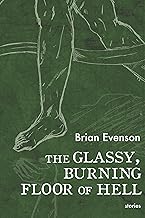
My own search for our animal natures got me to try out a number of new climate fictions, but I found I bounced off most of them, especially the speculative ones that evade hard looks at the coming century in favor of utopian far futures and fantastical recent pasts populated with magical beings. I found some more interesting new eco-fictions that were categorized as horror, like the excellent stories collected in Brian Evenson’s Glassy, Burning Floor of Hell. But most of my fiction reading this year was focused on novels about our relationship with nature that are not often presented as such.

On my springtime runs I listened to Daniel Defoe’s Robinson Crusoe (as narrated by Simon Vance), a book I had only ever experienced through juvenile abridgments or televisual adaptations, and found myself fascinated with its depiction of the state of nature, its ur-conception of the property-owning white Anglo-Saxon male’s view from nowhere and self-absorbed reinvention of the rule of capture, and its subtextual revelation that there is no such thing as a deserted island (or an empty lot).


As autumn blew in, I started John Steinbeck’s climate refugee novel The Grapes of Wrath, and found myself surprised by its frank sexuality and reminded once again that works that tell the story of the 1930s are usually the most economically radical in the American canon, providing anyone prone to alternate history counterfactuals with a window into how differently things could have played out.

Over the summer I finally tackled Herman Melville’s Moby-Dick, a book I had started once in my 20s only to get distracted before they even got on the Pequod. Its wonderful and under-acknowledged queerness was the one thing I did remember from my first attempt. Reading the whole thing after managing to have written a few novels myself, I was astonished at how stylistically crazy it is, veering from faux-Shakespearian riffs to lengthy technical manuals. It’s the latter that makes it such a singularly American novel to me—it even brought to mind the early books of Tom Clancy, which similarly built long-form fiction around lengthy descriptions of men and their tools, especially their big ships roaming the open seas (something also true of much American science fiction). But where Clancy has a fascistic proclivity for uniformed military hierarchy, Moby-Dick is a business novel, as we learn when the owners negotiate shares with each new crew member, and Ahab nails that doubloon to the mast. More than anything, as the long middle of the book shows us the strange business they are in, harvesting the flesh of marine leviathans to provide fuel to light human habitats, one is reminded of the truth that all business enterprise is rooted in extractive dominion over nature.


I got to Melville’s epilogue with the devious-cruising Rachel right after I had finished Rachel Kushner’s wonderful new nonfiction collection, The Hard Crowd. I was biased in favor of the book, which includes a revised edition of a piece she originally read at the memorial for my brother, the painter Alex Brown. But I really loved all the pieces, which couple creative memoir with the incisive critical eye of a great essayist. Kushner has become best known as a novelist, but I think it’s in her nonfiction that the power of her voice is most evident, the way she couples literary truth-telling and real feeling with an emotional toughness and political edge that reminds me of Joan Didion at the height of her powers—a connection amplified by their shared trajectories as daughters of California who began their careers as journalists in New York.

Another nonfiction work I have been enjoying this year is Amanda Sewell’s biography of Wendy Carlos. And as the year ends. I am diving into David Graeber and David Wengrow’s The Dawn of Everything, which I hope will provide fresh perspectives on what alternatives early human societies can show us to the Anthropocene civilization we have inherited.

Among the science fictions that I dug this year was Accelerate, the debut novel of Brendan C. Byrne, a pulp fiction for smart people that couples the energy of vintage cyberpunk and road trip movies with sharp criticism of techno-capitalist culture. And I found myself re-reading Eleanor Arnason’s amazing "Mammoths of the Great Plains," the title piece in her collection that’s part of the consistently excellent Outspoken Authors series edited by Terry Bisson for PM Press. I just pre-ordered two of the newest volumes in that series from two other favorite SF writers: Eileen Gunn’s Night Shift and Vandana Singh’s Utopias of the Third Kind.


I did make it to one movie in an actual theater this summer, in that brief window between vaccines and Delta, which was a blast, even though it was a Boss Baby sequel chosen by our two-year-old daughter, who also mostly dictates what is played on the television we finally introduced into our home to help us endure pandemic with a toddler. We worked hard to find alternatives to Disney princesses,and discovered some good ones, notably Albert Lamorisse’s The Red Balloon. After bedtime, my wife and I binged 80s and 90s pop, I watched a few stupid superhero movies, and I enjoyed most of Peter Jackson’s digitally enhanced work sessions with the Fab Four. But the best TV I found was trawling nerdy corners of YouTube, like Anthony Wilks’ documentary about Hobsbawm from LRB, The Consolations of History, which shows how personal history can yield radical insight into how history works. That union of the personal and the political also charged the best bit of TV I found this year: Hannah Arendt’s 1964 interview with Gunter Gaus on the German television program Zur Person. The combination of the high-contrast black and white, the thick clouds of cigarette smoke from both interviewer and subject, and the heady German-language conversation give the talking heads an arty expressionist edge. But it is the things they say that really grip you, especially when Arendt talks about the exact moment when she knew where things were going as the Nazis took power. Useful viewing for anyone trying to get a better bead on the trajectory of our own dark century, and even more powerful after reading Jenny Turner’s review at LRB of Samantha Rose Hill’s new biography of Arendt and learning of the intense misogyny she endured from her contemporaries like Isaiah Berlin and Walter Laqueur as she built her career.

Right before Thanksgiving I got an email (also from the LRB) that asked the same question that had been driving much of my reading for the year: Where are the ecoterrorists? I clicked through to find Adam Tooze’s “Ecological Leninism,” an essay that considers the radical writings of climate activist Andreas Malm and “the bridge between our reality and that of the revolutionaries of a century ago.” It’s a fascinating and important perspective, even if, as Tooze notes, it can just as easily be accused of “cosplaying revolution while the planet burns.” But as I walked past the fresh tags announcing the October death of Chairman Gonzalo, and saw “RevComs” starting to populate my Instagram feed, I got to wondering what unevenly distributed futures this pandemic has incubated. Ideologies of peasant revolution aren’t a bad fit for a world ruled by technobarons like Elon Musk, who is building his new robot car and space colonization outposts in this neighborhood of what he probably doesn’t know used to be plantations. 


Christopher Brown is the Philip K. Dick, World Fantasy and Campbell-nominated author of Tropic of Kansas, Rule of Capture, and Failed State, and of the weekly urban nature newsletter Field Notes.

Thursday, December 23, 2021

The Pleasures of Reading, Viewing, and Listening in 2021, part 21: Kristi Carter


2021 Pleasures
by Kristi Carter


I know I'm not alone when I say 2021 wasn't as much of an improvement on the previous year as we'd all hoped. Still living in the surreal confines of a pandemic era in a very red state in the Midwest is no easy task for anyone. That said, it's good to be invited to dwell on the positive from this last year. 


Because I'm employed as an adjunct, much of my reading and viewing is concurrent with what I assign students. This year we enjoyed analyzing the social implications and rhetorical choices of the incredibly entertaining Wild Wild Country documentary on Netflix. The series follows a community, perhaps cult, of people in Oregon during the 1980s and the way they clash with the sleepy town of conservatives nearby. Some of my students joked about taking a field trip to the now repurposed site of the commune or dressing up as sannyasins for Halloween. In a mandated English course, it was a pretty impressive level of engagement.

We also read Kiley Reid's Such a Fun Age, a novel that focuses on the shortsightedness of white allies whose investment is more rooted in their own white fragility than genuine investment. Though the novel is set in 2015, the events and implications feel effervescently current with the events of the last two years.

Aside from teaching, my partner and I made time to watch the new Netflix series Post Mortem: No One Dies in Skarnes. This is a speculative series set in current day Norway revolving around a woman, Live, and her family who owns their small town's funeral home. It's hard to get into this without too many spoilers, but what I will say is the writing never dwells too much on terminology and categorization, but more on how the characters' lives have been impacted by the supernatural. Exchanging rigid rules about what makes someone a certain kind of monster for family lore was refreshing, to say the least; also, its dark humor is well-landed in every episode.

The most disturbing film I watched this year was Things Heard & Seen (starring Amanda Seyfried), based on the novel All Things Cease to Appear by Elizabeth Brundage. There are supernatural elements in this film, but as it progresses we come to understand that like any good ghost story, it's the living who are the real villains. Perhaps because so much of my life has been in academia, the events following the male lead and his narcissistic terrorism hit close to home. I keep thinking about the events and imagery of this film months after finishing it. 


In reading, I've been enjoying a lot of nonfiction lately. I'm currently making my way through Nancy Marie Brown's The Real Valkyrie: The Hidden History of Viking Warrior Women in which she interrogates and dissects the sexist codification of viking lore to prove the presence of female warriors was more commonplace and respected than most of us understand in our mainstream perception of vikings.

I also loved Undress me in the Temple of Heaven by Susan Jane Gilman. This memoir revolves around two recent college grads who visit China shortly after the cold war cessation on travel is lifted. The memoir investigates American privilege and nationalism, but also the way that the two young women relate to one another under high levels of stress in the face of the unknown. Gilman's writing is sensitive without being overly expository, which can be hard to find in nonfiction.

We're big Kelly Link fans in our house and this summer I was able to finish her collection Pretty Monsters. Like most of her work, there's a balance of magical realism and postmodern deadpan humor that runs through the stories.

The last two works I read this year worth noting were two novels: Lorrie Moore's A Gate at the Stairs and Nightbitch by Rachel Yoder.


Moore's novel follows a young college student who babysits an adopted child of color for a white family. The book is set in 9/11 era America and pokes at some uncomfortable truths about the sidestepping of diversity that attitudes of "tolerance" create. Much like Reid's Such a Fun Age, the author refuses to give us easy answers and the characters are highly developed.

Last but not least, Nightbitch by Yoder has a special place in my heart because it was gifted to me by a friend, but also because, much like my books have been described, it is a difficult text by a woman about being a woman, specifically a mother. Much like Things Heard & Seen, the unnamed protagonist called "the mother" quarrels with the shortsightedness of systems in the humanities, though she's far from being a monster like the father in that film. Instead, the mother has to decide not just how sexism in child-rearing and economics impact her, but eventually, how she can defy them through her art and her life. This is all to say, the novel has an inspiring end, but the reader can't get there without enduring the intense --rightfully so--emotional work of the rest of the novel.


Kristi Carter is the author of Aria Viscera (April Gloaming), Red and Vast (dancing girl press), Daughter Shaman Sings Blood Anthem (Porkbelly Press) and Cosmovore (Aqueduct Press). Her poems have appeared in publications including So to Speak, poemmemoirstory, CALYX, Hawaii Review, and Nimrod. Her work examines the intersection of gender and intergenerational trauma in 20th Century poetics. With James L. Brunton she edited Transnarratives: Scholarly and Creative Works on Transgender Experience, published in 2021 by Canadian Scholars Press.   


The Pleasures of Reading, Viewing, and Listening in 2021, part 20: Ritch Calvin


Pleasures of Reading, 2021
by Ritch Calvin


When I was young, I was told to find something that I like to do and pursue that as a career goal. Well, I liked to read. A lot. My mother was a librarian, and with her help, I was able to read far more than contained in our local library. And so, I thought, this could be a career: I could teach literature. But the fact is, I get to do very little pleasure-reading now. Most of what I read is for class and for grading. However, some of what I read is for research and for writing. And then, I do get to read for pleasure.

This year, I’ve had two major projects, both of which entailed a great deal of reading.

The first major project that I have undertaken is a study of the work of C. J. Cherryh. I have been reading Cherryh’s work since the late 1970s. I know, a while. However, when I decided to undertake a comprehensive examination of Cherryh’s work, it was no small task. After all, she has published (depending on how you count them) 83 novels and 82 short stories. A daunting task, to say the least.

So far this year, I have been focused on the novels set in the Company Wars series and the Unionside series (Alliance-Union and Hinder Stars are up next). That is to say, the novels set nearest to Earth, in the expansion outward from Earth. These series include Downbelow Station, Merchanter’s Luck, Cyteen, and Forty Thousand in Gehenna.


And while I had read each and every one of these books as they came out, reading them for pleasure and reading them for analysis are different processes and experiences. Not to say that someone reading for pleasure cannot and does not also engage in analysis. But for me, the experience was different when I was looking for themes, looking for connections, and looking for contemporary issues.

Many, many years ago, I wrote my Master’s Thesis on, in part, a story by the Argentinian writer Jorge Luis Borges. In “Pierre Menard, Author of Don Quixote,” Borges makes the point that writing and reading are complex processes, ones that go beyond the marks on the page. Reading the Quixote in the 21st Century is a different experience—and produces different meaning—than reading it in 17th Century.

I found the same to be true of reading these novels by Cherryh. When I read them in the 1980s, I was a different person, and I was reading them in different political, cultural, and economic times. Similarly, and more to Borges’s point, Cherryh was writing them at a particular moment in history, and if, say, Downbelow Station (1981) were written today (2021), it would be a different text.

I still enjoy reading Cherryh’s work. I still enjoy (many) of the characters. And I understand why Downbelow Station and Cyteen were such popular books and so successful. Cherryh was, on the one hand, pushing the boundaries of classic-era SF. For one, her cast of characters looked different with women in prominent roles and some ethnic diversity. For another, the characters and plots were not simplistic good and evil. Signy Mallory and Ariane Emory, as two examples, are complex characters. In addition to that, it seems to me that the social and economic politics in the novels fitted well with the time in which they were written. Reading them in 2021, for me, was different from what it was in the 1980s. I am still quite pleased to revisit them, though.

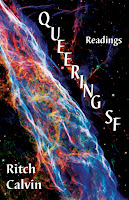
For the second project, I scheduled and taught a class in Queer Science Fiction. I made several decisions about content. For one, I would include just a few of the classic queer texts. I want students to know that the queer SF of today does not come out of the blue, and I want them to know that there is a history here.

To select a few classic queer texts, I read through some of the early queer anthologies, beginning with Worlds Apart: An Anthology of Lesbian and Gay Science Fiction, edited by Camila Decarnin, Eric Garber, and Lyn Paleo (1986). This early collection contains works by Delany, Tiptree, Bradley, Varley, and Russ. Bending the Landscape: Science Fiction, edited by Nicola Griffith and Stephen Pagel (1998). This anthology contains pieces by a number of writers familiar to Aqueduct, including Timmi Duchamp, Rebecca Ore, Élisabeth Vonarburg, and Ellen Klages. Richard LabontĂ© and Lawrence Schimel’s The Future Is Queer (2006) contains works by Duchamp, Candas Jane Dorsey, Neil Gaiman, and Hiromi Goto. Finally, for researching the early queer works, I read Time Well Bent: Queer Alternative Histories, edited by Connie Wilkins (2009). This anthology features a number of writers who would become active in the field, including Steve Berman, Adele Gardiner, and Catherine Lundoff. One of the fascinating and compelling things about re-reading these stories is to see what we understood as queer SF, to see what pushed at the boundaries of genre fiction. In addition, the Wilkins anthology marked a sort of liminal text. It features a new set a writers and a new press. Lethe Press would become a major player in publishing queer SF (and fantasy and horror).


However, the second decision was that I wanted the bulk of the course to be contemporary queer SF, by which I meant post-2010. To that end, I read through many of the excellent post-2010 anthologies—and there are (relatively speaking) a LOT of them. Lethe Press began the anthology series, Heiresses of Russ in 2011, with different editor each year (to be fair, they are not billed as “queer” but as “lesbian”). The first volume contains stories by none other than Tanith Lee, Ellen Kushner, Jewelle Gomez, and N. K. Jemisin. While the final volume (2016) contains a piece by Melissa Scott, the remainder is made up of pieces by newcomers, by many of the figures who would be instrumental in developing queer science fiction, including Benjanun Sriduangkaew, A. Merc Rustad, Alice Sola Kim, and others.

Lethe Press also published the Transcendent series of anthologies. It ran from 2016-2019, with K. M. Szpara editing the first and Bogi TakĂ¡cs editing the final three. These four books are a treasure trove, a delight. I’m so disappointed that the series seems to have ended (at least, according to the Lethe website, the series has been “retired”). As with the earlier collections, it was fascinating to read these newer anthologies (and many others besides the ones I’ve named here) to see where the field is at this political, social, and cultural moment in time. For one, the sheer number of queer SF stories is remarkable. For another, the breadth of representation has expanded. Authors and characters embody (and sometimes are not bodied) a wider range of personal, ethnic, racial, gender, ability, and sexual identities. Even more—and perhaps most—important is to see the ways in which the stories in these collections have pushed the boundaries of SF. The changes are fantastic. I would argue that these stories have fundamentally changed the genre. In the wake of these stories, SF cannot be what it was before. Further, we cannot read, think about, and enjoy SF unchanged by what is in these books.

Sometimes, I’m incredibly lucky and my work compels me to read a lot. Who could ask for more?


Ritch Calvin is an associate professor of Women's, Gender, and Sexuality Studies at SUNY Stony Brook. In 2016, he published Feminist Epistemology and Feminist Science Fiction: Four Modes (Palgrave). He edited Judith Merril's The Merril Theory of Lit'ry Criticism, which Aqueduct published in its Heirloom Book series in 2016. His latest book, Queering SF: Readings, is forthcoming from Aqueduct in 2022.

Wednesday, December 22, 2021

The Pleasures of Reading, Viewing, and Listening in 2021, part 19: Octavia Cade


THE PLEASURE OF READING IN 2021
by Octavia Cade


I’m not sure if “pleasure” is the right word for reading this year. “Necessity,” maybe? Or perhaps “obligation.” Neither of these sounds exciting. As the global experience of pandemic drags on, however, it’s inescapably changing my reading experience. I both want the escapism and lack the concentration for it; I’ve found myself reading less this year, though it could be that the reading itself is taking more effort.

I wonder, though, if the effort is the point. Some books require effort. Not just to understand, if the subject is complex, but to persevere if the subject is revolting. Unquestionably, the finest book I read this year, by a significant margin, was Medical Apartheid: The Dark History of Medical Experimentation on Black Americans from Colonial Times to the Present by Harriet A. Washington. You make think, from the title alone, that the book is grim reading. I assure you it is worse. I flipped through parts of it last year when researching a story of my own and promised myself I’d give it the attention it deserved this year. That attention was sporadic. There were times I literally flinched from the page, and I could only ever stomach a chapter at a time.

Many times I would have been happy to close the pages forever, but some books are too important to let lie.

I read Medical Apartheid with a friend. It was a good decision. Routinely, one of us would finish a chapter and then reach out to the other with incomprehension and disgust, tempered with absolute admiration for Washington. Her writing is amazing. I have slogged through some dreadful science and science history writing in my time, but Washington’s prose is never less than riveting. I have a PhD in science communication and hers is outstanding: a model to follow in communication and ethics both.

It is not, however, escapism. Nor, I think, is my favorite speculative fiction read this year: the recently published Foxhunt by New Zealand writer Rem Wigmore. It’s an argument for predation, even in societies that have developed into what are largely sustainable and compassionate communities. Well. Perhaps “argument” is less accurate than “acknowledgement”: the idea that the predatory instinct exists, and will not cease to exist in human interactions, and the way to navigate such predation is to channel it to productive purpose. It’s a fascinating story, much more gently confronting than my nonfiction read of the year, but it’s no coincidence, I think, that science and medicine, in both books, is the refuge of those who would hurt others, and exploit them for gain.


Is it the experience of pandemic that makes these books speak so strongly to me? The presence of prejudice and politics and science, how they come together in ways that are both beneficial to some and absolutely toxic to others. I don’t think there’s an exact correlation here, and I have no time for anti-vaxxers, so please don’t wander off believing that I think vaccines are giant experiments on the gullible unwitting, because I don’t. I can see, though, I think, how distrust develops, how it is shaped, and how deserved it can be.

And that, perhaps, is worth the effort.


Octavia Cade is a New Zealand writer with a PhD in science communication. She's sold around 60 stories to markets such as Clarkesworld, Asimov's, and F&SF. Her latest book is the climate fiction novella The Impossible Resurrection of Grief from Stelliform Press. She's won four Sir Julius Vogel awards for speculative fiction, and she was the 2020 writer in residence at Massey University. Aqueduct Press published her long poem, Mary Shelley Makes a Monster in 2019.

The Pleasures of Reading, Viewing, and Listening in 2021, part 18: Nisi Shawl


Untold Tales
by Nisi Shawl


After a first round of cataract surgery I’m slightly more capable of reading this year. My eyesight has improved--just marginally. But while waiting for the second round of surgery I still limit my reading to what’s required of me. My pleasures still derive from job-related discoveries: texts found during bouts of editing, teaching, and critiquing. Many of the things I’m going to expound on here won’t be available to you. Yet. Since that’s the case, I’ll do my best to recommend suitable substitutes. 

Alas, some of the most exciting writing I’ve come across this year is a far ways from being published. It’s stuff by my students, or by members of my critique group who haven’t quite made the bigtime. A novel-in-progress by Ben Kassman is the latest example of these mss., a lovely and original fantasy about a corkscrew world ruled by memory-burning magic. Ben is thigh-deep in revisions of his 220,000-word opus, currently titled "Spiral." Though they assure me they have lots and lots of work to do on this novel, the excerpts I’ve read are already enchantingly easy on my mind’s ear. Another, less polished example from an earlier class: L.M. Lu’s jolly little account of an eyeball-collecting alien bartender.

In my critique group I’ve been treated to a serial version of Joanne Rixon’s revolutionary anti-Harry Potter novel "The Starfish Banner." It’s awe-instilling! It’s gritty! It’s sweet and loving and hopeful and courageous!


And so far, it’s unsold. Thus, in place of a link to a site where you can buy and read "The Starfish Banner," I offer this link to an extract of “Like We Practiced,” a killer short story of Jo’s published in Aurealis Magazine; and this one to the entirety of “What Lasts,” published on the Vice site; and this one to Jo’s website, where you’ll find more links to more stories and story teasers.

It’s because I write that I had the chance to read these great things. My reputation gets me teaching gigs and critiquing colleagues eager to share approaches to our common problems and to help search for their solutions.


It’s because I edit that I had the chance to read a lot of other great things. This year I’m editing "New Suns 2," the sequel to my 2019 award-winning anthology New Suns. Among the submissions I’ve received for that, “Goodnight, Gracie” by the formidable Alex H. Jennings, grabbed me by the short hairs of my imagination and would not let go. And my friend K. Tempest Bradford’s story “The Farmer’s Wife and the Faerie Queen” made me laugh so hard I snorted my soup.

Due to budget and space constraints I won’t be publishing every piece I thrilled to, but while we’re waiting for my final selections to appear, here are a few links to alternative works by my very talented potential contributors. Alex has a new novel forthcoming in June: The Ballad of Perilous Graves. Tempest has a novel coming out soon, too--in a couple months. For now you’ll have to settle for her short story “Enmity,” brought to us courtesy of the Internet Wayback Machine and Electric Velocipede magazine.


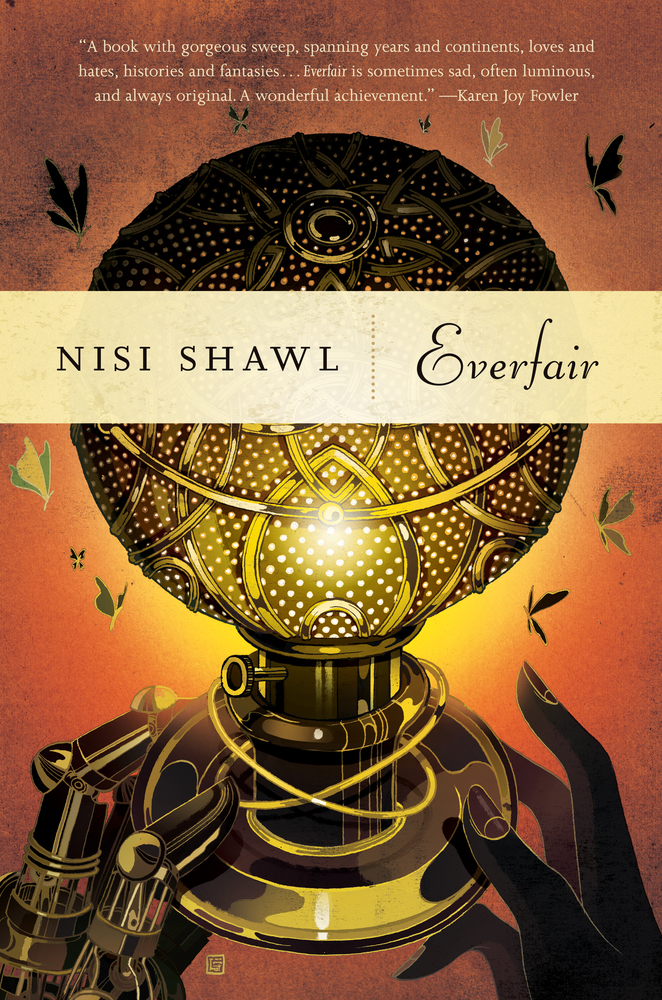
 Nisi Shawl is the Solstice-Award winning author of  Filter House, which won the James Tiptree Jr. Award and was nominated for the World Fantasy Award, Something More and More, her WisCon GoH collection, and, with Cynthia Ward, the co-author of the celebrated Writing the Other: A Practical Approach, and the editor of The WisCon Chronicles, Vol. 5: Writing and Racial Identity, all of which are published by Aqueduct Press. Aqueduct Press has also published Strange Matings: Science Fiction, Feminism, African American Voices, and Octavia E. Butler, which Nisi co-edited with Rebecca Holden. Tor released her brilliant alternate history/steampunk novel, Everfair, in 2016. She was awarded the World Fantasy Award as the editor of the wildly successful New Suns: Original Speculative Fiction by People of Color, which won several awards, including the 2020 Locus Award  the 2020 World Fantasy Award. She is also the editor of the acclaimed anthology, Stories for Chip: A Tribute to Samuel R. Delany and other anthologies.  She reviews science fiction for the Seattle Times and writes columns for Tor.com and The Seattle Review of Books, is a member of the Clarion West board, teaches writing workshops at Centrum in Port Townsend, WA., and is the reviews editor of The Cascadia Subduction Zone.

Tuesday, December 21, 2021

The Pleasures of Reading, Viewing, and Listening in 2021, part 17: Suzy McKee Charnas


2021 Pleasures
by Suzy McKee Charnas 


Reading has been disappointing this year, but still: 

The Weight of Memory by Shawn Smucker — a strange, then stranger story with the dreamy inexplicability of fairy tales from an exotic country, mixed with a sharp eye for grounding detail somewhere in the rural northeast. I started this one evening, finished it at 7 a.m. the next day.

Here’s Alexander McCall Smith with a new series, and he seems to have captured the slow civility + odd side of Nordic mystery (nothing Noir about it) with The Man with the Silver Saab, the third and newest of these stories of a Swedish detective named Ulf Varg (“Wolf Wolf”) with a case to solve and a decision to make about his dog’s nose. 


And art — feed the eyes. Art on the web is FANTASTIC. 

https://www.facebook.com/GrandArtists/photos/a.241068725964997/5662750403796775/

https://www.facebook.com/GrandArtists/photos/a.241068725964997/5788686027869878/

https://www.facebook.com/GrandArtists/photos/a.241068725964997/5921162484622231/ 
So is music — particularly music from films and TV. Some of this work is bloody gorgeous.

https://www.youtube.com/watch?v=lalnGhxT3PQ 
 
https://www.youtube.com/watch?v=WldRNFYUv9U 
This one, above, let me actually hear the music without the bombast of full orchestration -- a bit of Hans Richter’s score for “Interstellar.”
 
 https://www.youtube.com/watch?v=5URpJemLDrI

	And this, if you’re room for one more . . .   Hope the links work!


Suzy McKee CharnasSuzy McKee Charnas is the author of the four-novel Holdfast Chronicles, The Vampire Tapestry, Stagestruck Vampires and Other Phantasms as well as several other books. She's been honored with the Hugo, Nebula, and the Otherwise Awards.  Aqueduct Press published her novel, Dorothea Dreams, as part of its Heirloom Books series, and was pleased to release nine of her titles in e-book editions this fall.

The Pleasures of Reading, Viewing, and Listening in 2021, part 16: Erin K. Wagner


The Pleasures of Reading, Viewing, and Listening in 2021
by Erin K. Wagner


I’m going to start my list this year with some frank honesty. 2020 was tough. There were a lot of challenges. But I was in no way prepared for the difficulty of 2021, which was more personally challenging than the previous year (a privilege I recognize), not least for the flare-up of an anxiety disorder I had previously kept under control. So, much of my reading/viewing in 2021 was therapeutic, whether explicitly so in the form of self-help books and therapist-assigned homework or implicitly so in the form of old and comforting favorites. I would like to encourage you to read what brings you comfort, without obligation to outside pressures, and, please, seek help when you need it. You deserve it.

Here are some texts that brought me comfort in 2021.

Books & Short Stories

--Jemisin, N. K. The City We Became. Orbit, 2021 


I frequently teach the short story (“The City Born Great”) that Jemisin built on for her recent novel The City We Became. While I enjoy the short story and use it to discuss the relation between place and character, the impacts of marginalization, and the need for social justice, I found the novel even more engaging than I expected. The inversion of traditional fantasy tropes contributes to a lively, sinister, and twisty read.

--Le Guin, Ursula K. The Earthsea Cycle. As read in: The Books of Earthsea: The Complete Illustrated Edition. Saga Press, 2018 

On last year’s list, I included the The Tombs of Atuan as I began my read-through of the entire Earthsea cycle (including short stories). After that novel, I paused in my read-through. This year, however, I needed the quiet wisdom of Le Guin’s work—so I picked up the anthology again and finished reading the series. The arc of these books, arguably split into two trilogies, is beautiful and sad and real—in its rejection of the grand hero narrative for the quieter struggles of each and every one of us. 

 --Mantel, Hilary. Wolf Hall Trilogy. Fourth Estate, 2019-2020

Mantel released the last book of her acclaimed Wolf Hall trilogy in 2020, and I received the full trilogy for Christmas that year. I had read the first novel, Wolf Hall, many years before, so I enjoyed revisiting Mantel’s depiction of Henry VIII’s court. There is something about Mantel’s prose that is so gorgeous, precise, and poetic, lingering on the edge of sadness, that makes it worthwhile to read the books to just bask in the language alone. This trilogy fleshes out the skeleton of the history books and allows us to navigate the conflicted lives of people caught in a struggle for power, women and men alike, that seems fated for tragedy.

--Pratchett, Terry. Discworld. Harper Collins, 1983-2015.

I have long heard my friends and partner rave about Pratchett’s Discworld series, but until this year the only work I’d read of Pratchett’s was the co-written Good Omens. However, I needed something simultaneously light, humorous, and significant to read at bedtime, and Discworld seemed the ticket. It has not disappointed. Though, in its beginning, the novels seem more preoccupied with lampooning fantasy tropes alone, as they progress, character and plots lines are more fully developed and there are many wry comments on the inequities of society. I have just finished Hogfather in honor of the season.

--Roanhorse, Rebecca. Black Sun. Saga Press, 2020.

I bought Roanhorse’s newest novel a while ago but had been saving it as a treat. So I finally read it over summer and fall of this year. Though I think I might slightly prefer the urban fantasy-adjacent The Sixth World series, this novel presents a fresh take on the epic fantasy, an homage and a commentary on the tradition all in one. I particularly enjoyed the story-line of the ousted priestess Naranpa, and Roanhorse is excellent at painting scenes that engage all five senses in her carefully crafted world.

--Sen, Nibedita. “Ten Excerpts from an Annotated Bibliography on the Cannibal Women of Ratnabar Island.” Nightmare, May 2019 I read this story a few years back (see my review on my website) but first thought to teach it this fall. Upon rereading it for that purpose, I was reminded of how much I love it. Relatively brief, the story packs a punch, playing with style, plot, and character in intriguing ways. Reminiscent in tone of the Australian Picnic at Hanging Rock, this story in the form of annotated bibliography expertly skewers academic bias and shortcomings of white feminism while giving voice to those previously deprived of it.

--Tolkien, J. R. R. The Lord of the Rings. Ballantine Books, 1965

I will fully acknowledge that LOTR has problems—in its slim representation of women, in its implicit xenophobia. But when first introduced to it as a child, it was the world to me. It ushered me into a realm of speculative fiction that has since guided my own writing career. And my first copies are like a well-worn blankie, frayed, patched together, and familiar. I reread these in a particularly traumatizing month—since I realized I had watched the movies much more recently than I had fully reread the books—and not only did they provide the comfort of old friends, but the struggle of Frodo and Sam on Mount Doom became vividly relatable.

TV & Movies

--Villeneuve, Denis, dir. Dune. Warner Bros, 2021

As I mentioned in my list last year, I was looking forward to this movie—while also aware of its potential shortcomings and the problems of the source text. One of my favorite directors, Villeneuve did not disappoint in delivering an epic narrative, comprehensive to those unfamiliar to the world, crowded—and yet expansive—in its shots of landscape. Subtle changes gently criticize the white savior/masculine narrative of Herbert’s original book (though some might argue not enough).

--Cretton, Destin Daniel, dir. Shang Chi. Disney, 2021


A very fun movie. Awkwafina is always a joy to watch, and Ben Kingsley brings the right touch of humor to his role. I was familiar with Simu Liu from his previous Canadian sitcom, Kim’s Convenience, and enjoyed watching him kick ass in this film. I also found the fight choreography more satisfying than in most Marvel movies.

--Fukunaga, Cary Joji, dir. No Time to Die. Universal Pictures, 2021

I am a sucker for Daniel Craig’s Bond films (and have watched the entire Bond franchise), though I wholeheartedly agree with criticisms regarding representation of gender and race in the series. Watching the new film, via at-home rental, was a fun break from the normal grind, and I was pleased to see that this film both heavily nodded to classic Bond tropes while also acknowledging their shortcomings, thinking more seriously about the impact on women’s lives and their equivalent abilities. The end was also truly unexpected, and I think was a very wise choice on the part of the creative team.

--Hawke, Ethan, writer. The Good Lord Bird. Showtime, 2020

My partner is a big fan of Ethan Hawke, and I was excited to watch a series about John Brown. That said, this series more than met our expectations. It exceeded them by leaps and bounds. With nuanced dialogue and storytelling, with exemplary performances by Hawke and newcomer Joshua Caleb Johnson, this show explored the life of a radical abolitionist through the eyes of a young man and runaway slave. As such, it pushes for radicalism in social change and critiques the shortcomings in white allyship at the same time. 


 --Wheel of Time. Amazon, 2021-

Like many of you, I’m sure, I read the Wheel of Time series as a teenager. It was not my favorite series; I found many parts of it to be too imitative of LOTR, other parts of it indulgent of male fantasies. Nonetheless, I get excited about new speculative TV, and I have found the first episodes of the new Wheel of Time series to be fun and engaging. The show attempts to correct some of the sexism of the original series and foregrounds more nuanced representation of major female characters like Egwene and Nynaeve.

--Roddenberry, Gene, prod. Star Trek: The Next Generation. Paramount, 1987-1994

I think most can agree that if comfort sci-fi shows exist, Star Trek: The Next Generation is one of them. Having only watched episodes here and there in the past, I’ve settled down to slowly watch the entire series, from beginning to end, even as I keep up with new episodes of Discovery. The show is, in many ways, silly, especially when the holodeck is involved. But it can also be surprisingly moving. Though I have long expressed a dislike for Deanna Troi, whose main character trait I thought to be femininely emotional, and Riker, who I thought to be sex-crazed, I must admit upon this re-watching that there are elements to them I neglected before, especially with Deanna. Through her, the show prioritizes mental health and the impact of trauma in a way few other sci-fi shows have. 

Looking Forward to Reading or Viewing

--Corey, James S. A. The Expanse. Orbit, 2011-2021
--The Expanse. Syfy; Amazon, 2015-2022

As the last season of the Expanse tv series gets ready to drop, I am beginning the new novel in hopes of finishing it before watching the series finale. I applaud the way that the show has forefronted the women characters. The performances of Dominique Tipper (Naomi) and Cara Gee (Drummer) in the fifth season were spectacular and under-recognized, as was that of Shohreh Aghdashloo (Avasarala). I look forward to seeing what they will do in this last season as the show attempts to tie things off much earlier than the novel series. I am also excited to see how authors James S. A. Corey will wrap up their investigation of how the human engages with the inhuman against the vast backdrop of space. I think the strengths of both forms of this series is their attention to exactly that—humanity and how it evolves. 


 Erin K. Wagner grew up in southeast Ohio on the border of Appalachia, but now lives in central New York, where she hikes in the Catskills and listens for ghostly games of nine-pins. She holds her Ph.D. in medieval literature and teaches literature and writing in the SUNY system. Her stories have appeared in a variety of publications, from Apex to Clarkesworld, and her novella The Green and Growing is available from Aqueduct Press. Her second novella, An Unnatural Life, was released by Tor.com in September 2020. You can visit her website at https://erinkwagner.com/.