Tuesday, December 19, 2023

The Pleasures of Reading, Viewing, and Listening in 2023, pt. 10: Erin K. Wagner


The Pleasures of Reading, Viewing, and Listening in 2023
by Erin K. Wagner


In what has become a holiday movie, through unknown manipulations of nostalgia and music, Julie Andrews (or Maria), as optimistic au pair, assures her charges (and us) that recalling our favorite things will help ward us against the dog bites and bee stings of the world. In light of this, I provide a list of the favorite media I consumed this year.


(I realize there is a theme here—of posthuman structural analyses—sharpened by my pedagogical emphases this year.)


Books & Shorts

 Between editing my own work and reading for lessons, I did not read as many books as I had hoped this year. That said, here are some that I really enjoyed—or that provided blueprints for the future. 

LaValle, Victor. “Ark of Light” in Lightspeed (2020).

I taught this for the first time in my class this semester. A very short story, with relatively anonymous characters, the narrative touches on immigration and marginalization. It forefronts, however, unquenched hope and faith for a better future. 


Le Guin, Ursula K. The Dispossessed. Harper & Row, 1974.

I am conflicted about this book. There is a depiction of sexual assault (tw) that the book does not seem to fully grapple with. But the assault is of a piece with the book’s overall warning: that to possess items or people leaves yourself possessed, not free to pursue a society of true equity. A fascinating inquiry into nonauthoritarian socialism that reads almost like a treatise for the future. Like much of Le Guin’s work, it is truly haunting. 
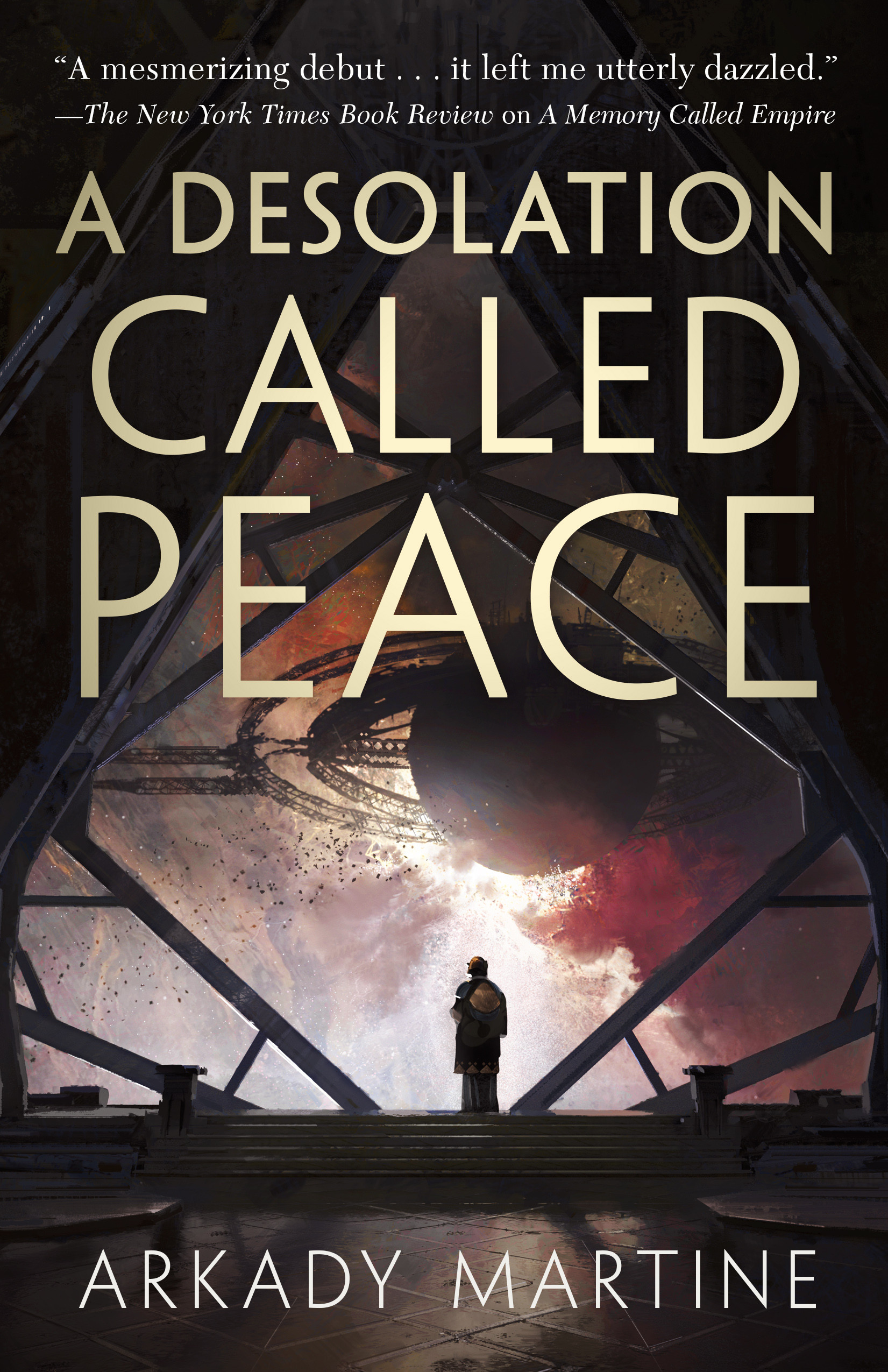


Martine, Arkady. A Desolation Called Peace. Tor, 2021.

A year of duologies! I finally had a chance to read the sequel to Martine’s fabulous A Memory Called Empire. Though this book was less poignant imho, it was a riveting posthumanist and postcolonialist examination of identity.


Parry, H.G. A Declaration of the Rights of Magicians and A Radical Act of Free Magic. Orbit (2021 & 2022).

A duology that swept me right up into the childhood joy of reading (one more page!). An alternate history of the French Revolution and Napoleonic wars that questions the interplay of power and freedom. With vampires. And spellcasting. 


Pratchett, Terry. Going Postal. Doubleday, 2004.

I have almost finished my first read-through of Pratchett’s Discworld (which I’ve mentioned in previous lists). I just wanted to give a quick shoutout to the delightful adventures, starting with Going Postal, of the entrepreneurial Moist Lipwig. A skewering of modern bureaucracy. 
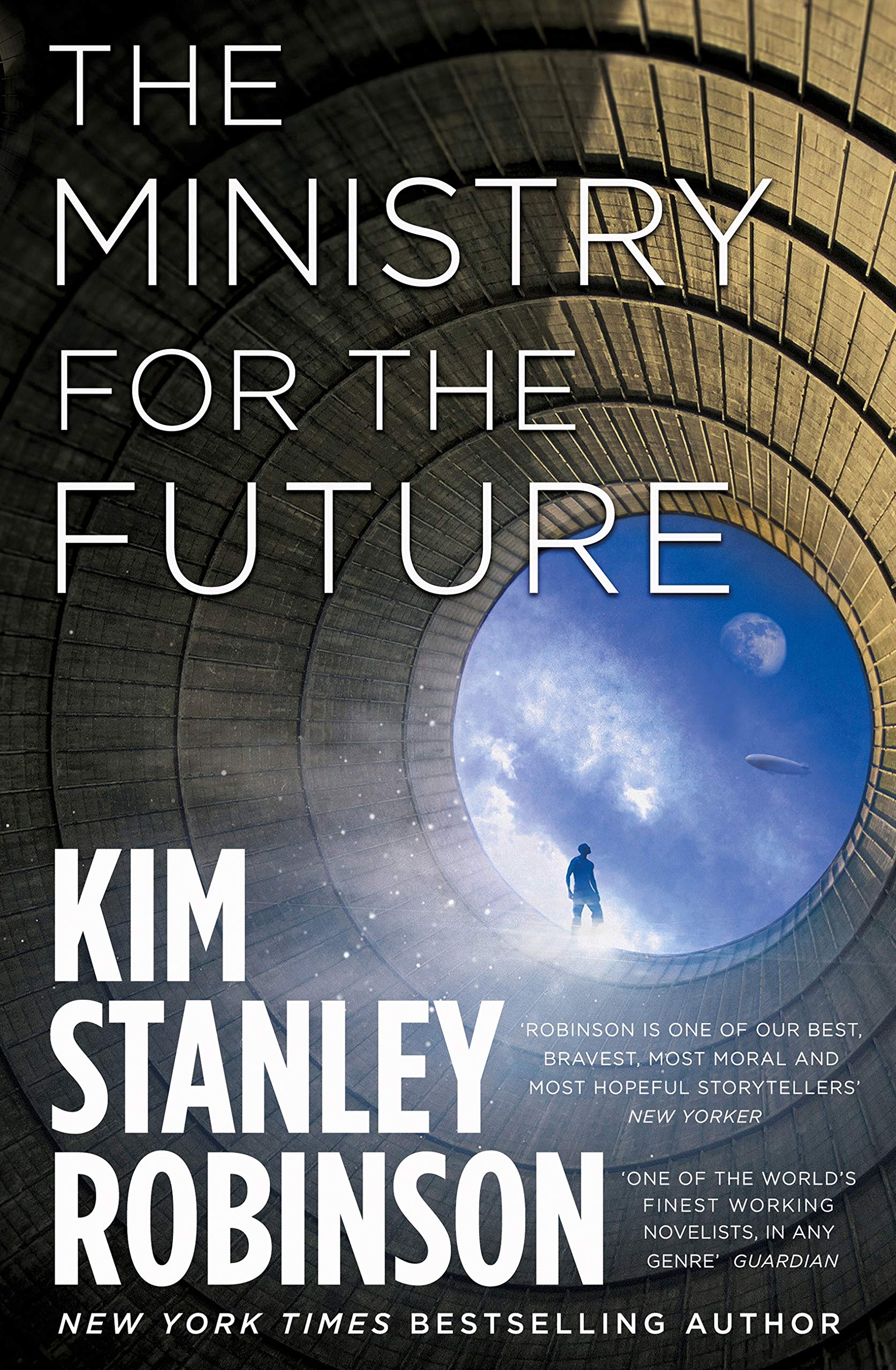


Robinson, Kim Stanley. The Ministry for the Future. Orbit, 2020.

Another treatise. A book of thought experiments, per Le Guin’s description of science fiction, that is intended to jumpstart real and radical change to save our environment. 


Yoachim, Caroline M. “Welcome to the Medical Clinic at the Interplanetary Relays Station | Hours Since the Last Patient Death: 0” in Lightspeed (2016).

A choose-your-own-adventure story that questions the reality of free-will? Why, yes, I don’t mind if I do. Fun and piercing at the same time.


TV & Movies

What can I say? I really like the screen. These are the movies and TV that really stuck with me.


Archer, Jim, dir. Brian and Charles. Focus Features, 2022.

A truly ridiculous premise with a DIY look that gut-punches you in the most lovable way. 


Brest, Martin, dir. Beverly Hills Cop. Paramount, 1984.

I have long thought that cop movies of the 80s dealt in more nuanced ways with intersectional identities than the 90s and 2000s. This movie is one such example.


Coscarelli, Don. Bubba Ho-Tep. Vitagraph Films, 2002. 

This movie is by no means perfect (or feminist). But it gets under your (mummified) skin and delivers a powerful message on how our society handles the concept of aging and the welfare of the aged. 


Dos Santos, Joaquim, Kemp Powers, and Justin K. Thompson, dirs. Spiderman: Across the Spider-verse. Sony, 2023.

I’m not a huge fan of animated movies, so it often takes some arm-twisting to get me to watch one. But even I loved this film. It’s gorgeous—and I hope the studio recognizes the need to value the labor that goes into creations like these. 


Gerwig, Grega, dir. Barbie. Warner Bros., 2023.

I admit it. I fell for it. It really hits you over the head with some of its messaging—but this belies the nuanced analysis running underneath as well. The performances, the look, the songs: perfect for what ails you. 


Gilligan, Vince and Peter Gould. Better Call Saul. AMC, 2015-2022. 

Visually, this series could not be more different from Barbie, especially in the black and white of the final season. But the last season also forefronts the viewpoint and empowerment of Kim, the counterweight to the titular Saul.


Gilroy, Tony, creator. Andor (s1) on Disney + (2022).

I have admired the Star Wars prequel Rogue One as the best of the movies released after the original series. This TV series is a notch even above that. Quiet, dark, and desperate, this series focuses on the real cost and sacrifice of rebellion and the real evil of bureaucratic annihilation. There isn’t much of the force here, but it is a forceful series. 


Goldstein, Jonathan and John Francis Daley, dirs. Dungeons & Dragons: Honor Among Thieves. Paramount, 2023.

I think we’ve already watched this movie four times (?) in order to share it with friends and family. It is fun, fun, fun.


Hernandez, Tara and Damon Lindelof. Mrs. Davis. Peacock, 2023.

This show is really weird. Like, it’s weird and then it gets weirder. But its commentary on the “threat” of AI is extremely relevant and forces us to remember that even stories about AI are really about people.



Johnson, Rian, creator. Poker Face (s1) on Peacock (2023).

Oft compared to Columbo, Poker Face is a feminist take on the detective show with a truly beguiling performance by Natasha Lyonne. It also acknowledges the wider structures that drive us to act. 


Judkins, Rafe, dev. The Wheel of Time (s2) on Amazon Prime (2023). 

With a higher budget and a year’s experience under the actors’ belts, this season of Wheel of Time surpassed the first striking out from the source-text to complicate definitions of good and evil and to center the women’s experiences outside of Rand. 


Kasdan, Jonathan, dev. Willow (s1) on Disney + (2022).

A truly fun extension of the Willow movie that seems to have been cut short. It plays with the gender-inversion of classic fantasy tropes and questions the savior narrative. 


Manzoor, Nida, dir. Polite Society. Focus Features, 2023.

An updated look at the romance conventions encouraged by modern renditions of Austen. Enjoyable fight choreographies and a speculative plot-turn that is truly surprising.  


Mazin, Craig and Neil Druckmann, creators. Last of Us (s1) on HBO (2023).

I’ll admit it. I cried with the rest of America. More than once. And I don’t cry easily. There has been some controversy around the series, but I read the violence of the series as a critique (if the paradox is possible). 


McQuarrie, Christopher. Mission Impossible: Dead Reckoning, Pt. 1. Paramount, 2023.

Often box-office hits, the Mission Impossible franchise is, I think, still underrated in terms of how solid its cinematography and storytelling is. Its presentation of women wavers between savior and saved, but I think the most recent additions have introduced some truly strong characters. The series, as a whole, grapples with the age-old philosophical problem: save the one or the many?


Nolan, Christopher, dir. Oppenheimer. Universal, 2023.

There are valid criticisms of this film. But its harsh send-up of toxic masculinity (intended or not) as the foundation of many truly horrific events in history is still worth watching. 


Polley, Sarah. Women Talking. United Artists, 2022.

A quiet, and quietly disturbing film, that does not need to fully visualize assault in order to critique it (a criticism I often have of films on this topic). This centers on the women and their engagement with a fundamental religious worldview that is far from simple. 
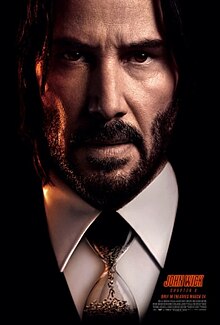


Stahelski, Chad, dir. John Wick: Chapter 4. Lionsgate, 2023.

I’m a sucker for these films. They transcend many action films, I think, not merely in terms of cinematography and choreography, but in their embrace of a speculative underworld that reimagines the violence of our society (and its purpose). 


Wilson, Hugh, creator. WKRP in Cincinnati. CBS, 1978-1982.

I indulge in old sitcoms as a comfort blanket for the mind. Borrowed nostalgia, as it were. This is one that truly seems ahead of its time and grapples with some real issues occasionally (not always perfectly). 


Podcasts

Hobbes, Michael and Peter Shamshiri, hosts. If Books Could Kill.

One of my new favorite podcasts. The hosts take the bestselling self-help tomes and societal commentaries of the last thirty years or so and point out the logical flaws of these too-easy analyses and grifts. With the sharp and unforgiving wit I’ve come to expect from Hobbes and Shamshiri (who is also a host on 5-4, a podcast on the Supreme Court that I’ve added to my regular listening queue).


Erin K. Wagner grew up in southeast Ohio on the border of Appalachia, but now lives in central New York, where she hikes in the Catskills and listens for ghostly games of nine-pins. She holds her Ph.D. in medieval literature and teaches literature and writing in the SUNY system. Her stories have appeared in a variety of publications, from Apex to Clarkesworld, and her novella The Green and Growing is available from Aqueduct Press. Her second novella, An Unnatural Life, was released by Tor.com in September 2020. Aqueduct published her collection of short fiction, When Home, No Need to Cry, in 2022. You can visit her website at https://erinkwagner.com/.

Monday, December 18, 2023

The Pleasures of Reading, Viewing, and Listening in 2023, pt. 9: Nisi Shawl


Backwards and Forwards: A Couple of Hopes
by Nisi Shawl


My fond affection for the music of my yesteryears remains untarnished by age. Steely Dan, Magazine, Prince--all still reign unchallenged in my aural heart.  And lately I’ve (re)turned to the tight, sweet stylings of The Pointer Sisters.  Their big charting hit was “Yes We Can Can,” which encapsulates for me a lost spring of optimism I drank from carelessly in my youth.  But the song that brought me back to their playlist this time was “Old Songs,” a tune all about nostalgia.  It’s the fifth track on their first, self-titled album, an ambitious enterprise encapsulating decades of soul-stirring melodies in just a few lines.  Longing for the times gone by has always been in fashion, even way back then, back in the 1970s.  There have always been past greatnesses to mourn, to praise, to anthemize and grow lyrical over.

 I hope there always will be.


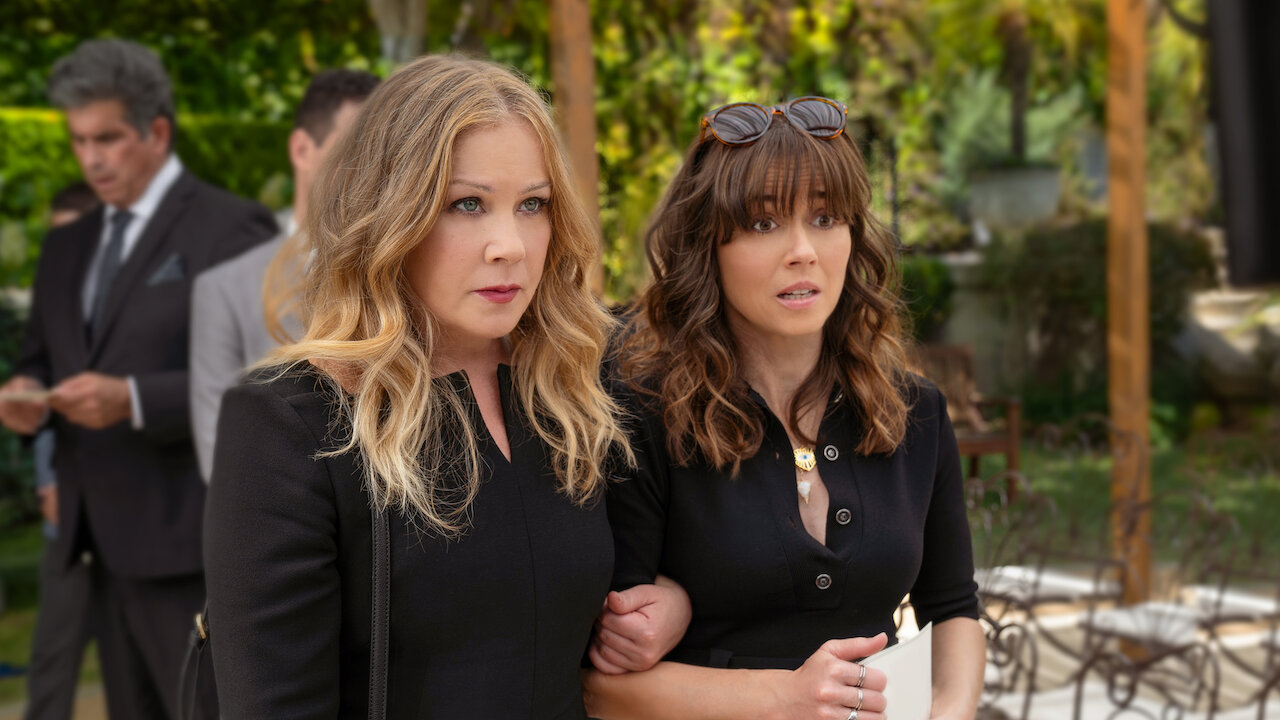
 My leisure activity continues to take the form of watching films and series, same as last year.  In addition to the practically indistinguishable stream of exploding heads and grifters I prefer to decompress with, I’ve consumed a couple of tamer storylines.  Of these, my favorite is Dead to Me, a “black comedy” starring Linda Cardellini and Christina Applegate


The friendship Cardellini’s character foists on the grieving widow played by Applegate is built on lies: she’s pretending to suffer a comparable loss, though actually she’s the hit-and-run driver responsible for the death of Applegate’s husband.  Nevertheless, the friendship proves itself truer than death and more reliable than life.  There are three seasons.  The third was delayed and somewhat rewritten due to Applegate’s sudden Multiple Sclerosis diagnosis.  Poignant and funny and scary and smart.  Can’t wait to watch it again--preferably in the company of someone as ride-or-die for me as these two are for each other.


I continue to reserve much of my reading energy for work assignments.  These break down into (A) books I’ve been invited to blurb and (B) texts by students/potential students.  

For full reportage on the blurb-ables, you’ll want to check the finished books.  They are: 

E. Lily Yu’s collection Jewel Box (October 24, 2023, Erewhon Books); 


These Fragile Graces, This Fugitive Heart, Izzy Wasserstein’s debut novel (March 12, 2024, Tachyon Publications); and

Rob Cameron’s middle grade fantasy Daydreamer (August 2024, Penguin Random House).  

Here I’ll restrict myself from saying much other than that the most thrilling surprise of these turns out to be Wasserstein’s post-apocalyptic, neo-Noirish Graces--mostly because I have yet to finish the Cameron ms., and because I knew of Yu’s prowess in advance.  Following Wasserstein’s Dora Madsen through Kansas City’s pot-holed, climate-catastrophized streets is more exciting than I or any other reader have the right to expect.  I recommend grabbing it up as soon as you possibly can.


Because Hugo House is “re-evaluating” their relationship to me as a teacher, my students and potential students for the past few months have come to me from Seattle’s Jack Straw program.  As of this writing, I’ve just finished winnowing this year’s 76 applicants down to a selection of 12 participants and two alternates.  I read scads of mss.!  Jack Straw emphasizes training students to give audio presentations--in person, online, broadcast, podcast--and has no restrictions concerning genre or form, so I spent a lot of time outside the comfort of my speculative-fiction wheelhouse.  Memoir.  Poetry.  Plays.  More memoir.  More poetry.


Two draft excerpts really got me going.  The first was from a hybrid form focused on links between a specific type of Filipinx monster, the shape-shifting manananggal, and negative takes on the feminine.  The second was from an historical novel about the founding of a colony of anarchists in Western Washington in 1902.  Yes, radical thinkers existed way back then!  They led interesting lives!  We can visualize them!  We can understand their dreams--we can empathize!


At least, I hope we can.


Nisi Shawl (they/them) is the multiple award-winning author, co-author, and editor of over a dozen books of speculative fiction and related nonfiction, including the standard text on diverse representation in literature, the Aqueduct Conversation Piece volume Writing the Other; the Nebula Award finalist novel Everfair; the first two volumes of the New Suns anthology series; and the Aqueduct Press story collection Filter House (co-winner of the 2009 Otherwise Award). They’ve spoken at Duke University, Spelman College, Stanford University, Sarah Lawrence College, and at many other learning institutions.  Recent titles include a new horror-adjacent Aqueduct Press collection, Our Fruiting Bodies; and the Middle Grade historical fantasy novel Speculation (published by Lee & Low in February 2023).  January will see the publication of Kinning, their sequel to Everfair. An excerpt is available on the Tor/Forge blog.
“Sun River,” a short story sequel, has been published by Tor.com.


The Pleasures of Reading, Viewing, and Listening in 2023, pt. 8: Lisa Tuttle


Pleasures of Reading, 2023
By Lisa Tuttle


So far this year I’ve read 93 books – already breaking my own record.   

Most of what I’ve read has been to review for my monthly SF, fantasy and horror roundup for The Guardian.  I often start books that I don’t finish because life’s too short; but because my permitted word-length for the roundups is even shorter, it means that not everything I read and enjoy can make the cut.  Ever since I started this gig, I have been meaning to write something about the ones-that-didn’t-make-it to post on the blog I have never got around to writing, on the website that does not exist…but that’s not happening.

So this year, in response to Timmi’s invitation,  I decided to write not just one list but three, beginning with the books I read with intent to review that for one reason or another didn’t get included. In no particular order, here are:    

My Top Five, Unreviewed

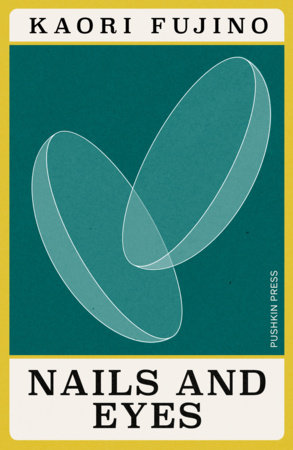
Nails and Eyes by Kaori Fujino, translated by Kendall Heitzman The title novella is a very unsettling psychological horror story involving a stepmother and stepdaughter, neither of whom is a sympathetic character. Along with two shorter ghost stories, the slim volume packs quite a punch.

A House with Good Bones by T. Kingfisher. 

I had been hearing a lot of praise for the odd-but-pseudonymously named author when this turned up in the post, but at first I thought it was not my kind of thing. I can enjoy a cosy mystery, but a cosy horror seemed impossible-- until invisible skeletal fingers started sending chills down my spine, and the narrative voice grew on me: yes, horror can be weird and creepy and alternate chills with the warm cuddlies.  Who knew?  

The Prey by Yrsa Sigurdardottir, translated by Victoria Cribb.  

I had read and enjoyed a couple of crime novels by this Icelandic writer before, and found her approach to a supernatural thriller to be similar in many ways to a detective story, even a police procedural. Well-crafted, it satisfies both as a surprisingly twisty mystery and as a more traditional ghost story.

Caged Ocean Dub by Dare Segun Falowo.  


A highly unusual short story collection by a writer who describes his style as “Nigerian Weird.”  The stories are fabulations that range from horror to surreal fantasy and speculative fiction. I love getting any of the beautifully produced limited editions published by Tartarus Press and wish I could review them more often.   

The Good Unknown by Stephen Volk. 

Another collection I wish I had been able to include in this month’s roundup – or else on this list – but time got away from me (as it does) and so far I have only read the first two short stories. I look forward to reading the rest over the holidays.

Jump Cut by Helen Grant. 

Apart from a few quibbles, I enjoyed this novel about a notorious “lost” film from the early days of Hollywood: finished, but never released. Fans and historians have speculated about it for decades, and suddenly Theda Garrick, a young widow who has been finding it hard to move on with her life, is invited to interview the 104-year-old star, ready at last to tell all – but she also wants something from Theda. Mystery and the occult mingle – it takes awhile to get there, but the creepy scenes are worth the wait.   


My Top Five, Reviewed

These are the books I enjoyed the most of those I did review. (Reviews can be found on The Guardian website.)


Bridge by Lauren Beukes

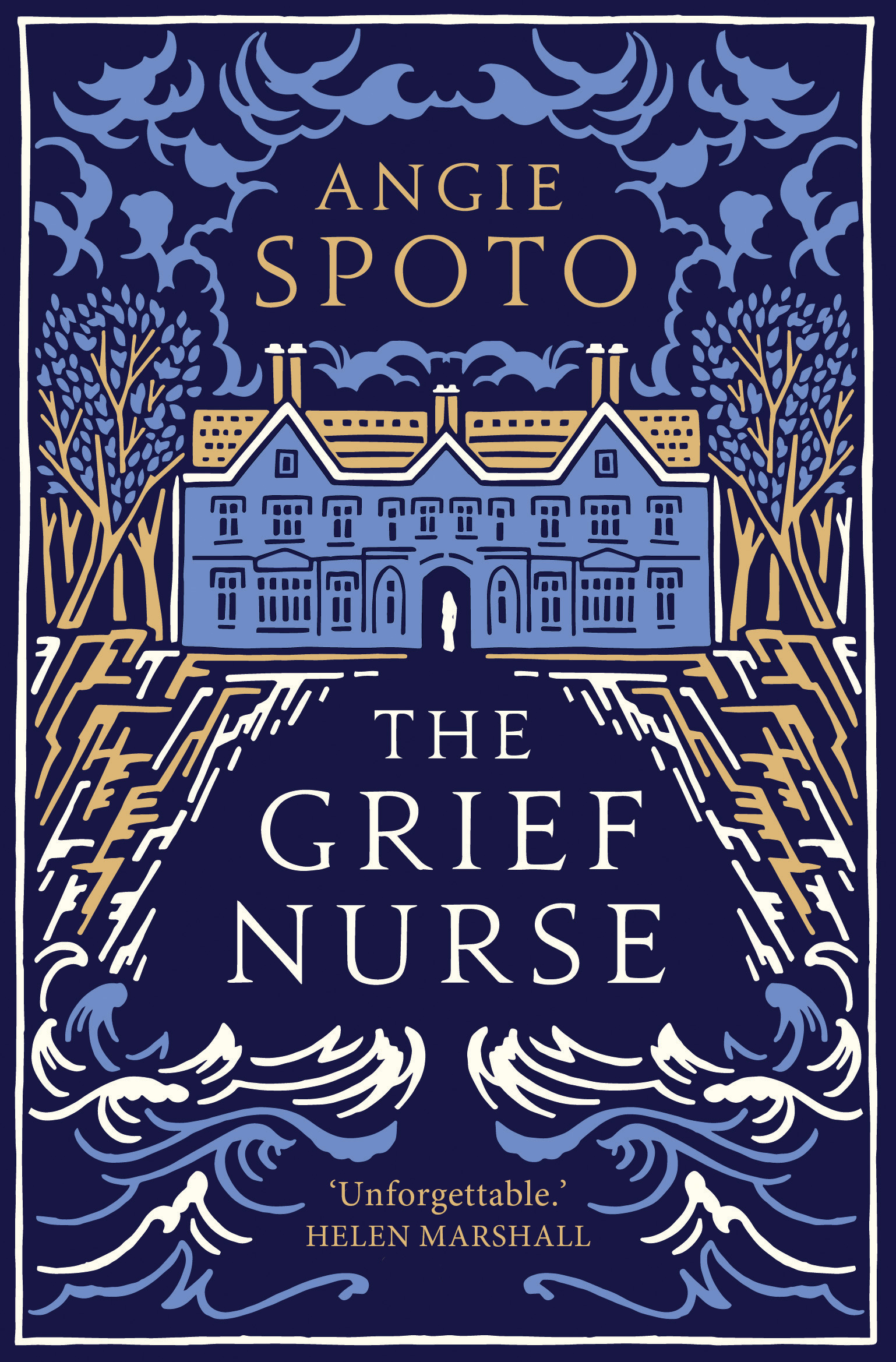
The Grief Nurse by Angie Spoto

Ink Blood Sister Scribe by Emma Torzs

The Scandalous Confessions of Miss Lydia Bennet by Melinda Taub

Looking Glass Sound by Catriona Ward


My Top Three Bought and Read This Year  

A Thread of Violence by Mark O’Connell  

Nonfiction. A different slant on the true crime genre, this is a thoughtful investigation into the question of how and why someone could brutally murder two complete strangers, a question he admits may be unanswerable – but this attempt, focusing on one man who committed crimes that took place when the author was a child, is seriously fascinating.

The Magician by Colm Toibin. 


A novel based on the life of Thomas Mann. It’s as beautifully written as everything else I’ve read by Toibin, and one of the best biographical novels I can recall. Somehow, Mann becomes as real as any fictional character, while remaining as essentially unknowable as any real person.

Yoga by Emmanuel Carrere, translated by John Lambert. 

A memoir and reflection on life that was initially intended as brief, uplifting discussion of yoga and meditation (as he’d practiced it for many years) before the author had a major mental breakdown and was committed to a psychiatric hospital for several months of treatment. I read a review that took exception to the book because, despite the author’s claim to be telling the truth, he left out things about his real life and might even have made some things up….Well, so what?  In my opinion, all memoirs are fabrications to some extent, and this book is well worth reading, full of brilliant details, some beautiful, some trivial, others shocking, and I loved it.


Lisa Tuttle began writing professionally in the 1970s. Although she also writes novels and non-fiction, her preference is for the weird short story. Her most recent collection is The Dead Hours of Night (Valancourt, 2021), but she has three books scheduled for publication in 2023: from Jo Fletcher Books, The Curious Affair of the Missing Mummies, the third in her supernatural mystery series set in London of  the 1890s; from Valancourt, Riding the Nightmare, a new collection of short stories, and, in NYRB’s “Classics” series, her 2004 novella My Death, previously published by Aqueduct Press (number 21 in the Conversations Pieces list).  She lives in a forest on the west coast Scotland. 


Sunday, December 17, 2023

The Pleasures of Reading, Viewing, and Listening in 2023, pt. 7: Gwynne Garfinkle


Reading Pleasures of 2023
by Gwynne Garfinkle


Looking back on this year's reading, I find that I read way less nonfiction than usual. Most of my favorite books this year were fiction, many of them in the horror and thriller genres.

In Silver Nitrate, the latest novel by Silvia Moreno-Garcia, a movie sound editor and her best friend (a former soap star she's always been in love with) must unravel the mystery of a cursed film and the Nazi occultists fixated on it in 1990s Mexico City. I loved all the references to horror movie-making, but my favorite aspect of the novel was the cranky but profound relationship between the two leads.


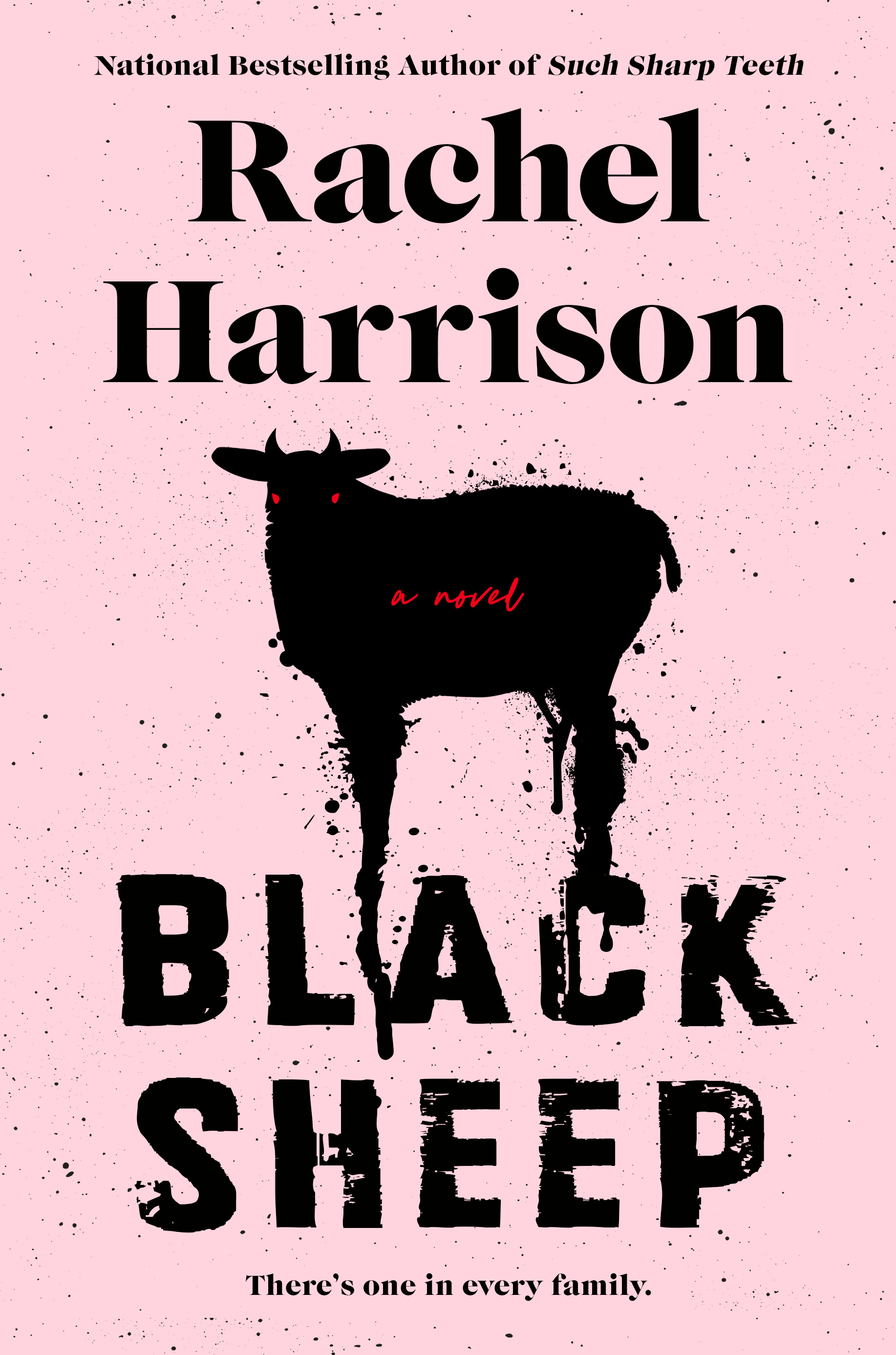
This year I read all of Rachel Harrison's novels. Each one explores female power and violence through a different horror staple: witches (Cackle), werewolves (Such Sharp Teeth), and "coming back wrong" (The Return). Her 2023 release, Black Sheep, is a neat feminist twist on The Omen that may be my favorite to date.

Another horror novel from 2023 that I enjoyed is Chuck Wendig's Black River Orchard, a sprawling but propulsive story about a town beset by evil apples. (While reading it, I found myself eyeing apples with suspicion at the grocery store.)

This year New York Review Books published a new translation by Paul Eprile of Colette's Chéri and The End of Chéri. I read these books long ago in an earlier translation, but this version brings them to life in all their exquisite earthiness.


NYRB also reissued Lisa Tuttle's novella My Death this year, and a wonderful Zoom discussion between Tuttle, Kelly Link, and Amy Gentry prompted me to finally read the Aqueduct edition that I'd bought years ago. I found this story of a widowed writer excavating the life of a neglected woman author and artist so irresistible, I would have loved it even without its uncanny elements and haunting spiral structure. (I also read Tuttle's earlier novel Familiar Spirit, a straight-up horror tale of possession, heartbreak, and sexual desire, reprinted in Valancourt's Paperbacks From Hell series.)

In Meg Elison's thriller Number One Fan--a gender-swapped version of Stephen King's Misery--a famous urban fantasy author is held prisoner by a misogynist fan. The different gender dynamic changes how the story plays out (it's the first time I've read a story about a captive woman in which she gets a raging UTI), as does the fact that it's set in the age of social media and toxic fandom. This book gave me nightmares, but I couldn't stop reading it.

R.F. Kuang's Yellowface is another compulsively readable novel that deals with publishing, plagiarism, and social media. An unsuccessful white writer steals a manuscript by her deceased Chinese-American friend, a young literary star. She claims to have written the novel herself and takes on a "racially ambiguous" persona to fend off accusations of cultural appropriation. This brutal satire is as uncomfortable as it is entertaining.

Delicate Condition by Danielle Valentine is a pregnancy thriller à la Rosemary's Baby about an actress in her late thirties attempting to have a baby by IVF. Although an embryo is successfully implanted, the woman miscarries--or does she? (The novel has been adapted by the American Horror Story TV series, but the AHS version, Delicate, makes changes that--at least up to the point that has aired so far--only point up the novel's more skillful storytelling.)


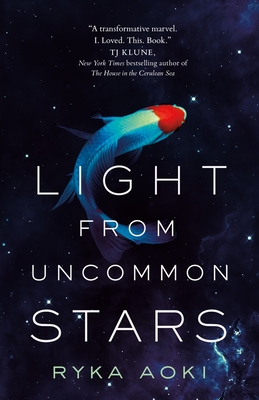
Probably the most joyful book I read all year was Ryka Aoki's Light From Uncommon Stars, a trans coming-of-age story featuring music, space aliens, Faustian bargains, and donuts. As a life-long Angeleno, I particularly enjoyed the novel's San Gabriel Valley setting.
 
My favorite poetry book of 2023 is R.B. Lemberg's Everything Thaws: A poetic cycle. This stunning autobiographical work spans Lemberg's childhood in the Soviet Union through their time in Hungary, Israel, and the United States, as it explores family, Jewish generational trauma, and memory. The thawing Siberian permafrost, a harbinger of climate change, also becomes a metaphor for unburied truths.


Gwynne Garfinkle lives in Los Angeles. She is the author of a novel, Can't Find My Way Home (2022), and a collection of short fiction and poetry, People Change (2018), both available from Aqueduct Press. Her work has appeared in such publications as Strange Horizons, Worlds of Possibility, Fantasy, Uncanny, Escape Pod, Apex, and Not One of Us.


Saturday, December 16, 2023

The Pleasures of Reading, Viewing and Listening in 2023, pt. 6: Deborah Davitt


Reading Pleasure in 2023

by Deborah Davitt


I was genuinely thrilled to be asked to take part in the “Pleasures of Reading” series this year because, as it happens, I started a podcast (Shining Moon: A Speculative Fiction Podcast) devoted to writers and editors this year. As a result, I’ve read a lot of things that have delighted me, and have been privileged to ask questions of their creators. . . or in some cases, to read and discuss the stories with other creators. . . and I’d love the chance to share these wonderful stories with a different audience!

First up are two stories that are holdovers from 2022 that I didn’t read until 2023:


Suzan Palumbo

“Douen,” The Dark, 2022.

Written in T&T creole, this story involves a girl who was accidentally killed by a car driven by her uncle, and how she came back as a douen, a faceless creature that can mimic voices and lure people into harm’s way. Her jealousy of her cousin drives her to kill her own dog; her jealousy of her baby brother leads her to torment her mother. Finally, when she’s led her cousin deep into the woods in a bid to kill her, she relents when she hears her mother calling her name, and her mother can finally see her again.

This bare description of the plot doesn’t do justice to this story, which is heart-wrenching in the best ways. The girl, the douen, is aware that she’s doing bad things, but because she’s so young and her mind is so unformed, she reacts out of jealousy and need toward everything around her, and the results are tragic. Everything bad that she does she ends up regretting deeply, but she can’t seem to stop. . . until her mother’s love saves her. Really wonderful, and I’m glad it was recommended to me, even if it was a little late


Holly Schofield

“Maximum Efficiency” Analog, November December 2022


This story is set after some sort of cataclysm has devastated the Earth. There are haves and have nots, and the haves have robots that guard their food supplies and keep the have-nots at bay. One of those robots has been damaged and is ‘malfunctioning’ when it approaches a woman of the Have-Nots, who is eking out a living growing soybeans and turning them into tofu for trade with other survivors. This woman also suffers from Chronic Fatigue Syndrome, so she only has the spoons to care about so many things in a given day, and being afraid of a seven foot tall combat model robot is not one of them. The story concludes with the robot, revealed as having been infiltrated by a software update implanted by a resistance member, decides that for maximum efficiency, the stores of the Haves should be turned over to the whole of humanity, and that his robot brethren should be turned to work, instead of to defending the hoarded goods of the affluent.

I really liked this story, which has subsequently been reprinted in The Year’s Top Robot and AI Stories: Fourth Annual Collection also the inaugural Year’s Best Canadian Fantasy and Science Fiction. Like most of the stories on this list, it’s got richness and depth to it that go beyond a spare recounting of the action of the story.


Next is a 2023 novel by my acquaintance Mel Melcer, which I had the pleasure of reading for the podcast episode on hard science fiction. Mel is Polish by birth, lives in the UK, and has a uniquely international feel to her writing style. She’s deeply aware of nuances of politics and interpersonal relationships, and that gives her writing a richly-textured feel.

Mel Melcer
Refractions, November 2023

I can’t recommend this novel highly enough. In this book, the protagonist, Nathalie, takes a journey in cryosleep to the first human colony outside of Earth to escape her own past, little dreaming that she’ll be forced to solve not one, but two mysteries: first, what happened to that first colony, which has gone dark and silent, and second, who’s trying to sabotage the mission and the ship they depend on for their lives.

It’s much more than a mystery, though; it’s got elements of cli-fi to it and asks important questions about how we find justice in an inherently unjust world. It’s tautly written and never made me roll my eyes or think “oh, and now we see Trope X or Trope Y.” Every suspicion is subverted and then tucked back away into a new suspicion, until the terrible truth is revealed. . . and Nathalie must make a terrible choice, not just for her crew, but for all the humans home on Earth as well.


Next up is a piece by my acquaintance P.A. Cornell, who had a really great year in terms of publications, but this is one that showed up on my podcast on the topic of dark fantasy vs. horror.


P.A. Cornell

“Hard Time” in the anthology Darkness Blooms, May 2023.

This is a dark sci fi piece about a man who’s taken his son’s place in a penal colony, a rap for a crime he didn’t commit. The punishment is exponentially worse than the crime—hard labor on a Venus-like planet for a handful of skimmed credits. When the warden finds out that his son got into security as an adult, he tries to get the father to force the son into embezzlement. The father manages to get the right friends to help him knock the warden out, and joins him in a coffin aimed directly at the planet.

Much more than a simple horror piece, this story questions the basis of justice in society—can we ever really truly implement a system that reforms as well as punishes, or is that a fool’s errand?


I’m not acquainted with Sam J. Miller, but folks who were due to appear on the podcast on the subject of dark fantasy vs. horror recommended this next story, and I’m glad they did.


Sam J. Miller 


"His Guns Could Not Protect Him" by Sam J. Miller. Lightspeed, Issue 153, Feb. 2023

Read online at: https://www.lightspeedmagazine.com/fiction/his-guns-could-not-protect-him/

A really good dark fantasy story about the two sons, Winchester and Remington, of a man whose “monster” has come for him, and how Winchester, the older son, comes to realize that he doesn’t have to be like his mom OR his dad, and that the monster he sees now might not be the one that comes for him in the end.

This story goes deep into the psychology of the older son, and asks questions about how we choose to become the people we want to be. He thought, for the longest time, that he had only two roads ahead of him—to be a fighter like his father, or a supporter like his mother. But, taken into the home of some family friends, who live lives surrounded by books and thought, he wonders if there might be another way to be, and chooses to put aside childish things, in the form of his card collection, which he gives to his sleeping younger brother. I loved this story!


I haven’t had the pleasure of meeting this next author, but I hope to in the future. This story came up as a recommendation for discussion on the Mythology, Folklore, and Prehistoric fiction episode of the podcast (a December episode, for anyone wanting to listen!), and I’m glad folks suggested it.


L Chan

"Re/Union" by L Chan in Clarkesworld (Issue 199 – April 2023)

 https://clarkesworldmagazine.com/chan_04_23/

Sharon is the only living member of her family that bothers to dine with the Shen Pai, the algorithmically-generated ‘spirits of the dead’ created from people’s online presences and digital records, on Lunar New Year each year. She’s the only descendant who can be bothered, and yet, because the Shen Pai cannot create new memories, there’s no recognition of this fact, no appreciation. Every year, she tries to recreate a traditional Peranakan dish that her mother never gave her the recipe for—digitally, so that these digital ghosts can sample it—and every year, the burden of her mother’s disapproving sniffs grows heavier. This year, she explodes at the ghosts, as so many people do over the holidays—and this time, her mother apologizes, they reconnect, and her mother tells her the secret of her recipe. But that recipe was never noted down in any of her files. . . .

I really enjoyed this story, which conveys great emotional depth and realism, while juuuust hinting at the possible reality of the ghosts at the end. I also enjoyed the blending of the folkloric past and the digital present/future, which was really skillfully done.

Marie Brennan is another of my writing acquaintances, and I’m happy to say that we trade RPG stories every now and again, too. She’s one half of M.A. Carrick, the pseudonym that she and Alyx Helms use to write the “Rook and the Rose” series. She’s been on the podcast several times, and always has something insightful to say. She brought me two new 2023 stories to discuss this year, and both are really excellent.


Marie Brennan
“The Merchant With No Coin” Flash Point Science Fiction, June 24, 2023.

In this flash piece, which seems inflected with Slavic influences, a merchant from a people known for driving sharp bargains is unable to prosper. He goes to a wisewoman, asking for a blessing of wealth, and she tells him that one of the gods has turned their face from him, ensuring that he will never prosper. Even if she grants him a blessing, he’ll never be able to save a penny of wealth for himself. And he replies that he doesn’t need the wealth for himself—it can go to beggars and friends and family. So she grants him his boon, and he becomes renowned for his generosity through all the days of his life.

This is the sort of story that, once you read it, simultaneously seems fresh and new while at the same time neatly slotting into a needed space in mythology and folklore—a spot that might not have been occupied before, but now is, and the story is perfectly shaped to fit the space.

“Constant Ivan and Clever Natalya,” Beneath Ceaseless Skies, Issue #373, January 12, 2023. https://www.beneath-ceaseless-skies.com/issues/issue-373/

This is a delightful story, simmering with world-building details. Constant Ivan sets himself a task to receive a prophecy from the Moon Turtle, but then reasons that since there are two moons, there must be two turtles. These turtles, once he’s reunited them for the first time in long ages, give him a prophecy that he’ll move what’s impossible to move—and when he hears about a caravan wagon that cannot be moved without the proper horses, he resolves to help the woman who owns it, Clever Natalya, not knowing that this is actually a test to find a new leader for her caravan. He finds sea horses, the horses of dawn, the horses of dusk, and finally, a horse made from the bones of the mountains themselves, and Clever Natalya, on seeing them and him, in his steadfastness and courage, decides that he would make a decent leader for her caravan, if he chooses to stay with them.

This story is infused with a strong sense of Slavic folklore, but seems utterly unique. Again, if there wasn’t a story like it before, there is now, and it’s slotted firmly into my head cannon as a “genuine” piece of folklore that should always have already existed.

Sheila Massie is a wonderful dark fiction writer of my acquaintance; I have no shame in admitting that she’s read and commented on a couple of my darker stories, and given me feedback to make them so much better. Her turn in the spotlight this year is the following story, which is dark and not for the faint of heart.


Sheila Massie:
“Fae Magic on a Friday Night,” Flash Fiction Online, 2023. https://www.flashfictiononline.com/article/fae-magic-on-a-friday-night/
 

This story features what I would characterize as an unlikable protagonist—there’s a trigger warning on the story for assault, and it’s not one but several perpetrated by the protagonist over the course of a thousand words, all for the purpose of gathering magic from willing and unwilling fae, so that the protagonist can do nothing more than cast a spell to be proficient at dancing.

This is a dark story about consent, and the lack thereof, and definitely deserves the trigger-warnings that are posted at its introduction, but it’s well worth braving, because it’s sumptuously written and deeply thoughtful


Laurence Brothers is another of my circle of writing acquaintances. I had the joy of discovering his novella The Demons of Wall Street this year for the podcast, of which there are I believe five excellent offerings in the series, all well worth checking out. What I’ll talk about here, however, is a short fiction piece.


Laurence Brothers

With Respect to the Cat, Kaleidotrope, Spring 2023
https://kaleidotrope.net/archives/spring-2023/with-respect-to-the-cat-by-laurence-raphael-brothers/

A pair of time agents in pursuit of an iridium statue of Bast find themselves moving from one intersection in time to another, changing the past as they try to get the statue safely to the future. By the time they do, the statue has lost the power of Bast that it contained, but a number of crisis points have been changed, allowing the timeline as a whole to become a better world.

This is definitely alternate history, because the timeline changes—repeatedly—but unlike most alternate history changes, we don’t see the world become worse for the alterations. We see the world become its best self, which is a genuine delight.

That’s all I have time to talk about for this year. I hope to be invited back next year to do the same sort of recap. . . and in the meantime, if you want to hear what these authors had to say about their work? Come check out Shining Moon!


Deborah L. Davitt has published over two hundred poems that have appeared in prestigious genre magazines like The Magazine of Science Fiction & Fantasy and Asimov’s Science Fiction, and her poetry has received Pushcart, Rhysling, and Dwarf Star award nominations. Her short stories have appeared in Analog, Galaxy’s Edge, and Flame Tree anthologies, and have been translated into Italian. Aqueduct published her From Voyages Unreturning earlier this year.

Friday, December 15, 2023

The Pleasures of Reading, Viewing, and Listening in 2023, pt.5: Xian Mao


2023 In Review
by Xian Mao 


Like the Kesh of Ursula K. Le Guin’s Always Coming Home, I have moved in a spiral this year. I found peace and hope in its quiet fictional anthropology, and it has left me with a passage that captured regret and grief. Names in Kesh society change with a person’s growth. In “Stone Telling,” the narrator’s mother asks to be called by her previous name after her lover abandons her again. In that moment she goes from Willow to Towhee, from graceful tree to small songbird, she seems to shrink within the narrative. Loss has ripped away her growth. As someone who places significant value on the role of names, I ask myself, what does it mean to go back to who you once were, to let go of your current existence?


A confession: the investigative portions of Apollo Weeps, where Owl sits with minor characters and listens to their stories, was directly inspired by Jonni Phillips’ storytelling in her incredible film The Final Exit of the Disciples of Ascensia, where characters tell their backstories in long unbroken monologues animated by guest animators, many of whom also provide the voice acting for the character. Her most recent movie, Barber Westchester, was a great way to begin 2023. A continuation of her miniseries Secrets and Lies in a Town of Sinners, Barber barely addressed any of the questions raised in the series and instead focused on the titular character and their struggles as they leave their hometown and live in a world that actively rejects them (on the airplane ride to their new job at NASA, one of their arms falls off and gets flushed in the toilet). Phillips creates a rich landscape filled with struggles both mundane and extraordinary, where the most relatable facets of life are juxtaposed with the ridiculous, creating a rich emotional reality that is enthralling to exist in. I look forward to Phillips’ further work expanding the world she has created and joining it all together in her upcoming movie Take Off the Blindfold, Adjust Your Eyes, Look in the Mirror, See the Face of Your Mother


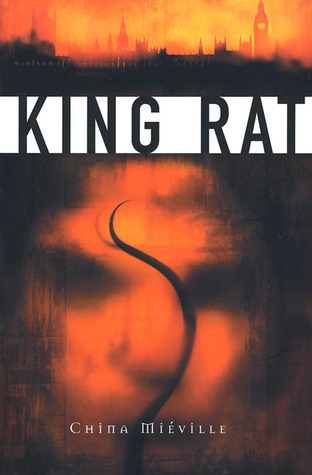
China Miéville is an author I need to read more of. King Rat is exuberant, an exploration of non-human senses and leftist politics passed from father to son, through the lens of two things I love: music and rats. The final confrontation with the Piper ended in a cosmic twist common in the New Weird genre, but to me this one felt earned because it depended so much on how jungle music is played and listened to. Through this book I have made a small dive into the genre, and in doing so realized how much it has influenced much of my favorite video game music in the way tracks are layered and leitmotifs come and go.

This was a year of short stories. I loved revisiting the words of Banana Yoshimoto in Dead-End Memories and enveloping myself in the delicate way she describes pain. I picked up Bound in Flesh: an Anthology of Trans Body Horror and was immediately drawn into the first short story, “Wormspace,” where an understanding of BDSM and specifically subspace are necessary to truly appreciate the story’s nuances. I have circulated this short story among my friends and now I am regularly sent pictures of worms. This specific intersection between desire and horror was also felt in Cronenberg’s Crimes of the Future, which would have been on my list last year (along with Skinamarink) if I had made time to watch it then. There’s also a bittersweetness in discovering the French film Eyes without a Face only this year, as a quiet horror movie focused on forcing parental expectations and medical transformation on a masked protagonist feels like something written specifically to my tastes.


The short story that has inspired me the most this year was Samuel R. Delaney’s “Aye, and Gomorrah…” which focuses on spacers, bodies considered objects of perverse sexual lust for some due to the removal of their gonads. We sit with a spacer as they journey through different parts of the world, their body always an object of scrutiny and politicization. It’s easy to draw a line between the story and the current debate surrounding the use of gonadotropin inhibitors, or “puberty blockers,” in transgender and gender diverse adolescents. The short story gave me pause to think, if transgender and gender diverse individuals weren’t currently used as a political wedge, what would our existence look like in a society that continues to uphold capitalism, patriarchy, and white supremacy?

In other instances of old becoming new again, it was a small miracle to watch Nimona in movie form, after having followed the initial graphic novel while it was being published as a webcomic. The main character remains as wild and frenetic as ever, but it was interesting to see how ND Stevenson tackles the story now compared to when he wrote it at a much younger age, in a time both similar to and very different from now.

I stumbled onto the work of Czech surrealist filmmaker Jan Švenkmajer by chance, and I have been entranced ever since by how he combines real life with stop motion and claymation to distort our sense of reality. His works, especially his 1992 Food trilogy, fills me with a visceral reaction followed by cerebral analysis. I have always loved how animation can push the boundaries of what can be depicted visually. I have mentioned two animated projects already, and I will let others sing praises for Spiderman: Across the Spiderverse and Scott Pilgrim Takes Off. Instead, I want to highlight some excellent independent short animations that have left an impression on me. Many of these are student thesis films, which I love to watch as they are filled with passion and ambition.

TEHURA by Wei Li: a pensive and heartrending exploration of having one’s culture commodified. 


Rat Snacks by Anthony Kos: fluidly animated nonsense that puts Looney Tunes to shame 


The Name by Alexander Aguilar: the perfect representation of the power of names, especially for transgender individuals 


BOLAVK/WEREWOLF by Niko Mlynarčík and Štepánka Milulíková: a dark parable that sent me back to my teenage years 


MISSION POPO by Jennifer Wu: cyberpunk grandma. Need I say more? 


Goodnight, Sweet Dreams! Pajama Mammal-Saur by Averi Roes-Kern: this simultaneously lulls me to sleep and makes the back of my neck prickle. 


Watchmaker at the End of Time by Sheriff Shaheen: there’s something so charming in the way characters move in the sketchy world where all the sound effects are made by the animator 


Midnight Garden by Sapphira Chen: this animation made me feel emotions known previously only to shrimp 


So Long, Caz! By Jingqi Zhang: another meditation on time. The ducks in fight reminded me of the bird scene in Night on the Galactic Railroad 


Big Top Burger Season 2 by Ian Worthington: this series about a clown-themed food truck continues to be one of the funniest series on the internet, with a mind-boggling conclusion to surrealist hijinks. 


Into the Wild by Little Dragon Studios: I talked about how influential the Warrior Cats series was last year, I might as well bring it up again this year with an amazing adaptation of the first book


Finally, two actual play series have been my faithful companions this year. Dimension 20 remains fun and engaging, with the most recent series Burrow’s End being among their best work. And I am slowly catching up to Friends at the Table, whose most recent season Palisade is both a continuation of previous season Partizan, named best mecha anime of 2020 by Crunchyroll, and a culmination of all the worldbuilding in their previous science fiction series, welded together in what is known to fans as the Divine Cycle. If Le Guin is to be believed and capitalism is set to fall like the divine right of kings, I want to continue pursuing art that asks the question, what happens next? 


Speculative fiction has always been Xian Mao’s home. At the end of their college career, and the precipice of the 2016 election, their first short story, “Silk Moth,” was published in Dirty Birds Press’s Undercities anthology. Another short story, “Carry the Ocean,” was published in Strange Constellations. Their poetry has appeared in Aqueduct Press’s Climbing Lightly Through Forests, a poetry anthology celebrating the life and works of Ursula K. Le Guin. Le Guin, along with Terry Pratchett, Lawrence Yep, and Octavia Butler, are major influences in their writing, which often focuses on isolation, generational trauma, and contending with history.Aqueduct Press published their novella Apollo Weeps as a volume in the Conversation Pieces series earlier this year.