Friday, December 15, 2023

Rebecca Ore's Collected Ogoense


 I'm pleased to announce the release of Collected Ogoense, a collection of stories by Rebecca Ore, in both print and e-book editions. You can purchase it now from Aqueduct Press at www.aqueductpress.com.


This volume of stories and novellas collects some of Ore's valuable fiction of the 1990s, work that continues to be of vital interest with a strong focus on persistent issues that remain urgent in our current world. In “Hypocaust & Bathysphere,” time-traveling academics more than meet their match in the medieval inhabitants they assume are naïve and ignorant and easily “studied. The historians exploring America’s past in “Scarey Rose in Deep History” uncover secrets in that past that challenge them personally to the core. 

“Stone Whorl Flint Knife” and “Horse Tracks,” set in Ore’s Bracken County where magic works and logic doesn’t, are tales of love and vengeance that play out amidst that county’s high-stakes power struggles. In “Collected Ogoense,” the volume’s title story, an underpaid biologist toiling over dangerous pathogens seeks refuge from the bleakness of her existence in her passion for African killifish until treachery takes her refuge from her and launches her into the obsession for revenge. And “Accelerated Grimace,” on the 1998 Otherwise Award Honor List, explores the effects of a technology on the transactional relationship between an artist and his muse/trophy wife whose great ambition is to be a famous artist’s widow.

 Praise for Rebecca Ore’s Work


“Centuries Ago and Very Fast…has a kinetic energy and hard-to-define originality that held me captivated from first word to last. Profane—scandalous?—the book wraps stories around stories, combines the surreal with the mundane and everyday.” —Jeff VanderMeer, Locus Online, February 2010

 “Ah, but a true power chord is infinitely replenishable, given enough talent on the part of the author. And Rebecca Ore proves this to the max with her new ‘novel in stories,’ Centuries Ago and Very Fast.... This novel comes with an endorsement from Samuel Delany, and on sexual and gender issues it exhibits the same polished rawness and sophisticated yet wide-eyed wonderment that Delany’s writing is famous for.” —Paul Di Filippo Asimov’s, March 2010


Thursday, December 14, 2023

The Pleasures of Reading, Viewing, and Listening in 2023, pt.4: Tamara Kaye Sellman


New Ways of Listening: Music as Creative Inhale
by Tamara Kaye Sellman
 

Human speech is like a cracked kettle on which we tap crude rhythms for bears to dance to, while we long to make music that will melt the stars. — Gustave Flaubert Madame Bovary


I learned the art of the creative inhale* by accident in 2023. It came to me in the form of music.

*Creative inhale: though multiple definitions exist, here’s mine… the intentional refueling of one’s creative life and process by mindful exposure to other media, forms of expression, disciplines—music, for instance, or dance, film, paintings, theater, poetry—always aligning to narrative as one’s true north.

I say "by accident" because it’s really unlike me to mash up music and writing.

It’s funny. Music ought to be an obsession for me, given my GenX OG status (’65). But, as with so many other of my personal pop-culture leanings, I’ve lived the life of an outlier, enjoying all kinds of music without becoming a material curator of any of it.

(I hope I don’t lose my GenX cred over that confession, but if you remember Lloyd Dobler’s monologue in Say Anything, you’ll recall that it dripped with anticapitalist, antimaterialist sentiment, which more or less describes my ethos.)

Not that I don’t enjoy music. Quite the contrary. I listen to specific kinds of music while exercising—at the gym, while hiking or kayaking, or during heavy work in the garden—if only for rhythms to keep me breathing and focused. I also like to sing loudly in the car to upbeat music (if solo) to energize myself on the way to conferences and conventions.

So I’d been at the gym last winter, listening to a brand-new workout playlist to get me through a long spinning session. And a Slack conversation broke out. My peers in a writing critique group would often sling Slack messages back and forth to one another during my time on the bike. I often chimed in because so many of those conversations could be robust and energizing. (In 2023, I can boast a new skill set: active Slack messaging during stationary cycling.)

It should come as no surprise that I finally conceived a possible connection between listening to music and my writing process during one of these writerly banter sessions. It happened when I discovered the song by Big Data, “Give Me Life,” and realized it more or less matched the theme to one of my peers’ cyberpunk horror stories. It was then that I—and my peers—began to toy with the idea of assigning a theme song to a novel in progress as a kind of emotional framing device. Ultimately, I decided it couldn’t work. Not for me, anyway. It seems unlikely that one lone song could capture the complex essence of long-form narrative. I mean, a short story can make much of a single evocative tune, but a novel really deserves an entire score, especially my novel in progress. After all, it features:

• A present-day protagonist
• A second protagonist (recently dead) from the past whose story provides the folkloric institutional memory of the novel
• A third character from the past (long dead) who leaves behind a scrapbook of factual history, hidden but meant to be found; and
• A fourth character who just happens to be Mother Nature herself.

Each of these characters really deserves their own soundtrack, if I’m being honest. So I let the idea drop; it seemed overly cerebral in the face of the original intention: to capture emotionality in a narrative. Anyway, I didn’t need another project. Workshops, critique groups, and other creative pursuits—and gardening—always keep me on my toes.

Then, one night not long after that, I found myself after hours updating my gym playlist (it’s in a constant state of revision, just like my novels and stories). It was then that I realized it wasn’t my novel that needed a playlist or soundtrack, but each of my characters--dedicated streams of music to capture the emotional weight of each of their arcs in the narrative. The story itself may be the highway upon which their emotions travel, but the characters are the emotional vehicles cruising that highway. 


This idea bloomed at the crocus stage of winter when I naturally begin to crave exercise outside again after months of being trapped indoors. Gardening and hiking are my go-tos in the spring, moving meditations in natural sunlight and fresh air that I’ve come to rely upon to evolve a stuck draft. It’s a fertile time to sort out the knots of plot issues, identify structural inadequacies in the overarching narrative, or immerse myself in a character’s imagined headspace to know them better. 

Sometimes these periods of intellectual disentanglement stretch for hours, but I scarcely notice the physical work at hand while I’m doing it—the sheer volume of pulled weeds or the miles spanned underfoot—for all my brain’s creative churn, aided and abetted by active listening. 

Part of doing something is listening. We are listening. To the sun. To the stars. To the wind. – Madeleine L’Engle, Swiftly Tilting Planet 

Afterward, I’m primed to sit down and write to capture those vibes, insights, and brainstorms. 

Now this… assigning playlists to each of my characters? This made sense. 

So I found myself up late again yet another night, turning in at oh-dark-thirty after creating two new Pandora collections and a whole folder of dedicated music and sound effects in my Epidemic account. The differences in their content were eye opening. 

• My protagonist suffers from moral injury as a former COVID front-line respiratory therapist. She’s experienced more trauma in one year than some people ever experience in a lifetime. You can bet her playlist runs emo and dark, brooding, weepy, angry (so angry), despairing, dissociative, dysregulated, and deeply driven by anxiety. Sample: “Heavy Rain” by Ethan Sloan 

• The second character is the protagonist’s dead grandmother, who left family property for the protagonist to steward in hopes she might find its right purpose. Dead grandma’s tunes are folksy, nostalgic, and underproduced, yet laden with sonic magic straight out of the landscape. So much like my own grandmother’s music, heavy with strummed instruments and vocal harmonies, with more than one loon calling in the background. Sample: “Walk Right In” by The Brothers Four 

• I must confess that the third character—a dead patriarch who left behind written mementoes that ultimately connect the novel’s past to its present—doesn’t have his own playlist. It’s not that he doesn’t deserve one, but more that his purpose in the novel is to establish objective truth through the public minutiae of newspaper clippings, underlined passages in books, and official letters. I do allow him a single confession—a secret diary entry recollecting a string of ineffable life-altering moments, which he can only tell straight because it’s his own truth, not meant for any audience. 

• Finally, Mother Nature gets her own playlist. I went with music categorized by mood or theme, all of it instrumental, and sound effects that explore the “ambience” of this stretch of her remote, wild acreage… some of it tamed, some of it left to its own fertile chaos. Her sections in the novel are god’s-eye interludes gazing upon the world beyond what humans can cognitively experience—a vibe check for transitions in the narrative, certainly, but also a chance to give voice to Gaia herself. Sample: “Into Wilderness” by Placidic 

Proof of concept of this newfound strategy struck the very first time I listened to one playlist: my protagonist’s moody music. I set it on Shuffle and Repeat and tuned in via earbuds. Unironically, I spent half the day mulching my mucky raised vegetable beds last spring while testing out this strategy. My writerly goal? To solve a challenging, unresolved plot point. 

I wasn’t looking for emotional depth in the writing that followed after the garden gloves came off that day and I sat down at my laptop. I just wanted to find order, structure, and sensibility in my ideas. 

And I did. But the playlist left me feeling like a voyeur soaking up my protagonist’s psyche. Not in a creepy way, but in an empathic way. I didn’t expect to discover how the implicit gravitas beneath the lyrics in her songs gave me more depth to understand her point of view. 

From this vantage, I finally discerned how to weave the dead roots of her emotional trauma into new living soil (new relationships) and trust the unseen mycelium (fates, Nature, the sacred) to perform its resurrection magic. 

What a breakthrough! Who knew that I might learn to lean into music as a tool in my writer’s process toolbox, using an approach that seemed impossible only weeks before? It’s a kind of listening I’ve never done, at least not in this capacity or with this kind of purpose. I now read lyrics on the regular, listen for architecture in music to inform structure in storytelling, savor the moments when I notice a thoughtful redirection in a song or the power of a certain phrase or refrain. 

I drink in the creative inhale now. If I cock my ear right, I can hear the breath of a story, carried out in voices and strings, drumbeats, and silence. 

We breathe the light, we breathe the music, we breathe the moment as it passes through us.―Anne Rice, The Vampire Lestat 

Now I invite the subterranean nature of emotion in music to ping its acoustic beacon while I tease out my own storytelling puzzles, all in service to establishing order in the noisy chaos that is my unfinished novel draft. 

Want to hear a sample of the sound of my brain while writing? "Don't Wake the Trolls" by Jon Björk  


Tamara Kaye Sellman's  published works (poetry, fiction, journalism, and essays) have been nominated for the Pushcart Prize or have earned other awards or distinctions. Some places where you can find her work include Crab Creek Review, Gargoyle, Literary Mama, Lowestoft Chronicle, The Nervous Breakdown, NonBinary Review, North American Review, Quarterly West, Rosebud, Spoon River Poetry Review, Terrain, and Weber: The Contemporary West. Her first book, Intention Tremor (MoonPath Press, 2021), collects poetry and prose forms documenting her life following her multiple sclerosis diagnosis in 2013. She is currently at work transforming the pieces from this book into experimental films to expand their accessibility to the hearing and vision impaired. (And because it’s fun.) Aqueduct Press will be publishing her collection Cul de Sac Stories in the Conversation Pieces series in 2024.

The Pleasures of Reading, Viewing, and Listening in 2023, pt. 3: Tansy Rayner Roberts


2023 Pleasures
by Tansy Rayner Roberts


It’s remarkably easy for me to talk about the pleasures of reading, viewing and listening in 2023 — because there have been many delicious pop culture tidbits along the way, but this is the year I REALLY discovered PG Wodehouse, and everything else has pretty much faded into the background.

It started with A Damsel in Distress, a charming little novel about country houses and small-scale burglary, only spoiled a little at the end by some random fat-shaming. I’m still extremely keen to see the Gershwin/Astaire musical based on it.


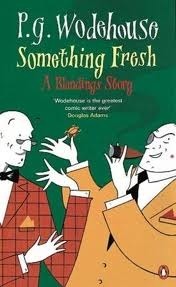
After that, I fell faster. I discovered the Blandings novels, for which Damsel is almost a blueprint, though they are warmer and funnier as each builds on the last. I re-discovered the joy of Jeeves and Wooster novels — I definitely had read some of these when very young, but discovering them now with their cutthroat wordplay and expert comic timing is a whole different ballgame.

The use of language in these books is so extraordinary, it’s hard to describe. They’re not just funny, entertaining, and enjoyable, they are both clever and silly in equal measure without being remotely ashamed of either of those features. It’s no wonder that Wodehouse has so many famous fans — the paperback editions are scattered with quotes from his many admirers.

It’s hard to single out my favorites, as they’re all tangled up now in my head, but by far the superior edition I have come across so far is the two Audible exclusive collections selected and read by Stephen Fry: one of favorite Blandings treats, and one of favorite Jeeves books. Once you’ve heard Wodehouse read in the voice of Stephen Fry it does pretty much spoil you for other narrators. So of course, I’ve had to start buying the things in hardcopy which is all very well, but do you know how many books Wodehouse wrote? THOUSANDS.

I’ve discovered that I love the Blandings short stories slightly more than the novels (again, is that because of Stephen Fry? At least slightly. But also because Freddy Threepwood is my favorite). I’ve also discovered that if I read or listen to too many Jeeves stories at once, I start dropping Wooster vocabulary into conversation which is TOO MUCH TO BEAR.


Along the way, I started hunting down the adaptations, of which there are startlingly few available. A ten-year-old adaptation of the Blandings stories featuring Evil George from Poldark as the bubbly, useless Freddy, paired with Timothy Spall as his absent-minded pig-loving father and Jennifer Saunders as the haughty Lady Constance, was deeply enjoyable, especially with its habit of bringing in excellent guest-stars. Emerald Fennell! Matthew Baynton! Phoebe Waller-Bridge!

Then of course… well I knew that the Stephen Fry and Hugh Laurie version of Jeeves and Wooster was excellent. I remember watching it back in the day, if only vaguely. But I didn’t know HOW good it was until I inhaled all four seasons back to back, while also reading the books. (Thank you, YouTube. I’ve since ordered it on DVD but, well. YouTube is faster.)

I even managed to find, thanks also to the glory of YouTube, a 90s adaptation of a random Blandings novel (weirdly Heavy Weather, which is a direct sequel to another novel, works quite well on its own, hand-waving the backstory) featuring Richard Briers as Galahad Threepwood, Peter O’Toole as Lord Emsworth, Judy Parfitt (Sister Monica Joan from Call the Midwife!) as Lady Constance, and the excellent David Bamber (Mr Collins from the Colin Firth/Jennifer Ehle Pride & Prejudice) as the slimy private detective Pilbeam.

As someone who has always been mildly obsessed with stories about country houses, I can’t get enough Wodehouse — and luckily for me, he wrote so many books between 1902 and 1977 that even the most voracious reader (which I can be when properly inspired!) can’t get through them all too quickly.

I’m going to be very sad when I run out of Stephen Fry’s Jeeves audiobooks, though I still have 17 hours left (it’s a whopper!), so I shouldn’t complain too much.

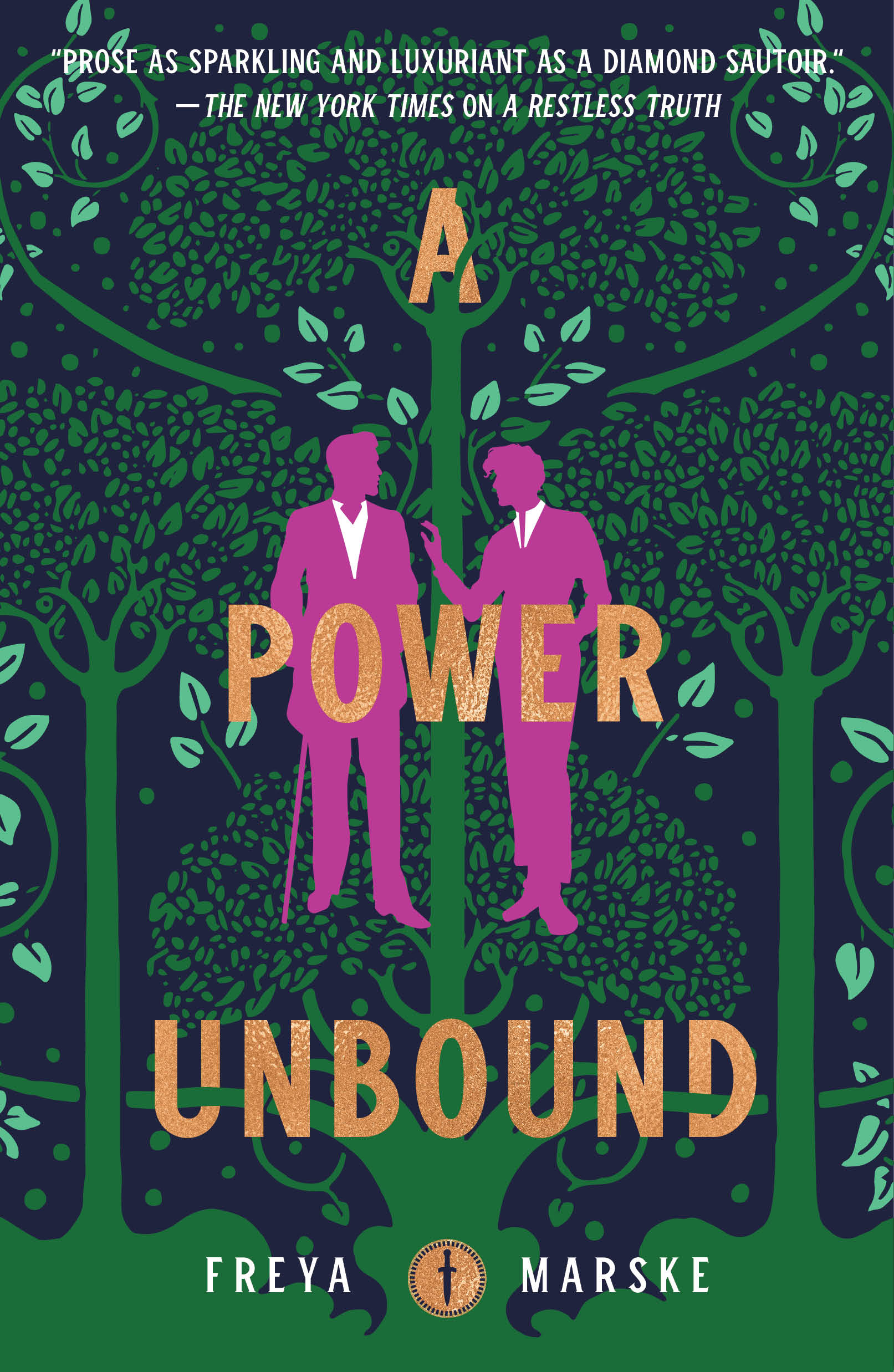
While we’re on the subject of country houses, I should take a breather from my current obsession to note that Freya Marske’s The Last Binding trilogy (magical 1920s houses!) finishes up quite excellently with A Power Unbound, even if she’s a bit brutal on one house in particular. Stephanie Burgis’ country house with dragons fantasy-romance Claws and Contrivances was also deeply excellent, as was KJ Charles’ smuggler-themed A Nobleman’s Guide to Seducing a Scoundrel (which has no magic or dragons, but plenty of steam).


To drop the country house theme entirely I should also point out that Cat Sebastian’s 1950s newspaper-based m/m romance We Could Be So Good is crunchy, sexy, thought-provoking, and basically brilliant. And I continue to enjoy Courtney Milan’s Wedgeford Trials books, based around a fictional Chinese community in 19th Century England - the new book, The Marquis Who Mustn’t is a fascinating take on accountability, as the son of a con-man returns to the scene of his father’s biggest crime to make amends.

In contemporary romance, the latest volume of Jodi McAlister’s reality-TV themed trilogy, Can I Steal You For A Second? is a lovely and subversive take on what might happen if two of the female contestants in a Bachelor-style contest fell in love with each other instead — bonus points for this being set during the height of Covid lockdown in Melbourne while still being a comfort read.

Speaking of subversive, I’d also like to draw attention to Kate Healey’s fabulous Olympus Inc series, which uses all the tropes of high glamor corporate soap but turns them all on their heads with a diverse, inclusive, creatively inspiring bunch of characters… who are all modern versions of characters from Greek myth. I adored her Persephone/Hades novel last year, as well as her Odysseus/Penelope reader magnet, but this year brought Aphrodite Unbound, a rom com about a supermodel with a learning disability, who shocks the world when she chooses to date Hephaestus, an IT guy who uses a wheelchair (and perhaps more importantly in the context of her career, does not himself look like a supermodel).


In TV Land I have been delighted to receive the pure and wholesome gifts that are Our Flag Means Death Season 2, Good Omens Season 2, and Ghosts (UK) Season 5 which all lightened my life and were essential family viewing in our household. As is the new Doctor Who, which has brought me so much sheer delight over the last three weeks, thanks to one of my favorite all-time TARDIS teams being fixed after the terrible things done to them fifteen years ago, and given some splendid material to perform in honor of the 60th anniversary. And now an exciting new Doctor to take us through to Christmas… there are great things ahead.

Please excuse me now, I have a 65 year old novel waiting for me to read with my next cup of coffee.


Tansy Rayner Roberts is a co-host of the Verity! Doctor Who podcast, and the author of a smaller number (for now!) of books than PG Wodehouse. Her 2023 releases included gaslamp fantasy novellas Gate Sinister, House Perilous and Have Spirit Will Duchess, a Greek myth short story collection Gorgons Deserve Nice Things, and the audiobook Teacup Magic: The First Collection. She recently Kickstarted a cozy SF novel about time travelers and talking cats. Find Tansy at tansyrr.com or patreon.com/tansyrr

Wednesday, December 13, 2023

The Pleasures of Reading, Viewing, and Listening in 2023, pt.2: Eleanor Arnason


2023 Pleasures

by Eleanor Arnason


I think I have mentioned before that I have had trouble reading fiction for the past several years. What am I reading then? Way too much news. The war in Ukraine disturbs me. The attack on Gaza horrifies me. I take refuge in some rereading: the fantasies of Diana Wynne Jones, for example. She is clever, fun and comforting. 


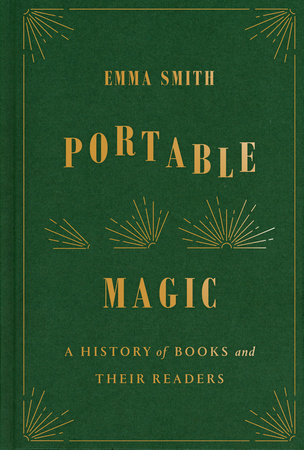
I also read nonfiction. Recently I read Portable Magic, A History of Books and Their Readers by Emma Smith. This is about books as physical objects. It’s interesting enough so I plan to reread it.


I followed it with Dinosaurs: New Visions of a Lost World by Michael J. Benton. This is basically a picture book with a scholarly commentary. I like paleontological art, and this has plenty. And I like dinosaurs, including the living dinosaurs, aka birds. I followed the Benton book with The Genius of Birds by Jennifer Ackerman. As the title suggests, it is about birds, the tiny dinosaurs that chirp in trees. I would describe this as pleasant pop biology. 


What next? A book on volcanoes, which didn’t give me what I wanted to know about volcanoes.  Then Of Time and Turtles: Mending the World, Shell by Shattered Shell by Sy Montgomery, which is about a wildlife rescue organization that treats injured turtles. Most have been hit by cars. Be careful when you drive. This was an encouraging book, about people doing good work. 


Finally I am reading a book on grass. Grassland: The History, Biology, Politics and Promise of the American Prairie by Richard Manning. Grass is amazing stuff, and Minnesota is at the edge of the great American prairie. I am a fan of rewilding much of it and bringing back bison. They evolved with the prairie. Unlike cattle, they have no trouble surviving on the prairie, and they do not harm it. They are huge and splendid and belong. 


We don’t watch many movies or TV series, but we have watched the Good Omens series, based on the Terry Pratchett-Neil Gaiman book. I love it. The actors, especially the two leads, are wonderful. We live in a time of catastrophe. A funny, well-acted, moral show about the end of the world is useful.


 We have a classical radio station on all the time. I listen to classical music and read about life forms, some alive now, some long gone. And I write some poetry as a way of coping with a world that seems difficult right now.


Maybe when this is all over

grass will grow

among the shattered buildings,

and birds nest and sing.


But will there be people?

Will children grow here

like the world’s grass,

which survives everything?


 Eleanor Arnason has written several novels and many short stories. Her fourth novel, A Woman of the Iron People (2001), won the James Tiptree Jr. award for gender-bending science fiction and the Mythopoeic Society Award for adult fantasy. Her fifth novel, Ring of Swords (1995), won a Minnesota Book Award. Aqueduct Press published her collection Big Mama Stories in 2013, her Lydia Duluth adventure, Tomb of the Fathers, in 2010, and her collection, Ordinary People, in 2005. In 2016 Aqueduct released  e-book editions of The Sword Smith, To the Resurrection Station, and Daughter of the Bear King. In 2017, Aqueduct published a collection of her Hwarhath stories, Hwarhath Stories, which was nominated for the Philip K. Dick Award and was named to the James Tiptree Award's Honor List. Next year, Aqueduct will bring out a new edition of Eleanor's Ring of Swords, with an introduction by Ursula K. Le Guin, as the fifth volume in its Heirloom Books series. 


Tuesday, December 12, 2023

The Pleasures of Reading, Viewing, and Listening in 2023, pt. 1: Tara Campbell


Pleasures of Reading 2023

 by Tara Campbell


They say reading is breathing in, writing is breathing out. I’ve been doing a lot of breathing in in 2023, and here are just a few of my favorite inhalations:

The Guest by Emma Cline

If you like to read (or write) protagonists who are both fascinating and reprehensible, this is the book for you. The main character Alex is clearly only out for herself, but demonstrates just enough vulnerability and occasional helpfulness to make her not a complete a monster. Her impulsive and just plain bad decisions have gotten her into a bind, and her hopes for extracting herself clash with the reality she’s heading toward. The book reminded me of John Cheever’s story “The Swimmer” in a couple of ways: (1) how Cline subtly signals the disparities between how Alex sees herself and how other people perceive her, and (2) the fluidity with which Alex oscillates between self-awareness and magical thinking, with the balance between those two states shifting toward the end. Then I happened to find a video clip of Cline talking about how that story was indeed one of her inspirations.

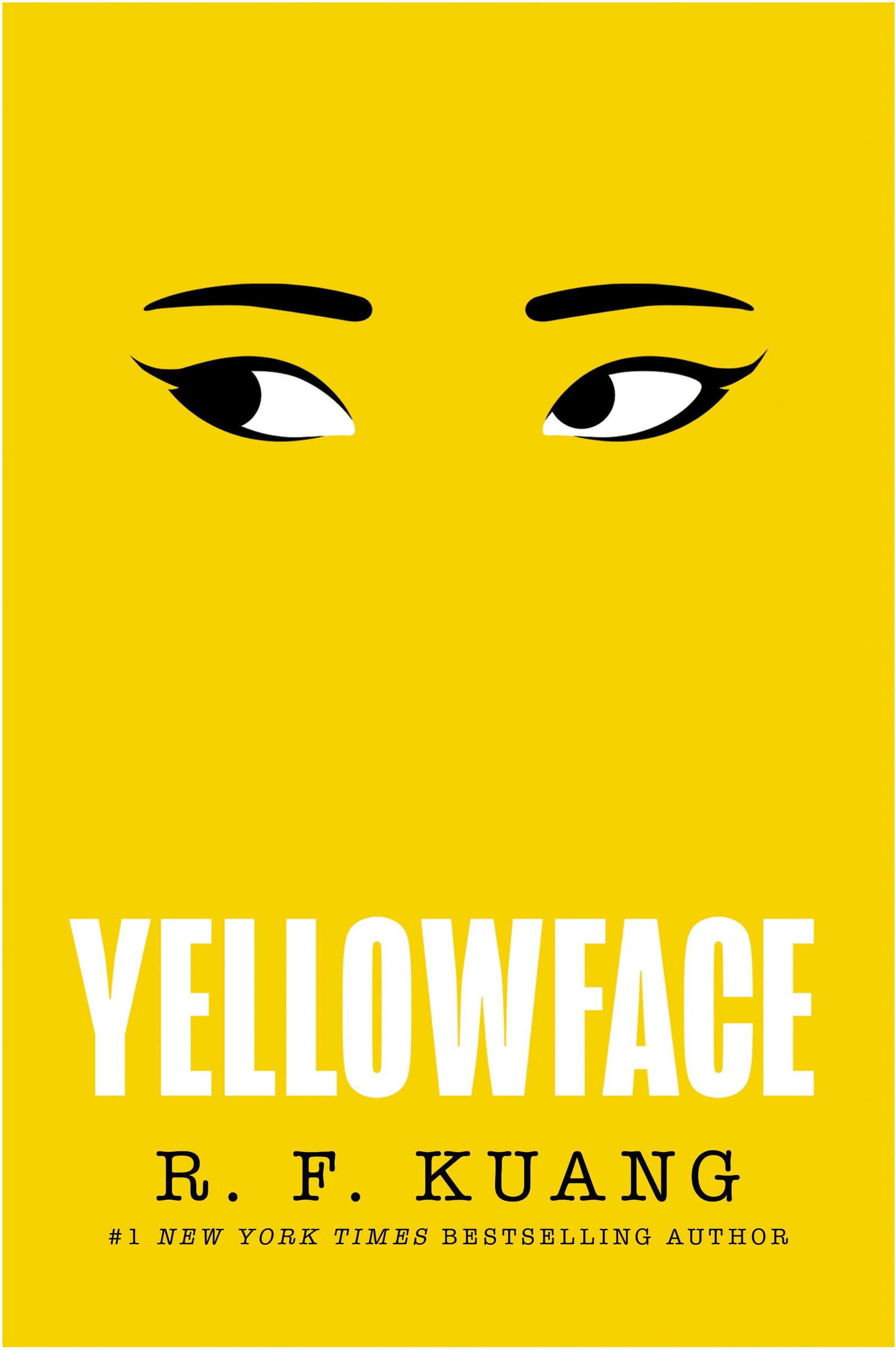
Yellowface by R. F. Kuang


Propulsive and nerve-wracking in the best way. Finished it the day after I picked it up from the library, which is saying something because I’m a slow reader. I was swept away by the escalation of one bad decision after another. 


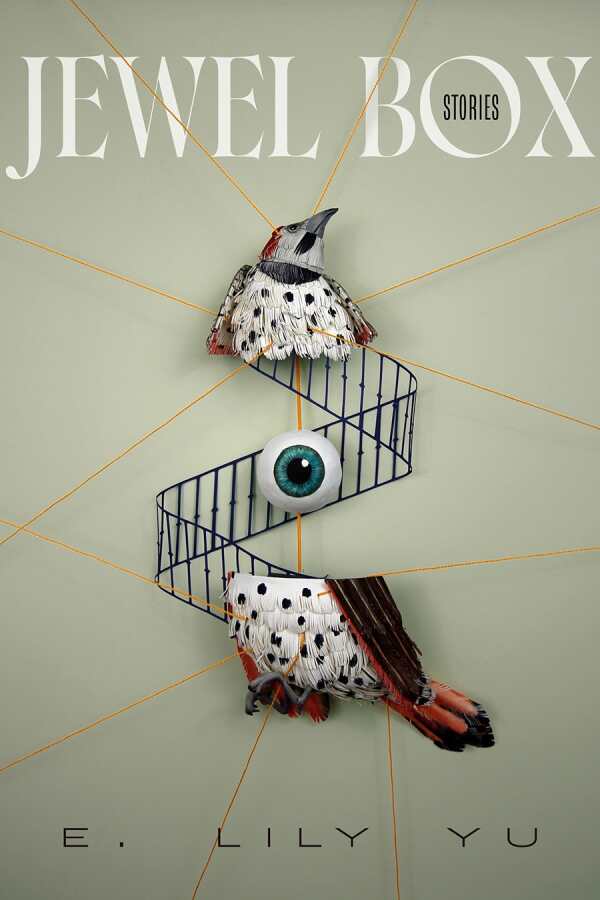
Jewel Box: Stories by E Lily Yu


I was lucky enough to meet this author at an event in Seattle this fall. The breadth of times, locations, and subjects of the stories in this collection is impressive, and the precision of her language is consistent throughout. Truly inspiring craft!


What We Fed to the Manticore by Talia Lakshmi Kolluri

These are nothing like the “cute animal story” trope that many an author has fallen into when trying to imagine the experience of a non-human narrator. Soulful and tender, sad and gentle, these stories contain a rich mixture of pathos and hope. ]


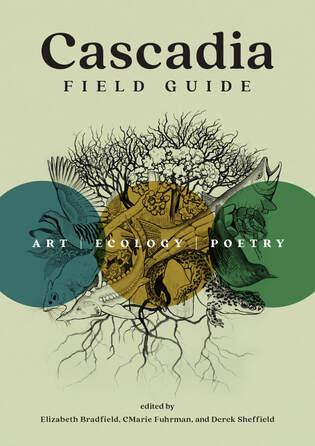
Cascadia Field Guide edited by Elizabeth Bradfield, CMarie Fuhrman, and Derek Sheffield

This was a delightful (re)introduction to the Cascadia area, a bioregion that extends from Southeast Alaska down to Northern California and as far east as Idaho and Montana. Rather than focusing on dry taxonomy, however, the editors fully embraced the STEAM method, giving equal weight to field notes, poetry, and artistic renditions of the flora and fauna. It was a truly engaging way to educate myself about a place I’d left for decades before moving back this summer. 


If I Survive You by Jonathan Escoferry

Nominated for just about every award under the sun, and I completely get why. It’s worth every bit of the hype. Not many authors can are so adept at easing light touches of humor into the midst of hardship. The fluidity of Escoferry’s prose and his unforgettable characters are a winning combination.

You Don’t Belong Here by Jonathan Harper

Devoured it in one day. One of the blurbs says it "reads like a Cheever fever dream," which I think is a great way to describe it! Amazing descriptions of food/consumption/self-destructive spirals. An extended queer Twilight Zone where the world around the main character constricts slowly to haunting effect. 


Lesser Known Monsters of the 21st Century by Kim Fu

I picked this book up in a display of Pacific NW authors, and was not disappointed! Fu’s ingenious ideas + well-developed characters = a pleasure to read. Loved the rising tension and unease in “#ClimbingNation” and the formal experimentation of “Pre-simulation and In This Fantasy.” “June Bugs” and “Bridezilla” also employed rising tension plus avenging monsters, “Sandman” and “Scissors” were notable for erotic tension, and “Do You Remember Candy” was remarkable in its full exploration of sensory information.


I’d Really Prefer Not to Be Here with You and Other Stories by Julianna Baggott

Her deadpan wit and the bizarre situations that arose in her stories kept me reading sections aloud to my husband.

A Thousand Splendid Suns by Khaled Hosseini

As in Kite Runner, Hosseini proves once again to be masterful with stories that stretch over decades and long absences, capturing longing and grace in horrific circumstances. 


Tara Campbell is a writer, teacher, Kimbilio Fellow, fiction co-editor at Barrelhouse Magazine, and graduate of American University's MFA. Prior publication credits include work in Masters Review, Wigleaf, Electric Literature, CRAFT Literary, Daily Science Fiction, and Strange Horizons. She's the author of a novel, two hybrid collections of poetry and prose, and two short story collections from feminist sci-fi publisher Aqueduct Press. Her sixth book, City of Dancing Gargoyles, is forthcoming from SFWP in September 2024. Find her at www.taracampbell.com

Monday, December 11, 2023

The Pleasures of Reading, Viewing, and Listening in 2023


 The Pleasures of Reading, Viewing, and Listening: the 2023 Edition


Our annual Pleasures of Reading, Viewing, and Listening series will begin tomorrow. This year I feel unprepared to make any generalizations at all about 2023, much less imagine what might lie in store for us in 2024. Over the last few years I’ve begun to feel in my bones a reality of history which, from the time I studied history as a graduate student, I’ve understood intellectually, though not as something important to me personally, that the random and the unpredictable rule human history—and, of course, the universe. If there were such a thing as the Laws of History, this would be the First Law. I remember thinking, during my first exposure to the theory of evolution, that the one thing most people I knew didn’t get about it—as evidenced by their misunderstanding of selection via “survival of the fittest”—was how great a role chance played in evolution.


In theory, of course, probabilities can be computed to great effect, and quantum computing gives one the sense that extraordinary feats of prediction might be achievable in the near future (as many science fiction novels have, of course, depicted). But reading the first two books in Isaac Asimov’s Foundation series this fall actually saddened me a little for reminding me of how fervently we humans long for predictability (which isn’t, of course, the same as stability) even as we struggle to believe that humans hold the fate of their species in their own hands. (Sometimes, when I think about the rising sense of fatalism in the US, I want to scream. It reminds me of the deceased family member who years before his death refused to do anything for his rapidly deteriorating health, saying “What will be, will be.”) A few years back, my reading of the Foundation series would instead have been focused on the gap between theoretical models, which are needed for generating projections, and the vast complexity of reality, never mind the complications of chaos theory.


Reading is always serendipitous. When a few days ago I read an essay by Joseph Conrad titled, simply, “Books,” dated 1905, I knew I would be offering lots of book talk on this blog in the weeks to come. The context for which Conrad wrote the essay wasn’t mentioned, so I have no idea why he began the piece by talking about books that people (including himself) hadn’t read. “But they are books, part and parcel of humanity, and as such, in their ever increasing, jostling multitude, they are worthy of regard, admiration, and compassion,” he writes, startling me.


“Especially of compassion,” he continues. “It has been said a long time ago that books have their fate. They have, and it is very much like the destiny of man. They share with us the great incertitude of ignominy or glory—of severe justice and senseless persecution—of calumny and misunderstanding—the shame of undeserved success. Of all the inanimate objects, of all men’s creations, books are the nearest to us, for they contain our very thought, our ambitions, our indignations, our illusions, our fidelity to truth, and our persistent leaning towards error. But most of all they resemble us in their precarious hold on life.”


I confess I’d never thought of books—the precarity of their existence—in this way before, though I had thought (almost obsessively, some people probably think) about how books mean differently over time. Conrad continues:


“A bridge constructed according to the rule of the art of bridge-building is certain of a long, honourable and useful career. But a book as good in its way as the bridge may perish obscurely on the very day of its birth. The art of their creators is not sufficient to give them more than a moment of life. Of the books born from the restlessness, the inspiration, and the vanity of human minds, those that the Muses would love best lie more than all others under the menace of an early death. Sometimes their defects will save them. Sometimes a book fair to see may—to use a lofty expression—have no individual soul. Obviously a book of that sort cannot die. It can only crumble into dust. But the best books drawing sustenance from the sympathy and memory of men have lived on the brink of destruction, for men’s memories are short, and their sympathy is, we must admit, a very fluctuating, unprincipled emotion. No secret of eternal life for our books can be found amongst the formulas of art, any more than for our bodies in a prescribed combination of drugs. This is not because some books are not worthy of enduring life, but because the formulas of art are dependent on things variable, unstable and untrustworthy; on human sympathies, on prejudices, on likes and dislikes, on the sense of virtue and the sense of propriety, of beliefs and theories that, indestructible in themselves, always change their form—often in the lifetime of one fleeting generation.”

Conrad also talks in this essay about novels and what novelists do. For those interested, the essay can be found in his collections, Notes on Life and Letters (1920)


The Pleasures series includes more, of course, than the pleasures offered by books. In past years the series has shown that reading, viewing, and listening pleasures vary widely. And that is what has made me keep this series going. I love the variety of tastes and practices it repeatedly reveals. This year's edition will include posts by Eleanor Arnason, Andrea Hairston, Lisa Tuttle, Christopher Brown, Nisi Shawl, Tansy Rayner Roberts, Cheryl Morgan, and others.

I hope you'll enjoy reading these as much as I do and that they'll swell the presumably always growing list of titles you want to read. Sometimes it seems that the volume of books published is so tremendous that it's no surprise that really wonderful work often slips below one's personal radar.