Friday, December 16, 2022

The Pleasures of Reading, Viewing, and Listening in 2022, pt. 7: Elizabeth Clark-Stern


On the Hunt for Transcendence

by Elizabeth Clark-Stern


With much of the world in disarray this year, I found myself reaching for experiences in art that took me into a place beyond the things I can’t control, stories that brought me into an imaginal world where I lost myself, then found myself, through the characters and their adventures. Two stellar examples are Damned Pretty Things by Hollow Wade Matter, and Cabinet of Wrath by Tara Campbell, both new Aqueduct titles. 

The characters in Wade Matter’s novel pop out at us with such vibrancy, we feel they are standing in the room next to us. To wit, “There are women whose beauty lies in symmetry, and there are women whose beauty lies in incongruity. The Devil’s girlfriend was an incongruous beauty of the first water.”  This is but a tiny sample of the tasty prose Ms. Wade Matter offers. I don’t know about you, but I have known several “Devil’s girlfriends” and now feel I grasp something about the appeal of evil I hadn’t understood before. Many adventures await our fantastical Thelma and Louise duo, Maude and Fortune, who bring us more charm and revelation than the ill-fated women of that film.


Tara Campbell’s Cabinet of Wrath invites us into the inner life of what we refer to as “inanimate” objects. In Campbell’s skilled hands, these objects become supremely animate, e.g., “I won’t deny that I began life as a novelty ring, giggled over in a shop in New Orleans, I was once only a silver skull with faux-ruby eyes and tiny silver bones strung into a circle with elasticized twine. One size fits all. I could have belonged to anyone, but I chose her.” ---If something that began life as a silly novelty ring can choose her owner, all manner of transformation is possible in what we call the “real” world.


 Another glorious read is Phantastes by George McDonald, first published in 1858, (Wm. B. Eerdmans Publishing Company, 2000).  The introduction by C.S. Lewis sets the stage for this seminal work. Lewis confesses that he is “entirely dependent on Dr. MacDonald,” for his own career as a fantasy author. The first chapter shows why. Our young hero is thrust unawares into a fairy kingdom, much like the children in Lewis’s The Lion, the Witch and the Wardrobe. MacDonald’s book also weaves in the newly discovered psychological theories of Sigmund Freud, adding a familiar aspect to the narrative: the main character opens a forbidden door and discovers his shadow, not a metaphor, but literal, his physical shadow follows our hero wherever he goes. How does this transform the character? You must look into your own heart – and read the book, to find out.

 Beyond the printed page, I found myself awash in live performances that thrilled me to the core. A friend bought tickets to Tristan and Isolde at Seattle Opera. I love opera, especially now that translations are projected above the proscenium so that I know what they are singing about. I knew the myth of these star-crossed lovers, but didn’t realize the opera was written by Wagner. An exhibit in the lobby traced Wagner’s controversial relationship with the Nazis, asking the question: should controversial art be produced? I was so glad to be educated about the controversy, beyond one-dimensional condemnations of the composer,  and that Seattle Opera chose to produce Tristan and Isolde.  
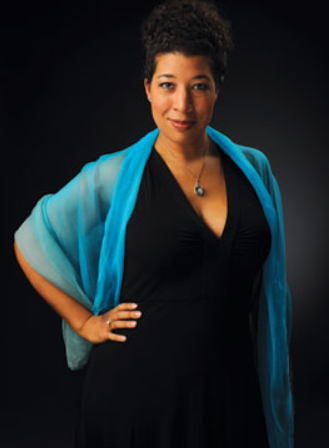

My opera companion could not make it to the end of this five-hour performance. I persisted, riveted by the voice and persona of Mary Elizabeth Williams, an African American artist who cut her teeth at Seattle Opera in 2000/01. In her hands, the Irish Queen, Isolde, vibrated with sensuality and all the power of her magical arts. In the final act, she held the body of her beloved Tristan in her arms, feeling his ascent into Cosmic Consciousness as she sang, “Mildly and gently how he smiles. How the eye he opens sweetly. Do you see it, friends?….Brighter and brighter he shines, illuminated by the stars….Shall I breathe? Shall I listen? Shall I drink, immerse? In the billowing torrent, in the resonating sound, in the wafting Universe of the World-Breath drown, be engulfed, unconscious supreme delight!” The entire stage was bathed in a video projection of the ocean, with only her face, and his, illuminated as their souls joined at last.

A fascinating musical fact: Wagner introduced the tension in the lover’s bond with the first note and did not resolve that musical phrase until the final note. This attention to musical detail is only one of the elements that made it such a moving experience. The full performance of Seattle Opera’s production is not online, but I discovered a grand reservoir of Tristan and Isolde on You Tube. I often wake in the morning and eat my oats in the company of Isolde’s final aria from a European production. Sublime.

My next ecstatic live performance was the Pacific Northwest Ballet’s production of The Seasons' Canon, Max Richter’s re-composition of Vivaldi’s The Four Seasons. I had never seen the choreography of Crystal Pite. A group of friends praised her and insisted I join them. I am indebted to them. From the first moment that the light on stage poured across the backs of a core of dancers moving as one organism, their heads popping up like shoots of new grass, I was enraptured. Crystal Pite wrote in the program, “Creation for me is like looking through a lens. It’s a way to see the world in greater detail and clarity; it’s a magnified experience. It is the act of making that sharpens my awareness and connects me most deeply to the natural world and all the brutality and beauty it contains.”

I have always loved Vivaldi’s music, especially The Four Seasons. Seeing it so faithfully brought into the art-form of dance was exhilarating in its portrayal of love and rebirth in spring, the joy of summer, the letting go of autumn, and the silence of winter. Again, I refer you to Crystal Pite’s work on You Tube.  It isn’t the same as seeing a live performance, but you still get the awesome scale, depth and originality of the work. Her theme of how the individual operates in a state of inter-being with others is a critical one for our modern age. For any age. 


Pite’s work reminds me of the work of Korean sculptor Do Ho Suh, whose sculpture of a ten foot tall empty coat of armor was displayed in the Seattle Art Museum for years. I don’t believe it is there any longer, but you can find it online. The coat of armor is made for an individual, but his armor is made of thousands of dog tags. Art holds the paradox: we are solitary beings: we are One.


Finally, no year would be complete without reaching for non-fiction that wants to change the world.  Maria Ressa’s How to Stand Up to a Dictator, just hit the bookstores. (Harper Collins, 2022) She is the Nobel Peace Prize-winning journalist who stood up to the dictator, Duterte, in the Philippines, and still faces possible criminal charges. Look for her in interviews on PBS and Stephen Colbert, posted on You Tube. (Honest, I don’t own stock in You Tube!)  She is a passionate, adorable, and engaging personality. I had to dash out and buy her book right away. And How to Stand Up to a Dictator does not disappoint, inspiring a change in behavior, consciousness, and world view that can build a brighter future for all of us. 


Elizabeth Clark-Stern has had careers as a modern dancer, actor, teacher, screenwriter, playwright, psychotherapist (an art form in its own right), and most recently, a novelist. Her novel, The Language of Water will be published by Aqueduct in 2023.

Thursday, December 15, 2022

The Pleasures of Reading, Viewing, and Listening in 2022, pt. 6: Suzy McKee Charnas


Reading Pleasures, 2022
by Suzy McKee Charnas 


What a year! Books I loved — 


A Tidy Ending, by Joanna Cannon, is a clever, funny, wicked thriller that sneaks up on you under a bland (but often funny and unexpectedly perceptive) suburban surface, this is a brilliant book. You might easily find yourself finishing it with your eyes wide and your mouth hanging open, and then go back and read it again, this time with slightly queasy astonishment. I did. 


Next up, We Spread, by Iain Reid. Reid takes us into the mind and experience of an elderly widow, a painter whose awareness is becoming patchy and unsure, who finds herself unexpectedly lodged in a deceptively cozy assisted living situation. It’s a gorgeous feat of the author's imagination, based on Penny's slow realization of just what unnatural (but oh so humanly natural!) drives underpin this sheltered life, even as her clarity of mind fades in and out, fighting for integrity of thought, identity, self.


 For a completely different, clever, and charmingly funny fantasy of old age, try the third in Richard Osman’s series about a cabal of puzzle-solving oldsters, The Thursday Murder Club:The Bullet That Missed. These seniors bring the skills and wisdom gained through their lively pasts to bear on intricate and entertaining crises rising now. It's great fun, and a good place to jump aboard this clever series. There’s always the danger of a series going stale, or getting weighed down with accretions of too many new characters acquired along the way, or old ones turned into stock figures being moved around in formulaic plots. Get this charming stuff while it’s still fresh! 


Then there’s The Ballad of Perilous Graves, by Alex Jennings, a rich and tasty phantasmagoria of and adventurous quest through a haunted, mystical New Orleans that draws on deep well-springs of local history. It runs deep and flies high on the irrepressible energy of music, not least the music of the language of a magical alternative city. This is a big, broad book, full of joy and danger; still a fast reader, I made myself slow down for this novel so I could better savor its discoveries and de- lights. This author’s debut is a doozie. 


 Finally, a gem of a book by Elizabeth Strout: Lucy by the Sea. We face our own strange, afflicted times both head on and obliquely, as the narrator’s plain, clear voice carries the reader through the disjointed upheavals of the first pandemic year. Uprooted from her New York apartment, Lucy and her ex view this jagged new era from a house on the coast of Maine. Lucy often says that she understands how others think and feel, and she shows us how and why she understands, using moments from her own fraught past. But there’s no security in understanding; time rolls on relentlessly, filled with spikes of the unexpected, waves of bafflement, bolts of far-off illumination, but above all, loss: loss of bearings, loss of home, loss of life, loss of the old familiar world being overwhelmed by an awful present. Here we are, clinging to what we can save, find, and improvise, even if it’s all so fragile: always dancing on the brink, but now we know it, every moment. 


Suzy McKee CharnasSuzy McKee Charnas is the author of the four-novel Holdfast Chronicles, The Vampire Tapestry, Stagestruck Vampires and Other Phantasms as well as several other books. She's been honored with the Hugo, Nebula, and the Otherwise Awards.  Aqueduct Press published her novel, Dorothea Dreams, as part of its Heirloom Books series, and have since released nine of her titles in e-book editions. 

The Pleasures of Reading, Viewing, and Listening in 2022, pt. 5: Tara Campbell


Reading Pleasures in 2022
by Tara Campbell


Book of the Unnamed Midwife – Meg Elison


Dystopia that doesn't merely wallow in suffering


I typically don't read dystopian novels because I find it difficult to spend that much time in darkness and violence, but I love Elison's work, so I decided to give it a try. I couldn't put this book down. Yes, there is darkness and violence, but Elison's protagonist is compelling, and her approach to the violence it is more factual than gratuitous. Yes, rape happens, but offstage and reported, rather than graphically fetishized. Even when the protagonist isn't being actively pursued, the tension of being a woman in a vicious world is palpable--and relatable. This book presents an opportunity to contemplate a challenging future without coming out just feeling abused.


Nettle & Bone – T Kingfisher


Kingfisher never disappoints!


What can I say, it's a page-turner with engaging characters and Kingfisher's characteristic strong, witty female characters. Yes, it's a quest set in a traditional medieval-pseudo-European world with kings and queens, but Kingfisher puts her own fresh, feminist spin on things. It's the language and characterization that draws you in; no one can tell a story quite like her.


The Rock Eaters – Brenda Peynado


This is exactly the kind of thing I think about when I hear the phrase "literary speculative fiction"--even when the premises are fantastical, the communities in which they happen are complex and immersive. The author's ability to tunnel through improbable occurrences to the emotional core is what elevates these stories. They are engaging, engrossing, and immensely satisfying.


The Monsters We Defy – Leslye Penelope


The characters were engaging, the pacing was brisk, and as a DC resident, it was fun to read a story set in the past of the city where I live. I liked the collaborative problem-solving approach to defeating supernatural forces--it was like a lighter, more optimistic version of Lovecraft Chronicles. Clara was an appealing protagonist, but I think my favorite character was Mama Octavia, Clara's guardian on the other side--we all need a steady protector like her. Of course, the spunky Zelda was a lot of fun too. I appreciated the author's stylistic approach toward the supernatural, evocative without being overheated. Some authors would flood the page with hyperbole to evoke a sense of urgency, but Penelope doesn't need to do that. This book was an immersive adventure into 1920s Washington, DC.


 The Runaway Restaurant -- Tessa Yang


I often use Yang's "Princess Shipwreck" in my flash fiction classes as an example of playful use of language, showing change through imagery, and creatively reimagining stories we think we know. This whole collection shared those strengths, making it a pleasure to explore. Yang serves up the world we think we know, but with a twist. Her stories are haunting and memorable, with real relationships at the core of the fabulist elements.


Tara Campbell is a writer, teacher, Kimbilio Fellow, fiction co-editor at Barrelhouse, and graduate of American University's MFA in Creative Writing. Her publication credits include SmokeLong Quarterly, Masters Review, Wigleaf, Strange Horizons, Daily Science Fiction, Uncharted Magazine, and Escape Pod/Artemis Rising. She's the author of a novel and four multi-genre collections including her newest, Cabinet of Wrath: A Doll Collection (Aqueduct, 2021) and Midnight at the Organporium (Aqueduct, 2019). Connect with her at her website: www.taracampbell.com.


Wednesday, December 14, 2022

The Pleasures of Reading, Viewing, and Listening in 2022, pt. 4: Erin K. Wagner


The Pleasures of Reading, Viewing, and Listening in 2022

by Erin K. Wagner


 I actually kept a reading journal this year. Surprisingly, it was the first time I’ve done so. And by journal, I mean I kept a list. Because lists are satisfying. And I realized, as I collated this list, that I want to keep better track of what I watch as well. There is something comforting about flipping back through pleasant memories of stories that kept you going through the year.

 My list this year is filled with books and media that have already been acclaimed. It’s great, reviews said. And I tended to agree. 


  Books & Shorts

 --Danielewski, Mark. House of Leaves. Random House, 2000 & Vladimir Nabokov, Pale Fire, G. P. Putnam’s Sons, 1962.

 Yes, I am very late to House of Leaves. It’s a book I’ve meant to read for a long time, because I have a fondness for postmodern tomes that play with style and format. The most interesting parts of the novel were when there were hardly any words on the page and you were forced to turn and flip the book to follow the text—it did evoke the winding passages of the titular house. Unfortunately, I was a little let down overall and could not help comparing the book to what it wanted to be: Nabokov’s Pale Fire. I love Pale Fire, a novel in the form of poem and commentary. I can’t help but find meaning in the meaninglessness Nabokov wanted to create (or did he?). So I reread that book right after finishing House of Leaves. 


 --Davis, Robert H. & Perley Poor Sheehan. Efficiency: A Play in One Act. 1917.

 I stumbled across this short play when I was searching out an appropriate drama for my introductory literature class. In the play, a manipulative scientist presents his new invention, Number 241 (two for one) to his emperor. Number 241 is a wounded solider rebuilt with mechanical parts. The play, in addition to being anti-Russian propaganda, questions the use of humans as soldiers and provides a powerful, if heavy-handed, contemplation of transhumanism and disability. 


 --Freire, Paulo. Pedagogy of the Oppressed. Trans. Myra Berman Ramos. Bloomsbury, 2018.

 How? How did I not find Freire until this year? Frequently cited by pedagogy and literacy scholars, Freire is recognized as one of the most influential voices in those fields. He posits a radical pedagogy that resists authoritarian structures (such as that which the typical Western classroom often supports or reinforces) and endorses identification of teacher with student.


 --Jordan, Robert. Wheel of Time. Tor, 1990-2013.

 And here’s another comfort read. In general, I find quite a few issues with the Wheel of Time series, but there’s something in its massiveness and formulaicness that can be soothing. Maybe it is the Hallmark Christmas movies of fantasy. Anyways, in the wake of the TV show, I started a reread.


--Kuang, R. F. Babel: Or, The Necessity of Violence. Harper Collins, 2022.

 A book that came out to lots of acclaim, all of it deserved. I was drawn to the text initially because of its promise of footnotes and academia. The novel skewers the postcolonial endeavor of the Western university and introduces a fascinating magical system based on linguistics and translation. As an English prof, I loved it even as I acknowledged its warranted criticisms of the system I’m part of (and trying to find ways to improve). 


 --McAlevey, Jane F. No Shortcuts: Organizing for Power in the New Gilded Age. Oxford UP, 2016.

 I’ve become very active in my union over this last year and it seems that worker-led strikes and union activities are now receiving more positive attention and support than we’ve seen in awhile. This text argues the necessity for effective unions to truly mobilize and engage all of their constituents. It’s also more widely applicable as a study of how to gain and use power if you don’t already have it.


TV & Movies

--Brunson, Quinta, creator. Abbott Elementary. ABC, 2021-

 The crowd is right about this one as well. One of the funniest and warm-hearted sitcoms out there right now, with an excellent cast, that somehow also manages to capture the severe issues with our current educational system, especially in underfunded areas. It fills the hole in my heart left by Superstore. 


 --Jewison, Norman, dir. In the Heat of the Night. United Artists, 1967.

 I am ashamed to say that I had not watched this movie until this year, when my partner and I sought out Sidney Poitier movies to watch. And it is amazing. Poitier, of course, brings a searing energy to film that transcends the screen like few actors I’ve seen. And this movie provides a bitter commentary on racism that is all too relevant still. And it has one of the best slap scenes in cinema. 


 --King, Paul, dir. Paddington 2. StudioCanal, 2017.

 This one is just cotton candy and hot chocolate and socks straight from the dryer. It is comfort embodied in film. 


 --Kwan, Dan & Daniel Scheinert, dirs. Everything Everywhere All at Once. IAC Films, 2022.

 Could this movie really be as good as the hype, I asked myself. YES. When a scene of two rocks personified and yet barely moving makes you want to cry? And when martial arts with a fanny pack makes you want to laugh? And when the ending manages to both be happy and yet aware of the impossibility of uncomplicated happiness? Then you know you have a good movie. Suggested snack pairing: everything bagels. 


 --Payne, J. D. & Patrick McKay, dev. The Lord of the Rings: The Rings of Power. Amazon, 2022-

 In last year’s list, I discussed my comfort re-read of Lord of the Rings. The copies I received as a teenager are taped along the spine and falling apart. So, needless to say, I was skeptical going into this show. And did I find things to be irritated with? Sure. But, as many have said, it was so nice, at the end of the week, to watch an epic fantasy with great production value and know that I would not have to watch traumatizing assaults in exchange for that experience. It was a gorgeous show, and I’m here for the Elrond-Durin bromance. 


 --Peele, Jordan, dir. Nope. Monkeypaw Productions, 2022.

 It’s pretty much a given that we will buy whatever movie Peele releases. But we always wait, just in case, to watch it on streaming first. So, we waited breathlessly for this one. And it did not disappoint. And we will be buying it. This movie is beautiful. The acting is fantastic. The themes are compelling. And the cinematography, per usual, is so sharp. Who knew the image of a sneaker could haunt you? Interested in what that means? Check it out. 


 --Somerville, Patrick, creator. Station Eleven. HBO, 2021-22.

 Himesh Patel and Frank Chaudhary were amazing in this adaptation that, in my opinion, transcended the book. Matilda Lawler was also great. And so was Danielle Deadwyler. And I could keep on going. This adaptation captured the intense bittersweetness of a world lost to a pandemic and a future created by art.


 --Stiller, Ben & Aoife McArdle, dirs. Severance. Apple TV+, 2022-

 And yet another critically acclaimed series! And yet another ringing endorsement. This is one that keeps you hitting play on the next episode when the credits start rolling. And its commentary on capitalism, the office work environment, loss, and connection engages your brain while its 70s palette of putrid and pastel greens engages your eyes. 


 --Watanabe, Shinichirō, dir. Cowboy Bebop. Sunrise, 1998-99.

Yes, I only finally finished watching this series this year. It can be hard to get me to watch animation, even though I fully acknowledge how great much of it is. This series, which bounced effortlessly from humor to tears, is a hallmark of the genre. And the ending still has me all upset inside.


Podcasts

I’m late to the podcast game. And much like with music, I tend to stick to one or two podcasts and listen to them faithfully as I drive back and forth to work. Here are my two favorites right now.

--Greene, Alyssa & Andy Crow. Say Podcast and Die!

 A delightful re-read and commentary on R. L. Stine’s classic Goosebump series (and related books). Somehow, I never read these as a kid (what!), so listening to the podcast has allowed me to fill in the gaps of my 90s childhood. And the intense theoretical scrutiny of the hosts, who acknowledge how much theorizing can be play, satisfies my literary critic self. It’s also just really funny.


 --Marshall, Sarah. You’re Wrong About.

This show deconstructs society’s popular narratives and shows you what’s going on behind the curtain. Definitely pay attention to the man there.


Erin K. Wagner grew up in southeast Ohio on the border of Appalachia, but now lives in central New York, where she hikes in the Catskills and listens for ghostly games of nine-pins. She holds her Ph.D. in medieval literature and teaches literature and writing in the SUNY system. Her stories have appeared in a variety of publications, from Apex to Clarkesworld, and her novella The Green and Growing is available from Aqueduct Press. Her second novella, An Unnatural Life, was released by Tor.com in September 2020. You can visit her website at https://erinkwagner.com/. Aqueduct released her collection of short fiction, When Home, No Need to Cry, last month.

The Pleasures of Reading, Viewing, and Listening in 2021, pt. 3: Xian Mao


Being Seen and Being Messy
by Xian Mao


How can I, a queer Chinese American, not begin by talking about Everything Everywhere All At Once? The moment Joy’s face appeared on screen, I knew. It didn’t take the warm kisses from her supportive girlfriend; just the expression, the posture, the clothing tipped me off that this was a story about queerness, on top of a story about Chineseness, neurodiversity, missed opportunity, and, well, everything. In a way it was also too real; the clenched-fist acceptance Evelyn had for Joy, the lack of language Joy has in communicating her sexuality to her Cantonese-speaking grandfather. My partner puts it best: “If you want a look into Xian’s family life, watch this movie.”


Perhaps the greatest insight I had from this movie, however, wasn’t Evelyn rescuing Joy from a nihilistic end, but Waymond teaching Evelyn how to love the simple things. The fact that the Waymond who saves the day is the gentle, goofy Waymond from Evelyn’s own universe brought me to tears, even as the Waymond from the Wong Kar-wai universe gave the thesis statement of the movie. Much of my resonance with this character comes from my own stepfather, who shares Waymond’s kind and silly nature.

I am forever indebted to this movie, because through the language of the Everything Bagel (or, in my mother’s own malapropism, the “黑(hei) Donut”) I was able to fully come out to my mother. At last, she understood that being my authentic self isn’t a selfish choice, but a necessary one, between existence and annihilation.

There’s so much to say about a movie that made me cry about rocks, and also featured a fight scene with plot-relevant butt plugs. Everything Everywhere All at Once says many things, some better than others, but it’s intentional in its messiness. Perhaps the true self is messy and incoherent, it posits. Perhaps that’s the beauty of it all. 


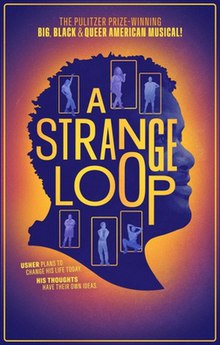
The other creative work that defined this year for me is the musical A Strange Loop by Michael R. Jackson. From the frenetic “Intermission Song” with its Sondheimian riffs and wholesale reference to “The Music and the Mirror” to the raw emotion of “Memory Song,” A Strange Loop had me proselytizing its music to my peers even before it came to Broadway. It breaks my heart that it’s closing before I can go see it, but I’m glad it has garnered the attention and praise it deserves.

I will use the song “White Girl Music” to transition to talking about music. If “Memory Song” is my favorite based on raw emotion, “White Girl Music” hits a very specific chord with me—my own musical tastes, from discovering Liz Phair in college to refamiliarizing myself with the Indigo Girls this year. The Indigo Girls hold a strange, special place in my heart because I was introduced to them by a lab mentor back in high school. Looking back at my barely closeted self, I understand now that talking about Indigo Girls was code for being queer. Unfortunately by then my generation had moved on to Tegan and Sara as the du jour “queer two-woman acoustic band,” but listening to the Indigo Girls in earnest feels like a return to my roots. I am choosing to connect with parts of queer history I was not there for, but which inform who I am today. “Chickenman” is also a phenomenal song with an escalation that at first listen left me breathless.  

One band I absolutely was present for was My Chemical Romance, and they now have the honor of being the fourth band I have seen live. Their music spoke to me as an angsty teenager, and seeing them live as an adult is an out-of-body experience. Half of me is screaming at the top of my lungs, and the other half is holding the screaming child, telling them it’s going to be okay. The absolute joy with which the singer Gerard Way plays with gender onstage, from dressing as a teacher with red scarf and pencil skirt at my concert to the literal sheet ghost the next—gender euphoria is contagious. 


This was the year when I treated my younger self with kindness and indulgence. One of my formative writing experiences was being a part of a Warrior Cats roleplay forum, first on Neopets and then migrating elsewhere. Amidst the utter messiness of my middle school self, the friends I have made online feels like a great love story. The utter joy and trepidation as I made the Discord channel and waited as people who I have not heard from in almost a decade join was definitely a highlight of my year. It was like seeing old friends I thought I had lost forever.  

While Warrior Cats series are not a work of literary genius by any degree (though they are a great middle grade talking animal series), they mattered to me immensely when I was young. Defunctland’s documentary on the Disney Channel theme hammered this home for me, as I had vivid sense memories stir up when I heard the various bumpers, returned to my best friend’s carpeted floors as we watched television while my mother was still at work. There is something heartrending and magical about the pieces of ephemera that wedge themselves into our soul. The most wonderful thing is when those pieces are found again, and new memories can be made.


Speculative fiction has always been Xian Mao’s home. At the end of their college career, and the precipice of the 2016 election, their first short story, “Silk Moth,” was published in Dirty Birds Press’s Undercities anthology. Another short story, “Carry the Ocean,” was published in Strange Constellations. Their poetry has appeared in Aqueduct Press’s Climbing Lightly Through Forests, a poetry anthology celebrating the life and works of Ursula K. Le Guin. Le Guin, along with Terry Pratchett, Lawrence Yep, and Octavia Butler, are major influences in their writing, which often focuses on isolation, generational trauma, and contending with history.Aqueduct Press will be publishing their novella, Apollo Weeps, next month, as a volume in the Conversation Pieces series.