Monday, February 24, 2020
Cynthia Ward's The Adventure of the Naked Guide
I'm please to announce the release of The Adventure of the Naked Guide by Cynthia Ward as the seventy-fourth volume in Aqueduct's Conversation Pieces series.It is available in both print and e-book editions on Aqueduct's website (www.aqueductpress.comhttp://www.aqueductpress.com/books/978-1-61976-179-7.php)..
The Adventure of the Naked Guide is the third novella in the author's Blood Thirsty Agent series.
The earth is hollow—a trackless primordial wilderness. It's also the new front in the Great War. Here, the British spy Lucy Harker—Dracula's daughter—must locate Britain's missing vampire slayer—her own mother. Then she's separated from her lover, the vampire spy Carmilla and captured by Germany's most brilliant scientist, the sinister Dr Krüger. Now, Agent Harker may discover her most dangerous opponents are on her own side.
Cynthia Ward’s Lucy Harker novellas give the modern reader an updated frolic through avant-garde genre fiction, a frolic frosted with a myriad of clever fandom-esque references sure to delight adventurous readers. (Read the whole review)
—Tangent Online, Michelle Ristuccia, February 14, 2020
Friday, January 31, 2020
Anya Johanna DeNiro's City of a Thousand Feelings
I'm pleased to announce the release of City of a Thousand Feelings by Anya Johanna DeNiro, the seventy-second volume in Aqueduct's Conversation Pieces series, in both print and e-book editions. The book can be purchased now at www.aqueductpress.com.
The City of a Thousand Feelings doesn't let certain people inside its walls. It's a place where emotions can become visible, but it flees the approach of a makeshift army who want to enter. Two of the trans women in this army forge a deep, complicated, and at times contentious friendship spanning thirty years. They must come to terms with not only the City's literal and figurative gatekeeping, but also other, even more sinister forces that use necromancy against them. As the narrator and her friend's lives are sundered apart, they must come to terms with what it means to not have a home, and what it means to be queer and aching for such a home. A sword and sorcery tale with emotional resonance, City of a Thousand Feelings brims with both the visceral and the allegorical, allowing the two trans women at the center of the story to claim their own space.
Advance Praise
“Anya DeNiro’s City of a Thousand Feelings is a huge fantasy epic with a deeply intimate relationship story at its heart. I love these heroic trans characters and their struggle to find, or build, a better world. This story left me with a renewed faith in our collective ability to make it through the wilderness and the assaults of undead angels, and to create better families as we do so.—Charlie Jane Anders, author of All the Birds in the Sky
Reviews
Surreal and lyrical, if opaque, this profound fantasy from DeNiro (Tyrannia) explores the struggle for acceptance. An unnamed trans woman narrator meets the fellow trans woman to whom the book is addressed, whose name changes over the course of the novel from Melody to Mystery to Mercy, when they both join a ragtag army of exiled women intent on storming the city that excluded them. The army falls and 15 years of loneliness pass before the two women reunite. Together they decide to sneak back into the city to steal the city’s blueprints and use them to build a new, inclusive home of their own. While the setting is successfully atmospheric, readers learn little about the characters. DeNiro’s imagistic style leads to moments of beauty in lines such as “My heart is a flock of swallows blown out of a barn by a gale,” but can also make it difficult to parse whether fantastical elements are meant to be read metaphorically. While some readers will struggle for a foothold in this strange, cerebral story, others will be gratified by the poetic writing and powerful themes of belonging.—Publishers Weekly, November 2019
DeNiro packs an entire epic fantasy into this very short book from Aqueduct Press, and it is a testament to what a skilled writer can do with a hybrid form.
—Buzzfeed, Wendy J. Fox, January 2020
Tuesday, January 14, 2020
2020 Philip K. Dick Award Nominees Announced
Congratulations to Aqueduct's Sarah Tolmie, as well as to Ada Hoffman, Megan E. O'Keefe, Susan Palwick, Sarah Pinsker, and Tade Thompson, for their nominations to the 2020 Philip K. Dick Award. The books on the final ballot are:
THE OUTSIDE by Ada Hoffmann (Angry Robot)
VELOCITY WEAPON by Megan E. O'Keefe (Orbit)
ALL WORLDS ARE REAL: SHORT FICTIONS by Susan Palwick (Fairwood Press)
SOONER OR LATER EVERYTHING FALLS INTO THE SEA: STORIES by Sarah Pinsker (Small Beer Press)
THE LITTLE ANIMALS by Sarah Tolmie (Aqueduct Press)
THE ROSEWATER REDEMPTION by Tade Thompson (Orbit)First prize and any special citations will be announced on Friday, April 10, 2020 at Norwescon 43 at the DoubleTree by Hilton Seattle Airport, SeaTac, Washington.
Thursday, January 9, 2020
The Plesures of Reading, Viewing, and Listening in 2019, pt. 28: Arrate Hildago
2019 Pleasures
by Arrate Hidalgo
2019 has
been, just as 2018, full of the chaos that comes with organizing a feminist SF
festival in one’s hometown with not much organizing experience to speak of.
This means that I have kept buying books but have finished far fewer of them
than usual. Still, maybe that is why I have really enjoyed just sitting and
reading a book this year, whenever I could. Below are some of the few books I have
been able do that with in 2019.
My Tiptree
(now Otherwise) award juror reading bled into the summer, when I had the chance
to stop and really enjoy some of the books Gretchen sent me (thank you,
Gretchen and publishers). One of those books is Sodom Road Exit by Amber
Dawn, a queer ghost story which is much more than that and which really spoke
to me in many ways, possibly due to my Catholic upbringing, among other
reasons. The book bursts with sparkling language and yet manages to convey
exactly what it is like to live with a lifetime of things unsaid.
I have been
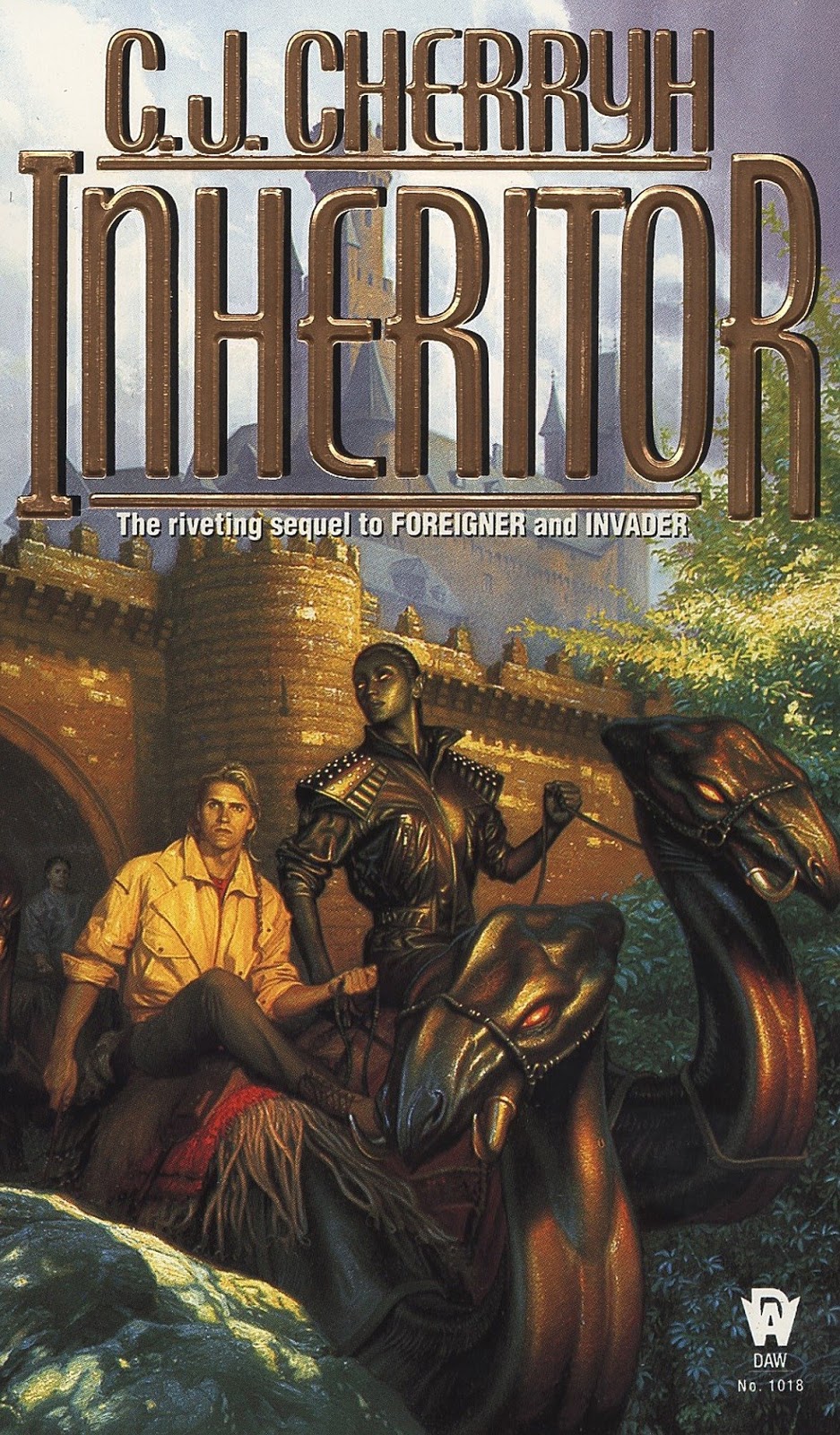
obsessed with CJ Cherryh’s Foreigner cycle since my friend and colleague
Lawrence Schimel gave me the first book in the series. He has ever since kept
providing me with volumes, and last summer I finished the first trilogy with Inheritor.
One of the things I love the most about these books, apart from everything
else, is the fact that as an overworked translator with anxiety I could not
hope for a more relatable protagonist. I keep looking at the next three books
on my shelf with longing. Maybe in February.
To be
honest, if I were to highlight anything about my reading life in 2019, that
would be the fact that I have kept delving deeper into contemporary women’s lit
in Basque, and it has been a ride. Two of the titles that have had a
greater impact in my head have been Kontrako eztarritik [“Down the wrong
pipe”] collected by Uxue Alberdi, and Amek ez dute [“Mothers do not”] by
Katixa Agirre.
Kontrako
eztarritik is a
collection of directed interviews conducted by bertsolari and author Uxue
Alberdi with other women bertsolaris, which were then de-kernelled into classified
topics relevant to feminism. Bertsolaritza or “bertso practice/making” is a
Basque oral poetic tradition, performed in public, in which bertsolaris are
given a subject and sometimes a metre and they must come up with an improvised,
sung-on-the-spot string of verses that both rhyme and have a punchline at the
end. Bertsolaris can be put in competition or cooperation with one another,
depending on the moment, and they are important public figures in Basque folk
and political culture. The same goes for contemporary feminist circles. Uxue
Alberdi’s book is a pioneering attempt at X-raying the circumstances of women
in the field by looking at concepts such as body, humor, Basqueness, and money
and the way in which they all interrelate. (If you’re curious about this Basque
thing, here is a thread by me on queer and trans
representation in contemporary bertsolaritza, via legend Maialen Lujanbio’s outstanding
work.)
On the
other hand, Katixa Agirre’s Amek ez dute is a visceral look into the act
of creation, both from the mother’s and the writer’s perspective, by merging
both identities in the novel’s protagonist. After hearing the news that a woman
near her hometown has drowned her infant twins, and finding out that the woman
is actually someone she once met when she lived in England as an exchange
student, the writer and rookie mum protagonist sets out to obsessively research
the case and turn it into her next novel. To say it was a gripping read would
be an understatement, and I was very surprised to be so sucked into a story
with a plot summary that I would have definitely passed on, had my friends
not recommended it to me. The author has translated herself into Spanish (Las
madres no), if anybody out there is interested. It is very intense and,
strangely, very enjoyable.
Among other things, Arrate Hidalgo is Associate Editor at Aqueduct Press. She is also an
English to Spanish translator, an founder and organizer of a feminist sf con, and an amateur singer. Visit her website at arratehidalgo.com.
Friday, January 3, 2020
The Pleasures of Reading, Viewing, and Listening in 2019, pt. 27: Eileen Gunn
The Pleasures of Reading, 2019
by Eileen Gunn
I have a confession to make, though it may not surprise anyone. I am a person who does not readily finish books. All over my house, stacked on chairs, lying half-open on tables, tucked temporarily into bookshelves in an order that makes no sense, are all the books I’m in the process of reading. So when Timmi asks me to join her year-end roundup of the books we’ve all been reading, I rush frantically to finish a few of my books-in-progress. This year I have failed to finish any of the books I am currently most enjoying, so I have have decided to dispense with all pretense and finish the books at the leisurely pace they deserve. So here are the books I am in the middle of reading that I am enjoying most, plus three books I actually did finish this year, though I’m not going to tell you directly which those are.
Stray Bats, words by Margo Lanagan, Illustrations by Kathleen Jennings. A demonically wonderful book. Fifty tiny intense tales, little windows into the minds and lives of fearsome, magically inclined women and a few hapless men. Ms. Lanagan is a master of endings that do more than twist: they writhe in your mind, transforming the story you think you just read. Ms. Jennings’s evocative pencil illustrations, as warm and fully fleshed as the mama witch on the cover, are sweetly reassuring. There is an intriguing inventory of poems by Australian women at the back of the book, an adventure I’ve just begun. And, yes, there are bats.
Agency, by William Gibson. A problem for writers of science fiction right now is how to write about the near future without depicting it as a time of bleak misery, a time in which the bulk of humanity will be powerless, at the mercy of criminals and oligarchs, unable to act in their own interests—in other words, how to break with the present. In this book, Mr. Gibson returns to us our agency, at least for as long as we are reading. I admit that I was pathetically happy to be, however briefly, living in a sane, modestly prosperous future. I won’t tell you how he did that.
River of Shadows: Eadweard Muybridge and the Technological Wild West, by Rebecca Solnit. This is the book about which men explained things to Ms. Solnit--the really important book that was reviewed in really important places, at the same time her own book on Muybridge came out…. Actually, as you and I know, that’s her book. And it’s a remarkable book, exploring the interconnectedness between place and technology and complex personalities--everything history is made of, really. It takes us places we would not have thought to go, and pays attention to the people who often get short shrift from history: the people at the edges. Muybridge seems at times like an excuse for the book, rather than its subject, as the readers’ attention is frequently directed at seemingly peripheral topics, such as the lives of individual Native American fighters in the Modoc War--whom Muybridge photographed--or the state of free-love feminism in the late 1870s—with which Muybridge, having murdered his wife’s lover, clearly disagreed. It is concerned, as is much of Ms. Solnit’s journalism, with what things mean and how they are connected.
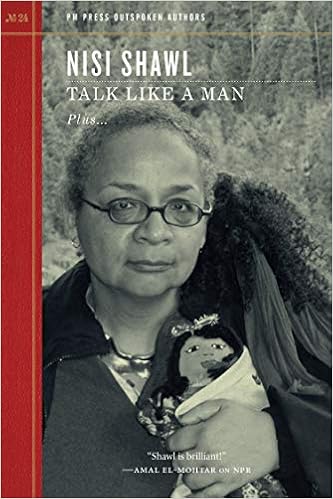
Talk Like a Man, by Nisi Shawl. This is a Nisi Shawl sampler, with three stories, a novella, an essay, a detailed Shawl bibliography, and an interview of Shawl by Terry Bisson, cultural icon and editor of this series of chapbooks from PM Press. One of Mx. Shawl’s magnificent gifts is an ear for dialogue, both spoken and internal; another is an ability to anchor stories in time and space, in a specific moment. Even if you have their earlier collection, Filter House, you will find new people and places here. Isn’t it time for another major Nisi Shawl short-story roundup? Let’s get those dogies movin’!
Rule of Capture, by Christopher N. Brown. This is a grimly realistic, exceptionally well-observed novel that desperately cares about our near future of drought, misery, oligarchs, and criminals, and wants its characters to be able to fight back. Fighting back is a tough job, and Mr. Brown does not underestimate the forces being brought, in real life, to keep the powerful in control, nor is he mistaken about the nature of the struggle: a not-actually-fictional moment in the book, an encounter with a coyote in a post-industrial wilderness, suggests that humanity may not survive in the long run. The story continues in Failed State, which is due out in January, fast on the heels of Rule of Capture.
The Tales of Uncle Remus, as told by Julius Lester, illustrated by Jerry Pinckney. I do love Julius Lester, have for over fifty years. I trust his voice: he said what he meant, he said it directly, he did not mess around. And here, in this four-book series, is his voice in the service of African-American folklore, telling stories that were collected a century ago, taking them out of 19th-century dialect, retelling them in what he says is contemporary southern black English, meaning in a voice that reflects his own speech and sense of humor. These are stories such as one might tell while putting the kids to bed, if one was the kind of witty, funny, slightly prankish storyteller that Julius Lester was. And, omigod, they’re illustrated by Jerry Pinckney, one of the greatest American illustrators of the past 70 years. These are not cartoons, thank you very much. These are gorgeous gouache illos of realistically imagined, beautifully drawn talking animals wearing human clothes. Do not settle for less!
"The Curve of the World," by Vonda N. McIntyre. A most enjoyable book, a rich portrait of Minoan Crete, with details drawn from existing artifacts, rigorous extrapolation, and an informed love of art, technology, textiles, and food. It introduces readers to the mostly peaceable trading peoples of the ancient eastern Mediterranean, and then whips them through the Pillars of Hercules for a brisk sail across the Atlantic and adventures in the new world. Part of the fun is trying to figure out when it’s set and where it’s going. Publication details are still being resolved. I am reading a typescript on my iPhone and trying to make it last and last.
There are lots more open books taking up space on my dining room table and in my brain. One of them may be yours. I’ll finish it soon—maybe for next year.
Eileen Gunn is the author of two story collections: Stable Strategies and Others (Tachyon Publications, 2004 and Hayakawa, 2007) and Questionable Practices (Small Beer Press, 2014). Her fiction has received the Nebula Award in the US and the Sense of Gender Award in Japan, and been nominated for the Hugo, Philip K. Dick, and World Fantasy awards and short-listed for the James Tiptree, Jr. award. Her most recent story, “Trudy on the Lam,” appeared in Asimovs, April 2019. Her non-fiction has appeared in Smithsonian magazine, Locus, Paradoxa, Science Fiction Eye, the New York Review of Science Fiction, and other magazines covering science fiction, technology, and culture. She is the author of The Difference Dictionary, a guide to and analysis of William Gibson and Bruce Sterling’s novel The Difference Engine. Gunn serves on the board of directors of the Locus Foundation, which publishes the genre newsmagazine Locus, and served for 22 years on the board of directors of the Clarion West Writers Workshop. After leaving the board, Gunn was an instructor at Clarion West in 2015, and will return as one in 2020.
by Eileen Gunn
I have a confession to make, though it may not surprise anyone. I am a person who does not readily finish books. All over my house, stacked on chairs, lying half-open on tables, tucked temporarily into bookshelves in an order that makes no sense, are all the books I’m in the process of reading. So when Timmi asks me to join her year-end roundup of the books we’ve all been reading, I rush frantically to finish a few of my books-in-progress. This year I have failed to finish any of the books I am currently most enjoying, so I have have decided to dispense with all pretense and finish the books at the leisurely pace they deserve. So here are the books I am in the middle of reading that I am enjoying most, plus three books I actually did finish this year, though I’m not going to tell you directly which those are.
Stray Bats, words by Margo Lanagan, Illustrations by Kathleen Jennings. A demonically wonderful book. Fifty tiny intense tales, little windows into the minds and lives of fearsome, magically inclined women and a few hapless men. Ms. Lanagan is a master of endings that do more than twist: they writhe in your mind, transforming the story you think you just read. Ms. Jennings’s evocative pencil illustrations, as warm and fully fleshed as the mama witch on the cover, are sweetly reassuring. There is an intriguing inventory of poems by Australian women at the back of the book, an adventure I’ve just begun. And, yes, there are bats.
Agency, by William Gibson. A problem for writers of science fiction right now is how to write about the near future without depicting it as a time of bleak misery, a time in which the bulk of humanity will be powerless, at the mercy of criminals and oligarchs, unable to act in their own interests—in other words, how to break with the present. In this book, Mr. Gibson returns to us our agency, at least for as long as we are reading. I admit that I was pathetically happy to be, however briefly, living in a sane, modestly prosperous future. I won’t tell you how he did that.
River of Shadows: Eadweard Muybridge and the Technological Wild West, by Rebecca Solnit. This is the book about which men explained things to Ms. Solnit--the really important book that was reviewed in really important places, at the same time her own book on Muybridge came out…. Actually, as you and I know, that’s her book. And it’s a remarkable book, exploring the interconnectedness between place and technology and complex personalities--everything history is made of, really. It takes us places we would not have thought to go, and pays attention to the people who often get short shrift from history: the people at the edges. Muybridge seems at times like an excuse for the book, rather than its subject, as the readers’ attention is frequently directed at seemingly peripheral topics, such as the lives of individual Native American fighters in the Modoc War--whom Muybridge photographed--or the state of free-love feminism in the late 1870s—with which Muybridge, having murdered his wife’s lover, clearly disagreed. It is concerned, as is much of Ms. Solnit’s journalism, with what things mean and how they are connected.
Talk Like a Man, by Nisi Shawl. This is a Nisi Shawl sampler, with three stories, a novella, an essay, a detailed Shawl bibliography, and an interview of Shawl by Terry Bisson, cultural icon and editor of this series of chapbooks from PM Press. One of Mx. Shawl’s magnificent gifts is an ear for dialogue, both spoken and internal; another is an ability to anchor stories in time and space, in a specific moment. Even if you have their earlier collection, Filter House, you will find new people and places here. Isn’t it time for another major Nisi Shawl short-story roundup? Let’s get those dogies movin’!
Rule of Capture, by Christopher N. Brown. This is a grimly realistic, exceptionally well-observed novel that desperately cares about our near future of drought, misery, oligarchs, and criminals, and wants its characters to be able to fight back. Fighting back is a tough job, and Mr. Brown does not underestimate the forces being brought, in real life, to keep the powerful in control, nor is he mistaken about the nature of the struggle: a not-actually-fictional moment in the book, an encounter with a coyote in a post-industrial wilderness, suggests that humanity may not survive in the long run. The story continues in Failed State, which is due out in January, fast on the heels of Rule of Capture.
The Tales of Uncle Remus, as told by Julius Lester, illustrated by Jerry Pinckney. I do love Julius Lester, have for over fifty years. I trust his voice: he said what he meant, he said it directly, he did not mess around. And here, in this four-book series, is his voice in the service of African-American folklore, telling stories that were collected a century ago, taking them out of 19th-century dialect, retelling them in what he says is contemporary southern black English, meaning in a voice that reflects his own speech and sense of humor. These are stories such as one might tell while putting the kids to bed, if one was the kind of witty, funny, slightly prankish storyteller that Julius Lester was. And, omigod, they’re illustrated by Jerry Pinckney, one of the greatest American illustrators of the past 70 years. These are not cartoons, thank you very much. These are gorgeous gouache illos of realistically imagined, beautifully drawn talking animals wearing human clothes. Do not settle for less!
"The Curve of the World," by Vonda N. McIntyre. A most enjoyable book, a rich portrait of Minoan Crete, with details drawn from existing artifacts, rigorous extrapolation, and an informed love of art, technology, textiles, and food. It introduces readers to the mostly peaceable trading peoples of the ancient eastern Mediterranean, and then whips them through the Pillars of Hercules for a brisk sail across the Atlantic and adventures in the new world. Part of the fun is trying to figure out when it’s set and where it’s going. Publication details are still being resolved. I am reading a typescript on my iPhone and trying to make it last and last.
There are lots more open books taking up space on my dining room table and in my brain. One of them may be yours. I’ll finish it soon—maybe for next year.
Eileen Gunn is the author of two story collections: Stable Strategies and Others (Tachyon Publications, 2004 and Hayakawa, 2007) and Questionable Practices (Small Beer Press, 2014). Her fiction has received the Nebula Award in the US and the Sense of Gender Award in Japan, and been nominated for the Hugo, Philip K. Dick, and World Fantasy awards and short-listed for the James Tiptree, Jr. award. Her most recent story, “Trudy on the Lam,” appeared in Asimovs, April 2019. Her non-fiction has appeared in Smithsonian magazine, Locus, Paradoxa, Science Fiction Eye, the New York Review of Science Fiction, and other magazines covering science fiction, technology, and culture. She is the author of The Difference Dictionary, a guide to and analysis of William Gibson and Bruce Sterling’s novel The Difference Engine. Gunn serves on the board of directors of the Locus Foundation, which publishes the genre newsmagazine Locus, and served for 22 years on the board of directors of the Clarion West Writers Workshop. After leaving the board, Gunn was an instructor at Clarion West in 2015, and will return as one in 2020.
Thursday, January 2, 2020
The Pleasures of Reading, Viewing, and Listening in 2019, pt. 26: Kristin King
The Pleasures of 2019: A Short List
by Kristin King
If I could just pick out four works this year to recommend, they would be:
In the Quiet Spaces by C. E. Young. This book is pocket-sized and goes with me 'most everywhere, and it always tells me something I need to hear. I’d explain it, but God is not in the explanations.
Talk Like a Man by Nisi Shawl. The story “Women of the Doll” takes an unforgettable superhero through her paces, and the essay “Ifa: Reverence, Science, and Social Technology” has given me hefty food for thought about how people make community.
The Expanse (novel series) by James S.A. Corey went through our family like the flu, one by one succumbing and losing hours, maybe days, at a time. I’ll never feel the same way about gravity again.
Exhalation by Ted Chiang gave me solace when I needed it most. Chiang had me at the story “The Merchant and the Alchemist’s Gate,” which mixes the fairy-tale setting of the Arabian Nights together with time travel to create philosophical breakthroughs. One way or another, all his stories are that way.
Kristin King (http://kristinking.wordpress.com) is a writer, parent, and activist who lives in Seattle. Her work has appeared in Strange Horizons, Calyx, The Pushcart Prize XXII (1998), and other places. Two of her stories appeared in an Aqueduct Press anthology, Missing Links and Secret Histories: A Selection of Wikipedia Entries Lost, Suppressed, or Misplaced in Time. A selection of her short fiction has been collected in Misfits from the Beehive State.
by Kristin King
If I could just pick out four works this year to recommend, they would be:
In the Quiet Spaces by C. E. Young. This book is pocket-sized and goes with me 'most everywhere, and it always tells me something I need to hear. I’d explain it, but God is not in the explanations.
Talk Like a Man by Nisi Shawl. The story “Women of the Doll” takes an unforgettable superhero through her paces, and the essay “Ifa: Reverence, Science, and Social Technology” has given me hefty food for thought about how people make community.
The Expanse (novel series) by James S.A. Corey went through our family like the flu, one by one succumbing and losing hours, maybe days, at a time. I’ll never feel the same way about gravity again.
Exhalation by Ted Chiang gave me solace when I needed it most. Chiang had me at the story “The Merchant and the Alchemist’s Gate,” which mixes the fairy-tale setting of the Arabian Nights together with time travel to create philosophical breakthroughs. One way or another, all his stories are that way.
Kristin King (http://kristinking.wordpress.com) is a writer, parent, and activist who lives in Seattle. Her work has appeared in Strange Horizons, Calyx, The Pushcart Prize XXII (1998), and other places. Two of her stories appeared in an Aqueduct Press anthology, Missing Links and Secret Histories: A Selection of Wikipedia Entries Lost, Suppressed, or Misplaced in Time. A selection of her short fiction has been collected in Misfits from the Beehive State.
Tuesday, December 31, 2019
The Pleasures of Reading, Viewing, and Listening in 2019, pt. 25: Christopher Brown
Year in Reading — 2019
by Christopher Brown
The book that
consumed me the most this past year was an old one, and one I had read before,
albeit in a different translation. Njal’s Saga is a 13th century epic about a
lawyer in 9th century Iceland who specializes in complex settlements
of family feuds. That the settlements never stick for long is kind of the main
point of the story—someone always breaks the peace, and the cycle of violence
renews over generations. I re-read Njal
in search of the deep roots of the lawyer story, and it holds up well in that
regard, especially since the system of proto-torts that bound that society
together was very close to our own Anglo-Saxon roots. More surprising was to
see how much the saga works in some of the same ways as a science fiction
colonization story—a tale of people settling a hostile landscape in which the
only other human inhabitants found upon their arrival were a few Irish hermits
sequestered in coastal caves, and a story that shows how the basic systems
human societies create to resolve disputes by means other than violence are the
essence of government.
In my year-end round-up here for 2016, I talked about another of the Icelandic
sagas, Laxdaela
Saga, and its
storyline about Unn the Deep-Minded, a female Viking and sage who found herself
leading her people and managed to briefly establish a kind of intentional
community founded on equitable distributions of property, the abolition of
forced servitude, and more just governance. The negative space of those stories
opens portals into possibility, in the unrecorded histories of those who tried
a different path, the kind of utopian path that small groups can manage where
large permanent settlements cannot.
The world of Njal,
crippled by the unceasing blood feuds of men who divided up the land and
reflexively drew their swords to settle the merest slights, was also the world
of Unn, who founded a community based on an ethos of sharing. That the world of
Unn could only exist as an ephemeral island in a sea of Viking raiders tells a
lot about the challenges of constructing utopia, even in terra nullius.
The search for
examples of other such islands drove the wide-ranging research reading I
undertook this year while working on my new book, Failed
State, about a lawyer representing
people who have been hauled in front of a post-revolutionary justice tribunal—a
utopian legal thriller, to bookend my dystopian legal thriller, Rule
of Capture, which came
out this past summer. Utopia is nowhere, but it is rewarding to search for.
I learned that
Gudrun Ensslin called consumer society “the raspberry Reich,” and that her
comrade in arms Andreas Baader insisted on wearing his favorite hip-hugging
velvet trousers instead of army fatigues even while training for combat at a
PLO camp in the Jordanian desert. The
Baader-Meinhof Group
by Stefan Aust, a journalist who worked with Ulrike Meinhof in the early days and
was exceptionally close to the material, is a remarkable examination of how youthful
political activism evolved into armed struggle in West Germany. It was one of
many books about revolution and justice I read or re-read, including a number
from or about Germany: Peter Weiss’s masterful The
Investigation, which
repurposed transcripts from the Frankfurt Auschwitz trials as the material for
a remarkable stage play; Hannah Arendt’s Eichmann
in Jerusalem; Abby
Mann’s Judgment
at Nuremberg; and
Leora Bilsky’s The
Holocaust, Corporations and the Law.
I read one new
book in Spanish, El
Comensal by Gabriela
Ybarra (published in English as The
Dinner Guest), an
intense and compelling short novel about the author’s investigation of her own
grandfather’s kidnapping and murder by Basque terrorists in the 1970s. I read
Chinua Achebe’s collection Girls
at War, the engaging
title story of which is a curious example of the way certain writers
romanticize the figure of the female revolutionary (this writer included). I
re-read Graham Greene’s The Comedians, his novel of the Haitian revolution, and
found that the languorous charisma of the author’s late colonial decadence does
not age well. I read Sophie Wahnich’s In
Defense of the Terror,
a fresh critical reconsideration of the French Revolution and its hagiography.
And I read Paul Krassner’s Patty
Hearst & The Twinkie Murders: A Tale of Two Trials, the satirist’s insightful diary of two
very different but both uniquely American prosecutions of political violence in
the 1970s.
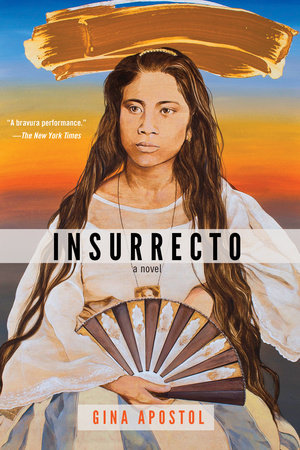
Gina Apostol’s Insurrecto was one of the best new books of the year
for me, an innovative story about two women collaborating on a project: a
Philippine translator recently returned to her home country from New York, who
gets hired to help a documentary filmmaker research her own father’s filming of
a Vietnam War movie there decades earlier (think Apocalypse Now or Platoon).
As they seek out the locations from the film, they confront more authentic
atrocities, and uncover layers of erasure and colonization in the process.
I also sampled a number
of utopian novels, from More’s eponymous classic to SF masters like Ursula K. LeGuin’s The Dispossessed (re-“read” as an engaging audiobook) and The
Word for World is Forest,
Kim Stanley Robinson’s Pacific Edge, and Aldous Huxley’s Brave New World. I even re-read chunks of James Hilton’s
Shangri-La fantasy Lost
Horizon, which I had
read as a teen. More interestingly, many of the books I picked up this year for
other reasons turn out in retrospective consideration to have been works I
would categorize as utopian. Longer by Michael Blumlein is a beautiful science
fiction novella about age and longevity, from one of our most unique
contemporary sf writers, a physician who at the time he was working on the book
was also facing the cancer that sadly took his life this fall. (Blumlein’s Thoreau’s
Microscope, like the
Krassner part of PM Press’s outstanding Outspoken Authors series edited by
Terry Bisson, is another amazing one I had the fortune to read this year,
especially memorable for the title essay in which the author considers the
wonder of his own cancer cells as viewed through the microscope.) Jessica
Reisman’s The
Arcana of Maps compiles
a beautifully written array of stories about communities of people trying to
build better realities free of conflict. Tears
of the Trufflepig, the
debut novel of Fernando Flores, is a literary dystopia of the Texas-Mexico
borderlands that somehow harbors a utopian mirror in the memory of the reader.
And Erik Davis’s High
Weirdness: Drugs, Esoterica and Visionary Experience in the Seventies interestingly synthesizes the utopian
proclivities found in the works of Robert Anton Wilson, Terrence McKenna and
Philip K. Dick and their tripped-out searches for paths to higher awareness.
Ecological
concerns appear in most of those utopian books, and much of the nonfiction
ecology writing I read this year also straddled the utopia/dystopia axis, for
obvious reasons. Silvia Federici’s Re-Enchanting
the World: Feminism and the Politics of the Commons collects an engaging body of radical
essays on capitalism, feminism, and our relationship with the land. Ashley
Dawson’s Extreme
Cities: The Peril and Promise of Urban Life in the Age of Climate Change argues the utopian potential to reorganize
more equitable and just community structures in response to the threat of
climate crisis. The
Uninhabitable Earth by
David Wallace-Wells is more grim, a travelogue of what he presents as the
inevitable state of the near-future world absent dramatic action to change our
collective behaviors. Seeing Like a State by James Scott weighs against the
possibility of utopia, and maybe even of any authentic capacity for pur
collective self-improvement, with an incisive critique of the hubris inherent
in human efforts to engineer better political economies atop natural systems. Along
with Scott’s more recent Against
the Grain, a deep
history of the Anthropocene which I mentioned here last year, a compelling case is made that the only
real solutions to our current ecological problems lie in a radical reworking of
some of the fundamental socio-economic structures that were created by (and
helped create) the agricultural revolution—a revelation of impossibility that
suggests the Cassandras like Wallace-Wells may be more accurate in their dismal
prognostications than I am inclined to believe.
As tonic for all
this, at the end of the year I discovered a book called Frauen
Auf Bäumen (Women in Trees) by Jochen Reiss, a book
of found amateur photos of just what the title promises. I am not sure why, but
when I picked the book up for my wife and daughter, I thought it was the most
utopian thing I could find, encoding some oblique answers as to where a
healthier future lies. Maybe even by climbing back into the trees, or at least
planting enough of them to start our way back.
Christopher Brown’s novel Tropic of Kansas was a finalist for the 2018 Campbell Award for best science fiction novel of the year. His latest novel, Rule of Capture, was published by Harper Voyager in 2019. He lives in Austin, where he also practices law.
Monday, December 30, 2019
The Pleasures of Reading, Viewing, and Listening in 2019, pt. 24: Julie Phillips
A Year of Shifting Perceptions
by Julie Phillips
It’s been a year of shifting perceptions for me, in
which some things that have been stuck for a long time came loose, I can only
hope for the better. Among my favorites this year are some books and a film
about how to take useful action, whether or not you know where you’re heading.
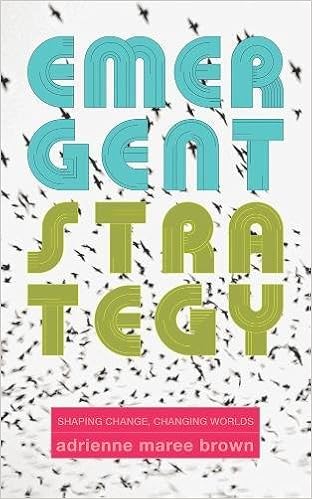
The most encouraging book I read all year was Adrienne Maree
Brown’s Emergent Strategy, a meditation on social justice and science
fiction that is also a kind of carrier bag for ideas about imagination and change.
Emergence has to do with allowing small interactions to become linked together
in complex patterns of community and persistence. Taking inspiration from the
work of Octavia Butler, as well as from biology and chaos theory, Brown emphasizes
resilience and adaptivity as useful qualities and suggests learning from the
survival strategies of dandelions, mushrooms, and oak trees.
She also advises “collaborative ideation—what are the ideas
that liberate all of us? The more people that collaborate on that ideation, the
more that people will be served by the resulting world(s). Science fiction is
simply a way to practice the future together.” Citing Toni Cade Bambara, she says,
“We must make just and liberated futures irresistible.”
While I was reading Emergent Strategy and marching
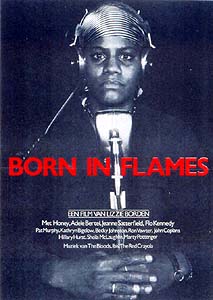
in demos, an old friend took me to see Born in Flames, Lizzie Borden’s 1983
science fiction film about women plotting a revolution. It deals with the
potential power of small-scale direct action, and I just can’t tell you how
good this movie is and how amazing it feels to watch in this moment. Visually
and thematically, it illustrates Brown’s patterns of emergence: Gangs of women
on bicycles circulate for safer streets. Two pirate radio stations create links
between feminist cells citywide. And an older activist (played by feminist
lawyer Flo Kennedy) advises a younger one: “Which would you rather see come
through the door, one unified lion or 500 mice? You know, 500 mice can do a lot
of damage.”
The central narrative of armed revolution is not
the film’s strongest point, although a scene of the Women’s Army hijacking a
New York City TV station does have a kind of anti-Fox News satisfaction. But its
class- and race-conscious analysis of feminism is fine, and I enjoyed its ’80s
feminist anti-style (one of my responses to it was “Hey, I used to wear that”)
and terrific punk soundtrack. You can watch it on demand here: https://vimeo.com/ondemand/borninflames
The feminism of Born in Flames grows out of
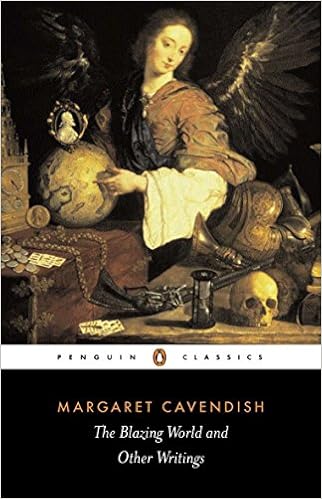
patterns of verbal exchange, and so do the weird liberating qualities of The
Blazing World, the epically strange 1666 work of fiction by Margaret
Cavendish, the Duchess of Newcastle. A friend asked me to write about it, and knowing
very little about it, I expected it to be a utopia of place—its creator’s
perfect world. What I found was a utopia of process, of dialogue and
relationships. The Blazing World isn’t actually on fire, sadly, though it has
the usual buildings made of gemstones and so on. Its most remarkable property
is that many of its inhabitants are half-human, half-animal—bird-men, lice-men,
fish-men, worm-men—and the human scientist who becomes its empress persuades them
to help her research the causes of natural phenomena. Where the science of the
time placed men above women and the natural world, Cavendish advocated scientific
inquiry as interspecies collaboration.
Also in 2019 I wrote about Suzette Haden Elgin’s Native
Tongue https://4columns.org/phillips-julie/native-tongue.
I went to a great reading by my old Voice colleague Colson Whitehead,
who is very funny about growing up a nerd as well as a profound and imaginative
thinker about the use and misuse of power. I reviewed Margaret Atwood’s The
Testaments and thought about how subtly she’s always written about the
space between individual women and their roles. https://www.julie-phillips.com/wp/?p=1048
I rediscovered the wonderful film Céline et Julie vont en bateau (1974)
by Jacques Rivette, a fantasy in which three female characters stage a
jailbreak from a heterosexist love story and go off in search of a better plot.
I was sad that we lost Vonda N. McIntyre this
year, and moved by her generosity in donating her estate to Clarion West.
Another project she encouraged friends to support was research into the Southern
Resident orcas who live in the waters of the Pacific Northwest. When I renewed my
family’s orca adoption again this December, I thought of her, of the
matriarchal society of the orcas, and how hard it is to keep imagining my way
toward others, even though it feels like the work that needs to be done.
I don’t know if that’s part of un-stuckness, but
I’m trying.
Julie Phillips is a book critic and the author of the NBCC
and Hugo Award-winning biography James
Tiptree, Jr.: The Double Life of Alice B. Sheldon. She lives in Amsterdam,
where she’s working on a biographical look at writing and mothering in the 20th
century, to be called The Baby on the
Fire Escape.
Subscribe to:
Posts (Atom)