We’re in the golden age of a lot of things, right now. Television, yes. Internet magazines, yes. Diversity in media? In 2016, most definitely, yes.
But the one that’s really gotten me this year is a sort of smaller one: as a result of the proliferation of online magazines and the millennial desire for mixing it up, I’ve spent the year reading amazing essays by marginalized people.
Here’s a selection of them (most of these were published in 2016, but some slightly less recently):
Essays on songs we love, that have embedded messages we hate.
The letter the Stanford Rape Victim read to Brock Turner in court.
What I Learned from Dating Women Who Have Been Raped: “More than any explicit action, this societal expectation for me to provide nurturance to the very people who resent me has poisoned me. It has required a betrayal of the most personal kind, and to recover from it necessitates re-learning one of the most basic human instincts: My own suffering matters."
Claire Light's stories and articles have appeared in The Encyclopedia Project, McSweeney's, FarThing, Hyphen, Other, Sensor, Viet Tide, popandpolitics.com
and various online and print zines. She was KSW's APAture featured
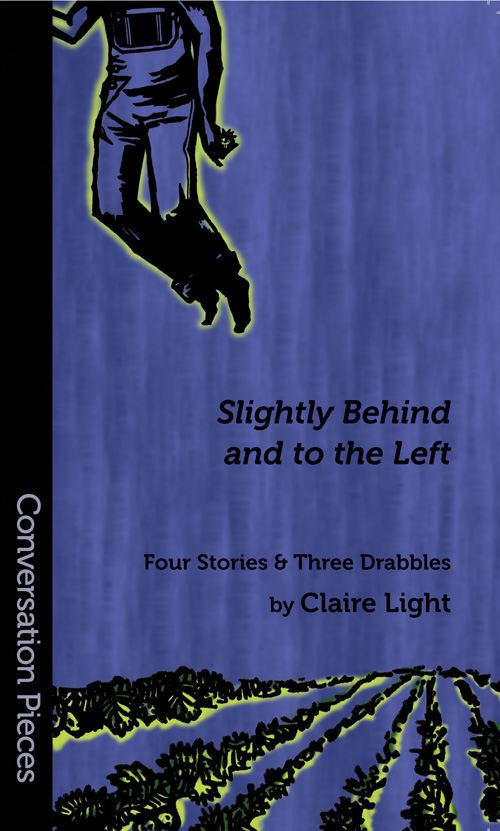
artist in literature for 2005. Aqueduct published a collection of her short stories, Slightly Behind and to the Left in its Conversation Pieces series in 2009.
She blogs at Hyphen and at her own blogs, SeeLight (personal blog) and atlas(t) (mapping and geography.)
1. Robin McKinley Dragonhaven: A boy growing up in a dragon sanctuary goes through a sort of coming of age ritual, spending the night in the wild by himself. But when he stumbles upon a dying dragon who has just given birth, In getting away from her usual late-teens female protagonist, McKinley has allowed herself to do something very interesting with this a-boy-and-his-dragon story. There's very little romance here; the relationship between the boy and the dragon is a parent/child relationship, and the arc is both one of a teen-aged single father, and one of two different species learning to communicate. You can see McKinley's obsession with inimical beings overcoming their differences and learning to understand and love one another. But this time, she takes greater risks with the story, and allows the alien species to be truly alien. And she does it all in the chatty, digressive language of a highly verbal teenager.
2. Cynthia Kadohata Outside Beauty: What are the problems with being beautiful and loving life? It's not the usual setup for teen angst, but this YA is unusual in more ways than one. A Japanese American mother enchants her four daughters (from four different fathers) with her attitude that life is a constant delight. They believe her, and their childhood is happy, punctuated by visits from and to their various fathers, each of whom was charmed in a different way by the mother's beauty and delicious perspective. But when the mother has a devastating accident and the girls have to split up and go live with their fathers, they find that this blithe outlook may not have been serving them well, and that the father with no beauty, grace, or charm may be the best father of them all.
3. Sarah Hall The Carhullan Army/Daughters of the North: This book may need no introduction with Aqueduct's readership, but in case you missed out, this is one smart piece of world-building. In a dystopian future England, ruled with iron fists after environmental breakdown restricts resources, a woman runs away from her failed marriage and a no-hope life to a remote women-only commune where an army is building. Some of the logic of their rebellion is weak, but the scenes in the commune are wonderfully imagined. A great inheritor of classic feminist sf.
4. Zetta Elliott A Wish After Midnight: Some of my favorite middle grade books when I was a kid were the Connecticut Yankee-style stories of kids being zapped back in time to experience history first-hand. This YA does them one better, by raising the stakes on the protagonist's involvement in the past. An African American girl growing up poor in Brooklyn makes a wish and wakes up during the American Civil War draft riots. She's badly beaten by a mob, and falls in with an abolitionist group. Elliott doesn't make the mistake of retconning anachronistic views of race onto the white abolitionists; they are complex and heavily burdened with bigotry. But it is her nuanced handling of the protagonist that makes the novel so good: the more subtle forms of racism this teenaged girl experiences in the present are illuminated by her trip to the past, and she loses her innocence in more than one way. The book ends with a cliff-hanger, and I can't wait for the sequel!
5. Ed Lin This is a Bust and Snakes Can't Run: The recent TV show Life on Mars (both Brit and American versions) renewed our interest in seventies-era cop tales. Ed Lin's new series gives that trope a twist: his hero is one of New York's Finest's first Chinese detectives, and he's working Chinatown. Lin commits to period detail -- and to the complexities of Chinese American enclave society -- to a fault: often the mystery-plotlines take a backseat to exploring that world. But I'm not complaining. It's a fascinating world, and the result is the love child of Chan is Missing and Serpico. I'm now an official fan and will be reading 'em as they come out.
6. Nami Mun Miles from Nowhere: If you asked me to name the tropes and elements of literary fiction that I most despise, I'd list: novels-told-in-linked-stories, autobiographical fiction, troubled-teen epiphany, deliberate urban grit, and "poetic" diction. Yet Miles from Nowhere, drowning in my least favorite things, is a slam dunk. I think it's the difference between a genuine gift for fiction, and trendiness: Mun makes this way seem like the only way to tell her story. She has a strong and delicate hold on the "telling detail," and doesn't waste our time and patience throwing images at us, hoping something will stick. She also knows when to get out of the way of telling a story. I hesitate to recommend this to writers, knowing that it will just encourage more people to try this; but maybe it can be a negative example: if you can't pull such a feat off this gracefully, try just telling the story straight.
7. John Green and David Levithan Will Grayson Will Grayson: Two boys, both named Will Grayson, are struggling with identity and sexuality in Chicago. One, who is straight, is overshadowed by his enormous (physically and personally) gay best friend, Tiny. The other is trying to fend off his best girlfriend's crush, while pursuing a love affair with a boy he meets online. The two meet one fateful night, which changes both of their worlds. A collaboration between two writers, each writing alternating chapters about two characters with the same name, really shouldn't have worked. But it did, and beautifully. Writing in the first-person speech of their characters, the authors were able to get around the problem of clashing authorial voices. And the convergence of the two stories feels natural, especially since they converge with musical theater. But the real triumph of the book is the character Tiny Cooper, who really should have been my best friend in high school, and who is hands down the most interesting character I've seen in YA since Octavian Nothing.
8. Mark C. Carnes Secret Ritual and Manhood in Victorian America: I'm not sure I'm recommending this as a fun read to anyone: it tends towards the academic. But it was one of the books that got me thinking this year. Carnes' interest in the development of contemporary ideas about masculinity takes him back to the origins and heyday of fraternal societies -- such as the Masons or the Oddfellows -- in the 19th century U.S. He points out that the pseudo-religious fraternal organizations were deliberately opposed to the Christianity of the second Great Awakening, which empowered women and had a distinct feminine bent. I read this for research for a novel, and I'm really pleased to see increasing amounts of scholarship on the origins of our ideas of manliness. It's a good book for those interested in the history of gender roles.
9. S. C. Gwynne Empire of the Summer Moon: Quanah Parker and the Rise and Fall of the Comanches, the Most Powerful Indian Tribe in American History: Gwynne tells a nearly lost story of how in the mid-nineteenth century, the Comanches -- who were at that time the best light cavalry in the world -- actually turned back the tide of Euro-American westward expansion for about two decades. In the process, he contextualizes the real people behind the classic John Wayne flick The Searchers. I love a good narrative history, and this is a great one. I'm still working off of Bury My Heart at Wounded Knee's presentation of the interaction between Euro-American settlers and Native Americans. That's the one in which First Nations were, one by one, fought, treated with, cheated, and debased. It's good to have my conceptions smashed and reformed every once in a while; and to be reminded that history is never just about oppressors and oppressed, but is a very complicated story -- too complicated to tell in one book.
10. Afsaneh Mogadam Death to the Dictator! A Young Man Casts a Vote in Iran's 2009 Election and Pays a Devastating Price: The author hides behind a pseudonym, the protagonist is also so hidden; it's hard to know if this is journalism, propaganda, creative nonfiction, or something else entirely. But this story of a young man who decides to participate in the protests against the stealing of the 2009 Iranian election is, for me, a rare narrative glimpse behind conflicting, flat, and agenda-ridden media depictions of a society I know nothing about. The protagonist has his brief moment of freedom in what appears to be an entirely evil regime, and is then arrested, held, and tortured. The book owes a great deal to 1984 and other 20th century political incarceration narratives; in fact, it's easy to see the seams where the narrative is sewn together to make a more affecting story. My helplessness to understand what is real and what is not in the face of the media onslaught about Iran is pretty telling; the book won't answer any of those questions, but it will raise them, tantalizingly.
11. Suzy McKee Charnas The Holdfast Chronicles: A classic I've never read before. A four-novel cycle about a tiny, holdout community of humans who have survived the Earth's environmental collapse by completely oppressing women and incompletely oppressing young men. In the course of the series, the young men rise up against their leaders, destroying much of what is left of their society; then women who have escaped slavery return to free their sisters, and destroy half again of that. Charnas' basic premise -- that men are capable of completely overlooking the essential humanity of women for centuries -- may have been easier to believe in the seventies. It's harder to swallow now. But if you can get past that pretty big stumbling block, the cycle is an amazingly, and increasingly complex piece of world- and character-building. Difficult, rich, and enjoyable, it's holding fast as a timeless work of literature, and not merely a topical work of politics.
12. Suzanne Collins The Hunger Games trilogy: Proof that we are in a true golden age of young adult fiction, this dystopian trilogy raises the bar on both the dystopian trend, and every other YA-money-making trend. A teenaged girl from the coal-mining province of a city-centered totalitarian dictatorship is one of two "tributes" chosen annually from each province to fight-to-the-death in the televised "Hunger Games." Her successful bid to save her partner's life touches off a rebellion, which leads to a war even she couldn't have foreseen. The series is morally complex, as is the de rigueur love triangle. It's not a feel-good series, but you'll feel good anyway.
Claire Light is a founder and former senior editor of the nonprofit Asian American magazine Hyphen and has been a contributing editor at nonprofit magazine Other. She's published stories and articles in McSweeney's, Far Thing, Hyphen, Other, Sensor, Viet Tide, popandpolitics.com and various online and print zines. Aqueduct Press published her collection Slightly Behind and to the Left: Four Stories and Three Drabbles in 2010, as well as her essay "Girl in Landscape: How to Fall into a Politically Useless Narrative Rut and Notions of How to Get Back Out" in Narrative Power: Encounters, Celebrations, Struggles. She blogs at her personal blog, SeeLight, at a mapping blog, atlas(t), and at the Group Asian American issues blog at Hyphen magazine.
In Speculative Fiction 2010 Standouts over at io9, Annalee Newitz offers her list of "the 15 best speculative fiction books of 2010." Included on her list is Claire Light's Slightly Behind and to the Left: Four Stories and Three Drabbles. Aqueduct is now selling this in an e-book edition for $5.95, by the way. It's an interesting list, so check it out.
I thought I'd better mention it, in case you all haven't heard: the Carl Brandon Society is holding a drawing giving away five e-book readers (2 Barnes & Noble Nooks, 2 Kobo Readers (with wifi), and an Alex eReader by Spring Design) that will include a selection of fiction by writers of color.
Here's a list of the fiction they'll be giving away:
Short Fiction
Judgment of Swords and Souls by Saladin Ahmed
Elan Vital by K. Tempest Bradford
The Executioner by Jenn Brissett
The Flinchfield Dance by Mary Burroughs (A Butler Scholar*)
The Abyss Gazes Also By Christopher Caldwell (A Butler Scholar*)
A – The Teachings by Chesya Burke
Chocolate Park by Chesya Burke
He Who Takes Away the Pain by Chesya Burke
The Merchant and the Alchemist’s Gate by Ted Chiang – 2008 Hugo and Nebula award winner
Non-Zero Probabilities by N. K. Jemisin – 2010 Hugo and Nebula nominee
And Their Lips Rang with the Sun by Amal El-Mohtar
Emeritas by Caren Gussoff (A Butler Scholar*)
Lena’s Gift by Shweta Narayan (A Butler Scholar*)
Hi Bugan ya Hi Kinggawan by Rochita Loenen-Ruiz (A Butler Scholar*)
Teaching a Pink Elephant to Ski by Rochita Loenen-Ruiz
Sex Degrees of Separation by Terence Taylor
Non-Fiction
Beyond Duality by Moondancer Drake
Novels
King Maker: The Knights of Breton Court by Maurice Broaddus (Angry Robot)
Racing the Dark by Alaya Dawn Johnson (Agate Bolden)
The Burning City by Alaya Dawn Johnson (Agate Bolden)
Redemption In Indigo by Karen Lord (Small Beer Press)
Anthologies and Collections
A Mosque Among the Stars, ed. Muhammad Aurangzeb Ahmad, Ahmed A. Khan (ZC Books)
Being Full of Light Insubstantial by Linda Addison – Winner of the 2007 Bram Stoker Award (Space and Time)
Tides From The New Worlds by Tobias S Buckell (Wyrm Publishing)
Slightly Behind and to the Left: Four Stories and Three Drabbles by Claire Light (Aqueduct Press)
The Honey Month by Amal El-Mohtar (Papaveria Press)
Paper Cities, An Anthology of Urban Fantasy, ed. Ekaterina Sedia – Winner of the 2009 World Fantasy Award (Senses Five Press)
Filter House by Nisi Shawl – Winner of the 2008 James Tiptree Jr. Award (Aqueduct Press)
Magazines
Apex Magazine November 2010 (Issue 18 – The Arab/Muslim Issue), ed. Catherynne M. Valente
Sybil’s Garage no. 7, ed. Matthew Kressel
Tickets are $1 each; you can purchase as many as you like until November 22 (i.e., a week from today). As you may have noticed, two fine Aqueduct collections are included.
You can hear Claire Light read her story "Pinball Effect," one of the stories in her Conversation Pieces volume Slightly Behind and to the Left, on KQED's "The Writers' Block," here. Running time is close to half an hour. The KQED site, by the way, describes the story in this way:
In "Pinball Effect," Kenji -- a human abductee traveling the galaxy with his alien abductors -- visits a planet with no gravity. The inhabitants are flesh and blood and as dense as humans, and Kenji falls in love. But throwing your weight around has consequences on a weightless planet, as Kenji and his lover -- or is it lovers? -- are to learn. This story is not recommended for people who dislike science fiction, exotic love interests, or hissing sounds.
Stop me before I amend my previous post yet again! To stop myself-- to get my mind off its all too human frailty-- I thought it would be best, actually, to write a new one.
I have a couple of new reviews of Claire Light's Slightly Behind and to the Left, which is the 26th volume in Aqueduct Press's Conversation Pieces series, to report. Interestingly, although they come from very different perspectives, they partake of some of the same reactions.
you'll find yourself drawn into dark, surreal worlds that will leave you feeling shaken for days afterward. In a good way.
A collection of ultrashort "drabbles" and four short stories - two of them linked - Slightly Behind And To The Left is the kind of book where planets are made of cats - but crimes against humanity are still as recognizable as the Moon. Light's prose moves effortlessly between hard science observations and absurdist flights of fantasy.
Writing from a very different, non-genre perspective, Terry Hong, at the Smithsonian Asian Pacific American Program's Book Dragon, also reviewsSlightly Behind and to the Left. She notes that "Claire Light’s slim, bright little book threw me for a loop for sure," and concludes: "Indeed, while her readers are the ones who are ’slightly behind,’ Light is … can’t resist … light years ahead reinventing the Asian American experience, feminist sf-style."
Crammed to the gills with aspirin and symptom-suppressing cold medication, armed with cough drops, tissues, water, and a pump bottle of hand sanitizer that I used with lavish abandon, doing all that I could to minimize physical contact in case I'm infectious, I attended Potlatch this weekend. Got in lots of interesting and sometimes wonderful conversation, but attended no programming (though I did send Tom off to attend the panel on ebooks, since, as we prepare to sell ebooks, we've been struggling to get a grip on technical issues and logistics).
It's been a long time since I've attended Potlatch without teaching a workshop or giving a reading or sitting on a panel, but I was glad for it this weekend. My thanks go out to everyone who gave me such a good conversation.
Bryan Thao Worra interviews Claire Light about Slightly Behind and to the Left for the Asian American Presshere.
I can offer you a brief excerpt from the interview, to whet your appetite:
The first [story], "Vacation," takes place in the few months following the mysterious disappearance of all men from the world. There are still boys, but once they cross over some undefined threshold of manhood, they vanish too. In this new world, women become sexually predatory. When I'm writing a story, I'm looking for the heat source, the place where the story hits a sore spot, something that will make me – and hopefully the reader – really feel something.
The hotspot here turned out to be examining this sexually predatory dynamic between women and young teenaged boys. It's very taboo, and it was difficult and a little scary for me to go there, to get into the headspace of a woman who could become something violent and intrusive. And it was even more scary to make this story public after I had written it. Because at that point, the only other story I'd published ("Pigs in Space," which is also in the collection) also included a woman being violent. But I did it anyway.
The story got extremely positive – even exhilarated – responses from women. And I got a lot of confusion and veiled hostility from men, even close friends. (The most common comment or suggestion from male readers was to ask me to explore the absence of men more, to justify it.) And only then did I notice that most of the editors I was sending the story to, most of the journal fiction editors, were men.
Well I'm just home this afternoon-- and what should happen but that my desktop computer crashed. But then it got worse! The reinstall didn't work, and the system has gotten into a "loop" (as Tom says). It seems we're going to have to reformat the drive. Sigh. That's life with computers, eh?
But listen, I arrived home to find a box of Claire Light's bright, shiny new Conversation Pieces volume, Slightly Behind and to the Left: Four Stories and Three Drabbles, sitting on the dining room table. Here's a description of what's in it:
Claire Light's fiction shifts our perspective just enough off-center to render the world we know a strange and unfamiliar place. In this volume, a woman with the most thankless job in space will calculate a new kind of "cold equation" to get her home to port. In a fantastical place where adulthood is the biggest threat to adolescent boys, predators arise from unlikely quarters. In a world with wonky physics and no gravity, a lone human learns the meaning of "reckless endangerment of alien life." And an alien abduction is only prelude to a long phantasmagoric journey. Interspersed with evocative flash fictions, this collection of stories luxuriates in the weird and wonky, half-lit realities and sidelong looks at painful truths.
And here's just a little taste from "Vacation":
The day all the men disappeared she went outside to see if it was true, if they were really all gone. The streets were quieter. You could hear more wind. Sometimes almost half a minute could go by without a car passing. The air smelled cleaner. More people were walking today, looking around. Some faces were in wonder. But in more of them, eyes were sweeping horizontal swaths, whites showing. And in the moments between the gusts of wind, when the wind died down and there were no cars passing, you could hear, for a moment, that the sound of walking was one of swishing and clopping, of cloth between thighs rubbed together, of wooden stacks, and of feet planted more forward than back.
You can purchase this little gem from Aqueduct right now, here for $9. (It will be available other places, like Amazon.com eventually, but not for a couple of weeks.)
Rick Kleffel has a podcast of his interview of Aqueductista Claire Light at The Agony Column, made on October 10, 2009 at SF in SF Litquake. This is his teaser:
"The way that writers of color use science fiction is very different..." — Claire Light
Kleffel also offers podcasts of a panel at Litquake as well as interviews of the other panelists:
Looking for a science fiction convention that meets once monthly and offers just one reading, one panel, comfortable seating and a bar? I can't imagine anything more ideal, really, none of the usual running about from one back-killing chair to another. But that's SF in SF, even when it’s also part of Litquake.
The panel on Saturday, October 10, 2009, was no exception, except that there were three authors rather than the usual two. Jewell Gomez, Marta Acosta, and Claire Light moderated by Terry Bisson proved to be as entertaining as you might expect, offering a variety of opinions and experiences with regards to the topic of "Color Me SF: The Science Fiction Worlds of Octavia Butler and Carl Brandon." We got the lowdown on Carl Brandon, the challenges faced by people of color writing speculative fiction — SF, horror and fantasy — and lots of fascinating anecdotes about Octavia Butler.
Claire's Slightly Behind and to the Left: Four Stories and Three Drabbles, Vol. 26 in the Conversation Pieces series, will be out from Aqueduct in December.
I discover new music haphazardly; I stumble across artists by accident. I am a terrible reader. I work too many hours, I have too many damn kids, and so I trip and fall backwards into reading stuff. I would never plan to read a whole novel; I haven't the time. So when I'm not looking, books happen to me.
Like Jessy Randall's hilarious collection of poetry A Day in Boyland, which I actually bought for my sister. I'd read a few of Randall's poems, she lives in my sister's state, and I thought she was funny. Fortunately for me, my sister left the book at my house and I got to read it in the ensuing (aherm) year AND A HALF it took me to finally mail it to her. And you know what? Randall's poetry collection isn't just funny. It's deeply, insightfully funny, looking at gender and love in uncomfortable and delicious ways. It makes you think even as you're laughing. And just when you're all: "ha ha ha omg so funnAY" she comes out with an utter heartbreak that socks you right in the gut. POW.
Speaking of gutpunches, have you heard the Minnesota Orchestra's recordings of all of Beethoven's Symphonies? They just finished the fifth and final CD this year. There is some music that will put hair on your chest! This is the most nuanced, brilliant series of recordings ever made of Beethoven's music. If you do not get all tingly listening to the magnificently spooky and ominous 7th you are either deaf or dead. They were not afraid to go whole-hog serious gut-clenching face-smashing in the choral movement of Beethoven's 9th, but they didn't back away from his gentle humor and heartbreakingly warm gentleness in the more subtle sections, either. No galloping grandly yet chubbily through the notes on the famous 5th like so many others have— Osmo Vänskä paid attention. He interpreted. He totally kicked every other orchestra's ass. Midwest represent!
If the Minnesota Orchestra's recordings of familiar music done in a delightfully fresh way make you feel slightly a kilter, I beg you to go back to Suzanna Clark's brilliant world by reading her collection The Ladies of Grace Adieu set in the same world as Jonathan Strange. It is so good to go back there. So good, and so fun. And seen from a different angle! I wonder if Clark felt bad writing such a male-character dominated book, or she wrote some of these bits that just didn't seem to fit into the novel itself so she decided to present them to us. Either way, it's great to go back and hear what the women have to say about this world. So, so nice to be back in that place I cried at having to leave a few years ago when I finished Strange.
If you'd prefer instead of be shaken like a can of spray paint and balanced on your head, get Benjamin Rosenbaum's collection The Ant King and Other Stories. Ben's playfulness, deadly earnest experimentation with physics and human emotion, and his sheer exuberance is utterly delectable. What he does with speculative fiction is exactly what spec fic is for: he stretches boundaries. He not only asks "What if?" but he also asks: "What next?" His stories are alternatively thigh-slappingly hilarious, quietly sad, and conceptually challenging. Stories in this book have appeared in Harper's and been nominated for Hugo and World Fantasy Awards. If I were giant, I would eat him up with a spoon. This is some seriously good shit. (Which is exactly what I said when I first heard Delta Spirit's "Ode to Sunshine" a few weeks ago. I thought they sounded like the Beatles, but some people call them folk. There are also whiffs of The Stones and Dylan. With a gospelly-soul feel. Classic. Seriously good shit. Check it.)
Barth Anderson's The Magician and the Fool is some seriously weird shit. Billed as an alternate history of Tarot (which it is), it's also a love letter to Minneapolis and Madison, the chronicle of the ultimate (thank goodness) failed attempts by two men to deny the power they have inside of themselves, and a profile of evil. I really hate it when people say stuff like "this blew my mind, maaaaaaaaaan!" because it's so hippy and embarrassing, but I see that I in fact used that exact phrase when I reviewed it on GoodReads. What I love is how unpredictable this book is. I had no idea where the plot was going. I had no idea who would wind up doing the right thing. I was somewhat dim on what the right thing to do was. And in the last chapter? I didn't even know WHO anyone was. But you know what? I didn't care. It was that good. I love-love-loved it. It was that mind-bending.
So is Amy DiGennaro's art. She just won a McKnight Fellowship this year and her work is AMAZING. She says of her own work: "My work explores the fictions that white middle-class America creates through the history and institution of family. I look at moments of disconnect between experience and perception and create visual tales of those points of slippage." What this amounts to is deliciously nightmarish antique-looking illustrations that might be found in an old children's primer if penned by your hip lesbian aunt. She pours herself into her work, depicting her father (who died suddenly and whom she adored), her partner and their children, and herself. Brilliant, fun to look at and find new surprising images, and often quietly moving.
Oh, this is so excruciating to admit in public but I just read The Female Man this year. I'm sure everyone reading this has already read it, but for the 1.5 of you who haven't: Joanna Russ wrote a deeply absorbing, complex, and challenging book. Although I caught myself rolling my eyes at some of her descriptions of men and courtship ritual in the book (and feeling deeply utterly extremely grateful for having been born in 1970 in the Northern U.S.), she got me with the end. Oh, how she got me! She turned my eye-rolling in on itself, which is much more nice than it sounds. I didn't see it coming, her sum-up which handed me my jaded tsking on a silver platter. Wonderful. One quibble: she doesn't know shit about raising kids.
Another book which starts out one way and winds up in a completely different place is David J. Schwartz's Superpowers. As it starts, you're all: "This is a delightful romp through a 'what-if' of college kids getting powers! Wait. These dates seem to be heading toward a rather ominous and famous day that rings a bell. Uh oh. Things are not working out well for people." The ensuing spiral of misery made me happy, of course, because I hate happy endings. HATE THEM.
Which is why I'm a hypocrite for finishing up with my number one favorite read of the year: Chris Barzak's One for Sorrow. Well, I guess the ending is only happy in comparison to the wretched misery of the rest of the book. But oh oh oh oh how I loved this book. I believed in it. I believed Adam, and I believed in him, and I believed his family and his town and his random angry desperate wandering. I believed the ghosts and the horrifying endless sadness. The beauty of this book lies in how true-to-life it is. Through stark and honest descriptions and storytelling, Barzak manages somehow to transcend sorrow by brilliantly describing it. Barzak's book took speculative fiction so far into my brain that it made me believe for a while that we do live in his world: it seems self-evident that people's shadows speak and that ghosts can wear live people's clothes and make sure that they eat some lunch, already. This book is misery and ugliness beautifully described, the chillest and saddest winter, and confusion and unfocused anger and old sneakers and sunflowers. Oh, how I loved this book and how I envy those of you who have yet to read it!
Haddayr is an essayist and fantasy writer with pieces in places such as TheMinnesota Women's Press, Strange Horizons, and Ideomancer. She writes advertising copy for her day job and lives in Minneapolis with her punk rock stay-at-home husband and two sons.
Claire Light:
My Top 8 Blogs of 2008
My reading rate of 2-3 books a week went down to one/week a few years ago, owing to the golden age of televised serial drama we're entering (Battlestar Galactica anyone? Deadwood? The Wire? Even Lost?) But this fall season's ranks of TV drama were mostly pathetic (what part of golden age do these producers not get?) ... yet my reading rate hasn't gone back up. It all came together when, trying to explain "aggregator," I was showing a newbie friend my bloglines page. "Do you really read ALL THOSE BLOGS?" she asked, shocked and awed. Well, yes ... yes I do.
It's all connected. Television's decades-long adherence to the Weekly Consistent (the same show, the same style, the same story arc, over and over and over and ov-) has been broken by the internet, and more specifically by blogs. The dailiness, or weekliness, of text blogs, podcasts, and video blogging have satisfied that well-trained need for entertainment that returns us to Point A every time we click through. And look at where TV is going now. This internet content trend has freed television up for longer story arcs; the season-long arcs popularized by Buffy, the series-long arcs rendered completely addictive by The Sopranos. Interestingly, television has taken a turn for the longer attention span. Whoever could've foreseen it?
Entertainment media are shifting roles. Updatable online content is taking over the short-form, repetitious niche that TV occupied for so long. There's all this fuss and worry that internet entertainment is shortening the teenaged attention span further, but teenaged attention spans have always been short, and new media always jump into the short-attention-span niche FIRST, before acquiring artistic cred by getting longer and more challenging. Look at novels, which started out as episodic narratives in magazines; look at films, which started out as silent shorts in nickelodeons; look at radio, which started with short-format variety shows.
What's changing now with the internet is that people are returning again and again to the same updating sites for new iterations of the same type of content. They're being drawn into serial consumption of a particular type of content, and this is taking up more and more of their entertainment time. The overwhelming bulk of online media creates opportunities for items of consumption, things called "content," to develop in craft, and to comment more seriously on the world. And it's time for us to look at blogs as such.
So, at the end of 2008, my first mostly online entertainment year, I'm listing the best blogs I read regularly this year, with some notes about what makes a good blog (for me), and even what makes a great blog.
There's a difference between an art blog, and a blog that is itself art. I would say that Last Plane to Jakarta, a music blog, is an art blog that is so well done it approaches art itself. There's nothing particularly special about the way John Darnielle (yes, that John Darnielle) has designed or maintained his blog. He posts about extremely obscure music, often metal genres I would never listen to, and, in fact, I'm not inspired by his "reviews" to listen to the music. I was at first, but I was always disappointed: it's not the music that's inspiring, but his enthusiasm about it. Darnielle himself is inspired by music to writing ecstasy, and that writing is worth reading for its own sake. Note the "Thirty Short Poems About My Favorite Black Metal Band" series here.
And I would say that Pruned, roughly speaking a landscape architecture blog, is a blog that is itself art, that merely pretends to be an art blog. What makes this blog great is to a small extent blogger Alexander Trevi's design sense (why are most beautiful blogs all on white backgrounds?), but mostly the way his posts pursue some strange idea of his imagination, jumping off a real-life design project he found. Take, for example, "Michael Jackson as Landscape Architecture," in which he jumps off a sod suit art project to discuss human body modification as a type of landscaping. Or take "Versailles in the Pacific," in which a wave generator machine that creates images in water gives rise to a flight of fancy about weaponizing a garden of Versailles made out of waves, and siccing the geometric tsunami on our enemies. I have no idea what Trevi's own real-life design practice is like, but I suspect that these fancies don't always get an outlet there. Pruned seems to exist primarily for its own sake, a pressure valve for the imagination, and a form of creative expression that only could happen in a blog.
While Trevi is pretty much unique in his tiny little niche, there are any number of video bloggers who are sticking their faces in front of cheesy digital cameras and SPEAKING their bloggery rather than doing that difficult, skills-oriented thing called "writing." YouTube's servers are groaning with the mumbles of poorly educated teenagers, but then, there are also those who, with a snatch of soundtrack here, and a little premiere-editing tweak there, have turned the cheesy-vid-talking-head into ... yes ... an art form.
I'm talking about Ill Doctrine of course, hip hip blogger Jay Smooth's one-and-a-half-year-old video blog. Smooth might be the perfect person for this form: a longtime radio announcer/producer, sideline hip hop artist, and all-around dude, who grew up with one foot streetside in Harlem's hip hop stream, and the other in schmancy prep schools and colleges. Plus, he's just hella cute. It's not so much that he's doing anything new, as that he's combining stuff that a bunch of other people are doing (face vlogging, fan vids, satiric sampling, general music video), and creating a balance among the elements. He just does it better, and, like all good artists, shows others how it can be better done. Here's an example from before the election:
Then there are the most base and flatulent sorts of blogs, the ones that post pictures and comment on them, that play to the lowest common denominator. If you detect a note of contempt in that description, check yourself, because I love blogs like this. By being purely themselves and pretending to nothing more, by being simply the best at what they do, Cute Overload and Go Fug Yourself have reached the level of art ... by my lights, anyway. Anyone can find pictures of cute animals or celebrity fashion disasters on the internet, post them, and comment on them. But it takes more than a good writer to be consistently funny and invent new languages. It takes a truly skilled and talented blogger to find that intersection between the found image and the text description and be able to exploit it over and over again to non-diminishing effect. I won't link to particular examples of these blogs because the special genius of both is that they bring the magic in every single post. I don't quite know how they do it, but this is blogging art at its purest.
There's also the realm of blogs that examine the WHOLE WORLD from the point of view of what white men in power love to call "special interest groups." I've read some of the the big feminist blogs, but my favorite is Salon.com's Broadsheet. This will shock and appall many, but I have solid reasons. For one, Broadsheet never gives in to the temptation to lecture that most feminist blogs do. It's is also flavored with snark, without being about snark in a way that sacrifices clarity of content to get in those nasty jokes. You bloggers know who you are.
Broadsheet is well controlled so that posts from this group blog have a fairly uniform length and structure; it's entertaining, while covering all topic areas: media, art, sociology and science, politics and policy, etc; it represents a decent--if not exhaustive--spread of opinions from the feminist landscape; and, yes, it is moderate in its views, inviting those with more pronounced opinions to disagree, and not alienating the middling-minded. I don't feel importuned when I read it, and I don't feel any reluctance to approach it because I'm going to be unpleasantly challenged. And yet, every day, I come across a topic on the blog that requires thought, that doesn't offer an easy answer or stance. This is better than education: this is illumination.
I also read a number of race blogs, and yes, these are necessarily limited. You can't blog about a particular racial or ethnic group without looking away from all the other racial or ethnic groups. And the lack of breadth, the necessary limitation of viewpoint of individual racial blogs, makes for limited blogging. (And I say this as a racial blogger myself.) So the only race blog I can put down here as a favorite is Racialicious, whose tag line is "the intersection between race and pop culture." Over time, the blog--started by "New Demographic" diversity trainer and multiracial Carmen Van Kerchove--has incorporated a lot more than just pop culture commentary, and included a number of regular and guest bloggers from a variety of racial and ethnic groups.
This is the one blog on this list that does not approach the highest in blogging "art." There are so many guest bloggers that the blog has never managed to maintain a consistent standard in voice and texture; the posts are waaay too long; it doesn't even try to resist the temptation to lecture--some days are just one lecture after another; and covering a broad variety of topics is clearly far more important here than good writing. But Racialicious is one of my main go-to blogs, a place where I am kept up-to-date on racialized viewpoints, and on the opinions of various ethnic communities on current events. It's not always pretty, but this is an essential function that blogs can, and must, fulfill.
Which starts taking us into blogs that attack culture from more ... oblique angles.
My favorite new blog of the year was, believe it or not, the Baby Name Wizard Blog. Yes, it's true, Laura Wattenberg's Baby Name Wizard online application, which, if I'm not mistaken started out as a side note on some online magazine's parenting section, now has its own book, its own website, and a whole slew of naming applications that allow you to map out the popularity of a name geographically, and see the changing popularity of a name over time.
The blog, launched a year and a half ago, comes from the most "debased" of origins: a combination of marketing, and the current retrogressive fascination with celebrity spawning, which has led to an online all-things-baby frenzy. And this is marketing at its best, a total marketing strategy in which every component is interesting and well-done, and every element feeds into the other elements. But the Baby Name Wizard Blog isn't just -- like Cute Overload or Last Plane to Jakarta-- great because it does what it does really well. The blog is intellectually transformative: it illuminates its topic area in a way that its readers probably never expected (I sure didn't) and elevates a universal and necessary pastime (naming babies) into an important cultural marker, which, in fact, it has always been. You could say that this is the job of Wattenberg's book, and you'd be right. There's a trend in full swing now in which nonfiction books unpack the fascinating cultural contexts of very simple phenomena.
But the advantage of a blog is that it can take a set of concepts and relate those concepts to current events as they come up. A blog can, in fact, evolve its core set of concepts as time and events pass, and illuminate and distort those concepts on an ongoing basis, as needed. This is the best kind of blogging: the kind that gives us a framework to live a thinking, imagining life in which no ideas, images or realities become frozen inside our heads. It's what Wattenberg and all the bloggers named above are doing, each in their own way, and it's our newest art form.
Get it, get with it, and happy holidays to you all!
Claire is a founder and former senior editor of the nonprofit Asian American magazine Hyphen and has been a contributing editor at nonprofit magazine Other. She's published stories and articles in McSweeney's, FarThing, Hyphen, Other, Sensor, Viet Tide, popandpolitics.com and various online and print zines. Aqueduct will be publishing an essay by Claire in a book on narrative and politics in 2009. She herself blogs at her personal blog, SeeLight, at a mapping blog, atlas(t), and at the Group Asian American issues blog at Hyphen magazine.