Showing posts with label Isabel Schechter. Show all posts

Saturday, January 3, 2026

The Pleasures of Reading, Viewing, and Listening in 2025, pt. 24: Isabel Schechter


Reading and Viewing Pleasures in 2025

by Isabel Schechter


Did that really happen? Did that person really exist? My husband and I asked each other this repeatedly while watching The History Channel’s Vikings, our most recent binge viewing. Well aware that historical fiction is, in fact, fiction, we did not let the familiar names, locations, or battles lull us into accepting everything in Vikings as completely factual and instead consulted the internet (an imperfect source, I know) a least once per episode and learned a lot about Vikings, England, and even France. Who knew that a Viking married a Frankish princess and became a duke in Paris? Or that the Vikings sailed to the Mediterranean? Not me.


 Watching Vikings reminded me just how much I like historical fiction, even though I did not know it was considered its own genre. I read The Adventures of Huckleberry Finn by Mark Twain and considered it fiction, as in, it was not non-fiction, but I would not have known to label it ‘historical fiction.’ The same applies to Little Women by Louisa May Alcott, Gone with the Wind by Margaret Mitchell, or Beloved by Toni Morrison, even though those stories were directly tied to a specific time. The father in Little Women is absent only because he is fighting in the US Civil War, Gone with the Wind includes actual events from the war, and Beloved’s main character is an escaped slave whose story takes place after the war.

 Looking back, it seems obvious that these are all historical fiction, and that got me thinking about what other historical fiction I’ve read and watched. Here is some historical fiction I’ve read and watched:


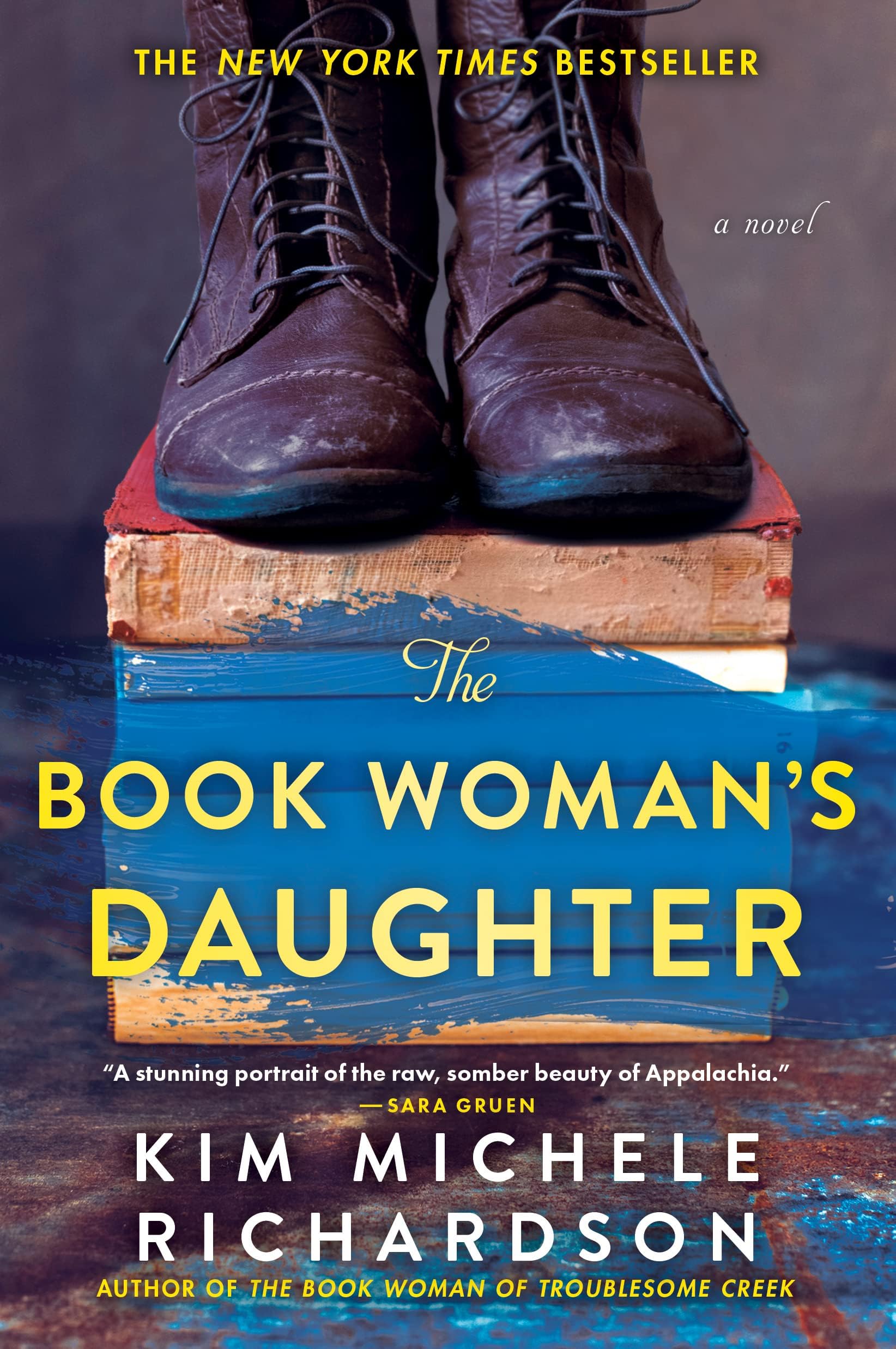
 I firmly believe books are a passport to this and other worlds and that libraries are necessary for a country to be a truly free and democratic nation. Books, films, newspapers, research materials, programs like Storytime for children, test prep books, foreign language software, and computers and printers, are just some of the ways that libraries and librarians provide necessary services to their communities. The Book Woman of Troublesome Creek by Kim Michele Richardson tells the story of one woman who served as a traveling librarian to towns in Kentucky during the Depression as part of Eleanor Roosevelt’s traveling library program. I admire the many women who were brave enough to do such an important job and was glad to learn that such a program existed.

 My mother-in-law and I read Moloka'i by Alan Brennert in our respective book clubs and agreed it was a sad story beautifully told. The story is about Rachel Kalama, who is diagnosed with leprosy as a young girl and is forced to leave her family in Honolulu to go live in Kalaupapa, the leper colony on the island of Moloka'i run by Franciscan nuns in the 1890’s. I had no idea that leprosy (Hansen’s disease) still existed in the 19th century or that people with the disease were forced to live isolated lives away from their families. In addition to seeing what life is like in the colony, I learned a little about the culture and mythology of Hawaiian people.


 In the Time of the Americans
by Oswald Rivera tells the story of several generations of two Puerto Rican families who represent very different perceptions and experiences of the transition of Puerto Rico from a Spanish colony to a US possession. Well-written characters deal with intergenerational strife, love affairs, political battles, and technological advances. The Puerto Rican in me found this to book be both beautiful and informative-not just for Bad Bunny fans!

Phillippa Gregory has been called “the queen of royal fiction” and is the author of The Other Boleyn Girl, The Boleyn Traitor, and other novels set in the Tudor court of Henry VIII as well Red Queen, White Queen, and White Princess, which are set during the War of the Roses. A film adaptation of The Other Boleyn Girl starred Natalie Portman and Scarlett Johanssen, and a BBC adaptation of the other books in the series starred Rebecca Furgeson. I have watched all the adaptations and read some of the novels. For those who like royal intrigue to go along with their history, Gregory’s novels hit the spot.


 Perhaps the most well-known historical fiction novel I have read and watched is One Hundred Years of Solitude by Nobel Prize-winning author Gabriel GarcĂ­a MĂ¡rquez. Primarily considered ‘magical realism,’ the story covers several generations of the BuendĂ­a family and takes place in the mythical town of Macondo. The story is more than magical realism, however, as Macondo is located in Columbia during a time of war and includes an incident based on the real-life Banana Massacre. The book is beautifully written, and I recommend it to everyone. Netflix released an excellent series based on the book. Other books by GarcĂ­a MĂ¡rquez include Love in the Time of Cholera, Chronicle of a Death Foretold, and The Autumn of the Patriarch.

 I intend to read more historical fiction this coming year, including Wolf Hall by Hilary Mantel, which is about Henry VIII’s attempts to divorce Catherine of Aragon in order to marry Anne Boleyn. I have tickets to see SIX, the Tony Award-winning musical about the six wives of Henry VIII portrayed as members of an all-girls pop band, so this will be a good refresher on Henry’s wives before the show. The novel also includes Thomas Cromwell, who is someone I have wanted to know more about for a while now, and this is another excuse to read the book.

 I am also going to read some classic historical fiction. My husband has been telling me for years to read The Count of Monte Cristo by Alexandre Dumas; now that PBS is adapting it, I am finally going to read it. This is a revenge tale (I am a big fan of revenge, which is why my husband thinks I will like this book) in which the main character works an elaborate scheme to get revenge against the man who had him falsely imprisoned and stole his fiancĂ©e. Love, betrayal, prison, treasure, and justice-what more could a bloodthirsty person like me ask for?

I suppose I could ask for more time to read the dozen or so historical novels I have on my TBR list, but I’m sure by the time I get through those I will have added more to the list, so I better get going and get started!


 Isabel’s essays on race and representation in SF/F have been published in Invisible 2: Essays on Race and Representation in SF/F, Uncanny: A Magazine of Science Fiction and Fantasy, and several volumes of the WisCon Chronicles; and she is Co-Editor of The WisCon Chronicles Volume 12: Boundaries and Bridges. She is Puerto-Rican, feminist, child-free, Jewish, vegetarian, and a Midwesterner living in Southern California, and embraces the opportunity to represent the fact that no one of those identities excludes any of the others.


Saturday, December 21, 2024

The Pleasures of Reading, Viewing, and Listening in 2024, pt. 12: Isabel Schechter


The Pleasures of Reading, Viewing, and Listening in 2024

by Isabel Schechter


I am a creature of habit, and, once I discovered science fiction and fantasy books as a young person, it made up most of my reading. In the past few years, though, I have tried to expand the genres of books I read. The problem I ran into was not finding books to read, but rather figuring out the meaning of the various labels used to describe them.

Science fiction, fantasy, women’s fiction, historical fiction, literary fiction, chick lit, and romance are just some of the types of fiction I have read this past year. But what do all those labels really mean? Are you allowed to read women’s fiction or chick lit if you’re not a woman? Isn’t all fiction that is written in or about the past, historical? What makes literary fiction more literary than any other type of fiction? Does it count as romance if it’s not Harlequin, Hallmark, or features a bare-chested man on the cover? And what the heck is romantasy?

Thankfully, I belong to several book clubs that help me make sense of some of these labels. The newest (and most surprising to me and everyone who knows me) is a romance book club. It is this book club that has taught me the importance and utter foolishness of labels.

Sometimes labels are good, like when you’re looking for a superhero book to give a five-year-old for their birthday, you go to the section in the bookstore that is labeled for children instead of the section labeled gardening. But sometimes labels can get in the way of finding a good book, especially when a label keeps you from trying something new because that genre is frowned upon or dismissed as not serious or quality reading, as is the case with romance.

Books labeled as romance feature a romance between characters in the book, but other types of fiction also include a romance between characters, yet they are not labeled as romance. How much romance is required for a book to qualify as romance? How much romance is too much for a book to be labeled as anything else? Should I buy a book cover so that no one will see the bare-chested man on the cover and dismiss my reading as inferior?

What I have learned from expanding the types of books I read is that good books are good books, regardless of genre, just as bad books can also come in a variety of genres. So yes, I read romance novels, and I like them. I suggest you branch out and read other genres than your usual ones, possibly even romance novels. You might be pleasantly surprised at just how much you like books with bare-chested men on the cover.


 Isabel’s essays on race and representation in SF/F have been published in Invisible 2: Essays on Race and Representation in SF/F, Uncanny: A Magazine of Science Fiction and Fantasy, and several volumes of the WisCon Chronicles; and she is Co-Editor of The WisCon Chronicles Volume 12: Boundaries and Bridges. She is Puerto-Rican, feminist, child-free, Jewish, vegetarian, and a Midwesterner living in Southern California, and embraces the opportunity to represent the fact that no one of those identities excludes any of the others.


Monday, December 25, 2023

The Pleasures of Reading, Viewing, and Listening in 2023, pt. 19: Isabel Schecter


Libraries and Books in 2023

by Isabel Schechter


Are we there yet? Are we there yet? Are we there yet?

For those of you who took family car trips when you were younger, or those of you riding in a carpool to WisCon, the wait to get to your destination on those trips was interminable. Time moved at a glacial pace. Fast forward to today when the book you have on hold at the library still hasn’t come in, and the wait is also interminable. Time is once again moving at a glacial pace.

Rather than waiting for the book, you could just buy it (from an independent bookstore, of course) and get it today, but that may not be a financial option for you. If it’s a popular book, friends who may own the book might be reading their copy and can’t lend it to you until they are done, and your friends who don’t own it may be the very people who have a hold on a library copy and are in line ahead of you.

On the other end of the time spectrum, your book club is meeting in just two weeks and you still haven’t even gotten the book, and who knows if you will be able to finish reading it before the book club happens? Apparently, time can move at a glacial pace and so fast that it feels like you can’t keep up with it. How is this possible?

Well, as a science fiction fan, I am used to time running in multiple directions at multiple speeds simultaneously, so I do the best I can to manage my impatience with whichever way time is flowing by having library accounts in multiple library systems.

I have an account with my San Diego city library system as well as the San Diego county library system (having both is permitted). In addition, although I am not a resident of Los Angeles, I am a California resident, and the Los Angeles city library system grants accounts to all California residents, so I also have an account with the Los Angeles city library system.

 My city library system has a shamefully small budget for books and materials (City Councilmembers, I’m looking at you), which means there is a limited selection of books, and a small number of copies of the books that are available. My county library system has approximately three times the city system’s books and materials budget (governing done right), which means my chances of getting a book in a reasonable amount of time are much higher with the county than the city.

Sadly though, even with two systems, there are still not enough copies of all the books I want. But I won’t let underfunded library systems stand between me and my book club, so when I was recently in Los Angeles, I brought my driver’s license and a utility bill, and viola, I now have a Los Angeles city library account! This doesn’t mean that I am going to drive two hours to go to LA every time I need a book, but I can put eBooks on hold and have an even greater chance of getting the books I need.

So the next time you need a book and can’t get it from your local library, or your other local library, or your other not-local library, contact your elected officials and invite them to join your book club that’s happening in two weeks. And be sure to pick a book that has 347 holds on it.

Here are some suggestions of books I’ve gotten from the library:


Book Lovers by Emily Henry


The Book Woman of Troublesome Creek by Kim Michele Richardson


The Last Chance Library by Freya Sampson


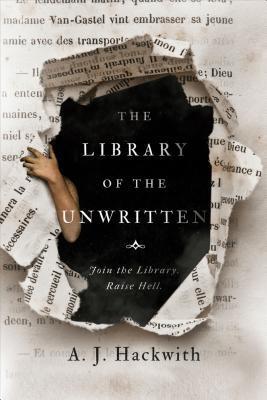
The Library of the Unwritten
by A.J. Hackwith


The Midnight Library by Matt Haig


 Happy reading.

 Isabel’s essays on race and representation in SF/F have been published in Invisible 2: Essays on Race and Representation in SF/F, Uncanny: A Magazine of Science Fiction and Fantasy, and several volumes of the WisCon Chronicles; and she is Co-Editor of The WisCon Chronicles Volume 12: Boundaries and Bridges. She is Puerto-Rican, feminist, child-free, Jewish, vegetarian, and a Midwesterner living in Southern California, and embraces the opportunity to represent the fact that no one of those identities excludes any of the others.