Showing posts with label Beth Plutchak. Show all posts

Tuesday, January 7, 2025

The Pleasures of Reading, Viewing, and Listening in 2024, pt. 28: Beth Plutchak


Cassandra at the Ballet

by Beth Plutchak


The night of November 5th, 2024 election night, my wife and I went to the World Ballet Company’s production of Swan Lake. I love Swan Lake, the music, the costumes, the swans dancing in unison, the plot that makes no sense, with a through line that can lead to happiness or tragedy. Which ending will this version be? No spoilers, please. I love Tchaikovsky. I love the Russian composers in particular because I can hear it, you know. I’m not a musician. I have no musical theory. But, I hear the cold and the longing and not angst exactly but something in between. Something between not knowing what one wants and the certainty that if you get what you want it will never work out the way you hoped. The World Ballet’s mission is ballet is for everyone. They want to make ballet universally accessible. World Ballet chose the happy ending. 


So, on November 5th I put the election out of my mind and watched the ballet. I watched the happy ending. On the way home I checked social media and I was transported to the tragic ending. I can admit it now, but I never had any doubts that Trump would win the election. As I saw my white feminist and queer white friends exhibiting increasing hope after Harris accepted the nomination I learned to keep my mouth shut, because I was constantly in danger of saying “the first time Trump was elected.” I heard my Black and Brown friends try to tell White Women, “Pay attention, what you are afraid of has been happening to us for a long time.” I never expected white women to rally around the abortion issue and “save” us. I remember how white women treated women of color during the women’s rights movement that brought us Roe v Wade. I remember the Combahee River Collective Statement. I remember white feminists’ response.

I have spent the greater part of the last two decades working on various projects involving complexity economics as a tool to understand where we are politically and economically and as a tool for moving forward. Things that are incredibly clear to me have been impossibly difficult to communicate (hence Cassandra). One thing that has remained clear is, to quote World Ballet Company, “Art Changes People. People Change the World.”

Politics operates at multiple levels. In an election year we tend to think politics only happens at the ballot box, but it also happens at the level of who determines what policies can be implemented, and before that it operates at the level of what policies we believe can be implemented and at the level of the future we can imagine. The work before us now is how do we change the message, the story line, and make an equitable future imaginable? It’s the long way round and the only way forward.


Where do we start this long way round work? A. R. Moxon released a book last year called Very Fine People | Confessions of an American Fool. This is the most important political book I have read in a long long time. Well as is often said, the best place to start is at the beginning and the beginning of America is genocide and chattel slavery. I don’t know how we come to terms with that as a nation, but I do know that as white people we can and must come to terms with it individually. Moxon lays out a path forward from acknowledgement, to repair, to redemption.


I spent a good deal of last year reading political and economic non-fiction, trying to find the language I need. Books I recommend in no particular order are The Persuaders, by Anand Giridharadas, Re-Enchanting the World | Feminism and the Politics of the Commons, by Silvia Federici, The Dawn of Everything | A New History of Humanity, by David Graeber, The Feminist Subversion of the Economy | Contributions for Life Against Capital, by Amaia Perez Orozco, translated by Liz Mason-Deese, and The Red Deal | Indigenous Action to Save our Earth, by The Red Nation. I followed the bloggers Heather Cox Richardson, A. R. Moxon at The Reframe, and Framelab which builds on George Lakoff’s work. I reread Don’t Think of an Elephant, by Lakoff, and am trying to learn how to communicate through shared morality rather than cold facts. There was a joke circulating through Facebook last year that went like this.

A: If you just provide people with concrete facts you can change their opinions.

B: Actually, they did a study and 95% of people did not change strongly held beliefs when presented with new facts.

B: Well, I can’t believe that’s true.

If white people are willing to do the work that is before us, we will find our way to the necessary evolution of a just world through community. As long as we make excuses for not doing that work we will fail. Until we do that work we will be unable to listen to what more marginalized people have learned and have been trying to tell us about surviving this chaotic post-capitalism we find ourselves in.  We will continue to circle in chaos.

But, I’m also supposed to be writing about pleasures here and the pleasures I found were a kind of escapism, a kind of catching my breath by streaming shows that brought me comfort and reminded me of the work to be done. My old standby is Foyle’s War available on Acorn. Christopher Foyle is a country policeman who struggles with morality during WWII. As a German spy puts it to him in the episode "Fifty Ships," “You investigate murder, in a time of war?” I am reminded that the world has been horrible before. (Just to be clear, we didn’t all survive then and we won’t all survive now). The important lesson is that just because the work we are able to do seems small, we are not absolved from doing it.


I discovered the series Deadloch streaming on Prime which was the Queer mystery series I didn’t know I needed. It is set in the fictional town of Deadloch on the coast of Tasmania, an intentional Lesbian community. It both follows the formula of so many British mystery shows and also lovingly satirizes them. And it is a lesson in community building.


Finally, I watched the first and apparently final season of Kaos streaming on Netflix, starring Jeff Goldblum as Zeus and featuring the brilliant Suzy Izzard as one of the Fates. I started the series because of an interest in Greek Mythology, a love of satire, and long-held crushes on both Izzard and Goldblum. I was unprepared for how Queer affirming and Trans affirming this show would turn out to be. There is such a difference between Queer acceptance and radiant Queer and Trans joy. But, it was Billie Piper’s scattered and resigned Cassandra that provided part of the title for this piece.

In 2024 I have also been trying to understand community building by becoming more active in local queer and sex-positive communities. Our challenge is to make community building expansive rather than closing in on ourselves and perpetuating silos. We must begin with humility, recognition of our own complicity in bringing us to where we are now, and love and joy for the most marginalized among us. While rereading “The Combahee River Collective Statement” it became clear to me that any social justice movement built to combat interlocking systems of oppression must be led by those most impacted, and that white cis women are tasked with making intentional cause against white supremacist patriarchy.  It will only cost us (white women) some unearned comfort and in return we may find collective joy and social justice.


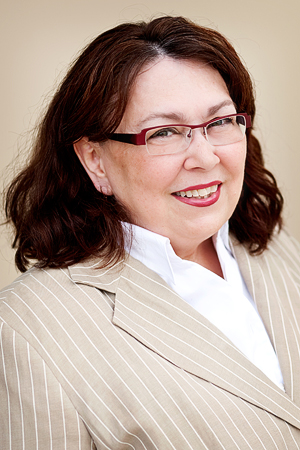
Beth Plutchak is an explorer for new worlds, totally dissatisfied with this one. As a young woman she moved to Alaska to live off the land. After the birth of her third child she moved back to Wisconsin in search of some of life’s luxuries like electricity and indoor plumbing. It is in Wisconsin where she works and writes. Her essays on science fiction fandom and intersectional feminism Boundaries, Border Crossings, and Reinventing the Future and her short story collection Liminal Spaces are available through Aqueduct Press. In November 2020 she edited a blog symposium on Complexity. This symposium and  her current work on Complexity Economics and Social Justice can be found at the edge-of-chaos. She also posts about these and other themes at beth.substack.com 


Tuesday, December 15, 2020

The Pleasures of Reading, Viewing, and Listening in 2020, pt. 11: Beth Plutchak


I Miss You, Scarecrow, Most of All
by Beth Plutchak


 Except I miss everybody. I miss hugs most of all. Ironically, I have more virtual contact with people than I had in-person contact in the before times. Except for all my big-family, friend, and professional events which were cancelled I have always struggled with getting together with friends. My night-blindness and anxiety made going places ridiculously difficult. Now I’m online multiple times a day. With people in boxes. Who I can’t touch. Even my favorite business networking group had been a huggy crowd.

 I’m drawn to dystopic stories now, rushing to the end, how did they manage to survive the impossible? I think that’s what we’re doing now, isn’t it? Figuring out how to survive until it’s over, whenever that is, whatever it encompasses, plague, climate, economic injustice, racism, all of it, over and done. So, I’m going to stick to my brand promise here (contrarian) and not talk about pleasures, but talk about what sustains me toward survival.


 I received all three books of Nancy Kress’s trilogy Tomorrow’s Kin for Christmas 2019. I gobbled it up by the second week of January. I didn’t know how prescient it was at the time. Kress is at her best with biological science fiction. When she threw in Aliens (have they come to save us, warn us, or something else?), I believed I knew what the book was about. Hmm. Kress did flash, bang, interplanetary travel, and aliens, but the books were about a family trying to navigate the unimaginable within political and personal choices that greatly impacted what they were left to choose from. I suppose it was the amount of research she has done over her career that helps her to see the inevitability of the paths we have chosen to follow. I plan on rereading it now that we are in the middle of the plague she predicted.

I’ve owned fellow Aqueductista Andrea Hairston’s novel Redwood and Wildfire since shortly after it won the Otherwise Award. I started it a few times but struggled to get into it, not just because the beginning is rough, which it is, but because I read it as another alcoholic redemption tale, and I’m not there for that, as they say. But in a conversation I had with Andrea about how movies impacted Vaudeville in Chicago Theaters and how that was a central setting for the novel, I gave it another try.


 My mom was raised in Chicago Theaters by alcoholic parents. She grew up performing stage acts with her sister during the middle of the matinee. It was believed at the time that people wouldn’t put money down unless there was a live performance. My mother had few happy memories of her childhood. Having costumes hand-painted for a stage performance of Little Bo Peep was one of them.


Most of Mom’s memories, though, centered around alcohol-fueled parties after the theater closed. She had a particularly vivid Christmas memory that was so traumatic she would end up reciting it every year as my Dad put up the Christmas tree. This memory was so vivid that I still see it in my own nightmares. This is as close as I can come to understanding the intergenerational trauma of racism, which is a constant theme of Hairston’s book. It made Redwood’s redemption that much harder, but still not impossible. And the book really was about redemption, about doing the work to become the person one wants to be, not the redemption narrative we are so often saddled with where the protagonist seeks and receives forgiveness, with lots of tears and promises to never again.

I also streamed a lot of video this year. There was a new season of Keeping Faith available through Acorn TV. Keeping Faith is a Welsh thriller starring Eve Myles, who many of you will know through her work on Torchwood. There is a subset of thriller in the UK which I don’t even know the name for, but unlike American thrillers these move slowly and are character-driven. They're not the tormented driven characters of American thrillers either. These are family dramas concerned with the minutia of daily life while in desperate situations. Many of the scenes are set around the kitchen island where Faith prepares and serves her children their meals. 


Oh yeah, Faith has three children who are woven into the plot in realistic ways. It is so rare to see motherhood portrayed in science fiction or drama as just a part of one’s daily life. The plot itself revolves around the sudden disappearance of Faith’s husband and Faith coming to terms with the fact that their life together was not all that it seemed. This is actually a frequent plot of British thrillers, for example Restless, available through Acorn TV, starring Hayley Atwell (Captain America and Agent Carter) and Rufus Sewell (The Man in the High Castle), and Mrs. Wilson, available through PBS Passport, starring Ruth Wilson (Jane Eyre) and Iain Glen (Game of Thrones).

I loved the slow pacing, even though there was plenty of dramatic tension. I loved the fact that the chief mystery to be solved was how is Faith going to cope and go forward? The show was only improved by the brilliant sound track especially written for both seasons by Amy Wadge. Damn, Season 3 would be available now if it weren’t for the plague.

Last but not least, The Broken Earth Trilogy by N. K. Jemison. Where to start? Another Christmas present: I read it early in 2020. I was aware of the triple Hugos Jemison won for this work before I read it. No one will ever have to call her the first Black Woman to win this distinction. She will always simply be the first person, ever, to do so. Needless to say, that did not go over well with the old white guard who felt uniquely qualified to condemn her work without ever needing to bother reading it. I listened to all of her winning speeches (short version: Wow, look I made it here, past all of the obstacles and gatekeepers. Hang on, I’m holding this door open now for you.) (response short version: Whine, whine, political correctness whine, whine, whine).


This was another series that started rough. The world Jemison created was a violent metaphor in many ways for the world we find ourselves in now. But the important stories were not the ones that moved the plot as much as they were the stories of people finding themselves, finding family, community, and a way to move forward in an unforgivingly harsh environment and polity. It was also a redemption tale for many of its characters. But, it turned the ordinary redemption narrative on its head in the same way that Redwood and Wildfire did. In The Broken Earth  people are redeemed through the amends they perform and the healing they seek from harms inflicted by them and on them by others. They are not seeking forgiveness. As they heal themselves they find ways to literally heal the world. Maybe this is something only black authors know how to do. I think the traumas that have led to a need for redemption must be apparent to people continuously engaged in an intergenerational struggle to survive them. Certainly, no one else is going to step in to take responsibility and save them, as was expected of me as the white wife of a white alcoholic.

The world Essun began in was totally unlike our own and the new world that was born by the end of the trilogy was totally unlike anything we’ve seen. The cost to get there was brutally high. But maybe that’s what we need right now: the belief that there is a there there, after all. And if we love those we love, do our own trauma work, support and bear witness to those around us, we might find a way to get through in the end after all, and to build the necessary something brand new. This is the way the world ends. This is the way the world begins.


Beth Plutchak is an explorer for new worlds, totally dissatisfied with this one. As a young woman she moved to Alaska to live off the land. After the birth of her third child she moved back to Wisconsin in search of some of life’s luxuries like electricity and indoor plumbing. It is in Wisconsin where she works and writes. Her essays on science fiction fandom and intersectional feminism Boundaries, Border Crossings, and Reinventing the Future and her short story collection Liminal Spaces are available through Aqueduct Press. In November 2020 she edited a blog symposium on Complexity. This symposium and  her current work on Complexity Economics and Social Justice can be found at the edge-of-chaos. She also posts about these and other themes at beth.substack.com  


Tuesday, December 18, 2018

The Pleasures of Reading, Viewing, and Listening, part 14: Beth Plutchak


Reading and Playing in 2018
 by Beth Plutchak

 Last year I was beginning to worry that I could no longer read books. Between all the scare stories that are published about how reading online—on iPads and phones—is destroying our brains and my own level of anxiety (I have the trifecta of an inherited anxiety disorder, PTSD due to domestic violence, and Trump) I was having trouble picking up a book and finishing it.

I spent a lot of time playing video games (good anxiety relief—trust me). The best are when I can totally immerse myself in make-believe worlds and take on the over-the-top, yet life-threatening/life-altering missions of the hero. I’ve been playing video games since Pong made it to the tv screen via Atari in the early 1970s. (Seriously, all you “real gamer” boys if you weren’t around to see Pong for the first time in someone’s home and know what a game-changer that was, how can you call yourself a real gamer?)

I prefer story-focused games and had been a huge fan of the Final Fantasy Series. I replayed some classics last year. Final Fantasy X which genre crosses science fiction and fantasy in a future world where science is shunned and magic is real. This particular cross-over gives me the same rush that reading Andre Norton did when I discovered her as a child. I first played this many years ago with my son, taking turns as we progressed through the story. My partner (who is not a gamer) wandered in and out often enough to follow the story. At the end when we found out that reality was not what we wished it was, we all cried.

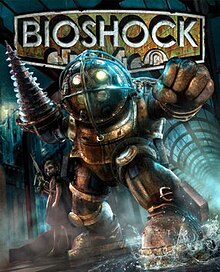
In FF XII and XIII I was able to put together all-female teams to make my way through the game. These teams were heavily weighted to magic and archery, not my first choices, but, you know, all girls. The only thing better would have been if there were a few mothers, motherhood being pretty much the defining reality of my life. I replayed all of the Bioshock games. I’ve found myself wishing often in the last few years that Paul Ryan could be required to play Bioshock and see what happens when you take Objectivism to its inevitable conclusion, instead of, you know—the rest of us experiencing it.

I received The Last of Us for Christmas. I’d put that one off because zombies scare me. This game met my distracting and apocalyptic yet not quite real needs. Post-apocalyptic nightmare—check; individuals learning from their mistakes—check; the importance of family—check. Many of the women I knew who played this game were not happy about the limited amount of playtime you got as Ellie and how little agency Joel allowed her. As a mom, I had no trouble identifying with Joel. I would do anything to keep my children safe, whether they approved or not. (For comparison, my kids are in their forties.) I totes would have made the decision Joel did at the end.

I put off upgrading to a PS4 for a long time. My FF addiction was not going to get me there after the release of XV, a male bonding road trip with no female playable characters. I finally broke down for Horizon Zero Dawn. Playable female protagonist—check; compelling storyline—check; post-apocalyptic future—check; science fiction/fantasy cross-over—check. However, Horizon Zero Dawn is problematic in its use of Native American imagery and stereotypes. Dia Lacina does a better job of explaining this than I can .

I’ll probably keep replaying the games I’ve enjoyed in the past while waiting for a game that hits all the right buttons. I think Virginia Wolf’s Orlando would make a great video game.

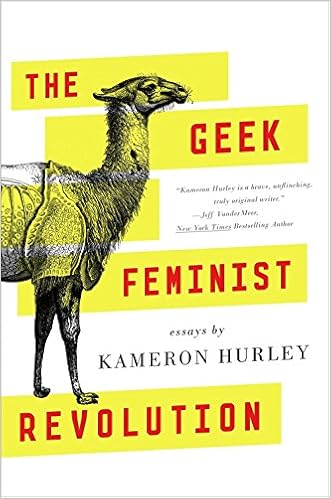
I did manage to read a few books last year and, like the year before, they were mostly nonfiction. I hadn’t followed Kameron Hurley’s blog, so all of the essays in The Geek Feminist Revolution were new to me. Examining fandom and the industry are of especial interest to me. I got so excited when I found out that she had lived in Alaska that I reached out to her on twitter. Her experiences mirrored mine in so many ways I was momentarily sure our paths must have crossed. Apparently at the time I left Alaska, she hadn’t been born yet. Sigh. People are so young these days.


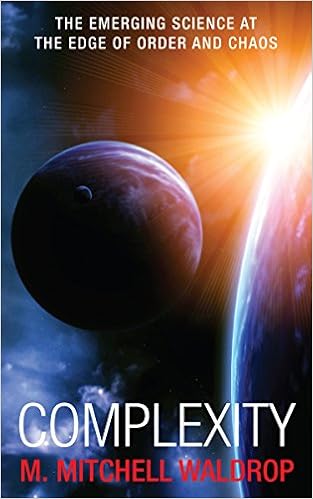
I read a number of non-genre related nonfiction books, including Thinking Fast and Slow by Daniel Kahneman and re-read Complexity: The Emerging Science at the Edge of Order and Chaos, by M. Mitchell Waldrop. Both of those were in service of my ongoing project of using the science of complex adaptive systems to understand social change. I’ve been taking detailed notes of this non-fiction reading. My notes on Complexity are now on Goodreads. My resulting essay “The Edge of Chaos and the Failure of Progressivism” is looking for a home. (Boy, does the Atlantic get their rejections out fast.)


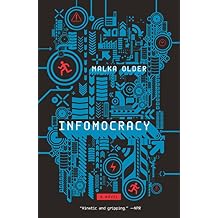
In my mundane life I am a researcher and a member of the Association of Independent Information Professionals, so the first book of Malka Older’s Centenal Cycle Infomocracy was a treat. AIIPers are a pretty small, pretty select group and what we do is a mystery to most people, but Older’s book read like it could have been about us. What fun. The next two are on my nightstand waiting to be read.

I’m a lifelong reader and lover of books. I got in trouble with the nuns in school for reading ahead in the reader. I love books. My collection includes copies of Dickens that are over one hundred years old, not valuable copies mind you, ratty well-thumbed copies from a library sale when I was a child. Used—well-used copies. I love books as objects. The thought that in the digital age perusing my iPad every morning, scanning articles and no longer reading them whole I may have lost my ability to finish books frightened me. But, I think I’m past that now. Taking notes while reading nonfiction has helped.

The love of books and books as objects in my grandchildren also helps. This Thanksgiving I took the middle grandchildren to the fiction library in my bedroom and let them choose a few novels to borrow. They were impressed by the number of books in my room. The two year-old sat on the floor carefully turning the pages of The Geek Feminist Revolution. If there was a “camel” on the cover there must be more camels inside. Books remain, and I too have stories to tell.


Beth Plutchak is a writer and consultant. After a twenty-year career in commercial banking she started her own business doing economic development and marketing consulting. Economics and social justice inform all of her work. She was the editor of the WisCon Souvenir Book for WisCons 21 through 29. Aqueduct Press published Boundaries, Border Crossings, and Reinventing the Future in 2017 and her collection of short fiction, Liminal Spaces, in early 2018.

Tuesday, January 16, 2018

Beth Plutchak's Liminal Spaces


I'm pleased to announce the release of Liminal Spaces, a collection of short fiction by Beth Plutchak, as Volume 59 in Aqueduct's Conversation Pieces series, in both print and e-book editions. Eleanor Arnason and Richard Chwedyk have both praised it.


"Yes, these stories are science fiction and fantasy, but they are deeply rooted in reality, especially in the lives of women. We learn about being in college in the 1960s, going back to nature in Alaska, working in a bank and trying to make a good life for a child with a disability. If there is a single theme, it's the struggle of women to control their lives—to be free. In addition to this often ordinary, gritty struggle of girls, wives, working women and mothers, the stories have time travel, space travel, game theory, clones, and magic. Grit and sense of wonder and (often) hope. What more could you ask for? I strongly recommend the collection."
 —Eleanor Arnason, author of Ring of Swords and Hwarhath Stories

"What I like most about Beth's writing is her utter fearlessness. She will take on topics from hard sciences, to magic, to all the spaces in between, and make them new with confidence and proficiency, not to mention a spring-loaded wit. Even in the most fanciful stories here, one will find passion tempered with familiarity—worlds with recognizable edges and shapes, occupied by people we know. If you read short fiction to be captured by an intoxicating fusion of the mysterious and the immediate, you've come to the right place."
 —Richard J. Chwedyk, Nebula Award-winning author of "Bronte's Egg"

You can purchase a print or e-book edition of the book at http://www.aqueductpress.com. It will soon be available elsewhere.

Monday, December 18, 2017

The Pleasures of Reading, Viewing, and Listening, pt. 14: Beth Plutchak


Still Thinking
by Beth Plutchak 
When Timmi asked me to write a blog post for the annual series on reading pleasures for this year, I panicked. I wished I were one of those people who keeps a list of everything I’ve read during the year, maybe notes as I read, maybe reviews on Good Reads. I don’t do any of those things. I don’t have a neat list to share. Everything I read is related to everything else and related to the things I am working on. I didn’t read much science fiction this year. I did reread Parable of the Sower, by Octavia Butler.

Since the election we all have been living on the Edge of Chaos. It’s felt like, as my Mom used to say, a real kick in the teeth. I needed to know what we were in for, also how it all comes out in the end. Spoilers—the way through and the way out is to build community and control the narrative. 

I didn’t even complete a lot of nonfiction books this year. I’m currently working on a project using complexity theory to explain the failure of progressivism. Are you interested in what I’m reading for that? It’s mostly politics, economics, and social justice. I read mostly online. Twitter has never worked for me, I’m on Tumblr for the Michael Kitchen fandom, and LiveJournal is as good as gone. So, like many of my cohorts I spend a lot of time on Facebook. I follow writers who link to their own longform pieces elsewhere as well as provide analysis and links to interesting articles. Ooh, that’s a list. 

Here is who I read on FB: Kat Tanaka Okopnik, the author of the ongoing Dictionary of Social Justice; Ijeomo Oluo, “Come for the feminist rants—stay for the selfies and kid quotes. Inclusive feminism here”; Son of Baldwin who links to and provides analyses of issues of racial and gender injustice; Jim C. Wright for rural left politics and a touch of sardonic humor; David Gerrold even though I ; and Mary Anne Mohanraj because she is so eclectic and the food. All these people are probably active on Twitter if that’s your jam. I don’t know.

I have a lot to stay on top of. I’ve added magazines to the mix this year. I now subscribe to the dead tree version of the often problematic The Atlantic. I’d like to see fewer articles that humanize Nazis for the white voter, though (I see you, too—New Yorker), and more articles that humanize people of color, because apparently white people need that. Now if we were willing to say ‘Hey, I have more in common than I thought with those people in the black community,’ for example, we might get somewhere.

I’ve subscribed to the digital version of The Washington Post. I’ve gone back and forth on The New Yorker, but still am able to read what I want within the free articles per month. I’ve added Bill Moyers Journal to my feed-reader.

People often ask me which economists I follow (seriously, they really do) and these are my go to sites at the moment: left, mainstream economists include Jared Bernstein, Dean Baker, Econbrowser—for Menzie Chin, Economists View—for Mark Thoma, the little bit lefter Robert Reich, and the left libertarian Yves Smith.

I’m also following a few that are specifically concerned with complexity economics. 

In a November 17th interview with Ursula K. LeGuin in The Los Angeles Review of Books, she is asked “You once clarified your political stance by saying, ‘I am not a progressive. I think the idea of progress an invidious and generally harmful mistake. I am interested in change, which is an entirely different matter.’ Why is the idea of progress harmful? Surely in the great sweep of time, there has been progress on social issues because people have an idea or even an ideal of it. 

“[Le Guin:] I didn’t say progress was harmful, I said the idea of progress was generally harmful [emphasis mine]… I was thinking of the idea of history as ascending infallibly to the better—which, it seems to me, is how the 19th and 20th centuries tended to use the word ‘progress.’ We leave behind us the Dark Ages of ignorance, the primitive ages without steam engines, without airplanes/nuclear power/computers/whatever is next. Progress discards the old, leads ever to the new, the better, the faster, the bigger, et cetera. You see my problem with it? It just isn’t true.” 

 This is as good an example as any of the Hegelian Mistake (thesis plus antithesis leads us to synthesis and leads us to a progressively better place). Complexity Theory is based on how change happens in the biological sciences, which is never straightforward, and never never predictable. An example of change states is boiling water. Water is changing from liquid to gas. We cannot predict which individual molecules will make the change. We only know that if we don’t keep applying heat or pressure, change as a whole will never be completed. Complexity scientists call this state the Edge of Chaos. I think it is more than a metaphor for where we are in the world today. I think it is the truth of it.

The economists working on this can be found at Evonomics-The Next Evolution of Economics and The Institute for New Economic Thinking. But books, was I supposed to be talking about books? A good place for the lay reader to start in understanding complexity economics is Eric D. Bonhoeker’s, The Origin of Wealth. I first read this ten years ago, but I return to it often. From the book: “Historically, science had taken a top-down reductionist approach, breaking the universe into ever smaller pieces…in search of ultimate laws… while this approach had been extraordinarily successful, many of the hardest problems in nature are “complex systems” that have collective or emergent characteristics.”


This year I decided I wanted to find out more about the Santa Fe Institute where much of this theory was first developed. And yes, I do follow the Santa Fe Institute on FB, as well as The Edge of Chaos, the lab at the University of Alabama in Birmingham tasked with solving “wicked problems.” So, this year I read Complexity: The Emerging Science at the Edge of Order and Chaos, by M. Mitchell Waldrop. This book, as well as deepening my understanding of complexity theory has lots of history about the founding of the Santa Fe Institute, where the work of complexity science continues. Unfortunately, much of the research on economics has been squandered on making better stock market predictions.

Thinking about complexity economics has lead me to thinking about the failures of neoliberalism and late-stage capitalism. Paul Mason, an economics reporter for The Guardian, wrote Postcapitalism A Guide to Our Future. This book provides a comprehensive breakdown of the failures of neoliberalism, why Marxism won’t fix them, and what needs to happen and in some cases is happening. Basically, as finance and intellectual property appropriate the place in the economy that was formerly held by manufacturing, GDP and income can no longer be in sync. Jobs and wages will never again create the standard of living that baby-boomers thought inevitable.

This lead me to Next: The Future Just Happened, by Michael Lewis. Like all of Lewis’s books, this one is an easy, gossipy read. It leans a little too heavily to the AI-are-taking-over- our-jobs argument; however, if you can read past that and read it in conjunction with Mason’s book, you have the beginnings of an argument of how we need to be thinking about economics. I’ve started The Zero Marginal Cost Society by Jeremy Rifkin, which goes further into an analysis of the internet of things, the collaborative commons, and the eclipse of Capitalism.

Together these books lean a little too heavily on the experiences of those who are already privileged in white supremacist capitalist patriarchy and can be read as economic solutions for millennial technocrats. I urge you not to do so. The problem isn’t that the outlook in these books is wrong, it's that it’s limited. The piece that’s missing is the experience of marginalized people in moving through society and in creating communities. 


People on the margins are, have been, speaking up about how to survive in America. This year I got around to reading Bad Feminist, by Roxanne Gay. I’ve long said that the reason feminism seems irrelevant to young people is because we lost. We lost. We owe young people an apology. We need to get out of their way. 

I also read The WisCon Chronicles Vol. 11: Trials by Whiteness, edited by Jaymee Goh. The WisCon Chronicles have historically provided a forum outside of the mainstream press and academia to provide analytic insights born of people’s lived experiences. This is the missing piece, my friends. How do we get from here to there? We listen to, we support, we follow those who have never been included.


Beth Plutchak is a writer and consultant. After a twenty-year career in commercial banking she started her own business doing economic development and marketing consulting. Economics and social justice inform all of her work. She was the editor of the WisCon Souvenir Book for WisCons 21 through 29. Aqueduct Press published Boundaries, Border Crossings, and Reinventing the Future earlier this year and will publish her collection of short fiction, Liminal Spaces, in early 2018.