Showing posts with label kiini ibura salaam. Show all posts

Tuesday, January 31, 2023

The Pleasures of Reading, Viewing, and Listening in 2022, pt. 33: Kiini Ibura


The Pleasures of Reading, Viewing, and Listening in 2022

by Kiini Ibura

I was at a convention some years ago and one of the authors confessed to playing games on her phone instead of keeping up with her reading. I thought: Me. You. Same. It has been a long time since I have been the reader I once was. I now spend more time viewing art than I do reading. Which means I’m still filling my life with creative pleasure. Here are some of the creative engagements I enjoyed in 2022.


JANUARY

As I get older, I spend more and more time managing my mental health and seeking a space of peace and joy—no matter what is swirling around me. This is, of course, impossible, but in seeking it, I can live in a state of grace more often than if I weren’t. In January, I stumbled across Wendell Berry’s “The Peace of Wild Things.”


The Peace of Wild Things

Wendell Berry


When despair for the world grows in me
and I wake in the night at the least sound
in fear of what my life and my children’s lives may be,
I go and lie down where the wood drake
rests in his beauty on the water, and the great heron feeds.
I come into the peace of wild things
who do not tax their lives with forethought
of grief. I come into the presence of still water.
And I feel above me the day-blind stars
waiting with their light. For a time
I rest in the grace of the world, and am free.


 These lines hit me deeply: I come into the peace of wild things / who do not tax their lives with forethought / of grief. I held on to that guiding principal as tightly as I could as I worked to finish two novel drafts last year. I finished Draft 3 in April and Draft 4 in December. Writing while holding down a day job and parenting is brutal. To make it through, I tried hard to proceed without “forethought of grief”: grief over my exhaustion, grief over the lost time I had for exercise and self care, grief over missing my goals, and fear over not making it through. Telling myself that however things unfold is fine, and I do not need to add a layer of worry about future outcomes (or punishments) that have not arrived is not necessary is what keeps me going.


In January I read bell hooks, All About Love a wonderful deep dive into all the various types of love in our lives and what are barriers and openers to love. I also saw an installation called Unnamed Entities by artist Daniel Lie at the New Museum. Lie creates largescale installations that simultaneously grow and decay. There in the museum was dirt, growing mushrooms, and decaying organic matter. The artist sees themselves as working in collaboration with what they call “other-than-human beings”—such as bacteria, fungi, plants, animals, minerals, and spirits to acknowledge our shared and continuous participation in the process of living, dying, and decaying. It was a wonderful opportunity to look at life and art anew.


    Unnamed Entities, Daniel Lie


FEBRUARY
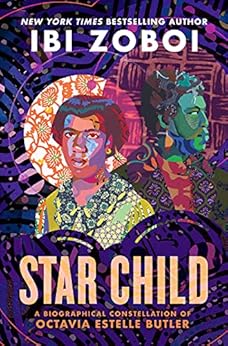


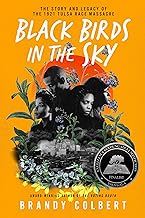
In February, I had a fantastic time talking to three authors about my middle grade novel When the World Turned Upside Down. I read of each of their books to prepare for the talks: Playing the Cards You’re Dealt by Varian Johnson, Black Birds in the Sky by Brandy Colbert, Star Child by Ibi Zoboi. It was an absolutely rich experience to talk craft with Johnson, history with Colbert, and Octavia Butler with Zoboi. Each of these books translates important issues and ideas for young people and inspires me to have a broader view of what writing for children can mean.



In February, I also went to David Zwirner gallery to see the Toni Morrison’s Black Book exhibition curated by Hilton Als. Morrison worked with collectors of Black memorabilia and a graphic designer to put the book together as a kind of scrapbook or panorama, of Black American life. “I was afraid that young people would come to believe that Black history began in 1964,” she told an interviewer. “Or that there was slavery, there was a gap, and then there was 1964.” As a senior editor at Random House, Morrison worked with a wide variety of writers and thinkers, including Muhammad Ali, Toni Cade Bambara, Angela Davis, poet Henry Dumas, novelist Gayl Jones, and Huey P. Newton. The exhibition included some art and images from the book, but it also included quite a lot of correspondence, primarily between Toni Morrison and other authors. I was most touched by her correspondences with Toni Cade Bambara as they lifted each other up and encouraged each other forward. I was also inspired by her outrage and passion as she worked to promote the Black book through disappointment of how it was being handled. People are communal beings, and it’s always exciting for me to see the connections that sustain the great creators of art.

 In the summer, I went to New Orleans to help my father downsize his books and media, and I ran into his copy of The Black Book, reminding me of how ideas are shared and spread—and how they sustain other idea-makers.


MARCH

In April, on a gallery stroll through Chelsea I ran into these photographs by Ruby Rubié. I saw them through the window, and I found them to be arresting. I love how they capture the wisdom, history, and personality of these women. In their eyes, I see stories of survival, I see the strength of grandmother-wit, and I see a hard insistence that they—and therefore I, as their grandchild—will make it through. This series feeds me on an ancestral level.

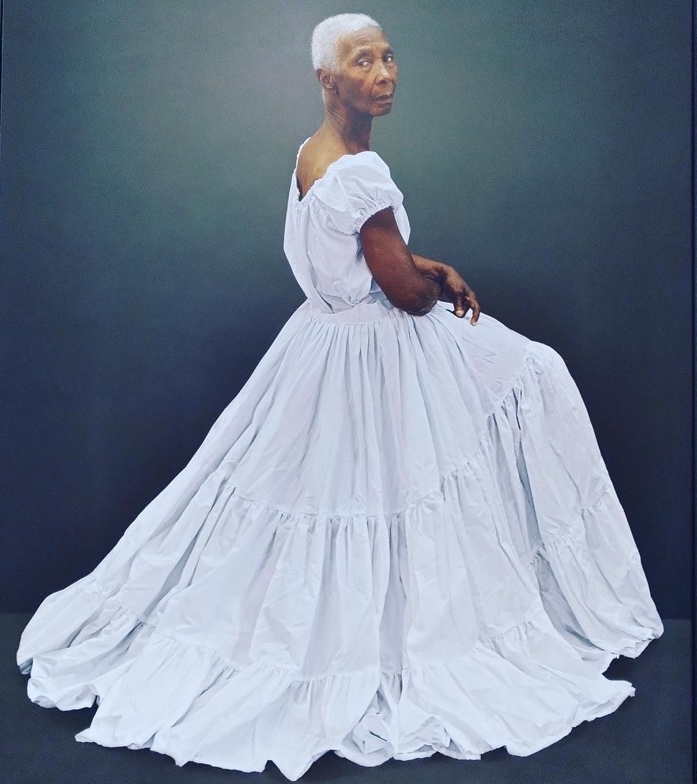

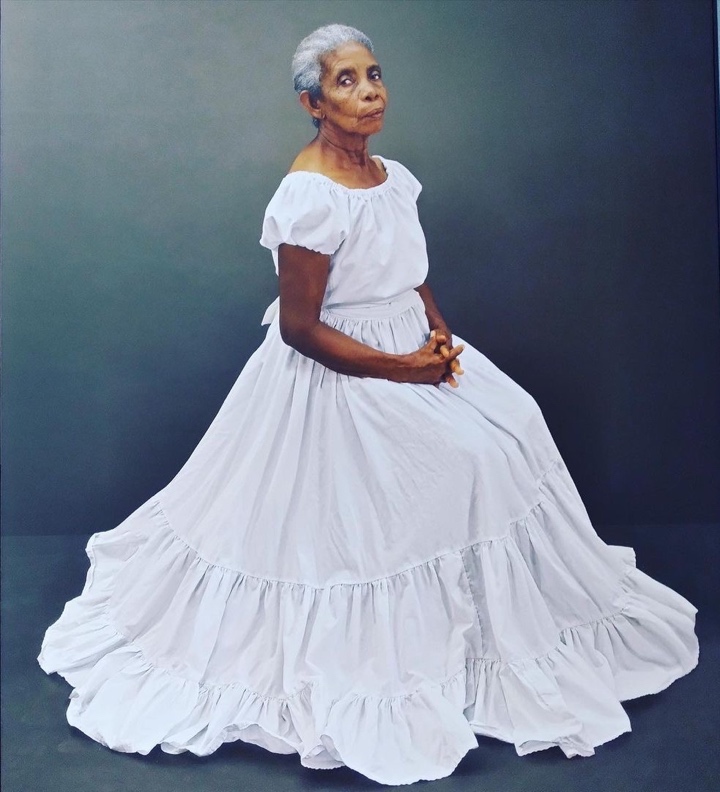


Photographs by Ruby Rubié.


APRIL


In April, I went to see the Whitney Biennial 2022: Quiet As It’s Kept. It was a rich show with so many engaging and interesting art moments. Including:


·        Awilda Sterling-Duprey creating extemporaneous, colorful abstract works while blindfolded and moving in tempo with jazz.

·        Adam Pendleton’s documentary capturing the life reflections of Ruby Nell Sales was so moving and expansive.

·        Theresa Hak Kyung Cha’s artist books, which boldly leans into text on paper as a complete and full art form.

·        N. H. Pritchard’s pages of poetry with scribbles and arrows that challenged my notion of what is or isn’t considered art.


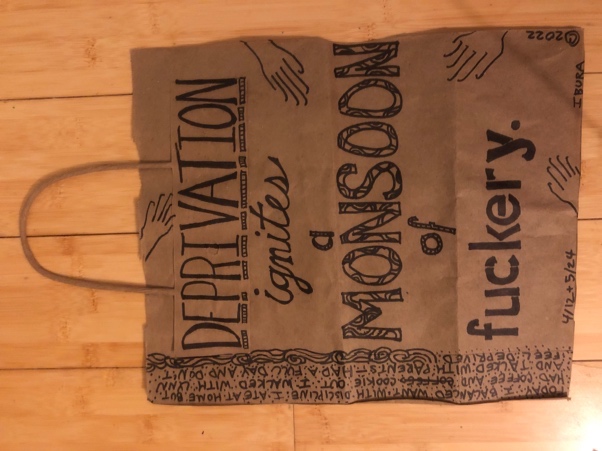
As a visual artist whose artistic production as vast fluctuations, I’m always seeking ways to reengage my work. Taking N. H. Pritchard’s approach as guidance, I did 30 days of easy art—making works with hand drawn text on paper bags. It was a beautiful gift to have a burst of creative productivity.


 Easy art by K. Ibura


MAY


In May, I went to Theatre for a New Audience to see Wedding Band by Alice Childress. The staging and acting were top notch, but what really shone through for me was the writing. The play was intense, layered, and witty. Childress has a way with words—as a writer she is playful, biting, insightful, engrossing. It was set during a time where America was at war and Black soldiers were returning home to a country where lynching of Black Americans was an ever-present threat. Through Childress’ pen, the play is both historical and modern at once. I was so inspired by her snappy dialogue and smart humor. Good writing is timeless!


JUNE

In June I saw the Black Venus exhibition at Fotografskia. The exhibition surveyed media images of Black women—from fetishized, colonial-era caricatures, to the present-day reclamation of the complexity of Black womanhood. I particularly enjoyed contemporary images interrogated or framed the gaze of the viewer.


Self portraits by Shawanda Corbett


Self portraits of Maud Saulter as she embodies 19-century actress Jeanne Duval


JULY

In July, I saw Garmenting: Costume as Contemporary Art. From the description, I wasn’t necessarily interested in the show, but luckily my art crew had identified it as a destination. There were some amazingly crafted garments in the show. Works that stretched the imagination and, in many cases, tugged at the emotions. All of the work had powerful impact as the artists used a range of techniques and materials to make art from body coverings. Costume exhibition at MOAD.


                                           Installation by Saya Woolfalk


AUGUST

In August I went to L.L. Cool J’s Rock the Bells music festival in Queens. It was a day of performances form hip hop artists who established the genre. LL Cool J had a very clear mission of honoring and celebrating the roots of the culture and foundational artists who created the art form. In the jam-packed open-air Forest Hills Stadium the entire crowd was electrified, singing along word for word so many hip hop classics. I was taken back to my youth. Over and over again, I marveled and the creativity, tenacity and vision of artists who created a lane in music and in life for themselves from nothing but their own imagination, grit and life experiences.


                     Still from Isaac Julien’s Once Again … (Statues Never Die)


In August, I also saw Isaac Julien’s installation of Once Again … (Statues Never Die) at The Barnes Foundation. It consisted of African sculptures and three large screens showing various black-and-white films that worked in concert to explore the work of Alain Locke, famed philosopher and cultural critic, known as the “Father of the Harlem Renaissance.” Part of the film series also explored Locke’s relationship with the foundation’s namesake Dr. Albert C. Barnes, who was an early US collector and exhibitor of African material culture. The films were stunning, and they mixed narrative recreation, sound, visuals, and facts to explore space and place in history, interpretation of value, the power of philosophy and positioning and so much more.


SEPTEMBER

In September I went to an outdoor screening of a documentary of Sidney Poitier, titled Sidney. It told the story of his amazing journey from a small island in the Caribbean to worldwide superstardom, as well as his fall from the embrace of fans. There was so much history wrapped up in his journey, and so much daring. How do you decide who to be when the world has decided—erroneously—who you are? Sidney Poitier was his own powerful engine, he defined himself and built a career that changed what it meant to be Black in Hollywood—and many American’s perceptions of what it meant to be Black period.


OCTOBER

In October, I went to Venice to the Venice Biennial. There are exhibitions all over the city, with two concentrated areas featuring art from around the world. Each country has a building where an artist or group of artists exhibit work. In the Belgian Pavilion, I saw a beautiful series of videos of children at play around the world called The Nature of the Game by Frances Alys. The French Pavilion hosted Algerian artist Zineb Sedira whose beautiful installation was a set and film studio looking at Algerian life and resistance in the 60s and 70s. There was lots of beautiful work but our journey was a pilgrimage to see the Simone Yvette Leigh exhibition in the American Pavilion. I recognized the pavilion from the distance because Simone had transformed the pavilion with one of her signature materials and created a bold and grounded environment for her works. I’ll not add my words to what the artist is already saying with her work. You can see the exhibition in the video linked here.


NOVEMBER

In November we went to see a workshop of a Toshi Reagon work in progress called You’re Having Too Much Fun so We’re Gonna Have to Kill You. The musical she’s working on focuses on disco and it’s inspired by the infamous death of disco where DJ Steve Dahl, incensed by the success of disco held an event in a Chicago stadium and invited people to burn disco records. The Guardian reports this reflection on the event.


Lawrence realised something wasn’t right: people weren’t just turning up with disco records, but anything made by a black artist. “I said to my boss: ‘Hey, a lot of these records they’re bringing in aren’t disco – they’re R&B, they’re funk. Should I make them go home and get a real disco record?’ He said no: if they brought a record, take it, they get a ticket.” He laughs. “I want to say maybe the person bringing the record just made a mistake. But given the amount of mistakes I witnessed, why weren’t there any Air Supply or Cheap Trick records in the bins? No Carpenters records – they weren’t rock’n’roll, right? It was just disco records and black records in the dumpster.”


Toshi explains that disco’s reign abruptly ended and many artists lost their careers. They were having too much fun and dominating in a way that—as Black, Brown, and queer people—was not allowed. She’s written the show as a celebration of the life force that has kept Black people alive while under attack, and as a defiant act to say: You can’t kill us.


DECEMBER

In December I went to an exhibition called Just Above Midtown: Changing Spaces at MoMA. JAM was an art gallery founded by Linda Goode Bryant. She created it to give Black artists a space to flourish. Walking through the show I saw the works of celebrated artists alongside the work of artists whose names I didn’t know. I could feel the collective energy running through the exhibition. Artists have been gathering in collectives since forever to help fuel their work. We need each other to keep going. I think it’s amazing how communal artmaking is—at least at the outset, where behind each individual artist is a community that supports and nurtures them. It was inspiring and invigorating. It was also sobering, as the exhibition included a wall of invoices, bills, and collection letters to the organization’s founder—who managed a massive amount of debt for the duration of the gallery’s existence. As Americans like to say “Freedom ain’t free.”


In 2022, I also ran into a video clip of Ornette Coleman sharing this philosophy:

 It’s like you’re living on a ghost of a chance. But the best thing to do to clean all that out, from where I stand, is to just try to play.”—Ornette Coleman


I’ll leave you with that. Let’s use 2023 to play—let the art flow!


Onward.


K Ibura
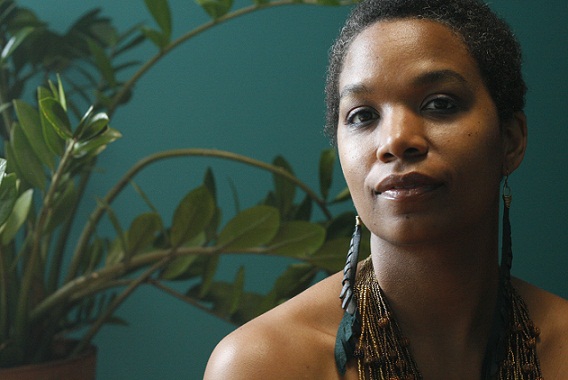
is a writer, editor, and artist from New Orleans—the original home of the Chitimacha Tribe. She writes essays about identity and gender, and fantastical fiction about ancient histories and future imaginings. She is the author of two speculative fiction collections: Ancient, Ancient—winner of the James Tiptree Award— and When the World Wounds, and a novel for children, When the World Turns Upside Down. Her ebooks examine the emotional underpinnings of the writing life. Learn more about her at kiburabooks.com and kibura.com.


Friday, April 21, 2017

Black Speculative Arts Movement #BSAMfuturismo2017


I want to give a brief heads-up for an Afrofuturist event at the Bronx Museum of the Arts on Saturday, April 22 (tomorrow!). Aqueduct authors Sheree Renee Thomas, Jennifer Marie Brissett, and Kiini Ibura Salaam will all be participating. For the full schedule of the conference, check out the official website: https://www.evensi.us/black-speculative-arts-movement-bsamfuturismo2017-bronx/194016603.

At 12pm a panel titled 25 YEARS OF AFROFUTURISM & BLACK SPECULATIVE THOUGHT, will feature  Dr Reynaldo Anderson, Mark Dery, and Sheree Renée Thomas, moderated by Tiffany Barber. And after lunch, at 2 pm, Sheree Renee Thomas, Jennifer Brissett, Kiini Salaam, and Ibi Zoboi will present BLUE BLACK MAGIC WOMEN.

 I so wish I could attend. If you have a chance, it sounds like a wonderful--dare I say inspiriting-- way to spend the day.

Sunday, January 10, 2016

The Pleasures of Reading, Viewing, and Listening in 2015, pt. 29: Kiini Ibura Salaam


Pleasures of 2015
by Kiini Ibura Salaam


One of the essential questions that artists have to answer for themselves is how they will be present, how they will show up and use their voices, in service of what sensation, expression, intention? In a 2015 interview, National Book Award-winning poet Terrance Hayes states: 
“I’m just interested in being present, not in being representative of anything.”

Hayes’s statement holds the tension of public and private--publicly people want to sort you, classify you, use you as a mouthpiece, a representation, but as an artist, the only way to authentically do your work is to be present to your self. It is something of a koan: How can you truly be present in and with and for yourself if you are representing someone or something else—even someone or something that looks and sounds exactly like you?

Much of the art I enjoyed in 2015 pivoted on questions of presence and representation.

Ava DuVernay’s Selma


In January, I started my art immersion for the year with the film Selma. I found it to be a riveting and intense look at one slice of the Civil Rights movement. What I appreciated most about it was the layers of the Civil Rights Movement that it revealed. History has flattened somewhat the broad span of groups involved with changing the laws and practices of segregation and voter discrimination. The students, the voting rights activists, the local workers, the movement architects, the superstars, the rabble rousers, the freedom riders—everyone joined the resistance from a different angle, representing a different demographic and a different motivation, and all these disparate strands came together to speak in one voice.

The other thing the film did was take an unflinching look at the indiscriminate violence that was visited upon anyone pushing for an integrated, equal society. The film demonstrated that the Civil Rights Movement wasn’t a sanitized event that—with a few marches and songs—created a more just society. The willingness of so many to be beaten, jailed, and killed was the thing that moved the needle in awakening the consciousness of a nation.

John Lewis’s March


Selma dovetailed quite nicely with the graphic novel March by John Lewis, Andrew Aydin, and Nate Powell. John Lewis was a college student during the Civil Rights Movement and was active in SNCC (Student Nonviolent Coordinating Committee). SNCC was already working in Selma when Martin Luther King and his leadership from the SCLC (the Southern Christian Leadership Conference) came to town to support the push for voters’ rights. The graphic novel’s striking illustrations and compelling storyline tells the boots-on-the-ground story of one young man who was unflinchingly committed to change in this nation.

Though Selma and March deal with times past, both were shockingly relevant to our nation’s contemporary identity, especially in a year filled with protests, murders, and marches.


Toshi Reagon’s musical production of Octavia Butler’s The Parable of the Sower


The evening after I saw Selma, I went to The Public Theater to see Toshi Reagon’s musical production of Octavia Butler’s The Parable of the Sower. One thing that was conspicuously missing from Selma was the music of the movement. With the exception of MLK calling up Mahalia Jackson in the middle of the night to sing to him so that he might hear the voice of God, DuVernay chose not to include song. There was, of course, a soundtrack, but during the march when there was singing, DuVernay showed the actors mouths moving but did not reveal the audio.

During that time period, music was a major component part of protests, whether anti-war or anti-discrimination. There has been a lot of study of protest music, notably Soundtrack for a Revolution http://www.soundtrackforarevolutionfilm.com/Home.html, a wonderful documentary about the music of the Civil Rights Movement and what it meant to the marchers, how it kept them fearless and motivated. I suspect DuVernay did not use the music in the film because we are saturated with the image of people marching and singing. To a degree, I think the national narrative we’d like to believe is that the marching and the singing made change. The song was spirit food—it fed the marchers, steeled their strength and their resolved, helped them carry on when they were tired and face death when they were scared, but it isn’t what won the battle.

Toshi Reagon was born into the tradition of activist folk music. Her mother, Bernice Johnson Reagon, was deeply engaged in the Civil Rights Movement and other activist movements. She was also a founder of the group Sweet Honey in the Rock. Toshi was named for activist, filmmaker, and wife of Pete Seeger—Toshi Seeger, so activism runs deep through her lineage. Early in 2015, Toshi did a series of performances to workshop the songs she’s developing for an opera of Octavia Butler’s The Parable of the Sower. Because I saw it on the same day as Selma, I couldn’t help but view it in conversation with Selma and it was almost like the musical answer to Selma. Performing music from the folk tradition and the church tradition with nods to rock and spoken word, Toshi gathered a wonderful group of performers to bring Butler’s words to life through song. I can’t wait to see the opera. One of the songs—dealing with the company-sponsored town—referenced how hard it is not to sell out when faced with the difficulties of life. For me, much of Butler’s oeuvre deals with humans in untenable situations and the unthinkable acts that we engage in when our backs are against the wall. One of the songs for this evening had a chorus that went something like: you think you can’t, but you will; you think you won’t, but you will, you will, you will. It is so Butler.


Wild Tales


This film had nothing to do with representation—except, perhaps, the representation of other types of stories on film, something Argentinian filmmaker Alejandro Jodorowsky pleads for in this passionate, philosophical crowd-funding video. Wild Tales features five madcap stories about the ravenous nature of revenge—how it consumes the person seeking revenge and burns down much more than the intended target. As stated in a review from The Guardian: Characters surrender, gratefully, to the thrill of losing it and letting someone have it.” The end result of the film is quite thrilling as you watch people push themselves to the limit to take revenge on others—and suffer the consequences. Rotten Tomatoes calls it Wickedly hilarious and delightfully deranged.” I wholeheartedly agree.


Amaryllis DeJesus Moleski’s futuristic romps through time and space


Amaryllis DeJesus Moleski


Amaryllis DeJesus Moleski presented a series of drawings at MoCADA in the spring that features big-bottomed, curvaceous women who seemed to be both futuristic and of the moment. There was so much playfulness as she explored self-image, mythologies, and the fantastic. I loved the exuberance, unexpectedness, and other-worldly nature of the work. More images and thoughts from the artist here.


Cassandra Wilson’s Tribute to Billie Holiday


For her tribute concert to Billie Holiday, Cassandra Wilson created an immersive experience that built its own setting, aura, and sensation of romance--transporting us into two hours of altered feelings that mirrored the fluttering pleasures of being in love. Being vulnerable before others is immensely challenging. Wilson immersed herself in emotion in front of a packed theater. She was positively altered by the music, the musicians on the stage, emotionally embodying that which she was singing. It’s the type of presence I want to bring to my work.

When we called her back for her encore, she strapped on her guitar and used it to introduce sonic dissonance and squeals as accompaniment to her vocals on the classic Strange Fruit. At the end, she went wild, continuing to improvise on it while slamming it back down in the stand. She left the guitar squealing while she exited the stage, leaving her band to reconcile the sound, to handle what she had flung out into the world.

Basquiat’s Notebooks at the Brooklyn Museum


You can’t see Basquiat’s work without thinking about representation, fame and pain. … I was discomfited at the spectacle of all of us, seeing his notebooks, his private scribbling, each page in each notebook taken apart so as to spread our consumption of him wider—especially as I suspect the consumption of him, the contradictions therein, led to his overdose death. This experience was thought provoking as it showed how Basquiat worked through his ideas and creative impulses. I am often jealous when I see artists playing with their thoughts, creativity, process, ideas, because I dream of returning to a state during which my creativity roams without constraint. As someone who squeezes in the time to work when I can, I am inspired when I see other artists existing in state of creative immersion. The exhibition showed the depth and breadth of his creative instincts, impulses and compulsions.


One Way Ticket: Jacob Lawrence Exhibition at MoMA

One-Way Ticket was a fantastic exhibition centered around Jacob Lawrence's seminal Great Migration series. I also appreciate seeing art I learned about in art books in real life. Seeing this series really made me reflect on my commitment to making work. The series consists of a 60 very small panels made with humble materials. The small scale and readily available materials, made me think that the artist was dedicated to telling his story with whatever materials he had on hand. The work itself was great to see in person, but what really elevated my enjoyment of the exhibition was the expansiveness with which the exhibition was mounted. There were additional rooms that stretched out to share literature, music, video, and photographs of other artists from the time period. It was wonderful to get a multidimensional view of the explosion of black arts at the time. Fantastic


What Happened, Ms. Simone?
I found this Netflix documentary about Nina Simone absolutely riveting and layered. The level of presence she brought to performing was a major theme of the documentary, but for me the theme that was most compelling was the issue of representation—how issues of abuse, family, mental health, freedom, the cost of life, the cost of fame, genius, racism, social unrest and escape are explored through her body and her presence. I felt each of these issues intensely and viscerally through the lens of Nina Simone’s tumultuous life. She was a woman of the times in one sense—in the sense of a woman being expected to marry and let her husband take care of things. At the same time, she was timeless, a woman of another world completely, with her vision, her talent, and her fierceness. An amazing portrait of both a woman and a time; a society and a situation.


Michelle Dorrance’s The Blues Project

I was thrilled to see Michelle Dorrance’s Blues Project at Lincoln Center this summer. It was such a breath of fresh air on so many levels. Throughout the concert, it was clear that something different was happening—in addition to the fact that it featured tap choreography that was more like what you see in modern dance, than Broadway razzmatazz, there were female hoofers going in hard with the foot stomps and thumps as I’ve only seen men do. Dorrance also included in her dance company dances of different sizes, heights, and shapes. Throughout the show, it was clear that this was a passionate groups of dancers committed to a rare artform. Later in the year, Dorrance was awarded a MacArthur fellowship for her work. Her interview is here and you can see her dance here. Like her dancers, Dorrance is a delight and a marvel to watch. As Gia Kourlas of The New York Times states Dorrance’s “sunny charisma and lanky body work in mesmerizing combination as she glides across the floor or hits it with fury. (Her coordination and speed are incredible.)" The New York Times does not exagerate,

Clementine Wamariya’s essay Everything Is Yours, Everything Is Not Yours


In a multi-part essay, called Everything Is Yours, Everything Is Not Yours, Rwandan Clemantine Wamariya writes about her life as a refugee following the Rwanda massacre. in addition to the harrowing details of surviving while the world is crumbling around you, Wamariya has a piercing analysis of the world and a wit that makes you want to keep reading and reading.


Grace Jones at the AfroPunk Music Festival
The other thing that makes me jealous of artists is when I see an artist being completely free. At 67 years old, Grace Jones is a riot of freedom, self-possession, outrageousness, and ferocity. Changing her robe and headgear between every song, Jones pranced her way through a full set at the 2015 Afropunk music festival. We were thrilled, we were enchanted, and we were inspired, as she:

Wearing white paint on her nude body and a corset/codpiece, Jones took us back to the days of disco with a bubble machine and riding through the crowd on a man’s shoulders:
https://www.youtube.com/watch?t=27&v=kXpzccEFhaU


She had men in body paint dancing on poles and she freaked them:
https://www.youtube.com/watch?v=tuMFoM9npDg
She changed her headwear and covering with every song:
https://www.youtube.com/watch?v=FeoxwDTooL8

And she hula hooped the entire way through Slave to the Rhythm (This video link doesn’t show the night I went, the night I went that hula hoop didn’t stop.)
https://www.youtube.com/watch?t=25&v=wyOS08gaw_c


Wishing you all a fierce 2016 full of presence, passion, and bold artistry.
Be well. Be love[d].

Kiini Ibura Salaam


Kiini Ibura Salaam is a writer and painter from New Orleans, LA. Her work is rooted in eroticism, speculative events and worlds, and women's perspectives. Her fiction has been published in a number of anthologies, including Dark Matter, Mojo: Conjure Stories, and Dark Eros. Her essays have been published in Essence, Ms., and Colonize This. She is the author of the KIS.list, an e-column that explores the writing life. Her first collection of short stories, Ancient, Ancient, was published by Aqueduct Press in May 2012 and was a co-winner of the James Tiptree Jr. Award. She lives in Brooklyn.