The
Pleasures of Reading by
Joanne Rixon
This
year I did a lot of comfort reading, which for me consists of re-reading books
I read years ago. I consumed stacks of old YA fantasy novels and obscure
science fiction trilogies that I wouldn’t necessarily recommend to anyone who
didn’t love them in the '90s. But I also encountered some real gems.
My
absolute favorite kind of novel is the one that blends literary seriousness
with speculative weirdness. Our Wives Under the Sea by Julia Armfield is
a strange, deep book about grief. Death as the sloughing off of our solidity as
we enter the dark currents of the underworld. The confirmation at the end that
the strange and menacing shadow is a real monster feels almost but not quite
unnecessary. I was left feeling like I’d made contact with something primordial—and
also like someday I need to write a queer book that isn’t about grief.
Malka
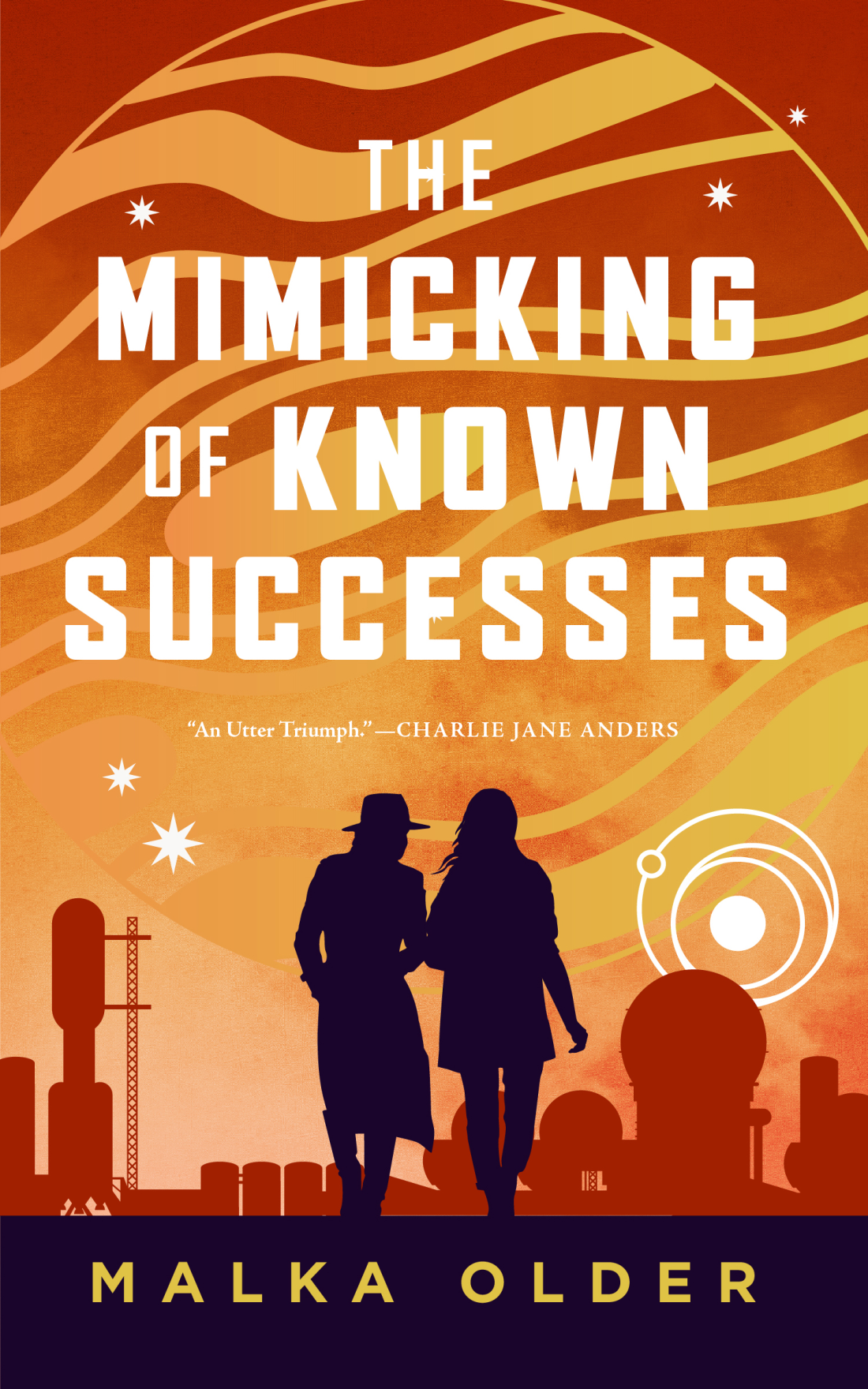
Older’s sensibility and clarity in The Mimicking of Known Successes is
something I envy as a writer. Here are the stairs, the doorway. Here are your
boots and coat, the delicate teacup on its saucer. Here are the flickering gas
lamps that glow in the fog, shaping the world without illuminating it. And here
is the fog, between you and the knowledge you seek. Holmes and Watson and a
missing body, reincarnated among the rings of a gas giant. I’ll be re-reading
this one as soon as I get my hands on the sequel that is coming out in the
spring.
My
most-recommended books of the year are Naomi Novik’s Scholomance trilogy. I
devoured all three like a fat dog who has stolen a whole rotisserie chicken off
the counter, in gulps, and then I told everyone I knew that they must read them
too. Not just because this series is a damn fine coming of age with magic and
monsters and world-changing intrigues, but because the whole point of telling
each other stories like we do is so we can figure out how to learn from our
mistakes and do better at being people in a society. And I truly think these
books are a beacon of moral clarity for understanding the world.
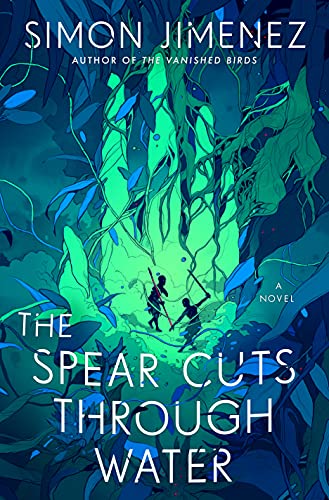
The Spear Cuts Through Water by Simon Jimenez took me more than
a month to read. Almost always, if a book is giving me that much trouble, I
stop reading it, but this book is different. Jimenez’ prose was very difficult
for me, but it was rewarding at the same time, and the rewards of the rest of
the book, which is a twisting, complex intergenerational battle for the soul of
the world, were great. And the difficulty of the prose was necessary—the
writing was dense and oblique, but also ornate and creative in a way that meant
every word was surprising. The creativity itself meant that I had to slow down
and read every single word. I couldn’t predict what words were coming next. I
was not in the driver’s seat, I was holding on for dear life as the story
careened around blind turns, and I enjoyed it immensely.
A
pattern I noticed in myself this year is that I ingested almost all of my
longform nonfiction via podcast. I had good luck with podcasts this year,
starting with Lead Us Not, an investigation by Jenna Barnett at Sojourners
into the leader of L’Arche, a religious community of co-op homes for people
with and without disabilities. The founder of this movement was a deeply
compassionate spiritual man who inspired many people to devote their lives to
service—and also a sexual predator who took advantage of a number of women who
looked to him for spiritual guidance. There’s something particularly awful
about a spiritual leader coercing people sexually; it distorts the spiritual
life of the victim. I have a friend who works within L’Arche as a chaplain, and
this podcast gave me enough light to have good conversations with them about their
work, their faith and their doubts.
On
a lighter note, The Big Dig podcast by NPR and WBGH public radio in Boston,
hosted by Ian Coss, is absurd to the point of comedy. A winding path through
the conception, labor, and birth of the multi-tunnel interstate highway project
in Boston known as the Big Dig, this podcast is an incredibly useful look at
infrastructure. Every writer should understand infrastructure—it’s real life
worldbuilding. Construction permits and architectural designs shape our lives
in ways obvious and subtle.
On
an even lighter note, If Books Could Kill is my favorite podcast of the
year. Michael Hobbes, investigative journalist, and Peter Shamshiri, lawyer and
co-host of the Supreme Court podcast 5-4, tear apart “the airport bestsellers
that captured our hearts and ruined our minds.” There’s something intensely
satisfying about scathing mockery of the worst books in the world, the
bestsellers full of maliciously useless pablum. Blowhards use these books to
get famous and make money off of people who are just looking for a little
guidance, and this podcast is the only justice the world will ever see for
them. It’s a beautiful work of art, and, like the YA fantasy novels of my
teenage years, a comfort to read—or listen to—when the rest of my life is not
very comforting at all.
Joanne Rixon's short speculative fiction has appeared in venues including Terraform, Fireside, and Lady's Churchill's Rosebud Wristlet.
They are a member of STEW and the Dreamcrashers, and are an organizer
with the North Seattle Science Fiction and Fantasy Writers Meetup. They
are represented by Jennifer Goloboy of the Donald Maass Literary Agency,
and you can find them yelling about poetry and politics on bluesky
@joannerixon.bluesky.social, or at joannerixon.com