Showing posts with label Christopher Brown. Show all posts

Wednesday, December 31, 2025

The Pleasures of Reading, Viewing, and Listening in 2025, pt. 21: Christopher Brown


Viewers Like You

by Christopher Brown


Late one Saturday night in early December as the bustle of the year wound down, I opened Volume One of my thrifted old Penguin copy of Robert Graves’ The Greek Myths to a random entry, kind of like the way the narrator of The Man in the High Castle throws the I Ching. The entry on page 188 opened as follows:

 54. THE TELCHINES 


The nine-headed, flipper-handed Telchines, Children of the Sea, originated in Rhodes, where they founded the cities of Cameirus, Ialysus, and Lindus; and migrating thence to Crete, became its first inhabitants. Rhea entrusted the infant Poseidon to their care, and they forged his trident but, long before this, had made for Cronus the toothed sickle with which he castrated his father Uranus; and were, moreover, the first to carve images of the gods. 

b. Yet Zeus resolved to destroy them by a flood, because they had been interfering with the weather, raising magic mists and blighting crops by means of sulphur and Stygian water. Warned by Artemis, they all fled overseas: some to Boetia, where they built the temple of Athene at Teumessus; some to Sicyon, some to Lycia, others to Orchomenus, where they were the hands that tore Actaeon to pieces. But Zeus destroyed the Lycian ones, though they had tried to placate him with a new temple; and they are no longer to be found at Orchomenus. Rumour has it that some are still living in Sicyon.

 That evening, after a busy day outdoors and at swimming lessons, we had let our 6-year-old daughter watch a couple of Lego experiment videos on YouTube while we tidied up and prepared dinner. We quickly realized, as my wife put it, that they (the platform operators) are “trying to colonize her brain” and persuaded the kid to play along as we switched to nature documentaries on the PBS streaming channel, thinking that could work as immediate deprogramming antidote.

 We started with Nova, but it too proved to be infected with the virus of digital capital’s hunger for our attention, evident in the hyper-kinetic narrative and visual structure, channeling the ghosts of carnival barkers through the eyeball kick accelerator of advanced video graphics semiconductors. Then we tried Nature, which thankfully had the same old-school pacing I remembered from whenever I had last watched it, in the era when you watched whatever was on. The catch now in Season 44 is, they show you the lives of other species on a planet where we, like the Telchines, have been interfering with the weather (and every other aspect of the habitat).


 Episode Four takes place on a beach in northwestern Costa Rica. It begins with a familiar parable, as the flipper-handed female sea turtles return after years roaming faraway oceans to lay their eggs in the sand on the same spot where they themselves were born. But then the story takes a grim and unexpected turn, as a jaguar lopes out from the treeline beyond the sand, takes one of the big mamas back into the jungle, and eats her on camera. Over the course of the ensuing 45 minutes, the documentarians lay out the wider backstory of a more interesting Anthropocene adaptation. How the coastal forest of the peninsula, razed for pasture as recently as the 1950s, has been allowed to rewild in the 21st century, providing an arboreal connection between the remnants of more mature jungle in the interior, where the decimated population of jaguar—the region’s apex predator—had been holding out. How the jaguar explored the new woods, found their way to the beach, and rebounded after discovering this bountiful new source of food. And counterintuitively, explain the ecologists monitoring the activity, the presence of the jaguars has stabilized the population of the sea turtles by deterring other terrestrial predators from coming anywhere near the beach, including when the adorable little hatchlings are scrambling for the water.

In Episode One of Season 44, we followed another fleet of seaborne mamas—the walrus of the Bering Sea, who travel north to the safety of the Arctic ice pack with their young pups while the males head for the beaches of Alaska. But the ice packs are melting, breaking up, and retreating farther north, and the narrator poses the question when it will become too far for them to travel, and what they will do then, these “saber-toothed seals.” This episode used digital technology in a valuable way, to visualize the migrations, each walrus a tiny yellow dot moving across a rapidly diminishing habitat, trying to make it across the open ocean to the retreating ice.

 Through it all, you can’t help but notice the presence of the camera lens, of the human gaze, no matter how hard they try to hide it. Especially, as Agustina astutely and hilariously observed in slang improvised on the spot for her daughter to understand, when the camera noses its way into the shallow sand nests and looks up as the female sea turtles are dropping their eggs.


The best new science fiction story I read this year was not presented as such. It was the opening entry in the Spring 2025 issue of the Paris Review, which I picked up after an event at Austin’s First Light Books, curious to see what the literary cool kids are doing and surprised to find myself immediately transported by Amie Barrodale in “Crystal Palace” to a Strangelovian scene where the surviving Justices of the United States Supreme Court and the staffers stuck with caring for them as the world dies look for things to do in their apocalypse bunker, and turn to the most potent intoxicants they find:

 The talk of trying them, of there being nothing else to do, of the possibility, however small, of finding a new kind of purpose—thinking outside the box—was mitigated by concern about epic bad trips or just plain death after what had happened to Amy, though that was more of a broken-leg issue. The AI medical wellness suite being not quite state-of-the-art, and there being the possibility that no one really wanted to explore of some kind of mismanagement of medication. Its being unclear, none of them having trained in medicine, what exactly it was that had caused Amys passing. John seemed to argue that death might not be so bad under the circumstances, though it was of course difficult to understand him, as he spoke through tears. Still. There was a certain, lets say, carefulness around drugs among the remaining members of the judiciary and their support staff—Terry and Keith—who were great, of course.

They took it to a vote and agreed eight to two that anybody who wanted to was free to go ahead and sample the wares.” Brett immediately raised a hand. Clarence looked around at the others, murmured that he was surprised, and extended a hand as well. And then, well, then that was it. The other justices sat there blinking until Sonia said, Okay, what do we do now?” and Samuel said, I guess they take the drugs. The acid or whatever.” And Clarence and Brett dropped, and then somebody suggested Bear Paw.


The worst new science fiction story I read this year was the widely-covered Abundance by Ezra Klein and Derek Thompson, a neoliberal manifesto of techno-progressive futurism outlining pathways to policies that could realize a utopian back half to the grim century currently unfolding. The vision telegraphed by the cover is one of habitat for all: gleaming cities powered by clean energy and magical technologies side by side with verdant green ecologies. A worthy goal, for certain, and the book is packed with useful ideas, but constrained by its intrinsic anthropocentrism, as evidenced by the fact that the word “nature” does not appear in the index. In the end, I found the index a more interesting text than the body of the book, like a naturally occurring variant of J. G. Ballard’s short story, “The Index” (an index to an imaginary autobiography that encodes a secret history of the 20th century).


 Curiously, the 1951 science fiction film The Day the Earth Stood Still does appear in the index to Abundance. Not, as you might expect, with a retelling of the powerful warning from more knowledgeable visitors about how dangerous a track we are on. Instead, when you flip to page 41 you find a discussion of how the alien Klaatu ends up staying in a rooming house in a nice neighborhood in D.C., and how misguided were the postwar zoning policies that made that kind of housing illegal.

 The rekindled memory of that film, in such an unlikely context, reminded me how effective science fiction once was at doing the same thing as one finds embedded in The Greek Myths: using stories of what happens when we offend the gods and incur their vengeance as a way to regulate the human proclivity for abuse of nature’s bounty and gifts. Much used to be made by certain sorts of critics by the fact that Klaatu’s undercover alias was Carpenter, but the god or gods he echoed were older ones, the ones that embody the elemental forces of the Earth, rather than those that endeavor to maintain the eternity of patriarchal dominion. 


*


Some other recommendations of new work I got to read in 2025:


 Helen of Nowhere by Makenna Goodman


Greyhound: A Memoir by Joanna Pocock


On the Calculation of Volume I by Solvej Balle


Capital’s Grave: Neofeudalism and the New Class Struggle by Jodi Dean


Crossings: How Road Ecology is Shaping the Future of the Planet by Ben Goldfarb


Bye Bye I Love You: The Story of our First and Last Words by Michael Erard


Capitalism: The Story Behind the Word by Michael Sonenscher


*


Christopher Brown
is the author of A Natural History of Empty Lots: Field Notes from Urban Edgelands, Back Alleys and Other Wild Places, as well as the novels Tropic of Kansas, Rule of Capture and Failed State.

Tuesday, December 31, 2024

The Pleasures of Reading, Viewing, and Listening in 2024, pt. 23: Christopher Brown


Reading and Viewing in 2024

by Christopher Brown


I dragged my wife this summer to see a post-apocalyptic prequel to the third sequel of a 1979 movie about Australian men trying to kill each other with their cars, promising her this was the one that would finally deliver the feminist utopia made from the ruins of petrochemical capitalism we had been teased with in 2015. And we did get a glimpse of The Green Place of Many Mothers—for about three minutes at the beginning until the bikers showed up, proving the filmmakers’ inability to unmoor their story from its (and their) roots in those '70s exploitation films where the bikers always showed up, and their (or maybe Hollywood’s) inability or unwillingness to show us an authentically different version of how life could be.

 When it came time to watch the actors pretending to be space opera jihadis rising up under the leadership of the tween prince, while we averted our eyes from the events unfolding in the real Arab world, I went alone.

 I took a long lunch to catch a weekday matinee of the movie about a Second American Civil War, but as anticipated it had no politics.


Maybe that is why most of my movie viewing this year was of the Criterion Channel’s new feed of their own non-stop selections from their library, Criterion 24/7, which lets you experience fragments of great movies as ambient backgrounds to domestic life. Among my favorite discoveries were An Angel at My Table, Jane Campion’s 1990 adaptation of the autobiographies of New Zealand author Janet Frame; Ornette: Made in America, Shirley Cole’s 1985 documentary following the improvisational music pioneer back to his hometown of Fort Worth; and Radio On, Christopher Petit’s beautiful black and white English road trip at the dawn of the Eighties.


 The most illuminating book I read this year was written in 1849 about events that took place in 1810-13. Adventures of the First Settlers on the Oregon or Columbia River is classic Americana, the account by Scots-Canadian entrepreneur Alexander Ross of his years helping launch John Jacob Astor’s Pacific Fur Company in the Pacific Northwest. A tale of frontier exploration and colonization, it begins with the dramatic arrival in downtown Manhattan of a group of Canadian management recruits escorted in a giant canoe by singing Voyageurs, takes a harrowing journey by ship around Cape Horn under the captaincy of an Ahab-like tyrant, has a decadent and utopian sojourn in pre-colonial Hawaii, and then details for hundreds of pages all the mishaps, fears, and failures of the group as they try to build their outposts and interact with the diverse Native American groups that surround them. You realize you are reading a business book, written not by adventurers, but by traders, whose skill was not trapping wild animals, but making deals. Reading their story, you get a vivid tour of the Pacific Northwest as it was before Anglo-American settlement and a fresh appreciation of how entrepreneurial finance was the real virus that paved the way for what would follow. 


Exploring similar territory from a radically different vantage was Boyce Upholt’s excellent 2024 book The Great River: The Making & Unmaking of the Mississippi, a wonderfully written work of Anthropocene ecology about what we have done to the bountiful riparian world we found between the Appalachians and the Rockies and the futility of our efforts to engineer the forces of nature into submission.


In a year extra busy with my own book launch and work and familial responsibilities, much of my reading was in the margins of the day, on the tiny screen of my phone after putting our daughter to bed. I deeply connected with Camille Dungy’s Soil: The Story of a Black Mother’s Garden, which made a diary of a suburban yard into an incisive exploration of race, family, and American identity. I liked some aspects of Cormac McCarthy’s The Passenger but found his efforts to write the other fell short, exposing the exhaustion of the burned-out masculine archetype at the center of the story. I was fascinated by my discovery of W. G. Sebald’s book-length poem After Nature, and enchanted by the dark spell of Nathan Ballingrud’s Crypt of the Moon Spider, a work of wonderfully weird fabulist melancholy that gets into your head and starts poking around like an alien dentist. I ended the year enjoying Joanna Pocock’s Surrender, which had been on my TBR pile since I picked up the print edition from Fitzcarraldo upon its publication in 2019. It’s a beautifully written and deeply insightful account of the author’s two-year stay in Montana in the company of her husband and daughter, witnessing the damage of both human and natural ecology at the frontier that is the edge of every American town, while navigating her own crises and life changes.


I devoured the nihilistic noir of David Goodis’ Dark Passage, enjoyed the brief retelling of the story of Viking matriarch Aud the Deep-Minded in Keneva Kunz’s new (to me) translation of Eirik the Red's Saga, and went into the bunker with Volker Ullrich for Eight Days in May, his fresh 2022 reconstruction of the last gasps of the Nazi regime. After our own incoming regime won the evident support of the American Volk, I found myself retreating into the labyrinth with Borges, rereading my favorites of his stories in the original Spanish (as collected in the Cuentos Completos, which I also enjoyed in the audio edition narrated by Gerardo Prat). Reading Borges untranslated takes some work for me, but made me realize how much more feeling and magic those stories had than one gets from the logic-drunk translations by American professors—and how much more strongly I could feel the specters of colonial horror and emergent autocracy echoing through the walls of the library in which those micro-narratives take sanctuary.

 The single thing I read this year that resonated with me the most was an essay by Patricia Lockwood in the December 4 issue of the London Review of Books, “Encounters With Aliens,” about watching X-Files reruns with her husband after he has major surgery, seeing how the whole show is about control of Scully’s body (and of that of the actress who plays her), and all the visitations of ghosts and disparate connections a nugget of aging popular culture can conjure. A reminder that our diverting escapes from the news of the day can also serve as left-handed strategies of engagement, and maybe even the laboratory to germinate the seeds of real change.


Christopher Brown’s latest book, A Natural History of Empty Lots: Field Notes from Urban Edgelands, Back Alleys and Other Wild Places, is now available from Timber Press.

Friday, December 29, 2023

The Pleasures of Reading, Viewing, and Listening in 2023, pt. 25: Christopher Brown


Aqueduct Year in Review 2023

by Christopher Brown


The only real vacation we took this year was to South Padre Island the week of July 4, with extended family ranging from ages 4 to 83. An old school Texas beach trip, where you pack your own portable sun shade structures to protect you from the ever more intense local star that radiates the day, as you watch the tanker traffic come and go in the deepwater distance and wonder whether the water is really safe to swim in. It ended up being the hottest week on the modern meteorological record, not just there, but around the world, and you could feel it on the sand, and even in the water. The wetland refuges on the bayside were desert dry, full of folks rampaging across the paradise turned wasteland on all terrain vehicles like the members of some Mad Max recreation club.

Above the kites floated a tethered aerostat operated by the U.S. Border Patrol, a cute white blimp loaded with advanced avionics, scanning for climate refugees and smugglers in the zone where the Rio Grande empties into the Gulf. And right along the horizon line shimmered the big rockets of the Space X factory and launch pad, their golden age Destination Moon forms making me wonder if the heat had me hallucinating some waking dream of the spacefaring 21st century my late 20th century childhood had promised. The evident truth was less promising: the richest men on Earth are using the libertarian business platform of Texas to try to get to another planet, now that we have trashed this one to a point where our culture and very survival is threatened. Roll over, Heinlein, and tell Bradbury the news.


Sitting there in my beach chair in our true dystopia, one of the paperbacks I had brought along was an old (1994) Penguin collection of Colonial American Travel Narratives edited by the women’s studies scholar Wendy Martin. It opened with A True History of the Captivity and Restoration of Mrs. Mary Rowlandson, one of the earliest American captivity narratives, a first-person recollection of the author’s capture and 11 weeks captivity by a mixed group of Narragansett, Wampanoag and Nashaway in 1675, during the conflict known as King Phillip’s War. Rowlandson was around 40 when she was taken, and wrote with great command of her story, telling it through a series of removes that give it a curiously cinematic structure, framed with a Puritan Biblical theme that very slowly erodes as her alienation from the people she has been taught to view as unredeemed savages becomes more complicated, and viscerally experienced by the reader through her detailed daily descriptions of the foods she is fed, from a singed seared horse liver to the unborn calf of a doe killed in the hunt—so tender, she explains, you could eat the bones. 


It was the second captivity narrative I had read this year. The first was Fanny Kelly’s Narrative of My Captivity Among the Sioux Indians, recounting the attack on the author’s wagon trail on the Oregon Trail in the summer of 1864, and her five months with the Lakota. The book had been on my shelf for a while, one of the many little hardbound editions I had accumulated over the years from Lakeside Press—the volumes the financial printer R.R. Donnelley used to send to its customers at the holidays every year for most of the twentieth century and the first two decades of the twenty-first, a series I had discovered as a securities lawyer who got on the mailing list for a while. The books were always classics of Americana, beautifully made, and accompanied by an introduction that mixed historical background with an epistolary business message from management to the stakeholders. They finally killed the series when traditional financial printing became an anachronism and the company was carved up into the remaining valuable parts, but I still keep an eye out for the books, which, in the way of all freebies, have a knack for showing up on the shelves of suburban used book stores.

I found myself binging those sorts of books this year, as intuitive writerly research. After five years of writing dystopian novels, I made the pivot to narrative nonfiction, with a pitch for a book about urban wildlife and ecology, green futures, and the story of my family’s project making a home in a Texas edgeland where industrial land use bleeds into interstitial wilderness. In the way one does after selling a book off a proposal, as I started actually writing it I found myself grappling with what sort of story it really was, and eventually realized what I was really doing was in a tradition most American readers have internalized so completely they forget about its existence as a distinct genre—the tales of exploration, discovery, colonization, conquest and frontier settlement that are the real post-Columbian literature of the Americas. Where we came from, what we found here, how we changed it, how it changed us. The quintessential American narrative archetype, one could argue, and perhaps a variant of the seminal human story—especially as our migratory natures are being reawakened by the climatic changes our permanent settlements have wrought.

I reread Cabeza de Vaca’s journal of his years among the indigenous peoples of Texas and northern Mexico after washing up on the coast following a shipwreck in 1528, and Haniel Long’s remarkable poetic riff on that narrative, An Interlinear to Cabeza de Vaca. I read translations on university websites of Cortes’ letters to King Carlos reporting on the wonders of Tenochtitlan, as smallpox began to winnow the local population and he effected his conquest. I re-read Bernal Diaz’s first person account of the same events, The Conquest of New Spain. On my mother’s shelves, I found Audubon’s memoir of his childhood and early life as a kid who always gravitated toward the wild spaces, in the form of a manuscript found by his family in a barn on Staten Island, and published by his granddaughter Maria along with his nature journals in 1897 as Audubon and His Journals, a text that reads like a letter to the author’s children at the same time as it encodes, from its first page’s account of his mother’s death in the successful Haitian slave uprising, the way so much nature writing situates ecological diversity as a private estate of white privilege.


I tracked down volumes of the strangely esoteric histories of American highways that are out there, like Milo Quaife’s 1923 Chicago’s Highways Old and New, revealing how the engineered routes of our automobiles and Internet cables often follow the paths of pioneer trails made from Native American trails, many of which had their origins as the trackways of migratory megafauna we have mostly banished from existence. I read the bizarre annotated journal of The Expedition of Zebulon Pike, the young Army officer dispatched by Aaron Burr co-conspirator General James Wilkinson in 1805 to explore the upper reaches of the Mississippi following the Louisiana Purchase, as edited in 1895 by the naturalist, surgeon and Madame Blavatsky protegĂ© Elliott Coues, who fills most of the pages with rambling footnotes riffing on the weird ways the collisions of languages express themselves through the ever-morphing names of places and peoples in the North American landscape. I discovered William Bartram’s journals of his trips into the southern swamps of the 1770s, Frederick Law Olmsted’s 1840s saddle trip across Texas, and re-considered Thoreau’s Walden and the illusion of solitude it constructs like some paradigm of the view from nowhere.


I read pioneer settlement accounts, like John Woods’ Two Years’ Residence on the English Prairie of Illinois, and similar stories of the first generation of colonists in my home state of Iowa. I reread pieces from John Keene’s brilliant Counternarratives, published by New Directions in 2015, which repurposes such narratives in stories and novellas that conjure a more honest and emancipatory window into the pan-American past and present. And I dug out the copy of Carlos Castaneda’s A Separate Reality some 70s stoner high school teacher assigned us, and freshly examined what was really going on there.


Through it all, I found windows into the continent that was, and the one we have made. The journals of early travelers like Pike, Audubon and Bartram into the wilds reveal a natural ecology we have mostly erased under plow and pavement, and a diverse and complex human ecology that reflected millennia of habitation of and movement across this land. I devoured material on the Pleistocene extinction and the curious ecology of common American plants co-evolved to be eaten and dispersed by animals that no longer exist, in books like Connie Barlow’s fascinating The Ghosts of Evolution.


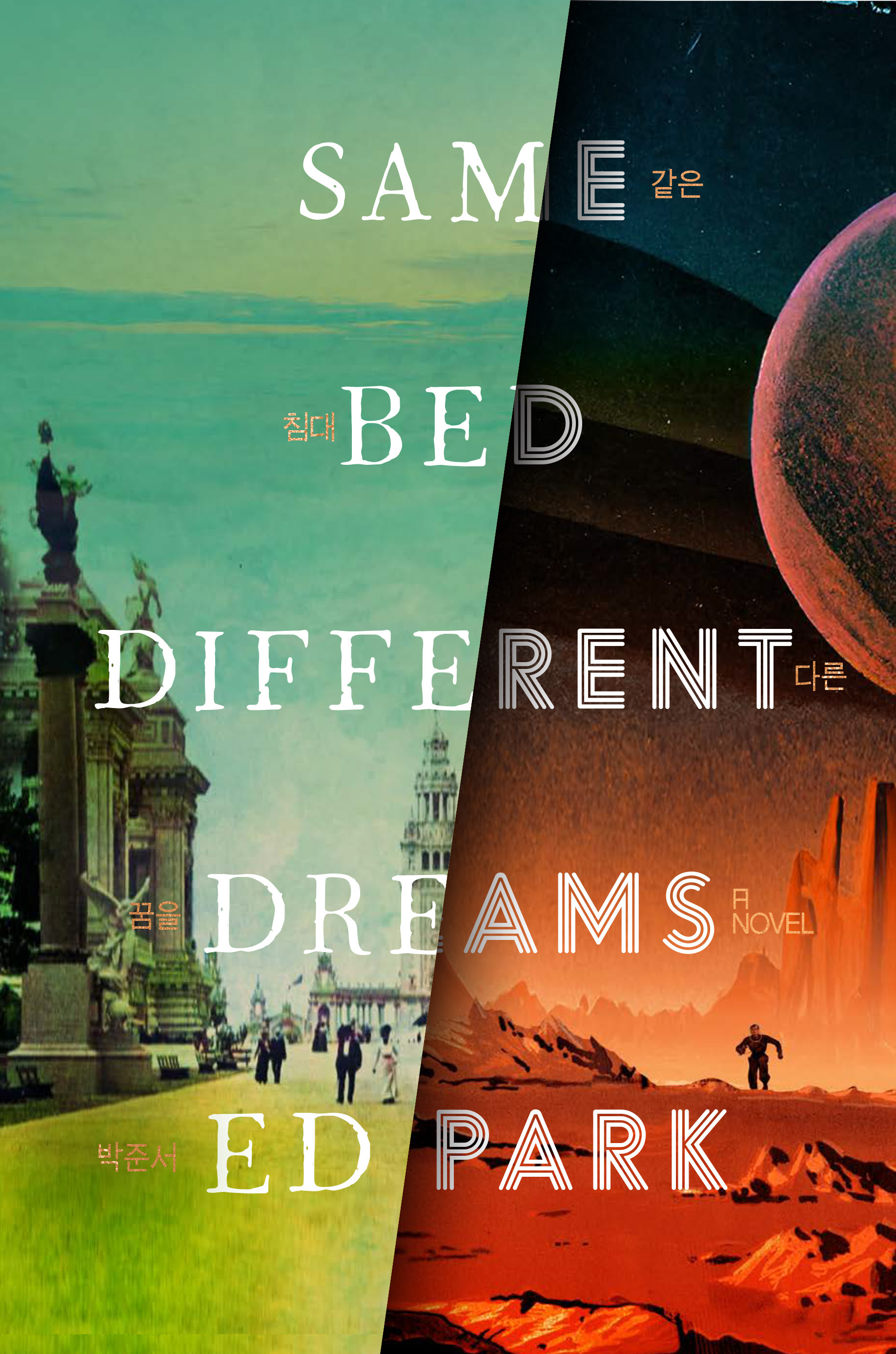
I started to see the newer stories we tell, including the science fictions that fuel the interstellar yearnings of Gen X technobarons to lord over their own new worlds, through the prism of those narratives of colonization. And to wonder how, through narrative inversion and interrogation, we might reinvent those operating systems of identity in a way that starts the process of decolonizing the world, and ourselves. I started to see many of the new books arriving through that prism, including, in the spring, my editor Makenna Goodman’s powerful and incisive first novel The Shame, and at the end of the year, Ed Park’s epic Korean-American literary alternate history Same Bed Different Dreams, and I look forward in 2024 to exploring what other new work I have been missing while bunkered down on my own.


Christopher Brown is the author of the novels Tropic of Kansas, Rule of Capture and Failed State. His climate memoir The Secret History of Empty Lots: Field Notes from an American Edgeland, which draws on the same material as his popular urban nature newsletter Field Notes, is forthcoming from Timber Press in the fall of 2024.