Showing posts with label Lisa Shapter. Show all posts

Thursday, December 29, 2016

The Pleasures of Reading, Viewing, and Listening in 2016, pt. 18: Lisa Shapter

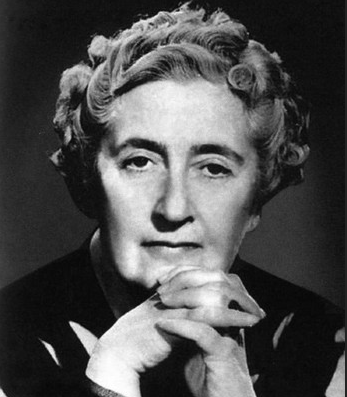
The Pleasures of Reading 2016: Agatha Christie 1936 
by Lisa Shapter 


When people think of the clever things mystery writer Agatha Christie does with narrative they usually mention The Murder of Roger Ackroyd (1926). I’ve been reading her later Hercule Poirot mysteries in order and I’ve discovered she seamlessly pulls off a more subtle effect: writing without comment or fanfare from male perspectives (with sympathetic concern in Dumb Witness (1937) for the issues of domestic violence, elder abuse, and restrictive divorce laws). She also breaks other ‘rules’ about narration and perspective (including her frequent, charming-when-it-ought-to be-irritating habit of having characters remark ‘Why, that only happens in mystery novels!’)

In 2016 I read the three(!) Poirot mysteries Christie published nearly 80 years ago, in 1936: The ABC Murders (The Alphabet Murders), Murder in Mesopotamia, and Cards on the Table.

Christie does something startling in The ABC Murders: she alternates the conventional 3rd person narration of Poirot’s friend-and-Watson-figure, Captain Hastings, with chapters of 1st person narrative from the primary suspect on the eve of each killing. (These chapters are actually reconstructions by Hastings who must have more of an imagination than Poirot gives him credit for.) This seems jarring and awkward at first (why not simply have the suspect hand over a later-excerpted diary when Poirot interviews him in jail late in the book?) But it turns out to be necessary in this unusual mystery where those closest to each victim assist Poirot on the case.

Murder in Mesopotamia starts with an unusual frame story from a tertiary character, a man, describing the woman who will be a central part of the case. It seems like an awkward entry point for an appealing, isolated-setting ‘county house’ mystery with a wonderfully realized location (a 1930s archaeological dig written by the wife of an actual 1930s archaeologist) but the frame gives a necessary outside viewpoint on the narrator that the woman herself could not give.

Cards on the Table has Poirot accepting the help of several other detectives, as equals, and admitting to his own faults of being overbearing and willing to do questionable things (trespassing on active crime scenes, eavesdropping, lying, and fabricating evidence) in order to solve cases. This breaks with Christie’s consistent earlier portrayals of her detective as admirable but mildly eccentric: in the late 1930's her writing starts to suggest that her detective’s neatness, his scrupulousness, and his sense of moral imperative might have a shadow side.

I put off reading Agatha Christie because I expected her work would be conventional and old-fashioned; I had read my share of once-groundbreaking science fiction half the Poirot series’s age that now seemed like well-done but staid set pieces. Instead I’ve found her mysteries to be masterful and startling. It is easy to think a man like the fictional Captain Hastings wrote them: honorable, conventional, blinkered by era and education; but Agatha Christie was a widely-read (and-traveled) woman with an excellent but unconventional education, making the illusions and limitations within her fictional viewpoints all the more surprising. Her 80-year old works have been a great pleasure to read in 2016.
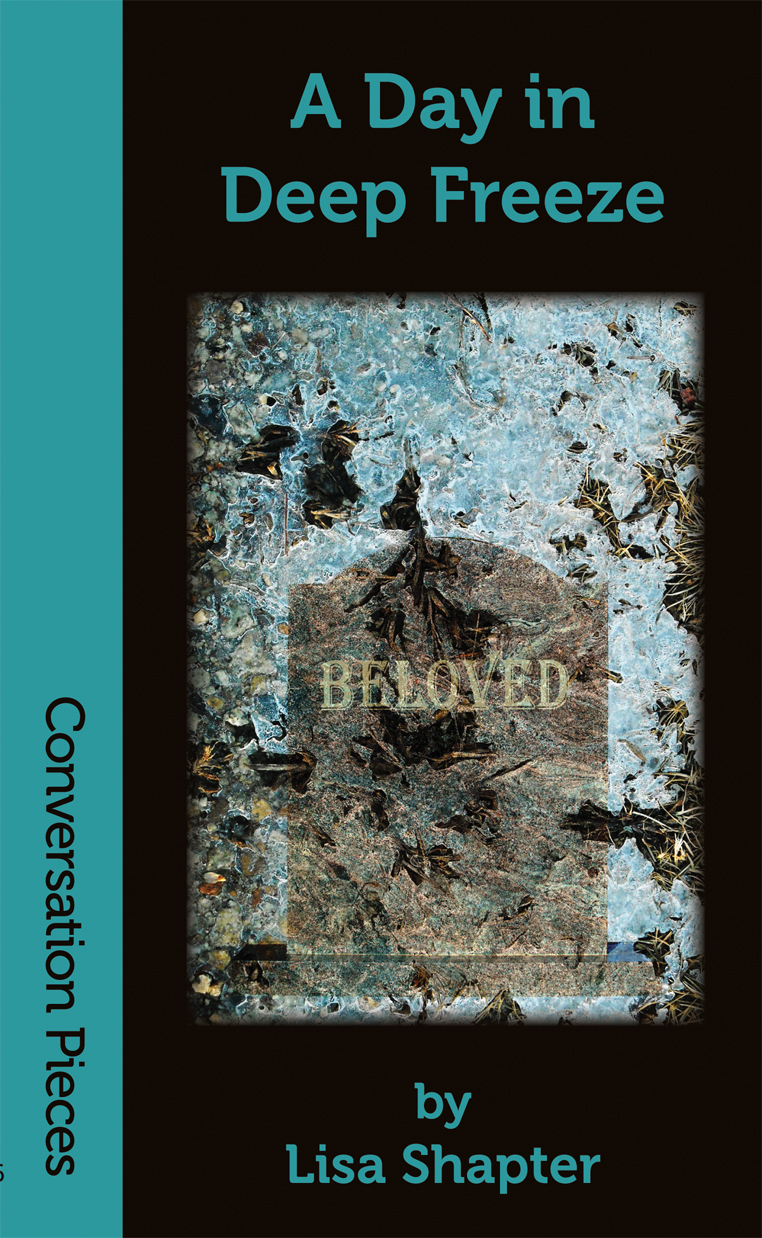


 Lisa Shapter is an alumna of the Bread Loaf Young Writers’ Conference and a member of Codex Writers’ Group. She lives in New England, collects antique typewriters, and is researching a history of 20th century women SF authors. She is a member of Broad Universe and the Dramatists’ Guild of America. Her science fiction play “The Other Two Men,” featuring characters from her short stories, was performed at the Players’ Ring of Portsmouth, New Hampshire in the summer of 2016. Her short stories have appeared in Black Denim Lit, Expanded Horizons, Four Star Stories, Kaleidotrope, and in the anthology Things We Are Not: An M-Brane SF Magazine Queer Science Fiction Anthology. Her novella A Day in Deep Freeze was published in 2015 in Aqueduct Press’s Conversation Pieces series.


Tuesday, December 15, 2015

The Pleasures of Reading, Viewing, and Listening in 2015, pt.12: Lisa Shapter

The Pleasures of Reading 2015: Forgotten Female Founders of Science Fiction
by Lisa Shapter

Our memory of women’s history is often diminished or distorted in popular culture. We remember Victor Frankenstein’s motherless, never-a-child, son as a grunting, monosyllabic hulk. In fact, he talks like this in the original novel: “[A]m I not alone, miserably alone? You, my creator, abhor me; what hope can I gather from your fellow creatures, who owe me nothing?” When we remember the history of science fiction, especially women’s history of science fiction, we often remember Mary Wollstonecraft Shelley’s pioneering Frankenstein: Or The Modern Prometheus (1818) or Charlotte Perkins Gilman’s utopia Herland (1915) but we forget that the history of women writers in science fiction is longer and older than either of these ‘firsts’.


A short list of forgotten books:

1) The Blazing-World (1668) by Margaret Cavendish

Science! Satire! A female narrator who survives, like Ishmael, only to be rescued by .... intelligent polar bears?

Author’s statement: I wish, with all my Soul, [that this book] ... might be shared amongst my Noble Female Friends .... though I cannot be Henry the Fifth, or Charles the Second; yet, I will endeavor to be, Margaret the First: and, though I have neither Power, Time nor Occasion, to be a great Conqueror, like Alexander, or Caesar; yet, rather than not be Mistress of a World, since Fortune and the Fates would give me none, I have made One of my own.

Read the rest at the University of Pennsylvania’s Celebration of Women Writers website: http://digital.library.upenn.edu/women/newcastle/blazing/blazing.html (Penguin Classics used to have a nice edition of this book, but no one has published the annotated edition that does justice to this novel’s humor, its relationship to the history of science, and the author’s other political and social writings.)

2) Mizora (1890) by Mary E. Bradley

A female narrator! Worldbuilding! A single-sexed utopia 25 years before Gilman’s Herland! (Warning: contains racism. See Pfaelzer for historical context.)

In my world man was regarded, or he had made himself regarded, as a superior being. He had constituted himself the Government, the Law, Judge, Jury and Executioner. He doled out reward or punishment as his conscience or judgment dictated. He was active and belligerent always in obtaining and keeping every good thing for himself. He was indispensable. Yet here was a nation of fair, exceedingly fair women doing without him, and practicing the arts and sciences far beyond the imagined pale of human knowledge and skill.

Read the rest at Project Gutenberg: http://www.gutenberg.org/cache/epub/24750/pg24750.txt(Dr. Jean Pfaelzer has produced a critical edition of this book published by Syracuse University Press.)

3) “The Island of the Nine Whirlpools” from The Book of Dragons (1901) by Edith Nesbit

For all its magic and fantastical creatures this is a classic puzzle story with a smart girl and math.

.... [T]he years went slowly by. The wicked King died, and some one else took his kingdom, and many things were changed in the world; but the island did not change, nor the Nine Whirlpools, nor the griffin, nor the dragon, nor the two stone ladies. And all the time, from the very first, the day of the Princess's deliverance was coming, creeping nearer, and nearer, and nearer. But no one saw it coming except the Princess, and she only in dreams.

Read the rest at Project Gutenberg: http://www.gutenberg.org/ebooks/23661.

Reading what pioneering women like these have said for themselves is often a shock and a revelation. I have spent the past year researching the history of 20th century women science fiction authors, and this sense of surprise has been my greatest pleasure while reading in 2015. This brief list is only a starting place for seeing how women have re-envisioned human societies, advanced technologies, and alternate possibilities – and the delights and discoveries these many visions contain.

I wish to acknowledge the kind help of women’s science fiction collector Tom Porter and point intrigued readers to the 15-some other early women writers of satyrical or utopian science fiction (likely including ‘Anonymous’) listed in The Dictionary of Imaginary Places: The Newly Updated and Expanded Classic by Alberto Manguel and Gianni Guadalupi.


Lisa Shapter is an alumna of the Bread Loaf Young Writers’ Conference and a member of Codex Writers’ Group. She lives in New England, collects antique typewriters, and is researching a history of 20th century women SF authors. She is a member of Broad Universe and the Dramatists’ Guild of America. Her science fiction play “The Other Two Men,” featuring characters from her short stories, will be performed at the Players’ Ring of Portsmouth, New Hampshire in the summer of 2016. Her short stories have appeared in Black Denim Lit, Expanded Horizons, Four Star Stories, Kaleidotrope, and in the anthology Things We Are Not: An M-Brane SF Magazine Queer Science Fiction Anthology. Her novella A Day in Deep Freeze was published in 2015 in Aqueduct Press’s Conversation Pieces series.

Monday, June 29, 2015

Photos from WisCon 39

I tend to forget to take photos at WisCon, except for those I've gotten in the habit of doing-- chiefly of the Aqueduct Press-organized readings. Partly this is because I don't like to take photos without first getting permission from those who will be clearly identifiable in the photo (which pretty much rules out most candid photos), partly because I tend to get so caught up in talking to people that I forget. On our first night at WisCon, I remembered to take a photo of the window of Room of One's Own (which I of course stared admiringly at before entering the store), and a photo of Kath, Arrate, Nisi Shawl, and Margaret McBride at dinner. (Tom was leaning in back in his chair, & so, like me, who was talking the photo, is invisible.)
Hmm. Actually, you can see Tom's arm, the napkin in his lap. The food was Peruvian, and we were all in an exuberant mood and rejoicing at being all together again and attending another WisCon.

Friday, I took a picture of our tables in the Dealers Room. Kim Nash took the photo so that all four of us could be in the photo: this is what it the center part of the table looked like before the doors to the Dealers Room were opened:
Reading on Saturday were Anne Sheldon (who read several poems and an excerpt from Adventures of the Faithful Counselor, Mary Anne Mohanraj (who read from the introduction of The WisCon Chronicles Vol 9: Intersections and Alliances, Jackie Hatton (who read from Flesh and Wires, which Aqueduct Press will be releasing later this year), Andrea Hairston (who read from a novella), and me (who read a portion of "The Forbidden Words of Margaret A., which has just been reprinted in Ann and Jeff VanderMeer's Sisters of the Revolution):

And reading on Sunday were Eleanor Arnason (who read from The Daughter of the Bear King, which Aqueduct recently released in an ebook edition), Nancy Jane Moore (who read from The Weave), Therese Pieczynski (not an Aqueduct author, but one who writes very much in the spirit of Aqueduct and who read a teaser from a story that had everyone on the edge of their seat), and Lisa Shapter (who read from her novella A Day in Deep Freeze, which Aqueduct published this spring, and who prefers not to be photographed).


Monday, April 6, 2015

Lisa Shapter's A Day in Deep Freeze


I'm pleased to announce the release of a new volume in Aqueduct Press's Conversation Pieces series, A Day in Deep Freeze, a novella by Lisa Shapter, in both small trade paperback and e-book editions. The story takes place in an alternate 1963, in which. Emran Greene is a successful corporate accountant, a hopeful soon-to-be-father, and an unremarkable husband--except, that is, for the lingering effects of an experimental wartime truth serum, his ex-boyfriend, the impossibility of his conceiving a child, and all of the other secrets he keeps from his wife and his employer. One of these, the secret of the lonely grave he visits regularly in Riverport's Castleview Cemetery, holds a tragedy that just won't stay gone...

You can purchase the book in print and e-book editions now through Aqueduct's website. It will be available soon through other venues.