Showing posts with label Sofia Samatar. Show all posts

Monday, December 17, 2018

The Pleasures of Reading, Viewing, and Listening in 2018, part 11: Sofia Samatar

Photo by Jim C. Hines


My Year in Translation
by Sofia Samatar


This has been an exciting year in reading for me, partly because I’m on the jury of the 2019 Best Translated Book Award, which means I’ve been reading lots of books that have just come out in English. Even outside my reading for the award, I found myself drawn to translated literature and stories of movement between languages. Call it my year in translation.


Patrick Chamoiseau’s Slave Old Man, translated by Linda Coverdale, is a dazzling, complex, and moving novel. Published in 1997, it only arrived in English this year, and I can’t help wondering how the course of black studies in the anglophone world might have been different if we’d had access, two decades ago, to this story of an escaped slave, the hound that pursues him, the forest that surrounds them, and the slippery, uneven spacetime in which everything happens and of which everything is made. It’s a startling book, historical and otherworldly at once, and Coverdale’s skill allows Chamoiseau’s language experiments to irradiate English in a marvelous way.


Other new books in translation took me north. Christina Hesselholdt’s Companions, translated by Paul Russell Garrett, is an homage to Virginia Woolf’s The Waves, and a story of intersecting lives in contemporary Denmark that grows deeper and more powerful by the page. The Endless Summer, by Madame Nielsen, another Danish author, is translated by Gaye Kynoch. A single summer unfolds through the eyes of “a young boy, who is perhaps a girl, but does not yet know it,” and, as in Companions, the narrative flows from one character to another, this time exploring how a love affair between two people ripples through multiple lives.


Anne Serre’s The Governesses, translated by Mark Hutchinson, is one of my best reads of 2018: a dreamlike novel that infuses an immense amount of energy, eroticism, and utter weirdness into its few pages. And then, also filed under weird, there’s Comemadre by Roque Larraquy, translated by Heather Cleary, which starts out with a tale of gruesome 20th-century experimentation (some doctors want to explore life after death, so they induce patients at their clinic to agree to have their heads chopped off, hoping the heads will say a few words before expiring), and ends with the autobiography of a 21st-century artist, involving uncanny doubles, extreme manipulations of the body, and the melancholy pursuit of fame.

Outside of awards-related reading, here are some highlights:

I Am the Brother of XX by Fleur Jaeggy, translated by Gini Alhadeff: I completely fell to pieces over Fleur Jaeggy this year, read everything by her in English, and want to recommend it all, but am limiting myself to this pulse-heightening, mind-expanding story collection. The frozen sea within you will crack.


Extracting the Stone of Madness by Alejandra Pizarnik, translated by Yvette Siegert: Pizarnik’s brooding, tumultuous, insomniac poems, 1962 – 1972. “The powers of language are the solitary ladies who sing, desolate, with this voice of mine that I hear from a distance. And far away, in the black sand, lies a girl heavy with ancestral music.”


The Word Book by Mieko Kanai, translated by Paul McCarthy: This was a reread for me, and it was a delight to come back to Kanai’s supple, intricate stories, which bore me away so gently that it took me some time to realize the shore was no longer in sight.

An Episode in the Life of a Landscape Painter by César Aira, translated by Chris Andrews: Heaven help me, why have I not been reading César Aira? If my brain is a sky, this novella is sheet lightning. Like the painter in Aira’s wickedly reimagined biography of Johann Moritz Rugendas, I am marked for life.
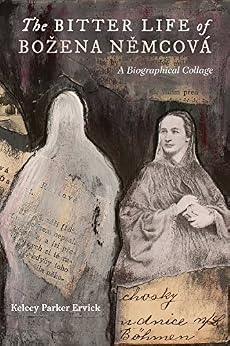

The Bitter Life of Božena Němcová: A Biographical Collage by Kelcey Parker Ervick: Božena Němcová was a 19th-century writer of fairy tales, an unabashedly unconventional woman, and according to Milan Kundera, “the mother of Czech prose.” Through letters, documents, and images, Kelcey Parker Ervick assembles the life of this fascinating figure, as well as the life of a writer named Kelcey Parker Ervick, who meditates on biography, searches for a Czech typewriter, and works to survive a collapsing marriage. As a confirmed fan of fairy tales, research, and researchers, I loved this.

This Little Art by Kate Briggs: A gorgeous essay on the “little art” of translation by a translator of Roland Barthes, this book is as searching, intimate, and risky as its subject. A fitting work to wrap up my year of reading in, around, and about translation.
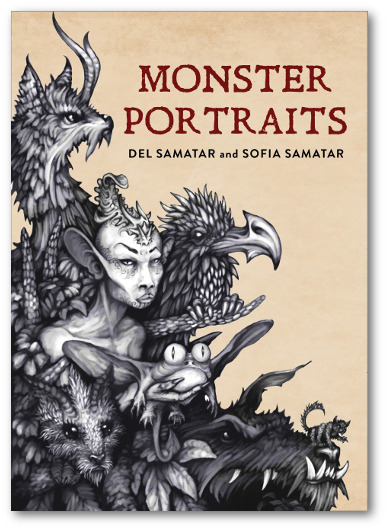


Sofia Samatar is the author of the novels A Stranger in Olondria and The Winged Histories, the short story collection, Tender, and Monster Portraits, a collaboration with her brother, the artist Del Samatar. Her work has won several awards, including the World Fantasy Award. She teaches African literature, Arabic literature, and speculative fiction at James Madison University.

Monday, December 11, 2017

The Pleasures of Reading, Viewing, and Listening in 2017: pt.4: Sofia Samatar


The Pleasures of 2017
by Sofia Samatar


I devoured This Young Monster by Charlie Fox—a dazzling collection of personal essays on monsters, the monstrous, art, and culture. It’s the perfect companion to the horror show of today’s America, and also to Stranger Things, which I watched with the avid passion of a teenage Winona Ryder fan, since that’s what I actually am. 

In poetry, I loved the questing spirit of Anna Moschovakis’s They and We Will Get into Trouble for This, the way black-body radiation meets the radiant black body in Samiya Bashir’s Field Theories, and Bhanu Kapil’s urgent, delirious, vagabond writing in Ban en Banlieue and its companion chapbook, entre-Ban.


Further pleasures: 

Kate Zambreno’s Book of Mutter, a philosophical investigation of grief, time, and the practice of art. 

Danielle Dutton’s magical biography, Margaret the First. 

Lynne Tillman’s mischievous, erudite, and delightfully weird The Complete Madame Realism. 

M. John Harrison’s Viriconium, which I’d never read before—a hallucinatory series, like King Arthur but with space travel and spleen. 


Kathryn Davis’s Labrador, which I’ve probably read 15 times—it’s still one of the best fantasies ever written.  

Sir Gawain and the Green Knight, Pearl, and Sir Orfeo, translated by J.R.R. Tolkien (he was a really good translator!). 

And finally, The Complete Stories of Leonora Carrington, an absolute treasure. I love it when the hyena tears her face off. 


Sofia Samatar is the author of the novel A Stranger in Olondria, winner of the William L. Crawford Award, the British Fantasy Award, and the World Fantasy Award. She is also a Hugo and Nebula Award finalist and the recipient of the 2014 John W. Campbell Award for Best New Writer. Her latest novel, The Winged Histories, was published by Small Beer Press in 2016.

Thursday, December 31, 2015

The Pleasures of Reading, Viewing, and Listening in 2015, pt. 28: Sofia Samatar

The Pleasures of Reading in 2015
by Sofia Samatar


The books I loved most this year work in a shifting space located somewhere between memoir, poetry, and theory. Ladan Osman’s poetry collection The Kitchen-Dweller’s Testimony, winner of the Sillerman First Book Prize, bears witness to small moments: a mother buying sugar, a child playing with a doll, a Muslim family receiving free Christmas presents from the Salvation Army. If we can point to the larger significance of these moments—war, poverty, immigration, girlhood, loss—it’s not because they’ve stopped being small, and that’s what I love about this collection: its commitment to lesser things. This commitment is expressed through a constant questioning that refuses grand statements. “Here, I attend to my book of questions,” the poet writes. Her voice won’t step away from itself in the name of any kind of essentialism, it refuses all the pieties, the pressure to perform some version of black female heroism, it refuses, it remains defiantly small, and it’s absolutely vital. “It’s me who’s getting ugly.” “I just need to ventilate.” “Yes, I have been disgusting so much.”

Bhanu Kapil’s Ban en Banlieue is, you could say, another poetic immigrant memoir, or you could say a meditation on impossible bodies, or you could say a book of spells, an engine, or a fire. It’s overwhelming. I still have trouble talking about this book, even though I did so for three days as part of an online roundtable. Bhanu Kapil has spent years writing about these unnatural or denaturalized bodies—immigrant, monster, schizophrenic, wolf—and Ban is in many ways a distillation of that work. “A book of time, for time and because of it,” she writes. “A book for recovery from an illness.” “A book as much poetry as it is a forbidden or unfunded area of research.” Forbidden, unfunded, dazzling.

Bhanu also keeps an incredible blog. In trying to describe this blog and Keguro Macharia’s—another favorite—I used the expression “life-thinking.” Afterward I discovered the term “autotheory,” a word for writing that integrates autobiography and social criticism, which
is maybe what I mean here. Anyway, I loved Suzanne Scanlon’s Her 37th Year: An Index, an alphabetical compilation of life, literature, feminism, and film: its brief, cross-referenced entries are both mysterious and precise. A whole world shimmers here. Anne Boyer’s Garments Against Women is another book that received the high compliment being carried around in my backpack for months after I’d read it: it’s sharp and unflinching and political and Kansas and motherhood and illness and apartments and TV, and you should read the excerpt that made me know I had to have it. Paul B. Preciado’s Testo Junkie: Sex, Drugs, and Biopolitics in the Pharmacopornographic Era, translated by Bruce Benderson, is another book that blew me away: it’s both a fierce work of criticism examining the links between the pharmaceutical and pornography industries, and a memoir of Preciado’s use of testosterone every day for one year. Finally, I have to mention Black Quantum Futurism: Theory and Practice (Volume One), edited by Rasheedah Phillips, a collection of essays on time, space, hip-hop, postmodernism, the imagination, and the future.


Sofia Samatar is the author of the novel A Stranger in Olondria, winner of the William L. Crawford Award, the British Fantasy Award, and the World Fantasy Award. She is also a Hugo and Nebula Award finalist and the recipient of the 2014 John W. Campbell Award for Best New Writer. Her new novel The Winged Histories is forthcoming from Small Beer Press in 2016.