Showing posts with label Lucy Sussex. Show all posts

Monday, December 15, 2014

The Pleasures of Reading, Viewing, and Listening, pt. 6: Lucy Sussex

A 2014 Selection
by Lucy Sussex


2014—a strange year, reading-wise.  Because I was doing longer reviews, for the first time in some years, rather than shortbites, I got to savour my response to a book more. That said, it happened that the longest reviews were not necessarily the books I most wanted to write about. I also had less of the reviewing the moderns/researching the Victorians experience, which has had some odd consequences in the past. Once upon a time I was co-judging a contemporary fiction award, and at the same time reading up for my thesis chapter on early crime/melodrama author Ellen (Mrs Henry Wood). After a while I got her modus operandi and she started to seem a rather better author than most of ye moderns. However, I behaved myself and refrained from suggesting that she should get the award. 

Here follows a 2014 selection.

BIOGRAPHY    

The Real Jane Austen: A Life in Small Things
Paula Byrne
Harper

Given the dearth of available information, what more can be said about Jane Austen? Quite a lot, as it happens. Byrne eschews the chronological approach for object theory: artefacts associated with Austen, which have their own story, but also tell hers. They range from portraits to lace to a royalty cheque. The result is to put the writer in context, and show how rich was her social and cultural milieu.  Austen’s interest in the French Revolution, her anti-slavery sympathies, her determination to be a successful writer, all are given due emphasis by Byrne’s approach. I learnt much, not least about the model for book publication, which I will draw upon in my next book. And I also got the inspiration for a short story, which I sold to Ellen Datlow. Thank you, Paula and Jane.


MEMOIR    

Living with a Wild God: A Non-believer's Search for the Truth about Everything 
Barbara Ehrenreich
Granta
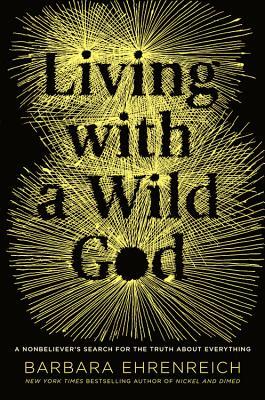
Barbara Ehrenreich is well known as a public athiest and investigative journalist. Now, in her seventies, she reveals a personal contradiction, that in her teens she had a profound mystical experience.  While what happened did not lead her to religion, it still became the central event in her life. Without this "enlightenment," she would not have become the person she is. It marked her out as special, if not anointed for a mission.

The teenage Ehrenreich was the child of socially and geographically mobile parents, alcoholics living in a state of marital war. She was bright, isolated, and miserable.  Her teenage words are as unbearably self-centred as the usual adolescent effusions, and quite hard to read. There are hints that she was mentally at risk, with odd dissociative episodes, experienced visually, momentary altered states of mind. 

Then came the full-blown experience. She travelled with her young brother, and a boyfriend, out of Los Angeles. They spent a vigorous day skiing, then stopped for the night in a nondescript town, sleeping in their car. In the morning, sleep-deprived, hungry, and badly sunburnt, she went for a pre-dawn walk, alone. And entered into a world on fire, subsumed into something wild, violent, and ecstatic.

Brief though this experience was, it marked her. She could have dismissed the experience as a mental fugue, but did not: it had simply been too overwhelming. Though she put it aside, but could never forget it.


 In this memoir she puts all of her investigative skills, all her research, into discovering what happened to her. Thanks to the family atheism, she could not file the experience into the spiritual category.  She examines religious mystics rigorously, yet feels more affinity with shamanism. Never does she deny the experience, but neither can she relate it to any kind of God-like being.  She lacks the religion gene, or the inspired madness of Philip K. Dick, who also saw the mystical in California.
  
Suffice to say, Ehrenreich does arrive at an explanation that satisfies her, and also takes the reader on an extraordinary journey.
                                   

Clothes Clothes Clothes Music Music Music Boys Boys Boys
Viv Albertine
Faber

Before Pussy Riot were the Slits. They were the original feminist 70s punk rock band, loud and
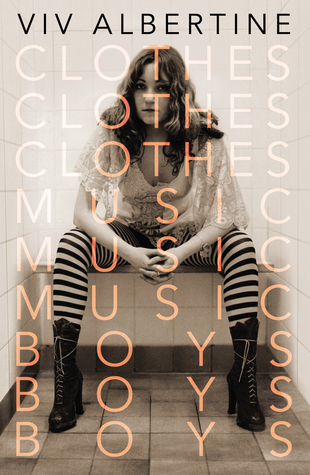
confrontational. Albertine wrote and played guitar with them. Her memoir has raw energy, utter honesty. She also tells a formidable story. It begins with the comment that autobiographers are either twats or broke: “I’m a bit of both.”

 In retrospect, the Slits are respected. At the time they faced constant misogyny and actual violence. Singer Ari got raped, and stabbed twice.  The Slits enraged male privilege—girls were not supposed to play electric guitar. Yet Albertine notes punk was the only time she fitted in. When the band split in 1981, she felt devastated.

In the aftermath she taught aerobics and had a career as a film-maker. Two weeks before marrying, she suffered an ectopic pregnancy. Years of brutal IVF followed. Shortly after her daughter’s birth she got diagnosed with cervical cancer. It took a decade from her life, which time she spent as a housewife on the English south coast. Then her marriage broke up—her husband resented her creativity.

This tale could be a misery memoir, but Albertine refuses to play victim. She has all the positive energy of the Slits, toughness and laughter. And if at the end she is alone, no matter. She has great relationships with her female family, and is making music again.

 Runner-Up: The Twelfth Raven: a Memoir of Stroke, Love and Recovery
Doris Brett
UWAP

One of the hardest literary genres in which to write is the medical memoir. Pain makes us recoil into ourselves, licking at our wounds. Writing about it may serve as a necessary catharsis, but the results are not necessarily good art, rather the reverse. Poet Brett is the outstanding exception.

  
TRUE CRIME

The Tainted Trial of Farah Jama
Julie Szego
Wild Dingo

This book examines the story of how a young Somali living in Australia was convicted of rape--due to contaminated DNA.   It would have been difficult to write, the subject belonging to an immigrant community afflicted with refugee trauma, and subject to racial/religious prejudice.  Matters were not helped by Jama remarking that women in Australia “have too much power.”  Later he withdrew his cooperation.

 Szego did not need it; nor that of the victim, "Maria." She shows how a chain of circumstances, a woman found unconscious in an apparent date-rape, led to the arrest of  a young black man from the other side of town. Only DNA linked the two. The Police laboratories denied any possibility of mix-up, and Jama got jailed.

What happened was extraordinary, an accident of non-admissable evidence, which led to a second victim, "Taylah."  Unlike Jama and Maria, she happily talks, in a chapter that is the warm heart of this book. Szego is particularly skilled in her treatment of ambiguities often elided in the adversarial system, which prefers black vs white. The perception of consent, the nature of rape—a lesser writer would have come to grief here. What also emerges is a chilling portrayal of modern Australia, where cultures clash, but misogyny still rules. 

CRIME

Stone Mattress
Margaret Atwood
Bloomsbury

This collection contained two fine examples of a rare genre: the crime short story. It is hard to do well, but Atwood has the form nailed. “The Freeze-Dried Groom” is a macabre modern take on Miss Havisham, and begs for a movie adaptation. The title story, written to entertain an audience of Arctic tourists, answers the question: how could you murder someone in this setting, and get away with it? It appeared in the New Yorker. The book also contains a horror story, “Lusus Naturae.” which essays vampire matter, realistically: the shortest tale in the book, but brilliant, with nary a word wasted. I’d happily anthologize it.


NATURAL HISTORY    

Where Song Began: Australia's Birds and How They Changed the World 
Tim Low
Penguin

After Australia’s European discovery, its weird creatures became famous worldwide. Marsupials have hogged the spotlight, but much less is known about the native birds. How extraordinary they really are is the focus of this book. Meet the white-winged chough, the only bird that practices slavery. Or the magpie goose, which is neither magpie nor goose, but belongs to a unique waterfowl family. 

 Here DNA studies upset the orthodoxy, like a quoll in a henhouse. Budgies may have conquered the world as cage-birds, but their fellow feathered friends did so by wing-power millions of years earlier. Parrots and songbirds originated in Australia, then flew across the globe. The original songster was the lyrebird.

The interplay between environment and the avians is a major feature of this book. Australia’s soils and sun creates excess nectar. It nourishes birds, and they act as major pollinators. Without them, forests will not survive.  Moreover, the nectar fuels competition between species, the result being some of the most aggressive and noisy birds on the planet. Another factor is brainpower: Australia’s big parrots, and their New Zealand cousins are among the most intelligent of all creatures.  They deserve much better than to spend their long lives alone in small cages.

Low has written a book highly informative, but also most readable. Twitchers everywhere will rejoice, but there is also much here that ordinary readers will enjoy.

   
For fiction, a book already mentioned by the Aqueduct columnists:

We Are All Completely Beside Ourselves 
Karen Joy Fowler

At the heart of this book is what it means to be human. Can we be Lords of Creation and also part-Neanderthal? Are we so different from the apes? Anthropomorphism is ancient, the act of seeing animals in our own image. Instead Fowler suggests empathy as a better alternative, without false sentiment. This novel is weighty, yet written with a lightness of touch that is more effective than any agitprop.  It charts a profound philosophic journey, mixing wit with scientific rigour.  The result might be Fowler’s most important work yet.
  
And I also add Ann Leckie’s Ancillary Justice, a book that has run away with many prizes, but which is also concerned with what it means to be human. And of course, post-colonialism, the crumbling of empires.

 Lucy Sussex was born in New Zealand in 1957. She has degrees in English and Librarianship from Monash University, and is a freelance researcher, editor and writer. She has published widely, writing anything from literary criticism to horror and detective stories. In addition she is a literary archaeologist, rediscovering and republishing the nineteenth-century Australian crime writers Mary Fortune and Ellen Davitt. Her short story, `My Lady Tongue' won a Ditmar (Australian Science Fiction Achievement Award) in 1988. In 1994 she was a judge for the international Tiptree award, which honours speculative fiction exploring notions of gender. Her first adult novel, The Scarlet Rider, is about biography, Victorian detective fiction, voodoo and a ghost. Aqueduct Press published her collection, Absolute Uncertainty, in 2006.

Sunday, January 6, 2013

The Pleasures of Reading, Viewing, and Listening in 2012, pt.33: Lucy Sussex

Best of 2012
by Lucy Sussex

The following represents a selection of the book reviewing this year. As my editors know, I have weird tastes, but I generally find something I like.

As for films, I recall with pleasure MARGIN CALL (quel script!) and Herzog’s THE CAVE OF FORBIDDEN DREAMS.

GENDER

MANLY AFFECTIONS: THE PHOTOGRAPHS OF ROBERT GANT, 1885-1915
Chris Brickell, Genre

Robert Gant was the town chemist in Masterton, rural New Zealand, in the late 1800s-early 1900s. He was the life of amateur theatricals, and worked tirelessly for charity. That he performed in drag and had a large circle of young male friends went unnoticed—until his photographs emerged from the obscurity of history. Gant was a gifted amateur photographer, and in his recording of his leisure hours shows men tactile, relaxed and affectionate in each others’ company. The erotic charge is felt, even beneath layers of Victorian clothing. The book is a reminder that the ancestors were both not so different from us, and also stranger (as with the photos of shoes and mock-beheadings). Unlike Wilde, Gant avoided censure, and led a long and happy life with various male companions.

THE GENRE WHICH IS MISLABELLEDCHICKLIT, BUT IS REALLY INCISIVE SOCIAL CRITIQUE

ME BEFORE YOU Jo Jo Moyes, Michael Joseph

Novels about heavy issues do not have to be heavy. Matter: a disabled man wanting to die. Style: light and wry. Narrative mode: the odd couple of romantic comedy. Heroine Lou is aimless but friendly, working as carer for quadriplegic Will. Their physical proximity sets hormones going. Moyes being English, class figures large: Will is Posh, Lou not. It could be a book that is truly sickening, but instead engages, even pleases. Memo to the readerspace: never underestimate chicklit. [Afterthoughts: a too-pushy PR-person almost put me off this book, but I was glad I read it]

THE MYSTERY OF MERCY CLOSE Marian Keyes, Penguin

We all need some levity in our lives, to keep the darkness away. Irish novelist Keyes bakes (her cookbook Saved by Cake) and writes brilliant comedy. This novel, written after a bad bout of black dog, juggles economic and personal depression—with great wit and observation. Through post-GFC Ireland stalks Helen, a private eye a few pills short of a breakdown. She has the task of finding an errant member of a 1990s boy band, gone awol from a reunion concert. All things Irish are duly sent up, including Bono. It made me giggle.

[Apart from a too-long break-in sequence, a perfect blend of comedy and darkness]

THE CONVENT Maureen McCarthy, A&U

Sometimes a writer changes gear, and their work takes off at speed. McCarthy is best known as a writer for teens, but this book is for women of all ages. It tells the story of the Abbotsford convent, via the lives of four generations. Sadie is an unmarried mother, who loses her daughter Ellen to the convent orphanage. Ellen’s daughter Cecilia is lost by becoming a nun. And Cecilia’s daughter Peach is quite unaware of her family history. Their stories are told in interlinked chapters, a rich tapestry. The Church changes, and so do the roles of women. Recommended.

CRIME

THE BEAUTIFUL MYSTERY Louise Penny, Sphere

Certain writers remain utterly reliable, utterly enchanting. Penny’s beat is Quebec, though here with the unusual setting of a Catholic monastery. Its reclusive order has recently had a world-wide hit with a recording of Gregorian chant. With the money has come murder, the suspect somewhere in the enclosed community. Inspector Gamache investigates, in a taut, deftly organized whodunit. Peaceful though the monks may seem, they have their secrets and tensions. The music is part of the plot, and in the chant lies the crime’s solution. For once, the title of the book describes it perfectly.

BLACK SKIES Arnaldur Indridason, trans. Victoria Cribb, Harvill

Indridason is perhaps the best crime writer alive. His beat is Iceland, and for the last two books he has banished his detective, the gloomy Erlendur. The subordinates take centre stage: here Sigurdur Óli. His coworkers find him annoying, but centre stage he is calmly efficient. Erlendur has interiority, Óli has none, being a young fogey, devoted to US pop culture. A favour to a schoolfriend results in a murder case; at the same time a parallel plot, of child abuse, unfolds. It ends with foreboding, Iceland heading for the GFC. Masterful as ever.

[My two favourite crime writers, in form. Bliss!]

SCIENCE/ECOLOGY

THE GREAT ANIMAL ORCHESTRA Bernie Krause, Profile

American Krause was a folk musician, rock sessioneer to the likes of The Doors, and latterly an expert in natural sounds. Here he has sought the origins of music. For forty years he has recorded aural soundscapes specializing in ecosystems. Biophony is animal noise, which he shows to be a complex aural interaction. A frog chorus signals mating, territory, but also protects against predators. Hunter-gather societies read their soundscape like a book; but sadly this ability is vanishing with the natural habitats. 50% of Krause’s recordings are of lost environments. A wonderful read, and a plea for conservation.

THE GENOME GENERATION Elizabeth Finkel, MUP

The sequencing of the human genome in 2001 cost billions. Now the price has dropped, and the discoveries are legion. Disease genes have been identified, and Lamarck’s theories revived. The immense complexities revealed are the focus of this book, which takes in HIV, plant genes, and species-hopping DNA. A new world of medicine and crop breeding awaits, and the social implications are the stuff of either utopia or dystopia. A fascinating book.

FLOATING GOLD Christopher Kemp, 4th Estate

Ambergris is a contradictory substance: dung into perfume. It forms in the guts of sperm whales, is refined in the ocean, and finally becomes a fixative for the most expensive scents. Science cannot replicate it, and its rarity value is huge. This book of popular science is both highly specific—everything you never thought you needed to know about ambergris--and yet very readable. Kemp is a scientist, who can write natural history and delight in nature with ease. He obsessively searched for ambergris himself, on the beaches of New Zealand. He was unsuccessful, but his prize and ours was this splendid book.

[How to make an interesting book out of whale poo]

HISTORY

CONVICTS: NEW ZEALAND’S HIDDEN CRIMINAL PAST Matthew Wright, Penguin

A proud point of difference between Australians and New Zealanders is their lack of convict ancestry. As this book shows, it is quite untrue. Given the short distance between the countries, several thousand felons, ex or not, simply hopped over the ditch. They found there jobs in sealing, or trading with the canny Maori. Some even became Pakeha-Maori, with tattoes. The treaty of Waitangi would obscure these disreputable early settlers, and their lack of literacy meant few of their stories survived. Excellent stuff—not least for the true story of the good ship Venus.

THE KING’S REVENGE Don Jordan & Michael Walsh, Little, Brown

Charles II is called the merry monarch, but he could also be coldly vengeful. This book details the fates of the 59 men who signed the death warrant for Charles I. Regicide was an offence against God, and bitterly personal for the King. Over thirty years, he either tortured and executed his foes publicly, or sent assassination squads across the known globe. It reads like a real-life spy thriller, with a cast including the Cromwells, Milton and Aphra Behn. But the authors also note the regicides’ reforms, their foundation of modern Britain. An informative, good read.

AGENT GARBO Stephen Talty, Scribe

Some characters are simply too outrageous for fiction. Consider Juan Pujol, one of World War II’s greatest spies. He was Spanish, undistinguished in career, but with a burning hatred of the Nazis. So he became a double agent. First he approached the Germans, convincing them he ran a team of spies in fortress England. Then he told the British what he was doing. This incredibly dangerous game worked because of Pujol’s ability to tell convincing whoppers. His greatest coup was to con the Nazis over D-Day, feeding them the wrong location for the attack. Fascinating stuff, well-told.

THE DARK FANTASTIC

ALIF THE UNSEEN G. Willow Wilson, A&U

Wilson is an American woman living in the Middle East, a convert to Islam. She is also a journalist, and a worker in pop culture, writing comics. Her interests merge in this strikingly original debut. It takes the matter of the Arabian Nights, and updates it: hackers encounter djinns, and revolution. Islam thus enriches the modern fantasy genre. Like Pullman’s Dark Materials trilogy, the novel has intelligence, and a social conscience. Yet while Wilson agitates for change, she respects Islamic tradition. Although only just released, the book was completed before the Arab spring, in fact eerily predicts it. Recommended.

PYROTECHNICON Adam Browne, Coueur de Lion

Pyrotechnicon might be the most imaginative novel published in Australia for some years. The subtitle is: the further adventures of Cyrano de Bergerac. The source matter is Bergerac’s own scientific romances. Browne extends these fancies in his own wild ride around the solar system, with the writer/swordsman as hero. Thus we get a flower-powered ship, Orangutans with magic lantern heads, and Louis XIV’s cats. The name of this literary game is transmogrification. The style and setting draw upon the baroque, creating a word feast. It fits neatly into no literary category. Illustrated by the author’s drawings, weirdly and well.

RAILSEA China Miéville, Macmillan

Miéville is endlessly variable. He might operate within the speculative fiction genre, but can move from horror to metaphysics to space opera with ease. His work is always intelligent, and political. Railsea encompasses teen and adult audiences. What if steampunk met Moby Dick, with a female Captain Ahab? He also nods to Edith Nesbit. In an alien world, hunters on trains pursue moldywarpes, giant moles. Young Sham is an apprentice to the chase, watching with wonder and horror. Railsea is a coming of age tale, written with great zest and derring-do. The imagination is breathtaking, as is also the sense of sheer fun. Recommended.

LITERARY BUT SPRIGHTLY

A LADY CYCLIST’S GUIDE TO KASHGAR Suzanne Joinson, Bloomsbury

This novel dances between eras and narrators, with much charm. In 1923, Eva accompanies her missionary sister to central Asia, to write a cycling guidebook. In the modern day, refugee Tayeb has fled Yemen for London. He encounters Frieda, another traveler, adrift in an unsatisfactory relationship. She has inherited a flatful of personal history, including Eva’s diary. What follows is a tale of East meets West, of the unexpected kindness of strangers. Frieda discovers much about her family, and that the distances between blood relatives are greater than any geography. A delightful book.

LITERARY, WITH GUTS HHhH, trans. Sam Taylor Laurent Binet, Harvill Secker

Few books have an unpronounceable title. HHhH is also an acronym, referring to SS Nazi Reinhard Heydrich. He was brainy, efficient and brutal—until his assassination in Prague, 1942. The story of the killing is famous, oft-told. Binet’s innovation is to place the author within the narrative. How can he write history faithfully, while also doing justice to this supreme act of resistance? So he grounds himself in old, unchanging Prague, researches, and imagines. The notion is as risky as the assassination itself, yet Binet lays out his choices, his agonies—and succeeds triumphantly.

[About the only book on this list which figures in mainstream best-ofs for 2012. That, and the Earls]

DOMESTICITY

MARJORIE BLIGH’S HOME Ed. Danielle Wood, Text

Bligh is a Tasmanian institution. She is a housewife superstar, but without Edna’s malice. Beginning in the 1960s, she self-published books of home hints. This book collects extracts, with endorsements from Bob Brown, or Matthew Evans. It is a mixture of great good sense, kitsch, and the gobsmacking. Cold porridge scones; how to cook wattlebirds; beetroot rouge. Her natural thrift made her a recyclista well before environmentalism. She knitted old stockings, and made rolled newspapers into logs. America has its Martha Stewart; Australia has Marjorie Bligh. No contest: Marjorie wins.

[Took this book to a Kris Kringle, and the recipient was overjoyed.]

HORROR

I REMEMBER YOU Yrsa Sigurdardottir, Hodder

Icelandic crime writing leaves the other Scandinavians for dead. It depicts isolation, but also interiority. Here the GFC leads to a holiday home renovation—with horror results. The bones of a child are found. In a parallel story, a psychologist mourns his lost son while investigating a case of what could be a poltergeist. The two cases will link, in an ever increasing chain of human frailty. What seems like ordinary, mundane lives can suddenly become very strange: Nature here turns lethal unexpectedly, and so do the people. Superbly creepy—and not to be read when alone at night.

REISSUE

THE FEMALE DETECTIVE Andrew Forrester Jr, British Library
Crime Victoriana buffs know Doyle, Collins and Mary Braddon. Less available is this text, featuring the first female police detective. In 1864, such was impossible in reality, with no women police for another 50 years. Nonetheless two books with this subject appeared, of which Forrester’s showed a rare and genuine ability. Mrs Gladden features as the heroine, not romantically, but of a series of adept detective stories. She is the complete professional, deadlier than the male. The reprint here is introduced by Alexander McCall Smith. It deserved better than a scanned typeface, but the sheer quality shines through.

[I am not convinced that the same author wrote the Forrester stories, as they vary in quality. A shared or house pseudonym, maybe. But these are the best Forrester—up to Wilkie Collins standard]

BIOGRAPHY

MODIGLIANI Meryl Secrest, Scribe

Artist Amadeo Modigliani lived wildly, died young—and left a good-looking oeuvre. He began rich in Sephardic Italy, and ended poor in boho Paris. In his life he sold little, but his works now earn millions. Biographer Secrest argues against the myth of the self-destructive genius: Modigliani worked like a fury, and TB, not drugs, killed him. Saddest was his young lover, artist Jeanne Hébuterne—although eight months pregnant, she suicided shortly afterwards.

THE BARONESS Hannah Rothschild, Virago

Nica Rothschild was born to wealth, and a troubled family history. She was intended to be a good Jewish wife, but then she fell in love with jazz music. Its siren call enticed her from her children and titled husband. She moved to New York, becoming a patroness of the music, and also friend of its players. She gained infamy when Charlie Parker died in her company, but her major influence was on Thelonious Monk. She would even take the rap for his narcotics bust. Rothschild, a documentary maker, documents her bohemian great-aunt meticulously and with love. A splendid biography.

THE GREAT AUSTRALIAN NOVEL

AFTER THE DARKNESS Honey Brown, Penguin

Brown’s last novel was longlisted for the Miles Franklin—and should have made the shortlist. This latest is more in the psychothriller genre, and an excellent read. A middleaged Australian couple take a beach holiday without the kids. What happens next upends popular thriller clichés of villains and victims. Wife and husband fight off a horrific attack together. Then they return to their lives as small business owners, ordinary people. But the violence has left its mark. They are scarred, and increasingly paranoid that the threat will follow them home. Are they going to become horrors themselves? Should make an excellent film.

FISH-HAIR WOMAN Merlinda Bobis, Spinifex

Bobis is a writer living in Australia, but vitally concerned with her birthplace, the Philippines. She also can do easily what very few authors here dare, mix the magical realism with the political. In this novel, a dirty war is being fought against Phillippine insurgents. Bodies are dumped in the river; and retrieved by a woman whose hair is a net for the dead. Parallel to this story is a young Australian, seeking his missing journalist father. The force of the writing does not allow disbelief; Bobis takes risks and no prisoners. The result is dark, angry, powerful. For the Stella prize, at least.

[Dear reader, I judged a literary award this year. Neither of these books appeared in the shortlist, but they were my Aussie faves]

AUSTRALIANA, NON-FICTION

THE CENSOR’S LIBRARY Nicole Moore, UQP

In the history of censorship, Australia figures as an enthusiastic banner of books. Some of these works were pulp, but many had serious intent. In the process, a huge library of the prohibited was created, and hidden in the National Archives. Moore rediscovered it—and thus had a unique window into the wowser mentality. Sex was bad, also sedition: and some truly strange decisions were made. Huxley, Salinger and Vidal were banned, along with porn and science fiction comics. The decisions were secretive, with Australians never knowing what the censors were protecting them from. Moore provides a powerful and informative story of a changing Australia.

BOOK HISTORY

THE ALEPPO CODEX Matti Friedman, Scribe

This book is a mystery story about a sacred text, a tenth-century annotated Hebrew Bible. It is believed to be the definitive version, but 200 pages are missing. Supposedly the damage came from Muslim rioters in 1947. They set fire to the Syrian synagogue which housed the Codex. It was believed destroyed, yet re-surfaced in Israel ten years later. Friedman’s investigative journalism follows the Codex on its journeys, a tale of smugglers, spies, and finally human greed. What he unearths says much about the formation of Israel. It is also a bibliographic scandal. A fascinating read, for those intrigued by religion and the history of books.

[Not perhaps flawlessly written, but still engrossing]

FEMINISM

THE UNFINISHED REVOLUTION: VOICES FROM THE GLOBAL FIGHT FOR WOMEN’S RIGHTS Ed. Minky Worden, Spinifex

‘Any revolution that doesn’t create equality for women will be incomplete’. Amen. This collection takes a global perspective on gender, examining unfinished women’s business. Part 2 is devoted to the Arab Spring, and its potential for regression in women’s rights. Afghanistan remains heartbreaking, but there are many other areas of concern. In California, thousands of evidence samples in rape cases remain untested. The book is sobering, but also a testament to courage, small and big victories: Somali Dr Hawa Abdi vs militias, a fatwa against FGM in Iraqi Kurdistan. Sobering and enlightening.

SHORT STORIES

WELCOME TO NORMAL Nick Earls, Vintage

Many essay the short fiction, but fewer actually succeed with the form. Earls is one of the shining exceptions. This collection is linked by the theme of travel, particularly people out of their comfort zone. Character and narrative are both important here: things happen, and resonate deep in the psyche. In “Range”, a US soldier drives home, with horror increasingly on his mind. Other stories show tourists: a feuding gay couple in Spain, or Australian wine-makers in Taiwan. Pick of bunch is probably “Merlo Girls”, about two ill-assorted males, and an act of kindness. Good stuff!

[I review quite a lot of short stories on principle, as they are neglected otherwise. Earls is one of the few authors I saw who knew what to do with the form]

TRUE CRIME

BLOOD ON THE ALTAR: IN SEARCH OF A SERIAL KILLER Tobias Jones, Faber

Two murders of women twenty years apart, in Italy and England. Had one been properly investigated, the second would not have occurred. Reporter Jones was drawn into the case, and provides a masterful picture. At the heart of this book is a great love for provincial Italy, but also awareness of its faults. The first crime went unavenged through inertia, and the fear of upsetting the powerful. A major factor was the Catholic Church, who hindered the investigation. Justice was finally done, but at the cost of possibly three more lives. A powerful book.

[True crime shades into voyeurism far too easily. That this book also dealt with serial killing should have meant I tossed it aside. Instead, I read to conclusion, as Jones neatly soared above the competition like a Powerful Owl].

Lucy Sussex was born in New Zealand in 1957. She has degrees in English and Librarianship from Monash University, and is a freelance researcher, editor and writer. She has published widely, writing anything from literary criticism to horror and detective stories. In addition she is a literary archaeologist, rediscovering and republishing the nineteenth-century Australian crime writers Mary Fortune and Ellen Davitt. Her short story, `My Lady Tongue' won a Ditmar (Australian Science Fiction Achievement Award) in 1988. In 1994 she was a judge for the international Tiptree award, which honours speculative fiction exploring notions of gender. Her first adult novel, The Scarlet Rider, is about biography, Victorian detective fiction, voodoo and a ghost. Aqueduct Press published her collection, Absolute Uncertainty, in 2006.

Thursday, December 15, 2011

The Pleasures of Reading, Viewing, and Listening in 2011, part 10: Lucy Sussex

The Pleasures of Reading, Viewing, and Listening in 2011
by Lucy Sussex

Ooh, what a crazy year of reading. Three reviews x 52 is 156 books. Some of them I only read because I was being paid! Some of them I wouldn’t re-read in a fit. Some I read from duty and found particularly boring. Most I simply can’t recall (extremely embarrassing if I meet the authors). So I decided I’d go with stuff I frankly loved, or if not exactly lovable was outstanding…

Best biography

PARADOXICAL UNDRESSING
Kristin Hersh
Atlantic

The publishing industry has lately turned to the rock memoir, and struck gold. Hersh of indie band the Throwing Muses might be the best of the genre so far. It draws on a diary of her eighteenth year, in which she had to grow up hurriedly. As she herself says, ‘copying down a year isn’t a particularly creative thing to do’—one of various remarks that instantly endear. Instead, the book reads like a novel, low on plot but high on living. Hersch initially seems a very bright, boho university student, with hippie parents and a band. Then she becomes stranger. Her mature-aged friend turns out to be the former Hollywood star Betty Hutton. And a head injury means she hears music, the band’s songs. The creativity becomes manic, and she is diagnosed with mental illness. Whilst on medication, she becomes pregnant. Her drugs are contraindicated for pregnancy; and severe morning sickness means she goes cold turkey. She risks insanity, but what probably saves her is the band, gaining momentum with their first record deal. Extraordinary courage is displayed here, without any self-congratulation. Hersh kept her mind, her baby, and her musical career. A fascinating story.

Best true crime

MIDNIGHT IN PEKING
Paul French
Penguin

Scene of the crime: Peking, 1937. War with the Japanese looms, and China is torn between Communists and Nationalists. The foreign devils of Peking play as if nothing is changing, from the upper-class British to the impoverished white Russians. Then, near a haunted tower, a young English girl is murdered. The police investigate, a case that takes them from elite private schools to sex slums. They get nowhere, thanks to interference from above. Then Werner, the victim’s elderly father, begins his own detection. He solved the case, but the nearing war meant justice was not done. French agrees with Werner, a man whose findings embarrassed the foreign rulers of China. The result is a brilliantly evocative book, where Peking itself becomes a character. French depicts people looking backwards, yet being propelled reluctantly into a new world. Not many true crime books present a convincing solution to a case, like Stephanie Bennett’s superb The Gatton Murders. This work is in the same class.


Best serendipity


LUCKY BUNNY
Jill Dawson
Sceptre

Jill Dawson is a British writer with varying subjects but constant liveliness. Her last novel was about Rupert Brooke; but this latest effort tackles London’s gangland. Queenie Dove grows up in the East End. Her father is often away, in prison, and her young mother cannot cope. Queenie and her brother Bobby grow up quickly, with only their old Nan to help. Queenie’s narration is forthright, honest, and vigorous. She is also very smart, and even as a child can think her way out of trouble. The effect is a bit like Moll Flanders transplanted to the Kray brothers’ London. It is also an indictment of post-war Britain. A class-ridden society creates its criminal class, and should take responsibility for it. In this attitude, Dawson is cheerfully Marxist. Queenie might go from trouble to worse, but she is never a victim. The latter part of the book concerns Queenie’s intersection with history, as she provides a new light on a famous crime: the Great Train Robbery. Dawson was new to me, but this book is a revelation.

Best crime (something hotly contested)

A TRICK OF THE LIGHT
Louise Penny
Sphere

Penny’s form is the village mystery, but she does not escape reality in an adorable rural retreat. Consistently her novels address big questions. They also form a continuous narrative of time and place. In A Trick of the Light, artist Clara, at 50, becomes an unexpected success. Then her problems start, with her artist husband getting jealous. Next, a former friend and art critic crashes Clara’s celebration, and is murdered. Clara had motive and opportunity—but then so did nearly every artist at the party. The book looks at issues of creativity vs criticism that bedevil most art forms. Can the critic separate personal issues from the quality of a work, hate the artist but admire their paintings? In the centre of these difficult, arty types, is Penny’s investigator Inspector Gamache. He will find disconcerting parallels with his own vocation, the link being the matter of forgiveness. A lesser writer might falter at this point, but Penny is exceptionally sure-footed in her weaving of technique, feeling and theme. Gamache and his team are still recovering from a gun battle; and the killer has never forgotten a spiteful, soul-destroying review. An exceptional novel, regardless of genre.

Runners-up: the Icelandic posse, Arnaldur Indridason’s Outrage and Yrsa Sigursadottir’s The Day Is Dark –the latter the only novel I ever knew set in Greenland.

Best science writing

SEDUCED BY LOGIC
Robyn Arianrhod
UQP

Émilie du Châtelet and Mary Somerville were mathematicians, working in the C18th-19th, when women’s education, let alone achievement outside the domestic sphere, was anomalous. That they achieved acclaim in a field so male-dominated makes them truly extraordinary. Both were self-taught, although Émilie had privilege as a French aristocrat. It also enabled her to become the lover of Voltaire. Both women focused on a famously difficult work, Isaac Newton’s Principia. They read, understood, and assisted in bringing Newton’s ideas to a wider audience. Science writer Arianrhod conveys the sense of excitement, of scientific discoveries reaching out into a Europe undergoing social and political change. Both women had to struggle, of which the most poignant instance was Émilie translating Principia into French while pregnant. She was 42, and had a premonition the birth would kill her. It did, but she had completed her work first. Mary Somerville would live longer, writing many books and enjoying the title of ‘Queen of Science’. She survived to see women admitted to Oxford, but not the college named after her. A fascinating read.

Books for troubled times (joint winners)


THE BORROWER
Rebecca Makkai
Heinemann

What does a children’s librarian do, when confronted with a parent’s list of verboten books: Harry Potter, Evolution and Roald Dahl. One I knew said: ‘We’ll discuss this after you’ve actually read them.” But Lucy Hull needs to keep her job, so all she can do is subversion. The child reader in question, ten-year-old Ian, is a willing accomplice; he may even be manipulating her for his own ends. Slowly Ian’s parents grow ever more atrocious—even enrolling him in evangelical anti-gay classes. When Ian decides to escape, Lucy, who has her own personal issues, drives the getaway car. What transpires is a road novel, informed by the sheer joy of reading. It takes in issues such as helicopter parenting and censorship, yet is written with a light, appealing touch. In fact it can make you laugh. At the centre of Makkai’s argument is that the developing mind needs imaginative space, which is what the great children’s classics provide. The book has some puzzling aspects: why do most of the characters assume Ian’s reading makes him necessarily gay? But that quibble apart, Makkai produces a thoroughly delightful read. For all those who believe in public libraries.

WALTZING AT THE DOOMSDAY BALL
Joe Bageant, ed. Ken Smith, Scribe

When Joe Bageant died, it was a crying shame. The veteran journalist found his subject late in life: America’s class wars. He had been born a redneck, and mined his background with great love and despair. The internet dissembled his fierce opinions, and he published two books. A socialist and atheist amongst the godfearing Right, his writing was sharp, witty, and perceptive. He never looked down on his subjects, but railed against the system that created their ‘Cultural Stupidity’. Great stuff.


Outer Adornment

SECOND SKIN: CHOOSING AND CARING FOR TEXTILES AND CLOTHING
India Flint
Murdoch

India Flint’s life is focused on textiles. It runs in the family: her refugee grandmother left Latvia with a sewing machine, which Flint inherited. In this book, which combines stunning photographs with useful advice, Flint considers how we can best use textiles. We need clothing to survive, but modern production creates social and ecological ruin. Dyes pollute water; sweatshops destroy lives; and cloth in landfill is waste. So Flint sets out to educate the reader. We learn about provenance, dyes (black is particularly toxic), and the informed choices we can make. If we can’t make our clothes, we can mend them, and even make wearable art in the process. The skills Flint describes were known to our ancestors and we should revive them. Not many books mix practical environmentalism with art, and this one should appeal to more than the crafty and green.


MINXY VINTAGE: HOW TO CUSTOMISE AND WEAR VINTAGE CLOTHING
Kelly Doust
Murdoch

Right in time for Buy Nothing New October comes this book, which addresses the vexed area of women’s clothing. For many, it eats up the budget, yet is irresistible. Doust, a craft expert and experienced op-shopper, shows here how buying old can also be a means of unleashing creativity. Wearing vintage can be nostalgic, but it also teaches the modern woman about styling. More importantly, Doust shows how vintage pieces can be reinvented. As they tend to be better made than our mass-produced fashion, they will forgive a dye-bath, or alterations. Good fabric, says Doust, deserves preserving. If too small, she adds a panel, too big, cuts. Damage, in her book, is simply an excuse for imaginative embellishment. Doust covers basics, like practical repairs, but also how to avoid dry-cleaning. But where this book shines is in the practical examples, of how to make the most of garments bought for a song. Doust freely admits to not being an expert dressmaker, and does not have the patience for constructing elaborate dresses from patterns. But as her striking before and after shots show, she is a dab hand at making the dowdy utterly divine.

The literary fantastic


THE TIGER’S WIFE
Téa Obreht
Weidenfeld & Nicolson

Last year one of my top novels was by an author from the former Yugoslavia: Dubravka Ugreŝić’s Tiptree-winning Baba Yaga Laid an Egg. Obreht’s debut shares the Balkan setting, and also the sense of myth merging with everyday life. The Tiger’s Wife is a seamless blend between personal and national grief, folklore and rationality. Natalia is a young doctor, moving across new borders. Her beloved grandfather has died mysteriously far from home. She seeks for the truth of what has happened, while re-examining their war-torn lives. Her grandfather told stories, in which fact and fancy mingled. Did he really give his copy of Kipling’s Jungle Book to a deathless man? Did a deaf-mute girl truly become the wife of an escaped zoo tiger? No stranger, really, than that neighbours should suddenly turn on each other in brutal ethnic violence. In the general insanity of civil war, often the illogical, but traditional, is all that people can cling to. An adept, engaging and powerful read.

Just simply delicious

MOOMINS COOKBOOK: AN INTRODUCTION TO FINNISH CUISINE
Tove Jansson and Sami Malila
Self Made Hero

Tove Jansson’s Moomintroll series is a much-loved children’s classic. Only recently has her native Finland realized its merchandising potential. This attractive hardback combines Jansson’s illustrations with dishes from Finnish cuisine. Certain staples recur, like smoked fish, rhubarb and cream, for this is cold climate fare, and hearty. The book is aimed at both parents and children, with recipes ranging from the very easy, like sandwiches, to the more complicated. It begins with breakfast (mostly porridges), progressing through the garden party to the picnic. Since the only test of a cookbook is to use it, I did. The onion pie, with an interesting pastry including grated carrot, worked perfectly on the first attempt, and so did the smoked fish salad. Most importantly, they were delicious. For the nostalgic, and for those who like Scandinavian food.


Best Australiana

KINGLAKE 350
Adrian Hyland
Text

In February 2009 temperatures in my home town reached 47C—a record. That same day the tinder-dry bush exploded into flame, and 200 died. Among the losses was my late parents’ bush home, lost in firestorm conditions. Adrian Hyland lived near the affected areas, and his friend was Roger Wood, a policeman at the forefront in fighting the disaster. He would gain a medal for bravery, and nearly lost his life. Hyland tells Wood’s story of that day, in a mixture of real-life action writing, fire science, and nail-biting tension. Being a crime writer, he knows all about dramatic pacing, and this book moves like wildfire.

Disclaimer: I briefly supervised Hyland’s PhD thesis of this book. But I still think it is terrific…even after he blew me off stage at a booklaunch.


Lucy Sussex was born in New Zealand in 1957. She has degrees in English and Librarianship from Monash University, and is a freelance researcher, editor and writer. She has published widely, writing anything from literary criticism to horror and detective stories. In addition she is a literary archaeologist, rediscovering and republishing the nineteenth-century Australian crime writers Mary Fortune and Ellen Davitt. Her short story, `My Lady Tongue' won a Ditmar (Australian Science Fiction Achievement Award) in 1988. In 1994 she was a judge for the international Tiptree award, which honours speculative fiction exploring notions of gender. Her first adult novel, The Scarlet Rider, is about biography, Victorian detective fiction, voodoo and a ghost. Aqueduct Press published her collection, Absolute Uncertainty, in 2006. Since then she's published two more collections, most recently Matilda Told Such Dreadful Lies: The Essential Lucy Sussex, published by Ticonderoga Publications, and the delicious Thief of Lives, published by Twelfth Planets Press.

Monday, August 8, 2011

Saturday, March 26, 2011

The delicious "Duchess of Newcastle"

Back in 2006, Aqueduct Press published Absolute Uncertainty, a collection of short fiction by Lucy Sussex, as volume 12 in the Conversation Pieces series. The opening story, "The Duchess of Newcastle," which Locus characterized as "a delicious original," is now available as a podcast from Terra Incognita Speculative Fiction. You can listen to it here, or download it from iTunes.

Also? You can still purchase Absolute Uncertainty here, from Aqueduct Press.

Tuesday, December 28, 2010

The Pleasures of Reading, Viewing, and Listening in 2010, pt. 25: Lucy Sussex

The Pleasures of Reading: 2010 
by Lucy Sussex


If you review constantly for a living (as I do), then the reading tends to divide itself into books read for duty, books read as poison-tasting, and lastly but sadly the smallest category, books you just liked, full-stop. Here follows a selection of the latter, maverick as ever.

Books That Made Me Grin
(they surprised and delighted me!)

BABA YAGA LAID AN EGG
Dubravka Ugrešić
Canongate

Ugrešić was forced to leave her native Croatia, branded as a ‘witch’. Her crime: to protest against nationalism. The result was this book, probably the best in Canongate’s Myths series, which includes Margaret Atwood and Philip Pullman. Here Ugrešić fictionalizes Baba Yaga, the Slavic witch. This powerful and frightening figure lives in a hut with hen’s feet, has iron teeth and a filthy temper. Ugrešić constructs her novel in three parts, all of them examining women’s ageing. She begins with a description of old women, at first invisible, then increasingly sinister. Then comes a poignant section concerning a woman with an increasingly demented mother. Next, three old ladies cause merry havoc at a health spa, which is followed by a semi-academic examination of the BabaYaga legend. All these threads come together in a magnificent conclusion. Ugrešić asks why are old women belittled and regarded as evil, when it is men who have the power for genuine evil in the world?

KEHUA!
Fay Weldon
Corvus

It is most enjoyable when novelists defy expectations. Fay Weldon might have a long career, but she breaks new ground here. This novel is a metafiction incorporating parts of Weldon’s own life, but also the fantastic. An unnamed writer sits in her Highgate cellar, shepherding her novel towards its ending. She has quite a task, with her characters part of an unusually dysfunctional matrilineage: a grandmother with a dark past, a devout mother, and assorted hetero- and homosexual lovers. To further complicate the mix the title refers to Maori spirits, whose task is to guard the family. They are bossy, but rather stupid, and Weldon imagines them as bats. But having found New Zealand’s national emblem, a kowhai tree, in London, the Kehua will acclimatize. So will the joyous wairua, the Maori ghosts of the unborn. The result is messy, exuberant fun.


Best Crime
(Consistently the best-performing genre, and that includes litfic)

HYPOTHERMIA
Arnuldur Indridason, trans. Victoria Cribb
Harvill

Indridason’s Icelandic police procedurals are cool, collected, and unique. Here a trait of the best detective fiction, the linking of the personal and the social, via theme, is displayed. Hypothermia is death by cold, and it affects most of the characters in this story. A woman commits suicide in a lonely holiday house. There are no suspicious circumstances, or are they? The dead woman’s friend thinks there are. She has a tape of a séance that intrigues Detective Erlendur. So he shrugs on his personal baggage once again, and investigates. Slowly the links emerge between a series of cold case disappearances, and a drowning, believed accidental. Could a student prank, a very nasty joke, be a factor in the case? A constant presence in the story is grief, either overpowering, or a intermittent unresolved itch. Erlendur as a child survived a snowstorm in which his brother disappeared; and his detection largely proceeds from the trauma. There are no easy answers here, just a quiet, dogged search all the more powerful for Indridason’s restraint.

Best Ghost Story

DARK MATTER
Michelle Paver
Orion

Publishers hate it when authors change genres: it supposedly confuses the readership. Usually they insist on a pseudonym. So it is possibly bad timing that soon after English children’s author Michelle Paver won a prestigious literary award, her first adult novel appeared. Dark Matter is published under her own name. It also has gay and horror elements. Most importantly, the book is superb. In the 1930s a British expedition sets off for the Arctic. Its members are young and Oxbridge, with the exception of working-class radio operator Jack. He is left alone on an island over winter, the endless polar night. Jack has his huskies for company; and as he slowly comes to realize, also an evil ghost. Paver writes in the M. R. James mode, in which the horror is all the worst for being suggested rather than splatter. Is Jack going mad from the Artic isolation, or is the ghost after him? Like James, Paver writes of homosocial males, but with greater awareness of social class, and their sexuality. The eerie polar setting is perfect for her, enabling great atmospherics behind the sense of impending doom. Here appear not graphic depictions of blood and guts, but something far more chilling and memorable.


Best Science

FEVER: HOW MALARIA HAS RULED HUMANKIND FOR 500,000 YEARS
Sonia Shah
A&U

Good science writing is worth its weight in diamonds, and Shah's is no exception. She examines the disease malaria, an age-old problem. Despite Bill Gates’s money, there is no solution in sight. Malaria is a parasite with the ability to evolve as fast as the AIDS virus. Humans have evolved back, hence the genetic disease of sickle cell anaemia. It actually is protective, in cultures where the disease is endemic. In these societies malaria is regarded on a par with flu, or the cold. Indeed, malaria has helped keep foreigners and exploitation at bay. The real issue, Shah argues, is when white people encounter malaria. That is when the money is spent, as corporations fight to save their foreign experts. America and England actually eradicated malaria decades ago through improved living conditions. There is small chance this feat will occur elsewhere.


(how to get paranoid whilst shopping…)

SLOW DEATH BY RUBBER DUCK: HOW THE TOXIC CHEMISTRY OF EVERYDAY LIFE AFFECTS OUR HEALTH
Rick Smith and Bruce Lourie
University of Queensland Press

Pollution is as old as mankind congregating in cities and generating noxious waste. What is different now is that it is all-pervasive. The products of the chemical industry are worldwide. How much industrial poisons invade our bodies is something Canadian environmentalists Smith and Lourie decided to test. They deliberately exposed themselves to various common but toxic substances: a chemical Supersize Me. After reading this book you will want to eliminate most plastics, scented body products and Teflon from your home. Be afraid, be very afraid.


Best Dystopia

SHADES OF GREY
Jasper Fforde
Hodder & Stoughton

Fforde is best known for the genial metafiction of the Thursday Next series. Shades of Grey differs by being dystopic, while maintaining Fforde’s essential Englishness. The reader is dumped in a future in which an Apocalypse has occurred, but nobody seems to know what it was. While a new society has emerged, it is rigidly enforced by a very British polite nastiness. Class rules, but based on the limits of colour perception. The characters might have names like Russett and Gamboge, but they are not allegories, being engaging, conniving persons. In this mix, the absurdist becomes credible, and humour shades into the sinister. Fforde also includes something rare in current writing: genuine rebellion. His young hero Edward might begin as a loyal servant of his society, but has a sharp lesson in how it really works. He finds everybody active in minor subversions of the system, with his basic self-interest moving from sheer survival to revolutionary activity. Great stuff.

Best Anthology

THE PERFUME RIVER: WRITING FROM VIETNAM
Catherine Cole (ed.)
University of West Australia


Vietnamese literature has a very long history, but little known to the West. Writers find the place inspirational, not least in its keen appreciation of literature. Cole begins her selections with the war against America, and its aftermath. She opens with an extract from Bao Ninh’s bestseller The Sorrows of War. Nam Le follows with a story from The Boat, the most familiar name here. Subsequent authors are less- or unknown to most readers, but are equally as strong. Poetry and prose, occident or orient, all present a portrait of a vibrant nation and its peoples. Standout for me was Pham Thi Hoai’s short stories, where the real and surreal meet. But there is much for most tastes to enjoy here.

Best Memoir
(And it went on to win a major award)

TEN HAIL MARYS
Kate Howarth
University of Queensland Press

The industry that surrounds infertility, the ruthless quest for a baby at all costs, is well known. As this memoir shows, it has existed for decades. Howarth was pregnant at 15, and sent by her grandmother to St Margaret’s Home for unwed mothers. It was essentially a Catholic sweatshop, its product babies. The young mothers were treated like sinners, and worked like slaves before they gave birth. Howarth withstood cruel pressure to relinquish her baby, but refused. Much of her account is given to why. Her background was Aboriginal, her family tending to battlers with a mean streak. She was used to harsh treatment, yet St Margaret’s nigh broke her. She fought the nuns, and took her baby home. Awaiting her was no bed of roses--life continued hard. Ten Hail Marys comprises a powerful memoir, without the self-pity of the ‘misery’ genre. It is a harrowing read.

Best Memoir (Bloke Division)

RAINBOW PIE: A REDNECK MEMOIR
Joe Bageant
Scribe

Bageant has a unique angle—he was born Redneck, in rural America. Now he is a middle-class intellectual and an acerbic commentator. He became famous with Deer Hunting with Jesus, an analysis of US conservative poor whites. It was written with a Steinbeck’s compassion and observation. He saw his subjects not as jokes, but the victims of equally rabid capitalism and Evangelical religion. Rainbow Pie continues in this vein, a memoir of his family as typical of their time and class. His grandfather farmed, existing in a subsistence economy where debts were social rather than monetary. He was part of a community, not perfect, but living far better than their urban grandchildren. Capitalism drove the Bageants off their smallholdings and into the cities, to minimum wage jobs: ‘human assets for the big-money boys’. With the loss of land went their roots. They were doomed to a life of consuming, debt, and an anomie only soothed by churches who really worship Mammon. Small wonder the urban Rednecks seethe, fed by media tabloids a diet of paranoia against ‘liberals’ and socialism. Small wonder America is going to hell, says Bageant. A powerful book.


Best Feisty Female (C19th Division)

WILD ROMANCE: THE TRUE STORY OF A VICTORIAN SCANDAL
Chloë Schama
Bloomsbury

Theresa Longworth came from a middle-class family, and a yen for adventure took her nursing in the Crimean war. Her encounter with army aristocrat William Yelverton seemed the stuff of romance. The pair married secretly—twice. When Yelverton married another woman Theresa sued for restoration of conjugal rights. Was Yelverton a bigamist cad, or Theresa a schemer intent on becoming a Viscountess? The story became a media sensation. In separate court cases, Theresa’s first marriage was found invalid, the second upheld, only to be struck down in the House of Lords. At issue was class and Theresa’s Catholicism. Less blatant but important was that Theresa did not fit the prevailing Victorian ideal of the submissive female. She lost her case, but as Schama argues in this entertaining book, actually benefited from it. Yelverton was obliged to live out of English society, in exile. Theresa used her celebrity to become first novelist, then travel writer. Ultimately she led a far more interesting life than as an upper-class spouse.

Best Travel

THE WOMAN WHO FELL FROM THE SKY
Jennifer Steil
HarperCollins

An extraordinary story is told here: of an American newswoman who took the job of running an English-language paper in Yemen. Steil was a thoroughly modern woman, working in a country whose values were completely alien. Men wore white robes and carried daggers; women were shrouded in black and secluded. She found a great hunger for learning, especially among her female staff, but also no understanding of basic journalism. The only way to survive was to essentially become a member of a third sex, so strange was she to this traditional society. Steil found she loved Yemen and its people, even if the workplace was disrupted by addiction to qat, the local narcotic. It seduced her, and she ended up as the consort of the British ambassador, with a baby. The professional woman became the complete romantic. A fascinating read.

Best Biography
 
BARBARA HANRAHAN
Annette Stewart
Wakefield

Hanrahan was an Australian printmaker and author of 12 novels. During her lifetime she got published, but not accorded stellar status. And yet she was ferociously talented and hard-working. Her achievement in two fields of art is extraordinary given her background. She began in the working-class, but escaped—via education, and a talent for art that could not be ignored. She went to London on a scholarship, and found a partner who became a devoted supporter. She could be self-obsessed, and her diaries are perhaps the bitchiest ever written in Australia. But, as this strong and detailed biography shows, she had incredible courage. Ultimately she enriched us all with her two bodies of work.


Best Feisty Female (Adventure Division)

THE TROIKA DOLLS
Miranda Darling
A&U

Miranda Darling has previously published a memoir of her model life; and has since commented on anti-terrorism. Now she ventures into the thriller world. The influence of Charles McCarry can be seen in her exotic locales, the suspense and exciting action sequences. Unlike McCarry, the cold war is past, and Darling depicts convincing female characters. Her heroine Stevie is multi-lingual, clever, and works as a risk assessor for an international security firm. Her employment can take her from ‘crusading’ Hollywood stars (very dumb) to the Russian mafia. But while a superwoman in many aspects, she is physically frail and emotionally vulnerable. She might be investigating the kidnap of a Russian banker’s daughter, but she is still nursing a broken heart. As with many thrillers, the momentum keeps the plot from close examination, but Darling can genuinely write.

Best Litfic (short)


READING MADAME BOVARY
Amanda Lohrey
Black Inc

Lohrey is one of Australia’s top novelists, with a range that includes the political and the ghostly. She is particularly acute with the small-scale, the domestic world. In Reading Madame Bovary she shows her strength at short-story length. The people depicted here are mostly middle-aged, economically secure, even cultured. They tend to define themselves by material possessions, with a resultant gnawing unease. In ‘Primates’ a woman juggles paid work, children, the household—the familiar stuff of most suburban lives. She copes, yet is aware joy has vanished from her life, until she sees it personified in a zoo monkey. In the title story, perhaps the most polished, a girl snaps out of selfishness by reading Flaubert’s classic. Just in time—for she is on a canal cruise with a boatload of underprivileged children, and her participation is needed. And so it goes. The most typical (and also adept) of these stories comprise slices of life in which a moment of epiphany occurs, usually when the protagonist is about to opt out. These are cool, clear, accomplished tales.

Best Litfic (novel)

NIGHT STREET
Kristel Thornell
Allen & Unwin)

Clarice Beckett (1887¬¬–1935) was an artist unappreciated in her time, but now commanding much posthumous price. This first novel is Thornell’s “imagining of her”. The life of art is hard to write, particularly when there are apparently no huge dramas. Beckett came from a middle-class family, studied art, never married. Much of her life was spent within the domestic realm, particularly when she cared for her elderly parents. In Thornell’s rendering she attracts male interest and is not immune to lovers. But her focus is on her art. Accompanied only by her wheeled painting trolley, Beckett seeks to depict her surroundings. She is less passionate than reflective and contemplative. Nothing much perhaps happens in the narrative, except a life devoted to painting—but that is enough. A book of much beauty.


Best Chicklit (the only genre that consistently looks at modern women’s lives and their problems)

BITTERSWEET
Melanie La’Brooy
Penguin

The best-constructed novels are not always the literary ones. Consider Bittersweet. The fourth novel by La’Brooy, it can be loosely classed as chicklit. That term covers a wide area of writing, lightly or darkly covering the matter of modern women’s lives. Some are fluffy; others, like this novel, mix serious messages with the entertainment. Sabrina and Mimi are two sisters, very different, but sharing a complex family past. Sabrina is a soapie actress, Mimi a drifter. When Sabrina needs a gofer as well as a bridesmaid, she hires Mimi—and the sparks start flying. La’Brooy is best with sharp, witty dialogue, but she can be poignant as well. Neither sister is quite what they seem, but both are stubbornly determined to maintain appearances. La’Brooy sends up wedding conventions mercilessly, while still negotiating a happy ending. The sisters reconcile without going gooey. Intelligent fun.


Best Feisty Female (C18th Division)

THE PAPER GARDEN: MRS DELANY BEGINS HER LIFE’S WORK AT 72
Molly Peacock
Scribe

What does a modern Canadian poet have in common with the C18th English minor aristocrat who invented collage? In this delightful book, plenty. Peacock encountered the flower art of Mary Delany (1700-88) and fell in love, firstly with the images, and increasingly with their creator them. Most attractive to Peacock is that Delany was a late bloomer. She came from a family with noble connections, but little money. When a drunken squire of 60 proposed to the pretty teenager, she had no choice but to accept. Widowed at 25, she would marry again, this time happily, to a cleric as interested as she in art and gardens. When widowed again she was devastated—until she created a new mode of flower art. As Peacock notes, she had been unintentionally training herself for this moment all her life. Despite her advancing years Delany created nearly 1000 collages. She also left volumes of sprightly letters, and was gifted at friendship. She knew Handel and Swift, and in old age, nearly blind, was ‘adopted’ by King George III and his family. Truly her life was rich, and so was her legacy.

Best True Crime


HONEYMOON DIVE
Lindsay Simpson and Jennifer Cooke
Macmillan

In 2003, on the Barrier Reef, an American couple’s honeymoon ended in a tragic diving accident. Or was it? Gabe Watson was a certified rescue diver, surely ideal to be his wife Tina’s ‘dive buddy’. Instead, she died minutes into her dive, abandoned and sinking to the ocean floor. In this book the authors maintain a narrative that could have foundered under the complexities of dive technology. How could Tina asphyxiate with a full air tank? A strength of the writing is its empathy—behind the legalities is a human story. The case ended in Australia with Gabe Watson pleading guilty to manslaughter. Back in the US, there is agitation for another trial, and the death penalty. Honeymoon Dive is a gripping, disturbing book about the dangers of the sea, and the worse dangers from our fellow humans.

Best Cartoons
(I met the author and she said it was the nicest review she’d ever had. I went all fangirl in response…)

IF YOU CAN’T STAND THE HEAT
Judy Horacek
Scribe

Judy Horacek is one of Australia’s best cartoonists, and should be a worldwide phenomenon. She brightens the day, with wit and intelligence. This latest collection includes some old preoccupations, and new pretensions to merrily deflate. A typical Horacek heroine (spiky hair, colourful sack dress) is handed high heels and a corset. The instruction is ‘Backlash is the new black’, and the reply is ‘Seriously?’ Elsewhere the nuclear industry gets a good kicking, and an ice canary melts in its cage. Indeed the cartoons here on the subject of climate change and its deniers are among her sharpest and saddest. Elsewhere pure whimsy reigns. Mermaids count sheep in snorkels and pajamas throw hissy fits. The twisted takes on Christmas should gladden anyone who has ever cried: ‘Humbug!’


Most Inspiring Read

HALF THE SKY: HOW TO CHANGE THE WORLD
Nicholas D. Kristof and Sheryl WuDunn
Virago

The title refers to a Chinese proverb: women hold up half the sky. Yet, as this book notes, they are not accordingly valued. In many countries, women are routinely mutilated, enslaved and treated like second-class citizens. Indeed the authors claim that more women have been killed for their gender in the last fifty years than the total of men in twentieth-century wars. They also believe that gender equality will be the chief moral challenge of our times. Thus they issue a call for positive action here, focusing on areas such as education, contraception, maternal mortality. The book alternates the grim—honour killing—with positive stories. The situation of women in much of the world may be dire, yet many are working for positive change. Repeatedly the authors emphasize that to impose Western values, from the top down, does not work. Rather the successes come from consultation, and empowering the women concerned. There are some surprises here: Third World sweatshops actually improve the lot of women, and give them more income. Or cable television soaps have provided positive role models in India. The book ends with four positive steps to take in ten minutes. Inspiring.


Best Science Fiction

THE DERVISH HOUSE
Ian McDonald
Gollancz

McDonald is distinctive in reflecting changing political paradigms, writing not of the old colonial powers, but 21st-century India, or Brazil. The Dervish House considers near future Istanbul. The focus is on the human, the experiences of a motley group of neighbours. A terrorist attack opens proceedings, and from that moment the pace is relentless. Political terror is not new here; the real danger comes from a nasty marriage of theocracy and technology, where belief is induced rather than enforced. The novel looks back at Turkey’s complex past, and also its future. It encompasses the biggest and most important ideas: economics, nanoscience, and the adaptation to a new climate. There are imaginative coups, as when a stockmarket coup is conducted in the virtual world. The dominant feature is zest, with an intense sense of place: Istanbul is depicted so strongly as to function as a character itself. An outstanding novel by any criteria.


Lucy Sussex was born in New Zealand in 1957. She has degrees in English and Librarianship from Monash University, and is a freelance researcher, editor and writer. She has published widely, writing anything from literary criticism to horror and detective stories. In addition she is a literary archaeologist, rediscovering and republishing the nineteenth-century Australian crime writers Mary Fortune and Ellen Davitt. Her short story, `My Lady Tongue' won a Ditmar (Australian Science Fiction Achievement Award) in 1988. In 1994 she was a judge for the international Tiptree award, which honours speculative fiction exploring notions of gender. Her first adult novel, The Scarlet Rider, is about biography, Victorian detective fiction, voodoo and a ghost. Aqueduct Press published her collection, Absolute Uncertainty, in 2006.