Showing posts with label Rosanne Rabinowitz. Show all posts

Monday, January 9, 2023

The Pleasures of Reading, Viewing, and Listening in 2022, pt. 30: Rosanne Rabinowitz


Adapt this, adapt that

by Rosanne Rabinowitz


This year I’ve given some thought about adaptations, especially adaptations of much-loved books. How do you capture the essence of a work within a different medium, and with at least several years of history down the line? I've also been intrigued by the role of memory. It could be a few years since I've read the book, so I'm always viewing a series with an imperfect view of the book. And while I'm writing this, I'm remembering a series without the time to rewatch it. Yet memory is where our most loved books and programmes dwell. 


Station Eleven


I first read Station Eleven when it came out in 2015. It also enjoyed a resurgence at the time of the Covid pandemic with its story of a deadly flu virus that wipes out large swathes of the population and the high-tech way of life. The story moves between the time before the flu, during and some years later. A child actress at the time of the change, Kirsten is now a player in the Travelling Symphony theatre troupe that travels between far-flung settlements.


I read the book a second time in 2021. Due to an actual pandemic it acquired another layer of meaning. This time, I read it to my client at work. I also found that the Prophet reminded me of a number of self-righteous individuals I’ve dealt with since the first reading, which resulted in my hamming it up when I came to the Prophet’s dialogue.


And then Station Eleven became an HBO TV drama series over 2021-2022.


What I've liked about the novel Station Eleven is its quieter approach to the post-apocalyptic tale, one that is neither dystopian or utopian. To paraphrase Ursula LeGuin's subtitle for her classic The Dispossessed ('an ambiguous utopia'), it is an ambiguous dystopia. In one strand, a disparate group of people are stranded in an airport and organise themselves as best they can. The Sky Lounge becomes a library and museum to the old world that was lost; parties hunt venison in the surrounding countryside. People muddle through. It isn't perfect, but it is certainly not a Cormac McCarthy-style long-pig chompathon.  


I was hoping that this more understated approach would stay in the series, and it wouldn't get turned into Mad Max plus Shakespeare. I'm glad to say that didn't happen. The series retains the emphasis on characters living, struggling, and sometimes creating in this transformed world.


Some aspects of the series worked well to heighten themes of the book and provided a more coherent shape to a story sustained over 10 episodes. For example, the portrayal of the relationship between the child Kirsten and Jeevan, who became her guardian with the loss of her parents. Their relationship and separation becomes a central thread running through the story.


Another difference lies in the portrayal of the airport community and the fundamentalist cult that arises in the post-pandemic world – steered by the 'Prophet.’ In the book, the airport community is shown in a benign or at most ambiguous light – much of the ambiguity came with the fact that the fundamentalist Prophet had grown up within that settlement. The fate of the last plane that lands in the airport illustrates this difference. In the book, no one leaves the plane and no one enters. It is left to the reader to imagine the horror of events on that plane as passengers sickened and died.


In the series, the airport community is cast in a darker light. Here, an actual survivor emerges from the plane and the denizens of the airport shoot him. We really didn't need that bit of add-on melodrama. Perhaps it was put in there to give the Prophet a motivation to react against and eventually leave the community; however, the paradox of an improvised democratic community giving rise to an authoritarian force provides enough grist for the mill. I also found that the presence of the plane as a silent ever-present tomb was much more effective.


The Prophet in the series was portrayed as more New-Agey rather than the straight patriarchal Bible-bound fundamentalist – with a penchant for multiple teenaged brides – as in the book. However, the book version resonated much more for me, given that fundamentalist movements have expanded their influence in our post-pandemic world.  


In the book, comics artist Miranda and Arthur Leander had been childhood friends on a small island off Canada’s west coast. This underpinned their relationship and gave some soul to Arthur’s character, who comes across as a simple vain-glorious star in the series.


This link is worth a look for a consideration of Station Eleven that takes a more critical look at the book:

https://electricliterature.com/white-futurism-no-longer-holds-center-stage-in-hbos-station-eleven/


For fans of Station Eleven in any form, I’d recommend St John Mandel’s latest book Sea of Tranquillity. It is a multi-stranded novel involving time travel and narratives across different time-lines, reminding me of David Mitchell's Cloud Atlas. And guess what? One strand concerns an author who has written a novel about a pandemic, who is faced with a real pandemic on a book tour.


And over the holidays I’ve read SJM's The Glass Hotel, the book that actually followed Station Eleven and preceded Sea of Tranquillity. There is a touch of ghostiness but little SF here; however, the book sets out some of the table for the book that followed it. I actually had this on my Kindle for a long time. Something about a fancy hotel, a Ponzi scheme and very posh people? Not really my cuppa. However, this book is as mysterious and wonderful as anything else that SJM has written. You also will get the back story of several characters you meet in Sea of Tranquillity.  


It does appear that Emily has committed trilogy! Whether this will be reflected in further TV series is another matter. 


The Mayfair Witches (series on AMC)


I’ve not yet seen this because it hasn’t been released yet! Therefore, this isn’t a review or a piece of criticism, but a look at the anticipation and apprehension that greets an adaption like this. Anne Rice’s Mayfair Witches trilogy had been a major literary love of mine in the 1990s. 


There was meant to ne a film of the first book, The Witching Hour, with Michelle Pfeiffer as Rowan Mayfair in the 1990s. I don’t know who was meant to play the other characters but in my fantasy casting Daniel Day Lewis would have played Lasher and Mickey Rourke would be Michael Curry. Shame that film never got made.


At the same time, I now appreciate that a drama series would do these books – or even one of these books – more justice than a film.


So I watched a couple of the trailers. What I saw filled me with some alarm, along with curiosity. WTF is that snaky tentacle thing doing there with that lady in bed? Oh no, do we get the trope of the beautiful shapeshifter really being a yukky slimy thingy? Double oh no, don’t tell me that Lasher will have a beard (inspired by a photo of Jack Huston, who will play the entity). And Rowan’s shiny eyes (full Midwich Cuckoo stuff) in one of the adverts also inspired some misgivings. 


In the original trilogy, there is some discontinuity between The Witching Hour and Lasher. In the first, Lasher is a discorporate entity who is fascinated by the fleshly world and takes his route of entering it through pleasures of the flesh. He takes human form and male at that because that’s the way to go! The second book introduces a lost race of very tall slender and long-lived people, and Lasher is one of them and seeks to bring them back. Sometimes the two concepts don’t mesh but the jarring interface between the two is overcome by the perfection that is the third volume, Taltos.


I look forward to seeing how the drama series joins the concepts. 


Wednesday (Netflix)


Finally, I've enjoyed Wednesday on Netflix. Of course, I had my initial worries. Will the sharp satirical edge of the Addams Family films get dissolved in some generic teen drama? I still seasonally post the Thanksgiving skit sequence from Addams Family Values each year.


But the first scene, where Wednesday puts piranhas in the school swimming pool, proved these fears proved groundless. The series was a delight. I was especially taken by its 'too weird for even the weirdos' theme, which is often how I feel at F/SF conventions! 


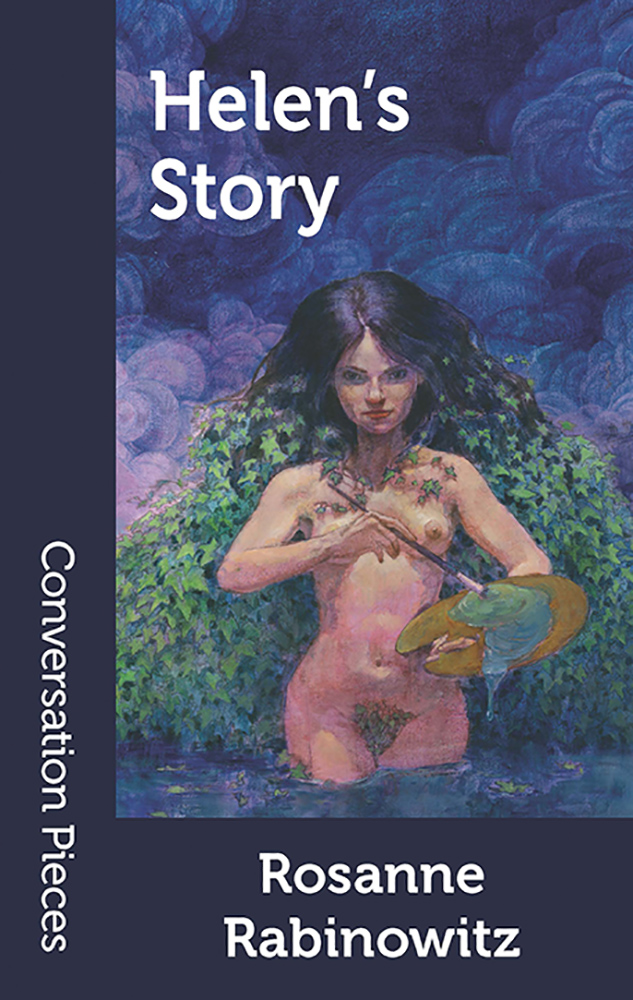
Rosanne Rabinowitz's novella Helen's Story was a finalist for the 2013 Shirley Jackson Award and she has contributed work to a variety of anthologies from acclaimed independent publishers such as Egaeus Press and Swan River Press. Her first collection of short fiction, Resonance & Revolt, was published by Eibonvale Press in 2018 and shortlisted for the British Fantasy Award. Her chapbook All That is Solid is available from Eibonvale Press as well and it has also been published in German.
Rosanne lives in South London, working as a carer and a freelance editor. She enjoys strong coffee, whisky and jumping around to raucous music of all genres. She also likes a good schlep around her neighborhood and visits to a local pub once frequented by William Blake. She often engages in fretting, nail-biting, sarcasm and satire.

For more information visit: rosannerabinowitz.wordpress.com. Follow Rosanne on Twitter: https://twitter.com/RoRabz


Tuesday, December 24, 2019

The Pleasures of Reading, Viewing, and Listening in 2019, pt. 19: Rosanne Rabinowitz

The Pleasures of Reading, Watching and Listening
by Rosanne Rabinowitz


It’s that time of year… So here are a few highlights of my reading and watching in 2019; perhaps I’ll spend more time on the ‘listening’ part next year. I’ll stress that this is not a ‘best of’, just a few things that come to mind or stuff that I've tweeted or posted about during the year.

Novels

The Migration Helen Marshall.

In the near future an unknown immune disorder has been affecting young people throughout the world. After Sophie's sister Kira is diagnosed, her family leave Canada to stay with an aunt in Oxford for specialised treatment. But what appears as a disease could herald a transformation... I’ve spent a lot of time in Oxford with my partner there, so I appreciated Marshall’s superb sense of place. She made this Oxford of the future very real. The characters also live on Osney Island, a watery part of central Oxford where one of my favourite pubs in the city happens to be. Now for a little story attached to this book... When Helen read an extract at Fantasycon in 2018 she announced a competition. Whoever cawed the loudest would win a copy of the Canadian edition. This was a big deal because the UK edition wouldn’t be out for about six months. And I cawed! I was desperate – I just couldn't bear the waiting and that desperation must have given my 'caw' its volume and urgency. It could not be denied!

And then I tweeted with joy when I won the prize.

The Dollmaker Nina Allan

We follow the journey of Andrew, a dwarf who is a dollmaker, as he tries to connect with his penfriend Bramber. Bramber, who came into contact with him because of their shared love of dolls, is stuck in an institution in a remote part of Cornwall after traumatic events in her past. A series of stories by Polish author and dollmaker, Ewa Chaplin, also weaves through the book. The Dollmaker is not overtly fantastical but it definitely feels like a fantasy novel – the book is about fantasy itself and how it can impart wonder and hope. It makes me think of Geoff Ryman’s Was in this respect. I loved its mittelEuropa flavour, even in sections set in London and Cornwall. The texture of the prose is rich and evocative. I found myself seeing the book as a film starring Peter Dinklage as Andrew and perhaps Samantha Morton as Bramber and Sophie Okonodo as Andrew's friend Clarence. And there's gotta be a role for Tilda Swinton in there somewhere.

A Spectral Hue Craig Laurence Gidney

The town of Shimmer, Maryland has long drawn a stream of black artists – working in a range of media – who focus on a colour that shifts between purple and pink, the hues of the rare local salt marsh orchid. Graduate student Xavier goes to Shimmer to study the work of these artists, inspired by an encounter with it in his past. He discovers magic in its beauty and also encounters the dark history that gave birth to it, one rooted in slavery and violence. This eerie and weird tale is populated by a memorable cast of queer black characters. It evokes our capacity to create art under terrible conditions and the power of that art to reach through time. As a writer I'm also obsessed with colour imagery and drawn to combinations of purple and pink so I loved this.

The Ten Thousand Doors into January Alix Harrow.

A satisfying portal fantasy, told from the perspective of a biracial girl growing up in a mansion filled with treasures, a mostly absent father and a guardian who treats her as one of his curiosities. But her quiet existence is shattered when she stumbles across a strange book. Each page reveals worlds within worlds and she begins to learn who she is. And the book literally opens doors for her.

What I Loved  Siri Hustvelt

I read this earlier in the year. A book full surprises. It started off as a story about arty nobs in NYC and transformed into a psychological thriller of sorts that explores grief, and meditates on nature and nurture.

Collections

Hollow Shores  Gary Budden

These atmospheric tales focus on the Kent Coast and London and some locations further afield. I loved their invocation of punk pleasures past and present, their sense of place and psychogeography. Some of them might have been unsatisfying on their own but as pieces in this mosaic they add to my understanding of these characters and their world. Generally, I love collections that have a thematic centre and I'm also drawn in by recurring places and characters. It reminds me of some early M John Harrison work, especially Climbers (though the main activity in this is walking). And WTF, I just love stories about old punks wandering about...

Sing Your Sadness Deep Laura Mauro


I was familiar with many of these stories as a subscriber to Black Static, and I've shared space with Laura in an anthology or two. However, it was good to read through them as a varied and captivating body of work. And then there were ones I hadn't come across before. I'd say that the award-winning "Looking for Laika" was worth the price of my ebook alone, and there are many more fine tales such as "When Charlie Sleeps," "Letters from Elodie" and "Ptichka."


TV and film


Years and Years (BBC)

Near-future how-we-live stuff, leaves you laughing and then crying and then very angry. Excellent performances all around, especially from Russell Tovey and Emma Thompson as a right wing populist politician. Here’s a chilling clip that I’ve posted in several online discussions, where Emma Thompson's character gives a spiel about the new detention camps, which reveals how 'concentration' camps first began under the auspices of the British Empire. "The word concentration simply means a concentration of anything... You can fill a camp with oranges and it will be a concentration camp by dint of the oranges being concentrated. It's as simple as that. Made it sound rather tasty! ...They simply let nature take its course. The camps were crowded, pestilent, and rife with disease... You might call it neglect, you might call it efficient.”

https://www.youtube.com/watch?v=EUPf5GagKF0&t=2s

However, the end of the series didn't quite work. A bit Doctor Who, which is fine in its place . But it wasn't an effective ending for this series – an emotional dystopian drama rooted in current events. It dissipated the very real and present ambiance created by earlier episodes.

The Affair (Showtime)

I didn't think season 5 would be up to much without Ruth Wilson and the first couple of episodes seemed to confirmed that. BUT...

It went kind of SF with a near-future strand about Cole and Alison's daughter, Joanie. With episode 6 I became re-addicted despite some poor dialogue. Singing along with the theme tune is always fun and it lends itself to a bit of interpretive dancing when I need to get steps in. However, I must remember to draw the blinds first!

This unexpected twist in the show reminded me of Years and Years – a combination of relationship drama/family saga & SF – but not as well-written. Most people on Twitter hated the turn it took, but it revived my interest, which had been waning amidst the soapy suds.

Russian Doll Season 1 (Netflix)

A few of have already blogged about this in their Pleasures posts so I'll just briefly say that I enjoyed it. An abrasive, witty time-loop drama. Hope there's a second series.

The Beforeigners (HBO) (European)

I stumbled on this Norwegian time travel drama by accident and got hooked in immediately. I tend to avoid subtitled work on the small screen for eyesight reasons but the subtitles on this appear in big and very visible letters. This is a crucial technical point!

People from the past are suddenly emerging into the present – temporal immigrants in Oslo comes from eras such as the Stone Age, the Viking period and the 19th century. The 'beforeigners' collect in communities with others from their time and bars spring up specialising in their favourite grog. There's some great culture clash comedy, but the serious issues are not far below the surface.

The series follows a former Viking shieldmaiden who becomes a police detective, the first of her background to join the force. She bumps into a former comrade in arms and they have adventures that sometimes conflict with her duties as an Oslo cop investigating murder cases.

One standout scene involves an orientation seminar where an assortment of newly arrived Norse folk (the preferred term to 'Viking') are watching a cheesy 'welcome' video on modern Norwegian life. An argument breaks out between the Christians and pagans in the room.

I enjoyed the approaches to Norse history and myth the most and it may very well come to the fore if there's a second series. The 'tec tropes were fun they didn't absorb me in the same way. But now... St Olav and his killer Thor Hund are now living in modern Oslo. Thor is trying to live a quiet life with his wife & kids in a council flat and a job as a delivery person. Then he's rumbled... and Olav is still up for saintery, Christian crusading, and forcible conversion. Bring it on!

His Dark Materials (BBC)

The first episodes seemed a bit of glossy meh, but later episodes were very powerful.

I enjoyed the differences introduced into the series; for example, more elaboration on Will's background and the way he comes into the story earlier. I read the books back in the early 2000s so I'm a bit vague, but I wondered if the series places more emphasis on the fantasy trope of 'the one' and 'destiny'? If I recall, in the book Will found a door into Lyra's universe just by chance, but now it's part of this destiny set-up too. I've always hated 'the chosen' trope and I just try to ignore it so I can enjoy the series.

I also think there was a bit more SF behind the fantasy in the books. That side is explored in John Gribben's book The Science of Philip Pullman's His Dark Materials, which I've had on my TBR list for years.

While watching episode 6 of His Dark Materials I had a dose of creepy deja vu. Then I realised that the outfits worn by Lyra and the other girls in the daemon-severing camp are just like the ones we had to wear for 'phys ed' in school (circa 1970s), otherwise known as 'gym suits'. Very appropriate, for the school system at the time was definitely intent on daemon deleting. Vile garments for vile times and places.

Fast Color (film on Netflix)

This film is described as a 'superhero film' in reviews. While formidable powers come into play, I found it much more quiet and contemplative. I'm not at all a superhero fan. I get bored with repetitive fight scenes even in the better ones like Black Panther

Generations of black women in a particular family have the ability to disintegrate objects into their atomic components and put them back together again. It's more than that – they are able to "see the colors" after performing these acts, indicating a universal connection and journey as well as a handy bit of sub-atomic DIY. The ability is blocked in the main character, resulting in lack of control and destructive consequences to her powers. She has to revisit her past in order to connect with this ability.

The numinous significance of color in this film and the centrality of black characters reminded me a lot of the novel A Spectral Hue, mentioned earlier in this piece. Its feel and some of its concerns are similar too.

Dark S2(Netflix)

Impulse S2 (YouTube).

Finally, this year brought long-awaited second seasons of the German time-traveling drama Dark, as well as Impulse and its teleporting teenage heroine. Both of these were excellent, though I didn't feel quite the same level of thrill and wonder that the first series brought.

With Dark I picked up some German. Ich bin Du. I am you – declared several times. You can guess what's going on there! Paradox aplenty.  

Impulse is a rare thing – a sequel that is superior to the original. The series carries on from a mediocre action film called Jumper, also about teleporting folks. There were some engaging concepts there, such as a centuries-long struggle between religious authorities and those who have this ability. However, the film featured lots of fight sequences and little story. In the UK we joked that the follow-up would be called Cardy.

Instead, we got Impulse, and I'm glad for it. We meet the daughter of the bloke in Jumper, who is growing up in a working class community in Washington State with her sister and her struggling single Mom.

This series hasn't received much attention, but it deserves a wider audience. Unlike its predecessor, it addresses issues such as class and sexual violence through the eyes of a complex protagonist. While series 2 does indulge in melodrama and lose its thread in places, it proved satisfying. I hope there is a third series.

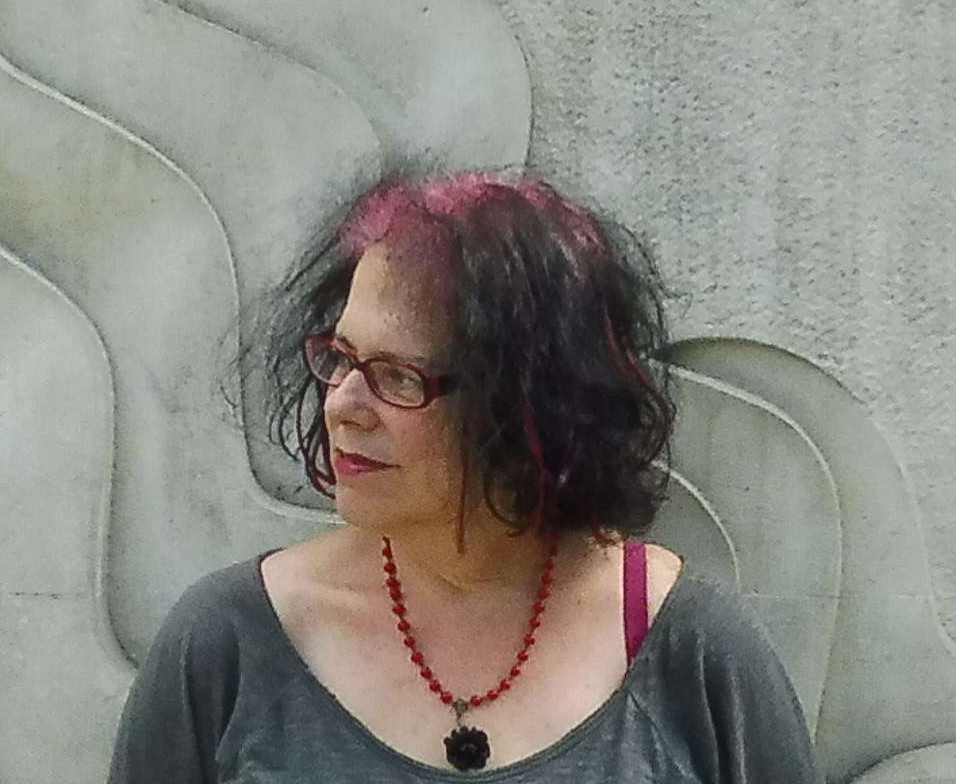
Rosanne Rabinowitz is a London-based author of speculative fiction. Her debut collection Resonance & Revolt was shortlisted for the 2018 British Fantasy Award and her earlier novella Helen's Story received a Shirley Jackson Award nomination. Her Brexit and Oscar Wilde-inspired weird tale All That is Solid is now available as a chapbook from Eibonvale Press. She spends a lot of time drinking coffee – sometimes whisky – and listening to loud music while looking out her tenth-floor window.


Tuesday, December 19, 2017

The Pleasures of Reading, Viewing, and Listening in 2017, pt.15, Rosanne Rabinowitz


The Pleasures of Reading, Watching, and Listening
by Rosanne Rabinowitz


I’m a new Aqueductian who was pleasantly surprised by Timmi’s invitation to contribute to this regular end-of-the-year roundup – so my most recent reading, watching and listening pleasures will loom large in my account.  

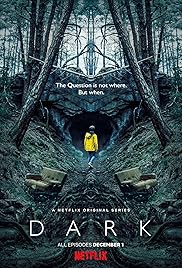
I'll start with last week’s binge on the new Netflix series Dark, an import with one foot in the 1980s and others in 2019 and 1953. The series has been described as a German version of Stranger Things, albeit with an older and not-so-cute crowd of kids. There are no people-eating monsters either, but we face murderous humans along with the complexities of time travel and its effects on three families in a village near a nuclear power plant. Young boys disappear while corpses appear; small-town passions seethe and hidden histories surface. The narrative hops along several timelines, as do several of the protagonists. 


Well, I’m always up for a good time travel yarn. I have a sense that the series is riffing on – and against– classic 1980s time travel capers like Back to the Future and Bill and Ted's Excellent Adventure.  

But it's not such an excellent adventure for young Mikkel, a boy who finds himself stranded in the 1980s. This situation has been mined for laughs in the past (Hot Tub Time Machine, anyone?) but here I was genuinely moved by Mikkel's terror and deep sadness as he is torn out of his world and displaced in another. Though he finds an adoptive family and goes on to marry and have children he never recovers from this wounding.

The visual and emotional palette is sombre and mysterious, helped by a haunting musical score. Sometimes the angst teeters on the edge of parody, as if we’re in Back to the Future as directed by Ingmar Bergman. In the middle of the series I really was expecting a geezer in black to turn up for a game of chess. Some might find that a fault, but it added to my enjoyment. Oh yes, I love a good mash-up. And I’d definitely love to see one where the Stranger Things kids have intense discussions of fate, mortality and theology while zipping about on their bicycles in their Ghostbusters outfits.

So if you think you'd enjoy a 10-episode helping of Teutonic time-traveling gloom, Dark is for you. I'd add that there are glimmerings of humor here and there, especially when a version of the grizzled 'grandfather paradox' gets another airing. I laughed when teen-aged Jonas, who ventures into the past to search for Mikkel, expressed his confusion: "Now I have another grandma, and she’s the principal of my school... Her husband, who’s fucking my mom, is looking for his son, who’s my father! A few days ago I kissed my aunt..."


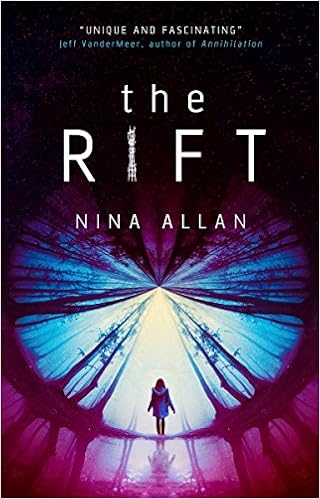
Any thematic continuity was unintentional, but when I downloaded The Rift by Nina Allan I found myself venturing again into a story centered on a disappearance. Selena’s sister Julie goes missing at the age of seventeen. Then Julie 20 returns years later, with a tale of a narrow escape from death and time spent on another planet. There are resonances of the loved one returned from the realms of faerie. Are they the missing person, or someone else? The Rift is a haunting and ambiguous tale.

Another recent read is Swingtime by Zadie Smith. In this novel Zadie returns to her home turf in north-west London, and ventures much further afield as well. Two young women grow up: one is a talented dancer and another is not so talented, but a good adapter who ends up working for a Madonna-esque superstar. This book sped by; I found it moving and also full of laugh-out-loud satire. It's the best I've read from her, as I’ve had mixed feelings about Smith’s earlier work. While responding to its wit and perceptiveness I often found it rather detached in tone. This time Smith brought me up close to her characters in a novel that brims with sense of place and time – and sense of person as well.

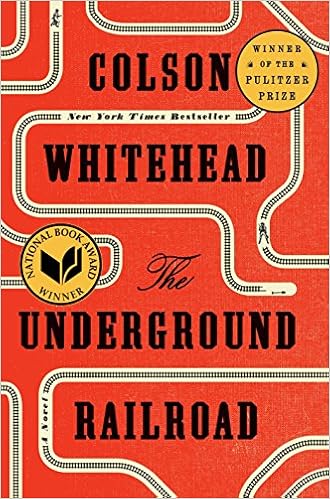
I would also recommend The Underground Railroad by Colson Whitehead, which won the Clarke Award, the Pulitzer and possibly some other accolades as well. This book was chosen by a care client as a birthday present, and I read it out loud to him with great pleasure. It tells the story of Cora, who struggles with oppression as a slave plus isolation within her own community. While it is a harrowing narrative of slavery and racism in the southern US, it also shines with Cora's vital determination to be free and build a better life with others: “The world may be mean, but people don’t have to be, not if they refuse.” 


The underground railroad in this book is an actual steampunky railway used by the slaves to escape into alternate places and futures. Some of these are not what they seem and the best of them are not likely to last forever. The nature of the railway is never explained, and readers of science fiction are free to come up with their own theories. Wormholes, parallel universes? The 'wow' factor never overwhelms the horrific reality of slavery but offers another way of looking at resistance to it.


Looking back earlier in year, other books of note were At Night We Walk in Circles by Daniel Alarcon The Nix by Nathan Hill, The Bricks that Built the Houses by Kate Tempest, The Power by Naomi Alderman and The Savage Coast, a rediscovered novel by poet Muriel Rukeyser. I also read some biography – from Susie Bright's memoir Big Sex Little Death to Lynne Segal's Making Trouble and Out of Time, to bassist Peter Hook's recap of his years in Joy Division, Unknown Pleasures.


I’ve seen a lot of films in the past year, but the one that stands out in my mind at the moment is Here to be Heard: The Story of the Slits – an inspiring montage of interviews and footage of the female-led first-generation punk band.

I'll end with linking to an article that I read and posted in December 2016, just after Trump's election: Notes from the Resistance: a Column on Language and Power by Summer Brennan. I've recently reread it and still find it a powerful inspiration to any writer who ever has doubts about whether putting words onto paper (or disc) is a worthwhile thing to do: http://lithub.com/notes-from-the-resistance-a-column-on-language-and-power/

"Words have power. We fight back by correctly labeling; by calling a white supremacist a white supremacist, a fascist a fascist, a sexual assault a sexual assault. We name what is happening or about to happen around us: kleptocracy, kakistocracy, authoritarianism, fraud, corruption, embezzlement. We can creatively add to the taxonomy of tyranny even as we feel ourselves buried alive by it: idiocracy, dystocracy, misogynocracy... The hijacking of public language, as is happening now, is a way to shift perception—to bend and control thought—and must be resisted.I would like to invite readers to join me in doing this. Get a diary or journal and write down as many words as you can that relate to the things that you value. Fascism favors sameness; it represents a desertification of language and thinking. You can fight sameness with diversity."


Rosanne Rabinowitz  helped produce radical London-based women's zines in the 1980s/90s such as Feminaxe and Bad Attitude. She has a creative writing MA from Sheffield Hallam University. Aqueduct published her novella  Helen's Story as a volume in the Conversation Pieces series in 2017. Resonance and Revolt, a short story collection, will be published in early 2018 by Eibonvale Press (https://www.eibonvalepress.co.uk/books/books_resonance.htm).