Showing posts with label Larissa Lai. Show all posts

Thursday, June 6, 2019

The 31st Annual Lambda Literary Awards


Here at Aqueduct Press, we're elated that The Breath of the Sun, Isaac R. Fellman's debut novel, which we published last year, has won a Lambda Literary Award. Congratulations, Isaac!

You can find the full list of winners for each category below. I was especially pleased to see that Larissa Lai's Tiger Flu (on this year's Tiptree Honor List, as well) won in the Lesbian Fiction category, and Claire O'Dell's A Study in Honor, a science fiction noir novel that I much enjoyed, won in the Lesbian Mystery category. I'd also like to salute Looking for Lorraine: The Radiant and Radical Life of Lorraine Hansberry, in the LGBTQ Nonfiction category, as a very fine book that I also enjoyed. In fact, just as the Tiptree Honor Lists are always a good source of titles to search out, so with the entire list of Lambda Award finalists (which can be found at https://www.lambdaliterary.org/31st-annual-lambda-literary-award-finalists-and-winners/ .


31ST ANNUAL LAMBDA LITERARY AWARD WINNERS:

Lesbian Fiction
The Tiger Flu, Larissa Lai, Arsenal Pulp Press

Gay Fiction
Jonny Appleseed, Joshua Whitehead, Arsenal Pulp Press

Bisexual Fiction
Disoriental, Négar Djavadi, Translated by Tina Kover, Europa Editions

Bisexual Nonfiction
Out of Step: A Memoir, Anthony Moll, Mad Creek Books / The Ohio State University Press

Transgender Fiction
Little Fish, Casey Plett, Arsenal Pulp Press

LGBTQ Nonfiction
Looking for Lorraine: The Radiant and Radical Life of Lorraine Hansberry, Imani Perry, Beacon
Press

Transgender Nonfiction
Histories of the Transgender Child, Julian Gill-Peterson, University of Minnesota Press

Lesbian Poetry
Each Tree Could Hold a Noose or a House, Ru Puro, New Issues Poetry & Prose

Gay Poetry
Indecency, Justin Phillip Reed, Coffee House Press

Bisexual Poetry
We Play a Game, Duy Doan, Yale University Press

Transgender Poetry
lo terciario / the tertiary, Raquel Salas Rivera, Timeless, Infinite Light

Lesbian Mystery
A Study in Honor: A Novel, Claire O’Dell, HarperCollins / HarperVoyager

Gay Mystery
Late Fees: A Pinx Video Mystery, Marshall Thornton, Kenmore Books

Lesbian Memoir/Biography
Chronology, Zahra Patterson, Ugly Duckling Presse

Gay Memoir/Biography
No Ashes in the Fire: Coming of Age Black and Free in America, Darnell L.
Moore, Bold Type Books

Lesbian Romance
Beowulf For Cretins: A Love Story, Ann McMan, Bywater Books

Gay Romance
Crashing Upwards, S.C. Wynne, self-published

LGBTQ Erotica
Miles & Honesty in SCFSX!, Blue Delliquanti & Kazimir Lee, self-published

LGBTQ Anthology—Fiction
As You Like It: The Gerald Kraak Anthology Volume II, The Other Foundation, Jacana Media

LGBTQ Anthology—Nonfiction
Not That Bad: Dispatches from Rape Culture, Roxane Gay, HarperCollins / Harper Perennial

LGBTQ Children’s/Young Adult
Hurricane Child, Kacen Callender, Scholastic / Scholastic Press

LGBTQ Drama
Draw the Circle, Mashuq Mushtaq Deen, Dramatists Play Service

LGBTQ Graphic Novels
The Lie and How We Told It, Tommi Parrish, Fantagraphics Books

LGBTQ SF/F/Horror
The Breath of the Sun, Isaac R. Fellman, Aqueduct

LGBTQ Studies
Toxic Silence: Race, Black Gender Identity, and Addressing the Violence Against Black Transgender Women in Houston, William T. Hoston, Peter Lang International Academic Publishers

Wednesday, December 25, 2013

The Pleasures of Reading, Viewing, and Listening in 2013, pt.20: Larissa Lai

Reading, Viewing, and Listening in 2013
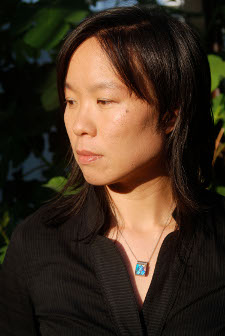
by Larissa Lai

It's been a very eclectic sort of year for reading, writing and listening. The nature of my work means things get often get read as my teaching schedule dictates. The nature of my health, this year, meant that I got some enforced reading/listening time. I'm much better now, and happy to amble through some of the things that caught my attention in 2013.

I began the year as a juror for the Dorothy Livesay Prize, which is the British Columbia Book Prize for Poetry. Of the hundred or so books in the box, my pick for the winner was speculative in its experimentation with language and form. Roger Farr's IKMQ is about the adventures of four letters of the alphabet. IKMQ consists of sixty-four brief passages. These are variously stories, vignettes, descriptions, instructions, scenarios and formulae, each of which involve the characters I, K, M and Q. Because the characters are letters, the fragments sometimes have the quality of a psychological or algebraic hypotheses, in which broader social, political, mathematical or psychological ideas are being tested out. Other times, it is grammar itself that gets tested, particularly when I is the protagonist. As in: "I was it. K ran behind the hedge, M climbed onto the deck, Q ran around the perimeter of the yard." The "I" here could stand in for a self—"me"— or it could be an abstract, like K, M or Q. Or "I" could be the first letter of someone's name— "Ivan" or "Isabelle". By leaving the possibilities open, Farr shows us how context dependent all writing is. I,K,M and Q show up in scenarios as diverse as a committee meeting in which Roger's Rules are being followed, a pornographic film, a physics experiment, a heist and a chart for testing vision. This is language that speculates on our expectations. If we want it, we get lots of sense for our pennies— more than we might imagine possible. Maybe I could put it beside Russell Hoban's Riddley Walker, which I read and did a little talk on for the Vancouver-based Kootenay School of Writing talk series "I'm in You, You're in Me" in February of this year. Twelve-year-old Riddley is a "connexion man" desperately attempting to retrieve history after the nuclear blast. English as we know it has been lost, and the youngsters of post-apocalyptic "Inland" (England) reconstruct it from what they've got.

I do often find myself wishing that experimental poets and speculative fiction writers would read each other more. I think we'd have a lot to talk about. Some speculative fiction writers and readers might enjoy Bhanu Kapil's Humanimal: A Project for Future Children, an experimental fiction about the "Bengali wolf girls", feral twins found in 1921 and "recuperated" to Indian society. Seeking an ethical way to engage their story, Kapil travelled to Midnapure with a film crew, and revisited the place where the girls were captured as well as the various sites connected to them. She met a ninety-eight year old woman who recalled their howling, found a tree in which one of them had been photographed trying to grab the tail of a cat, and visited the room in which they had been kept. Her book shows us our own animal continuities, the cruelty and impossibility of humanization, and likelihood that we are all more animal that we usually imagine.

One of my tasks in the spring was to rework a seminar on 1970s feminist speculative fiction for graduating English majors at the University of British Columbia, where I work, to teach this coming winter. Last year, that class was a rough one to teach. It seems always difficult and painful to teach material that I think is democratic and liberatory. Some students loved it, but many of them just hated it and resisted the course material at every turn. The material I was teaching— Woman on the Edge of Time, Kindred, The Left Hand of Darkness, Les Guerrillères, The Female Man and Mind of My Mind— is 40 years old. I didn't set out to shock them. I was surprised by what they found surprising. As a great believer in student-centred learning, I actually want to start the discussion where they live— a much harder thing to do than one might imagine. This year, I'm framing it through Tom Moylan's idea of "critical utopias", as a contemporary phase of utopian writing that seeks neither another place (like Thomas Moore's Utopia) nor another time (like Edward Bellamy's Looking Backward) for utopian possibility, and yet also refuses the defeats of some of the middle of the 20th-century's speculations (like Orwell's 1984, Zamyatin's We, or Huxley's Brave New World). Other thinkers I'll use to frame this course include David Harvey and his idea of the "insurgent architect" as he articulates it in Spaces of Hope. I'm particularly interested in those passages where he talks about the difference between what activists and thinkers plan and what actually unfolds. I'm interested, in other words, in that element of the unpredictable. I'll also use a little teeny bit of Fredric Jameson's Archaeologies of the Future: The Desire Called Utopia and Other Science Fictions. This is an important text because it addresses shifts in the political sphere that accompany shifts in the economic one. It articulates the relationship between utopian fiction and the material world, and helps us see more clearly the time in which we are living.

This reframing gave me the opportunity to read Ernst Callenbach's Ecotopia, which is so visionary on the environmental front. We're living in a moment when our economic system seems very much like a death cult bent on destroying the earth and life as we know it, and I'm hoping that students might draw some inspiration from Callenbach. I'm also somewhat worried about the book's sexism, though it might do the work of illustrating what writers like Joanna Russ, Marge Piercy and Ursula LeGuin wrote so passionately against in the 1970s. I also finally read Daniel Heath Justice's Kynship, a fantasy novel that draws out the complexities of Indigenous political locations, and the tensions among them. What I loved about this book is that humans are pitched as the colonizers. Reading Kynship and thinking about how to teach it put me on to Grace L. Dillon's Walking the Clouds: An Anthology of Indigenous Science Fiction. It seems to me an important thing to think about fantasy universes, technology and speculative futures with Indigenous world views at the centre.

For several weeks at the end of May and into early June, I had a little health trouble that made sitting and standing very difficult. The upside of an otherwise unhappy situation was being able to immerse my mind in pleasure of audiobooks. I usually listen to them to save my sanity while in transit on long international trips. I can't imagine a better way of enduring the three-hour immigration line-up at Heathrow, for instance, than to spend it listening to A Remembrance of Things Past. This spring, in the dark comfort of my bed, I listened to Amitav Ghosh's River of Smoke and Sea of Poppies, of interest to me because they are about the movement of opium between India and China in the 19th century, and the South Asian, British and Chinese lives touched by the British enforcement of opium production and trade. I was quite blown away by his figuration of the Ibis, as a schooner once used to transport African people across the Atlantic into slavery, now redeployed (in world of Sea of Poppies) to transport South and East Asian coolies as well as opium across the Indian Ocean. The world system of the 19th century was every bit as ugly as the one we currently live in. I listened to his The Glass Palace, as well, about the fall of the Burmese monarchy and its exile in India. I also heard The Calcutta Chromosome, a novel in which Ghosh imaginatively locates the cure for malaria with a scientific/mystical Calcutta-based movement that can give people eternal life. He offers us, in a sense, an alternate history that embeds the documented history of Sir Ronald Ross's cure for malaria within it. What Ghosh's novels have in common is that they foreground the stories of South Asian (and sometimes East and Southeast Asian) characters and offer us non-Western ways of knowing, so that we can see the past, and sometimes the future too, differently.

I also had the luxury of having Haruki Murakami's 1Q84 read to me. I loved that novel's premise— that it is possible to enter another world by listening to Janáček's Sinfonietta then climbing down a staircase that juts from a busy freeway offramp in Tokyo. And that one knows that one it in that world because there are two moons, the second of which is small and moss-coloured. Originally published in Japan in in 2009 and 2010 in three volumes, 1Q84 also tackles some weighty issues— secret cults, serial murder, domestic abuse, and literary fraud. I very much enjoyed Murakami's ability to take us from the ordinary to the subtly unfamiliar and then to plunge us from the subtly unfamiliar into the profoundly weird. He does it with such a deft hand one doesn't even realize it is happening, until small beings emerge from the mouth of a sleeping girl and you just nod and think, "okay." (Some critics hated Murakami's "little people," but they worked for me, and I appreciated the risk.) I'm always disappointed with his portrayals of women, though. Because he writes well, his female characters are always interesting, but because he doesn't really understand women, there is always something a bit alien about them. He doesn't understand them, but he reinvents them in interesting ways. As long as I think of his women as another species, then I can quite enjoy his books. Otherwise I get irritated. In 1Q84, the protagonist Aomame (trans. "Green Peas") is a martial artist, physiotherapist, and paid serial killer who specializes in the murder of men who have abused their wives. In her spare time, she hangs in seedy bars with her only friend, a policewoman called Ayumi, picking up older men with well-shaped heads for manga-style foursomes. In the audiobook, the Aomame sections were read in the high, soft voice of Allison Hiroto. It was a very strange experience to have Murakami's weirdly-styled female interiors narrated by this voice. Her voice was so clear and high, and her diction so perfect. The listening experience was at times like being taken to a particularly filthy lavatory by a lovely angel. Good thing Murakami has already taken us up the offramp and down the staircase into a world where the there are two moons.

I also listened to Neil Gaiman's The Ocean at the End of the Lane, which tells the story of a man who returns to the village of his childhood. There he reconnects to memories of a young, supernatural girl who sacrificed herself to save his childhood self from less benign supernatural "varmints" who would erase him and the entire village given the chance. I enjoyed this book for the way it catches the whimsy and terror of childhood, and the way it shows us how the children we once were are still very much a part of us, if somewhat repressed or forgotten. I particularly liked the ways that Gaiman puts enchantment and disenchantment side by side, in particular with the character Ursula Monkman. She is a worm spirit from another world whom the protagonist initially pulls out of a hole in his foot. She appears in the family as a beautiful but nasty young woman who seduces the protagonist's previously loving father, and causes the father to try to drown him while she looks on. I enjoyed this book for its charm and its creepiness. I felt it lacked something in terms of a broader social engagement, but maybe that says more about my own tastes than anything else.

Once my health improved, I had a lot of work to catch up on, primarily the final revisions on a book of criticism called Slanting I, Imagining We: Asian Canadian Literary Production in the 1980s and 1990s, which I'm happy to announce is coming out through Wilfrid Laurier University Press this spring, for those of you interested in anti-racist criticism, theories of subjectivity and/or cultural life north of the 49th parallel.

In September, I attended a conference on contemporary poetry and poetics at the University of Washington, Bothell. Highlights included readings and talks by Sarah Dowling, Amaranth Borsuk, Robert Gluck, and Carla Harryman. I have been a big fan of Robert Gluck ever since meeting him at a conference on queer literary kinship in Ghent in 2009. His Margery Kempe, a very queer retake on the medieval Christian mystic who was in love with Jesus, is the sexiest, strangest and most heartbreaking novel I've read in a very long time. I probably should have known his work a long time ago. I confess to my gaps. He is an active member of the New Narrative school, of which Kathy Acker was probably the most famous member.

In October, I was at the University of Ottawa for a conference on Science and Society and to share my work in the English Department. Enjoyed talks by Yves Gingras on science and citizenship and Sheila Janasoff on science and its publics. Once the conference got rolling, I was somewhat taken aback by the hold certain streams of positivist philosophy have on science studies. Enjoyed talks by my co-panelists Robert Bean (about a project on early typewriters) and Cindy Stelmackowich (about her work on 19th-century anatomical drawings). I did a talk and reading and had a lively conversation with members of the English Department at the University of Ottawa afterwards, in which I shared both my talk for the Science and Society conference (on the liveliness of the material world) and a bit of the novel, Grist, which I have been working on for way too long. Thomas Allen had a few good reading suggestions, which I hope to take up in 2014: Colson Whitehead's The Intuitionist, which is about an African American woman who breaks into a league of elevator inspectors in a world where elevators are a prestigious technology, and Karen Tei Yamashita's Tropic of Orange, about a magic orange that travels from Mexico to Los Angeles and drags the Tropic of Cancer along with it. Take that, Henry Miller!

In November, in preparation for the Sally Miller Gearheart conference, I read Vonda McIntyre's The Moon and the Sun. I loved the sadness of her 17th-century sea monster. I also read Suzy McKee Charnas's Dorothea Dreams, which made me wish I was a grown-up in the 1970s.

As the year closes, I'm reading Miguel Syjuco's Illustrado about the murder of a fictitious writer/eccentric called Crispin Salvador, and the attempts of Miguel, his student and friend to find Salvador's novel-in-progress, which mysteriously vanished at the time of Salvador's death.

In 2014, I'm looking forward to reading some of the books I bought in Eugene, especially Andrea Hairston's Mindscape and the two volumes of Ursula LeGuin's short fiction, The Unreal and the Real, that I bought there.

A lot of ambling was done this year, that much is for sure. As the dark and sleepy winter soltice descends, I'm seeking a little peace, both on earth and in the recesses of my overly busy mind.

 Larissa Lai is an Assistant Professor in the Department of English at The University of British Columbia. She holds a PhD from the University of Calgary. Her first novel, When Fox Is a Thousand (Press Gang 1995, Arsenal Pulp 2004) was shortlisted for the Chapters/Books in Canada First Novel Award. Her second novel, Salt Fish Girl (Thomas Allen Publishers 2002) was shortlisted for the Sunburst Award, the Tiptree Award and the City of Calgary W. O. Mitchell Award. She has also published a good deal of poetry. Her first solo full-length poetry book, Automaton Biographies (Arsenal Pulp), was a finalist for the Dorothy Livesay Poetry Prize.

Wednesday, November 13, 2013

A few notes and thoughts on the Worlds Beyond World and Women's Stories, Women's Lives Symposia

I wanted to write at least a little about the conference I attended last weekend in Eugene, celebrating the 40th anniversary of the Center for the Study of Women in Society at the University of Oregon. The conference kicked off with a documentary film, "Agents of Change: A legacy of feminist research, teaching, and activism at the University of Oregon" by Gabriela Martinez and Sonia De La Cruz, which I'm sorry to say I missed because I was helping Kath to unload Aqueduct's books and set up our tables in the vendors' room. But I did attend about half of the sessions of the first symposium and all of the sessions of the second. I took the occasional note on some of them.

The first symposium, titled "Women's Stories, Women's Lives," was held on Thursday. The sessions were nominally organized by decades-- 1970s, 1980s, 1990s, and the 2000s-- but since most of the work presented was historically conceived, in fact ranged over larger spans of times. Shelley Grosjean's presentation "Lesbian Lands in Oregon," for instance, began with the 1960s and went beyond the 1980s in tracing the history of a lesbian separatist community. It is quite a while since I've thought of feminist separatism-- probably since reading Joanna Russ's What Are We Fighting For (which devotes a chapter to it). Listening to the presentation, I realized that probably a lot of younger feminists don't realize that separatist communities often came about in the way this one seems to have done. Apparently, when a couple of women in a mixed-sex, "back to the land" group, Jeanne and Ruth, challenged the group's conservative gender roles, they were booted out--and promptly organized a group of women to form a new community. This community explicitly defined itself as seeking spiritual connection via women's physical bodies in relationship to the landscape, and published Woman Spirit Magazine (1974-1984) as a means of doing "long-distance consciousness raising." (I think she may have said that Mother Kali's bookstore in Eugene was associated with the community. I remember Mother Kali's from visits I made there in the 1980s. Just thinking about it made me long for the days when feminist bookstores were to be found all across the country.) The presentation did not attempt to gloss over the community's feminist shortcomings. The community was white-- lacking in "universal sisterhood in reality," and so "attempted to appropriate other cultures to give them sense of being universal." The presenter said that the women she talked to viewed separatism as "a hospital"-- a place for being healed. But, she says, the community discovered that women severely damaged by patriarchy could never leave separatism because they were never healed. The presenter summed up the community's ideological differences from contemporary feminism as "hugely emancipatory, hugely exclusionary."

Cheris Kramarae, a longtime women's studies scholar, who is probably best known for her statement "Feminism is the radical notion that women are human beings," presented next, on the subject of Global Antiviolence. "Feminism 'dies' continually," she remarked at the beginning of her talk. (So true, so true...) She finished by noting how the issues of sexual harassment, sex trafficking, and domestic violence remain important issues. "There is still no economic aid for battered women-- only individualized solutions for social problems." Most of the money appropriated for dealing with domestic violence, she says, goes to anger management programs for men rather than foucsing on the complexity of the social problem. "There is no ancient history as in 'gone'," she concluded. "The issues of the 1960s are still with us."

The third presenter in the session was Eugene's mayor, Kitty Piercy, speaking on reproductive rights activism. I couldn't help be struck by her story of being recruited at a NARAL booth in the 1980s. (I was recruited at a NARAL house party in 1981.) She referred, amusingly, to "speculum parties" where women had the opportunity to see their own cervices. As I recall, at least some of these parties had a lot to do with Our Bodies, Ourselves developments--which had a major impact on all feminists. (Indeed, it changes many practices in the medical mainstream, not only in gynecology, but in family practice as well. Medical practice in the US has never been the same, thank the goddess.)  Piercy emphasized that she was strongly motivated by personal experience to work for reproductive rights-- and as a result became a "more public person." (More personal resonance here-- the NARAL organizers I worked with in the 1980s also attempted to get me to do public speaking, but I begged off--and instead did a lot of writing and analysis for them.) In Piercy's case, one thing led to another-- which eventually included election to public office.

Margaret Hallock, a member of the faculty in Economics at the University of Oregon, spoke next on Pay Equity and union organizing in the 1980s. She helped organize the Oregon Public Employees Union. Clerical workers, whose jobs were labeled "unskilled," joined the fight for pay equity. Many of these public employees needed food stamps to supplement their pay. (Like quite a few workers today, actually.) Eventually they came up with the idea of a "rolling strike," which was do-able in the way a general strike was not. The rolling strike was so successful that the legislature has since outlawed it. Every day the clerical workers in a different department walked off the job. (Imagine the surprise of all the people relying on the labor of clerical workers discovering how dependent they were on it...) Briefly, the gender gap in pay was closed. (Sad closing note: the gender gap in pay is back.)

Shannon Elizabeth Bell spoke about the origin of the environmental justice movement in the poorest county of North Carolina. This is a movement aimed at protecting health and economic well-being of communities (rather than focusing on protecting the Earth). It is grassroots and on-going, particularly in Appalachia vis-a-vis the coal industry. The presenter played a moving audio clip of an Appalachian woman talking about why she fights for environmental justice and the backlash she faces within her own community.

Next we broke for lunch, after which we had the pleasure of listening to Molly Gloss reading from her Tiptree-Award novel Wildlife. I'm afraid I can't find my notes for the afternoon sessions. I missed most of the first session (presumably because I was talking to someone at the time, though my memory is weirdly hazy). The second afternoon session, on the 21st century, entailed Gabriela Martinez on the University of Oregon's Diversity Project, Nichole Maher on Native American Families ( a wonderful success story of community organizing and coalition work), Susan Sygall on disability rights in the global context, and Charli Carpenter on "interest gaps between intentions and outcomes" in national security policies. Carpenter is particularly interested in the gendered norms for defining civilian immunity and the "Making Amends" campaign, based on the idea that governments need to not only not commit war crimes, but also need to assist civilians harmed by violent conflict. (I have to say-- and several members of the audience agreed with me, this latter would have been more effective without an overwrought sound track.)

Dinner break was a bit of a rush, since seating for the Ursula Le Guin reading began at 6 p.m. The reading was, as you might expect, wonderful. Ursula read from an unpublished story that only three people (I think) had previously read. I won't say any more about it, though, since Ursula swore us all to silence. (Given the hundreds of people listening, I'll be interested to see if details of the story leak out.) After the reading, Ursula did some Q&A, first with a professor and graduate student and then with the audience. A signing, which I and several other writers participated in, followed.(I was seated between Suzy McKee Charnas and Kate Wilhelm.) And then it was back to the hotel and the hotel's bar, where a good time was had by many (including me), and it felt a lot like WisCon, if you know what I mean.

Saturday's symposium was "Worlds Beyond World," and was all about feminist sf. The first panel, moderated by Roxane Samer, featured three undergraduates and one graduate student talking about class projects using the University of Oregon archives (which includes the papers of Ursula Le Guin and Joanna Russ). Laura Strait talked about Ursula Le Guin's correspondence with Eleanor Cameron and Cameron's run-in with Roald Dahl and her critique of the racism in his work. Strait made the point that she believes an understanding of an author's intentionality can inform literary criticism of the author's work. Grace Shunn, who admitted knowing very little about science fiction, talked about reading UKL's correspondence with Alice Sheldon. Mahkah Wu, who spoke so quickly the person writing captions gave up even trying to follow his presentation, talked about men's advantages in debates-- because men are allowed to be verbally aggressive without penalty and can talk as fast as they want and still be intelligible (especially if their voices are deep). Debate, he said, creates a hostile atmosphere toward women. He mentioned debating the proposition that "Women should not be allowed access to political institutions" (on the con side)-- though I have no memory of how this related to anything else he was saying-- about which, later, someone (I think it may have been Vonda McIntyre) wondered why the proposition hadn't been "Men should not be allowed access to political institutions" instead. He finally, after much preamble, noted that he had chosen to focus on an argument Ursula had with Darko Suvin. Amy Jones concluded the session by talking about reading documents in the archives to trace changes in language use (which is something that interests me mightily).

I was a panelist for the next two sessions, one before and one after lunch, and so I'm afraid I can't really say much about them. (I was told that a written transcript of the sessions is being prepared. When/if I hear of one, I'll let you know.) I was a bit uncertain going into these because I wasn't sure of what our audience would be. Nevertheless, the level of the discussion was in no way a sort of "feminist science fiction 101." My impression after the event is that the audience's level of comprehension was varied. The first panel focused on "Feminist Science Fiction as Political Theory." Larissa Lai moderated this beautifully, and Suzy McKee Charnas, Vonda N. McIntyre, Kate Wilhelm, and I were the panelists. I enjoyed it immensely, as I did the second panel, "Building Feminist Worlds," moderated by Margaret McBride, with panelists Molly Gloss, Andrea Hairston, Larissa Lai, and me. I think we talked more specifically about particular works on the second panel. (Though I may be wrong!) My hope is that we conveyed a sense of just how lively, diverse, and burgeoning feminist science fiction is.

The last session, moderated by Grace Dillon, included Kathryn Allan, Joan Haran, Andrea Hairston, and Alexis Lothian. Grace Dillon questioned the prevalence of frontier and pioneer metaphors in science fiction research and cited Katie King's Networking Re-enactments. "True tradition," she asserted, "is dynamic" rather than static. Joan talked about her article with Katie King in the new issue of Ada. (Which I liked to in an earlier entry on this blog.) She argued that new historiographies enable us to think about alternative futures (an idea I've gotten behind myself, particularly in my "Toward a Genealogy of Feminist Science Fiction"). She emphasized how wrong it is to assume that the present is single and unified. Alexis talked about feminist science fiction's exploration of ways of knowing, which allows us other ways of looking at the world. Andrea declared that when she sits down to write a paper, it is as "a performance monologue by Andrea the Professor." "I follow the desire for knowledge and then I write about it," she said. Kathryn Allan studies "feminist post-cyberpunk" as an independent scholar. She works on disability in science fiction and has written "Cripping the Future" using an approach to disability studies that takes the modeling of disability away from the medical estabilishment and gives it to the disabled.

In retrospect, I'm struck by how the discussions that unfolded over the last three sessions always came back to the importance of community for feminist science fiction. On one of the panels (probably "Feminist Science Fiction as Political Theory") I noted that for me, three metaphors characterize feminist science fiction. The first is the one Carol Stabile (one of the key organizers of the conference) articulated at the beginning of the Worlds Beyond World symposium: Feminist science fiction provides space for creating alternatives to "what is" (which is especially important now that most people in the US have been taught to believe that how things are is the only way they can be). Karen Joy Fowler gave me the second metaphor when she wrote to me (back in 2002, I think) that "feminist science fiction is the sea I swim in." The third metaphor is my own: feminist science fiction is a grand conversation. Each of these metaphor help us to see different aspects of feminist science fiction, all of them absolutely critical. The first explains what feminist sf does and why it matters. The second tells us about how the individual reader or writer engages in feminist science fiction within a crucial, indispensible context. (A work of feminist sf is only possible and intelligible because of the existence of feminist science fiction as a whole.) And the third metaphor makes explicit the connections the second one implies and explains how it is intelligible at all.

It was a wonderful weekend, y'all. I wish more of you could have been there.