Showing posts with label Susan diRende. Show all posts

Thursday, December 21, 2023

The Pleasures of Reading, Viewing, and Listening in 2023, pt. 15: Susan diRende


2023's Pleasures, Guilty and Otherwise 

by Susan diRende


When it occurred to me that the time was approaching for this year‘s Pleasures of Reading, Listening and Viewing essays at Aqueduct, I had a wicked thought. What if I told the truth?

I mean, I’ve told the truth in the past, but it was the nice and comfortable truth for people who like reading, who take literature seriously, and who recognize and enjoy diving into the thorny complexities of human existence. I do have a highbrow side.

But also a lowbrow one. A taste for those guilty pleasures with no redeeming qualities?

If I’m being kind to myself, I will call it my mental spa time, a mental manicure or pedicure. Dealing with the surface things in life. Soothing the mental aches and stress points of reality. A place where I don’t have to think about anything meaningful.

Blame it on my imagination. My creativity is an omnivorous scavenger. This is not self-praise. The only omnivorous scavenger in nature is the cockroach.

What this means for me in practical terms is that all the things other people do to turn off their idea-generator —taking a walk, meditating, watching a movie, or reading a good book — in me does the opposite. All those things beautifully made to engage me in story and nature and cosmic understanding, all of them give me ideas. And there I am on the mountaintop spinning a story or conjuring a palette for a painting or considering a fantastical planet with conscious snow.

My inner life is a constant battle of focus, or more precisely of choosing what to focus on today, this minute. To get books written, to paint canvases, to market my work: that takes a lot of time. But if I read a book about the history of agriculture, suddenly I’m world building. If I come across a writer whose prose is just yummy, I stop to figure out how she did it, and want to practice putting it into my own writing. (I’m looking at you, Ursula LeGuin.) If I watch historical drama, I’m suddenly filled with impatience at the whole idea of kings and queens and want to break the genre’s focus on that by revealing the constructed nature of our love for hierarchy since I don’t believe it’s natural, but a cultural artifact.


Okay, I lied. I have some “real” book recs after all: David Graeber’s The Dawn of Everything coupled with any of Ed West’s A Very, Very Short History of England Series. You will never view kings kindly or think an admiring thought about Richard the Lionheart ever again. And don’t get me started on The Enlightenment… 


See what just happened? I started off writing about the reading and viewing pleasures that turn off my brain, when I was hijacked by the idea of suggesting just a couple of thought-provoking books. *Sigh*

So what do I do watch, read, and listen to to relax?  I’m almost embarrassed to say.

Reels. As in those short form videos on TikTok, Instagram and Facebook. Even YouTube. I love them. Some are just what you’d expect from the social media commentaries. Animal videos for instance. Antics. Rescues. Relationships. Not only do they make me laugh or marvel, but a creature doing something funny or extraordinary or surprising almost never make me think about anything but the moment.

Sure they’re sentimental. And yes, Wilde did say that “a sentimentalist is simply one who wants to have the luxury of an emotion without having to pay for it.” Hence the “guilty pleasure” admission. 

https://www.instagram.com/reel/CrPlfgHNnMg/

I also watch demo reels. Paper holiday decorations. (Amazing what a person can do with toilet paper rolls.) Cooking. (Did you know you can knock the seeds out of a pomegranate in ten seconds by cutting it in half, holding it over a bowl in the sink to catch the splatter, and whacking the back with a wooden spoon? Magic.) How to draw a horse. (You start with a kite shape…)

Sometimes I tell myself that I am feeding my writer’s knowledge-base by watching people building furniture or houses. Training horses. Sewing garments. Weaving grass baskets. Tying knots. Wild foraging. Mudlarking where people dig in riverbanks for a little bits of this and that. I’m not gonna do any of that.

If I really want to zone out, I watch YouTube where there are longer process videos. For instance, there are all these landscapers who do videos of tending to badly overgrown yards for free and use them to get viewers on YouTube. I watch these and I get absorbed in mowing, trimming, and edging. It is weirdly satisfying seeing the chaos turned to order. Nothing I would take and make a story out of, nor does it spur in me any desire to do it myself the way a painting process video might. It makes the watching mentally restful.

Another completely pointless pleasure is watching videos of people who buy abandoned storage units and go through them looking for valuable stuff they can sell. Likewise people shopping at thrift stores to list on eBay. There is a solid, low-level hum of curiosity generated by unwrapping the unknown or the search for an unrecognized treasure. I watch these when I want to disengage. And it works. 

So if the holidays are full of stress, and if the idea doesn’t give you rotten egg disgust, you could try reels. In the beginning, they will send you lots of loud, obnoxious, sexualized content unless you control it. Search for a hashtag like #animals or more specifically #bees and watch the lady who moves hives from unwanted locations without getting stung. If you’re crafty, try #diy or pick a material thing related to a craft like #yarn or #fabric just to give the algorithm a place to start. Select what looks interesting. Watch and “like” it if you want more of the same.

As for me, I’ll be watching some border collies move a herd of sheep.


Susan diRende has always been a fan of the empty-handed leap into the unknown, both in her life and her work. She creates stories at the intersection of worlds that make heroes of misfits, skeptics, and fools. Her published works range from serious academic to sci-fi space farce. Her art and videos has been shown in exhibitions and film festivals in the US, Mexico, Belgium and New Zealand. She has won numerous awards and grants for her writing and art from, among others, the Artist Trust, the Philip K Dick Awards, Seattle Arts Commission, Montgomery Arts Association, the Dixie Film Festival. Before Covid, she wandered the world with no fixed abode and is looking forward to getting back on the road with little more than a suitcase and her dog. Aqueduct published her novella Unpronounceable in 2016 and her debut novel, Knife Witch,in 2023.


Thursday, June 1, 2023

Susan diRende's Knife Witch


I'm pleased to announce the release, in both print and e-book editions, of Knife Witch, Susan diRende's debut fantasy novel. It's available now from Aqueduct Press at www.aqueductpress.com.


 Read a sample at  http://www.aqueductpress.com/books/samples/978-1-61976-238-1.pdf.


A village kitchen girl has few choices in life until a slip of her knife causes invading barbarian pirates to think she’s a witch. They kidnap her to get the “witch” bounty offered by their home coven. She goes willingly enough with only the clothes on her back and her favorite boning knife.

Dubbed “Knife Witch” by the barbarian captain, Volzh, and his crew, she saves the ship—twice—thanks to what they insist is magic and she protests is nothing more than an itchy disposition and her mad skills at carving and filleting. They start to think of her as “their” witch, and she starts feeling responsible for them as if she actually had the power to protect them. Which is not what she wants. She doesn’t see herself as capable of defeating anything larger than a chicken headed for the soup pot. That she manages to skewer a kraken before it sinks them all does not help her case. Side note: the kraken is telepathic and develops an amorous fascination with her.

Claiming she’s just a kitchen girl, she goes on to wreak havoc with the evil coven, an even evil-er Empire, the kraken determined to marry her, a world-breaking volcano, and the gods themselves.

Be as must be. 


Advance Praise

“Knife Witch by Susan diRende offers seafaring, kraken-haunted adventure centered on a kitchen maid from a coastal village whose “luck” turns out to be witchery. She soon endears herself to a band of pirate raiders and to the reader. It’s pure pleasure to discover, along with diRende’s spiky narrator, how magic and other forces work in this novel’s archipelago universe. Thoughtful readers will appreciate diRende’s dissections of monstrousness and barbary, but the tale itself is primary: you have to root for this sharp young woman with knives stashed in her hair as she outwits every power ranged against her, from small-town bullies and corrupt witch councils to far greater natural—and supernatural—entities.”
 —Lesley Wheeler, author of Unbecoming and Poetry’s Possible Worlds

“Susan diRende’s unique voice marries funny to fantasy in this rollicking feminist tale of a kitchen worker who discovers she’s a powerful witch after she’s captured by pirates. She takes on krakens and kings, not to mention other witches, all while protecting others (including a dog and the pirates) and doing good (mostly). And she does it her way.
   Anyone who thinks feminism — or, for that matter, fantasy — can’t be funny needs to read Susan diRende.”
 —Nancy Jane Moore, author of For the Good of the Realm

Tuesday, December 20, 2022

The Pleasures of Reading, Viewing, and Listening in 2022, pt. 13: Susan diRende


Speculative Fiction and the Multiverse in the Mind

 by Susan diRende


Everyone lives in a multiverse and navigates between worlds all the time. Growing up we learn to fit into our family, into our schools, into the worlds of our playmates and their families, and into the demands of the overarching society at large. At some point, we feel the jarring collision of these worlds, and realize they are constructed. Going “home for the holidays” is a clichĂ© collision itself, fraught with tensions as we squeeze into ill-fitting roles or fight to resist them to the jingle of cheery admonitions for love and peace and unity.

 We cannot choose the world we are born into, but we do choose the stories we like. And to bring us another clichĂ©, stories are gateways out of this reality and into another. Through them we enter a different life and world and feel what it is to live there. Television series and genre fiction take the imagination even further through serials\ stories that return us to realms we love. Recursive returns allow us to deepen our relationship to the worldview underpinning them, book by book or episode by episode.


The Hobbit, when I read it as a kid, was captivating. But it was The Lord of the Rings trilogy that built for me a universe that, for a while, overlaid this one like a double exposure image over my suburban childhood in the sixties. In part it was pure escape from my general unhappiness. But in part it was a tool, a way to imagine myself elsewhere, to pull the threads of what I loved about it, and weave those threads into another universe I could inhabit.


It was the same for the Earthsea Trilogy a half-dozen years later. Again with the Psychohistory of Foundation and the Incarnations of Immortality. The dragons of Pern and the witches of Discworld. Ender and Murderbot. Harry Potter and Dr. Who.


I know in the front of my brain that all stories take me to another world. Nevertheless, speculative fiction not only dissolves the “me” who is a member of my family, class, and country, it can remake my species, reimagine my connection to other beings, alter my relationship to the cosmos.

 The books I love to read sing into being universes that echo my deep desires for purpose and belonging and empower my voice in whatever here and now I find myself.

 And I think that changes this world.


Susan diRende has always been a fan of the empty-handed leap into the unknown, both in her life and her work. She creates stories at the intersection of worlds that make heroes of misfits, skeptics, and fools. Her published works range from serious academic to sci-fi space farce. Her art and videos has been shown in exhibitions and film festivals in the US, Mexico, Belgium and New Zealand. She has won numerous awards and grants for her writing and art from, among others, the Artist Trust, the Philip K Dick Awards, Seattle Arts Commission, Montgomery Arts Association, the Dixie Film Festival. Before Covid, she wandered the world with no fixed abode and is looking forward to getting back on the road with little more than a suitcase and her dog. Aqueduct published her novella Unpronounceable in 2016, and will be releasing her debut novel, Knife Witch, next year.


Monday, December 20, 2021

The Pleasures of Reading, Viewing, and Listening, part 15: Susan diRende


2021 Pleasures
by Susan diRende


So I scrolled through my 2021 browser and library of app histories to remind myself of what I read and watched and listened to over the last twelve months. Apparently, I am in tune with the whole imploding-of-civilization zeitgeist, the loss of nuance, and the abandonment of intellectual rigor for the “feels.” I’m not proud of it, but there it is.

Okay, I think at the computer as I write this. Maybe there are others foundering in depths they once swam freely in just like me. They might find a much needed escape in the lowest common denominator of culture like I have. I can’t be the only shallow one. Or, if I am, think what a kindness it will be for others to compare their own lists to mine and feel oh so good about themselves. 


So, first off, I’ll tell you what is the lowest source of reading pleasure for me. The written equivalent of reality tv on social media. I cannot resist sites like Bored Panda, a compilation of reddit threads, which defines itself, I kid you not, as an “Arts and Humanities Website.” “Why?” you ask. I ask myself that even as I click on “45 Times People Hilariously Roasted Multi-Level Marketing.” (If someone uses the word “toxins” and can’t name anything specific, they are trying to swindle you.) Or, “People Share the Weirdest Interview Questions They’ve Been Asked.” (Can you stop dialysis treatments to be more available?) And of course, “Employee Fired for Failing to Come to Work the Day After Open Heart Surgery.” (Okay, I made that one up.)

Frequently reloading ads sometimes make scrolling impossible, so half the time I just read the comments--comments written by people with strong opinions and weak grammar. Some part of me despises my sordid journey through meaningless, probably invented, certainly inadequate human interaction. What is the pleasure here? People. Maybe I like it because I can get a hit of herd feeling without having to actually hang out with people. Or maybe it is the endless fascination of train wrecks minus the blood and gore.

I couldn’t listen to this stuff, though. Which is why my listening is a bit more literary. Thanks to my library app, I can now load audiobooks from four different library systems onto my phone and let the narrative play as I walk. I listen almost exclusively to nonfiction, though recently I enjoyed a pseudo-dictionary compilation of magical beings: Finding Faeries: Discovering Sprites, Pixies, Redcaps, and other Fantastical Creatures in an Urban Environment by Alexandra Rowland.


Each entry is short and light. I particularly enjoyed absorbing the mock-academic details presented for liminal creatures, their appearance, habits, and habitat while walking through parks and city streets. It made for some delicious moments. The book never asks me to think deeply, and I am spared feelings of outrage at the stupidity of humans regarding such things as the environment when the depredations are presented in terms of their harm to dryads.

When it comes to watching, not having a television and being unwilling to sit in a movie theater for pandemic reasons, I prefer nonfiction content as well. (Okay, so I lapse at times into scrolling for clips of old movies and television series in a sorry nostalgia move, but my list would not be the same as yours, and you probably don’t need my help anyway in finding your video equivalent of gummy bears.)

I have actually started paying for online classes. There are good free classes all over YouTube as well, but sometimes I want something more structured. I tried Master Class for a month and got a refund. Too pricey. Skillshare was too iffy in quality and content. But I have recently started taking classes with Domestika, a leaning site that is arts-based. The quality is as good as Master Class, and while many are in languages other than English, I’ve learned valuable information and gotten some skills practice for my art and writing. The “list price” of classes is high, but the discounts offered on social media and through emails knocks the price down to a little over $10/course, which I can afford.

Finally, despite my resolutions to avoid the political as much as possible here, since “pleasure” is not a word I would apply to the political infoscape, I am going to suggest a book and a video, both short (remember my atrophied-by-crises attention span). Both of these represent my thinking about how society and politics should work and what I can really expect from my fellow humans. Both were laced with dry humor, and both gave me a reality check that what is happening in the world is an aberration that can be reset to a more rational norm.


The book, The Basic Laws of Human Stupidity, is a quick read or listen, more a monograph than full-on book by the economic historian Carlo Cipolla. If you want to get a quick overview, the Wikipedia page sums up the essentials. This treatise reminded me to step back from the cascade of constant outrage, to accept the current turmoil as being as old as human society, and to recognize that the stupid occupy all levels of society, including my own cohort.

Similarly, I thought the animated video by CGP Grey, Rules for Rulers, was going to be just a silly escape. It turned out to calm the roiling waters of my political angst. It addressed my useless question, “What is wrong with Democrats that they can’t win and legislate better?” Thinking about the number of competing interests that the one party has to satisfy almost guarantees its weaknesses. I never thought that our two-party system was particularly bad compared to governments that rule by a coalition of disparate parties, but I can see now that it favors authoritarianism and betrayal of supporter interests.

So maybe not completely shallow pleasures after all.


 Susan diRende ran away from college and joined the circus at 20, where she learned how to step outside the boundaries just far enough to get a laugh. Ever since then, she has been writing, painting, performing, and directing with the goal of bringing about illumination and transformation through laughter. She has won awards as a playwright, screenwriter, filmmaker, and performer. A multilingual US/EU citizen, she currently is living the vagabond life with no fixed abode, chasing images and ideas wherever the impulse leads. Aqueduct Press published her novella, Unpronounceable, in 2016; it received a Special Citation for the Philip K. Dick Award.

Tuesday, December 22, 2020

The Pleasures of Reading, Viewing, and Listening in 2020, pt. 24: Susan diRende


Witches, Dragons, and Toto Too
by Susan diRende


I read a lot this year, mostly fantasy, borrowing new books and old friends. Partly, because I was writing fantasy this year. Partly, because this was a year when it seemed every book hinged on an alternate reality. Hanging out with friends in a bar? Taking a cruise? Not in this continuum.


I devoured whole series the way some people binge-watch television, nonstop and through the night.  I made my way through Discword, reading some of them twice. I read urban fantasy and steampunk, high fantasy and paranormal romance. (NOTE: I skip the sex scenes in most romance genre books because they feel about as erotic as a sex toys catalog, sterile and banal. It is a sign of my need to read that I kept on with them anyway.) 


I loaded my phone with ebooks from the library and then, curling up on the couch, drank in worlds by the cool, blue glow of the screen.


Floating in my dream-state, I confess I devoured a lot of ‘easy’ books. Stories that were pretty formulaic, that didn’t tax me too much, weren’t too dark, and ended happily. Still, amid the easily digestible, there are some lovely reads and many a pleasant hour spent. Since we are still more or less house-bound, I figured I’d share a few series that might beguile you as they did me.

ON WITCHES and their ilk


I preferred female main characters hands down. Females with abilities, strengths within themselves, powers that don’t come out with guns blazing but rather used as a last resort. Who prefer what Granny Weatherwax, the most prominent witch in Terry Pratchett’s Discworld series calls “headology.” She frequenly scorned the use of magic, insisting it was much easier to let other people’s belief in your powers do the heavy lifting for you. My favorite series within the 41-book Discworld uber-series follows Tiffany Aching from the discovery that she is a witch at age nine in The Wee Free Men to her settling fully into herself and her place in the world in The Shepherd’s Crown.

Honorable mention: Genevieve Cogman’s The Invisible Library series. She’s not a witch exactly, but a Librarian, whose use of The Language acts much like an incantation, so the distinction is moot. There are dragons in this series as well, which dovetails nicely to…

DRAGONS


I like dragons in the Anne McCaffrey Pern mold, not the St. George Christianity mold. Dragons not as evil demons to be destroyed, but as an external form of the shadow within us. My armchair psychology says that it may be that masculine nature needs to battle and subdue the dragon while feminine nature… (There has to be a less submissive-sounding adjective. Feminile from the French? Femaline?) … needs to waken and partner with their inner beast of chaos and rage to become whole. If this is a girlie take on dragon nature, then girlie I am, and happily so.

Anne McCaffrey’s Dragonriders of Pern series still pulls me in to reread one or more when I need a dragon fix. The initial book of the series, Dragonflight, made her the first woman to win both the Hugo and the Nebula awards.

Honorable mention: Christopher Paolini’s Eragon launched his Inheritance cycle and his career. A popular YA novel, its flaws can be forgiven as it was written and originally self-published while Paolini was a still teenager.

Also-rans (though these dragons are more familiars than main characters):
The Chronicles of Elantra by Michelle Sagara
Shatterglass by Tamora Pierce, part of The Circle Opens series (YA, but still)

DOGS/WOLVES/FAMILIARS


Yes, I know the cat is considered THE familiar of choice for witches. But for non-witches, dogs are popular sidekicks. (Disclosure: I have a dog, have always had dogs, and love them as myself. So, if you want someone to make the case for cats, owls, horses, or unicorns, you’ll have to look elsewhere.) Toto in The Wizard of Oz gave me my first inkling of the metaphorical identification transfer I later read about in psychology books like The Uses of Enchantment by Bruno Betelheim.  It was clear to me even as a little girl that the dog. Toto, was an aspect of Dorothy, the part she subdued in herself that she needed to embrace be whole and free. Small, clever, loyal, fearless, and obnoxiously yappy, Toto was the heart of the story for me.  (Disclosure: I have something of a small-dog nature myself.)

Sometimes the dogs are seemingly harmless until danger transforms them into powerful and monstrous defenders of their person. (The Shih Tzu named Beast in the Innkeeper Chronicles by Ilona Andrews)  

 Sometimes it is just a dog, though the person may have some magical bond with it.  (Assassin’s Apprentice in the Farseer Trilogy by Robin Hobb.)

Sometimes it is the person herself who transforms, hence the huge popularity of werewolves in modern urban fantasy. (Silence Fallen by Patricia Briggs, part of the Mercy Thompson series)

The above list doesn’t aim to be comprehensive or even representative of the best. I read over 300 books this year. They muddle a bit in my head. It’s the reading, after all, that is the pleasure of reading. The book is the means. There is no destination, only the end of the story and coming home again, like Dorothy.


 Susan diRende ran away from college and joined the circus at 20, where she learned how to step outside the boundaries just far enough to get a laugh. Ever since then, she has been writing, painting, performing, and directing with the goal of bringing about illumination and transformation through laughter. She has won awards as a playwright, screenwriter, filmmaker, and performer. A multilingual US/EU citizen, she currently is living the vagabond life with no fixed abode, chasing images and ideas wherever the impulse leads. Aqueduct Press published her novella, Unpronounceable, in 2016; it received a Special Citation for the Philip K. Dick Award. Earlier this year, her novelette "Knife Witch" appeared in The Cascadia Subduction Zone.

Saturday, December 21, 2019

The Pleasures of Reading, Viewing, and Listening in 2019, pt. 14: Susan diRende

Navigating Power
by Susan diRende 


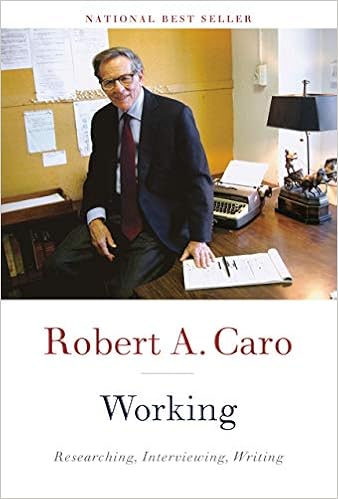
I ended the year listening to a standout memoir read by the author, Working by Robert Caro. Instead of aiming to tell the story of a life as he does in his biographies, this book focuses exclusively on Caro’s evolution and process as a writer. Caro the human being appears, but more as if seen through a window into what it takes for a person to live and work with absolute integrity. I found myself admiring him and his wife immensely.


 I chose to read Working because it was a writer’s memoir. Hearing Caro’s voice, his easygoing, conversational tone colored with a New York accent, as I walked the dog made me feel like he was joining me on the stroll. His stories captivated me. His outrage and his admiration became mine.

But it was the political world he had to navigate in order to write his enormous biographies of Robert Moses and Lyndon Johnson that brought me unexpected solace given the political climate today. I understood how he could have both empathy and even pity for these political giants whose accomplishments were overshadowed by their disregard for the ordinary people whose lives they carelessly destroyed. Moses, for example, exercised unchallenged power in his domain for 40 years, and yet he ultimately lost it all. And Johnson, who got so much landmark Civil Rights and social services legislation passed, didn’t even bother to run for a second term because of Vietnam.

What struck me again and again was how power became the point for players in the political arena and not the virtues or service, not the ideals of the republic, not the people themselves. When I hold the lens of the world of Caro’s research up to the political world today, I see less of a catastrophe and more of an ongoing battle that requires constant struggle. I see that I mistakenly thought fairness, justice, and progress had been woven into the system instead of being delicate stitchery easily torn without constant attention and care.

And of course, one avenue of that attention is exemplified by Caro himself. His unfailing rigor in researching and supporting every fact. His determination to make the people around the central figures and those far away but affected by their actions all come to life in the awful complexity of the social fabric. His clarity that writing matters.


 Susan diRende ran away from college and joined the circus at 20, where she learned how to step outside the boundaries just far enough to get a laugh. Ever since then, she has been writing, painting, performing, and directing with the goal of bringing about illumination and transformation through laughter. She has won awards as a playwright, screenwriter, filmmaker, and performer. A multilingual US/EU citizen, she currently is living the vagabond life with no fixed abode, chasing images and ideas wherever the impulse leads. Aqueduct Press published her novella, Unpronounceable, in 2016; it received a Special Citation for the Philip K. Dick Award. Earlier this year, her novelette "Knife Witch" appeared in The Cascadia Subduction Zone.

Wednesday, December 19, 2018

The Pleasures of Reading, Viewing, and Listenin in 2018, part 16: Susan diRende


Worldbuilding for This World and Others
by Susan diRende


 Worldbuilding has been on my mind, so I see it everywhere. Political pundits on talk shows. Advertisers on my Facebook feed. My sister.

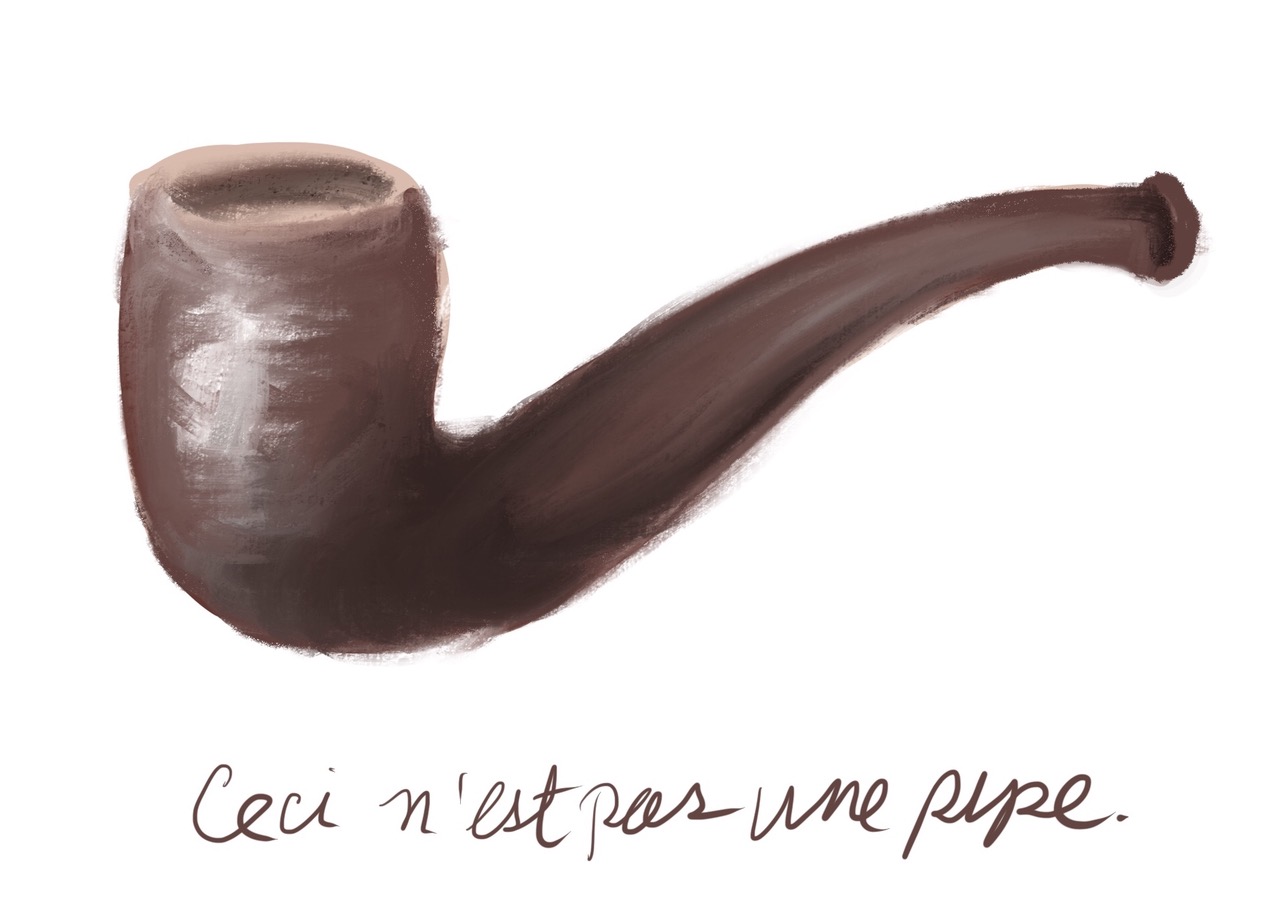
It seems everyone does it to some degree. I suspect that it is some fundamental process of mind, that the dog on the cushion across the room lives in a “world” that forms the foundation upon which he knows his place and how to act. If I made a scale of worldbuilding skill with the dog anchoring one end and with either theoretical physicists or the best speculative fiction writers on the other, most folks would end up much closer to the canine. Political animals in particular seem to create flat worlds just to fit ideologies and fall into the trap that Magritte’s The
Treachery of Images demonstrates. The 20th Century was filled with the horrors of ideology-driven states fueled by pre-internet mass communication. It may be that the 21st will grow such monstrosities exponentially. Which is why I think quality worldbuilding that illuminates minds to possibility rather than trapping them in certainty is desperately needed.

In my reading, I’ve come across ideas that have made me feel the same way I do when I see fireworks in the night sky. I don’t know if it will be the same for you, but if you’d like to check these suggestions out, I hope you’ll tell me. Maybe we can begin a dialogue, do some meta-worldbuilding. Or we could just have coffee.

1. Every Word is a Bird We Teach to Sing by Daniel Tammet

The beginning of this book describes the author’s journey into understanding language the way the rest of humanity does. Words carved  paths entirely through his brain, connecting with areas ours cannot and skipping over what most of us recognize as meaning in places. Here was a fellow human with all the same senses who revealed to me how shallow and prosaic every concept I had had of an alien mind really was. NOTE: I highly suggest listening to the audiobook read by the author. It multiplied my understanding to hear him talk about what the world looked like from inside his head.


2 .You Are Not So Smart by David McRaney; Thinking: Fast and Slow by Daniel Kahneman; The Undoing Project by Michael Lewis

I’ve been fascinated by the ways the mind fools you, and while you might think of these books as giving insight to character, the fact that the unconscious mind not only hides reality from our conscious mind but manages to erase the traces of its treachery all in the name of maintaining our psychological equilibrium and physical energy reserves. If you like your nonfiction light and fun, I can recommend again David McRainey’s You Are Not So Smart. But if you want more substance, the ideas in Nobel Prize winner Daniel Kahaneman’s book, Thinking: Fast and Slow has become a mainstay of psychological thought. If you prefer your science embedded in stories about people, the book The Undoing Project talks about Kahneman and his partner, Amos Tversky, as they upended the foundations of psychological study back in the 1970s.


3. The Shipwrecked Mind by Mark Lilla; Suspicious Minds by Rob Brotherton

If you have a political bent and want to find a way to address the current rise of fundamentalism in works, these books offer some fascinating perspective. The introduction to The Shipwrecked Mind lays out an interesting way to look at the contrasting revolutionary and reactionary worldviews that underpin socio-political movements. If nothing else, it’s a fresh perspective on what we’re facing in the world today. And, if I may conjecture that folks writing in this genre belong mostly to the group who see change and progress as the direction of history, his focus on examining the reactionary power as an equal and not lesser force is something we should understand rather than dismiss out of hand.

In Suspicious Minds, Rob Brotherton looks at how the human mind is overtaken by conspiracy thinking and how being conspiracy minded colors your view of every event.


4. Seven Brief Lessons on Physics by Carlo Ravelli


If you’re more inclined toward the science side of speculative fiction, this book is a must if you haven’t already read it. Actually, I enjoy all of Rovelli’s books, and this one is a quick and easy introduction to the outer horizon of what science currently understands in seven discrete areas of inquiry, setting you free to work within or speculate beyond.


 Susan diRende ran away from college and joined the circus at 20, where she learned how to step outside the boundaries just far enough to get a laugh. Ever since then, she has been writing, painting, performing, and directing with the goal of bringing about illumination and transformation through laughter. She has won awards as a playwright, screenwriter, filmmaker, and performer. A multilingual US/EU citizen, she currently is living the vagabond life with no fixed abode, chasing images and ideas wherever the impulse leads. Aqueduct Press published her novella, Unpronounceable, in 2016; it received a Special Citation for the Philip K. Dick Award.