Friday, December 29, 2017

The Pleasures of Reading, Viewing, and Listening in 2017, pt. 22: Jackie Hatton


The Power of Reading, Viewing and Listening
 by Jackie Hatton


2017 was a sad year for me. I lost three very good men who were central to my life, my family, my history. It made no sense. It made me angry. It made me numb. Every book I read tasted like cardboard. Every song reeked of cheap sentiment. Television series and movies all felt too glossy, contrived. I was bereft of my usual comforts and pleasures. 

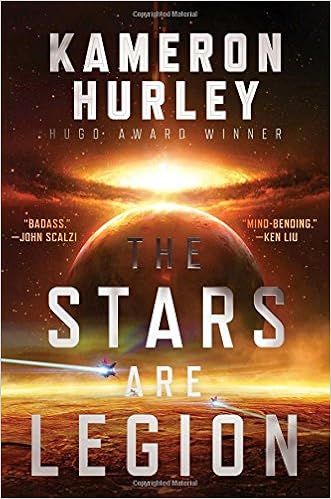
Then along came The Stars are Legion.  I don’t think I need to describe this book — Kameron Hurley has rightly won prizes and plaudits and widespread recognition for her all-female space opera. I don’t want to talk too much about the politics of the work either — Hurley’s exploration of the relationship between power, sex and violence was interesting but not entirely unexpected. Her philosophical contemplations ran deeper — the concept of total recycling and women giving birth to parts of a world was perfect fictional musing for the existentialist in all of us — but that was still not what hooked me on this work. What I really loved was the way that Hurley’s powerful evocation of emotion under pressure — anger, despair, passion, compassion — managed to budge my frozen heart and blow out the cobwebs settling into my mind.

Suddenly I could feel and think again.  Women fighting futile and inexplicable battles against enemies they don’t fully understand, in the name of misguided ideologies and loyalties, for the sake of saving a world that is randomly cruel and falling apart anyway. Death on every page, death of the body, death of the planet, death of dreams, death of relationships. Talk about parallels with absolutely everything. I stayed awake at nights for a week completing this book. I was of course awaiting some kind of pay off — rebirth, realization, hope — and luckily I got it. This is a book that has strangely helped me to accept and process the inevitable cycle of life.

At around the same time that I completed The Stars are Legion I finally found something that was emotionally, politically, and philosophically compelling to view as well. After spending too much time bingeing on Netflix series that feel generic to me — too slick, too many hooks, no true end in sight, just a never-ending bag of glossy tricks that didn’t satisfy — I discovered a BBC1 (UK) box-set of a six-part drama series called Broken.  This is the story of a flawed (but decent) Catholic priest who is struggling with his faith as he attempts to help parishioners in one of the poorest of northern neighborhoods. There is a single mother struggling both to make ends and to curb her temper, there is a woman with a humiliating secret planning suicide, there is a mother seeking justice for her mentally ill son, shot dead by the police, and there is the policeman struggling with his conscience. Those are just the main characters. Every single person on screen matters in this drama — every single human interaction reveals a little something about the nature of our endless human struggle with forces both without and within. Television drama used to be like this — writ on a smaller scale, digging deeper, speaking to things we know or want to know, giving us pause rather than cheap distraction. Written by one of the keenest observers of the English class system — Jimmy McGovern — and with a cast led by Sean Bean and Anna Friel I cannot recommend Broken highly enough. It is not a Netflix series. You will have to work a little harder to get it, same as you will have to work a little harder to watch it, but I like to think that you will feel better for it. I did. I felt genuinely uplifted by it.

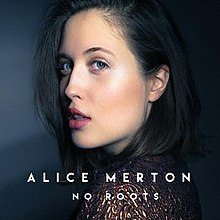
In a year filled with bitter-sweet memories I sought out new, not old music. No endless replays of David Bowie and Tom Petty for me.  Instead I looked for music that would not remind me of anything, music that would take me elsewhere. Shazam helped. I would sit in bars and cafes, point my phone at the speaker and discover new tracks. This is how I found Alice Merton, a German-Irish singer-song writer, who sounds more like Sia than Sinead. Her debut single, No Roots, is a brightly soulful number that will have your shoulders dancing in spite of yourself. In a year when I had no choice but to confront the practical and emotional consequences of a nomadic life this song spoke to my soul.  Rather than choose to be sad about her own lack of deep geographic roots, Merton embraces a life in motion. No Roots is a song of honesty, reflection and acceptance. It is my song of 2017.

Happy New Year, Fellow Aqueductistas.


Jackie Hatton was born in Australia and lives in Amsterdam. She spent a glorious girlhood in Tasmania, came of age in the suburbs of Melbourne, became her own person at Melbourne University, then jumped at the opportunity to move to the US for graduate school. She was taught by a long series of strong-minded women who encouraged her in many different ways and to whom she is permanently indebted. After completing her Ph.D. in American Women's History at Cornell University she has done many different things, most of which fall under the rubric of "pen-for-hire." Aqueduct Press published her novel Flesh & Wires. You can find her at www.jackiehatton.net.


Thursday, December 28, 2017

The Pleasures of Reading, Viewing, and Listening in 2017, pt. 21: Carrie Devall


Pleasures of 2017
by Carrie Devall


This has been a very long and yet very short year. I did a lot of reading but much was for work, or to understand how this particular sociopolitical moment came to fruition. I watched a lot of bad TV, dubbed, to improve my Spanish for work. However, the bright spots shone that much more brightly this year.

One fiction series that I read to bookend the year was Binti and it's sequel, by Nnedi Okorafor.  I picked Binti up because it was short, not realizing the compressed story would pack such a wallop.  I am not a big fan of first contact and alien communication stories, until I read one that hits home.  Binti did this, dense in the best science fictional sense, and full of possibilty despite horrific perils.  The sequel, Binti: Home, went off in a different direction but did not let up on either possibility or realistic jeopardy.

I reread Malka Older's Infomocracy in anticipation of the sequel coming out in September, to be able to pay more attention to the worldbuilding and political details.  I was glad I did, though in both readings it took me a long time to get into the story while commute-reading in short stints.  This was also true of Null States, the sequel.  

However, each story started moving along, in worlds rich in both small details and political intrigue.  Whenever anyone says they wish someone would write a story about what comes next after this political chaos/standoff, I say, "Read Malka Older." The intriguing concept of microdemocracy and its up and down sides are illustrated with a variety of characters spread across some very different settings.

I spent a lot of 2017 immersed in Finnish language and cultural products, spurred on by the idea of another truly world Worldcon and by my ongoing infatuation with Finnish and Estonian literature.  Briefly, in August, I got to spend a week immersed in the real deal, attending my first Worldcon and hiking around Helsinki, nearby Nuuksio National Park, and neighboring Tallinn, Estonia.

We saw lots of cool sights, but the highlight of the sightseeing was the chance to experience extensive and affordable public transit while the Minnesota legislature was trying to defund our city transit.  Other highlights of Helsinki were old buildings and finding lots of good vegan food thanks to foodies, fads, and Nepali refugees.  We had an interesting conversation about American politics with guys who ran one Nepalese restaurant, after they graciously let us eat and run at closing time.  We discussed tasty recipes across the language barrier at a fancy Finnish local foods vegan restaurant in off hours. I made some people laugh with me about my very limited Finnish abilities, and fooled a few people until I became quickly tongue-tied.  We discovered the Gandhi-inspired Vegan Inspiratsioon nestled amidst the graffitied medieval towers and churches.
 
A highlight of Worldcon 75 was the many translation and world sff panels at the con, though they filled up quickly.  The chance to attend multiple panels with Johanna Sinisalo talking and reading her work in both Finnish and English was the main reason I saved up for this trip. I was not disappointed. I learned a lot about many of the more obscure-to-a-non-Finn references and weirder aspects of her novels. The Iron Sky sequel trailer was an unexpected pleasure.

Many of the Worldcon panels are posted on YouTube. I spent a lazy weekend watching these and have to recommend the interviews with Johanna Sinisalo and Nalo Hopkinson, for starters. Scott Edelman also did an in-depth interview of Johanna Sinisalo for his Eating the Fantastic podcast, along with many other interviews of a great selection of writers.  He asks good questions.

Not to be a broken record, but I got the chance to see many Finnish films and listen to Finnish folk music this year thanks to Suomi 100 events, for the 100th year of Finnish independence. Finnfest was in Minnesota this year.  I went to see a coworker rock on the mandolin along with some very talented musicians playing traditional instruments like the kantele. (We also got to meet the 'true' Santa, but the record 90+ degree September heat was too much for his reindeer.) The films I saw were all quite good, with an often subtle and sly sense of humor and humanism that were appreciated by the Minnesota audiences.  

Probably the best was Love and Fury (Syysprinssi, 2016, directed by Alli Haapasalo and shown at Finnfest). It did a good job of conveying a sense of 80s art/lit and political scenes and their oppositional style.  I liked how the 80s was evoked by ideas, not pop music or clothes, though these were not absent. The film seemed at first (and from the trailer) to be a study of a flashy, narcissistic, and well-funded male writer and his mental struggles.  However, the quiet but solid spine of the story was a woman writer just doing her work, finding her voice despite him, and persisting despite limited support.
 

A film from this year's MSPIFF that really stood out from a strong field was Sami Blood (Sameblod), a film about Sweden's treatment of the Sami people set in the 1930s, the debut film by Sami writer/director Amanda Kernel. I was curious how the film would affect the mostly Swedish-American audience. The festival often plays broad comedies as their Swedish films. The great acting and the heartbreaking, intimate story of a defiant young woman full of thwarted desires seemed to move everyone.

Another great movie was Signature Move, by writer/director Jennifer Reeder, I think also her debut.  This was in English, Urdu, and Spanish, a fun lesbian romance centered around semiprofessional wrestling. There was a pretty thick layer of familiar cheese around the cross-cultural misunderstandings and mother-daughter conflict, but it worked.
 

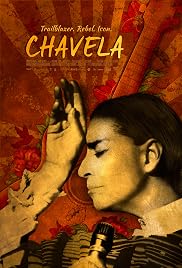
A winning documentary was Chavela, by Catherine Gund and Daresha Kyl, about singer Chavela Vargas. I had not known that she was originally from Costa Rica, and knew her mainly as one of Frida Kahlo's more dramatic lovers.  She was popular first in Mexico, but alcohol took its toll.  The film spends a long time on her later life and the Spanish revival of her career. It is worth seeing for the music alone.

Some other things that lightened 2017 a little were the ever stranger but delicious forms of vegan cheese my girlfriend learned to make. I also read a lot of vegan cookbooks, to keep up.  The most original and least repetitive were Street Vegan: Recipes and Dispatches from The Cinnamon Snail Food Truck, by Adam Sobel, and But I Could Never Go Vegan! by Kristy Turner.  The spicy sandwiches in the Street Vegan and the cheeses in the Turner book are winners.

Catherine Lundoff did me a big favor by making me get off my duff on a work night to go see Cleve Jones speak at the Quatrefoil Library. It was in the middle of a long week spent thinking about and working virtually in Puerto Rico, but he was engaging and inspiring. He answered questions about his book When We Rise.  He covered a lot of ground, including being a gay teen in Indiana, running off to San Francisco, working with Harvey Milk, the Quilt Project, and his ongoing union organizing.  The admonitions that every victory is temporary, it can be done, and keep fighting are still ringing in my ears.

The French film Beats Per Minute ( 120 battements par minute), directed by Robin Campillo, was a good look at a non-New York ACT UP.  It reminded me a lot of ACT UP Boston and San Francisco and conveyed the sense of urgency, improvisation, and found community I remember. It took time to get into the arguments about tactics and the ethics and effectiveness of insider strategies that various documentaries have also explored.

Another book about organizing and community that I spent a lot of time thinking about after reading it was Sarah Schulman's latest nonfiction book Conflict Is Not Abuse.  She builds on her prior nonfiction writing and draws on her experience in a range of social movements to discuss effective and destructive strategies for ending abusive behavior without relying on police and the legal and penal systems. It's not the first discussion of these issues, but she draws on her unique points of insight and personal experience.

I read that after a very different discussion of recent social movement praxis and ethics, Jonathan Smuckers' Hegemony How-To: A Handbook for Radicals. Neither of these books said things that were news to me, after years in the same and similar groups and observing what has worked and backfired for others. But I liked how they were both rigorous and forthright in examining mistakes and detrimental assumptions the groups they were in had made.

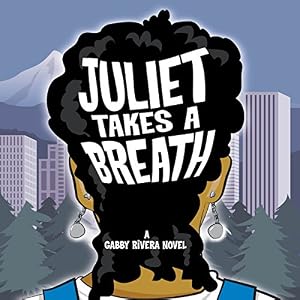
I picked up Juliet Takes a Breath by Gabby Rivera (Riverdale Ave Books) because of the cover art by Kristy Road and the catchy blurb. It turned out to be a fun and thoughtful story about a young woman from the Bronx going to Portland, OR, for a summer internship with a new-agey white woman who inspired her with a body positive manifesto.  She wrestles with the contradictions in various mentors' personal political theories and the differences in their actions, forging her own way and pursuing a sweet, sexy romance.

Carmen Maria Machado's collection, Her Body and Other Parties is the kind of short story collection you want to hate because everyone says it is a must-read to the point it seems overhyped, but then you read it and can't avoid doing the same thing.

Murder on the Red River by Marcie Rendon, a local author, is a Minnesota mystery in a familiar vein but explores the protagonist's experiences in the foster care system and the legacy of Minnesota's removal of native children from their parents.

Lucy Jane Bledsoe's latest novel, A Thin Bright Line, fictionalizes and extrapolates from what she learned about her aunt, who died in a fire. The protagonist lucks into a job working for a visionary scientist who is extracting the first-ever polar ice cores and explores various lesbian communities of the Cold War era.

Finally, I appreciated the detailed history of how various public lands and national parks came to be found in the 2005 memoir of Mike McCloskey, In the Thick of It: My Life in the Sierra Club.  As a young lawyer, he became the first field organizer of the Sierra Club, in the days before the Club became a direct mail behemoth. It was a timely read, as much of this legacy is under threat of dismantling, road building, toxic resource extraction, and other destructive uses. I also learned some new inside dirt on my uncle's longstanding environmental movement gripes and antipathies.  

As my uncle would say, the challenge is to Think Like a Mountain. But also, to win when necessary.  Here's to 2018.

Carrie Devall writes from Minneapolis, MN, where it rains a lot thanks to global warming.

Wednesday, December 27, 2017

The Pleasures of Reading, Viewing, and Listening in 2017, pt. 20: Kristin King


Escapism, 2017 Style
by Kristin King 


So 2017 will go down in U.S. history as a dumpster fire. A significant portion of our voting populace decided that our problems were just too hard and too confusing -- easier just to light everything on fire. There’s been quite enough horror and tragedy in real life (oh, and by the way, #metoo), so I’ve looked for lighter fare in my fiction. 

Here are some of the books and shows that helped me get through the year. 

The Adventure of the Incognita Countess by Cynthia Ward 

This is escapism of the best sort, a pulpy mashup full of excitement, espionage, and romance. Lucy Harker, the daughter of Dracula, has come onboard the Titanic on a mission to guard the plans for the Nautilus, but is sidetracked by a romance with a mysterious countess.  More, please.

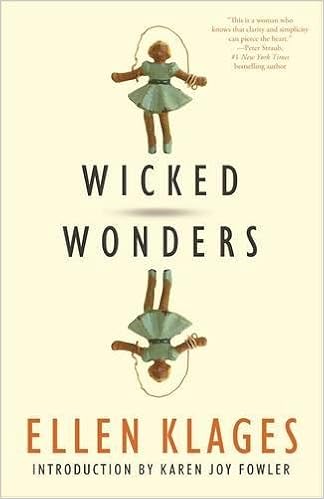
Wicked Wonders by Ellen Klages 


Klages is always a joy to read. Her works reflect a positive outlook on life -- generally -- but the reader is never safe. I winced all the way through the magician story “Hey Presto,” not knowing who would survive the on-stage trickery, rooted for the evil stepmother in “The Education of a Witch,” and so enjoyed the hilarious “Mrs. Zeno’s Paradox” that I read it out loud to anyone who would listen.
The Clover Twig series by Kaye Umansky  (Clover Twig and the Magical Cottage and Clover Twig and the Perilous Path

This children’s series takes a sensible, orderly young girl and puts her to work in a witch’s house, filled with messes waiting to happen, cupboards you must never open and potions you must never take, alongside an accident-prone boy. It’s fun and exciting, with delicious prose. I especially enjoyed the cat, who acquired the ability to speak while remaining decidedly feline. 

Green Grass, Running Water by Thomas King

This brilliant and funny novel by part Cherokee author Thomas King is impossible to describe. A satirical Western? A Native treatment of white mythology? A trickster road trip novel? Three “old Indians” have run off from a nursing home, and somewhere along the way they take on the names Lone Ranger, Ishmael, Robinson Crusoe, and Hawkeye. The novel ranges from sly satiricism to outright comedy, leading up to a convoluted Columbus Day pun. But this novel is also as serious as it is funny, with strong characters struggling with life and identity both on and off a Blackfoot reservation, at the unveiling of a great big -- and very profitable -- dam. 


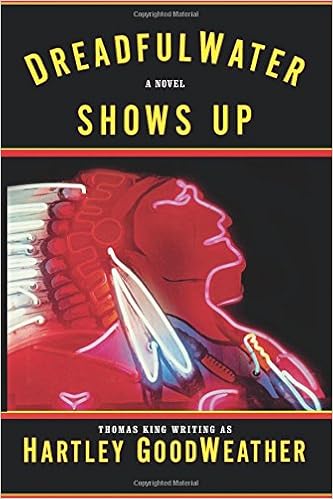
Dreadful Water Shows Up by Hartley GoodWeather 

In this novel, Thomas King, writing as Hartley GoodWeather, takes a well-drawn protagonist through an illicit investigation of a murder that mars the opening of a controversial -- and very profitable -- casino. It’s a good send-up of the hard-boiled detective novel, but like Green Grass, Running Water, it tempers the wit with emotional depth. My favorite moment is when the protagonist, Dreadful Water, encounters a crying woman and processes his own grief while trying to comfort her, and I get an insight into human nature I’ve never seen before. Dreadful Water notes that he’s never understood why women think crying makes you feel better, where in his experience, it’s always made him feel worse. That was a lovely way to turn a stereotype on its head. 

Soap

With the passing of Robert Guillaume, I revisited an old favorite from my childhood. In a weekly bonding moment, our family used to watch Soap on a TV channel we could barely receive, listening intently through the snow for the next joke. Now I’m watching it with my own, teenage kids. It’s been a hit but I’ve had some serious explaining to do, especially when faced with the rape jokes and the severe homophobia that surrounds the character of Jodie. 

Jodie was one of the first homosexual characters to be portrayed sympathetically on television, as a real person rather than a caricature, and kudos to Billy Crystal for risking his career by taking this part.  Many of the jokes are offensive, but it helps to remember that this was a no-holds barred show that exploited a wide range cultural insecurities.  

Benson, the black butler played by Robert Guillaume, is a force of nature and hilarious from the first episode, where he stands up to his sleazy boss, Mr. Tate, with a combination of outright defiance, feigned ignorance, pointed glances at the camera, oblique references to racism, perfect timing, and wit. Later in the season (episode 16, to be precise), a Nazi detective comes around to bully and intimidate the family, but Benson cuts him short with biting wit . . . and the willingness to sacrifice the family’s strawberry shortcake. 

In other words, Benson was antifa before it was cool. 

Doctor Who Series 10 

This was a relatively light series, especially after all the death, horror, and drama of Series 9, and Peter Capaldi got to settle into more humor, alongside a witty-and self-possessed companion.  
Actress Pearl Mackie, as Bill, broke onto screen with a big splash in her first trailer, asking newbie questions with a comic wittiness. (Why do the Daleks have a sucker? Why do they say “Exterminate” and not just “Kill”?) 

One of my favorite moments is when another character catches her talking to herself and she neither denies it or calls herself “crazy.” She explains that she was having a conversation with her mother, who had died when she was young, and she frankly admits that she does it regularly, like it’s a perfectly healthy thing to do. Which it is.  

In another fine moment, she comes to the conclusion that the Doctor has taken the wrong side. (He was playacting at totalitarianism.) Disappointed but practical, she points a gun at him and pulls the trigger. No hand-wringing or hero worship here. She is purely her own self, with her own story arc, and it’s marvelous. 


Kristin King (http://kristinking.wordpress.com) is a writer, parent, and activist who lives in Seattle. Her work has appeared in Strange Horizons, Calyx, The Pushcart Prize XXII (1998), and other places. Two of her stories appeared in an Aqueduct Press anthology, Missing Links and Secret Histories: A Selection of Wikipedia Entries Lost, Suppressed, or Misplaced in Time. A selection of her short fiction has been collected in Misfits from the Beehive State.

Tuesday, December 26, 2017

The Pleasures of Reading, Viewing, and Listening in 2017, pt. 19: Mark Rich


Readings and Re-Readings, 2017
by Mark Rich 


After writing this sonnet in mid-June, I saw it could take a through-all-seasons title: "Frost in the Rain." I may have it in finished form, now:

There sat out in the rain those all: at least
the blurb avers the poems are complete
in that one volume. I am no aesthete
concerning paperbacks, when they hold yeast

for daily bread; and this one I had taken
with me gardening on days before;
over its loosened page-leafs would I pour,
between tasks. Open, it sat, less forsaken

than forgotten, out that Sunday late
while I, abed, still heard Frost sing of flowers,
grass, and trees. Then Monday's early hours
brought wet leaves to eyes closed with dream's weight.
So I closed poems rippled by rain showers
leaf-press tight. Not that Frost lines go straight.

If you consider that a leaf-press is a tool to help memory, preserving spring or autumn leaves past their living vibrancy, then you understand the closing lines as not only factual, even if I tell you that at the time the facts in the incident compelled the poem; they gave the impetus that set the sounds into motion. I see this myself, now, almost exactly six months after waking with the thought arising in me of my forgetfulness, to be followed by the idea of the leaf press.

Sounds rolling into motion roll differently than Toad's "poetry of motion" in The Wind in the Willows. By reading Robert Frost, though, I was venturing a little into the Wide World that lies beyond the Wild Wood -- while, I hope, still burrowing into the homey comforts genially possessed and guarded by Mole and Rat. I was venturing toward a larger commonality with a will, or at least with a will greater than the whimsyish will that took me away from the true child and toward the illusory adult. I wonder if Kenneth Grahame ever ceased to be the true child, in some chamber in his heart, after he moved into the Wide World. I wonder this because if you ever have lost the true child then you will find that Grahame can make you cry. If, that is, you have saved some tears through the years.

In reading Ursula Le Guin not long ago I sensed a correspondence in this: "As a boy, Ogion like all boys thought it would be a very pleasant game to take by art-magic whatever shape one liked ... But as a wizard he had learned the price of the game, which is the peril of losing one's self, playing away the truth. The longer a man stays in a form not his own, the greater this peril." If Le Guin is on-mark then the loss begins with the child even as a child; and with this Mark she must be on, to take the example of the very book which holds this thought. For when young I could read The Left Hand of Darkness and talk a bit about it with the one friend who also read it. Left Hand as I recall had a non-objective or non-realist book-club cover. With my mind's eye I see a Richard Powers evocation in wispy forms, maybe because his wisps, tangles, and Giacometti forms told me that a book might be worth reading. Le Guin's Earthsea novels, which I saw at bookshops -- my older sister Beth may even have had copies -- had covers with grayly fanciful evocations suggesting magic and sporting dragons. They reflected an intentionally youthful aesthetic somehow different from, say, the self-consciously stylized paintings and framing designs on the Modern Fantasy series from Ballantine Books, whose covers I could and did open, in the 1970s. The Earthsea covers told me that those books were not for me. I was too old, you see. My teen years found me with a lopsided arrogance already -- not quite as severe as that of Le Guin's character Ged -- as though I had lacked the time to finish growing to be a child.

I went lopsided even at that time into Frost's poems -- being little different from most readers in the later Twentieth, in that regard. Yet a note in Frost remained one that I could ear, even so; and just as the note to be heard in Le Guin has brought me to begin her "juveniles" (I am, after all, old enough now to read Kenneth Grahame), the note in Frost led me two years ago to delve with a will into his works as a whole. Oddly, I have yet to finish even a first reading of the book I left out to be rained upon, due to the habit I worked to develop of memorizing his poems, with the hope that some would find a place in permanent memory. I suspected that I would continue failing to understand Frost if not myself living with his poems in memory; and my gardening sessions, despite neighbors' habits and addictions involving power machines, brought me to recognize his symbolist nature and his consistency in language, accent, and symbol. Nearly knowing -- I remain at that point, of nearly knowing -- his first book, of 1913, I became quite curious about his way of thinking. Fortuitously, in a package of family books that my mother sent, a fat volume of Frost's poetry and prose appeared. As with many objects of childhood I have no recollection that it was there on some shelf -- although its eye-dulling cover makes me wonder how even now I could notice so large an invisible thing.

I have just finished my second, more careful reading of that book's prose portion. What I find there might have been invisible to me as a child, too -- even though I was reading about poetry already, by my junior-high years, no doubt from the pleasures to be had in going about lopsided. In one late prose introduction, in any case, Frost wrote of assembling his first book -- whose title of a sudden now has luminance: A Boy's Will. "The interest, the pastime," he wrote, "was to learn if there had been any divinity shaping my ends and I had been building better than I knew." In other pieces it becomes evident that he seized on this "pastime" well after feeling he had lost a most important part of his being. He felt he had lost the poet in himself.

Characters would lose themselves in entirety, seemingly, through the Modern years, only to emerge into a new humanistic state or situation -- a state or situation which, it is revealed, already was there, if concealed by art or artifice. Such is Jim's situation in The Adventures of Huckleberry Finn, in which Tom Sawyer and Huck can free Jim because Jim already is free. I may have read this novel in high school, since I remember doing so -- but can only think how inadequate that reading must have been, since I know my new reading of it was inconsistently awake. I happened to undertake its enjoyment, by accident, just before picking up Harriet Beecher Stowe's most famous novel, in which the only free character seems to be Uncle Tom, who dies with that freedom intact: for he is free in the sense that Viktor Frankl would discover while in a German deathcamp, less than a century later. Stowe may have had a moment akin to the one I have just encountered in Le Guin, in which her priestess character Alha, immersed in the darkness of a cavern she has come to know and perhaps to love for that very quality, sees that darkness briefly dispelled -- "by glory." Even before I came to see what Stowe was attempting I found the thought growing upon me that Hemingway's judgment that Modern American novels found their source in Huckleberry Finn gives but half of a quite possibly accurate observation, with the other half being Uncle Tom's Cabin, which offers a structure to be embraced by best-seller novelists to follow Stowe entangled with a Christianity that was trying vainly to either fully close or fully open its old, peering Puritan eyes.

A book written earlier, Richard Henry Dana, Jr.,'s Two Years Before the Mast, as a sea-journey gives intimations of Twain's and Stowe's down-river journeys. An astonishing work, I found early this year that it nearly crushes the reader with its combined factuality and humanism. The image of Dana in the ship's hold, in utter darkness, pacing and reciting to himself remembered poems by Cowper, has come to me often. His is the soul imprisoned within a system from which physical escape, as it is for Uncle Tom, is impossible.

At this, a passage comes to mind from Yoshiko Uchida's Desert Exile: The Uprooting of a Japanese Family, in which women attempt ruses to find privacy in a hastily constructed, drafty internment camp during World War II -- not for privacy itself, in a situation of tightly packed, displaced humanity, but for the sake of their poetry. In A Flower Does Not Talk, a book I read with pleasure and have kept revisiting, Zenkei Shibayama says that human freedom is creativity. I cannot help but think that Dana's pacing in the darkness, reciting Cowper, was an inner, creative response that, since it appeared in his monumental book, helped improve conditions for others such as he had been, trapped within society's machine, beyond whose hull the Wide World's implacable ocean rolled.

I suppose something in me -- maybe even "that small inquiring something which all animals carry inside them," in Grahame -- is saying that I am stretching for freedom, in mumbling poems, written by my hand or by another's, while out in the garden maintaining a vague order, not to mention growing food. Yet I tend to view it instead as another step in the process I call by the ear-dulling name of returning to basics -- a return to that which already I am, to that which never ceased to be -- as Shibayama might have put it -- within the illusory self that shape-changing left me to seem.

I found time to write this today because it has been snowing, with the snow meaning I am staying off the roof where I had planned to pass some time on remaining tasks. While I hired an Amish roofer, Ben, for this project, so often have I found myself in the position of being a helper that I know enough to finish some of his unfinished tasks -- which, at a time when new snow is falling on new metal, are mercifully few in number. Martha and I have been not without a roof over our heads, these recent years, but rather with a leaking one -- which statement you may take for its expressed or implied meaning, or both. I chose to remedy the situation with Amish help, not knowing that all the attendant tasks besides the support work would keep me at least as busy as the gardening and antiquing had, in the summer -- with the difference that my work on Frost has slowed. When on ladder or sloping roof I focus on a different balance in my life.

One noon, though, on a balmy day in November, in the lower forties, I was sitting with Ben and his excellent occasional helper, Joe. While eating, Ben and I discovered we had both read Huckleberry Finn this year. We talked about it, with Ben relating incidents from the novel and several times saying, "I laughed so hard!" Joe's eyes widened at times, as when I reminded Ben (for we tended to recall different aspects) Tom's getting shot all because of his make-believe exploit at the end. "I laughed so hard!" said Ben again, so that I envied him the true child he possessed despite being able to handle a sixteen-foot sheet of metal while atop our steep, more-than-a-century-old roof. We went on to Tom Sawyer ("I laughed so hard!") and then back to work, with me having some tears to blur matters. Maybe I had been laughing over Twain, there over our picnic fare. And maybe I had been recognizing something, or someone, that or whom I had missed.-- December 11, 2017


Mark Rich had a syllabic sonnet in the spring issue of Poem and has a traditional one in the just-published fall issue, after not having had a poem in Poem for twenty years. His story "And Fountains Flow" appears in Shadows & Reflections, the new Roger Zelazny tribute anthology. With partner-in-life Martha Borchardt and two Scotties-in-life he lives in Cashton, Wisconsin, and gardens, shovels snow, still reads Bach daily, and remains faithfully behind in his book revisions.

Monday, December 25, 2017

The Pleasures of Reading, Viewing, and Listening in 2017, pt. 18: Karen Heuler


The Year 2017, and the Madness of Men
by Karen Heuler


It’s a strange coincidence that this was the year I watched Mad Men. I didn’t see the show when it first aired, and to be honest, I watched the first couple of episodes a few years ago and decided I didn’t want to live through that crap again. That hungry, leering, supercilious, offensive era.

But I went back and tried again, and I’m glad I did. I started every day by reading about what rights had been removed/were about to be removed by the current administration and what fights were going on over things that were—flip side—starting to be covered in the background in Mad Men. Most of my watching coincided with the #MeToo movement, which also prompted mixed reactions in me. Was there a danger that the accounts of (relatively) minor infractions would dilute the awful experiences so many of us dealt with –mostly silently, mostly with an eye to survival? I finally gave in and did my own #MeToo, and while I don’t regret it, I’m not sure it will matter long-term. I’m not great at reading social media or movements, but almost everything I’ve lived through has its own backlash waiting to be born. And I think it may be starting off by creating the wrong casualties. Roy Moore almost got elected because it doesn’t matter to that kind of men what other men do. I think offending women did matter to Al Franken, and I regret his loss.

So Mad Men and #MeToo had my attention together. Don Draper is a horn dog, but the men around him, especially in the beginning, are caricatures of men, the ogling, tongue-hanging-out, despicable men. These are the ones I recognize, the ones I’ve worked with in various guises. I love, with all my heart, Joan and Peggy for fighting through these men and past these men and creating their own lives, their own integrity, because in fact the integrity of women has largely been the province of men.

In watching Mad Men, it’s obvious that men have only ever had their eyes on other men. All that office camaraderie, the drinking, boasting, evaluating, choosing, picking up “dates”—all of that was measured in the eyes of the other men. Of course we know that value has nothing to do with women, but what seemed obvious to me (and is reflected in today's vile things) is how the men determine value by anticipating what the other men will see as value.

But Don Draper has an appeal—not necessarily the bad boy aura, but the wounded hero aura. He’s searching for something, and he’s recovering from something. He can’t be satisfied even as he tries to be satisfied. He has a completely selfish quest to find the woman he needs, who will fulfill him, and it’s all wrapped up in a story. He’s good at stories. In fact, all of Mad Men is about story—about finding the story that sells, about finding a woman whose story supports you, about always searching for the story that absolves you of all the misery you’ve inflicted on just about every woman who’s comes your way.

I like that this is all about story; I don’t like that the stories exist to excuse men and their actions. The male world is cars and tobacco and whiskey and whores—sensation without depth or meaning. The female world—bras, hosiery, feminine cigarettes—is laughable, dismissable, and not worthy of having a place on a man’s resume.

So much of what I read this year was all about politics, about the politics of men like Trump and Moore and Weinstein. That’s one story line. There’s another about #MeToo, about accountability, and I have no faith that this story line will prevail. Mad Men covered the 1960s to the 70s. There isn’t that much difference between that era and our era, not deep down. All final decisions are still male decisions, as far as I can see. The distance we’ve come since then is significant, but it’s still revocable. I fear for Roe v. Wade.


Karen Heuler’s stories have appeared in over 100 literary and speculative journals and anthologies, from Alaska Quarterly Review to Weird Tales. She’s won an O. Henry award, is frequently nominated for Pushcart and Best American Short Story awards, and has been a finalist for the Iowa Short Fiction award, the Bellwether Award, and the Shirley Jackson Award. Aqueduct Press has published her novella, In Search of Lost Time, and her collection, Other Places.