Sunday, January 4, 2015

The Pleasures of Reading, Viewing, and Listening in 2014, pt. 25: Veronica Schanoes


The Pleasures of 2014
by Veronica Schanoes

This year, I had it figured out.   I started keeping a log at the beginning of the year, and writing down everything I read/saw/heard that I enjoyed, on the off chance Timmi asked me to contribute at the end of the year.  How clever was that?  How marvelous was my foresight?  Look at my planning!
            I kept this list on my beloved netbook.  I saved it regularly.  Sometimes I would open it and pore over it, reveling in my forethought and cunning. 
            And then my toddler godson accidentally dumped a glass of sangria into my netbook.
            That was not the disaster it might have been, as I had backed up almost everything I’d written onto a flash drive, but I’d never bothered to back up the list of cultural pleasures because, well, it wasn’t creative writing and it wasn’t scholarship, so it wasn’t a big deal, so what the hell?
            The good people at Computer Overhauls tell me that it would cost more to repair the netbook than it would to buy a new computer.  Six months later, I’m typing this on my old MacBook, which no longer recognizes the battery and has to be rebooted every time my godson trips over the cord or I decide I’d rather sit on the couch with my best friend than by myself at the table.
            So yet again I found myself in the position of trying to figure out if I have actually read anything in 2014, or seen any shows, or heard any music.  Was the year a wasteland?  All I could remember are endless episodes of Dinosaur Train and Daniel Tiger.  After cudgeling my brain tirelessly, I managed to recall these items making an impression:

1)        Cabaret: At the last minute, a friend called me up with a spare VIP ticket to Alan Cumming in Cabaret on Broadway.  I had never seen any incarnation of the musical before.  We went to the old Studio 54 and were seated at a small table about six feet from the stage and given a complimentary bottle of champagne, which was all very well and good, and how every evening should begin, as far as I am concerned.  The production was simply devastating—not the story of the tedious young lovers, because who cares about them, but the story of Germany’s descent into Nazism, the knowledge of what’s going to happen to Herr Schultz, and the final scene highlighting the futility of trying to go along with fascism to get along.  I admit to being somewhat surprised at some audience reactions—the audience laughed along to and then audibly gasped at the final line of “If You Could See Her Through My Eyes,” the love song the MC sings to a gorilla: “She wouldn’t look Jewish at all.”  Really?  You were all shocked?  You didn’t know that was coming?  This is a musical about the rise to power of the Nazis.  Whom did you think the gorilla was standing in for?  Well, I am Jewish, and as my experience with the next entry in my list shows, my perspective is perhaps more specialized than I assume.  Alan Cumming was amazing as the seedy 40-year-old MC trying to pander to popular mood and those in power.  My ideal production would play up Cliff Bradshaw’s desire for other men somewhat more, but that’s a quibble about a production that brought tears to my eyes.

2)        Life After Life by Kate Atkinson – I have been a fan of Atkinson’s for about a decade now.  I loved the magic realism of some of her early novels, particularly Human Croquet, and I find some of the Jackson Brodie novels quite lyrical; they are what I think Douglas Adams’s holistic detective novels aspired to be.  This novel recounts the story of Ursula Todd, born in 1912, died…well, that’s the thing.  Ursula dies many times: at birth, at the seashore as a child, beaten to death by an abusive husband, and each time she begins again, making different decisions, with the vaguest awareness that something…strange is happening, a sort of déjà vu when she encounters turning points, creeping up on her.  In one life she murders Hitler in 1932; she herself is summarily killed by his flunkies, so we don’t see how that particular endeavor plays out (I’ve always been suspicious of this trope—were Mengele, Himmler, Goebbels, not also monsters?  But indeed there was such a fervent cult of personality around Hitler, perhaps this is a case of a man making history rather than the other way round.).  In another life, Ursula visits Germany in the early 1930s and marries a member of the Nazi party; she kills herself and her daughter after hearing rumors of the Red Army’s depredations as it heads toward Berlin.  It is of this life Atkinson speaks when, in an interview published along with my edition of the book, she says that it was important to include the experiences of German (presumably gentile) civilians because, after all, “they had it so much worse than us.”  And this is the sentence that brought me up short.  “Us?” I thought.  They had it worse than us?  And then I realized that her “us” was British civilians and I felt a chasm open up between my perspective on the second world war and Atkinson’s.  Never, when speaking of that time, would my “us” refer to, say, American civilians, though that is what I am.  My “us” would always be Jews, and that will always temper my sympathy for what German gentile civilians suffered at the hands of the Red Army.  There is no excuse for atrocities, particularly those directed at children, but for the adults, well—these were the people perfectly happy to cheer as people like me, their neighbors, were defamed, vilified, stripped of rights, shipped off, and tortured to death.  So, not to put too fine a point on it, fuck them.  That does not mean, of course, that I condone the rape and exploitation of, well, anybody, but it does mean that my capacity for sympathy in this case is limited.  It means that it would never cross my mind to say of the German gentile civilian population that they had it worse than us.  My “us” in this context will always be Jews.  And I don’t know if I have a right to that “us.”  My family had been in the US for a couple generations by World War 2.  My grandmother, born in this country, had exchanged letters with family back in Klevan until, well, until letters stopped coming back, but no family of mine closer than that suffered at the hands of the Nazis.  But.  I know what the Nazis did in the towns my great grandparents emigrated from, and I know what they would have been only too happy to do to me and mine if they never had emigrated (well, without emigration, I wouldn’t have existed as my mother and father would never have met), and I use that “us” anyway.   I have rarely felt more alienated from a writer I loved than when I read that statement of Atkinson’s, and realized that in no life did Ursula Todd marry a German Jew; apparently Atkinson did not feel it important for her to explore those events.  It was a profound experience for me, even if not the one Atkinson had envisioned.
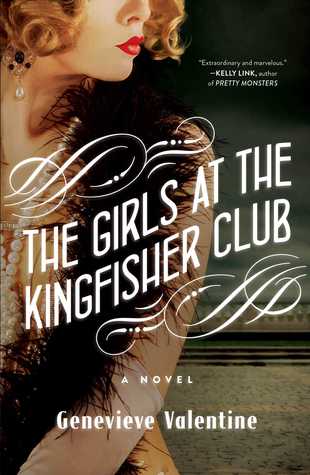
3)        The Girls at the Kingfisher Club by Genevieve Valentine – It was not all Nazis all the time for me in 2014.  This was the year that Genevieve Valentine’s novel resetting the fairy tale of the twelve dancing princesses in the speakeasies of Prohibition-era NYC (full disclosure: Valentine is a good friend of mine; I still love this book).  I read an early version a few years back and the manuscript made my “best of” the year list.  The published version is even better, the characters more finely drawn, their relationships more affecting and complex.  I only wished there had been more of the book!  The relationship between the two oldest sisters was one that I really hadn’t gotten when I read the manuscript, but it was a particularly poignant element of the finished novel.  It’s a story that deserves visual representation of the flashing dresses, lipsticked smiles, tapping shoes, smoky speakeasies, perhaps in cinematic form, perhaps in comic book form (Valentine is currently writing Catwoman for DC).  And Valentine writes an excellent adult protagonist—Jo, the oldest sister, is decidedly not 16 or 18 or 22.  She’s in her late 20s, and she feels older.  Trauma will do that to a person.  I recommended the novel before and I recommend it now.  And hey, now you can read it!

4)        A Face Like Glass by Frances Hardinge – Hardinge is my favorite living children’s literature writer, and I don my official mortarboard of authority to say so (my academic field of specialty is officially children’s literature).  But this book took me a little while longer to get into than usual; I don’t know that it had anything to do with the book, though I kept bouncing off the central conceit, which is that in the underground world of Caverna, where artisans make dangerous cheeses, wines that wipe and restore memory, and perfumes that compel behavior, children do not naturally mimic facial expressions.  All such expressions have to be purposely studied and acquired, and facesmiths are responsible for creating and teaching the faces, as well as setting the styles for faces.  Drudges, or the working class, learn only a few, while aristocrats have vast wardrobes of faces.  Into this world falls a girl from the outside, whose face moves naturally, and her presence wreaks havoc.  I kept trying to fit the premise into what I know of infant and child development and coming up with “But that just couldn’t happen!”  Eventually I had to hand-wave it for the sake of the novel (though I think I now have an inkling of how physicists might feel when reading books that include faster-than-light travel).  However, by the time characters have betrayed our protagonist and felt remorse while other characters, initially sympathetic, left her high and dry, by the time the complex politics of Caverna were being overturned by revolution, and a previously devious and self-serving girl had betrayed and sold out her entire immoral family to do the right thing, I was caught up in the adventure of it all.  Hardinge often writes of oppressive societies turned upside-down and shaken apart by clever, brave young girls.  Having been brought up by leftists, I suppose she’s writing my wish-fullfillment fantasies.

5)        Marvelous Transformations edited by Christine A. Jones and Jennifer Schacker – I reviewed this book for Marvels and Tales, the premiere fairy-tale studies journal, and I’m recommending it here because it is a fabulous text for learning the history of fairy tales and the state of critical thought about them.  Most texts of this sort take a narratological approach, where each chapter compiles variants of a given tale, say, “Cinderella.”  This book instead adopts a historicist approach, dividing its chapters by historical era.  The advantage here is that it includes tales that do not normally get anthologized, like stories from Giambattista Basile’s Pentamarone that do not have contemporary fairy-tale cognates (it is in Basile that we get our earliest European versions of Cinderella and Rapunzel), and allows us to make connections across tales as well as track generic changes from century to century.  The section on contemporary, post-modern work is particularly good, including pieces by Kelly Link and Nalo Hopkinson.  A particular pleasure for me, as I had not before read Hopkinson’s “The Bottle Tree,” a revision of Bluebeard that revolves around the relationship between colorism and self-hatred.  It’s a great piece in a great book, one that will definitely find its way into my classroom.  

6)        I’m going to end by talking about punk rock, the kind that makes you shout and jump and make sparks fly through the air and your blood fizz with excitement and possibility.  And really fucking loud, too.  I spent a good part of 2014 trying to see The So So Glos play as much as I can, because if all goes well, I’m going to give birth in late June, and I suspect my going to punk shows will be sharply curtailed for a year or two.  I have not felt like this about a band since I was a teenager. Punk rock, when it’s right, when it’s on, is like getting an electric injection of adrenaline and speed straight to the heart, your pulse races, and you might explode or die, and if you did it would be worth it, it would be well worth it, and you don’t care.  I can feel the bassline sometimes inside my ribcage, and it feels like being shaken into pieces from the inside. I’ll tell you what else I love about the Glos—they look like they’re having a tremendous amount of fun when they perform.  Their last album, Blow-out, came out in 2013, and it’s pretty fucking great.  I don’t know what the crossover between feminist spec fic and punk rock appreciation is, but I have at least two data points, myself and my friend Psyche, and Amazon once told me that "We've noticed that customers who enjoyed Maria Tatar's The Hard Facts of the Grimms' Fairy Tales also like Punk: The Definitive Record of a Revolution," so what the hell.  I fell in love with the Glos some years back when I saw them play a song about gentrification that cut right to the heart of the matter (“My Block,” off Tourism/Terrorism).  They’re older now, and have a manager and opened Lollapalooza this past summer, but seeing them is still loud and intimate and lovely.  (A few sentences of this last entry could previously be found on my LJ.  Only a few, though.) 

    
       Veronica Schanoes is a writer and assistant professor in the department of English at Queens College - CUNY. Earlier this year, she won a World Fantasy Award. Her work has appeared at Tor.com and in Lady Churchill's Rosebud Wristlet, Strange Horizons, Interfictions, and Year's Best Fantasy and Horror 21. She lives in New York City and does not like cats. Her book of criticism, Fearless Children and Fabulous Monsters: Lewis Carroll, Angela Carter, and Beastly Girls, will be appearing in the near future. She currently lives in New York City.

Tuesday, December 30, 2014

The Pleasures of Reading, Viewing, and Listening in 2014, pt. 24: Fiona Lehn


Reading, Viewing, and Listening in 2014
by Fiona Lehn


READING

            Looking for stories to fill your dark days of hibernation this winter? If you like space adventure, feminist science fiction, and/or space opera, I have two words for you: Ancillary Justice. Ann Leckie’s award-winning debut novel has been mentioned earlier in this 2014 blog so I will leave it at that.
            Next on my list is Floating Worlds. It’s hard to believe that this epic novel by Cecelia Holland is nearly forty years old. This is a space adventure, a study of anarchy, and ultimately the story of heroine Paula Mendoza, who works to negotiate peace between the middle planets and gas planets before their war destroys everything she knows. This science fictional work by a well-known American historical novelist has been compared to the works of Arthur C. Clarke and 2014 National Book Award winner Ursula K. LeGuin.
            Speaking of historical novels, Alan Smale has a new alternate history novel, the first in a trilogy, coming out in March of 2015. It’s called Clash of Eagles and tells the story of a Roman leader, sent to find gold in the new world, only to find an intelligent and complex native civilization already there.
            I also recommend the Goblin Emperor, Katherine Addison’s fantasy novel about an unschooled young half-goblin who is suddenly crowned ruler of a troubled country. Addison weaves depth of character and intriguing plot into a narrative that I found to be quietly compelling.

            Spirit: The Princess of Bois Dormant, by Gwyneth Jones, is a space adventure fantasy novel of a more desperate nature. It tells the tale of Bibi, who is forced from her position as a junior officer to become a concubine, and things get worse from there. She ultimately seeks vengeance on those who betrayed her. A harrowing heroine’s journey, exquisitely written, by one of England’s greatest contemporary science fiction and fantasy writers.


VIEWING

This year I binged on bunches of science fiction television series. I’m a bit of a junkie, I must admit, and have enjoyed seeing many strong female characters playing major roles, and political issues addressed in creative and intelligent ways, including:  
·         
          Continuum (a time-travel cop show, with main character Kiera going back in time to try to stop corporations—one of which is called Sonmanto—from destroying the future);
·          

       Defiance (a space adventure, with believable aliens living with humans in post-apocalyptic St. Louis);
·          
      Sleepy Hollow (a humorous and thrilling supernatural, pre-apocalyptic cop show, with main characters Ichabod Crane—awakened 250 years after falling in battle during the American Revolution—and Sheriff’s Lieutenant Abbie Mills. Together they try to stop the imminent arrival of the four horsemen of the apocalypse.
·        
          The Blacklist (an espionage thriller in which FBI rookie Liz Keen must work with a government fugitive to put away criminals no one else can catch).


LISTENING


            Right now I’m listening to Judy Collins and have to say, some music never loses its relevance for me. Her renditions of “Goodge Street” and “Suzanne” remain two of my all-time favourites.
            This year, I really got into Muse. In a time when most rock bands are studio concoctions that fail in a live venue, Muse is the real deal. Intelligent music and lyrics, great production—this is one of the best bands making music today.
            Finally, Barbra Streisand released a new album this year called Partners, in which she duets with some of the top male vocalists in the business. Is it her best work? Probably not. But I wanted to mention this milestone album because her career and artistry have blazed a trail for countless women in music and film to follow and widen and pave over. Streisand’s achievements, like her iconic voice, have influenced the artistic world for decades, and will resonate for decades more.

Happy viewing, reading, listening, and ambling along the aqueduct, and all the best in 2015!
Fiona Lehn


 Fiona Lehn made her first professional sale of fiction in 2008 when “The Assignment of Runner ETI” won third place in the Writers of the Future contest. From 1993 to 2006, she co-produced several CDs of her original songs and performed across the U.S. From 2007 to 2011, Lehn served on the editorial collective of Room, Canada's oldest feminist literary magazine. Though Fiona grew up in Stockton, CA and is a graduate of the University of California at Santa Cruz, she lives now in Vancouver, BC as a Canadian citizen. Aqueduct Press published her novella The Last Letter as a volume in its Conversation Pieces series in 2011.

Monday, December 29, 2014

The Cascadia Subduction Zone, Vol. 5, 1


We're not yet done with the 2014 Pleasures series, which will resume shortly. But the January 2015 issue of the CSZ is out (early!), so I'm eager to announce it. This issue marks the beginning of our fifth year of publication. In case you've forgotten or don't know, all but the last two issues are available for free download from the CSZ's archives. The new issue is available as a pdf for $3, or a print copy (in the US only) for $5. Subscriptions are $10 for the pdf edition and $16 (in the US only) for the print edition.


 Here's the new issue's table of contents:

Essay
Unqualified
   by Nisi Shawl


Poems
Song of Steel
&
Midnight Snack
   by Mary Alexandra Agner

Scatter and Return
   by Rose Lemberg

Gorgoneion
   by Sonya Taaffe

Grandmother Magma
Peerless Steerswoman: Rosemary Kirstein
   by Kate Elliott

Reviews
Elysium, by Jennifer Marie Brissett
   reviewed by La Shawn M. Wanak

Hate Crimes in Cyberspace, by Danielle Keats Citron
   reviewed by Nancy Jane Moore

The Wilds, by Julia Elliott
  reviewed by Victoria Elisabeth Garcia

Made for You, by Melissa Marr
  reviewed by Aaliyah Hudson and Nisi Shawl

Maplecroft, by Cherie Priest
  reviewed by Kristin King

Featured Artist
Tahlia Day

Saturday, December 27, 2014

The Pleasures of Reading, Viewing, and Listening in 2014, pt. 23: Katrinka Moore

The Pleasures of 2014
by Katrinka Moore

Elements of wildness run through what I’ve been reading, and through the events I’ve had the chance to see and hear over the past year.

Early in the winter I went to The Drawing Center in New York to see an exhibit of Emily Dickinson’s manuscripts written on envelopes. It was very moving to view the actual artifacts, and I felt that the handwritten poems on cut and torn pieces of paper diminished the boundary between the poet’s inner intensity and the reader standing on the outside.

Sometimes Dickinson filled the available space with words. For example, she wrote “In this short Life that only lasts an hour” on the triangular flap of an envelope, making each line shorter down to the single word at the bottom. (The final — or anyway, the printed — version of the poem is two long lines.) On the other hand, she wrote a draft for “A not admitting of the wound” on only half the available space, an opened-out envelope. And “Glass was the Street – in Tinsel Peril” she fit in two columns on a torn envelope.

Whatever her purpose in using these paper fragments for writing drafts of some poems — thrift, convenience, design — she saved them. I liked these “scraps” so much I cut out odd-shaped pieces of paper to give to participants in a visual poetry workshop I taught later in the year. Some people filled up the space, others wrote around the edges. Each poet approached the space differently.

The envelope manuscripts are reproduced in The Gorgeous Nothings: Emily Dickinson’s Envelope Poems, edited by Jan Bervin and Marta Werner. You can see some of them here: http://www.poetryfoundation.org/poetrymagazine/article/246738 and scroll down]

Viewing the exhibit led me to begin an informal study of Dickinson’s work, starting with Helen Vendler’s Dickinson: Selected Poems and Commentaries. I find Vendler very helpful, from her deconstruction of individual poems to placing each one in the framework of the poet’s work and life.

But mostly I read contemporary poetry this year. Caroline Beasley-Baker’s For Lack of Diamond Years (Pelekinesis, 2013) has more than one kind of wildness. There’s family in “pre-school/the eyes & ears”:
i spent my first 4 years in a beer joint in downtown
Kansas City on the edge of hillbilly and honky tonk —

my aunt lola sitting on my father’s knee — my mother
leaping
                                      from off the top of the juke box:


And then there’s the outside, as in “nativity/early spring in 3 colors”:
heliotropic
hectare — punchdrunk
— i’m stunned in nascent
luxe:
ruched/dew-sugared
ground greening in-sync
— ur-pleasures
reified/demitassed
dark — replete.

deliver
me rinsed/
tricked out/clean —

Blueish
Gooseberry Blond
dyed Snow Pink.
Beasley-Baker is also a visual artist and once did graduate work in myth and folklore. Reading her book is like swirling around in colorful, mythic landscapes. http://www.cbeasley-baker.com
 

Sarah Stern mixes erotica and family in But Today is Different (Wipf and Stock Publishers, 2014; http://sarahstern.me). She writes about her mother in “After the Stroke”:

I bring her memoirs to read.
She likes them.
She tells me I lost my ass.
I reach back
and there it is

smaller, true, but still there.
I love my ass and tits.
Always have—thighs another matter,
now that I’m older
I’m liking them.

They’ve been there for me.
I feel her slipping away….

And then there’s the wild love of — maybe everything — in this part of “Tongue/Fire/Eclipse/Groove”:
I knew then at 3 a.m.
Out on the terrace 23 degrees
I shouted it at the moon
Copper/yellow/egg
An iota of nothingness in my winter coat
And my son’s basketball sneakers,
I looked up, the stars shining
With a light that pierced/changed me
My voice echoed over the park and Henry Hudson
I was standing in the night air
Shouting for all time
I love you to no one—to you.


George Held writes about the seasons in Culling (Poets Wear Prada, 2014), but with the sadness of extinction and climate change hanging over. In “Natural Quiet” he writes about the loss of silence:

I’ve known natural quiet only once, In the core of the Swedish forest, where Lost alongside a lake one moonless night, Too rapt for fright, I heard cicadas chirr, Hooves thump, mink drink, fish splash, although the roar Of blood deafened me, and dark sealed my sight.


Molly Bashaw is a poet and musician who grew up on small family farms. The Whole Field Still Moving Inside It (The Word Works, 2014) is a mythical version of her childhood. Here is the ending of “There Were No Mirrors in That Farmhouse”:

                                 It must have been
because we had been separating stones
from pebbles from stones so deeply gone
they could not touch the plow, stones
from boulders for our wall, that the hay bale
we threw down from the loft, held together
by two short pieces of twine,
seemed weightless and full of light.
The whole field still moving inside it.


I also read and viewed lots of wild poetry and art online. Here are a couple of pieces from MungBeing, a journal that has everything — art, music, all kinds of writing.

Elizabeth Poreba begins with an epigraph by Thomas Berry in “The Invention of Photosynthesis”:
“…when living forms had consumed the conditions of their own survival…photosynthesis was invented…” --Thomas Berry. The Dream of the Earth
You’d think we’d have taken the hint to fade
back to cosmic dust, but we were still cells,
single, not sensitive to rebuff. The oxygen was gone,
but we still had hydrogen and sun,
so someone, some optimist, some
entrepreneur of air, got an idea,
and made sugar out of carbon. The invention
caught on, and we’ve made a fortune.

A classic tale: When handed a lemon...
don’t crave Coke. Work with what you’ve got.
http://www.mungbeing.com/issue_57.html?page=33

And Holly Anderson’s mixed media “Botanical (Spring Collage)” is worth a closer look online: http://www.mungbeing.com/issue_55.html?page=25#4093.

~ ~ ~ In the summer my husband and I went to the Grey Fox Bluegrass Festival in Oak Hill, New York, a days-long event with a wide range of musicians rooted in Americana but taking their own ways — Carolina Chocolate Drops, Elephant Revival, Barleys Jacks, The Steel Wheels, Gangstagrass (yes, bluegrass hip-hop). What a scene — families living in tents and trailers for the duration, everyone bringing chairs to set up on the lawn. Then there’s the Dance Tent, a stage and a wooden floor for the audience, fairly close quarters — nothing like listening to Rhiannon Giddens & company while dancing with friendly people of all ages, kids and dogs running around.

Late in the summer I read Gary Snyder’s A Place in Space, a book of essays published in the mid-1990s but with pieces going back to the 1970s. As always, Snyder writes beautifully about existing in nature, but I was disheartened by the environmental problems he detailed that have only worsened, with no progress made at all.

Here’s Snyder on wildness and language:
Wildness can be said to be the essential nature of nature. As reflected in consciousness, it can be seen as a kind of open awareness — full of imagination but also the source of alert survival intelligence. The workings of the human mind at its very richest reflect this self-organizing wildness. So language does not impose order on a chaotic universe, but reflects its own wildness back.
As it turned out, Snyder’s essay “Writers and the War Against Nature” helped inspire Meredith Monk’s performance piece On Behalf of Nature, which was the culminating wild event I saw at the end of the year at the Brooklyn Academy of Music. Snyder imagines the role of the artist as a “spokesperson for non-human entities communicating to the human realm through dance or song.” That pretty much describes On Behalf of Nature. Monk and her co-performers dance and sing, and both their wordless songs and their simple movements are haunting, calling up knowledge and feelings so ancient they mix not only animal and human but wind, water, fire. Monk is a shaman. I hope we are listening.


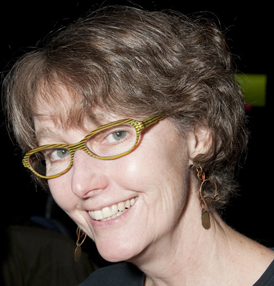
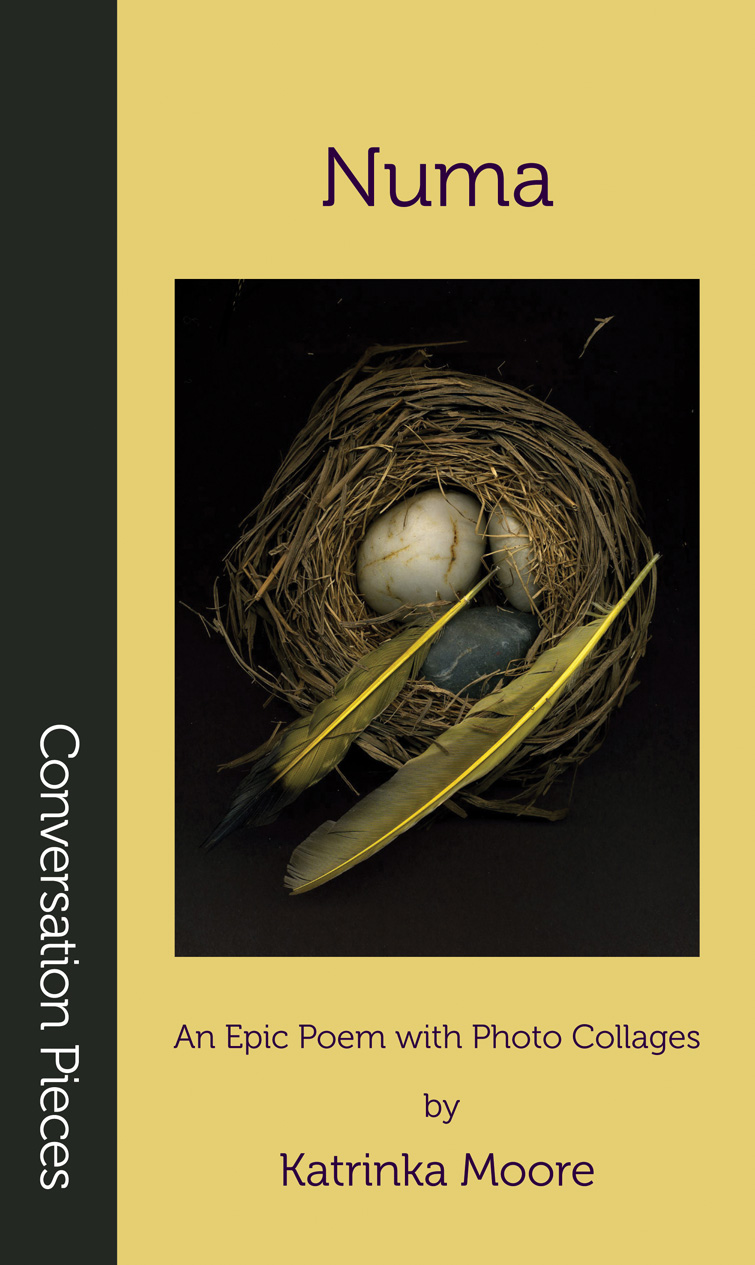
Katrinka Moore’s epic poem Numa was published by Aqueduct Press in 2014. She is the author of two previous poetry collections, Thief and This is Not a Story. She lives in New York.

Friday, December 26, 2014

The Pleasures, of Reading, Viewing, and Listening in 2014, pt. 22: Catherine Krahe

The Pleasures of 2014
by Catherine Krahe

Hello! I'm happy to share some of the books I've read in 2014.

Any time I'm asked for recommendations, I mention Courtney Milan, who's been mentioned already this series. I read a lot of romance these days and Milan is reshaping the genre. She subverts and expands the genre while still being part of it, which is no small feat. Her latest series, The Duchess War, The Governess Affair, The Heiress Effect, The Countess Conspiracy, and The Suffragette Scandal, deals with matters of identity-- who you are, what you do, what you have done, what you will do, and declaring ownership of all these things.

I'm getting too formal and not making these books sound as awesome as they are. And they are awesome. Yes, there are nobles here and there, but there's also alternate Victorian science, a women's newspaper with an Ask a Man column, neat explanations of privilege, poor people, rape explained not as something stolen from the woman but as an assault, a woman pretending to be stupid, annoying, and perfectly innocent (people pretending to be stupid: it is a trope I adore), and a sassy bowler-wearing suffragette with a box full of exclamation points you can use.

Plus Milan has written some really good sex scenes.

Changing audiences completely, Stephanie Kuehn's Charm and Strange was one of the weirdest reading experiences I had this year. I'm not sure what to tell you to encourage you to read it and find your genre expectations completely blown away. Dare I say it's the best new werewolf novel I've read in a while? Because it kind of is.

Also YA is Above by Leah Bobet. It's a contemporary fantasy set in Toronto and blew me away with its craft and intersectionality. Unlike a lot of YA, which uses the snappy first-person narrator as a default, this book could not exist with a different narrator. Matthew's experience of the world shapes how the reader experiences the semi-magical community he lives in and the terrifying surface world. The aspect I loved most, besides the intersectionality, was that Matthew sees a different set of races from the typical white American experience. He still sees race, but he places importance on a completely different set of characteristics. The book doesn't wobble, isn't clumsy or halfhearted, and through it all, I knew I could trust Bobet with what she's doing. Trust makes a huge difference in a book like this.

Katherine Addison's The Goblin Emperor was competence porn in a magical multispecies kingdom. I might have to reread it just for the way the dialogue is put together. Like Bobet's Matthew, who explains the world by what details he sees and doesn't see, Maia the titular Emperor demonstrates how his world isn't the typical white American world (besides, you know, goblins and emperors). Addison uses archaic and nonverbal language as secondary channels rather than flavor or humor, and oh how I loved discovering them.

Speaking of a magical kingdom, Otherbound by Corinne Duyvis is a strong and well-tangled debut from one of my CW11 classmates. Issues of disability, agency, intersectionality, and responsibility abound, whether it's details like what language is spoken at home-- and in what context at home-- or that one of the two viewpoint characters is mute. After spending a chapter in her head, I was always surprised to find that the other character could speak aloud. Otherbound doesn't make anything easy, not romance, not guilt, not magic, not daily life for a kid who lives more in another world than our own. The ending isn't easy, either, but honest; it strikes to the heart of the entire book with a single perfect sentence.


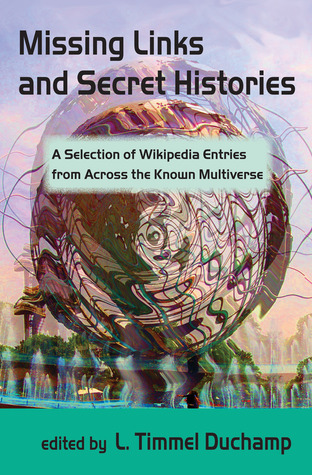
An alumna of Clarion West, Catherine Krahe's fiction has appeared in Realms of Fantasy, Nature Futures, and Missing Links and Secret Histories: A Selection of Wikipedia Entries from Across the Known Multiverse.  She recently received a Master’s degree in environmental engineering from the University of Iowa and plans to save the world by telling stories and planting trees. She is on the staff of Alpha, the science fiction, fantasy, and horror workshop for young writers.

Thursday, December 25, 2014

The Pleasures of Reading, Viewing, and Listening in 2014, pt. 21: Eleanor Arnason

Pleasures 2014
by Eleanor Arnason

As I have mentioned before, I am having trouble reading fiction these days. My core reading for most of my life has been science fiction and fantasy, and I don’t find it as interesting as I used to. Either it has lost sense of wonder or I have.

I recover my sense of wonder by reading books on dinosaurs. The most recent one is Flying Dinosaurs by John Pickrell. Pickrell is a science journalist, and his book is a competent overview of recent discoveries, with some neat paintings of feathered dinosaurs as they might have looked. I love paleontological art.

This new take on dinosaurs is partly due to reexaminations of dinosaurs that emphasize their bird-like traits and to remarkably detailed fossils from China, which show us that a number of dinosaur species had feathers. Some of them—for example Microraptor – apparently flew or at least glided.

It’s now generally accepted that birds are descended from theropod dinosaurs, the group to which T. Rex belongs. In fact, scientists now speak of avian and non-avian dinosaurs. The avian dinosaurs are the ones singing in our trees. The non-avian dinosaurs are the ones that are extinct.

I also find pterosaurs wonderful. They filled the skies in the era of dinosaurs, but they were not dinosaurs, and none of their lineage has survived into the present The largest of them are so huge that it’s hard to imagine how they flew, but they must have. (Quetzalcoatlus had an estimated wingspan of 36 feet, and weight estimates range from 150 to 450 pounds.) Mark Witton’s book Pterosaurs is a bit too specialized for my liking, but I bought it and intend to keep it. He has interesting ideas of how pterosaurs walked on the ground and how they took off.

So giant non-dinosaurs soared in the Cretaceous skies, and feathered proto-birds stalked over the ground. It’s even possible that T. Rex had feathers or some fuzz. There were actual flying dinosaurs and real early birds, such as Confuciusornis, as well. Pretty neat, and not at all like the Cretaceous era of my youth. Best of all, dinosaurs are still around and highly successful. Every time I remember that, my heart grows lighter.

The other thing that gives me back my sense of wonder is anime. I am currently watching Ghost in the Shell, a Japanese TV series from 2002-2004, which is set circa 2030, in a corrupt future Japan populated with robots, androids, cyborgs and un-augmented humans. The heroes are a government police force made up mostly of cyborgs, though there are also robots and one un-augmented man. They are more or less super-cops, led by a woman – usually called the Major – whose body is entirely artificial. Like Raymond Chandler’s private eye, they are the honest characters in a crooked world. (Don’t think Japan by itself is corrupt. As far as we can tell, every human society is crooked.) The series is partly about corruption, but mostly – I think – about what it means to be human.

The ghost of the title seems to be what we would call a soul. Do the cyborgs have souls? Do the robots? For that matter, in what sense do the crooked politicians and corporate leaders have souls?

The show is violent, and you can see the depiction of the Major as sexist. She has one heck of a build and is usually falling out of her far-too-skimpy costume. But her artificial body is extremely, inhumanly powerful. She doesn’t fear men. Nor does she want to attract or placate them. Most of time, she seems tough and a bit cold, the kind of person who is armored in her own self-confidence.

The series also has tachikomas, bright blue robots with high-pitched, girlish voices and guns. They are adorable, and they also appear to be gaining self-awareness, as they try to puzzle out human behavior and their own existence.

So that is what makes me happy these days: dinosaurs, pterosaurs, Section Nine (which is the major’s team) and tachikomas.

Maybe I am made happy by new ways of seeing and thinking. Our vision of dinosaurs and pterosaurs and birds has changed and is continuing to change. Ghost is the Shell gives us a new world, though not a nice one, and a new way to think about humanness.

In our current world, which seems locked into a dark and terrible future, new ways of seeing are important.


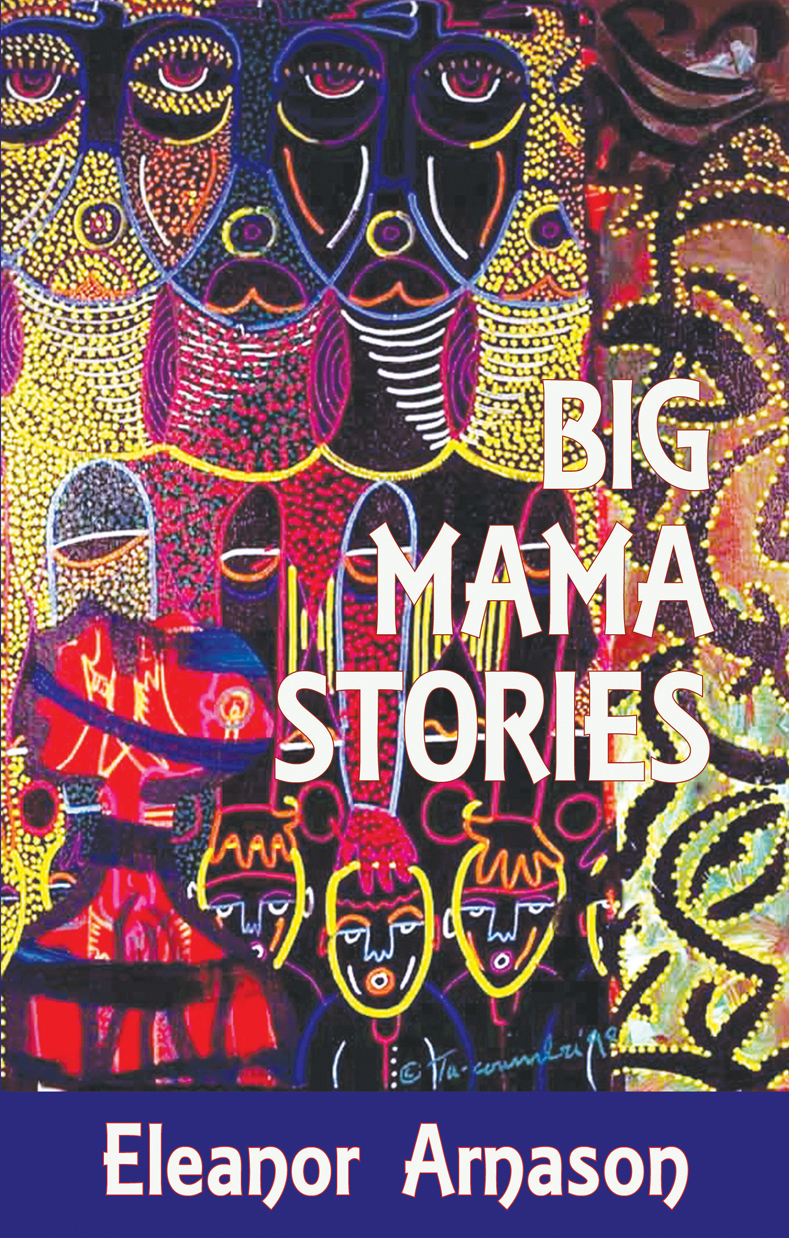
 Eleanor Arnason has written several novels and many short stories. Her fourth novel, A Woman of the Iron People (2001), won the James Tiptree Jr. award for gender-bending science fiction and the Mythopoeic Society Award for adult fantasy. Her fifth novel, Ring of Swords (1995), won a Minnesota Book Award. Aqueduct Press published her collection Big Mama Stories in 2013, her Lydia Duluth adventure, Tomb of the Fathers, in 2010, and her collection, Ordinary People, in 2005. Aqueduct will be releasing e-book editions of The Sword Smith, To the Resurrection Station, and Daughter of the Clan Bear in 2015.