Saturday, January 25, 2014

The Cascadia Subduction Zone, Vol. 4, 1


The winter issue of The Cascadia Subduction Zone is out. You can purchase the issue for $3 (or subscribe for $10) at http://www.thecsz.com/. The issue features the art of Kristin Kest; reviews by Victoria Garcia, Cat Rambo, Karen Burnham, Michael Ehart, and Cynthia Ward; a Grandmother Magma column by Nisi Shawl; a poem by Alicia Cole and a poem cycle by Anne Sheldon; and an essay by me, reporting on the Worlds beyond World Symposium in Eugene last November.


Vol. 4 No. 1 — January 2014
Essay
Feminist World-Building: Toward Future Memory
   by L. Timmel Duchamp
Poems
Down Seventh Street Road
   by Anne Sheldon

Coral Bleaching
   by Alicia Cole

Grandmother Magma
Walk to the End of the World, by Suzy McKee Charnas
   by Nisi Shawl

Reviews
The Waking Engine, by David Edison
   reviewed by Victoria Garcia

Dangerous Women. edited by George R.R. Martin & Gardner Dozois
   reviewed by Cat Rambo

Ancillary Justice, by Ann Leckie
  reviewed by Karen Burnham

The Constant Tower, by Carole McDonnell
   reviewed by Michael Ehart

The XY Conspiracy, by Lori Selke
   reviewed by Cynthia Ward

Featured Artist
Kristin Kest

Friday, January 17, 2014

Andrea Hairston reviews Africa SF

Andrea Hairston has a piece, "Dismantling the Echo Chamber," reviewing Africa SF, ed. Mark Bould, at the Los Angeles Review of Books. Here's a little taste:
Rewriting the rules that define/constitute the fantasy we call reality in order to dismantle colonial structures and transform said reality is an incredible challenge. Black to the future was/is a radical, dangerous, and daring dream—an impossibility. Science fiction and fantasy (sf&f) is a rehearsal of the impossible, an ideal realm for redefinition and reinvention. For Africans and their descendants in the diaspora, decolonizing our mind/body/spirits was/is an on-going sf&f project. Freedom is a Magic If. Indeed, for all of us, humans, non-human animals, and plant-life, recovering the past and decolonizing the future is a critical survival question in the subjunctive case. How might we coevolve, but be different, together in a (post)colonial empire hell-bent on global monoculture, the commodification of identity, and the monetization of everything? What of our past should we carry with us? What might we chose to leave behind? What new possibilities could we embrace and manifest?
Read the whole thing here.

Tuesday, January 14, 2014

10 Fabulous Pacific Northwest Authors of Color and the Books They've Written

In honor of its fortieth anniversary, Humanities Washington has begun posting a series of Top Ten lists, "sharing the best of the best from a variety of humanities topics from the past 40 years." Their inaugural list is from Anu Taranth, who offers a "Top Ten Pacific Northwest Authors of Color" list. The list names our own Nisi Shawl, and specifically cites Filter House. Do go and check out the whole list here.

Monday, January 13, 2014

Quote of the day

Considering these things, I can’t help but tell my fellow writers to write fearlessly. Our stories were never meant to speak to everyone. There are those who will read and who will embrace what we write and there are those who will read and hate us for what we write.

But write what you have to write. Write being true to what’s in your heart. Play on the page. Dance on the page. Imagine possible futures on the page. Your stories are important, not just to you. They are important to me. They are important to the generation that is yet to come. --Rochita Loenen-Ruiz, Movements: A Poetics of Struggle (Part 2)

Sunday, January 12, 2014

New Amazonia by Elizabeth Burgoyne Corbett

I'm pleased to announce the release, as the third volume in Aqueduct Press's Heirloom Books series, of a new edition of New Amazonia: A Foretaste of the Future, a feminist utopian novel by Elizabeth Burgoyne Corbett originally published in 1889, which includes an introduction by scholar Alexis Lothian. “Corrupt, Degraded, Rotten to the core is British Civilisation, and yet we find women who ought to know better, actually pretending that they are perfectly contented with the existing order of things,” declares the narrator of New Amazonia. Raging against an antifeminist statement signed by “ladies” opposing the cause of women’s suffrage, a writer falls asleep in 1889 and wakens, in company with a hashish-smoking “masher,” in a future world run by women. New Amazonia tells the story of how this future world came to be and reveals its shiny, futuristic marvels as well as its government-administered horrors. 


“When Elizabeth Burgoyne Corbett sat down in the late 1880s to imagine a world 500 years hence, she can little have imagined that her words would be pored over in another century, on another continent, in a community gathered around the kinds of imaginative engagement with gender that she was pioneering. L. Timmel Duchamp has described feminist science fiction as a "great conversation”; Corbett’s speculations about New Amazonia are part of that conversation’s prehistory, a fictional contribution to political debates with which the writer was intensively engaged. The book you are holding is a piece of utopian fiction, but it is just as much a feminist rant––entertaining, educational, and more than a little over the top.”—from the Introduction by Alexis Lothian

New Amazonia is available now through Aqueduct's site (http://www.aqueductpress.com/books/NewAmazonia.php) in trade paperback and e-book editions. While it is also available online in public domain pdf files (and printed and bound pdf files) of the original 1889 edition (sans Alexis's illuminating introduction), those pdf reproductions are not easy to read. My decision to bring the book back into print was based on a combination of my desire to draw attention to this early feminist utopia (of which I knew only its bare existence until Alexis talked to me about it) and the need for a more readable version of the text. 


Tuesday, January 7, 2014

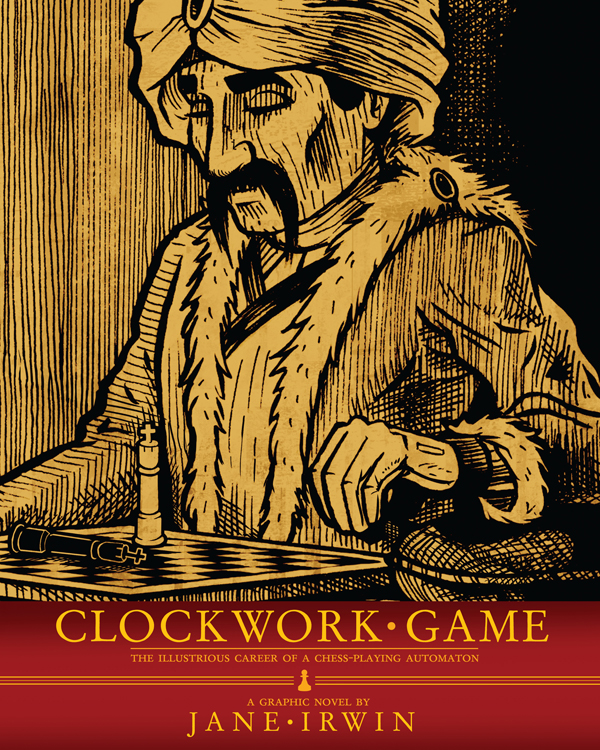
Jane Irwin's Clockwork Game

Jane Irwin's graphic novel, Clockwork Game, has just been released. It can be purchased in both trade paperback and pdf editions at http://www.fierystudios.com/store/. Here is Nisi Shawl's introduction to it:


Into the Canny Valley
by Nisi Shawl

The truth is right there in a word balloon on page 165.  “People believe stories, not facts,” says Johann Maelzel, one in a series of owners of “The Turk,” the figure at the center of the real-life, 85-year conspiracy depicted in Clockwork Game.  Telling The Turk’s strange story through expressive drawings and apt words, Jane Irwin makes us believe everything, from its first appearance before 18th-century Vienna’s royal court up to its blazing finale in 19th-century Philadelphia.  There’s the supposed chess-playing automaton’s match against Benjamin Franklin, Napoleon’s pragmatic skepticism when presented with The Turk in the wake of his Austrian victories, and Edgar Allan Poe’s article debunking the claim that its prowess was that of a pure machine.  The Turk rubbed elbows with Beethoven and shared an exhibit hall with P.T. Barnum’s Joice Heth, who the fledgling impresario said was the 161-year-old former nurse of President George Washington.

Clockwork Game is true.  It’s also, unlike Barnum’s showman’s patter, mostly facts.  Though not entirely.

But to paraphrase Maelzel’s lead-up sentence to the aphorism above, the story’s telling is what Jane Irwin gets right.

The Ottoman Empire had a long and glorious tradition of engineering marvels and expanding scientific knowledge.  Irwin makes this tradition concrete in the book’s opening pages with a charming sequence showing Al-Jazari’s elephant clock in operation, complete with dragon heads and drummer.  In 19th-century Philadelphia, Turkish-American doctor Yusuf bin Ibrahim provides another lens on the racially-charged lampoon its inventor created in his ostensible automaton.  Again and again Irwin challenges herself to question comfortable assumptions, looking at The Turk’s career through the eyes of those so often classified as “others”: workers, women, people of color, the physically disabled.  Again and again she enriches the telling of this fascinating tale by doing so; Clockwork Game is simultaneously funnier and more tragic than readers may expect.

In the field of human aesthetics, the “uncanny valley” is the dip in the graph of our tolerance of human simulacra.  We react with rising positivity to dolls and robots as they become more and more like us--up to a certain point.  At that point there’s a drop-off in acceptance, a sinking into revulsion.  Too lifelike, yet not alive, inhabitants of this figurative valley are uncanny in appearance.  If their similarity to us is developed further and continues to grow, the positive reaction reasserts itself and the graph line trends upward again.


Wolfgang von Kempelen, The Turk’s inventor, despised what he’d created as a fraud, “base trickery.”  Discussing one of his “serious” devices he bemoans the way audiences focus on the odd appearance of his Speaking Machine, explaining that he’d frequently begin demonstrations with its wheezing bellow and nostril-simulating tubes covered by a sheet.  He tells a sympathetic visitor that he hopes eventually to hide the apparatus inside the dummy of a young girl’s body.  I think doing this would have been a mistake; a human-looking doll that spoke would have been far too disturbing to people of that time.  The Turk was saved from inhabiting in the uncanny valley by several factors: the clockwork noises made during its operation; the standing invitation to inspect its inner workings and thus disregard its outward appearance; and its likeness to an exoticized other, which allowed the intended viewers to distance themselves from it rather than identify with it.  These dehumanizing elements kept The Turk on the valley’s far side.

What I call the canny valley--without any experiments or charts to back my theory up--is the sweet spot authors aim for between data and whimsy.   Clockwork Game sits in the canny valley’s exact center.  Here the dip represents a fall in resistance to the unfamiliar.  Beginning with sheer nonsense, what writers and artists offer becomes more captivating as it encompasses more verifiable facts--but not too many.  There is a place on this imaginary graph where, suddenly, facts take on the allure of fantasy and speculation the weight of certainty.  Clockwork Game’s dramatic framing and quick pace make it easy for the book to fulfill our innate biological hunger for narratives, and Irwin’s art—particularly her characters’ enchantingly expressive faces—fleshes out the mere names and dates that would have comprised her initial research.  And that research was both broad and deep, as can be ascertained by referring to her twelve pages of notes and four of bibliography.  It included books, videos, websites, and consultations with people knowledgeable in areas such as Turkish culture and the representation of diversity in fiction.

Composer and comedian Neil Innes once famously said, “I’ve suffered for my music.  Now it’s your turn.”  It was a joke, but other creative artists have sometimes had to strive to avoid meaning something similar—especially when they do lots research to support their projects.  They’re drawn to the far side of the canny valley, the dry and tortuously infertile terrain of facts for facts sake.  A book filled with nothing but the poorly presented results of research will beguile very few of us to spend our precious time struggling through its pages.  Resistance will be high.

Irwin’s motto might well be “I’ve been suffused with pleasure for my work’s sake.  Now it’s your turn.”  Though she carefully describes when, where, how, and why she departed from what’s known about The Turk and its many adventures, she keeps these notes out of the story’s way, confining them to Clockwork Game’s after matter, where they rightfully belong.  This leaves us free to luxuriate in the delightful greenery where the story proper grows—to speed through it or linger, to return to the canny valley as often as we like.


Saturday, December 28, 2013

The Pleasures of Reading, Viewing, and Listening in 2013, pt.22: Sheree Renée Thomas

2013: from Ashe to Amen and Beyond
by Sheree Renée Thomas


The year has seen me thinking about spiritual matters and exploring its roots and history in my work and in some of the art I admire most. Perhaps it is the loss of dear friends and loved ones, or the ever-growing sense and recognition that none of us are promised tomorrow, but I have enjoyed this exploration and hope it will yield sweet fruits in my own work. One of the highlights of the year was having an opportunity to help celebrate the legacy of Octavia E. Butler with writer Tananarive Due and some of my favorite authors, filmmakers, and artists at Spelman College this past Spring.


Between what felt like a family reunion led by Steven Barnes’s lively and inspiring informal “green room” talk on health and happiness from a focused physical and spiritual practice, to beautiful futuristic art and films, and a multimedia lecture on Afrofuturism and music by celebrated DJ Lynnee Denise (check out her Girls Gone Vinyl Project)
where she was literally flat-foot jamming in Spelman’s Museum, I have to say the new year and Spring season started off quite beautifully after what felt like the longest winter ever.
 
 Another fun conference was Onyxcon V held in August at the historic Auburn Avenue Research Library in Atlanta. Onxycon is the Southeast’s largest convention celebrating the presence of the African diaspora in popular arts.


Founded by artists Iyabo Shabazz and Joseph R. Wheeler, this summer’s conference covered writers’ and artists’ tips to how to collect and appraise black popular media like comic books and vintage movie posters. The participants included museum curators, comic book professionals, and even the founder of a soul food museum. The other added treat besides meeting new friends was a chance to see a small but beautiful exhibit of paintings by children’s book illustrator R. Gregory Christie who also runs an open studio in Atlanta.

The conference was a great experience before the back-to-school grind. The end of the summer meant the end to some of my favorite guilty pleasures, including watching obscure and fascinating foreign indie films like I’m Not Scared, the amazing Italian movie that I won’t spoil for you since it was a little surprising and made this closet tearjerker boohoo inexplicably, or the fabulous silent, black-and-white Spanish Snow White adaptation I saw.

Set in the 1920s, Blancanieves explores the world of bullfighting, where the neglected and abused daughter of a beloved Spanish matador is rescued by a family of bullfighting dwarves (I kid you not!), who goes on to glory and tragedy, as befitting the Grimm fairy tale. The cinematography was beautiful, the costumes and actors were memorable even though as usual, the seven (or is six?) dwarves are never given anymore than broad strokes of characterization.


Special praise should be given to the wonderful child actress, Sofia Oren, who delivered a pitch perfect performance, and I loved the music and the over-the-top scenery-chewing satire of the stepmother’s performance. Maribel Verdú as Encarna was a Femme Fatale Betty Boop with some serious issues and a fierce wardrobe to match. While Blancanieves is no The Artists (it didn’t seem to take itself quite as seriously and in case you were wondering, no, no bulls were slaughtered on or off camera for this film), it is well worth watching in my humble opinion, especially for anyone who enjoys a little lore and magic in their movies.

My other guilty pleasure this summer included fussing at the Magical Negroes of the show I love to hate but can’t stop watching, The Vampire Diaries, and its great spin-off series set in New Orleans, The Originals with yet another Magical Negroe with an interesting backstory. Neither of these shows can be watched without also consulting TV.com’s hilarious photo recaps.

Speaking of Magical Negroes, in late September, a couple of days before my birthday, I saw stop. reset, the new Signature Theatre play by actress and playwright Regina Taylor in New York.


Taylor’s science fiction play set in a black independent publisher’s Chicago offices was a moving meditation on how grief can scar the soul and how future tech can enslave or set us free. How one took the play’s ending depended upon whether or not you saw lead Carl Lumbley’s final “transition” as a visitation of the spirits, a riding of the loa, or a case, as one critic saw it, as “contagious insanity.” Needless to say, I loved this nuanced work and the awesome public discussion that took place following the performance.


And speaking of contagious insanity… watch Tina Mabry’s Mississippi Damned. For me, it was a little like watching a Kara Walker picture come to life. Enough Said.


Ashe to Amen: African-Americans & Biblical Imagery is a sensational, provocative traveling exhibit that features work by 50 artists who explore a wide range of faiths, from hoodoo to Vodou, from traditional African religious influences to Islam and Christianity. My favorite works in the exhibit included the amazing 3-dimensional praise tent that is crocheted by artist Xenobia Bailey. Xenobia is an astonishing artist who came of age in Seattle among a few of Jimmi Hendrix’s influences

 and has continued over the years to “press on to Paradise” as she says, keeping her dream and her vibrant art alive. Her latest journey led her last month to a group art show in the United Arab Emirates which she blogs about here: http://xenba.blogspot.com/


This wildly colored textile sculpture is large enough for a priestess or a mother and child to climb inside it, and it is vaguely reminiscent of the intricately woven Camerounian Bamileke crowns worn in Central Africa (or perhaps more memorably, by ZZ Top).


“Sister Paradise’s Great Wall of Fire Revival Tent” by Xenobia Bailey


Antique Bamileke hat and contemporary iconic hat worn by musician Billy Gibbons of ZZ Top


Bailey’s sculpture seemed sentient, magically alive with its two great unblinking eyes staring down at museum visitors, as if the “Mystic Seer” could see right into our souls and minds. I must admit that I had to resist my inner child’s desire to climb right in and sit cross-legged upon the emblazoned sun that adorned the floor beneath the sculpture.


 Renee Stout’s thrilling neon installation piece, “Church of the Crossroads” evokes Esu, Elegba, and Papa Legba more than the hooded Ku Klux Klan reference that was featured in the accompanying description of my local museum in Memphis, The Dixon Gallery and Gardens. Organized by New York’s Museum of Biblical Art and curated by artist and scholar Leslie King-Hammond, Ashe to Amen is one of the first exhibits that trace the shared roots and connections between African and Biblical traditions.


Three poetry and fiction volumes by the late author Wanda Coleman (1946 – 2013) and an essay in The Nation have had an impact on my writing life. When I first read A War of Eyes and Other Stories and African Sleeping Sickness: Stories and Poems (Black Sparrow Press, 1988 and 1990) I had no idea that Coleman also had a connection to a creative writing institution that would serve as a safe haven and encouraging lighthouse for my own journey. A married mother of two by age twenty, Coleman worked numerous day jobs while seeking out writers’ workshops on nights and weekends to help hone her craft and develop the gift she had shown since she began publishing her poetry in a local newspaper at age thirteen. The Watts Writers Workshop was one of those invaluable spaces for Coleman.

January 1, 1966
January 1, 1966: Budd Schulberg (center) conducts a session of the NEA-supported Watts Writers' Workshop. Schulberg created the workshop in his living room in response to the 1965 Watts riots. Photo credit Los Angeles Times 

This workshop founded by Budd Schulberg (probably most well known for his award-winning screenplay, On the Waterfront) would also inspire Fred Hudson, a former librarian, playwright of The Legend of Deadwood Dick, and Paramount Studios screenwriter (The Education of Sonny Carson) to create in 1971 the Frederick Douglass Creative Arts Center in Manhattan where I was a student and later, an instructor.


                                                   Nat Love aka “Deadwood Dick”

                   
                             Fred Hudson, Founder of The Frederick Douglass Creative Arts Center

Wanda Coleman began her writing journey as a reader seeking refuge from the racism of 1950s society and the cruelty that can mark anyone’s youth. Seeking solace, she said that she became an avid reader at a time when public libraries “discouraged Negro readers.” A native of Watts and long considered its unofficial poet laureate, Coleman published over twenty books over four decades, writing eloquently and with dark humor about racial injustice and gender inequality. Not one to mince words, this former critic and columnist for the Los Angeles Times once caused a mini tempest in America’s literary community when she published a scathing critique of beloved Maya Angelou’s A Song Flung Up to Heaven and a follow-up response in The Nation entitled “Book-Reviewing, African-American Style.” This essay got her banned from at least one independent black bookstore and earned her publishers a flood of letters.

At a time when aspiring black women writers were faced in the public sphere with laboring in the wake of literary giants like Angelou or Morrison, Wanda Coleman’s collection, Heavy Daughter Blues: Poems and Stories,1968-1986 (Black Sparrow Press, 1987) was an exciting discovery that offered yet another distinctive voice and view of life that inspired me. And while she is no longer here to offer her powerful live readings or no-nonsense, hands-on writers’ workshops, the spirit and brilliance of her writing—her poetry, her fiction, her essays--will continue to inspire other women writers to find their voices and carry on.

                                                     Wanda Coleman (1946-2013)

 Sheree Renée Thomas is the author of the chapbook, Shotgun Lullabies: Stories & Poems (Aqueduct Press, Conversation Series) and the editor of Dark Matter: A Century of Speculative Fiction from the African Diaspora and Dark Matter: Reading the Bones. Her work has appeared in storySouth, Callaloo, Essence, The New York Times, The Washington Post Book World, Renaissance Noire and in anthologies, including most recently The Moment of Change: An Anthology of Feminist Speculative Poetry. In 2014, Sheree will speak in New York at the exhibition panel for the Studio Museum of Harlem’s Afrofuturist exhibit, The Shadows Took Shape and at the Center for American Literary Studies (CALS) symposium, “Alien Form: Genre and the Production of Ethnic American Literatures,” hosted at Pennsylvania State University.

Friday, December 27, 2013

The Pleasures of Reading, Viewing, and Listening in 2013, pt.21: Kristin King

The Pleasures of Reading and Viewing in 2013
by Kristin King

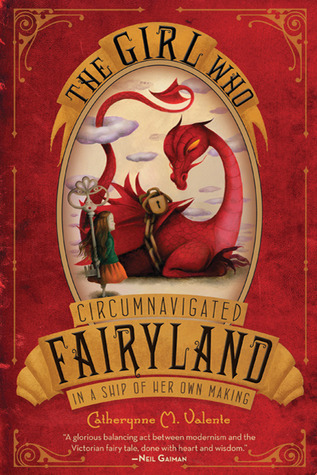
 The Girl Who Circumnavigated Fairyland in a Ship of her Own Making by Catherynne M. Valente

I’ve never read anything quite like it before and I never will again. You know that omniscient narrator of Victorian children’s books? She talks straight to you, and she’s more than a little condescending. This one is like that, except she is more perceptive than she maybe ought to be, and she knows that you know she’s lying. So she tells it to you straight. Our intrepid heroine, September, is going to get into trouble and she’s maybe not going to get out of it again, but she’ll be all right in the end – wink, wink.

 
One of my favorite parts is the chapter titled “In which September enters the Worsted Wood, Loses All Her Hair, Meets Her Death, and Sings it to Sleep.” A child’s death, the narrator explains, is as small as a mouse, because it seems so far away. Death is only big and scary for adults. And September’s mouse has bad dreams, from all the regrets of all the people who have met her, and must be sung to sleep. Like much of this book, it reads differently for children than for adults. If I had read this chapter as a child, I would have found it strangely moving and exciting. Reading it as an adult, though, I get chills down my spine.

 September is an admirable hero. She’s naïve, because of her age, but courageous and clever. Whenever she’s faced with a decision, she weighs her options and usually picks the hard route. This leads to grand adventures but also consequences, such as the loss of her heart or the severing of her shadow. She faces the consequences, deals, and moves on. Late in the book, she asks if she is “the chosen one,” and here is the lovely reply:
“You are not the chosen on, September. Fairyland did not choose you – you chose yourself. You could have had a lovely holiday in Fairyland and never met the Marquess, never worried yourself with local politics, had a romp with a few brownies and gone home with enough memories for a lifetime’s worth of novels. But you didn’t. You chose. You chose it all.” Now, that’s empowering.

Chicks Unravel Time, edited by Deborah Stanish and L.M. Myles.

In this collection of essays, all kinds of women – fans, authors, and artists – take a look at every season of Doctor Who. And what a look! They give close examinations to everything from the use of stock music in Season 5 in Classic Who to David Tennant’s bum in Series 2 of New Who. (We women like every aspect of the Doctor, apparently.) I was happy to see some of my favorite authors have been inspired by the show. I was also happy to see the authors ask tough questions of the show. In “Guten Tag, Hitler,” for instance, Rachel Swirsky asks why the Doctor, who fights all kinds of monsters, won’t touch Hitler – and points out that the only character who ever tried was a supposed psychopath. And in “Maids and Masters: The Distribution of Power in Doctor Who Series Three,” Courtney Stoker delves into the actual power dynamics of the characters in the show.

 Doctor Who episode “Nightmare in Silver”
http://www.bbc.co.uk/programmes/b01skfzk 

This Doctor Who episode, written by Neil Gaiman, features a life-or-death chess match with the added twist that the Doctor has been possessed by a Cyberman and must therefore play the chess game against . . . himself. That was a tall order for actor Matt Smith, and he filled it by going even more over the top than usual. I’m really a sucker for shows where “the good guy” playacts “the bad guy,” and so I was quite beside myself here. Meanwhile, the Doctor’s companion Clara Oswald, who had been suffering from a lack of character development in some of her scripts, came into her own as the commander of a troop of misfits. Here’s hoping she gets more good plots.

Mapping Human History by Steve Olson

I’ve spent hours and hours trying to find information about my family history. You go back five generations, and you end up with a whole lot of relatives – especially since some of my ancestors were Mormon polygamists. My biggest wild goose chase was trying to figure out if we really are related to German nobility through the family name Buse, as my great-granduncle claimed. Why exactly would I want to be related to German nobility, anyway? I don’t even know. But as it turns out, there’s about a five to ten percent chance that the father listed on any given birth certificate is not the biological father. (Sorry, dads.) This means that the farther we go into the past, the lower the chance that our written genealogies are correct.

But that revelation is small potatoes compared to the mathematical surprise that the number of our ancestors grows exponentially as we go back in time. In fact, if we go back just 600 years, we have more than a billion ancestors. (But how is that possible? The world’s population was only about 375 million. The answer is that we are related to our ancestors through multiple lines of descent.) I knew that our ancestors all migrated from Africa many tens of thousands of years ago, which means humanity shares common ancestors from long, long ago. But for some reason, I imagined the migration of my ancestors to more or less follow a single line from Africa, to Europe, to the United States. That’s not what happened at all. There was no single line; instead, there were billions of ancestral lines. And they went from Africa to many places all over the world, and from all those places to Europe, and from there to the United States. So much for “the races.”

Summer Night by Lina Wertmüller

Steamy.

Two completely unsympathetic characters, an arrogant one-percenter and a ferocious criminal, vie for power on a remote island. It’s so funny, sexy, and completely over the top, that it doesn’t matter who wins.

This movie is directed by Lina Wertmüller, a master at taking gender and class hierarchies, flipping them inside out, and then combining the resulting mess with sex, or Italian politics, or both. She has the honor of being the first woman ever awarded an Academy Award for directing. This particular movie hasn’t got quite the critical acclaim of some of her others, such as Seven Beauties or Swept Away. But for me, it’s the most fun.


 Kristin King (http://kristinking.wordpress.com)  is a writer, parent, and activist who lives in Seattle. Her work has appeared in Strange Horizons, Calyx, The Pushcart Prize XXII (1998), and other places. Two of her stories appeared in an Aqueduct Press anthology, Missing Links and Secret Histories: A Selection of Wikipedia Entries Lost, Suppressed, or Misplaced in Time, published this year.

Wednesday, December 25, 2013

The Pleasures of Reading, Viewing, and Listening in 2013, pt.20: Larissa Lai

Reading, Viewing, and Listening in 2013
by Larissa Lai

It's been a very eclectic sort of year for reading, writing and listening. The nature of my work means things get often get read as my teaching schedule dictates. The nature of my health, this year, meant that I got some enforced reading/listening time. I'm much better now, and happy to amble through some of the things that caught my attention in 2013.

I began the year as a juror for the Dorothy Livesay Prize, which is the British Columbia Book Prize for Poetry. Of the hundred or so books in the box, my pick for the winner was speculative in its experimentation with language and form. Roger Farr's IKMQ is about the adventures of four letters of the alphabet. IKMQ consists of sixty-four brief passages. These are variously stories, vignettes, descriptions, instructions, scenarios and formulae, each of which involve the characters I, K, M and Q. Because the characters are letters, the fragments sometimes have the quality of a psychological or algebraic hypotheses, in which broader social, political, mathematical or psychological ideas are being tested out. Other times, it is grammar itself that gets tested, particularly when I is the protagonist. As in: "I was it. K ran behind the hedge, M climbed onto the deck, Q ran around the perimeter of the yard." The "I" here could stand in for a self—"me"— or it could be an abstract, like K, M or Q. Or "I" could be the first letter of someone's name— "Ivan" or "Isabelle". By leaving the possibilities open, Farr shows us how context dependent all writing is. I,K,M and Q show up in scenarios as diverse as a committee meeting in which Roger's Rules are being followed, a pornographic film, a physics experiment, a heist and a chart for testing vision. This is language that speculates on our expectations. If we want it, we get lots of sense for our pennies— more than we might imagine possible. Maybe I could put it beside Russell Hoban's Riddley Walker, which I read and did a little talk on for the Vancouver-based Kootenay School of Writing talk series "I'm in You, You're in Me" in February of this year. Twelve-year-old Riddley is a "connexion man" desperately attempting to retrieve history after the nuclear blast. English as we know it has been lost, and the youngsters of post-apocalyptic "Inland" (England) reconstruct it from what they've got.

I do often find myself wishing that experimental poets and speculative fiction writers would read each other more. I think we'd have a lot to talk about. Some speculative fiction writers and readers might enjoy Bhanu Kapil's Humanimal: A Project for Future Children, an experimental fiction about the "Bengali wolf girls", feral twins found in 1921 and "recuperated" to Indian society. Seeking an ethical way to engage their story, Kapil travelled to Midnapure with a film crew, and revisited the place where the girls were captured as well as the various sites connected to them. She met a ninety-eight year old woman who recalled their howling, found a tree in which one of them had been photographed trying to grab the tail of a cat, and visited the room in which they had been kept. Her book shows us our own animal continuities, the cruelty and impossibility of humanization, and likelihood that we are all more animal that we usually imagine.

One of my tasks in the spring was to rework a seminar on 1970s feminist speculative fiction for graduating English majors at the University of British Columbia, where I work, to teach this coming winter. Last year, that class was a rough one to teach. It seems always difficult and painful to teach material that I think is democratic and liberatory. Some students loved it, but many of them just hated it and resisted the course material at every turn. The material I was teaching— Woman on the Edge of Time, Kindred, The Left Hand of Darkness, Les Guerrillères, The Female Man and Mind of My Mind— is 40 years old. I didn't set out to shock them. I was surprised by what they found surprising. As a great believer in student-centred learning, I actually want to start the discussion where they live— a much harder thing to do than one might imagine. This year, I'm framing it through Tom Moylan's idea of "critical utopias", as a contemporary phase of utopian writing that seeks neither another place (like Thomas Moore's Utopia) nor another time (like Edward Bellamy's Looking Backward) for utopian possibility, and yet also refuses the defeats of some of the middle of the 20th-century's speculations (like Orwell's 1984, Zamyatin's We, or Huxley's Brave New World). Other thinkers I'll use to frame this course include David Harvey and his idea of the "insurgent architect" as he articulates it in Spaces of Hope. I'm particularly interested in those passages where he talks about the difference between what activists and thinkers plan and what actually unfolds. I'm interested, in other words, in that element of the unpredictable. I'll also use a little teeny bit of Fredric Jameson's Archaeologies of the Future: The Desire Called Utopia and Other Science Fictions. This is an important text because it addresses shifts in the political sphere that accompany shifts in the economic one. It articulates the relationship between utopian fiction and the material world, and helps us see more clearly the time in which we are living.

This reframing gave me the opportunity to read Ernst Callenbach's Ecotopia, which is so visionary on the environmental front. We're living in a moment when our economic system seems very much like a death cult bent on destroying the earth and life as we know it, and I'm hoping that students might draw some inspiration from Callenbach. I'm also somewhat worried about the book's sexism, though it might do the work of illustrating what writers like Joanna Russ, Marge Piercy and Ursula LeGuin wrote so passionately against in the 1970s. I also finally read Daniel Heath Justice's Kynship, a fantasy novel that draws out the complexities of Indigenous political locations, and the tensions among them. What I loved about this book is that humans are pitched as the colonizers. Reading Kynship and thinking about how to teach it put me on to Grace L. Dillon's Walking the Clouds: An Anthology of Indigenous Science Fiction. It seems to me an important thing to think about fantasy universes, technology and speculative futures with Indigenous world views at the centre.

For several weeks at the end of May and into early June, I had a little health trouble that made sitting and standing very difficult. The upside of an otherwise unhappy situation was being able to immerse my mind in pleasure of audiobooks. I usually listen to them to save my sanity while in transit on long international trips. I can't imagine a better way of enduring the three-hour immigration line-up at Heathrow, for instance, than to spend it listening to A Remembrance of Things Past. This spring, in the dark comfort of my bed, I listened to Amitav Ghosh's River of Smoke and Sea of Poppies, of interest to me because they are about the movement of opium between India and China in the 19th century, and the South Asian, British and Chinese lives touched by the British enforcement of opium production and trade. I was quite blown away by his figuration of the Ibis, as a schooner once used to transport African people across the Atlantic into slavery, now redeployed (in world of Sea of Poppies) to transport South and East Asian coolies as well as opium across the Indian Ocean. The world system of the 19th century was every bit as ugly as the one we currently live in. I listened to his The Glass Palace, as well, about the fall of the Burmese monarchy and its exile in India. I also heard The Calcutta Chromosome, a novel in which Ghosh imaginatively locates the cure for malaria with a scientific/mystical Calcutta-based movement that can give people eternal life. He offers us, in a sense, an alternate history that embeds the documented history of Sir Ronald Ross's cure for malaria within it. What Ghosh's novels have in common is that they foreground the stories of South Asian (and sometimes East and Southeast Asian) characters and offer us non-Western ways of knowing, so that we can see the past, and sometimes the future too, differently.

I also had the luxury of having Haruki Murakami's 1Q84 read to me. I loved that novel's premise— that it is possible to enter another world by listening to Janáček's Sinfonietta then climbing down a staircase that juts from a busy freeway offramp in Tokyo. And that one knows that one it in that world because there are two moons, the second of which is small and moss-coloured. Originally published in Japan in in 2009 and 2010 in three volumes, 1Q84 also tackles some weighty issues— secret cults, serial murder, domestic abuse, and literary fraud. I very much enjoyed Murakami's ability to take us from the ordinary to the subtly unfamiliar and then to plunge us from the subtly unfamiliar into the profoundly weird. He does it with such a deft hand one doesn't even realize it is happening, until small beings emerge from the mouth of a sleeping girl and you just nod and think, "okay." (Some critics hated Murakami's "little people," but they worked for me, and I appreciated the risk.) I'm always disappointed with his portrayals of women, though. Because he writes well, his female characters are always interesting, but because he doesn't really understand women, there is always something a bit alien about them. He doesn't understand them, but he reinvents them in interesting ways. As long as I think of his women as another species, then I can quite enjoy his books. Otherwise I get irritated. In 1Q84, the protagonist Aomame (trans. "Green Peas") is a martial artist, physiotherapist, and paid serial killer who specializes in the murder of men who have abused their wives. In her spare time, she hangs in seedy bars with her only friend, a policewoman called Ayumi, picking up older men with well-shaped heads for manga-style foursomes. In the audiobook, the Aomame sections were read in the high, soft voice of Allison Hiroto. It was a very strange experience to have Murakami's weirdly-styled female interiors narrated by this voice. Her voice was so clear and high, and her diction so perfect. The listening experience was at times like being taken to a particularly filthy lavatory by a lovely angel. Good thing Murakami has already taken us up the offramp and down the staircase into a world where the there are two moons.

I also listened to Neil Gaiman's The Ocean at the End of the Lane, which tells the story of a man who returns to the village of his childhood. There he reconnects to memories of a young, supernatural girl who sacrificed herself to save his childhood self from less benign supernatural "varmints" who would erase him and the entire village given the chance. I enjoyed this book for the way it catches the whimsy and terror of childhood, and the way it shows us how the children we once were are still very much a part of us, if somewhat repressed or forgotten. I particularly liked the ways that Gaiman puts enchantment and disenchantment side by side, in particular with the character Ursula Monkman. She is a worm spirit from another world whom the protagonist initially pulls out of a hole in his foot. She appears in the family as a beautiful but nasty young woman who seduces the protagonist's previously loving father, and causes the father to try to drown him while she looks on. I enjoyed this book for its charm and its creepiness. I felt it lacked something in terms of a broader social engagement, but maybe that says more about my own tastes than anything else.

Once my health improved, I had a lot of work to catch up on, primarily the final revisions on a book of criticism called Slanting I, Imagining We: Asian Canadian Literary Production in the 1980s and 1990s, which I'm happy to announce is coming out through Wilfrid Laurier University Press this spring, for those of you interested in anti-racist criticism, theories of subjectivity and/or cultural life north of the 49th parallel.

In September, I attended a conference on contemporary poetry and poetics at the University of Washington, Bothell. Highlights included readings and talks by Sarah Dowling, Amaranth Borsuk, Robert Gluck, and Carla Harryman. I have been a big fan of Robert Gluck ever since meeting him at a conference on queer literary kinship in Ghent in 2009. His Margery Kempe, a very queer retake on the medieval Christian mystic who was in love with Jesus, is the sexiest, strangest and most heartbreaking novel I've read in a very long time. I probably should have known his work a long time ago. I confess to my gaps. He is an active member of the New Narrative school, of which Kathy Acker was probably the most famous member.

In October, I was at the University of Ottawa for a conference on Science and Society and to share my work in the English Department. Enjoyed talks by Yves Gingras on science and citizenship and Sheila Janasoff on science and its publics. Once the conference got rolling, I was somewhat taken aback by the hold certain streams of positivist philosophy have on science studies. Enjoyed talks by my co-panelists Robert Bean (about a project on early typewriters) and Cindy Stelmackowich (about her work on 19th-century anatomical drawings). I did a talk and reading and had a lively conversation with members of the English Department at the University of Ottawa afterwards, in which I shared both my talk for the Science and Society conference (on the liveliness of the material world) and a bit of the novel, Grist, which I have been working on for way too long. Thomas Allen had a few good reading suggestions, which I hope to take up in 2014: Colson Whitehead's The Intuitionist, which is about an African American woman who breaks into a league of elevator inspectors in a world where elevators are a prestigious technology, and Karen Tei Yamashita's Tropic of Orange, about a magic orange that travels from Mexico to Los Angeles and drags the Tropic of Cancer along with it. Take that, Henry Miller!

In November, in preparation for the Sally Miller Gearheart conference, I read Vonda McIntyre's The Moon and the Sun. I loved the sadness of her 17th-century sea monster. I also read Suzy McKee Charnas's Dorothea Dreams, which made me wish I was a grown-up in the 1970s.

As the year closes, I'm reading Miguel Syjuco's Illustrado about the murder of a fictitious writer/eccentric called Crispin Salvador, and the attempts of Miguel, his student and friend to find Salvador's novel-in-progress, which mysteriously vanished at the time of Salvador's death.

In 2014, I'm looking forward to reading some of the books I bought in Eugene, especially Andrea Hairston's Mindscape and the two volumes of Ursula LeGuin's short fiction, The Unreal and the Real, that I bought there.

A lot of ambling was done this year, that much is for sure. As the dark and sleepy winter soltice descends, I'm seeking a little peace, both on earth and in the recesses of my overly busy mind.

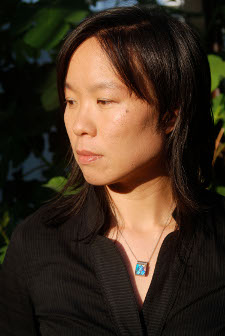
 Larissa Lai is an Assistant Professor in the Department of English at The University of British Columbia. She holds a PhD from the University of Calgary. Her first novel, When Fox Is a Thousand (Press Gang 1995, Arsenal Pulp 2004) was shortlisted for the Chapters/Books in Canada First Novel Award. Her second novel, Salt Fish Girl (Thomas Allen Publishers 2002) was shortlisted for the Sunburst Award, the Tiptree Award and the City of Calgary W. O. Mitchell Award. She has also published a good deal of poetry. Her first solo full-length poetry book, Automaton Biographies (Arsenal Pulp), was a finalist for the Dorothy Livesay Poetry Prize.