Wednesday, December 26, 2012

The Pleasures of Reading, Listening, and Viewing in 2012, pt. 26: Alisa Alering

Reading, Listening, and Viewing in 2012
by Alisa Alering


I don't think anything I'm going to highlight here actually debuted in 2012, but that is one of the beauties of books: they don't spoil like ripe produce (well, most of them.) 


Reading:

Twitter -- which I am still of two minds about -- has done one good thing this year, and led me to the work of the strange and talented Marly Youmans. Marly hopped onto a conversation I was having with another Tweep (about pancakes, IIRC), and was so persistently clever and silver-tongued that I looked up her stories--of which there are a considerable number. Two of my favorites are:

     --"Concealment Shoes," in Salon Fantastique: Fifteen Original Tales of Fantasy, edited by Ellen Datlow and Terri Windling. (2006)

     --"The Incident at Agate Beach," in The Year's Best Fantasy & Horror 2006: 19th Annual Collection, edited by Ellen Datlow and Kelly Link & Gavin J. Grant. (2006)

Youmans’s stories have an indelible sense of place, the language of a poet (she is one), and a creepy sense of wonder. I've acquired a copy of her out-of-print YA novel, Curse of the Raven Mocker, and am looking forward to a little spooky Appalachian reading to help me through the holidays. 

I also discovered Nina Kiriki Hoffman for the first time this year, thanks to a review by Jo Walton on Tor.com. There was nothing intellectual about my enjoyment of Hoffman's trilogy, A Red Heart of Memories, Past the Size of Dreaming, and A Stir of Bones. These interconnected novels about a group of odd young people with magical abilities made that most essential of author-reader connections, seeming to flow straight out of the author's imagination and into mine without translation. Reading these books gave me back hope for parts of myself that I haven’t seen or felt for at least ten years.

Another work that really stands out from this year's reading is Kij Johnson's Fox Woman. I've read (in translation) Japanese classics like The Tale of Genji and The Pillow Book of Sei Shōnagon. Johnson does a wonderful job of creating the same tone and atmosphere for her characters--even the animal ones. A dreamy, transportingly magical work.

This past summer, I had the good fortune to take a week-long workshop with the inimitable Lynda Barry. Artist, cartoonist, novelist, playwright, teacher, and superstar of karaoke, Barry is an unstoppable fountain of inspiration and incisive humor. Her recurring characters Marlys (The Greatest), Ernie Pook, and Fred Milton Beat Poodle are waiting to improve your world. If you're unfamiliar with her work (as it seems younger people are), get acquainted via Blabber Blabber Blabber: Volume 1 of Everything which collects her early work. Also recommended: One Hundred Demons.

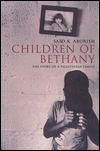
And now for some non-fiction: Children of Bethany: The Story of a Palestinian Family, by Said K. Aburish. I had been meaning to read this 1989 book for a while now, and I'm glad I finally did. I understand times and places better through people, and this book beautifully and vividly describes the life of the author's family in a small town in East Jerusalem from the 1920s. He traces the different choices made by various members of his large family and how they individually react to changing circumstances and the advent of history. Enjoyable and informative.


Listening:

Sadly, I almost never listen to music anymore, except the execrable stuff I hear at the gym. Audiobooks and radio shows are a different story. I listen to these when I walk the dog, do the dishes, mow the lawn, clean the cat boxes....pretty much anything that requires my hands and not my brain. 

Going along with my 'history through biography' theme, I greatly enjoy the BBC Radio 4 program Great Lives. A celebrity guest (but this is Radio 4, so the celebrity is an ex-Home Secretary, a Welsh poet, or the Astronomer Royal) nominates a ‘great life’. An expert or two is rounded up, and along with host Matthew Parris, they geek out about the subject for twenty-eight minutes. Recent episodes have covered Philip K. Dick, Josephine Bonaparte, Stan Laurel, and Juvenal. The fact that all of this is not dull but fascinating is the magic of Radio 4.

Some audiobooks I enjoyed the most this year are:

--One Hundred Thousand Kingdoms & The Broken Kingdoms, Books 1 & 2 of the Inheritance Trilogy, by N.K. Jemisin

--The New Republic, by Lionel Shriver

--The Girl Who Circumnavigated Fairyland in a Ship of Her Own Making, by Catherynne M. Valente

--Beauty Queens, by Libba Bray

--Cocktail Hour Under the Tree of Forgetfulness, by Alexandra Fuller

Viewing:

I’ve been watching Doctor Who and Sherlock, just like everybody else.


Alisa Alering is a recent graduate of Clarion West (2011). Her fiction has appeared in or is forthcoming from Flash Fiction Online, Every Day Fiction, and Writers of the Future, Vol.29. Her story “Madeline Usher Usher” will appear in Missing Links and Secret Histories: A Selection of Wikipedia Entries Lost, Suppressed, or Misplaced in Time, forthcoming from Aqueduct Press. She supervises "The Writer's Room" column in the new Waylines magazine. Visit her blog at http://alisaword.wordpress.com/about/ or follow her on Twitter @alering.

Tuesday, December 25, 2012

The Pleasures of Reading, Viewing, and Listening in 2012, pt.25: Mark Rich

Readings 2012: My by-my-own-bootstraps mode of living ...
by Mark Rich

It leaves little time for working through a library — especially when the library is of the steadily self-accreting sort. Still in odd moments I seize the handy book and make do ... and so I was contemplating Tennyson one scorcher Saturday sitting idly at a sorry flea market I was participating in as a gesture of support for the organizer. As an O. Henry character says of him, Tennyson is "a boss poet." I sold almost nothing that day — but the almost nothing was a Pabst Beer neon sign for goodly money ... money that I watched come and then go. On the other hand I obtained a lovely insight from Lord Alfred that remains with me and which seems available to me on a renewal basis, should I grow forgetful. That Pabst sign, and its money? Gone, and gone.

So did this lesson — that I am better paid for reading — help keep me from running around to auctions and such, and frittering away my year? Nope.

Anyway ... I will be catching up and revisiting the nineteenth century forever, it seems. With undone tasks on my desk that require more such delvings, I should do little else. So why do I feel a little guilty thrill, opening old pages? The other day when entering the world of The Poet at the Breakfast Table I felt I was shirking duties — and I was: but just other duties than the ones I was pursuing. My problem, I suppose, is my usual enjoyment of duties, of almost any sort. Not always, but more often than not, I love this chaos of my life, with all its mismatched socks and tasks ... and being a child born of a society still rooted in its Calvinism, how can I not feel guilty at such pleasures taken?

The rush of Cyclopean-bellows winds — and Time's thunderous hooves ... Yes. That rushing-nearer pressure brushes away silly slow pleasures ...

But the world has so many people driven to distraction by these Hollywood speeding-time effects that I feel free to open Oliver Wendell Holmes on a quiet afternoon after a bowl of chicken soup. As Holmes points out, we often have thoughts unknown to ourselves — until we utter them. I have often thought that. And how many too-hurried souls have stopped to realize that of themselves? Do they have time to speak, let alone listen — to others, or themselves?

More pertinently — more worriedly, when I hear Time's wingèd xylophones ... I ask myself about all these books by writers who are friends, and by writers who should be, in piles awaiting reading. For the moment I must say to them: I will be a better reader than I am, by the time I am with you.

For I am a poor reader. I know this thanks to Van Wyck Brooks: what a conversationalist he must have been! In my life he still is, via his writings. In our household he exerts a Presence ... as given evidence by the fact that the Chevy van that Martha purchased to be the camel caravan of our antiquing expeditions she dubbed Van Wyck. This year in Madison I found a book by Brooks I knew little about, and was predisposed to dismiss: for who cares about opinions of a man whose name no one knows? You must hold in your hands a good copy of Opinions of Oliver Allston to know who might be you. The dust-jacket-flap comment — that Brooks is "cloaking himself in the somewhat transparent robes of Oliver Allston" — has nothing to do with flagrant frontal self-display. Brooks hit on a way that allowed him to explore his own thoughts and ideas — a brilliant way, to judge from the book's appeal. Oliver Allston is Van Wyck Brooks, in a handy, alter-ego sort of way.

I first discovered Brooks in another Madison used-books store, Paul's, many years ago. I doubt many of Brooks's books appeared in paper — or if they did, then most copies must have eroded from thumbing. My copy of The Writer in America is not shaky but shaken apart apart at the binding, thanks to this same erosion. The cover has become a folder holding a sheath of too-often re-read pages. Time, and thumbing, should be kinder to my hardcover Oliver Allston — although should I find a battered copy without the revealing dust jacket I just might take it along when traveling, as I used to do with my paperback Writer. The expansive and encompassing insights, the full-hearted thinkings, the tinting humors of a widely encompassing understanding ... a Brooks book can be a well-liked companion just as much as it is literature.

I fear that when I started reading this new-to-me oldish book, during my one night and morning at this year's WisCon, I broke out in Brookese — for when I encountered Mari Kotani at a coffeeshop I burbled about it, as I did again, stopping for a long chat with Mary Rickert on the hotel stairs. Babbling like a brook — not like a Brooks: for my babbling is unlike Brooks's steady and relaxed stream that never babbles.

My aim at 2012's onset was to regain myself — to rescue Mark Rich. I put it in those words. Whatever it might be that Mark Rich is, or was: that I would aim to rescue. Why? In 2010 I worked to rescue one local business from a situation caused by bad hiring ... then, in 2011, to rescue another from a situation caused, I fear, by bad firing. Disgusted once and then twice by these employers — for people reasons, not business reasons — I washed these latest exercises in futility from my hair, hoping to find my old exercises still clinging there, somewhere.

I had no idea how to go about rescuing myself, exactly. Had I been less busy at being poor, I might have put myself more securely in my reading rocker (is that unclear? — the rocking chair in which I do most reading) earlier than I did. Re-entering Brooks's world gave me an approach. Surprisingly, it even offered a technique, in returning to my writing. (If you wish to know the technique: read the book.) In coming to grips with what I was returning-to-myself from, however ...

A quite different old paperback leapt off the shelf at me, one Sunday afternoon in the lovely used-bookstore across from our spot on the courthouse square in Baraboo, Wisconsin, where Martha and I set up our antiques and oddments for sale each Sunday this past summer. For years I have known I needed to read Ortega y Gasset — something, anything. Here I found at last and read The Dehumanization of Art — with wonder and delight. Oddly, the essay therein from which I anticipated gaining least — its subject is Goethe, whose works I have dipped into, not really read — opened a window. In speaking of personal meaning, of destiny, of entelechy, and of Goethe's time in Weimar, Ortega speaks of Goethe's running away from himself — away from becoming himself.

This, I believe, sits near to Brooks's way of thinking when the latter says the "great question" for the writer is to find focus and then to keep it: for "when he is out of focus he is in hell."

So was my problem a matter of finding "my destiny"? — which I ask thinking not at all of determinism. Brooks argues staunchly against determinists yet can speak of himself elsewhere as a "predestined writer" — I think sharing Ortega's sense that one makes of oneself that which one already is. The sense of the "already is" pervades the artist's sense of self; and I think this feeling is akin to the religious mission the young artist often expresses — as in the Art-as-religion impulse that can be found expressed in Kipling's novel The Light That Failed, which I suspect gave Kipling a way of talking about himself as a writer, just as Brooks found a way by creating "Oliver Allston." For something that is already there is also that which must become itself.

So it may be that "thou dost His will,/ the Maker's, and not knowest," as a certain boss poet says. It seems to me that the Maker is a Self-Maker who moves forward, not-knowing while also securely self-knowing — moving out from self-knowledge into becoming oneself.

Our problem may lie in the fact that we, in our Age of the Masses, have so well escaped tradition. We lack the option of living traditionally. "A man's life from birth to death was a series of transition rites which brought him nearer and nearer to his ancestors" — thus Chinua Achebe, in Things Fall Apart. In the past tense. To say that sentence in present tense seems not quite fitting, or at least not an option for us.

After days or weeks of living with such thoughts I came to realize I had not, after all, been running away from myself, in Ortega's terms, in the two years previous. I had become an organic maple-syrup blender and bottler, at the national level ... lah-de-dah. I was a winemaker-in-the-making in the northern-grapes winemaking movement ... etc. What was happening, instead, is that in going these directions I was straying, maybe blindly feeling my way, in my attempt already well begun ... my attempt to regain myself.

So then when did I lose myself — or lose direction — or run from the I that I was becoming?

I believe I knew it, felt it, when it was happening nearly twenty years ago. For at the time I was making minor but important breakthroughs in my writing — breakthroughs that allowed me to taste an unusual difference, when then I re-tasted the works of C.M. Kornbluth.

In 1992, I turned what the science fiction crowd calls, somewhat demeaningly, "professional" by selling some stories for penny-per-word rates of a certain level. Before and afterwards I was writing many stories and "selling" many — for money, or not. Then, in 1994, only two years later, Cyril Kornbluth took over my life to such a degree that my fund of concentation ended up deflected from my own writing.

When that happened I knew the next task on my docket was the Kornbluth biography. I had no choice about it. Because of actions I had taken, choices I had made, it faced me — and me, apparently, alone.

What also faced me, in 1994? The insecurities any writer finds facing her or him, on the verge of abyss — artistic abyss or financial abyss: take your pick. That faced me — as did the fear that I lacked the steadiness to face down the opprobrium of certain others: for I knew I would need more than average strength in standing, when I said what I felt would need saying. Even then, with my toes barely wetted at the edge of Kornbluthian waters, the skeleton of the narrative was struggling to articulate itself — in my mind, perhaps in my soul ... the skeleton I would manage at last to present as an apparition of the past, with a fair share of factual flesh, fifteen years later. But in 1994 and then 1995 and 1996, the knowledge and the fears were tearing me apart. The inside vs. the outside — a necessary conflict, says Brooks ... but even so ...

So was it then that I ran from myself? How can I say for sure, when my task never ceased to stare me in the face? Yet I believe I was not wholly myself for the next fourteen years. A slow fire was burning my fields. A part of me hung in the killing tree, pushed by an unrelenting wind out of the past that made the body seem almost alive.

Do these words sound too grim in tone? Yet I was there — at least in part.

To be fair to myself, my running-from-self must have seized to stillness, like grit in the gears, the writer I was becoming. It may not have subtracted from the writer I was. All the same, I displaced myself. Suddenly — or gradually: I do not know — I was far at sea; and I had only my limited abilities to draw upon, in dog-paddling the various directions in which I hoped to find shore. The steady developments that might have opened as possibilities for me, had I shouldered my task when it offered itself, now closed, as options. Part of me, of course, did labor and develop steadily. Another part, however, had to wait — and had to fear that it did, indeed, swing, steadily, back and forth, pushed by a haunted wind.

How resilient we are, I think now: for we survive our self-woundings — even regaining the use of limbs we have hacked off with our own scimitar-bearing hand.

And how fortunate I feel, too — for whatever of me did remain vital in those years proved adequate to the task of gradually, fitfully pulling myself back toward the place on the shore where I last had stood on both feet, in 1994.

And how strange it also seems — that our household soul became tripartite in the year, 2008, that I finally bowed my head to shoulder my task ...

... as though a missing piece of a soul could make its reappearance on four feet, with erect Scottie ears. In the great, deep disruption of adding doglife to our long-established home life, a greater, deeper disruption ended. The true soul-night lay ahead, for me: for the act of shouldering my task required complete self-abnegation — a requirement I was glad to meet, by this time. It may be true, what Kipling said through his self-surrogate character: "You must sacrifice yourself, and live under orders, and never think for yourself, and never have real satisfaction in your work except just at the beginning, when you're reaching out after a notion." You must this, you must that. It happens, though, that way. Best, perhaps, to know it afterwards. Already I had given whatever it is that I had to give. So I thought, anyway ... and learned better.

In this light — thank you, Ortega — my difficulties and obstacle-running and goose-chasings of 2010 and 2011 seem almost natural ... after having been lost at sea for fifteen years and then tossed ashore nearly drowned — but only nearly. Gasping for air, I was not all I once was — I do feel this, to some degree — in writing the life of Kornbluth. Yet surrendering myself to the waves and winds that were there, close to shore, whether I wanted them or not, I was surrendering the part of me that had held so tenaciously, for so long, to my running away.

I was re-finding my focus, per Brooks; I was becoming that which I already was, per Ortega. I endured my trial and performed what would have been coming-yet-again-of-age rite in Achebe's pre-Western vision, facing my egwugwu spirit of my adopted dead ancestor — weirdly enough, a secular-Jewish Manhattan-born spirit that hovered above my half-Japanese Midwestern one ... and I was finally doing what I needed to do, which was to satisfy the egwugwu that he might speak at last, and that he might rest at last ... at least for a time.

Does it somewhat spoil things that my resolution of 2012, to rescue myself, should come after I had already done so, in 2009-10? Not really. I fear this self-rescuing may need permanency, as a resolution. I find here an irreverent note I made to myself this last January — "Keep to business as usual if it is an unusual business." So with such nonsense for a motto ...

I found another experience satisfying for different reasons, in reading The Naturalistic Theism of Henry Nelson Weiman (1884-1975). (Wieman is pronounced like why-man.) I have among my books a copy of my grandpa Mark Rich's book inscribed to his son, my Dad, Charles M. Rich; and now, too, I have a copy of Charles M. Rich's book inscribed to Mark Rich — the grandson of the other Mark. Can you blame me for enjoying the symmetry? Naturalistic theism actually interests me despite my usual phobia of things religious: for this theism embraces rational efforts to understand the religious attitude, feeling or endeavor. Its proponents included Josiah Royce, A.N. Whitehead, and John Dewey — characteristically Modern figures, even if our mental picture of religion of the times might focus more on church reactions to Darwinian and Spencerian thinking; on the Brethren and the rise of Fundamentalism; or on the Neo-Orthodoxy (a term I learned from this book) of the most famous theologians around and after the Second War.

It took me several efforts to get up speed to finish a full first reading of my Dad's book — not at a run, but at a reflective stroll. Perhaps the first half of the book presents ideas and issues that were new enough to me, and sufficiently abstract, that forward progress required steady mental application. Decades ago I opted out of a Philosophy second-major thanks in part to feeling no real desire to sink myself into Modern philosophy — so I lacked footing I might have had, had I just swallowed what seemed, at the time, a not particularly healthy pill. So this book forced me to find footing where I had almost none. At about halfway, when Dad's exploration of Weiman's developing ideas reaches Whitehead and Dewey, the going went much more easily (I cannot resist that "going went"). This is ever-so-slightly more familiar territory, for me.

Difficult or not I believe the book offers rewards — because the level of thinking is high, beginning to end. I did have some clues beforehand about naturalistic theism. Many readers, though, may find this a wholly new area for thought. Even though the "theism" part of the picture offers a direction I tend to veer from, Wieman's efforts toward establishing inductive grounding for religion speaks directly to issues surrounding the individual in society. Wieman's insistence on the necessity of building an understanding that embraces interpersonal differences and conflict, rather than avoiding or suppressing these aspects, I find refreshing. The whole direction of Process philosophy, likewise — as in the phrase "process of progressive integration," which Weiman thought a fitting way of describing the "religious object."

As with Brooks and Ortega, this is a book that offers ideas and perspectives to which I will be returning, in years to come. (And congratulations, Dad.)

I have long felt the attractions of philosophy, but almost always have felt underwhelmed by my ability to assimilate concepts. As usual, assimilation comes through freely giving the time. When overly fractured, or running from that entelechy of constant re-creation (ha-ha! how do you like that?), I was not the I who had what was mine, including time, to give. So it seems, anyway.

And with such new elements settling into my Whiteheadian prehensive self ... onward ...


Mark Rich is the author of a major biographical and critical study, C.M. Kornbluth: The Life and Works of a Science Fiction Visionary, published by McFarland. He has had two collections of short fiction published — Edge of Our Lives (RedJack) and Across the Sky (Fairwood) — as well as chapbooks from presses including Gothic and Small Beer. With partner-in-life Martha and Scottie-in-life Sam, he lives in the Coulee region of Wisconsin where an early-1900s house, a collection of dilapidated antique furniture, and a large garden preoccupy him with their needs. He has twice contributed essays to The Cascadia Subduction Zone.

Sunday, December 23, 2012

The Pleasures of Reading, Viewing, and Listening in 2012, pt.24: Cat Rambo

The Year's Pleasures
by Cat Rambo


My reading hops around a lot, but I graze most frequently in the fields of speculative fiction. I’ve tried to clump the books a bit so if you see something you liked, you may well enjoy the others in that particular clump. I always start the year intending to track what I’m reading and then don’t manage it, so I have undoubtedly left out some of my favorites, but mean them no slight.

Superhero fiction remains a love of mine, and I found some fun ones in 2012. Of particularl interest were: Arinn Dembo’s Sacred Heart, Mur Lafferty’s Playing for Keeps, In Hero Years, I’m Dead by Michael Stackpole, and Carrie Vaughn’s After the Golden Age.

In urban fantasy, I slammed through Seanan Maguire’s excellent October Daye series in a week after hearing her read. I also picked up Mira Grant’s Feed - Grant is Maguire writing under a pen name, and Feed’s a zombie novel that I really enjoyed (most of the time the subgenre leaves me pretty cold, no pun intended.) Yesterday’s Hero and No Hero by Jonathan Wood were recommended by a friend, and reminded me of Charlie Stross (in a very good way). John Dies At the End by David Wong was fast and funny and clever. In A Perfect Blood Kim Harrison delivered another Hollow novel and proved that she can keep a series going without anyone becoming too powerful to maintain narrative interest.

In preparing for a WFC panel, I went and reread a whole bunch of Fritz Leiber, whose stuff not only stands the test of time well but which, in the form of the Fafhrd and the Grey Mouser books, set the bar pretty goddamn high for sword and sorcery type fantasy. Of the newer stuff in this field, I particularly enjoyed Joe Abercrombie (I read everything of his I could find after I tried The Heroes), Daniel Abraham’s Dagger and the Coin series, Red Knight by by Miles Cameron,The Palace Job by Patrick Weekes, Lindsay Buroker’s fabulously funny The Emperor’s Edge series, and Carol Berg’s gripping Collegia Magica trilogy. (Berg has become one of the writers I always trust to deliver a good read, and this trilogy was no exception). For steampunky/historical fiction, two series finished up particularly well for me this year: Gemma Files’ marvelous Hexslinger series, and M.K. Hobson’s The Warlock’s Curse, which followed The Native Star and The Hidden Goddess.

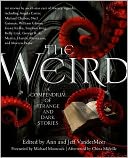
Short story collections and anthologies are so often a crap shoot, but this year I found a bunch I liked, including Elizabeth Bear’s Shoggoths in Bloom, the first year compendium put out by Daily Science Fiction (surely the best value in terms of words per cent of anything on this list), A Pretty Mouth by Molly Tanzer, and Stephen Graham Jones’ The Ones That Got Away, which has some just plain killer stories in it. I loved The Weird, edited by Jeff and Ann VanderMeer (and I am so intrigued by the new writing book project, Wonderbook, Jeff’s been working on and posting teasers about) as well as The Apex Book of World SF, edited by Lavie Tidhar. Bronies, put out by Kazka Press, included a number of intriguing and interesting stories. And I read what is now my favorite speculative fiction Christmas collection, Sandra Odell’s The Twelve Ways of Christmas.

Less sortable fantasy included: Elizabeth Hand’s Generation Loss; Kij Johnson’s The Fox Woman; The Night Circus by Erin Morgenstern; Among Others by Jo Walton; and The Wizard of the Crow by Ngugu Wa’Thiong’. Non spec fic reads included Winter’s Blood by Daniel Woodrell and a slew of novels by Chuck Palaniuk, of which I most liked Invisible Monsters.

I always read through writing books, but my favorite this year was shown to me by Jen Volant: Plotto: The Master Book of All Plots by William Wallace Cook, which was aptly described as “makes writing as fun as doing your taxes.” It’s actually a lot of fun to play around with, generating possible story/book plots, but there is a certain fill in line 57 then go to section 77A, quality to it.

I’m not a movie person, for the most part, and my musical taste tends to stick with the Beatles, but I did want to point to someone whose music AND writing I enjoyed this year, Sarah Pinskercebook, whose music you can listen to here: http://www.sarahpinsker.com/listen/

Games, however, are a big part of the media I consume. Video-wise, my year was given to Skyrim,
and then I tried the World of Warcraft Panda expansion, and it turned me off video games for a while. The Pandas were fun, but after a brief time with them, it felt like the same old, same old. I continue to watch Armageddon MUD and wish I still had time enough to participate there other than reading their forums occasionally. But I found two great collaborative story-telling games: Fiasco, which Walter Jon Williams trotted out at a retreat, and Microscope, which allows you to collaboratively build a world or setting, via my brother Lowell. Both of those are on my shelf, and promise to be put to good use. And, for a fun quick card game, Fluxx from Looney Labs is a blast, and includes some interesting expansions, including Monty Python, Wizard of Oz, and zombie versions.


Car Rambo's stories have appeared are ASIMOV’S, WEIRD TALES, CLARKESWORLD, and STRANGE HORIZONS, and her work has consistently garnered mentions and appearances in year’s best of anthologies. Her collection, EYES LIKE SKY AND COAL AND MOONLIGHT was an Endeavour Award finalist in 2010 and followed her collaboration with Jeff VanderMeer, THE SURGEON’S TALE AND OTHER STORIES. Her most recent collection is NEAR + FAR, from Hydra House Books. She teaches at Bellevue College as well as running a highly successful series of online classes.

Saturday, December 22, 2012

Solstice yes, end of the world not

Yesterday we reached the winter solstice. We really notice such things in Seattle, where the sun barely rises in the sky-- when one can see it at all, that is. It's rained just about every day for the last three months-- which has put even those fortunate enough not to suffer from Seasonal Affective Disorder to the severest test. As you might imagine, because the days are mostly heavily overcast, we have to have the lights on during all our waking hours. And so we seize on sun breaks, when they come. And yesterday, we had one. (Actually, we had sun for about an hour today, too.) So out Tom and I went to the Lake Union fill, a piece of reclaimed land so wet at this time of year that boots are needed, even for the graveled paths. In past Decembers, more than a dozen swans have hung out in that bit of Lake Washington, but we haven't seen them yet. Yesterday we did see, in addition to the many mergansers, northern shovelers, and buffleheads usually to be found at this time of year, some spectacular wood ducks. Oh, and the red-winged blackbirds are back in huge numbers. Also, I was bemused to see three pied-billed grebes swimming together. Grebes tend to be loners, except during mating season. Their behavior changes completely, then.

Since I'm currently reading Susan Cain's book on introverts, it occurs to me that perhaps grebes are the supreme introverts of waterfowl... Certainly they're the opposite of American coots-- which form long noisy rafts across vast swathes of the lake, pivoting and shifting position collectively on a dime. This time of year, the coots are always to be seen at the fill. American coots strike me as embodying both instinctively compulsive groupthink and extroversion.

I also saw a lone woman, kneeling in the soaking muddy grass at the edge of the water, celebrating the solstice with a burning candle and some foodstuffs that couldn't be identified without violating her privacy (which I was unwilling to do). It wasn't exactly picnicking weather, but I suspect that didn't matter in the least to her. Nice for her, I guess, that the rain had paused, though perhaps she might have put up an umbrella to protect her candle's flame, if it hadn't. 

We have more 2012 Pleasures posts yet to come, but I'm pausing them for today. They'll resume on Sunday.


Friday, December 21, 2012

The Pleasures of Reading, Viewing, and Listening in 2012, pt. 23: Pamela Sargent

The Pleasures of Reading, Viewing, and Listening in 2012
by Pamela Sargent

I’m a baseball fan who also much admires the writing of Michael Bishop, so have to wonder why it took me until 2012 to read his superb 1994 novel Brittle Innings. Part of the reason has to be that my partner George Zebrowski and I have long had the habit of acquiring books and then slipping them onto bookshelves, as with bottles of wine in a wine cellar, to age a bit before being read. (This method works best with books that have been heavily publicized; you’ll either enjoy and appreciate them all the more after all the hype has died down or else you’ll wonder what all the fuss was about.) In Brittle Innings, Bishop does a masterful job of combining a coming-of-age story with a detailed glimpse of the American South during World War II, some of the most evocative and beautiful writing about baseball I’ve ever seen, and one of the early masterpieces and forerunners of modern science fiction – and that’s about all I should say so as not to spoil this fine novel for those who haven’t yet read it. First published by Bantam, it’s back in print and once again available in trade paperback from Fairwood Press.

Paul Grondahl’s Mayor Corning: Albany Icon, Albany Enigma, was another book that ripened on the bookshelf before I picked it up this year; this biography of the man who was the longest-serving mayor of any American city to date (Erastus Corning was elected mayor of Albany, New York in 1941 and died in 1983 while still in office) was first published by Washington Park Press in 1997 and in trade paperback by the State University of New York Press in 2007. Fellow Albanians are probably the prime audience for this book (I grew up and went to school in Albany, the kind of environment that leaves one marinated in politics and cynicism, before heading off to college, then moved back to Albany in 1996), but anybody interested in an intimate and well-researched look at the lives of upper-class WASPs in the early and middle twentieth centuries combined with what amounts to a workshop in machine politics as practiced by a master of the art, Daniel O’Connell, who ran Albany behind the scenes for decades and clearly provided William Kennedy with some of the material for his novels, will appreciate this biography. Grondahl offers a novelistic portrait of Corning, who turns out to be a much more complex and interesting character than I expected. Each section of the book covers a different facet of a man (the brilliant but lonely prep school student, the politician, the aristocrat who chose to join the U.S. Army during World War II as an enlisted man instead of as an officer, the distant husband and father, the beloved and awe-inspiring mayor) who was adept at presenting an entirely different persona to different groups of people, perhaps a necessity for any successful politician. Albany is still marked by Corning’s tenure, for better and for worse, while the closest companion and confidante the mayor had during his life, his former secretary Polly Noonan (another member of the O’Connell political machine) was the grandmother of Kirsten Gillibrand, one of New York’s current U.S. Senators. This biography convinces me that Polly Noonan also deserves a book, either a biography or maybe a novel, of her own.

Caroline Alexander’s The War That Killed Achilles, published in 2009 by Viking, is a close, detailed study of Homer’s Iliad that views it as an antiwar epic; Achilles’ wrath is seen as the result of questioning how much he actually owes his commander. Alexander explicitly compares Achilles’ challenge to Agamemnon, “I for my part did not come here for the sake of the Trojan spearmen to fight against them, since to me they have done nothing,” with Muhammad Ali’s refusal to fight in Vietnam: “I ain’t got no quarrel with the Viet Cong…I am not going 10,000 miles to help murder, kill and burn other people to simply help continue the domination of white slavemasters over dark people.” Her enthralling study almost inspires me, for the first time in ages, to pull out my old Oxford University Press edition of the Iliad in Greek, the same one I wrestled with while taking Greek in college, and read it again with fresh eyes.

As for recent science fiction jam-packed with speculation, ideas, and a lively and often satirical wit, I recommend Joan Slonczewski’s John W. Campbell Award winner The Highest Frontier, which Tor brought out in 2011. You get a space elevator, an alien invasion that has made parts of Earth nearly uninhabitable, a space habitat powered by microbes, a realistically disorienting and all-pervasive Internet-like system (Toynet), a troubled and intelligent protagonist (Jennifer Kennedy Ramos, a genetically-engineered descendant of the celebrated American Kennedys), a political campaign for the U.S. Presidency, and more, including the threat of disaster for both the Earth and the habitat that houses Frontera, the college Jenny attends. Slonczewski thrusts you headfirst into this future world but has the narrative strength to make you stay there long enough to find your bearings.

My most valued online reading this year was probably legendary numbers man Nate Silver’s blog, FiveThirtyEight, and Charlie Pierce’s fiercely eloquent posts at the Esquire Politics blog. Silver convinces me that a knowledge of statistics (a deep knowledge, not the superficial and all-too-common “I’ll look for some numbers that’ll shore up what I already think” attitude) is an essential survival skill; Pierce displays the power of righteous rage harnessed to words. While at the Science Fiction Research Association conference earlier this year, I went to a reading by Sarah Zettel during which she contended that the Great Depression was probably the most neglected and forgotten recent period of American history. (Her novel Dust Girl, published by Random House earlier this year, is set in the 1930s.) I thought of her comments while watching Ken Burns’s recent PBS documentary of that period, Dust Bowl. An environmental catastrophe caused by ignorance, carelessness, and greed; people losing their homes and livelihoods, the need to rethink our relationship with this planet – we’d better start recalling that period now, which seems more relevant than ever. We ignore the lessons of Dust Bowl at our, and the planet’s, peril.

Pamela Sargent won the Pilgrim Award, given by the SFRA for lifetime achievement in science fiction and fantasy scholarship, in 2012; she has also won the Nebula and Locus Awards. Her novel Farseed, second in her Seed Trilogy, will be out in trade paperback from Tor in January. Earthseed, first in the trilogy, was optioned by Paramount Pictures; Melissa Rosenberg, screenwriter for the “Twilight” movies, is writing the script and will produce through her Tall Girls Productions. Sargent also edited the Women of Wonder anthologies; her novels include the historical novel Ruler of the Sky, the science fiction novels Venus of Dreams and The Shore of Women, and the alternate history novel Climb the Wind. Her Web site is at www.pamelasargent.com.

Thursday, December 20, 2012

The Pleasures of Reading, Viewing, and Listening in 2012, pt.22: Kristin King

The Pleasures of Reading, Viewing, and Listening in 2012
 by Kristin King

This year's "Pleasures of Reading, Viewing, and Listening" slips backward and forward in time from the beginning of Western civilization to a dystopic future we are rapidly approaching. I'd give most of them a score of ten out of ten, except that the whole concept of scoring makes me uneasy, somehow . . .

Girl of Time (Toki o Kakeru Shōjo)
(http://en.wikipedia.org/wiki/Toki_o_Kakeru_Sh%C5%8Djo_%281983_film%29)

This is the 1983 live-action movie version of the Japanese novel titled The Girl Who Leapt through Time. Who could resist a movie with a name like that? Not me.

After an accident with lavender in her school's chemistry lab, schoolgirl Kazuko Yoshiyama finds herself shifting forward and backward in time. She has to figure out what is happening while also managing a love triangle with two boys, saving people from a fire she experienced a day early, and grappling with discrepancies with her childhood memories. Most of the time shifts are beyond her control -- until she makes the decision to learn the truth about her time shifts, whatever the cost. Then she is dealt a warning: "Don't be a vagabond of time." This is a beautiful and thought-provoking movie about love, loss, remembering, and forgetting.

Inanna by Kim Echlin
(http://www.powells.com/biblio/61-9780888994967-1)

This gorgeously illustrated book tells the stories of the ancient Sumerian goddess Inanna, who is wild and reckless and cunning and unabashedly at home in her own sexuality. She brought the gifts of civilization to mankind by winning them from the god Enki in a drinking game.

 Echlin first learned about Inanna when looking for myths to tell her daughters. She loved Inanna for being resourceful and fearless, but all the translations she found were too scholarly, so she made her own. Here is a short excerpt:

"Inanna sailed away on the Boat of Heaven.
She stole the holy powers.
She had truth.
The marriage bed was not wide enough for her.
Heaven and earth were not wide enough for her.
Inanna wanted to go to the underworld."

Oh, and I may have forgotten to mention - the Sumerian myths are sexually explicit. And Echlin didn't euphemize that out.

The Sumerians: Their History, Culture, and Character by Samuel Noah Kramer (http://www.powells.com/biblio/1-9780226452388-4)

I enjoyed Inanna and hope to share it with my daughter when she's old enough, but I see it as a teaser for a bigger story. There is a pantheon of Sumerian gods and a socio-political-economic context for the worship of those gods. There is a civilization that lasted for thousands of years. And there is the birth of writing.

Where can you go to learn that story? Samuel Noah Kramer is a pretty good start. He was a Sumerian scholar involved in the recovery and translation of thousands of cuneiform tablets, containing stories and temple hymns and daily minutia. In this book, he sums up what he learned for an audience of laypeople. It is a fascinating window into a culture that is both alien and foundational to mine. Kramer covers not only priest-kings and empires and gods, but also the details of everyday life, from the parent-child relationship to the experience of a schoolboy getting in trouble for being late to school. Even better, he includes excerpts from the Sumerian texts themselves.

I must warn you, however: this is a male scholar writing in 1963, and his translation does use euphemisms.

Scored by Lauren McLaughlin
(http://www.powells.com/biblio/62-9780375867910-0)

This YA novel is the dystopia for our time. What happens when you put together No Child Left Behind high-stakes standardized testing with surveillance measures like spy-cams and GPS monitoring of cell phones, and then introduce a company whose product is a single score for every child, which colleges and corporations will then use to sort people?

That is the reality for Imani LeMonde, a high school student whose scores put her on track for a college scholarship -- something that is otherwise out of reach for all but the very rich. The scores are supposed to establish a meritocracy to replace our system of inequalities, but something else is going on. Scores update minute-to-minute, and they depend not only on school performance but also day-to-day activities and peer group associations.

Imani's troubles begin when her score drops precipitously because her friend Cady is kicked out of her house and moves in with a boy. This takes her off the college track, and if her scores drop farther, her only options will be welfare or the military. She has a choice to make -- but it's not the simple moral dilemma of whether or not to denounce Cady to regain her score, because that option is not open to her. Instead, she has to look deeply into the scoring system to understand how it works -- and what matters to her.

The society pictured here is not far off the mark. Our teens and children will be subject to more surveillance than we ever imagined. Case in point: school records are kept in "longitudinal databases" where they can be tracked over long periods of time and across school district and state lines. And by school records I mean test scores, tardies, absences, ethnicity, dental records - you name it. (For a sneak peek of the hundreds of items that can be collected, visit http://nces.sifinfo.org/datamodel/eiebrowser/techview.aspx?instance=studentElementarySecondary.) Ten years from now, could a prospective employer check the database for information about my children? I bet. Could they get a score? I bet.

Kristin King (http://kristinking.wordpress.com)  is a writer, parent, and activist who lives in Seattle. Her work has appeared in Strange Horizons, Calyx, The Pushcart Prize XXII (1998), and other places. Two of her stories will be appearing  in an Aqueduct Press anthology, Missing Links and Secret Histories: A Selection of Wikipedia Entries Lost, Suppressed, or Misplaced in Time, forthcoming in 2013.

The Pleasures of Reading, Viewing, and Listening in 2012, pt.21: Andrea Hairston

The Storytelling of 2012
by Andrea Hairston


Real Time Performances
The Big Circus Show this year—filled with good and bad clowns, wild beasts, amazing acrobats, and cranky ringmasters—was the November Election. Audience participation part was very exciting; however, it was an excruciatingly long show. The bloated budget for smoke and mirrors, for lying and grandstanding drained our spirits. We spent so much time fussing over nonsense—legitimate rape, the slacker 47%, etc. The Gate Keepers trying to keep folks out of the big tent were also infuriating. I did a lot of cursing. Yet, I must confess that the final act was a HUGE relief.


On Stage
While in Germany this past summer, my German friends “gave” me a Bavarian folk theatre production for a birthday present—Da Himmegugga roughly translated as "The Stargazer." (http://www.e-und-e-ringsgwandl.de/) This musical SF & F play is about a wild peasant inventor, the Himmegugga, who is certain of imminent alien visitation! He sends out signals to the aliens believing they will share his cosmic sense of wonder and be able to answer the question of God’s existence. The Himmegugga’s daughter sticks by him but his neighbors think he is a misanthropic crackpot making wild contraptions that are as pointless as his star gazing. The Himmegugga has stopped talking to his best and oldest friend. House trolls (marvelous puppets) wreck havoc with his home life, stealing and rearranging the chaos of hilarious inventive junk. Only the audience sees the trolls who include us in their mischief. None of his inventions work, and it’s looking pretty bleak when an alien finally drops in for a visit and transforms the Himmegugga’s relation to the cosmos. It turns out that God is in the marvel of inventions and meanings we make together.

The actors speak in Bavarian dialect. The text is full of Bavarian wit and wisdom, and the production is done for the home crowd. The rest of us hang on by the seat of our pants in high German. Elfriede and Erwin Ringsgwandl wrote, produced, directed, and acted in the production which started as a I have a barn, let’s do that play we’ve been talking about community production. Da Himmegugga is now in a big tent and selling out to enthusiastic crowds (even a few non-Bavarians) twelve months in advance. The play celebrates the local and intimate that embraces the cosmic and the universal. The audience is part of the action. We are stargazers, inventors plagued by trolls, hanging on to dreams. Here is a song in many languages pleading with the alien to come visit. http://vimeo.com/33828651. This mythic, folk SF epic stands in sharp contrast to:

The Movie I Wanted to Like But Just Couldn’t
Beasts from the Southern Wild. The cinematography is stunning. The child actress playing the lead is absolutely compelling. I dashed to the movie theatre at the promise of a mythic story riffing on New Orleans, flood waters of Biblical proportions, and a bold little black girl. Beyond the corruption and decay of postindustrial, late capitalist civilization, white and black folks have made a place of wonder—the Bathtub—below sea level. Here, their spirits are not drowned. Floods wash away their world-trailer park trash-kingdom. Monstrous black beasts storm the ruins of their devastated world and are turned aside by the grace of the child heroine who is fierce beyond her years!

What’s not to love?

We all see different movies. I saw another Topsy wild black child raising herself. I saw folksy poor people without history, context, or motivation, filmed in their beautiful, picturesque, primitive glory. Racism is magically over! I endured another mythic presentation of Noble Savages never combing their hair, eating at troughs, and celebrating patriarchal masculinity. The Noble Savages cling to their irrational magical thinking when hospitals tempt them with healing. The Savages are close to the beasts and forces of nature who torment and threaten them. Mute women are the hand maidens to their noble savagery, ghosts and vague memories. Girl children must be tough, never cry, and align with the patriarchal Savages if they wish to survive.

For me Beasts was regressive nostalgia masquerading as visionary divination.


Books and Movies 


Ancient, Ancient by Kiini Ibura Salaam, The Receptionist and Other Tales by Lesley Wheeler, Up Against It by M. J. Locke, Salsa Nocturna by Daniel José Older, and Bitterblue by Kristen Cashore were full of visionary divination…and also beautiful language, great story telling, and provocative ideas. I’d wake up at four in the morning and pick up one of these books and not care that insomnia might wreck the next day! Sister Citizen for Colored Girls Who’ve Considered Politics When Being Strong Isn’t Enough by Melissa V. Harris-Perry mixed literary analysis and political theory for a provocative read.

I enjoyed Argo, Lincoln, Cloud Atlas, and Flight. There was also the delicious serial melodrama of Downton Abbey and Game of Thrones. Pariah (http://www.imdb.com/title/tt1233334/)written and directed by Dee Rees was a revelation. The film does a compelling exploration of the lives of young, black, queer women in Brooklyn. The script and cast are very strong—particularly the lead, Adepero Oduye.

We inhabit the stories we tell and we become the characters we imagine. I am grateful to these storytellers for the Andrea that will go charging into 2013!

Andrea Hairston is the Artistic Director of Chrysalis Theatre and has created original productions with music, dance, and masks for over thirty years. She is also the Louise Wolff Kahn 1931 Professor of Theatre and Afro-American Studies at Smith College. Her first novel from Aqueduct Press, Mindscape, won the Carl Brandon Parallax Award and was shortlisted for the Phillip K Dick Award and the Tiptree Award. Her second novel, Redwood and Wildfire, which Aqueduct also published, won the James Tiptree Jr. Award earlier this year. This year Aqueduct also published Impolitic!, which Andrea co-authored with Debbie Notkin, in connection with WisCon, where both were the 2012 guests of honor.