Tuesday, December 20, 2011

The Pleasures of Reading, Viewing, and Listening in 2011, part 15: Jeffrey Ford

Books, Movies, and Music Enjoyed in 2011
by Jeffrey Ford


Read

The New Jim Crow: Mass Incarceration in the Age of Colorblindness by Michelle Alexander (The New Press) -- Alexander offers a supremely well-researched and ultimately convincing argument that the out of control incarceration of young Black males constitutes a new kind of Jim Crow law and resultant caste system. Interesting discussion of how this phenomenon is aimed at blocking and/or disenfranchising people from their vote.

Doctor Sleep by Madison Smartt Bell (Grove Press). An Americn ex-heroin addict, self-styled hypnotherapist, who works with a secret government agency at times and lives in London, suffers from insomnia. A trippy book in which the reader is never quite sure what's happening. Errant and subtle. Terrific writing.

The Natural History of the Unicorn by Chris Lavers (Harper Perrenial). Across continents and centuries, Lavers traces the history of a myth. Interesting stories from antiquity to the 19th century concerning this symbolic creature.

Wave of Mutilation by Doug Lain (Eraserhead Press/Fantastic Planet). The universe has a hole in it and reality is leaking out. Who knew it would be this much fun? Doug Lain's Wave of Mutilation is the story of Christian and Samantha; a story that generates itself as it devours itself. Its characters and surreal scenes are rendered with an engaging style and seem to have truths to tell us about relationships, politics, sex, the history of furniture. At the same time, they convince us they are insubstantial, errant, nothing but the illusion of the world. Terrific writing, good laughs, and the flawless execution of a fictional tightrope walk between "reality" and nothing. Wonderfully original!

The Hundred Thousand Kingdoms, The Broken Kingdom, The Kingdom of Gods by N. K. Jemisin (trilogy from Orbit Books) -- A fascinating and original take on the genre of epic fantasy by a writer who can do it all. This is a lot of epic fantasy for me (not so much an epic fantasy reader). I was constantly engaged, delighted, and surprised by these works. Looking forward to see what Jemisin does next.

Matilda Told Such Dreadful Lies: The Essential Lucy Sussex by Lucy Sussex (Ticonderoga Press) -- A retrospective collection from one of my favorite contemporary short story writers. Eclectic themes (SF, F, H, Mystery)) and styles -- creepy dolls, genetics of the snake woman, volcanoes. Sussex is an underappreciated story writer. It's great to see this new compilation of some of her best work.

R/Evolution by Tenea Johnson (Counterpoise) -- A mosaic novel. Fast paced science fiction full of ideas from a time and place where bio-technology and racial justice/injustice coincide. Nice blend of the fictional page turner and important political ideas. Also check out Johnson's new Smoketown novel from Blind Side Press.

Starve Better by Nick Mamatas (Apex Publications) -- Advice on the writing life is usually for shit, but Mamatas manages a clear headed, realistic, and humorous view of what to expect and offers credible tips on making the most of your fiction in the world of professional writing. There are few books like this that I'll recommend to my fiction students, but this is definitely one of them.

The Camel by Robert Irwin (Reaktion Books) -- Everything you might want to know about the mythology, history, and biology of the camel by an interesting author.

This year I've been lucky enough to read some books that won't be out till 2012. You might want to consider these in the new year.

The New American Crime Film by Matthew Sorrento (McFarland Publishers) -- Forward by director, Stuart Gordon. Sorrento covers the crime films of Lynch, Cronenberg, Mamet, Herzog, etc. A little pricey, but a scholarly work that is more than just gossip and glitz.

Moscow But Dreaming by Ekaterina Sedia (Prime Books) -- this new collection of stories by Sedia contains weird and twisted tales from old Russia, the Soviet system and America. Sedia's writing is alive with metaphor that renders both the beautiful and the bizarre. Her yellow Lenin is the height of creepiness. I can't recommend this one enough. Sure to be one of the stand out collections of 2012.

Technicolor and other Revelations by John Langan -- Langan, one of the best short story writers in the Horror genre, takes the archetypal themes of horror and filters them through his unique imagination and style, making them entirely fresh. Contains the classic "How the Day Runs Down" from the JJ Adams anthology, The Living Dead, plus seven other pieces, one a new story. Great book of short fiction.

Viewed

Kiss Me Deadly directed by Robert Aldrich, starring Ralph Meeker as Mike Hammer, written by A. I. Bezzirides and Mickey Spillane (1955) -- Sort of an SF/Noir with espionage intrigue, a box of glowing bad stuff, and a loopy plot. Cloris Leachman debuts. Criterion Collection.

House of Numbers directed by Russell Rouse, starring Jack Palance and Barbara Lang, based on a novel by Jack Finney and a script by Don Mankiewicz (1957). Palance plays twins in this prison break caper. The scheme that Arnie and Bill Judlow put into play is preposterous, but somehow the story works. Shot at San Quentin, using real guards and prisoners as actors. The Chief, from Get Smart, plays the warden of the joint.

Two Lane Blacktop directed by Monte Hellman, starring James Taylor, Laurie Bird, Dennis Wilson (of the Beach Boys) and the great, Warren Oates, screenplay by Rudy Wurlitzer and Will Cory (1971). Ran into this late one night on, I believe, TCM. Apparently the film had been out of circulation for a long time. About a race from somewhere in the Southwest to Washington D.C. The prize is that the winner gets the loser's car. No frills movie making -- errant and at times beautifully slow. Wurlitzer plays a race car driver and a young Harry Dean Stanton plays a hitch hiker.

Listened


The Goat Rodeo Sessions by Yoyo Ma, Stuart Duncan, Edgar Meyer, and Chris Thile.

"Just You, Just Me" by Pianica Maeda

Rough Guide to African Guitar Legends anthology

Ska Down Her Way anthology

For Your Love" by Ed Townsend


Jeffrey Ford, who has the won the Nebula Award, the World Fantasy Award (several times), and a few other awards as well, is the author of The Well Built City trilogy and numerous other novels, as well as several collections of short fiction. He lives in New Jersey.

The Cascadia Subduction Zone, Vol. 2, 1

I'm pleased to announce that the new issue of The Cascadia Subduction Zone-- the first of our second year of publication-- is out! In addition to a full complement of reviews, it has an essay by our own Josh Lukin on disability in literary criticism in general and Anne Finger's brilliant short fiction in particular, another essay by Mary Meriam on Lilian Faderman, Kij Johnson on Margaret Cavendish, and a poem by Anne Sheldon. If you aren't already a subscriber, this would be an excellent time to subscribe, especially since we have a special-- supplemental-- issue on Joanna Russ in the works, which we intend to distribute to subscribers without additional charge. And if you're subscription has expired, surely you'll want to renew! You can do both of those things here.

Here's the Table of Contents of the new issue:


Essays
Ishmael in Love: Anne Finger and the Reclamation of Disability by Josh Lukin
My Muse by Mary Meriam
 
Poem
History Lesson by Anne Sheldon
 
Grandmother Magma
The Blazing World by Margaret Cavendish reviewed by Kij Johnson

Reviews
With Fate Conspire by Marie Brennan reviewed by Ebony Thomas
Master of the House of Darts by Aliette De Bodarda reviewed by Deb Taber
The Kingdom of Gods by N.K. Jemisin reviewed by Mikki Kendall
Mr. Fox by Helen Oyeyemi reviewed by Nic Clarke
Distances by Vandana Singh reviewed by Ama Patterson
Song of the Swallow by K. L. Townsend reviewed by Karen Szymczyk
Featured Artist
Marilyn Liden Bode

Monday, December 19, 2011

The Pleasures of Reading, Viewing, and Listening in 2011, part 14: Fiona Lehn

2011, On the Couch
by Fiona Lehn

I spent nearly half of 2011 on the couch with my foot up, having broken my ankle while hiking the beautiful (but harrowingly treacherous) Mt. Seymour in the summer. A good friend who understands these things brought me her entire 5-season series of Babylon 5 on dvd. Avoiding tv (besides the Canucks and the Broncos) for the past 25-ish years has rendered me somewhat culturally ignorant; thus, I had never heard of Babylon 5. But now…I know my Minbari from my Psi Corps and everyone in between. This is a fascinating saga that starts out slow (the first season required concerted investment even while on painkillers that made everything warm and fuzzy) and evolves into an epic space opera that ended all too soon.

Glee (season 2, dvd). I’m a Gleek. I admit it. I have always loved musicals and I LOVE Glee! I believe that if everyone broke out into dance and/or song in our daily lives, the world would be a much healthier place. Season 2 dials down the OTT style of the first season and cranks up the higher love.

Dead Like Me (seasons 1 and 2, dvd). I discovered this show early in 2011 while babysitting a friend’s kid who had long since fallen asleep. I love the tone of this show, the wit, and the characters. Dark and philosophical, it seems to be a show for depressed people. (Reminds me of early 1900s Russian literature. Ok, maybe not that dark!)

Torchwood (all of them, dvd). Is everyone on this show sexy, or is it just me? Great acting, thrilling plots, everything you could ever ask for from science fiction. Yummy.

The Runaways (dvd). I remember when Joan Jett came out with “I Love Rock N’ Roll” and hit Number 1 with it, but I didn’t know her earlier band, The Runaways, at all. I watched this dvd during my “lie on couch with ankle up” tenure and was blown away by the spirit and the talent of the young female musicians, by their drive, their mistakes, their passion—what a fabulous film for the inner rockstar in everyone!

The visual artwork of Geneviève Pratte and Suzanne Lorenz.I first discovered Pratte, a young, award-winning Montréal-based painter, while editing an issue of Room magazine. I fell in love with her sometimes desolate and almost apocalyptic work, represented by Galerie Lamaoureux Ritzenhoff.
Northern Californian photographer Suzanne Lorenz has photographed the dying oak trees and other native beauties that have become quite rare in the San Joaquin Valley, (once one of the most fertile farm valleys of the world, now much built over as bedroom communities for the San Francisco Bay Area). The Light of Change showcases much of her work.

Pink: “Raise Your Glass” (official music video). Long ago, Pink earned my fandom. Tough, smart, compassionate, talented, she likes to push envelopes (remember her video “Stupid Girls”?) and does it well. In her video for “Raise Your Glass”, Pink raises the bar with irreverence, and celebrates all of us—just watch it!

OK GO: “This Too Shall Pass” (official music video). Never seen an OK GO video? Change that. You won’t regret it. This creative, colourful and witty band writes groovy music with uplifting lyrics and makes high-quality one-take videos that boggle the mind. This particular video features a marching band in marshland camouflage and a children’s choir. It’s hilarious, somehow Dr. Seussical, and the music rocks.

Megan Slankard: A Token of the Wreckage (independent cd). This debut album by a young songwriter from Northern California resembles Jonatha Brooke at times. High production values, layered vocal harmonies, thoughtful lyrics and smooth arrangements —reminds me how good songs can be.

Dan Ariely: The Upside of Irrationality (nonfiction). Although I haven’t yet finished this book, it has already changed the way I think about people’s behaviour. I used to believe that just a few people behaved irrationally, but now I agree with Ariely: pretty much everyone does. A good-natured and pragmatic study of why people do what they do, and how their irrational responses make sense.

Connie Willis: To Say Nothing of the Dog (science fiction). I became a Connie Willis fan a few years ago when I read Lincoln’s Dreams. Despite several attempts, however, I had trouble getting into To Say Nothing of The Dog until I was going in for surgery on my ankle and grabbed the thickest book I had yet to read from my bookcase. Somehow the desperation I was feeling while wondering if I’d walk again and waiting for the operating room to open up, helped me to leap into this time travel story that, turns out, is hilarious. Ask yourself one question: How much trouble can one little cat cause? Read and find out…

I have a few all-time faves that must be mentioned:

Stanislaw Soyka, Poland’s songwriter, and Francis Cabrel, France’s songwriter—that’s what I call them anyway. Whenever I meet someone from Poland or France, inevitably, I ask if they have seen their respective country’s songwriter live, what they think of the music, etc. Both are poets and fabulous musicians. If you love good music and don’t necessarily need to understand all the words, try them (and pick up a couple new languages at the same time).

Joanna Russ: Picnic on Paradise (science fiction). I love it, have always loved it, and always will. Russ’s anachronistic little heroine kicks ass from start to finish in a barbaric future universe, and leaves the reader wanting more.

Suzy McKee Charnas: “Listening to Brahms” (novella). McKee Charnas’ narrator in this story becomes emotionally numb after experiencing a cataclysmic trauma. When I first read this novella, I had to read it again. Many times. It sparked something in me. I became fascinated by the idea of a character who had been programmed to feel nothing, and what happens to her eventually became the story of my first novella, “The Assignment of Runner ETI”. Can people reacquire their humanity once it vanishes? And if so, how? McKee Charnas’ story is a chilling account of the end of the world as we know it. Set on a planet run by lizards. Told with a dark humour, and no hope at all. (You’ll love it!)

I look forward to walking again, and to the many artistic treasures 2012 will bring. Until then, enjoy!


Fiona Lehn made her first professional sale of fiction in 2008 when “The Assignment of Runner ETI” won third place in the Writers of the Future contest. From 1993 to 2006, she co-produced several CDs of her original songs and performed across the U.S. From 2007 to 2011, Lehn served on the editorial collective of Room, Canada's oldest feminist literary magazine. Though Lehn grew up in Stockton, CA and is a graduate of the University of California at Santa Cruz, she lives now in Vancouver, BC as a Canadian citizen. Aqueduct Press published her novella The Last Letter as a volume in its Conversation Pieces series in 2011.

Saturday, December 17, 2011

The Pleasures of Reading, Viewing, and Listening in 2011, part 13: Nancy Jane Moore

The Pleasures of Reading, Viewing, and Listening in 2011
by Nancy Jane Moore

I took my ancient (but working) TV set to Goodwill when the signal changed over to digital, intending to buy myself a nice flatscreen device. But it’s been a year and a half and I still haven’t done it. It’s not the cost – a new TV set wouldn’t cost as much as the Android-powered tablet I got this year – but rather a lack of motivation. I just haven’t missed TV enough to do anything about it.

I did watch a few TV shows via Netflix (Mad Men was especially good, and I really liked the new Sherlock Holmes series with Holmes as a young computer geek), but lately I haven’t even done that. And every time I think about going to the movies, I read the list of what’s actually showing and decide not to bother.

Which means I’ve been reading a lot. When I’m really brain dead after a day of work, I tend to re-read old novels on the (misguided) assumption that I can easily put them aside and either get more work done or go to bed at a respectable hour. Alas, I have discovered that I have not outgrown reading a compelling book into the wee hours, which does not fit in well with my other recent discovery that a good night’s sleep is very valuable indeed.

One of the exciting re-reads that kept me up last year was Starfarers, the first volume of Vonda N. McIntyre’s Starfarers Quartet. This is perfect science fiction: imaginative but possible science, political hassles, compelling and diverse characters with very real human motivations, and the grand idea of exploring beyond our home. It’s been out of print, but Book View Café has brought the series back in ebook form.

As for books that were new to me: In one of my hunts through my large and disorganized book collection for something to read, I stumbled across another one of those books I can’t remember buying and didn’t even know existed: Terri Windling’s The Wood Wife. This book sucked me in so completely that I didn’t want to leave the world when the story was finished (even though the story ends perfectly). The desert Southwest, artists, mythological characters who become real, humans who can understand more than the daily grind – all add up to a magnificent fantasy world.

Suzy McKee Charnas’s Dorothea Dreams is also set in the desert Southwest (Northern New Mexico as opposed The Wood Wife’s Southern Arizona), which might explain why it’s another world that sucked me in so completely that I didn’t want to leave it when the book was over. But a better explanation is that it’s a wonderful story that uses a fantastic element to talk about real human beings. I think it might be my favorite among Suzy’s books, and am glad Aqueduct brought out a new edition.

I reviewed those two books and a number of others that I enjoyed on the Book View Cafe blog over the last year. Here, in no particular order, are some of the books I liked enough to review (I only write about books I like, as a rule). And yes, several of them are published by Aqueduct, because Aqueduct publishes the kind of books I want to read, including ones I didn’t know I wanted to read until they hit print.

• Andrea Hairston’s Redwood and Wildfire, a magnificent story that makes the truth of the Jim Crow years in the U.S. more real by adding fantastical elements.

• N.K. Jemisin’s The Broken Kingdoms, a worthy sequel to The Hundred Thousand Kingdoms (I have to get around to the third volume of this trilogy soon).

• L. Timmel Duchamp’s Never at Home, which collects many of Timmi’s most imaginative and fascinating stories.

• Eleanor Arnason’s Mammoths of the Great Plains. Just think about that for a moment: What if there had been mammoths ranging the U.S. in the 19th Century?

• Anne Sheldon’s The Bone Spindle. A story and poems about the fiber arts, which sounds so ladylike and polite, and would be, if Anne didn’t have a wicked knack for slipping in the subversive.

Eclipse Three, edited by Jonathan Strahan, which proves that it is quite possible to have a great anthology dominated by women authors. I particularly liked Maureen McHugh’s “Useless Things” and Karen Joy Fowler’s “Pelican Bar,” but really, there’s not a bad story in the book.

I did read some books by men this year. I finished (sigh) reading the wonderful Patrick O’Brian Aubrey/Maturin series and am now just waiting for enough time to pass so I can read it again. And I finally broke down and read Steig Larsson’s Millennium Trilogy (The Girl With the Dragon Tattoo et al), which I’d avoided for years on the principle that hardback bestsellers prominently displayed in airport bookstores can’t possibly be good. I was wrong: these books are compelling (definitely kept me up to the wee hours), if grim in spots, and the casual political assumptions that are common currency in Sweden were very refreshing in contrast to a summer of idiotic U.S. political posturing.

It always amuses me that the supposedly “true” written word is called “nonfiction” – that is, it’s defined in the negative. I take this to mean that fiction is the higher art, since other work is defined by its absence. Not, of course, that there isn’t quite a bit of fiction in some nonfiction, not all of it acknowledged.
But I do respect and appreciate good nonfiction. This year the death of Joanna Russ inspired me to read her critical works. While I know Russ’s fiction well, I’d only read a little of the nonfiction. Two books stood out for me: How to Suppress Women’s Writing and What Are We Fighting For?

I’d like to think that How to Suppress Women’s Writing was outdated, that things had changed dramatically since it was first published in 1983. Unfortunately, it is still very relevant, as witness all the discussions about the barriers to women writers that periodically travel around the Internet (many of them held here on Ambling Along the Aqueduct). All too often while reading this book, I found myself going, “Oh, that’s what happened to me.”

What Are We Fighting For? not only provides historical perspective on the part of the feminist movement that began to grow in the late 1960s and 1970s, but also provides the analysis needed for continuing to expand those ideas in the 21st Century.

In a slightly different (but in my mind, related) direction, the book Why We Cooperate, edited by Michael Tomasello, provides an insight into the theory – currently being explored by biologists and anthropologists – that the human ability to get along with others has been a major factor in our evolution. This slim anthology of essays by scientists in different fields is a good starting point in the study of cooperation.

The most beautiful book I’ve seen this year – almost a coffee table book – is a collection of Michael Ventura’s essays illustrated with photographs by Butch Hancock: If I Was a Highway. Ventura is one of the most provocative thinkers of our time. His essays appear biweekly in the Austin Chronicle, but they don’t read like columns written on a deadline. Ventura is a writer who cares about how he says things as well as a thinker who cares about ideas, and every word he puts down is carefully chosen. The title of the book is from one of Butch’s songs, which are just as provocative as Michael’s essays – Butch knows how to use words as well as how to take fascinating pictures. This book is published by Texas Tech University Press, which shows that intelligent publishing can flourish even in the Texas Panhandle.

I’ll end with the book I’m reading now, even though I haven’t finished it and find myself arguing with it as I read: Steven Pinker’s The Better Angels of Our Nature. This is his book arguing that human violence has declined over our history.

I am not a fan of Pinker’s; even when I agree with him I find him irritating, and I disagree strongly with his public statements on sex differences. This particular book is annoying because he has decided that violence has declined and then presented the arguments that he thinks best support that thesis. It is not an exploration of the idea, but rather an attempt to bludgeon the reader into agreeing with him.

But – and it’s a big but – I think he’s right: Human attitudes about cruelty and violence have changed for the better. I’m not sure he’s right about why, but some of his theories are worth pursuing. I suspect he’s leaving out some important ideas – such as those about the human need and capacity for cooperation – but since I haven’t finished the book yet I don’t know what all his ideas are.

Despite my doubts about this book, it does seem to be the first book on the subject to get major attention and is a good starting point for a discussion of whether the human race is on the road to eventually becoming civilized. As an optimist by nature, I’d like to think so – assuming we survive climate change, overpopulation, and the other disasters we’re not dealing with right now without losing the progress we’ve been making toward true civilization.

Bio: Nancy Jane Moore’s most recent book is a collection of her flash fiction, Flashes of Illumination, available in ebook form from Book View Café. Her other books include the collection Conscientious Inconsistencies, published by PS Publishing, and the novella Changeling from Aqueduct Press. Her short (but longer than flash) fiction has appeared most recently in the military SF anthology No Man’s Land and in several Book View Café anthologies, including the steampunk books The Shadow Conspiracy and The Shadow Conspiracy 2. She blogs regularly on the Book View Café blog. Besides writing, her other passion is martial arts, and she holds a fourth degree black belt in Aikido. She lives in Austin, where she worries about drought and bad government policies, but is made very happy by the fact that she does not have to shovel snow.

Friday, December 16, 2011

The Pleasures of Reading, Viewing, and Listening in 2011, part 12: Lynne M. Thomas

The Pleasures of Reading, Viewing, and Listening in 2011
by Lynne M. Thomas

It’s hard to believe that 2011 is nearly over, but it has been filled with many wonderful things.
I began the year by reading what would become this year’s World Fantasy Award-winner for best novel, Nnedi Okorafor’s Who Fears Death. Okorafor’s prose was visceral and wrenching in the best possible way; she took on difficult topics with clarity. Lisa Goldstein’s The Uncertain Places was a haunting, lovingly rendered tale of a young man’s life among the fey. Alex Bledsoe’s subtle The Hum and the Shiver incorporated Appalachian music and traditions into a rural twist on urban fantasy that stayed with me long after I’d finished reading, as I contemplated how the novel was shaped like the music that informed it. Andrea Hairston’s Redwood and Wildfire provided an engrossing tale of migration from the Deep South to Chicago’s vaudeville and cinema theaters at the turn of the last century. Genevieve Valentine’s Mechanique twisted and turned through the beautifully written tale of a post-apocalyptic circus company struggling for survival.


In young adult and middle-grade literature, I really enjoyed Catherynne M. Valente’s Andre Norton Award-winning The Girl Who Circumnavigated Fairyland in a Ship of Her Own Making-- a quirky, sly, whimsical adventure tale of September, a young girl who is decidedly not the stay at home type. I’m very much looking forward to reading it my daughter. I also enjoyed Malinda Lo’s Huntress, which had splendidly drawn adolescent characters meeting fairy tale challenges in a haunting, wintry setting.

In short fiction anthologies, I caught up with the work of Shirley Jackson Award-winner Rob Shearman. His Love Songs for the Shy and Cynical took on love and life, and the uncertainty of whether one is actually managing to do either well with wry, self-deprecating humor and a dark amusement at human foibles.

Viewing has been a bit limited this year, and most of the things I watched were from the past. However, I can note that I have very much enjoyed this season of Doctor Who, especially the River Song arc. I finally saw for the first time the first season of the 1990s Batman: The Animated Series, which was a fantastic example of how animation can tell riveting visual stories. My favorite new-to-me series that I watched this year was The Middleman, which may well be the geekiest television series ever produced, with a heart of gold. This was a summer of comic book movies, and I found both Captain America and Thor quite entertaining. As is in keeping with the characters themselves, Captain America was a straightforward origin story, while Thor was a bit more exuberant in its storytelling.

Listening? My iPod is not the most adventurous, but I enjoyed the Radio Free Skaro (Doctor Who news and chat), and (still!) Galactic Suburbia podcasts (general SF news and chat from a decidedly feminist and snarky perspective) when I could catch them.

I’m looking forward to what 2012 will bring.


Lynne M. Thomas is the Editor-in-Chiefof Apex Magazine. She co-edited the Hugo Award-winning Chicks Dig Time Lords, as well as Whedonistas, and the forthcoming Chicks Dig Comics (all from Mad Norwegian Press). She is also the moderator for the SF Squeecast, a monthly SF/F podcast. In her day job, she is the Curator of Rare Books and Special Collections at Northern Illinois University, where she is responsible for the papers of over 55 SF/F authors. You can learn more about her shenanigans at lynnemthomas.com.

The Pleasures of Reading, Viewing, and Listening in 2011, part 11: Wendy Walker

Best of 2011
by Wendy Walker

Without my having planned it, my reading this year seems to have circled around the topic of political pressure and how people respond to it. I started out by reading quite a bit about and by Joseph Conrad. Zdzislaw Najder’s excellent biography Joseph Conrad, A Chronicle shows how the author’s Polish background, and the political dilemmas it involved him in, inflected his life from day one. From the moment his parents were sent into exile for their underground political activities, he accompanying them though only a small child, he was launched into a world of experience which he drew on for his tales, of tyranny, imperialist exploitation, anarchism and espionage. Edward Said’s Joseph Conrad and the Fiction of Autobiography delves deeply into narrative secrets and must be read by any lover of this author.

As to Conrad’s fiction, I was surprised by the power of his first and second (linked) novels. Almayer’s Folly and The Outcast of the Islands are not very widely read and have often been disparaged in comparison to the later work. Each deals with the perils of passion conceived across a cultural divide. The romantic subject matter and lush exotic setting are vehicles for a language utterly fitting, and new in English. One of the most fascinating results of Conrad’s colonial struggle is the impact of his native language upon his English prose style: Polish syntax underlies the structure of his so-distinctive sentences. Besides enriching his adopted literary tradition, Conrad’s writing went some way towards assuaging his deep sense of national loss and political estrangement.

I also read a number of books by and about brilliant American literary women. In Lyndall Gordon’s Lives Like Loaded Guns: Emily Dickinson and Her Family’s Feuds, Mabel Loomis Todd, Emily’s brother’s lover, is the beautiful vampire who steals the show. Mabel Todd was responsible for getting Dickinson’s poems published after her death, but her possessiveness of the poet’s legacy was later matched by Arthur Houghton, a ruthless collector of manuscripts, who destroyed the integrity of the original fascicles in a campaign so underhanded one wishes Harvard hadn’t been capable of it. This book is a real page-turner, about hatred in a family possessed of a literary treasure, and how personal passions for dominance infect the struggle over literary legacies, to the endangerment of the manuscripts themselves.

Margaret Anderson, a leading light of the literary vanguard in Paris in the 1920s and 30s, wrote a four-volume autobiographical memoir, of which I read the last volume, The Strange Necessity. It covers the period during which Anderson’s journal, The Little Review, was put on trial under the obscenity laws for publishing excerpts from Joyce’s ms.-in-progress, Ulysses. Anderson’s book contains memorable passages on poetry, music, and publishing, as contextualized by her relationships with her friends, among them Jane Heap and Janet Flanner.

Silence and Power: A Re-evaluation of Djuna Barnes, ed. Mary Lynn Broe, deals with one of my favorite writers, another member of Anderson’s circle. It contains a variety of illuminating essays about Barnes’s works, not least her famously difficult play The Antiphon. In an essay by Lynda Curry entitled “‘Tom, Take Mercy’: Djuna Barnes’ Drafts of The Antiphon,” the play is revealed to have been so radically reduced in length during the editing process by T. S. Eliot (!) as to render the plot incomprehensible in the published version. Curry goes over the excisions (which deal with rape and incest) and restores them, in the hope that the play as Barnes wrote it will be made available before long.

When a friend of mine died, I inherited part of his library, among which I found Friedrich Rech-Malleczewen’s Diary of a Man in Despair. This is an extraordinary document of WWII, recording the changes in a Bavarian village. The author, a member of the old aristocracy deeply opposed to the Nazis, closely observes Hitler’s changing behavior as the war wears on. Hitler is shown insecure and inept in social gatherings, a bully festering with resentments.

Susan Buck-Moss’s Hegel, Haiti and Universal History performs an invaluable service by daring to place so-called “fringe political developments,” in this case the Haitian Revolution, at the center of Western cultural history. She makes a persuasive case that Hegel’s concept of the master-slave dialectic was inspired by his daily reading of newspaper accounts of the slave insurrection in Saint Domingue, and the subsequent defeat of Napoleon’s army. She speculates on the importation of elements from Voodoo ceremony into the rituals of the Freemasons, and makes other startling, and convincingly visual, connections.

Also in the revisionist vein, Ed Kritcher’s Jewish Pirates of the Caribbean (a publisher’s title if there ever was one!), argues a surprising thesis, that the colonization of the New World was largely shaped and driven by the Jews expelled from Spain by Isabella in 1492. As “New Christians” (forced converts from Judaism), they secretly used the explorations to search for new places where the Jewish community could live safely. The book is fully documented with footnotes to sources in the Jamaican and Brazilian archives. I look forward to seeing further research on this topic, a curious chapter in the history of the Atlantic, and the new vision of the part played by the sailors who rejected servitude in the European navies in favor of a rough experiment in democracy, piracy.

Easily the best exhibition I saw this year was “Alexander McQueen: Savage Beauty” at the Metropolitan Museum of Art. It was truly astonishing, and I can only compare it in its complexity and theatricality to two previous exhibitions at the Costume Institute, the Yves Saint Laurent show of 1983 and the Diaghilev Ballets Russes of 1978. I encourage anyone who is interested in these clothes to watch the runway videos here, rather than just looking at photos. They convey the spatial excitement and drama of the clothes. These are clothes for the imagination, rather than clothes to wear. The collections that will stay with me are those that express McQueen’s preoccupation with the Highland Clearances, a veiled genocide perpetrated by the English upon Scotland, the designer’s ancestral home. Two collections, “Highland Rape” (which introduced the “bumster” pant) and “The Widows of Culloden” show the power of fashion to mount a politico-sexual critique. But lovers of fantasy and science fiction may well be more entranced with the collections “The Girl Who Lived in a Tree,” “Plato’s Atlantis,” and “It’s Only a Game.” The Met’s installation was superb, in terms of pacing, lighting and music, and fittingly theatrical, as the clothing demands.

In film, I discovered a wonderful director, new to me, Rachid Bouchareb. The two films I saw, “Outside the Law” (Hors la Loi) and “Days of Glory” (Indigénes) deal, respectively, with the impact of the Algerian Revolution in France and the experience of Algerian soldiers fighting for France in World War II. If you choose to watch them (and you should!) select the subtitled, rather than the dubbed, version, as the soundtrack is in both French and Arabic, and the interplay between those languages is crucial to the meaning of the film.

Three more very special films: Andrea Arnold’s Fish Tank, about a 15-year old girl from the British underclass; The Beaches of Agnes Varda, the director’s memoir as seen through the filmic use of seaside world of her childhood, and Marwencol, a documentary about a man who recoups his health after a vicious bias attack by building a war-torn city inhabited by Barbie dolls.


Wendy Walker is the author of a modern masterpiece, The Secret Service, and the formally innovative Blue Fire, A Poetic Nonfiction, and several collections of short fiction, including Knots, which Aqueduct Press publishes in its Conversation Pieces series. Her most recent book is My Man & other Critical Fictions. She is currently at work on "Sexual Stealing," an inquiry into the origins of British Gothic fiction in 18th-century Jamaica and Haiti. 

Thursday, December 15, 2011

The Pleasures of Reading, Viewing, and Listening in 2011, part 10: Lucy Sussex

The Pleasures of Reading, Viewing, and Listening in 2011
by Lucy Sussex

Ooh, what a crazy year of reading. Three reviews x 52 is 156 books. Some of them I only read because I was being paid! Some of them I wouldn’t re-read in a fit. Some I read from duty and found particularly boring. Most I simply can’t recall (extremely embarrassing if I meet the authors). So I decided I’d go with stuff I frankly loved, or if not exactly lovable was outstanding…

Best biography

PARADOXICAL UNDRESSING
Kristin Hersh
Atlantic

The publishing industry has lately turned to the rock memoir, and struck gold. Hersh of indie band the Throwing Muses might be the best of the genre so far. It draws on a diary of her eighteenth year, in which she had to grow up hurriedly. As she herself says, ‘copying down a year isn’t a particularly creative thing to do’—one of various remarks that instantly endear. Instead, the book reads like a novel, low on plot but high on living. Hersch initially seems a very bright, boho university student, with hippie parents and a band. Then she becomes stranger. Her mature-aged friend turns out to be the former Hollywood star Betty Hutton. And a head injury means she hears music, the band’s songs. The creativity becomes manic, and she is diagnosed with mental illness. Whilst on medication, she becomes pregnant. Her drugs are contraindicated for pregnancy; and severe morning sickness means she goes cold turkey. She risks insanity, but what probably saves her is the band, gaining momentum with their first record deal. Extraordinary courage is displayed here, without any self-congratulation. Hersh kept her mind, her baby, and her musical career. A fascinating story.

Best true crime

MIDNIGHT IN PEKING
Paul French
Penguin

Scene of the crime: Peking, 1937. War with the Japanese looms, and China is torn between Communists and Nationalists. The foreign devils of Peking play as if nothing is changing, from the upper-class British to the impoverished white Russians. Then, near a haunted tower, a young English girl is murdered. The police investigate, a case that takes them from elite private schools to sex slums. They get nowhere, thanks to interference from above. Then Werner, the victim’s elderly father, begins his own detection. He solved the case, but the nearing war meant justice was not done. French agrees with Werner, a man whose findings embarrassed the foreign rulers of China. The result is a brilliantly evocative book, where Peking itself becomes a character. French depicts people looking backwards, yet being propelled reluctantly into a new world. Not many true crime books present a convincing solution to a case, like Stephanie Bennett’s superb The Gatton Murders. This work is in the same class.


Best serendipity


LUCKY BUNNY
Jill Dawson
Sceptre

Jill Dawson is a British writer with varying subjects but constant liveliness. Her last novel was about Rupert Brooke; but this latest effort tackles London’s gangland. Queenie Dove grows up in the East End. Her father is often away, in prison, and her young mother cannot cope. Queenie and her brother Bobby grow up quickly, with only their old Nan to help. Queenie’s narration is forthright, honest, and vigorous. She is also very smart, and even as a child can think her way out of trouble. The effect is a bit like Moll Flanders transplanted to the Kray brothers’ London. It is also an indictment of post-war Britain. A class-ridden society creates its criminal class, and should take responsibility for it. In this attitude, Dawson is cheerfully Marxist. Queenie might go from trouble to worse, but she is never a victim. The latter part of the book concerns Queenie’s intersection with history, as she provides a new light on a famous crime: the Great Train Robbery. Dawson was new to me, but this book is a revelation.

Best crime (something hotly contested)

A TRICK OF THE LIGHT
Louise Penny
Sphere

Penny’s form is the village mystery, but she does not escape reality in an adorable rural retreat. Consistently her novels address big questions. They also form a continuous narrative of time and place. In A Trick of the Light, artist Clara, at 50, becomes an unexpected success. Then her problems start, with her artist husband getting jealous. Next, a former friend and art critic crashes Clara’s celebration, and is murdered. Clara had motive and opportunity—but then so did nearly every artist at the party. The book looks at issues of creativity vs criticism that bedevil most art forms. Can the critic separate personal issues from the quality of a work, hate the artist but admire their paintings? In the centre of these difficult, arty types, is Penny’s investigator Inspector Gamache. He will find disconcerting parallels with his own vocation, the link being the matter of forgiveness. A lesser writer might falter at this point, but Penny is exceptionally sure-footed in her weaving of technique, feeling and theme. Gamache and his team are still recovering from a gun battle; and the killer has never forgotten a spiteful, soul-destroying review. An exceptional novel, regardless of genre.

Runners-up: the Icelandic posse, Arnaldur Indridason’s Outrage and Yrsa Sigursadottir’s The Day Is Dark –the latter the only novel I ever knew set in Greenland.

Best science writing

SEDUCED BY LOGIC
Robyn Arianrhod
UQP

Émilie du Châtelet and Mary Somerville were mathematicians, working in the C18th-19th, when women’s education, let alone achievement outside the domestic sphere, was anomalous. That they achieved acclaim in a field so male-dominated makes them truly extraordinary. Both were self-taught, although Émilie had privilege as a French aristocrat. It also enabled her to become the lover of Voltaire. Both women focused on a famously difficult work, Isaac Newton’s Principia. They read, understood, and assisted in bringing Newton’s ideas to a wider audience. Science writer Arianrhod conveys the sense of excitement, of scientific discoveries reaching out into a Europe undergoing social and political change. Both women had to struggle, of which the most poignant instance was Émilie translating Principia into French while pregnant. She was 42, and had a premonition the birth would kill her. It did, but she had completed her work first. Mary Somerville would live longer, writing many books and enjoying the title of ‘Queen of Science’. She survived to see women admitted to Oxford, but not the college named after her. A fascinating read.

Books for troubled times (joint winners)


THE BORROWER
Rebecca Makkai
Heinemann

What does a children’s librarian do, when confronted with a parent’s list of verboten books: Harry Potter, Evolution and Roald Dahl. One I knew said: ‘We’ll discuss this after you’ve actually read them.” But Lucy Hull needs to keep her job, so all she can do is subversion. The child reader in question, ten-year-old Ian, is a willing accomplice; he may even be manipulating her for his own ends. Slowly Ian’s parents grow ever more atrocious—even enrolling him in evangelical anti-gay classes. When Ian decides to escape, Lucy, who has her own personal issues, drives the getaway car. What transpires is a road novel, informed by the sheer joy of reading. It takes in issues such as helicopter parenting and censorship, yet is written with a light, appealing touch. In fact it can make you laugh. At the centre of Makkai’s argument is that the developing mind needs imaginative space, which is what the great children’s classics provide. The book has some puzzling aspects: why do most of the characters assume Ian’s reading makes him necessarily gay? But that quibble apart, Makkai produces a thoroughly delightful read. For all those who believe in public libraries.

WALTZING AT THE DOOMSDAY BALL
Joe Bageant, ed. Ken Smith, Scribe

When Joe Bageant died, it was a crying shame. The veteran journalist found his subject late in life: America’s class wars. He had been born a redneck, and mined his background with great love and despair. The internet dissembled his fierce opinions, and he published two books. A socialist and atheist amongst the godfearing Right, his writing was sharp, witty, and perceptive. He never looked down on his subjects, but railed against the system that created their ‘Cultural Stupidity’. Great stuff.


Outer Adornment

SECOND SKIN: CHOOSING AND CARING FOR TEXTILES AND CLOTHING
India Flint
Murdoch

India Flint’s life is focused on textiles. It runs in the family: her refugee grandmother left Latvia with a sewing machine, which Flint inherited. In this book, which combines stunning photographs with useful advice, Flint considers how we can best use textiles. We need clothing to survive, but modern production creates social and ecological ruin. Dyes pollute water; sweatshops destroy lives; and cloth in landfill is waste. So Flint sets out to educate the reader. We learn about provenance, dyes (black is particularly toxic), and the informed choices we can make. If we can’t make our clothes, we can mend them, and even make wearable art in the process. The skills Flint describes were known to our ancestors and we should revive them. Not many books mix practical environmentalism with art, and this one should appeal to more than the crafty and green.


MINXY VINTAGE: HOW TO CUSTOMISE AND WEAR VINTAGE CLOTHING
Kelly Doust
Murdoch

Right in time for Buy Nothing New October comes this book, which addresses the vexed area of women’s clothing. For many, it eats up the budget, yet is irresistible. Doust, a craft expert and experienced op-shopper, shows here how buying old can also be a means of unleashing creativity. Wearing vintage can be nostalgic, but it also teaches the modern woman about styling. More importantly, Doust shows how vintage pieces can be reinvented. As they tend to be better made than our mass-produced fashion, they will forgive a dye-bath, or alterations. Good fabric, says Doust, deserves preserving. If too small, she adds a panel, too big, cuts. Damage, in her book, is simply an excuse for imaginative embellishment. Doust covers basics, like practical repairs, but also how to avoid dry-cleaning. But where this book shines is in the practical examples, of how to make the most of garments bought for a song. Doust freely admits to not being an expert dressmaker, and does not have the patience for constructing elaborate dresses from patterns. But as her striking before and after shots show, she is a dab hand at making the dowdy utterly divine.

The literary fantastic


THE TIGER’S WIFE
Téa Obreht
Weidenfeld & Nicolson

Last year one of my top novels was by an author from the former Yugoslavia: Dubravka Ugreŝić’s Tiptree-winning Baba Yaga Laid an Egg. Obreht’s debut shares the Balkan setting, and also the sense of myth merging with everyday life. The Tiger’s Wife is a seamless blend between personal and national grief, folklore and rationality. Natalia is a young doctor, moving across new borders. Her beloved grandfather has died mysteriously far from home. She seeks for the truth of what has happened, while re-examining their war-torn lives. Her grandfather told stories, in which fact and fancy mingled. Did he really give his copy of Kipling’s Jungle Book to a deathless man? Did a deaf-mute girl truly become the wife of an escaped zoo tiger? No stranger, really, than that neighbours should suddenly turn on each other in brutal ethnic violence. In the general insanity of civil war, often the illogical, but traditional, is all that people can cling to. An adept, engaging and powerful read.

Just simply delicious

MOOMINS COOKBOOK: AN INTRODUCTION TO FINNISH CUISINE
Tove Jansson and Sami Malila
Self Made Hero

Tove Jansson’s Moomintroll series is a much-loved children’s classic. Only recently has her native Finland realized its merchandising potential. This attractive hardback combines Jansson’s illustrations with dishes from Finnish cuisine. Certain staples recur, like smoked fish, rhubarb and cream, for this is cold climate fare, and hearty. The book is aimed at both parents and children, with recipes ranging from the very easy, like sandwiches, to the more complicated. It begins with breakfast (mostly porridges), progressing through the garden party to the picnic. Since the only test of a cookbook is to use it, I did. The onion pie, with an interesting pastry including grated carrot, worked perfectly on the first attempt, and so did the smoked fish salad. Most importantly, they were delicious. For the nostalgic, and for those who like Scandinavian food.


Best Australiana

KINGLAKE 350
Adrian Hyland
Text

In February 2009 temperatures in my home town reached 47C—a record. That same day the tinder-dry bush exploded into flame, and 200 died. Among the losses was my late parents’ bush home, lost in firestorm conditions. Adrian Hyland lived near the affected areas, and his friend was Roger Wood, a policeman at the forefront in fighting the disaster. He would gain a medal for bravery, and nearly lost his life. Hyland tells Wood’s story of that day, in a mixture of real-life action writing, fire science, and nail-biting tension. Being a crime writer, he knows all about dramatic pacing, and this book moves like wildfire.

Disclaimer: I briefly supervised Hyland’s PhD thesis of this book. But I still think it is terrific…even after he blew me off stage at a booklaunch.


Lucy Sussex was born in New Zealand in 1957. She has degrees in English and Librarianship from Monash University, and is a freelance researcher, editor and writer. She has published widely, writing anything from literary criticism to horror and detective stories. In addition she is a literary archaeologist, rediscovering and republishing the nineteenth-century Australian crime writers Mary Fortune and Ellen Davitt. Her short story, `My Lady Tongue' won a Ditmar (Australian Science Fiction Achievement Award) in 1988. In 1994 she was a judge for the international Tiptree award, which honours speculative fiction exploring notions of gender. Her first adult novel, The Scarlet Rider, is about biography, Victorian detective fiction, voodoo and a ghost. Aqueduct Press published her collection, Absolute Uncertainty, in 2006. Since then she's published two more collections, most recently Matilda Told Such Dreadful Lies: The Essential Lucy Sussex, published by Ticonderoga Publications, and the delicious Thief of Lives, published by Twelfth Planets Press.

The Pleasures of Reading, Viewing, and Listening in 2011, part 9: Carrie Devall

Reading and Viewing in 2011
by Carrie Devall


The day job took a lot of my time and brain power in 2011, but I managed to get some reading in that was not just odd bits of writing research or about distance running and sports injuries.
Most recently, I have been enjoying the fantasy novel, Redemption in Indigo, by Caribbean writer Karen Lord (Small Beer Press, 2010). Lord's novel is very funny, and it can be read in short bursts which makes it good for public transit reading. Redemption is based on a Senegalese folktale and told in an engaging traditional but modernized style, involves quantum physics in a way that hasn't yanked me out of the story yet, and has some deft characterization and observations about human (and demonic) psychology, with a feminist edge.

The best reading I went to in 2011 was Leslie Marmon Silko at the downtown Minneapolis library. The portions she read from her new non-fiction book, The Turqoise Ledge (Viking, 2010), were funny and devastating in turn, with a focus on animals and the Sonoran desert environment in and around Tucson, Arizona. Silko gets extra credit for managing to provide thought-provoking answers to the dry and reductionist questions that a gaggle of college students posed to her in the Q&A session which were clearly based on their papers they had to write for class.

The most intellectually rewarding and thematically original novel I read this year was China Mieville's Embassytown, which I started after having not been able to finish his Kraken before I had to turn it back in to the library. The plot is essentially a story about a seemingly human species relating to alien life forms in outer space in the distant future and eventual war between these people, but revolves around linguistic and semiotic theory, and likely neurology and/or behavioral theory. I confess some ignorance here, but it did not reduce my enjoyment of the book. A lot of possible alternate readings were evoked in my mind, based on human Earth-based political and economic history. I ended up with the desire to read it again at some point when I had more time to really think about it. The real strength of Embassytown to me was that this definitely did not feel at all like a story I had read before, which is a rare event even in the theoretically wide open world of science fiction.

The other standout novels I read in 2011 were Lauren Beukes' Moxyland and Zoo City (Angry Robot Books, both). My ears perked up when Buekes won the Campbell award a year or two ago, but the books were not really available in the U.S., so I kept periodically checking the Angry Robot site for quite awhile. The Zoo City paperback showed up at Dreamhaven books right when I needed something to read for a two-week work training in a less than exciting city. I enjoyed reading both books, but I ended up with mixed feelings about the (multiple) points of view in each book, which felt to me oddly color-blind regardless of the characters' race and positioning in society.

This clashed with the plots, which are built around and broadly parody corporate capitalism and government-corporate economic policies; in a setting like Johannesburg, it just seemed strange. I found it interesting that I found a lot of reviews online saying how great it was that the genre was open to a South African writer but no discussion of the treatment of race in these books about a post-apartheid near future. The treatment of a gay character was similarly normalized in a way that may represent a more liberated future way of looking at sexuality but rang untrue to me. The plot of Moxyland was a little disappointing to me in the very end, as well. I felt like I'd just finished a familiar essay on the evils of consumerist capitalism rather than a futuristic novel, having read a lot of the Sociology/ Economics/ Cultural theory literature on that issue in 2010 and early 2011. Nonetheless, I found both novels fascinating on a lot of levels, and it's hard to find new book with a cyberpunk edge, especially by a female author.

Ted Chiang's The Life Cycle of Software Objects (Subterranean Press, 2010) was also a gripping read. A bunch of software developers get caught up in the gaming world they create to test out some AI creatures. Both the human and 'artificial' characters were so well-written, I got all caught up in them too, even though I have a tenuous grasp on many of the IT concepts involved (mostly from other SF books).
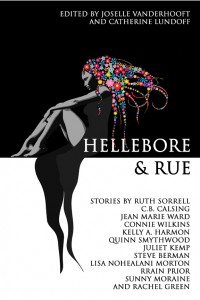
I went to several joint readings by some local friends and was inspired to read their books. C.M. Harris has two books out, Mother Glory (Spinster's Ink, 2009), a multi-generational story spanning several eras about a midwestern family that runs a religious sect and has a lot of queer folks mucking up the works, and Enter Oblivion (Casperian Books, 2011), a gay male romance set in a British glam rock setting. Being a Bowie fan I had a soft spot for the latter, but Mother Glory is more wide-ranging and complicated. Catherine Lundoff, a Wiscon regular, has a couple books out recently too, an anthology and a short story collection I have only heard snippets from so far A Day at the Inn, a Night at the Palace and Other Stories (Lethe Press, 2011). The anthology, edited with Joselle Vanderhooft, Hellebore and Rue: Tales of Queer Women and Magic (Flyleaf/Drollerie Press 2011), was a good transit read: a decent variety of stories to keep things interesting and a really beautiful cover to boot. Plus there is not exactly a glut of recent lesbian SFF anthologies on the market...

Speaking of short stories, a few this year really stuck in my mind. “White Lines on a Green Field,” by Catherynne M. Valente (Subterranean, Fall 2011 issue) was very funny and a nice take on the Coyote tale, not an easy thing since Trickster stories regularly get a good workout in the genre. My Clarion West classmate ('07) Dominica Phettiplace had a cool story in Asimov's, “The Cult of Whale Worship” (October/November 2011). CW alum ('08) An Owomoyela had a couple stories published this year that made me a fan. “God in the Sky” was Asimov's (#421, March 2011), “All That Touches the Air” was in Lightspeed (4/11), and these led me to some older stories on the web including “Abandonware” (Fantasy, 6/10). Lightspeed had some other memorable stories, including “The Kingdom of the Blind” by Maureen McHugh (11/11 issue) and “Manumission” by Tobias S. Buckell (7/10 issue, but I got to it in 2011). I also spent a good deal of time poring over the Paris Review summer issue that included interviews with William Gibson and Samuel R. Delany, with awesome old photos from both of them.

A couple movies stand out. Source Code, directed by David Bowie's son Duncan Jones, was a very watchable scifi movie with Jake Gyllenhall as lead, though I can't say I thought it was profound, or as good as his first movie, Moon.

I found the documentary We Were Here very moving. It's basically talking-head interviews with several gay men who survived the AIDS epidemic in 80s San Francisco, with some old footage. I'm biased because I was there too, as a member of ACT UP! SF and other AIDS activist groups, and knew many of the people they were talking about, but other audience members also seemed to have become caught up in the stories. The documentary was recently nominated for an Academy Award, so it may make it out into some sort of general release. A guy who was leaving the theater said he felt like it said nothing new to his generation, who lived through the 80s, but it seemed like many audience members of all ages (at a benefit for an AIDS service organization) were unfamiliar with basic things like the Names Project quilt and the right wing calls for quarantine of all gay men or people with HIV in the U.S. in the1980s.

Some of the commentary in “We Were Here” was annoying, like the white guy who said he felt no other community had gone through a similar experience. I had flashbacks to all the consciousness-raising arguments in ACT UP meetings about race and class and why “we” should care about Haiti and Africa in that moment. And some issues were very depoliticized, partly because ACT UP's role was barely mentioned. Hello, they did not just hand over drug treatments that easily, it took some very direct action, again and again, to cut through a ton of red tape, ignorance, fear, and downright hatred. But I liked that it focused on a small community who was both broadly and deeply affected, because it made the stories very accessible. And I also liked that it focused on what it means to 'survive' as much as the historical facts of what happened in the 1980s and 1990s, while still providing a basic historical overview.

I really like traditional musics, especially with banjos and mandolins, but it's not so easy to find bands that don't have “old-fashioned” attitudes, in one way or another. The Carolina Chocolate Drops came to town and though I did not get to go to the show, I bought a CD. (Heritage, dixiefrog.com) Old-timey spare arrangements with lush vocals and a smattering each of banjo, fiddle, resophonic guitar, akonting (a Gambian banjo-precursor), jug, bones, and drums are focused on their stated goal of rehabiliting the old Black string band tradition, in the North Carolina Piedmont style. They collected songs from elderly fiddlers and singers in rural N.C., and also pulled stuff from old records. There are some originals including one based on Schubert's “Erlkonig,” and songs from another member who has been performing African music and drumming for over 30 years.

For local Twin Cities musicians, I also have to recommend Black Blondie, a sort of jazzy contemporary rock-folk band that is mostly female, and the Doomtree hip hop collective, who were recently featured in a funny interview/spread in our free paper, the City Pages (.com). The reunited Tom Tom Club opening for the Psychedelic Furs at First Avenue (think “Purple Rain”) was a great concert; the frontwomen had tons of energy and a great sense of humor. “Whatcha gonna do when you get out of jail? I'm going to have some fun...”

Finally, for people in or near the Bay area, if Margo Gomez' latest show is still at The Marsh in San Francisco (it keeps getting extended), or she takes it somewhere else, “Not Getting Any Younger” is wicked good. I laughed throughout the whole thing, even though I've seen many of her prior shows. A lot of heads were nodding at her musings about aging, ageism, families, and growing up in Da Bronx, old school. As she said with justified pride, she is one of the “pioneer” out lesbian comics.

Writing this mostly made me look through all the lists of books and stories I need to get around to reading, which are longer than the lists of the ones I finished this year. It's (always) time to get cracking...
Carrie Devall is a speculative fiction writer and reader. She blogs a bit at metrospec.blogspot.com and otherwise works at the day job a lot these days, producing a lot of timeless legal prose.

Wednesday, December 14, 2011

The Pleasures of Reading, Viewing, and Listening in 2011, part 8: Mark Rich

Readings 2011
by Mark Rich

Being caught in a whirl of circumstance, in 2011 I read deeply from the lists of the many fantasy publishers of 2010; and I skipped and dipped and explored widely elsewhere. (I will leave titles and even many author names unsaid; some of what I leave unsaid can be found in the list of World Fantasy nominees.) At random, for instance, I picked up a Lauren Beukes novel, about which I knew nothing. Thoroughly and maybe even outrageously impressed I went on through more books from Angry Robot. What vitality, there! Small Beer, too, seems to have a clue as to where lies the heart of contemporary imaginative fiction. Its Karen Fowler collection, for instance, offers a set of ghost stories presented as though unghostly. Several other important one-author fiction collections that I dipped into or read in their entireties have strands woven into them that give them cohesiveness, as books. The strand in Fowler's is nearly invisible ... appropriately enough. For some reason I was surprised, too, by the Patricia McKillip novel from Ace. This novel offers obstacles at first, then delivers in full to the reader who perseveres. An engrossing, absorbing experience, in prose of unusual quality. Another of her meditations on the culture of words, perhaps.

Other surprises, small and large, came from writers previously unknown to me, including Tony Burgess, Aliette de Bodard, Celine Kiernan, Karen Lord, Helen Lowe and Angela Slattery ... among others. At one point I thought I was sensing a Scottish writing-upswelling. Then an Australian one reared its head. Then I began contemplating the inexplicable energy -- and frequent literary excellences -- among the dark fantasists. And everywhere I was encountering writers well-known to me who like Fowler and McKillip were moving impressively onwards unfaltering in their strides.

The overall effect of such a reading experience was to underline what I long knew of myself, but never felt so intensely: the dimness of my awareness of the works of my own time. I started 2011 reading old books; and in ending it similarly I am letting the works published in 2011 slip away from me. On the other hand I am glad to have Asa Briggs' Victorian People now on my list of books to re-read. I look forward to placing there, too, the book I now struggle with and delight in, Northrop Frye's Anatomy of Criticism.


Mark Rich is the author of a major biographical and critical study, C.M. Kornbluth: The Life and Works of a Science Fiction Visionary, which was published last year by McFarland. He has also published two collections of fiction — Edge of Our Lives (RedJack) and Across the Sky (Fairwood) — as well as chapbooks from presses including Gothic and Small Beer. With partner-in-life Martha and Scottie-in-life Lorna, he lives in the Coulee region of Wisconsin where an early-1900s house, a collection of dilapidated antique furniture, and a large garden preoccupy him with their needs.

"A Project to Bend the Arc of History" (ASA 2011)

“Transforming the University Curriculum with Disability Studies: Interdisciplinary and Collaborative Approaches.”

Mike Rembis, Corrine Bertram, Allison Carey, Susan Burch, Josh Lukin, Ann Keefer

An excerpt from the proposal that got the panel accepted: The panel will explore three recent disability studies initiatives at public universities and discuss how, in a time of limited resources, each has imagined and effected the introduction of disability studies into the curriculum. All three programs present themselves as part of, or logical extensions of, older social justice models, using the vocabulary of diversity, marginality, equality, and privilege; so each has set itself the challenge of maintaining disability’s distinctiveness as a social category and avoiding the elisions and distortions that accompany easy analogies to other oppressed groups. But in most respects, the three initiatives differ immensely in their approach. One encourages the introduction of disability content into a university’s core courses and explicitly seeks to support students with disabilities; one proposes a broad goal of raising awareness to identify and transform oppressive institutions and environments; one is creating a disability studies minor in a social science department, using extant thought on power and stratification to integrate disability into its curriculum. The respondent is a prominent disability historian who heads a Center for the Comparative Study of Race and Ethnicity, demonstrating that disability scholarship can be integrated into areas that formerly focused on other kinds of social identity.

The insight that I got from this panel was that it’s impossible for me to take thorough notes on a panel that I have organized and am on. Especially when, despite my partner’s repeated efforts to make sure in advance that the room was set up for it, there was no working microphone and no amplification for the sound on the video we projected. So we showed some of the video on this page and read the captions aloud to make it all accessible; and our copanelists gave great presentations about what they were doing at their universities, Shippensburg and Buffalo, and how they were getting support for such projects in hard times. The notes I have mostly record the enthusiastic and encouraging remarks of our moderator/respondent, Disability History star Susan Burch, and interesting lines from the q & a.

Burch said that the panel and the work it described address a key concern: how we talk about disability. People with disabilities constitute the largest minority in the world: the number of people with identifiable disabilities exceeds the population of the U.S. Disability Studies has been around for decades and addresses a growing community, as disabilities are created by war, poverty, and the other usual suspects. There have been Society for Disability Studies panels on how we build the discipline as a system, as a presence, in a world where institutions of higher learning are still wildly ableist. We are involved in a project to bend the arc of history, and for it we need sustainability, community, and coalition; we need assets and the invitation to be more thoughtful in our actions. What the panel is doing reflects the issues Disability Studies deals with all the time: all of us are so deeply interested in praxis — how do we apply this knowledge we’ve accumulated? Our institutions of higher learning are vastly diverse in terms of access, power, and privilege; so who has expertise? Who’s getting trained and how? What can maintain a university’s or an academic movement’s sustained relationship to the larger disability community? Knowledge is so “siloed”; and the way we think about disability cannot be cut off from other identity categories, nor should it be modeled on a single older movement.

The twelve or fourteen attendees in the audience were very involved in the discussion. A graduate student from San Francisco State asked a question having to do with race, and ensuring that race is not a black/white issue: she looks in vain for herself (i.e. Latinas) in disability scholars and research. I remarked that even the battle to make disability a black/white issue is still a struggle: what would one do, I asked, if one wanted to talk to higher-ranking scholars whose DS syllabi were exclusively white authors’ memoirs? Oy! (I think I actually used that interjection, inadvertently, because there was audience laughter) With Ann’s encouragement, I noted that one place where you could find engagement with disability and a wide range of racial identities was in the arts and mentioned, for example, novelists such as Ana Castillo and poets like Johnson Cheu.

A guy from the audience, trained in women’s history and feminist theory, noted that 85% of disability is acquired, from landmines, bullets, pregnancy, and the like. Mike’s global perspective is important in the light of such facts. Corrine has tried to address immigration and refugees and how the U.S. is involved in their refugee status. A woman from the University of New Mexico wanted to address the lack of inclusivity on the part of disability activists: they were, she said, long unwelcoming toward the Deaf, for example. How do we struggle productively with differences? More and more people, Burch and others pointed out, are entering the Deaf/disability dialogue. Amy Ferrell noted that nonetheless, other groups are still struggling with the stigma attached to claiming disability like the Deaf used to: the fat, for example, do not want to claim disability or even invoke analogies to disability ever.

Kathleen Brian from George Washington U remarked on how Susan Wendell’s and Margaret Price’s books begin in confessional mode, legitimating their authority with identity-claims, and asked about the necessity or drawbacks of that tactic. Allison said we need to be very socially aware of who the messenger is and we have to be aware of shutting out voices. I agreed with what I took to be Brian’s point, that self-disclosure should not be an imperative, and then told the story of a meeting five years ago, when Diane Bryen, then the director of Temple’s Institute on Disabilities, arranged a meeting with me after having seen my Black Disability Studies article in the Temple Faculty Herald and, as we sat down to talk, observed, “You’re not black.” You gotta teach these things with the human resources you have, even if it means that the three-dimensional person the students see in front of every class doesn’t always clearly belong to the social identity under discussion, or that of the authors/performers/artists whose work is being discussed.